![[LIB] Explore - Libras III](https://i.ytimg.com/vi/F_ZvLjyADw4/maxresdefault.jpg)








![AULA [AO VIVO] PARÂMETROS, LINGUÍSTICA E GRAMÁTICA! - FELIPE SABARÁ](https://i.ytimg.com/vi/Kd7aw5cXUlM/sddefault.jpg?sqp=-oaymwEmCIAFEOAD8quKqQMa8AEB-AHUBoAC3gOKAgwIABABGGUgZShlMA8=&rs=AOn4CLCD9Hfl9goN-s00w9XHimnhhWtaMw)



![BSL Verbs-Agreement Verbs [Subtitles available]](https://i.ytimg.com/vi_webp/p8vuHyYHtYs/maxresdefault.webp)




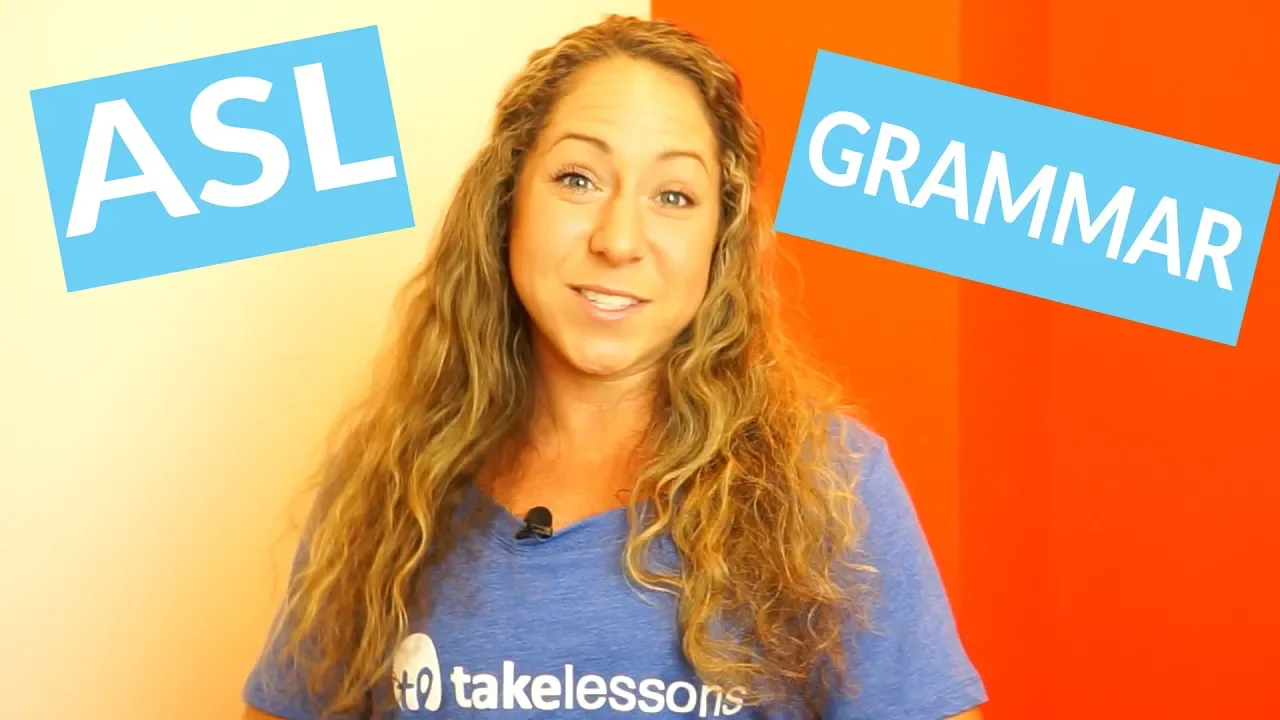
In American Sign Language, neon-verb pairs are nouns and verbs that share meaning and form but differ in movement, with verbs having single movements and nouns having smaller repeated movements (e.g., bicycle, chair/sit, comb hair/comb). Questioning in ASL involves raising eyebrows, tilting the head forward, and looking directly at the person. Negation is expressed through head shaking or facial cues. Topicalization uses a topic marker (line) on subjects to emphasize them, allowing speakers to rearrange word order for emphasis (e.g., 'bicycle my broke' instead of 'my bicycle broke').
ASL Class Week 8: Noun-Verb Pairs & Topicalization
Added:Basic ASL sentence structures (Subject-Verb-Object) to understand how topicalization departs from standard word order.
The five basic parameters of ASL (handshape, location, movement, orientation, and non-manual signals), particularly how 'movement' distinguishes sign meanings.
Introductory vocabulary including common everyday nouns and action verbs (e.g., chair, sit, book, open).
The role of basic Non-Manual Markers (NMMs) in ASL grammar, such as facial expressions and head tilts.
Applying topicalization to complex, multi-clause sentences and conversational ASL discourse.
Learning advanced sentence structures, such as conditional clauses and rhetorical questions, which also rely heavily on specific non-manual markers.
Mastering directional (agreement) verbs, where the movement of the verb indicates the subject and object without separate noun signs.
Integrating classifier predicates to describe the spatial layout, movement, and physical characteristics of nouns introduced in a topic-comment structure.
439 views3likes7:08Original Release: 2012-01-03
so right here it's chocolate page page right there okay so it says there are many nouns and verbs which are related to each other in meaning and form and differ only in movement these are called neon-verb pairs some verbs have a single movement and the related noun has a smaller repeated movement okay so okay so like we're talking about with bicycle the end of it says um the related noun has a smaller repeated movement okay so in bicycle then the noun would be a small repeated movement so bicycle would be here or two bicycle and like riding my bike and this would be a bicycle a bicycle two bicycle okay so here we have chair and sit okay so chair and sit okay we did comb hair and comb so we have comb hair like a repeated movement okay and it says note that while verbs may vary in movement the related nouns are smaller and repeated in so it has some more of those so we had comb hair and we had comb to come so do you remember what the cue means from the top question it has the line it's a question so what do you do whenever you ask a question where's your eye so you raise your eyebrows up tilt your head forward tilt your head forward maybe your body a little bit and you look directly at the person okay so you won't see you okay so here are the signs so you want with sit sit you okay so now do it with the eyebrows up leaning forward and looking directly at the person okay so you want sick okay so the response or the answer will be yes i want chair i okay so you'd say yes i so these are just the signs you want chair so the chair is twice chair because this is sit so i want chair i okay so what is the y the y over it with the line yes answer yes answer okay so it would be shaking your head something affirmative like that okay so yes i want chair so number nine says so was it open book okay so what's book show me book book okay now what's open book open book what's now yeah okay so is it just like ah now or is it now okay so let's do it together you ready open book now okay and this one's saying maybe i don't have the book so i not have book okay so and it has the end you guys see the n over it so what is the n no negation so it can be shaking your head or with your face as well okay so i not have i so you can say i not have a book i don't know that was not so let's go to the little box part says using subject as topic the topic markers may be used on some on subjects as well as objects the marker is used to specify and in some cases emphasize the subject okay so examples so my bicycle is broken okay so they're saying okay so what are the signs so bicycle my break okay so bicycle my so we're saying it's my bike break okay so what is the t it's the topic topicalization the page 64 has it right there so what do we do okay so the part that's that has the line is bicycle my does break have it no no okay so you're going to raise your eyebrows whenever you're talking about my bicycle okay she would say bicycle my so just keep your eyebrows up bicycle my i also kind of lean forward too bicycle my my bicycle broke one of the ways that you are able to say it is bicycle mine the topicalization like the t is just to show what the um it's to show the subject yeah the topic the topic don't work really fast i didn't connect that topic hospitalization whatever sorry it shows the subject so in the subject my bicycle broke you're talking about my bicycle that's the subject so instead of saying my bicycle broke you can say um yeah then you could just start with bicycle yeah so it's just a different way to the point
Up Next

9:10
ASL Classifiers Explained | Learn Sign Language Grammar
@csdbchannel
115.7K views•2016-11-08
36:52
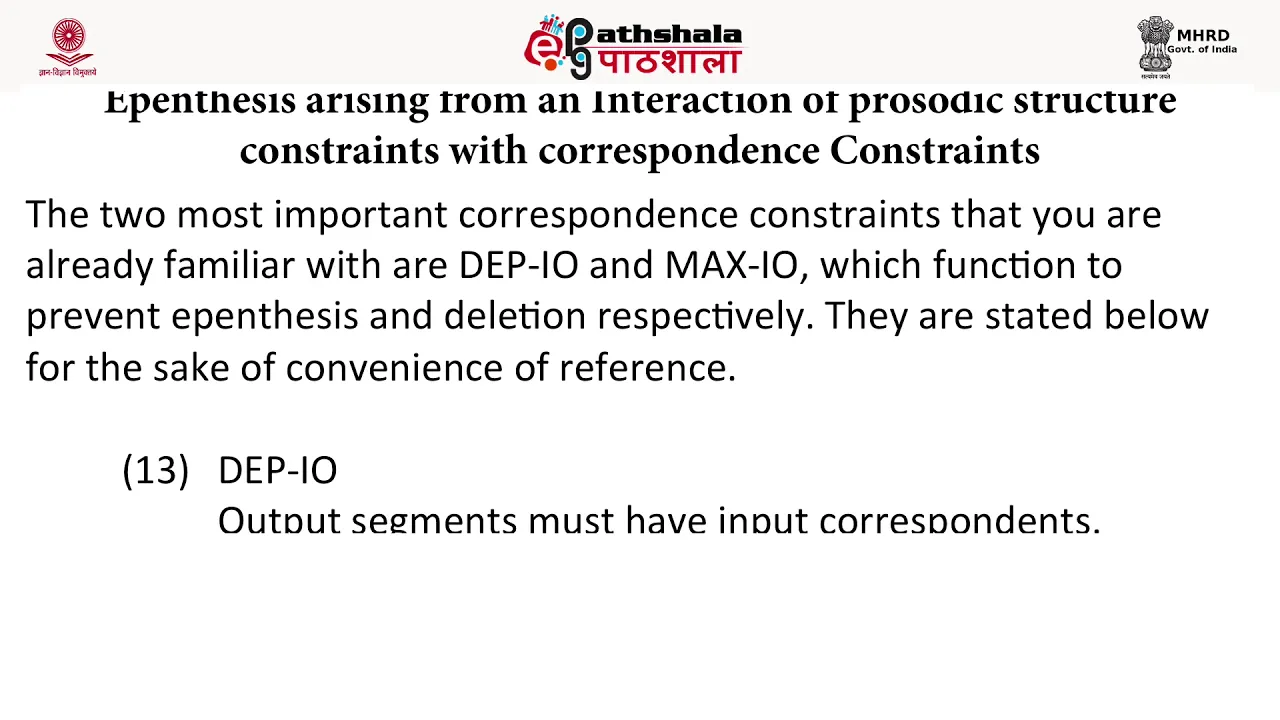
Constraint Interaction in Optimality Theory: Epenthesis & Deletion
@Vidyamitra
180 views•2018-08-20

19:33
ASL Common Sentence Structures: Conditional Sentences Explained
@SignWithCourtney
2K views•2012-04-25

21:32
Accent Expert Explains U.S. Regional Dialects | Part 1
@WIRED
9.3M views•2021-01-21
Related Study Plans & Knowledge Roadmaps
Structured learning paths in Linguistics
linguistics
Optimality Theory: Tableaux & Constraints
01Phonological Basics: Sounds, Syllables & Rules
02Foundations of Optimality Theory: GEN, CON, and EVAL
03The Constraint Inventory: Markedness vs. Faithfulness
+ 2 more learning modules
15h5 modules
Explore Roadmap
linguistics
Morphosyntactic Alignment: S, A & P Systems
01Foundations of Syntax: Transitivity and Arguments
02The Linguistic Variables: Mapping S, A, and P
03Nominative-Accusative Alignment
+ 3 more learning modules
12h6 modules
Explore Roadmap
linguistics
Analyzing Sign Language: Phonology & Syntax
01Foundations of Sign Language Linguistics
02Phonology: The Five Parameters of a Sign
03Morphology: Word Formation and Classifiers
+ 2 more learning modules
14h5 modules
Explore Roadmap
linguistics
Pragmatics: Speech Acts, Grice & Politeness
01Introduction to Pragmatics: Meaning in Context
02Grice’s Cooperative Principle & Implicature
03Speech Act Theory
+ 2 more learning modules
14h5 modules
Explore Roadmap