






![Apollo 13: Anatomy Of The Failure, Sy Liebergot [HD]](https://i.ytimg.com/vi/2BXNAEhoxsE/maxresdefault.jpg)








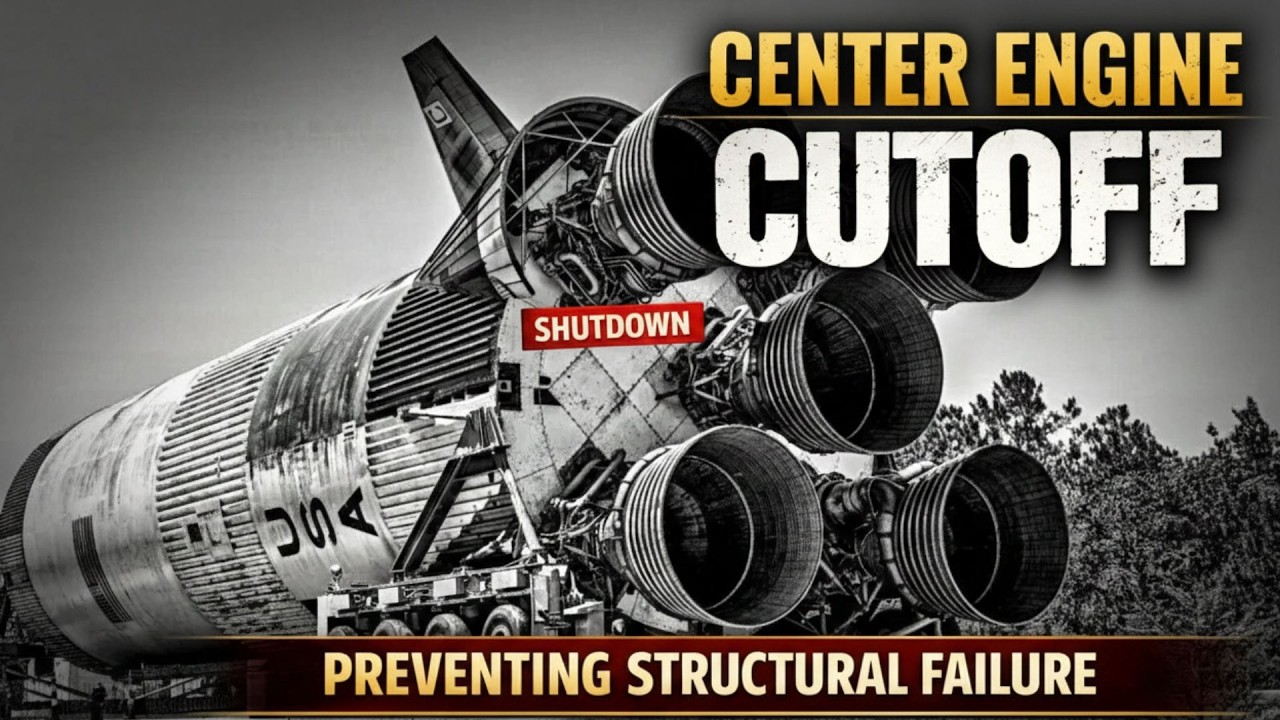
The Saturn V rocket, developed during the Apollo program, demonstrates fundamental principles of rocket engineering including staged propulsion (three stages with progressively smaller diameters), regenerative cooling using propellant as coolant, common bulkhead tank design for weight reduction, and sophisticated guidance systems using both digital and analog computers working in tandem to control engine gimbaling and ensure structural integrity during the violent ascent phase.
Apollo Engineer Explains Saturn V Rocket Systems, F-1 Engines, and Apollo 13 Fix
Added:Basic principles of rocket propulsion, including Newton's third law of motion, thrust-to-weight ratio, and specific impulse.
The concept of multi-stage rocketry, explaining why launch vehicles shed mass to reach orbit and escape velocities.
Fundamental components of liquid-propellant rocket engines, specifically how fuel (RP-1) and oxidizer (liquid oxygen) are pressurized and mixed.
A general understanding of the Apollo 13 mission timeline, particularly the oxygen tank explosion that compromised the Service Module.
In-depth analysis of gas-generator rocket engine cycles (used by the F-1) versus modern staged combustion cycles (used by engines like the RS-25 or Raptor).
Systems engineering and redundancy design principles, focusing on how aerospace engineers plan for and mitigate critical system failures.
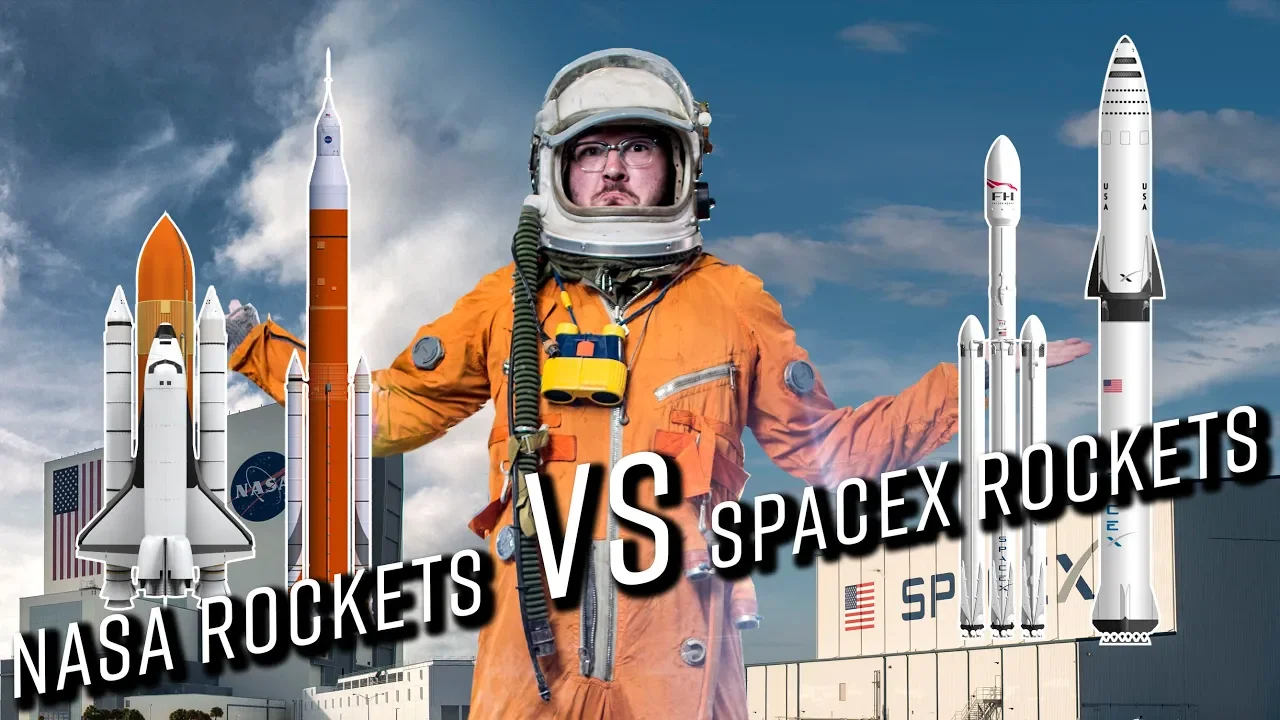
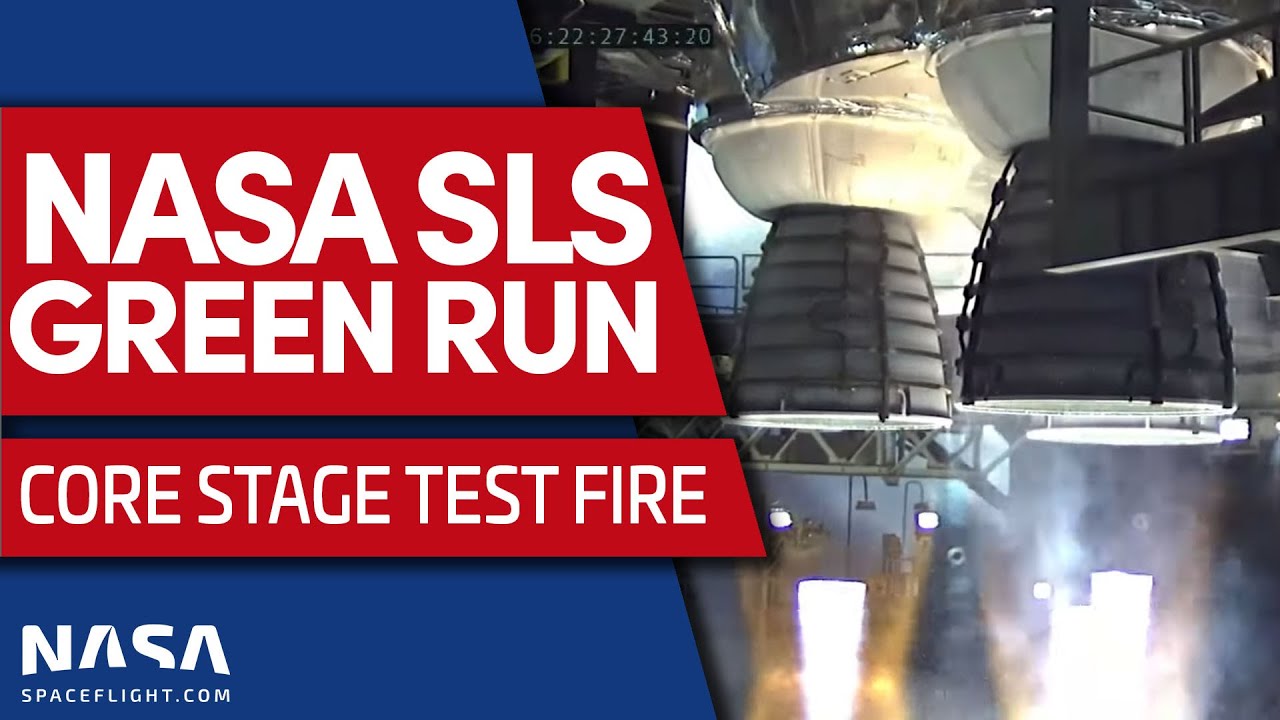
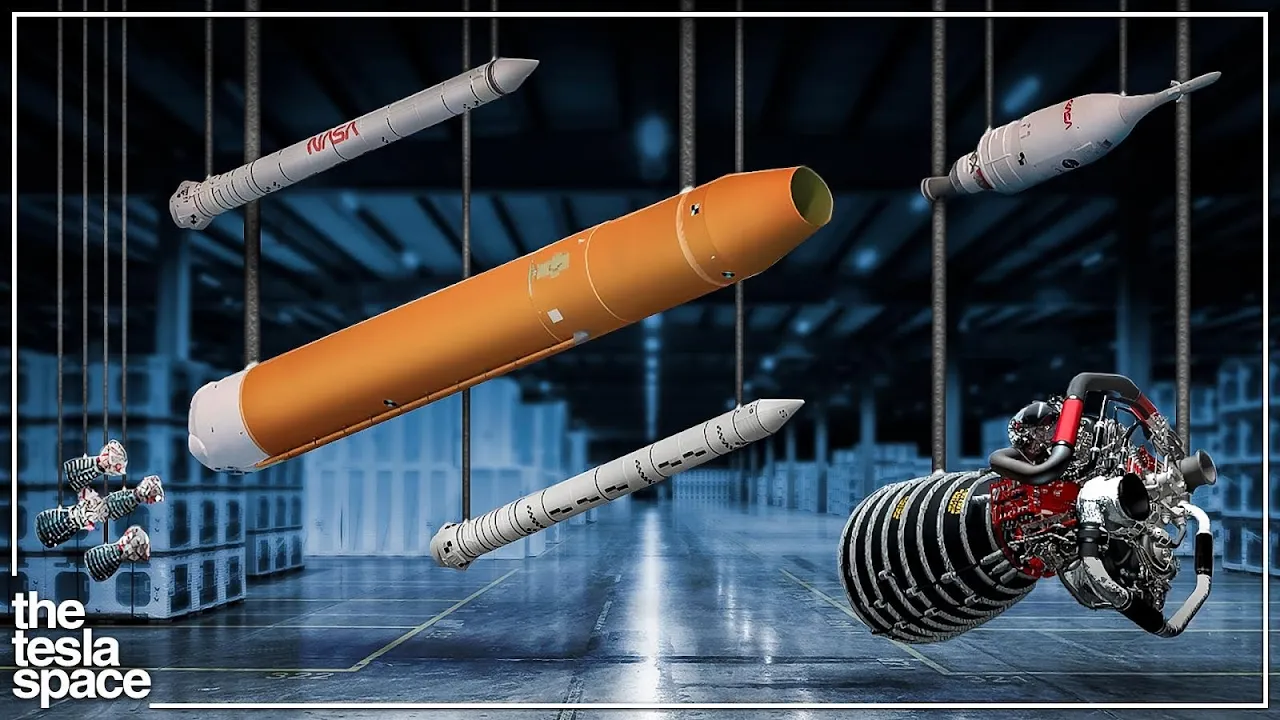
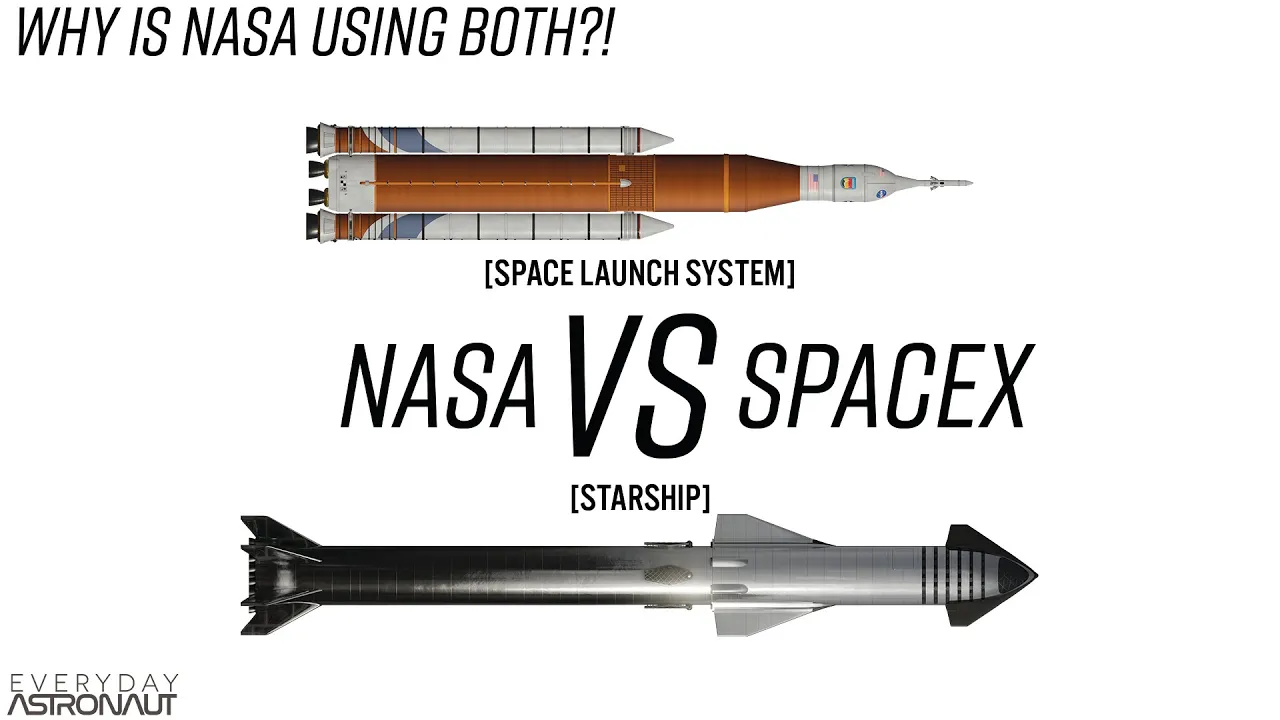
A comparative study of historical and modern heavy-lift launch vehicles, evaluating the Saturn V against NASA's Space Launch System (SLS) and SpaceX's Starship.
The physics of pogo oscillation, a structural vibration hazard that affected early Saturn V flights, and the engineering solutions used to dampen it.
1.7M views25.9Klikes1:47:13Original Release: 2022-12-26
Three, two, one.
Zero.
All engine running Liftoff. We have a liftoff.
32 minutes past the hour. Liftoff on Apollo 11.
Tower cleared. We got a roll program.
Hey, it's me, Destin.
Welcome back to SmarterEveryDay2.
Glad to have you.
So today we are going to do the long interview with Luke Talley.
There's a shorter version over on the main channel, but this is like the whole shebang.
Today we are going to talk to Luke Talley, who was an IBM engineer in the sixties, and he worked on the instrument unit right up here at the top of the Saturn V rocket.
And it controlled all the different stages of the Saturn V, things like main engine cutoff, for example, and then that would launch the second stage.
So this instrument unit controlled all of that stuff.
And so he's an ideal person to talk to about how the Saturn V worked.
But not only that, he is an award-winning engineer. For example, back in the '60s they had this thing called the Manned Spaceflight Awareness Program, and the whole idea was to tell employees like, Hey, your job matters because the safety of the astronauts is in your hands.
For example, Luke and his coworker Nate here, there was a coaxial cable that would melt when it got hit by the sun, and they figured this out.
They ran a test and they fixed it.
And as a result of that, Luke won a manned spaceflight awareness award.
And part of that award was he got a trip to go to Kennedy to watch the Apollo 13 launch, which is so cool.
Here's this.
This was kind of the whole deal here.
You can see on this award, it's signed by Alan Shepard.
It said, Luke, we stake our lives on employee awareness.
Alan Shepard. How cool is that?
A personal autograph specifically to Luke.
That's really, really cool.
They went down there.
This is Luke and Kitty at the Apollo 13 launch, which is so very, very cool.
So I'm excited to show this to you.
If you enjoy this video, please consider supporting on Patreon, at www.patreon.com/SmarterEveryDay If not, no big deal.
I'm just excited to learn more about the Saturn V rocket straight from the horse's mouth.
Let's go get SmarterEveryDay with Luke Talley.
How do you want to do it? Tip to tail? Tail to tip?
We'll start at the tail and work our way up.
Okay.
We're going to learn all about the Saturn V from the horse's mouth.
So we'll head down there and we'll get started.
So three stages, right? Yep.
Three stages.
And an instrument unit.
what's, What's your most favorite uh, what's your favorite part of the whole thing?
I don't know about the favorite, but the most phenomenal are the engines that we'll look at on the first day.
Really? Just the sheer size and magnitude of how those things operate is mind-boggling. That's amazing.
The computer system in today's world was very small.
16,000 words of memory, and today the transistors we used on our computer, we didn't have integrated circuits or microprocessors.
The transistors that were used in the Saturn computer were about 1/32nd of an inch square.
We had about 87,000 transistors in the size in the space of one of those transistors today, IBM equipment that's in the field has 18 million transistors.
Quite a big difference there.
So things have changed a little bit.
Still you've got to you've got to admire the people that programmed that thing and designed the intricate mechanism of how that thing worked.
To fly this giant rocket we never had a single... Saturn is the only rocket that I know of that never had a catastrophic failure.
We had things that didn't work once in a while here and there.
And, you know, we had to fix them on the next flight.
But all in all, this was a really successful project.
That's amazing.
What was it like to be a part of something like this? It was great.
Yeah. Yeah?
Where you want me to start, Luke?
I guess we got to see the bell, don't we?
Yeah, we'll just start back here. All right.
Okay.
Well, I call this the this is the mouth-dropping entrance of the Saturn hall.
You come in here and you see these, each of these, about 12 feet in diameter.
Each of these engines now produce one and a half million pounds of thrust each.
The four outer engines are gimballed.
That is, they can move They can move anywhere within a one and anywhere within a five degree circle controlled by the computer up in the instrument unit which is on top of the third stage.
During the flight the first stage will go through the speed of sound at about 60 seconds.
Shortly after that, you get the maximum aerodynamic pressure on this vehicle and it is like two giant hands have it, shaking it for all it's worth.
I'm gonna look at you right here, Luke.
Okay.
Can you turn around?
There we go.
Yeah, go for it.
Each of the engines can move anywhere in a five degree circle as we go through the speed of sound and we get maximum aerodynamic pressure, we would see them move about one and a half degrees.
That's the most we ever saw them move. Most of the time, except in that high vibration period, they would move at maybe a half a degree.
And that was actually pointing the rocket. Yes.
And that steers the rocket.
So you move these four outer engines as you need to, to steer the rocket.
Now, the rocket that's in here, the structure that's here is we get the question, did it fly?
Well, no, it didn't fly.
If it flies, we don't get it back.
So the structure in here was actually the structural test model for Saturn. The test stand at Marshall Spaceflight Center stood this thing up in it, put forces like you expected to see, vibrated it, just generally beat it up.
Okay.
Well, when this thing is flying and these engines, the computer sending the commands down to steer the rocket by moving the engine, when you move the engine, you not only move the rocket, but you cause it to flex.
These engines are so powerful that there are points in the flight where if you move this engine too quick, you can break it in two. Break the rocket in two, not the engine.
Oh, wow.
So the measurements that were made were what they call bending modes and structural dynamic modes.
That information was used to program our computer so that we knew at points and what points in the flight can we move the engine more or less based on the data that came out of these tests.
So that was one series of tests that were run.
Okay.
So if I understand.
Okay, so so we're at the back end of the rocket.
And what are these engines what are they called?
These are called F-1.
I have no idea why it's F-1, that's just the number.
Okay. They're called F-1 engines.
Each is producing one and a half million pounds of thrust.
The thing that to me is just incredible is each one of these engines now, the fuel is kerosene and liquid oxygen, of course, is the oxidizer.
This thing burns a ton of kerosene and two tons of liquid oxygen every second, each engine.
That's... because when you say, man, this this does a ton of whatever, That's right. you're kind of, you're doing hyperbole, but you're literally saying a ton of kerosene per second per engine.
So these, these five engines are burning 15 tons of propellant every second.
So the mass of this thing changes very rapidly and that affects these bending modes.
So we had to measure that kind of stuff and program it in to the computer system so that we knew not to try to overcorrect.
So you're saying each of these, each of these engines can move.
Each of the four outer engines can move. The center engine's fixed.
It doesn't move. Well, how do they move? do they have pistons?
They have they have actuators.
Will you show me? These things, can you see this pointer?
Yeah, a little bit.
Okay.
So, so that thing right there's an actuator?
Each engine has an actuator.
There's an actuator here and then there's another one up on the other side of it up there.
So two actuators per engine. The actuator is a hydraulic actuator, servo mechanism under control of the computer in the instrument unit and they're using the kerosene as their hydraulic fluid.
There's plenty of pressure in the tank, so I don't need a pump, so I'm saving weight and complexity and so forth.
And they look at it and you say, Are you sure we saved any complexity?
But that's true.
Oh, so there's like a lot of aerodynamic or aerospace systems have a hydraulic fluid. Oh yeah, you have a hydraulic fluid. And you don't here.
Well, the upper stages have to have the hydraulic fluid.
But this thing we just use the kerosene.
Interesting.
And that saves a whole set of piping.
A whole more set of piping, complexity. Affects your reliability. Number one concern is reliability in this thing, you want to have it as perfect as you can because there's, you know, there's 5 million parts or something like that in this thing.
So every part, if it's 0.9 times, I got 5 million of them and that ain't real good.
So I need 0.999 you know, so I got to have 99.999 something percent chance of making the mission in order for all this stuff to work.
that has to, so that's one of the main issues. Now the the engine itself, as you look at the engine, can you look up there?
I can barely see your laser, but you're pointing in this area right here.
Okay.
So we have the thrust chamber and then we have a nozzle extension on the back.
But the interesting part of this engine is all this that's mounted up above the thrust chamber.
Okay? This is a jet engine to drive the pumps to get three tons of propellant through that engine every second.
So this is a jet turbine in here.
And this jet turbine is about a 50 some odd thousand horsepower turbine.
The helicopters that fly around Huntsville, probably 5,000 to 7,000 horsepower engine, so this is a monster turbine.
The... probably one of the more interesting points of it is the thrust chamber itself.
The throat temperature is 5,900 degrees.
That melts stuff.
That will melt any of these materials.
So what they do is, if you can see this, it has fine tubes running down this thrust chamber region here.
The kerosene, before it's burned, is actually routed down these tubes, ok? Comes down through the tubes, goes back up another set of tubes, then in the engine to burn it.
And the flow of that in the wall is how you're cooling that engine to keep it from melting.
Now, the oxygen was, was liquid oxygen, right?
Was the kerosene super cold or... No, it's just plain old liquid kerosene.
Okay.
Now, a lot of the engine, a lot of the rockets today SpaceX, somebody like that, they're using methane.
Okay.
Well, methane, kerosene, still hydrocarbons and so forth.
Methane is compressible.
So it's a lot easier to transport and move around. Kerosene, liquids, not compressible.
So a little bit heavier to to deal with.
How do you do that?
Do you put like air over the liquid and pressurize the air or you pump it by positive displacement? These these tanks, the oxygen tank, of course, it's pressurized with pumping heated oxygen back into top of the tank, to create pressure.
But now in the fuel tank, we actually use helium. We take helium, and in fact, on the output of the turbine up there, there are a couple of heat exchangers in the turbine exhaust.
It's a it's a jet turbine driving the pumps, so it's just like any jet engine, it's got an exhaust.
So that exhaust has a couple of heat exchangers in there.
One of them, you bring oxygen down from the tank, run it through the heat exchanger, heats up, raises the pressure, put that pressurized back in the top of the tank, gives you the pressure. We have we carry helium bottles inside the liquid oxygen tank, ok?
So we're bringing the helium down through another heat exchanger, heat it up and put it back into the top of the kerosene tank.
You don't put oxygen in the fuel tank.
Oh, yeah. Not but once, okay. Because it'd blow up. That's right.
So it's a pressurant. You use helium as a pressurant.
And the reason it's helium is because it's an inert gas.
Right. Okay. And it won't react. Yeah. Interesting.
And so you, you throw all that down in here into the combustion chamber? Yep.
And what does that look like?
That mixer plate there.
The injector plate is just a large diameter plate, has about 6,000 holes in it.
Some of the holes are squirting kerosene, some of the holes are squirting liquid oxygen.
Do we have something here in the museum that shows it? Yeah. So we can see that? Yup. Interesting.
And so you said the four on the outside would gimbal. That's right.
But the one in the middle does not. No.
So how do you, with the computer, how would you know which ones to control?
Would you, could you spin...?
Well your guidance, your, you have a guidance platform in the instrument unit and this tells you where you are and you have a stored profile of where you want to be.
So 25 times a second, he's reading the guidance platform and calculating or part of the calculation.
But where where am I? versus where should I be?
And so based on that, he determines which engines need to be gimballed in order to steer you in the right direction.
Do I need pitch?
Do I need yaw?
Do I need roll? Do I need all of the above?
And all of that's done in the... And it's a closed loop system? Yeah.
That's amazing. Okay. That's incredible.
So that one right in the middle, I'm noticing that you've got these these rigid structures there, what does that going into? This plate that we're seeing, was that on the actual flight hardware? Yeah.
Now all of this on the base, the engines and the base were all covered with an insulating blanket.
The thrust chamber up there where we were talking about the little tubes that's all made out of a metal called inconel. Nickel, cobalt, chromium, very corrosion resistant.
This sucker's burning two tons of oxygen every second.
So if it's a piece of iron, it would melt.
It would rust in a heartbeat. Really?
So they had inconel blankets, layer of thin inconel, and then probably probably asbestos and then another layer.
And it was all.. The engines.
they had just blankets on the engine, they had blankets on the base.
The problem you have with this thing, once you get up a little out of the atmosphere, that center engine gets extremely hot from all the heat coming off of these.
So you're trying to keep as much heat as you can away from that center engine.
Oh, interesting, because you're kind of in a low pressure zone back here.
Right. Oh, yeah. Yeah.
Because you're moving forward and you got this little pocket.
That's right. Interesting.
So how would you... so the thermal management on the center engine, was it different than the outside?
No, the engines are the same.
So we just... everything is blanketed with an insulating blanket to try to keep all the heat in the engines instead of dumping it over on that poor center engine.
Interesting.
I didn't know that. That's amazing.
As we say in south Alabama, he's hotter than a $2 pistol.
I like that song, too.
That's amazing.
So in here, as you look at this thing, you see there are parts on here that are yellow.
Anything in here that's yellow is ground handling equipment.
So you see those those plates are there and that's so this thing won't sag as it's laying on its side.
So once you get it up, standing on the pad, you would remove the yellow pieces.
We'll see a lot more of that on the forward section.
And that's the original design for the hardware? Yeah, yeah.
Okay. All right. Following you.
So that's the first stage.
How long would the first stage fire?
Okay, so the first stage will burn two and a half minutes, takes them up to about 40 miles high and 5,000 miles an hour.
Now, at that altitude, you're you're pretty high, you know, 40 miles up.
Well, he's still climbing as... he's separation.
So when things separate, you think each of these engines back here is 9 tons.
So we've got 45 tons of engines. They attached to a cross member of aluminum that's another about 20 tons.
So we've got 60, 70 tons of stuff.
So you would think the rocket is climbing he would do this and fall.
But he's going 5,000 miles an hour.
When it separates from the second stage, it does sort of tilt down.
But this thing will go almost 70 miles high before it finally starts coming down. Falling from 70 miles when it hits the Atlantic, it, pieces just go everywhere.
Kablooey. Yeah, kablooey.
To be clear, the reason you separate the rocket is you've got all this extra mass.
Right? Trying to get rid of everything you've used.
Once you're out of, out of all that fuel.
Sitting on the pad, we're about six and a half million pounds.
This rocket, the first stage is like over 4 million pounds of that.
Wow. The first stage is a big chunk, but it gets you up and gets you up through the atmosphere and on your way up to 5,000 miles an hour.
So as you as you walk up beneath the thing, you'll see the smooth sections and corrugated sections.
The smooth section directly above where I'm standing right now has the USA on it. It's the fuel tank. Okay.
So that's where the kerosene is.
This thing is made out of aluminum plate, an inch, to inch and three quarter inch thickness.
They form a flat plate, they mill the inner surface for strength and some slosh baffling.
And then they put this thing in a giant press and bend it.
Well, this plate is about... is one third of the circumference.
Then they take these plates, stand them up, and they have this automated welder.
As I recall, there was something like something like 20 to 30 passes to, weld this inch and a half inch... quarter thick aluminum plate.
I remember some of the mechanical guys talking about it.
They would set the thing up, put up these what we call test coupons, just to, you know, a piece of aluminum to check out the weld to make sure it's okay.
So they make the welds and they take this thing, slice it up, put it on the microscope.
And they said, you'd be hard pressed in most cases to tell the virgin aluminum from the weld. They were very, very precise.
So they were super skilled craftsmen.
Yes. Yes. Automated system.
So what?
So the.
Corrugated sections, the tank now has to... Let me back up.
The engines, the forces from the engines are transmitted out through the structure we were talking about.
And all the forces are transmitted upward through the skin.
There's no internal beams or anything like that.
So all your forces are going through the skin.
Well, the tank now has to withstand the upward force, plus the pressure in the tank called hoop stress.
Yes. Okay.
So the tank area is has to withstand more forces then do the inter-tank areas.
So the inter-tank areas are made with this corrugated material.
So I can use a lot lighter weight material because I'm only having to withstand upward force. I don't have any inside pressure.
Oh, so. Well, correct me if I'm wrong on this, Luke.
So right there I'm looking at the corrugated stuff, right?
It has a bigger cross section so that it can withstand more axial forces?
Well, it's just no, it's just it just corrugated to give it more strength.
So it's not going to buckle. Right.
And so are there tanks inside, like, am I looking...?
So this is a model. I don't know if this is a correct model.
Yeah, it's a pretty good little model.
The... if you look, the fuel tank is the lower section down here.
If you look inside the tank, you can see that the liquid oxygen lines actually run through the fuel tank.
Those things are about 18 inches in diameter.
If you had to bring them out around the tank, you would mess up your streamlining on your rocket, on your surface.
So they're actually going through it.
Now, the problem we have here is liquid oxygen would freeze the kerosene so that the piping that is going through there is kind of like a big Thermos bottle.
Okay.
So you're saying like this is the liquid oxygen. That's the liquid oxygen tank.
So the oxygen's set above the kerosene. The fuel, yeah.
And these pipes that go in between the two.
Right, yup. They, you've got these big pipes that go... they sure do. How many are there? Is there one.
5. 1 for each engine.
Just a direct line. Yup. Okay.
And so you want to make sure that you don't have frozen kerosene around that.
So it's double walled or how do you do it? Yeah.
It has an inner wall, outer wall and then it has a low pressure gas in between, just like a Thermos bottle. Really?
And the purpose of the low pressure gas is to insulate. Insulation.
Wow. Okay. Did not know this.
And so when they came down... Then they come out and they go into the top end of the engine and the fuel lines now come out of the bottom of the fuel tank and you have two fuel lines for each engine.
One go in each side of the pump.
The way the engine is organized on this thing is the top most turbine up near the top up here would be your liquid oxygen.
So the 18 inch line comes into the center of that pump and then you have an oxygen line go into the engine and go one on each side.
You're balancing the forces on your engine.
Then the next line, the next pump down is the actual fuel pump.
And you have a line coming into both sides of the fuel pump and then this line goes into the engine.
So volume metrically. How does the chemistry work?
Do you have more fuel or more oxygen?
Oxygen. More oxygen, Yeah. So how does that...?
Well, you look up here, you're about 2 to 1.
Where does the oxygen start?
Oxygen tank is in the smooth section up top up here.
Okay. One right above us was the fuel tank.
This now is the oxygen tank.
You can see there's about two to one.
Two to one. Okay. Wow. So... And they density is about the same.
Is it? Okay. Hydrogen... I mean, oxygen is like 9 pounds per gallon.
Kerosene's like seven, I think. Really?
So we're still under stage one.
We're still under the first stage.
There's the engine. You want to talk about it?
You want to talk about the inconel?
If you well, if you want to talk about that injector plate.
Well, I want you to talk about it, you're more knowledgeable than I am.
Well, we were talking about the injector plate down in the throat of the engine is this injector plate, got something like 5,000 holes or something like that.
And some of the holes are spraying kerosene, some are spraying liquid oxygen.
And you have these baffles. When this engine was first made, the Air Force started development of this engine early on, they thought that nuclear weapons were going to be much heavier than they turned out to be.
So they thought they were going to need a heavy lift rocket.
They thought they were going to put manned orbiting laboratories, spy in the sky type things, and ultimately the technology got ahead of them.
So this engine was transferred to NASA to follow to resolve the final issues and use it on the Saturn. Originally in did not have the baffles.
The problem is this stuff spraying in here starts a circular rotating motion.
So this gas starts circulating in this giant like.. we're talking about stuff swirling around, maybe 2000 RPM.
I mean, it's really moving in there.
Problem you get with that is these injectors, sometimes they mix, sometimes they don't mix well.
So you wind up, you can get an engine that I'm getting too much oxygen in an area, not enough kerosene.
It turns into an acetylene torch and cuts the end off the bell. Really?
And then the other problem you have is if I get too much kerosene and not enough oxygen in this thing, it starts like a car that's running rough on the road.
So now it starts a terrible vibration which shakes it to pieces.
So the baffles break that swirling motion up into much smaller areas that then don't have such a major effect on it.
Once I put the baffles in and this is only happening in the first few inches of the injector. So first few inches into the engine off an injector.
So these baffles were enough to solve the problem.
Several injector designs, such as this LOX dispersion injector, have been tested in an effort to increase combustion stability margins.
Other designs tested include the baffled divergent ring injector, low fuel delta P injector, 21 compartment baffled injector, and the divergent ring injector.
As part of the LOX dome oscillation study tests have been conducted on Rocketdyne's high flow test bench at varying pressures.
This data will be evaluated and compared with data from hot testing.
So so basically what they're doing is they're they're controlling, they're controlling a very huge turbulence problem. That's right.
They're cutting it into smaller chunks.
And then that way you can get more complete mixing in these sections. That's right.
Yep. Are these the pipes you were talking about here?
Yeah.
So these are the tubes, the inconel tubes where you're pumping the coolant.
Now, this big baffle around this thing, we take the jet turbine, there's a nozzle extension on the engine, which is not in this one, laying on its side. There's another six, seven feet of engine out here, that's a nozzle extension. Well, it's made out of high strength stainless.
And what they actually do is they take the turbine exhaust, the turbine now is running a fuel rich mixture.
So its exhaust temperature is only about 1200 degrees.
So by capturing that exhaust and routing it around here and then injecting it into the walls of this nozzle extension and then having little openings around the interior of the extension, the flow of that exhaust in the walls is how you're cooling the nozzle extension.
Kind of hard to think of cooling with 800 degrees, but it's better than 5,000. Wow.
And then you allow the exhaust to be injected into the nozzle and that way your extra thrust you're getting out of that is put in the direction you're going.
That thing will produce about 18,000 to 20,000 pounds of thrust.
So if you squirt it out to the side, you'd forever be correcting with another thrust.
Just the cooling section is 18,000 pounds.
Just the well, the exhaust from the turbine, yeah.
Oh I see.
So you have to control where the coolant goes. That's right, you direct it into the thrust chamber so it's going in the direction you're going.
Oh, okay.
Luke, you're absolutely right. We could do this forever, couldn't we?
That's right.
I don't know how you're going to cut this but... Oh man. It'll be fun.
That's quite the reveal for stage two.
We'll we'll hustle. No, no, no.
I like it. I'm having fun.
Just saying. I love it.
Okay, Now we'll get to the top of this stage.
We were talking about ground handling equipment.
You see this big yellow structure on the top of it.
This is how you lift this thing off of the transporter and pick it up and put it on the launch pad.
Then you would remove this yellow structure up here and then there's a piece missing that would go from the base of the stage out to about where I'm standing, I guess, 12 or 15 feet, something like that.
And this is an interstage.
Now the first stage attaches to the interstage.
The problem you have is, if this thing were if this stage were connected directly to the base, remember we said when it separates, it really wants to flip up.
Well, it would just rip the engines right off of this thing.
So you have to pull it straight back.
Well you pull it back off of something back here so if it moves like this, it won't hurt me.
I see. The astronauts said that... somebody asked them one time we were having a problem with S2S4B, the second and third stage separation.
We asked them, Well, what does it feel like?
Man... One of them said, Man, that felt like a train wreck when that thing separated. So well, what did this one feel like?
This one felt like a large train wreck.
So. So the astronauts after that, occasionally you'll listen to... if you see one of the videos, you hear them talking, okay, here comes the train wreck, you know, and that's this separation because it... it rattled them around pretty good. Really? And it was the acceleration... It's just the sheer separation of this thing.
There was a lot of banging around when it comes loose.
So when you guys so you and your team... Whoever. Whoever controlled the the, the firing and the timing sequences and things like that.
So we've lit off the engines, we've burned all of our fuel and it comes time to do separation.
So you have to shut the.
So you have to shut those engines down.
MECO Main engine cutoff. That's right.
And then there are four fins on the base.
There's a fairing that flares out so that your engine, when you can gimbal it without the atmosphere streaking by and holding you, keeping you from gimballing all right.
And then in that fairing there is a fin.
All right.
There's four of them around it.
Well, at the base of that fin pointing in this direction, two big solid rocket motors.
So there are eight of them around that thing.
So the thing is connected to this interstage with a set of with a piece of ordnance.
So your computer says, all right, time to shut it down.
Main engine cut off, fires this ordnance. This ordnance now separates the stages have strapped together with tension straps around the interior of those straps is the ordnance. Computer fires the ordnance, severs these. Same time fires those retro rockets to slow this thing down, doesn't back it up, just slows it a little bit.
This piece that is missing up here, the interstage, there are eight more solid rocket motors around it, and they're fired at the same time to put thrust on the upper on the upper, on the second stage to keep the propellant seated in the tanks so I can get these engines started. Because of slosh.
That's right.
You got to get that stuff down in the tank.
Otherwise, when you shut off, they just kinda wants to float forward.
Okay. Okay.
So you have to have a little bit of thrust to pull that stuff back and get these engines going.
Once you get these engines going, then you jettison this inner stage and that's to get rid of excess weight.
So there's a lot more going on in stage separation.
Okay, So check me here.
So engines cut off. Yeah.
And then we blow the tension straps here. Yep.
And then we have those four retro rockets on the fins.
Yup, that's right. Fire those to slow this down. Right.
And then we have a kick right here.
And we have these.
These are called ullage rockets. Oh, okay.
So we have a... To push forward a little bit.
Yeah. A little kick in the pants. Seat my tanks, fuel and propellant in the tanks and then start these engines.
Now, these engines, first stage one and a half million pounds of thrust.
F-1s. These are J2 engines.
The fuel here is liquid hydrogen and liquid oxygen, of course, oxidizer.
Now, the difference is engine... You want to go there?
Do it. I want to go everywhere.
.. The way you rate these engines is by impulse, specific impulse.
If you take the amount of thrust you're getting and divide that by the flow rate of your propellants, okay?
How many pounds of thrust divided by how many pounds per second of stuff, okay.
If I take pounds, divide by pounds per second, do all that canceling and stuff in you know, ninth grade, algebra, whatever it was, you wind up with an answer in seconds, okay? Well, the more seconds you get, the more efficient your engine.
Well, first stage engine efficiency is down 200, and I don't remember the exact number.
We'll just say 225 seconds.
This engine is probably 425 seconds.
That's high.
So hydrogen gives you a lot more efficiency.
But, boy, hydrogen's, really tough to mess with. 426 below zero, so everything in a whole different world now for messing with a bottle of kerosene versus this stuff okay. But more efficient.
So each of these engines now, the first stage remember we were burning three tons of propellant every second to produce one and a half million pounds of thrust.
These are burning about 600 pounds a second to produce 230,000 of thrust.
600 pounds a second. Yep.
To produce how much thrust?
230,000 pounds of thrust. Wow.
A quarter million per engine. Yep.
Okay, so this, these five engines equal about one of those first stage engines.
I see.
But you have less mass that you're hauling around.
That's right. And so you don't have to accelerate all that.
And I'm carrying hydrogen, which is pretty light. Hydrogen density, remember we said liquid oxygen is 7... is 9 pounds per gallon.
Liquid hydrogen, 7/10 of a pound per gallon.
Oh, wow. Okay. Now, the difference there means that these pumps on these poor little engines, they have to work really hard.
The pumps that we were spinning, the turbine is spinning the pumps on the first stage engine at about 5,000 revolutions per minute.
The oxygen... I believe the oxygen pump on this one is about 6,000, 8,000 revolutions per second, per minute.
And the hydrogen is 37,000 revolutions per minute.
Oh, I see.
They're working hard because hydrogen, the low density, it's got to work very hard to pump a bunch of that.
So volumetrically, you're having to pump a lot faster because you have less mass, but you still need the same amount of well, you need a lot of mass in order to make the chemistry work.
You got to get some oomph out of that.
I mean. Technical talk, That's amazing.
So where's the pump?
Again, so they're on each engine, each engine has its own.
So we have five engines here, four outer engines are gimballed just like first stage. These I think first stage could move five degrees.
I believe these would operate closer to ten degrees.
And you're controlling these with your computer?
These are all still under control of the instrument unit.
Everything's under control.
Everything we've talked about so far is under control of the instrument unit.
Well, how do you connect the computer from... So that means the instrument unit, which is over there.
It's on top of the third stage.
It's way up there at the top of the third stage.
How do you connect the computer?
You've got cables going down all the way down. Where would they be?
They would be in going between the stages and you won't see them on here.
Okay.
They are on the interstages.
They have uh they have disconnects.
Okay.
And then they have a backup guillotine, (arm swing) whack Make sure that sucker's cut free. Really? I don't want this thing hanging on a cable back here.
So it's a blade. Yeah (arm swing) Chompf.
Explosive blade.
Yeah, so the stages are all connected through their independent lines from the instrument.
And there are not many lines there, you know, probably 20 or 30. Really? Yeah.
That's amazing.
And so this engine, what was it called?
J2. The J2 engine.
Yeah, J2 that would be on the third... on the second stage and the third stage.
So a lot of people spent their entire lives just working on this engine.
Oh, yeah.
A lot of people spent their entire lives working on one part of that engine.
Really.
It's kinda the way it goes.
And then here you come along and you get to control everything.
That's right, yeah.
That's amazing.
How big was your team that you worked on that would control everything?
Exactly right, yeah. The IBM site here, I think the peak was about 2,000 people here.
The computer now was built by IBM in Owego in New York, several hundred I think probably.
And I don't know how many of those actually worked on it, but now all the components on these things are come from companies all over the country.
So this IBM, our job was to put it all together.
So we made some of it.
We bought a lot of a lot of it comes from different companies.
How do you manage... So today we have systems engineering tools to manage all the parts and components and how they work.
How do you manage such a complex system in an era where there was no electronic bookkeeping?
NASA... probably... for every component, every stage, every interface, there was an interface control document that NASA produced.
Okay.
And of course, we work with the company that... whoever's making the component and they say, here's what this component's going to do.
It's going to be this big.
It's got these, what they, what we call the goes-intos and the goes-outtas signals coming in, signals going out, this much power, you know, voltage or current or whatever, or fluid, if it's got a, you know.
So they had an interface control document for every component, every major stage.
So every time you have an interface, you have this interface control document.
That was a stroke of genius.
I remember working with those interface control documents and it made it so much easier to understand a problem because you could go to the document.
Okay, here's what signal he's going to get, here's what he's going to do with it.
Here's what this going to get. Here's what it's going to do with it.
So you were trying to do some problem resolution.
Those things were great for solving problems as well as building them.
So interface control documents were how to do it.
The ICDs we used to call them, they were in my mind were a stroke of genius.
We still use those today. Oh yeah. Everybody.
And that was I think that was really why this program was so successful.
Really. Okay.
You wanna talk about the S2 stage a little bit?
Let's do it.
Okay. Well, above us is the S2 stage.
All right, now the S2, we got a little bit of corrugated, but most of it is smooth.
Okay. All right.
So in the first stage, remember, we had the hydrogen, we had the kerosene tank, and then we had the liquid oxygen tank in two totally separate tanks.
Here we have a deal where there's a common bulkhead between the two tanks.
That saves a tremendous amount of length, which saves a tremendous amount of weight.
What's a bulkhead?
I don't have a I don't have a hemispherical tank here.
And then another one up here.
Actually, I've got one surface and that surface serves the oxygen tank below and the hydrogen tank above.
So I get to instead of having a tank like this and a tank like this, I just have three.
That's right. Okay.
I've got an oxygen tank and a hydrogen tank, but they share one of the one of the bulkheads of the tank is shared.
Okay.
So we have hydrogen on this side, oxygen on that side.
Well, that saves a lot of length on your rocket, on your stage.
And by doing that, you're saving a lot of weight.
So that's very important.
And so that was an idea that came along long after S1C stuff, I guess, that's been done on the... So if you have... forgive my ignorance here, so I'm imagining it like a propane tank, you know, like behind your house.
Yeah. You've got a hemisphere on each side and you've got a cylinder in the middle.
Right.
So if I stuck another propane tank on the back side and I had the cylinder and it connected, there would be a little a little sharp point on the corners.
Am I making any sense?
So basically I got a hemisphere this way.
Let's say we're shooting the rocket that way.
You got a hemisphere on the back and I've got a hemisphere on the front.
That one in the middle. Is it facing this or this way?
(points forward) Okay. Pointy end up.
Face the front. Pointy end up.
Rule #1 in flying a rocket, keep the pointy end up.
Okay, That's awesome.
Okay, so now this stage you can see above us up here, it has sort of a funny looking surface to it.
This was a phenolic honeycomb grid, and then it was filled with foam.
The hydrogen tank is so.. hydrogen is so cold, 426 below zero.
You really have to insulate it and you have to insulate it very, very good.
Problem you run into is if you don't insulate that tank, the boil-off from it will be so great that you can't fill the tank.
So you got to insulate it to fill it.
Number one.
Plus you got to insulate to make sure it lasts any time.
So the second stage is insulated on the outside.
This was used on some of the early flights, this phenolic deal. Later on, my understanding is they went to like big Styrofoam blocks just glued to the outside.
It worked a lot better. Upper stage now, the upper stage will last first stage we were burning two minute, two and a half minutes.
This one's going to burn about 6 minutes.
Wow. Okay.
So not long into the flight, these two stages are gone.
But the third stage now, he's going to go in orbit and it's going to be a number of hours before we're through with it.
It's actually insulated on the inside of the tank.
Really? Yeah.
Okay. So hydrogen, which one's on top?
Oxygen or...? Hydrogen's on top.
Hydrogen's the big tank.
And then the oxygen below.
And that's just because of the stoichiometry of the chemical equation, whatever the fancy word is.
Well, you put most of the weight in the bottom.
I see, I think.
Okay, that makes sense.
Okay.
Now, when you come to the end of the second stage, beginning of the third, we've got another inner interstage and of course it's missing here.
You can see it on the model over there.
So there's a tapered section that goes... the first two stages are 33 feet in diameter.
This third stage and the instrument unit are 22 feet in diameter and the spacecraft is 11 feet in diameter.
Okay?
They knew they're going to be a lot of us Alabama guys working on it.
So 33, 22, 11 they were keeping it simple.
You don't have to put that in there.
Somebody did make a decision though, didn't they?
Okay.
So now when we get to the third stage, we've only got one engine.
Okay.
Well, before, first two stages, we've got four outer engines that we can gimbal those and we can make the rocket pitch, we can make it yaw, and we can make it roll. With one engine I can pitch and I can yaw but I can't make it roll.
Interesting.
So the two black pods. There's one up here on the upper right.
There's one on the left. Probably can't see it.
There's a set of thrusters in there to give us roll control while the engine's burning.
What's that called?
Is that called a reaction... This is called the auxiliary propulsion system, APS.
Okay.
These are hypergolic, you know, nitrogen tetroxide, whatever that other stuff is, hydrazine.
Hydrazine. In a hypergol... And so when they when they squirt it into the chamber it immediately burns, you don't have to have an igniter.
Okay? So during the boost phase, they have the APS gives you the roll control.
Now this will go into orbit and will coast.
And while we're coasting there are roll pitch and yaw thrusters in there to control it. And you're controlling those?
This all under control of the computer, instrument, Right. Wow.
Okay. So the first stage shutdown at about 40 miles high and then it went on up higher and then fell into the ocean, wound up about 450 miles from the Cape in the Atlantic.
They put out maritime warnings, you don't want that thing to fall on your boat while you're out there fishing.
The second stage now, he shuts down. The first stage was still climbing. This one now, he's up to about 115 miles high, traveling 15,500 miles an hour.
He's going to do a nosedive into the atmosphere.
Going into the atmosphere, probably begins to break up at altitude.
It doesn't burn up, just breaks up and pieces in the neighborhood of 2,000 miles, 2,500 miles from the Cape, something like that.
Wow. In the Atlantic.
Okay.
Now the third stage is going to burn for about 2 minutes.
Okay. Now he's going to take them up.
Not much higher, 117 miles high, probably 17,500 miles an hour puts them in orbit.
Now, the problem we have here, or the situation, we're going to the moon, but we launch from the Cape.
Cape is here on the earth.
You launch you can only launch in certain directions from the Cape.
All right.
So what you do is you, you launch and you wind up in an orbit about the earth, but the orbit plane is in a different plane from the plane of the moon that's also orbiting the Earth.
All right, so we go into orbit, we shut this thing down, usually coast an orbit and a half.
We could have coasted as much as 6 hours before we batteries ran out.
Okay?
Usually only orbit and a half, hour and a half or so, 2 hours.
And what we do is when our orbit we come around in our orbit and it intersects the plane of the moon's orbit, we restart this engine again.
So this one burns twice.
Now he will burn for about 6 minutes.
It will take them out of the moon's plane, I mean, out of his orbit plane and into the moon's orbit plane and up to 24,500 miles an hour.
Now they're on their way to the moon.
And after that, crew's got to get separated and do all their magic.
Okay. So we'll talk a little bit about that if you want to. Let's do it.
Where do you get rid of the third stage?
What I mean, does it go to the moon with you?
Oh, we'll get back to that one. That's a good one.
Okay, so we won't spend much time on the spacecraft, we'll just say, here's here's where it is.
Yeah, we'll just we won't talk much about the little thing that went to the moon.
Like the actual land part.
If you will know about that, go to the Johnson Space Center.
Here's here's probably the best little thing you can show is this, this model here shows the third stage, the instrument unit, and the lunar module is inside what's called a spacecraft lunar module adapter.
The SLA, and then the service module atop that.
And atop that is the command module.
And this is where the three astronauts are located.
Now, this launch escape system up here on top of it, if we had to abort during the first stage burn, we lost two engines or the rates got too high, if the rates get too high on that first stage, you can break this thing in two also.
So that is an emergency, get them off of there right now.
So there's an emergency detection system, hardware in the instrument unit.
We don't need the computer. We don't need any of this.
It's all hard wired.
It's triple redundant and everything.
So if I lost two engines on that first stage, that system would automatically fire a rocket motor that's in that launch escape tower up there.
That thing would pull just the command module with the crew.
And you know, the crew members are inside, the astronauts are inside there.
So this thing now would pull them wherever the abort occurred, would take them 30,000 to 40,000 feet higher.
Then they would jettison and they would come down on their parachutes.
And so I'm looking at right there... That's only in first stage burn.
I'm looking at it right there so I can see the nozzles on the back side.
So that's a rocket. Solid rocket motor yup.
And nozzles are pointed out. That's right.
And that's to not burn the top of the gumdrop.
Don't melt.. Yeah, don't melt the spacecraft.
Now, the spacecraft during that point, as they're going up in, in case you were to have an abort that launch escape system actually has a cover that is actually over the top of the spacecraft.
Until they jettison this during second stage burn, they can't hardly see anything.
There's a little window down at the side they can see out.
But the main one, they can't. It's covered and that's in case we had to fire that thing, we wouldn't damage the spacecraft.
Yeah, interesting.
And when the launch escape tower separates, it pulls that conical section with it as part of it.
So when does that fire?
I mean you've got to get rid of it.
During second stage, just after the second stage burn starts.
Okay, so it's after first.
So you jettison it while you're firing the second stage? Yes.
Yes. Really? Yeah. Okay. I didn't realize that.
Right. It has it has a little motor up at the front of it that will will pull it away and pitch it up out of the flight path.
So there's a little motor on top of it.
Yeah.
There's a couple of little extra auxiliary motors inside that thing that... Is it a pretty dumb rocket up there? It's solid, right? Yeah, it's solid.
That thing has as much thrust as a Redstone rocket.
Just doesn't burn as long. It'll snatch them away there real quick, they will pull some Gs. Really? Probably be sore if that ever happened.
Luckily, we never had that happen.
That's amazing.
I did not realize that you jettisoned that.
Is that the word jettison?
I didn't realize you jettisoned that while the second stage was burning.
Just after second stage, you start burning, then you get rid of it.
Oh, just after second stage. Just after it starts.
Okay. Yeah, it just started burning.
Then you toss that thing.
Wow. Now the the instrument unit, we talked about it.
This is where it's located on top of the third stage.
Okay, now, when the, when we get to this point, we will just.
The lunar module is inside the tapered section up here.
We've jettisoned that launch escape tower, so it's no longer there.
The command module and the service module are going to stay together until just before they re-enter the Earth's atmosphere coming home.
So at this point now they're heading toward the moon where, you know, we're probably 600 or 800 miles above the earth, not very far yet.
They've got about three days to get to the moon.
So the crew now, the command module, service module together, they will separate from this launch escape from the the SLA, the spacecraft Lunar module adapter.
They will separate and move away from the space from the rocket, and then they'll turn around.
Okay.
As they're turning around, we'll jettison four panels on this SLA here, which is part of the instrument unit control stuff again.
Center command will jettison these four panels.
That leaves the lunar module still attached to this lower part of the SLA with the top end of the lunar module pointing forward, the command module goes out, turns around, comes back and docks with the top part of the lunar module.
They dock and then they will set up, hook up some cables and some latches and they throw a switch in the command module and that releases the lunar module from the rocket.
Now they're going on their way to the moon.
Now the moon's up here.
They're down here three days away almost.
They, they the spacecraft.
Moon's moving like so.
They will follow a trajectory and go around the leading edge of the moon, fire that service module, engine'll slow them down, put them in orbit.
Do their thing, and then they use the service module to get away.
Now, when we shut down the stage, we're going 24,500 miles an hour.
We're only a few hundred miles above the Earth. The Earth's gravity is slowing them down very quick.
By the time the crew separates this thing is probably everything is probably slowed down to maybe 12,000, 14,000 miles an hour because you're still very close to the earth. Earth's gravity saying, come on back home guys.
So this thing now when they separate, they would slow this we'd slow this stage down maybe seven miles an hour, eight miles an hour.
They would speed up the spacecraft a few miles an hour.
And the reason is so much momentum with this, if we did not slow this stage down, there was a very high probability that before they could reach the moon, the S4B stage would run into the spacecraft.
Oh. Okay, so this was a safety... So they were flying, they may be flying a formation like that?
Well, you're going you know, you're going to the same place if you don't do something.
So we would make... that was a safety measure.
How would you fire it? Where were the rockets at?
That's that auxiliary propulsion system back there.
The little black thing right there? Okay.
Now, once we had done that maneuver and everything was okay, now, depending on the mission, the early missions, what we would do then is we would actually reorient the stage, pump some propellant out the back of it that's left, a little bit of propellant left.
Don't fire the engine, just pump it out of it, fire some thrusters and the moon's up here.
So we'll slow it.
We're going let's say we're going 12,000 miles an hour.
We slow this thing 85 miles an hour out of 12,000.
It will go around the trailing edge of the moon.
Really.
We get within 2,000 miles of the moon, the moon's gravity now throw this in orbit around the sun.
So we got five of these orbiting the sun. Right now?
Right now.
Now, beginning with Apollo 12, the astronauts would leave the instrument packages on the moon called Apollo Lunar Surface Experiment Package, ALSEP.
One of the objectives of one of the science objectives of Apollo was to determine what the interior of the moon... what's the consistency? Do we have, does it have a molten core like the Earth?
Is it sort of like a consistent density, or does it have mass concentrations? Which it turns out it does.
So beginning with Apollo 13, after 12, and every time they land, they leave an ALSEP package.
So at Apollo 13, instead of slowing at 85 miles an hour, we slow it 45 and slam it into the moon. This thing hitting the moon is about somewhere around 10 to 11 tons of TNT.
What? Create about a two and a half to three hour moonquake. It'd rattle it pretty good. All the green men are running around.
Oh man, the Americans are back.
It would be a moon quake wouldn't it? Yes, yes, that's right.
It's not an earthquake. It's a moonquake.
And so so the computers that you controlled to fire that package, the APS right there.
So this computer would control that APS.
And instead of 85 miles an hour deceleration, you give it, what did you say 45?
Just how many seconds do I burn?
And so there was a conversation, Hey, computer team, we need you to fire this much so we can slam this into the moon. Yeah, these were all preprogramed and preplanned.
Now, during the coast period and during this trans-lunar coast period, Mission Control could send commands up to make it burn longer.
Make it burn less.
You know, they could make some changes.
Didn't change anything during during boost, the ground is sitting there watching but once you get into orbit and on your way you can do various things with it. There's a group here at Marshall, Renee Weber, Dr. Renee Webber.
Lunar... no, not lunar... Space Physics Division, something.
Okay.
They went back a few years ago and retrieved all this old data from these impacts. Okay.
Originally the data is pretty noisy, electric, you know, data noisy.
And they said, well, it appears that there was there is a molten core, but we're not sure.
Well, Dr. Weber and her team, maybe eight or nine years ago, went back and retrieved all this old data, cleaned it up with the modern signal processing techniques and determined, yes, there is a molten core, there's an iron-rich, solid core, kind of like the earth.
Then there's a molten core around that. But the moon has an extra layer that's not quite molten and not quite solid yet.
The moon is cooling.
The theory is that the moon is cooling.
In the case of the earth, our molten core is kept molten by radioactive materials in the center of the earth.
So the earth molten core's kind of static.
You know, stays... The magnetic field has something to do with.. A lot of that.
Yeah. Yeah.
You know, all that stuff ties together.
The case of the moon, the moon is cooling.
And so this extra layer is part that hadn't quite turned to solid yet.
If you go back another, you know, million years from now, it will be smaller, the molten core.
So... That's amazing.
It doesn't have the molten... doesn't have the radioactive material.
That's a very odd experiment that somebody came up with.
Yeah, okay.
I know, guys. Yeah.
Do you think it was one of those things where they're like, What do we do with it?
Well, maybe we just crash it in there and.
Well, no, that was part of the ALSEP design was the, you know, the one of the science objectives was to determine the interior of the moon.
And so part of the ALSEP design was to add this.
Like a secondary.
Seismometer.
Yeah. That's amazing.
Okay, So, so when you look at this thing right here, so this is the computer, the instrumentation ring, right?
Yeah. Yeah. This is a kind of a mockup of it.
This is not really.
What do you feel when you see this?
What do I feel?
Yeah.
Nothing.
Yeah, I've been there before.
Yeah, Yeah. Well, it's, it's.
You know, it brings back a lot of good memories.
I know that because this was uh... so many of us that came in to work on this program were right out of college.
So this is something that nobody had ever done before, and it was a great learning experience because there were... there's so many different aspects to it.
You know, technology goes from, you know, the RF technology to transmit the data to the ground, the telemetry systems and so forth, the environmental control system and the fact that we, in the 1960s, we didn't have a whole lot of compute power.
So we have a digital computer and an analog computer.
Okay.
And this was an outgrowth of what had been done on the Titan missile that IBM had done.
So we had this combination.
So the digital computer does navigation and guidance and all those timing things, start engine, stop engine, fire retros, fire all this ordnance, and you know, blow the panels off the SLA, all of those kinds of discrete functions were done in the digital computer.
Generating a computer word to telemeter to the ground is done in the digital computer.
And navigation and guidance is done in the digital computer.
But when it came to controlling that engine down there, most of the world didn't speak digital.
So if I want to talk to those actuators they ain't in the digital world.
So that was done with the analog computer and this business of where we're controlling the rocket by moving the engines.
Well, remember, we're creating these bending modes and we want to control that.
We don't want to break in two, so they actually have another set of rate gyroscopes that feed into the analog computer that it then uses to determine how much I can actually can move this engine at any particular point in time.
The computer's sending commands over to say, okay, I'm in this time base.
You can move it this much.
I'm in this time, you can move it this much.
So they're talking to each other, but the analog computer ultimately sends the command down to move the engine.
Interesting. So there's a D to A.
and then... It's a combination of analog and digital.
So you were bridging a gap.
Yeah, well, that was that was that was what we had at the time.
Now once shuttle came along, remember, now shuttle has the computers and then everything is datalink down to whatever.
So if you want to move the ailerons, let's say you're reentering, you want to move the ailerons.
Well, you send that digital signal down and then there's a converter down here that will actually convert it to whatever the analog is to move the whatever kind of actuator, you know, and so forth.
So as you go forward, you see that the digital is moving farther and farther down the line.
So did you feel like a pioneer?
I just felt like somebody who didn't know what the heck was going on.
I got out, I finished college in 1965 Okay?
I had had zero computer courses of any kind, no digital anything.
It was all analog.
In fact, all my stuff was high was like TVA power, you know, high big power stuff.
So I came here and dad to learn a whole 'nother world.
But this is a point that in my mind is kind of sad that it hasn't been promoted more.
When this program was at its peak, there were 300,000 contractors and 47,000 NASA employees working on this thing. Well a lot of us contractors had come from college and we had come into this, a lot of young folks working on these programs.
The things that we learned in this then we moved, you know, after these programs phased down, most of us went off to other... other fields.
So I started with this and doing flight evaluation and so forth and, you know, systems and component issues, trying to work through what happened.
Then this all ended.
We did the computer and the control system for Skylab, worked on that.
We had a 24 hour, seven day a week mission support tied in with Houston from our facility here in Huntsville.
And then this all really phased down. NASA was getting budget cuts and not really sure where to go with shuttle.
So a lot of us went to other things.
Okay.
I worked on a Patriot missile program for several years and then IBM closed here.
We went to North Carolina in the commercial side of IBM, applying what I know, a lot of what I learned here.
Then they decided, well, we need some engineers that can know some computer science so they sent us back, get a computer science degree.
So my last job at IBM was I was writing software to read handwritten amounts off of personal checks.
Really? That was the first, probably one of the first widespread commercial applications of machine learning that was ever done.
That was terrific. Fun job.
So you went from, you went from some of the first transistors ever... Right.
To machine learning. Yeah.
In your career. Yeah.
What's that like?
That's pretty neat.
And then I retired from IBM after 31 years, moved back to Huntsville, and spent another 19 years working on Patriot again.
Wow. I had a 51 year career.
That's amazing. Yeah.
And you're still and you're still educating, right now?
It's still fun.
That's amazing, Luke.
So where do you wanna go from here?
Should we go to the pointy end? Or go ahead.
That's... all right.
Let's talk about one more thing here where we talked about when the crew separated, went on their way.
Then we target, we slowed this stage down and targeted the moon and tried to throw it in orbit.
Let's go to Apollo 12.
Apollo 12 was absolutely one of the, an engineer's dream.
There were more crazy things happened on that one than you can imagine With this one, there's, the instrument unit has a C-band transponder.
All right, C-Band 5,000 megahertz transmitter.
Very accurate.
So the ground, the mission control folks, they use the C-band transponder tracking data, compare that with the onboard computed data and say, well, you, you're a little bit off in the x axis so they can send up a command and say, well, you need to make this little correction in the <unknown> to do whatever.
So what we're trying to do is we're trying to send this thing 2,000 miles past the trailing edge to get thrown into solar orbit.
On Apollo 12, the tracking system was such that they thought they were going faster than they actually were, so they slowed it down another 25 miles an hour beyond what was already programed.
Well, turns out we missed the moon... several thousand miles.
It goes into very, very high orbit about the earth, something like a 70,000 mile by maybe 500,000 miles something.
It's it's really very high orbit.
Well, over the next several years, this thing apparently, as it's going in this orbit, is getting affected by the earth's gravity and the moon's gravity.
So the orbit slowly gets stretched.
Well, there's a point called Lagrange L1 point where the gravity of the moon, I mean, the gravity of the sun and the gravity of the earth equal. Earth's pulling this way the same amount as the sun's pulling that way.
Well, the people at I believe it's JPL, they, they believe that this thing's orbit stretched out to the point that it went beyond the L1 point and was ultimately pulled into orbit around the sun after all.
So this thing goes out there and he orbits the sun.
Of course, everybody said, oh, well, we knew that would happen. Yeah right.
Anybody believe that? So about 30 years later, 2002 amateur astronomer who I cannot remember his name.
He has got his name on a lot of asteroids because he's an asteroid hunter.
Sees this white dot. Goes the Internet, reports that he thinks this is an asteroid, whatever.
JPL and I think MIT people start looking at it and they're scratching their heads.
Naw, the trajectory can't be an asteroid. And I believe it's this Dr. Paul Chodas at JPL, their group started looking at it and they are the people who track space junk.
Yup.
And he said that he had done some back figuring and thought this was actually the third stage from Apollo 12, and it was coming back into orbit around the Earth.
In 2002. 2002. Wow.
So this Lagrange point follows the earth around the sun.
Okay. This thing had gotten into some orbit about the sun, and this just, you know, I mean it's going to stay in that same pretty well orbit.
It may precess a little bit, but for the most part.
So this Lagrange point now is following the Earth, well, at this point in time S4B, the Earth and the LaGrange point just happened to be at the right point.
And this thing gets S4B and the instrument unit get pulled back into orbit around the earth so it orbits the earth for about a year, gets near the moon on one of these orbits and gets thrown back into solar orbit again.
Now, the people at JPL said they think this is going to happen again.
It will re-happen about every 40 years for the next 1,000 or 2,000, ultimately it'll run into the earth or the moon.
And that's all because this little module right here, the APS on the back of the third stage fired just a little bit... 25 miles per hour too much. Yeah.
And that put this thing in... That started all this foolishness.
Right.
So.. It started all this foolishness!
Yeah, right.
So this guy is still floating around.
If you want to know about it, you can go out on the internet and do an internet search on J002E3.
Okay. That's the space junk number for this thing.
And there is a there a couple of people have put plots of what the JPL simulation is that shows this thing coming around L1 orbiting the Earth.
And you can see every time it gets close to Earth, you can see how the shape of the orbit changes.
And then on this last one, it comes around and the moon just (toomp) grabs it and throws it out into orbit.
But but my grandkids will see it again.
Good. That's amazing.
That's awesome.
Some poor slob 2,000 years from now going to be walking down the street, seeing his shadow getting big real big, real quick.
Oh, smack. Wonder what that was?
That's amazing.
All right, Luke, you've talked a lot about the rocket, all three stages, the instrumentation ring here.
And then we get up to this this business up here.
I notice you don't talk a lot about this side over here.
Well, yeah.
Well, we were the rocket guys. We, you know, that was our part.
You were like a tractor. Yeah.
You hauled them up there. That's right. And then, and then, so Johnson would handle most of this.
Yeah, well, the Johnson Space... from the instrument unit forward is all Johnson Space Center.
They're responsible for all of that.
So your job was done in how much time?
Once you know, from T0 to how, well..?
Well the instrument unit would last about 11 to 12 hours. The batteries would run down.
So after that, we couldn't do anything else.
You know, that was that was our part.
We got them on their way and we got this thing heading either in solar orbit, or we're going crashing into the moon, one of the two.
And then that that was, you know, the launch vehicle's pretty well done all they can do.
So. So can you just walk me through up to launch day?
What did it feel like? You did all this work, you and a huge team?
Not just you, obviously.
Oh yeah, lots of folks. Yeah. Yeah.
What, what did it feel like on launch day? Did, and at what point did you feel relief? Or did you?
Well, not really, because we would actually go back and, uh, our group would start about 36 hours before the launch.
Okay.
We had a room over here at our IBM facility.
We had a couple of people that were out at the, the HOSC they call it Huntsville Operations Support Center.
And then we had some folks that were, one guy who was at the Cape.
And so starting 36 hours before launch, we would have most of our engineers were over here at the IBM site.
We had a couple out at HOSC and this was the first couple of missions, okay.
After that we had more people out at the center out here at Marshall, and starting with the fourth flight, I was actually working on one of the consoles at HOSC.
We had one of our people who had become critically ill and couldn't do it.
So it was a different department.
But they said, Well, you guys need to be there for the pre launch.
So sitting there operating one of the consoles is as good a place as any.
So I started doing that then.
So we would be about, we would do like 12 hours on, 12 hours off, starting about 36 hours before, going through the launch, which is about a 48 hour period total.
Once the thing is launched, then the instrument unit, our part of it, the instrument unit would last about 11 to 12 hours until the batteries would run down and that would be it because we couldn't do anything. We... wasn't anything else. Once the batteries were exhausted, did you have a feeling of We did it!?
Well, yeah, always felt good.
The thing was, is the next morning we would do what was called a quick look analysis and we would go out to the HOSC.
Now, this is before all the fancy days of plots and stuff that we have today and we all take for granted.
Marshall's Center Comp Lab, they had the ability to make a series of plots for us.
So all the all the contractors from the stages, you know, the first stage, second, third, the companies from those, the people that build the engines.
You know, all these people plus us from the IU, we would go out to the HOSC and they would have the hallways and the comp lab, they've got stuff thumbtacked to the wall all over the place, with these little plots.
So we would go out and for whatever part I'm responsible for, I go out and I take notes from that plot and write them all down, you know, and then go back to work that, that afternoon and put together a presentation to give the next morning, which we call the formal quick look where we got all the NASA folks and the contractors in a big conference room out there at Marshall and we give our presentation for what worked, what didn't work, what we're going to do to try to resolve what didn't work, you know.
So so you're looking forward to the next launch already.
Well, we're, we will it will take about two months for us to finally analyze all the data.
And then we would do about a three month final report and then we would get ready for the next one.
Have you ever gone back and look and looked at your old reports?
Yeah. Yeah. And some... should've said that different even today.
Yeah.
That's amazing.
Especially today.
You know, there's a lot of that stuff that's out there on the internet.
You can go out and look for the flight evaluation report for Apollo 12 or AS Apollo Saturn, Dash 501.
That would be the first Saturn V launch and then 501, two, three, four, five, so on. What parts did you write?
Uh, I did, well, it depended. You know, you changed through. The electrical system, telemetry system, and ECS, environmental control.
Those were my primary ones.
And then later on, the guy that was doing one of the, part of the guidance, the guidance platform, he had gone somewhere, transferred to somewhere else.
So I picked up that part of it.
And then over time, we all just kind of scrambled around and did pieces here and there.
We had one big analysis we had to do on the computer where we were not real sure things were doing what they were supposed to do.
But once we got done and that was my first real exposure to the nitty gritty of the computers, how they worked.
Let me ask you this.
So there's literally tons of components all the way up to, you know, from tip all the way to tail a lot of people.
You said 350,000 or so. Yeah.
What was the atmosphere like in terms of teamwork? Great.
Did people have their own thing?
Like, I'm working on this and I'm the expert and you don't get near my stuff, or was.
What was it like?
It, that was probably the best environment I ever worked in.
It was not that way.
Everybody helped everybody.
There were documents.
Each system, we had a series of documents on the components.
We had a serie... and a document on the entire system, like in like the power system, electric power, the telemetry system.
We had, we had documents written on the transmitter, on the multiplexers, on the signal conditioning.
You know, all that stuff was if you needed information, you could get it.
It was readily available.
That was that was probably the best working environment I was ever in.
Really? Yep.
So what did it feel like when you saw Neil Armstrong step out of the out of the spacecraft?
You know, pretty cool.
I think the biggest problem was my daughter was sitting in front of the TV and I couldn't see. Really?
Carmen, move over a little bit.
And that was, I think we all kind of just.
Wow! Can't believe this.
And you were a part of it.
Oh, yeah. Yeah. Had a little bit, a little piece of it.
That's amazing.
That's a big deal. It was a lot of fun.
Yeah.
I think a lot of the if you try to summarize the whole thing, I think the biggest, you know, all this was good.
And I think one of, the big mistakes that were... has been made was that it was not put forward enough to tell the public what they got back from this.
I mean, you know, like I'm telling you, I'm out here working with machine learning and a lot of that had to do with this first problem we had with that computer, trying to understand what was going on, you know. Ultimately, I went to North Carolina, and first year there I was teaching microprocessors.
I had a neighbor that worked for Intel, and he got me all kinds of educational materials that I taught myself and went out and taught classes.
And that for a year that we were starting a new site.
So. So you're saying the taxpayer got a huge return on investment? 01:18:23,181 --> 01:18:23,999 1606 Oh, yes.
Oh yes.
These big research and development programs, it's just incredible what you get out of it.
You know, we're talking about welding on that first stage.
Probably every automobile out there has got that technology in it, you know, and so... Are you excited about the the new lunar program?
Yeah. Yeah.
I really hope it all works. I... my problem is the long term goal is go to Mars.
To go to Mars, we're going to have to set a 25 year plan.
Our country is not good at 25 year plans.
We have a hard time getting a year or three months sometimes.
And if we're going to go to Mars, we're going to have to set a plan and stick to it.
From administration to administration, we're going to have to stick to it.
Otherwise, it'll never happen.
How would you do this?
That's... I don't know.
But that that's going to take some real salesmanship from somebody.
And I don't know whether NASA or private industry or China or somebody else will do it.
Person going on a Mars mission's going to be gone three years.
And to, to make it three years... Now this is my personal opinion.
These people here, Rocket Center, probably wouldn't like it.
But as I stand here today and say it's going to take me 25 years to finally get to Mars.
I think where we are now and go back 25, look at technology, look at possibility going forward, you begin to wonder, would it make sense to send people to Mars? For every person you send, you've got to take 25 tons of stuff food, water, toilet paper, all this stuff.
Send a robot, 25 tons.
I can send a lot of robots for 25 tons and they only eat sunshine.
So going forward, that's going to be a lot of tough, tough decisions. You want to, you want to send people, you want to see people do it.
I mean, that's just human nature.
But will it happen?
I don't know.
What do you think we will gain out of that? You... Well, it's it's the same thing.
Your, your technology's going to you know, it's going to be there and you're going to be building off of it.
Yeah. Hard to put your finger on one thing, but... So you went from, in your career, you went from transistors on this thing, some of the first transistors to machine learning.
What do you think is going to happen in the next generation of electrical engineers?
That's why I say, you know, that's why I say going forward, if you go on the internet and you look at Boston Dynamics robots and you look at the robots and you look at what we have today and then you just think, man, where are we going to be 25 years from now?
Or ten years or, you know, and you really have to wonder, what what in the world are we going to do?
I don't know. I just I have no idea.
But I just tell you, there's there's a lot a lot of head scratching between now and then.
That's amazing.
That's all. Well, Luke, thank you for your time.
I really appreciate it. Ok, all righty.
Well, this. You want to walk over there?
This is the Apollo spacecraft from Apollo 16.
If you look on the back of it, you see that it's the whole thing is covered with a material, ablative material so that as you reenter and this thing gets up to, you know, 3,000, 4,000 degrees, you don't melt everything.
Well, this part of it looks pretty good.
But then you see where it's actually hitting the atmosphere.
You can see where it's charred.
Now, this thing is all beat up because of handling and whatever.
And people probably were taking pieces of it off for samples.
And then you see the holes that have been drilled in them.
Those are to analyze the structure and see how well it behaved.
So this thing coming down, it gets pretty doggone hot.
Now, as you look inside, you see that it doesn't look like there's much room.
But now these couches actually fold back out of sort of back up against the wall here so that there's a little more room to move around down in there than you might think.
But for three people, there's not a whole lot of room.
After a ten day mission there ain't no secrets.
Ain't no secrets, that's pretty good.
And there's a moon rock on the backside, right? Yep.
Yep. Yeah.
Which one, now you know, Dr. Schmitt, right?
Well, I met him, but I don't know him.
Yeah.
So this one's Apollo 12.
This is Apollo 12.
Yeah.
And what's what's it like to see a rock from the moon that your team helped helped gather?
Pretty amazing.
Yeah.
And Pete Conrad holding some of them over there.
He was on 12.
Apollo 12 was an interesting flight.
Struck by lightning and Alan Bean, when they popped into the Atlantic, the camera was mounted in a bracket up above his head.
It fell down and split his head open and slight concussion. So 12 was an interesting flight and the camera, the TV camera got hosed on, as soon as they tried to take it out, and set it up so they didn't have any video from it.
Really?
Yeah.
So do you remember each flight?
Bits and pieces of them. Yeah. Yeah.
That's wild.
That thing over there, that's interesting.
That's Skylab.
Yeah. That... That's the piece that fell on Esperance. Right?
Yeah. That thing wound up in Australia and uh My grandfather worked on Skylab. Yeah. He was at Marshall.
Oh, yeah. Who, what was his name?
Uh, Wilson Sandlin, as Fess.
He, uh.
I didn't know him. Yeah, he was a drafter.
He didn't work on the actual rocket, I don't believe.
Yeah, he did work on the shower for Skylab.
Yeah. Oh, yeah.
And I, I remember trying to do some research on the shower that Granddaddy helped design, thinking it was going to be amazing.
And all the reports I read, the astronauts said the shower was awful.
Yeah.
They use, they use wipes now they never, don't use shower.
Yeah.
Those droplets just go everywhere.
They do.
We were here working on Patriot, would've been '77, I guess. We got a call from the NASA guys and asked if we remembered how to power up Skylab so two of us, one guy Tom was the software guy and I was the hardware guy.
So we went home that night and to our archives in our garages and came up with a procedure to power that thing back up.
And what had happened was the earth, uh, I mean, the sun periodically goes through a series of solar flares, and they produce ultraviolet light.
Ultraviolet light causes the upper atmosphere to expand.
This is the earth.
We had left Skylab in an attitude like, this which is called a gravity gradient attitude.
So as it goes around the earth, it stays in that position. Gravity difference here versus there in a microgravity environment makes this a stable orbit.
Well, this big bulge in the atmosphere, come around hit it broadside, it starts shaking around.
So Tom software guy comes up with a scheme where they reorient Skylab so that it goes around like so. Now we're having to control it all the time now. Before in this attitude, everything's powered off.
So now we're like so. We're having to control it so that the the small end hits that bulge. For about a year it did fine, but then the sun went through a whole series of flares and the whole atmosphere around the entire Earth expanded.
And at that, after that, we were in the atmosphere all the time, and that's what brought it down. Really?
Yeah.
So you guys were controlling the control moment gyros on Skylab or..?
Yeah. That's amazing, you could point it.
Yeah. That's amazing.
Yup. We were talking about that inner tank.
Yeah. The bulkhead.
This is what's between those tanks on the... Oh, wow.
That's pretty big. Yeah.
So that's the insulator. That's the bulkhead between the... The oxygen and hydrogen? Yeah.
Wow. Yeah, that's amazing.
Look at this.
So this is how they handled that.. Yeah.
Interface. Yup.
Yeah. Okay, So.
So this is the Saturn.
Okay, so on the first stage, you had two tanks. Yep.
And because you had two different sections, you had all this wasted space in between? And weight. And weight.
Okay, so when you have that common bulkhead that, that solves that problem.
That's right.
And yeah it makes sense that that's, that's a complex stress problem right there, is when that bulkhead goes to the side of the rocket.
Interesting. You like coming back and showing people this stuff?
Yeah. I was here one day with a lady standing down there at the bottom of that first stage and she's looking at this thing and she's making notes and taking pictures.
And so I went down and they asked, I said You sure are mighty interested in this?
Do you have any questions?
Well, I do have a few.
I spent 4 hours with that lady. Really?
She was a schoolteacher from a, uh, they were in upstate New York.
She said they were almost on the Canadian border in a very remote area, and her kids didn't, you know, weren't exposed to any of this kind of stuff.
She was taking pictures and taking notes.
says I'm going to take all this stuff back and show my kids.
I mean, teachers are amazing. Yeah.
That's awesome.
So there was a mission rule, don't leave the astronaut on the moon. Okay.
So the ascent stage engine is over here.
And if you push the button and that engine didn't go, they actually had lanyards. And they could pull this lanyard and that engine would burn, because we're hypergolic so all you got to do is open the valves.
So they had to actually have a lanyard on that thing and they could actually start that engine without anything except pulling this lanyard.
This was the engine that got them off the moon?
Yeah. Really? Yeah.
So. So they had a they had a backup plan.
Yeah.
This lunar module ascent engine.
That's incredible. Yeah.
I always thought that was really slick.
Now the Skylab is actually the structure of the third stage.
Okay. So the the structure of Skylab is actually the, the third stage.
And then if you go into the Skylab exhibit over here where you're standing, you're actually inside what would have been the liquid hydrogen tank.
But it didn't go on to lunar orbit so you didn't need all this, right? Is that true?
It didn't go to lunar orbit so the first two stages launched it into orbit.
We didn't have a third stage on the Skylab launch.
Got it.
Interesting.
The Skylab was the third stage.
As America's first space station. Space station, yeah. Yeah.
That's amazing.
Did you work during Skylab?
Yeah, we had a mission support.
Yeah, we did the computer system for Skylab and IBM worked with the control system.
This was a strapped down system.
Used control moment gyros and thrusters as backup. And IBM was responsible for a lot of the work done on the control system.
That's fantastic.
And the computer, it was a computer of its day.
This model is pretty good. I like it.
The thing we used to be in the 4200 building out there and when I first came here working in 4708, I'd come over here at lunch with my peanut butter and jelly sandwich and Coke and study this thing.
So this was... this was built before... This was, this was, and it was here in 19... It was in the headquarters building out there in 1965.
I used to come in and study this during my lunch break.
Really? Yeah.
So this was what you were going to build and you guys were, you had a model of it.
So this was CAD?
Oh, yeah. Computer aided drafting, right? That was it.
Modeling and simulation.
We didn't have all this fancy stuff.
Heavy on the model.
All right, so, is this, which ones you? Left.
So this is you? Yeah.
So you were like one of the official short sleeved shirt, black tie.
Well.
This is 1967, is at IBM, and that's the expected dress.
Really?
Do you miss it?
I mean, it looks pretty sharp, I think.
Well, yeah, I think yeah, I really do.
I think it's a shame that people just don't care anymore.
About how they dress? Yeah. About how they look.
That's important. Because if you carry yourself with respect... That's right. It changes how you present.
That's right.
And it changes how other people might think about you too.
Oh, yeah.
Oh, interesting.
So tell me about this picture Luke.
On Apollo 12, well, Apollo 13, we were going to crash that third stage into the moon.
Well, on Apollo 11 and 12, there's a S-band transponder on the instrument unit.
We had an extra battery and we were going to power that thing so that we could track the instrument unit all the way until it impacted the moon, okay.
Well, Apollo 11, that thing conked out about an hour after the crew separated.
Well, the telemetry people, the RF guys, they thought that it was because of a coaxial switch that we had in that system and we had a new design was going on Apollo 12 and everything would be good.
Apollo 12 came along, same thing happened.
Well, I was at the HOSC at the site, you know, out there on one of the consoles, and when the crew separated from the from the rocket, you could see that there was bright sunlight shining down in the instrument unit.
Well, we weren't supposed to have bright sunlight in the instrument unit.
That's part of our spec, okay? So my theory was that if you look at where that happened, you want to look at where that happened?
Yeah.
If you look right here, that gold box there is the S-band transponder.
Yeah. Okay?
All right.
Right next to it's the transmitter and the little coaxial switch down by that.
And that went up to a set of cables that came around to antennas on the side of it up here.
There's a little small antenna there, it's a omni directional antenna.
Yeah.
The bigger one up there is a directional antenna.
Well, my theory was that when the crew separated, I actually saw that there was very bright sunlight in this area right here.
So I came up, my theory was that what was happening is, this coaxial cable was actually what we call well, this coax has an aluminum outer conductor.
And then you have this foam flex interior dielectric and you have a copper wire.
Well, being this color stuff, in space, gets hotter than black.
Really? Okay.
Blackbody radiation. All right.
So my theory was that this cable was heating up and melting that dielectric and caused that thing to short out.
Okay, so that picture over there, the stuff we're holding is the gold aluminumized kapton like on the bottom of the lunar module and Nate Kayola is the, he was the environmental control thermal guy.
And so the idea was we would use this stuff and cover the cable trays with it and then cover the equipment with it because we also found several other measurements that we had lost and we went in and did some tests.
We took some of that cable, put it in a vacuum chamber, put some heat tape on it, put signal through it, and the heat tape gave us so many watts per square inch that we expected in space.
And sure enough, about an hour and a half into it, the signal quit.
We dumped cold air into the chamber to freeze that dielectric back, x-rayed the cables, and sure enough, that semiconductor was shorted out.
So that's why we decided to use this.
So Nate was the thermal guy, and his idea was to wrap the cable trays and the equipment. When we got to 13, we tracked it all the way to the moon and all the rest of them worked fine after that.
So you fixed the problem?
So that was the, that was what that was all about.
You and Nate? Nate, yep.
That's awesome.
And a handful of other people because, you know, you're dealing with the chamber and we had to get some cables made and the RF folks had to be involved.
So it was a whole group of people working on it.
That's awesome.
What if we go right over here and we just do a brief of the instrumentation?
So this is a little loud because of the air conditioning unit back there.
But this is what you worked on.
Yes, this is the instrument unit, sits on top of the third stage.
Basically, the thing is set up like this so that you can distribute your weight around the outside of the thing and control your center of gravity and so forth, you know.
The hope was that we would go on with an Apollo application program and with this layout like this with the different thermal conducting panels, we could move equipment around and, you know, do different experiments.
So basically the top part of it is the telemetry system starting over here, where this looks like a barrel. Coming on down to the sphere, that's kind of the guidance navigation control section.
From about where I'm standing on up to the blank panel, this would be the power and the environmental control and the umbilical plate attachment through that big black boot up there, that's part of the, that's where the umbilical attaches.
That boot right there? Yeah, the big one up there.
Then these three large rectangular pieces were the batteries.
The other thing that looks like a barrel was full of water.
That's part of our environmental control system.
So this thing sat on top of the third stage?
Top of the third stage.
And controlled the whole rocket. That's right.
Those lines up at the top up there you see going down?
Those were the lines that went down, connected to the other stages to allow us to communicate with them.
That's awesome.
And there were methods in the system for separation to disconnect the cable.
And we made another video about the, the computer over there.
That's a whole different thing isn't it?
Yeah.
So I guess, I guess if you want to learn more about the computer for Saturn V, you should just go watch that video, I guess. But uh... Yeah, these were the memories. These were core memory, there's 4,000 words of memory in here.
There's one of these in each one of these blocks on the wall over here.
That's 4,000 words.
4,000 words today probably fit on the head of a pin.
But this is core memory, so it's non-volatile.
So if you shut your system down and bring it back up, it's still there.
When we powered up Skylab after being floating free in space for about four years, we powered it up, it came on instantly.
With the core memory, we didn't have any errors of any kind.
That's awesome.
So, pretty good stuff.
It worked.
It was made by hand too, right? And that's right.
Ladies wove these things by hand. These core planes had little donuts with wires going through them.
There's 8,192 of those little magnetic cores on here.
There's 14 of those stacked up to make this module.
And then there's four of those, one of these in each one of these.
So that's four, eight, 12, 16,000 words of memory and another 16,000.
When it's flying, the same flight program executing in both memories and they're comparing the outputs and that's for reliability, make sure you get the same answer.
If you didn't get the same answer, you go into the subroutine and determine what happened and keep going.
You don't have time to call Houston. It has to, you have to keep going.
Real time. Real time. Yeah. That's amazing.
I think during all the Saturn flights, I don't think there were probably more than 20 errors, 25 something like that.
Not too much.
These are the logic part of it. It had the transistors.
I don't know if you've seen that before.
Oh you have, you have one in your pocket?
Yeah.
I don't know if you can see this thing or not.
These are the chips that were used in the computer.
We didn't have microprocessors or integrated circuits.
So each of these little shiny squares is one transistor, about a 32nd of an inch square.
Really small down in there?
This little tiny thing up here at the top.
Yeah. Okay. Okay.
So this one's got two transistors in it, and this one has about six.
I think we can have at most nine. Total, we had 87,000 transistors in the computer system.
This little transistor here in the latest system that IBM has in the field, it's a very common system today, in that space there's 18 million transisors.
So we're down to where transistors now are measured in numbers of atoms probably.
That's amazing. I know. Yeah.
Yeah.
What would you have done back in the day if you'd had even one microprocessor?
Well, you'd replace most of that computer.
Really? Yeah.
The thing about these, though, is you can design a system like this and say, Well, I need this part to be very reliable.
I'll make it triple redundant.
I need this to be not that reliable.
Maybe I'll make it dual, maybe I'll just make this a single path type thing A design like this is relatively easy to do that.
But in a microprocessor, if I lose anything on that processor, I'm dead meat.
Wow. So there's a lot of a lot of plus to having individual components.
Really? Solve it with a hardware solution.
Depending on your what you're trying to do. Yeah.
How critical it is.
Trade offs. Because a lot of this, a lot these circuit was triple redundant in the, in the processor part. Memory was dual redundant.
And it would compare.
Yeah, Yeah.
All right.
Luke Talley, the man, the myth, the legend.
Thank you for your time, sir. Yes, sir.
I'm absolutely honored to be your presence.
Enjoyed it. Really appreciate it. I'll let you get on to breakfast.
So, how'd you get that?
Somebody... you smuggle it out?
We, I made this.
Did you really? Yeah.
This thing is 50 years old. Really?
One of the guys that was the, one of the computer, you know, the guy that was responsible for... the component-responsible engineer for the computer.
Okay.
He had a bunch of parts, and he gave me these, and I made this little thing.
You made it to last, didn't you?
Yeah, I think I made this in 1968, probably.
Before we landed on the moon.
Yeah, that's awesome. Yeah.
I'll just get a tight shot of it, and we'll call it good.
So that's the housing on the left and two transistors on the right.
Is there any transistors in that one on the left?
Yeah, there's about... one, two, three, four, five six, seven or eight in there.
Got it.
The little squares will be the transistor.
The transistor stands up on three little... you can't see it from there.
Emitter, base, collector?
There's three solder balls on the bottom of the transistor.
So what they do is they form that conductor pattern, print it like you're printing a T-shirt, put it in the oven and fire it, and then bring it out.
And the transistors on the base of the transistors, they have three tiny solder balls.
So they take that and they stand it up on the where the three conductors come together, they stand it up on those three solder balls, put in another oven, and that melts the solder and the melting solder, the surface tension of that melted solder aligns that transistor perfectly with that conductor pattern.
They tried all manner of ways to do it, and that always, that was the best.
Is that called a ball grid array?
Well, it is today.
Well you all invented it then?
Yeah.
This is probably one of the first examples of it.
Really.
Wow. And I've got millions of those things in my pocket now.
Oh, yeah.
Yep. This is another one.
Man, you got all kinds of cool stuff in here.
Is that silicon wafer? Now that, yeah, that's a piece of silicon up there but down here in this corner?
Uh huh. There are, I don't know, there's eight or ten of these tiny little squares on that.
Each one of those is one of these transistors.
That's out of an IBM 360 computer.
A newer one.
Well, this was this was the same vintage, 1960s.
Really? Yeah.
So this same thing that we used on Apollo, it was used, I mean, on the Saturn instrument unit, was being used on the IBM 360 computers.
They came along about that same time.
So this was flight hardware? Mm-hmm.
This was not. Yep.
Wow. So these, these surface mount circuits sit flat because we have such a high vibration environment. But now here you see these are pin and hole circuits that go through holes in circuit boards.
And these stand up. you couldn't put that in a vibration environment It'd snap that thing in two in a heartbeat.
And you made this back in the '60s. Yeah.
There's something amazing about the fact that you made that.
You've been carrying it around ever since? Yeah.
You polish it up every once in a while?
Uh, I haven't polished it in a long time.
You can tell.
It could probably stand polishing.
Is this all your cheat sheets? What are these?
Yeah, these are some old cheat sheets I put together over the years.
So talking about the systems?
Yeah, I made these up when I first started here volunteering 'bout, I think I've been doing this 12 years, I think.
Uh huh. And I put these together just as.. remind me.
And people can come visit you here. Yeah.
US Space and Rocket Center.
And you're just here and you're giving everybody all the knowledge.
Yeah, here and there a few hours a week.
The cool thing about this is you can actually come to the US Space and Rocket Center. If you're lucky, it's kind of like Groundhog Day.
If you're lucky, you'll, you'll find Luke here.
Yeah, well, they're a bunch of guys with the white coats, like.
All the docents. All that stuff. Yeah.
All right.
I hope you enjoyed this interview with Luke Talley.
Luke, thank you so much.
I have a newfound appreciation for all the things that went into the Saturn V.
It's amazing.
Thank you so much.
Also, thank you to you for watching and thank you for considering supporting over at SmarterEveryDay on Patreon.
If you'd like to do that, you can.
It's at www.patreon.com/SmarterEveryDay That lets me like free myself from the financial worries and lets me make videos that I want to make, and I hope you enjoy them too.
So if not, no big deal. I'm just glad you're here.
Glad you're watching and I'm grateful.
Anyway, that's it. I'm Destin.
You're getting smarter every day. Have a good one. Bye.
Up Next
33:45
Learning from Rocket Launch Failures: Historical Explosions Analysis
@EverydayAstronaut
3M views•2018-06-25

30:32
Ultrasonic Transducers: Resonant Frequency Measurement and Horn Design
@imajeenyus42
229.9K views•2017-02-22
54:16
Polymer Environmental Degradation: Mechanisms & Stabilization
@iit
1.8K views•2012-07-10
33:39
How a Student's Question Saved a NYC Skyscraper from Collapse
@veritasium
22.8M views•2025-04-26
Related Study Plans & Knowledge Roadmaps
Structured learning paths in Engineering
engineering
Building Acoustic Levitators: Physics & Arduino
01The Physics of Sound and Standing Waves
02Piezoelectric Transducers and H-Bridge Drivers
03Arduino Programming: Generating 40 kHz Signals
+ 2 more learning modules
14h5 modules
Explore Roadmap
engineering
Building Peltier Cloud Chambers: Particle Tracks
01Cosmic Rays & Cloud Chamber Physics
02Thermoelectric Cooling (TEC) Fundamentals
03Custom Liquid-Cooling Loop Design
+ 2 more learning modules
18h5 modules
Explore Roadmap
engineering
Yagi-Uda Antennas: Modeling, Build & VNA Test
01Introduction to RF and Antenna Fundamentals
02Yagi-Uda Antenna Design Principles
03Antenna Modeling and Simulation in 4NEC2
+ 2 more learning modules
18h5 modules
Explore Roadmap
engineering
ECG Monitor Design: Op-Amps, Filters & Noise
01Electronics & Breadboard Basics
02Op-Amps and Instrumentation Amplifiers
03Bioelectricity and ECG Fundamentals
+ 2 more learning modules
18h5 modules
Explore Roadmap