









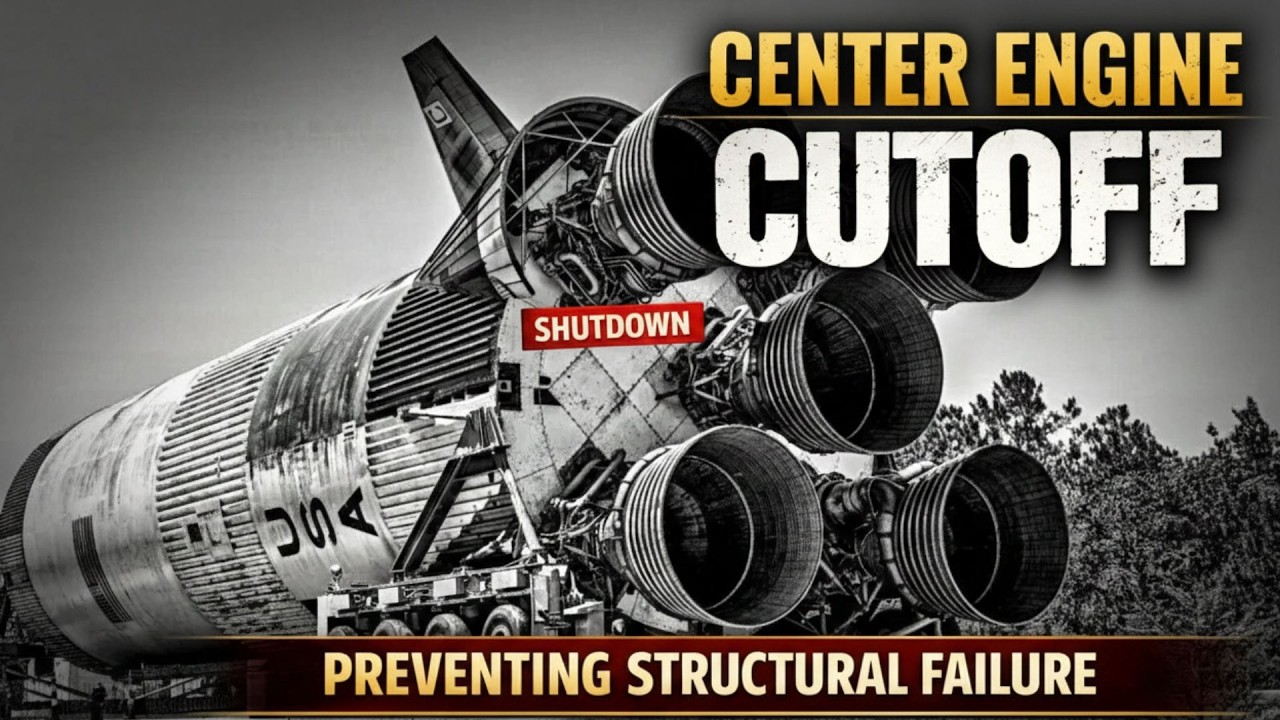










Rocket failures throughout history have provided critical engineering lessons that advanced space technology, including SpaceX learning to land reusable rockets after multiple explosive failures, the Ariane 5 explosion revealing software data type overflow issues, and the Soviet N1 rocket's catastrophic failure demonstrating the dangers of insufficient engine testing and control system complexity.
Learning from Rocket Launch Failures: Historical Explosions Analysis
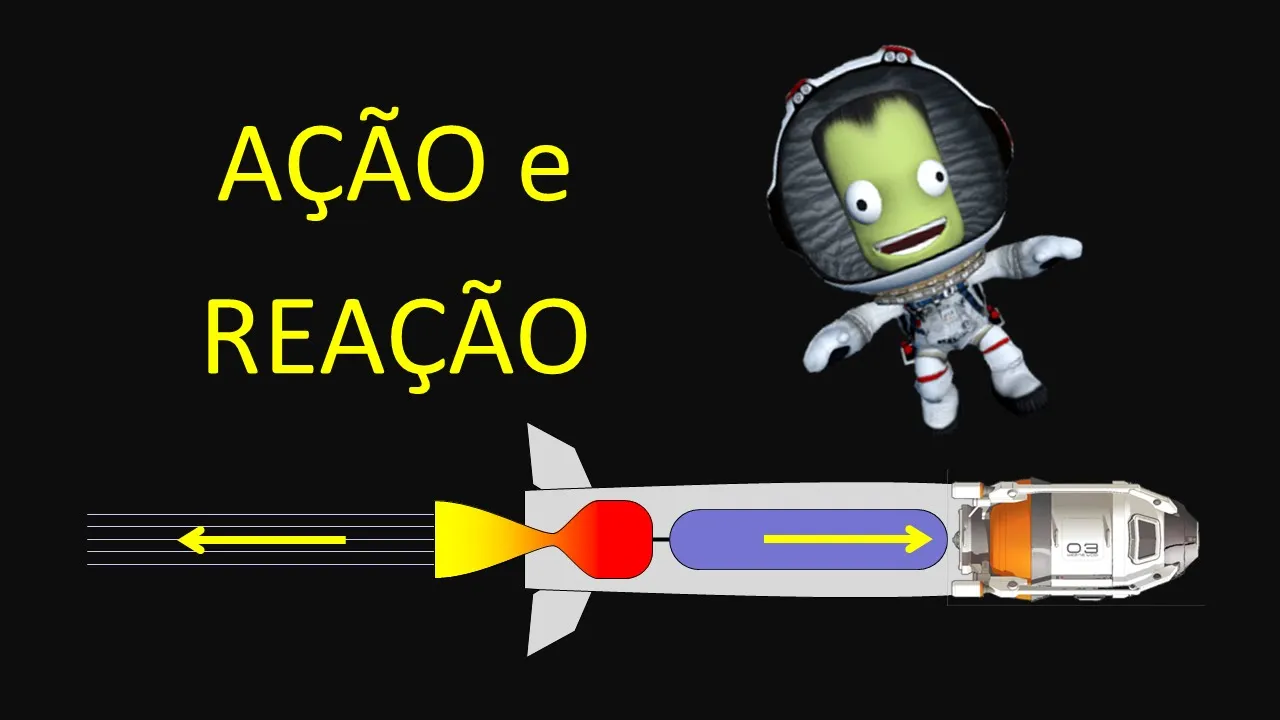
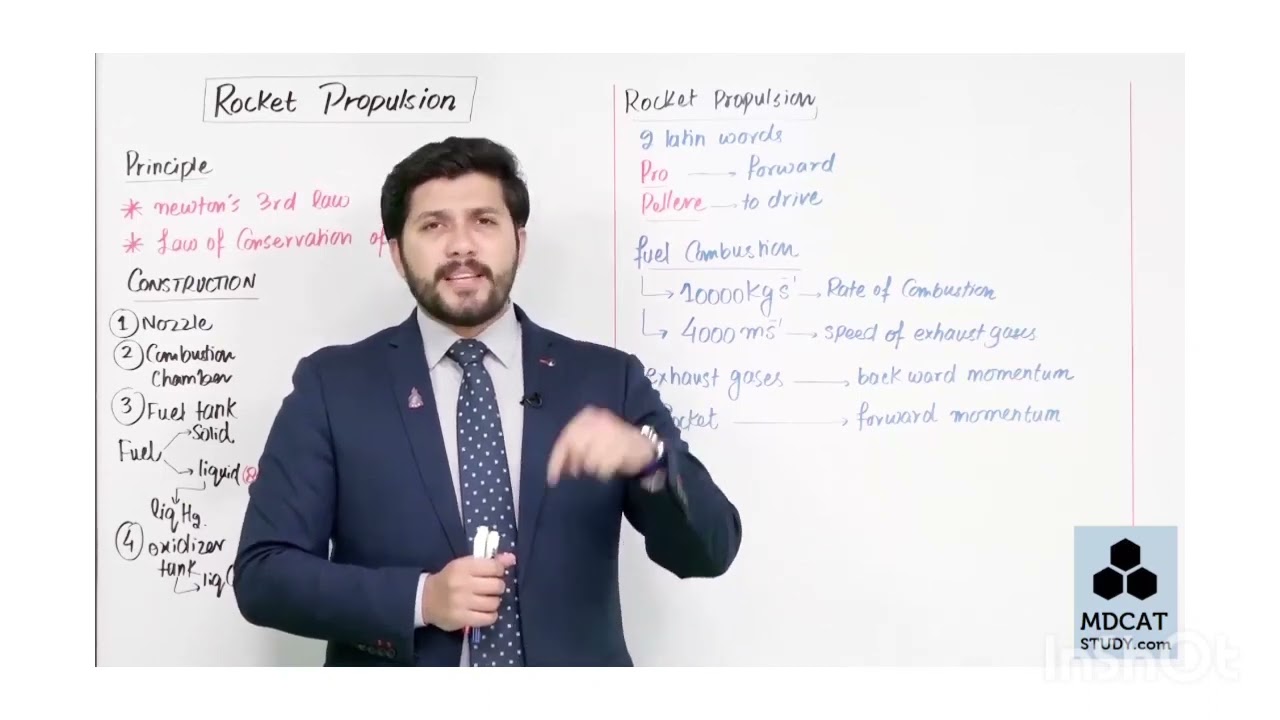
Added:Basic principles of rocket propulsion, including Newton's third law of motion and the concept of thrust-to-weight ratio.
The structural anatomy of a launch vehicle, specifically the distinction between fuel/oxidizer tanks, combustion chambers, and nozzle designs.
Fundamental chemical concepts of combustion, including the volatile reactivity of liquid oxygen, hydrogen, and solid rocket propellants.
An understanding of aerospace forces, structural loads, and the extreme atmospheric pressures a rocket encounters during ascent.
Failure Modes and Effects Analysis (FMEA) and fault tree analysis methodologies used in aerospace systems engineering.
The design of modern launch safety systems, such as active Launch Escape Systems (LES) and redundant flight control computers.
In-depth case studies of specific historical anomalies, such as the Ariane 5 flight 501 software failure or the Space Shuttle Challenger O-ring degradation.
Advanced materials science in aerospace engineering, focusing on thermal protection systems (TPS) and cryogenic tank alloys.
3M views59.3Klikes33:45Original Release: 2018-06-25
- Hi it's me Tim Dodd, the Everyday Astronaut!
Space is hard.
There's a reason we use rocket science as a benchmark for anything extremely difficult.
I for one champion all things space and eagerly await every single upcoming space event.
But, in order to move forward, we'd better have a look back at some past failures and see what we've learned from them.
What better way to do that than to watch some of the biggest booms in spaceflight history?
But as always on my channel, this isn't just some random compilation of crazy explosions nope sorry, you're gonna learn something.
I'll be teaching you what went wrong and other random facts about each mission so we can learn while we watch some fireworks.
After all, mistakes are only mistakes if you don't learn anything from them.
That being said, it's time for some of the biggest booms in rocket history.
(upbeat music) Now before I start, I do want to mention that I omitted any mission that had loss of life.
Those are tragedies and they need to be treated in a way that honors and respects the lives lost and the families, friends and the people who deal with that reality every day.
After you watch this video, let me know if you want me to do any more of these.
Maybe biggest face palms or funniest moments, closest calls?
Maybe all of 'em.
Let me know.
Oh and one last thing, these are in order of what I think are spectacular and not necessarily in the order of actual magnitude of explosions.
Okay, enough talking, here we go.
So let's start off with perhaps my favorite booms to come out of recent space history.
Of course, I'm talking about SpaceX's landing attempts with their Falcon 9 rockets.
We saw plenty of rapid unscheduled disassemblies as SpaceX honed in on the once thought impossible.
Propulsively landing and reusing an orbital class liquid fueled booster.
Starting with their first attempt at landing on their autonomous spaceport drone ship on January 10th, 2015.
After a successful stage separation, the booster homed in on its landing platform.
It fired up it's center merlin engine to perform the final landing burn.
Woah, okay what went wrong there?
The booster ran out of the hydraulic fluid that powers the grid fins which steer the booster through the atmosphere just moments before it touched down.
They then remained stuck in a fixed position, causing the booster to go out of control just before touching down.
The engine gimbal couldn't correct for this and it made the booster come in all sorts of wonky.
And don't forget while watching this the ship its trying to land on is the size of what some people call a football field.
- [Man] 'Murica.
- And the booster is 45 meters or 150 feet tall.
In other words, that's a 15 story building crashing down on the deck, woah.
But this was a great first attempt at landing, I mean after all they hit their target from over 100 kilometers or 60 miles in altitude, after traveling over 7500 kilometers or about 4500 miles an hour while going about 300 kilometers or 185 miles downrange from the launch site.
The next attempt was also pretty spectacular for mission CRS-6 on April 14th, 2015.
Their second attempt at landing on the drone ship got even closer.
It even kisses the deck then touchdown, yeah.
Oh wait, no, wait no, no.
No, no, no (crying) gosh.
That one was so close it hurts.
Oh and watch this, this is my favorite part.
Check out that tiny little nitrogen thruster trying its absolute hardest to keep the Falcon 9 upright.
You almost had it little buddy.
Just before touchdown, the center Merlin 1D engine that performs the landing burn experienced stiction, a word I was unfamiliar with until I heard it in this context.
In other words, it had a sticky throttle valve.
This caused a delay in throttle inputs, which made the rocket have too much horizontal velocity as it touched down, and subsequently tipped over.
There are a few other great booms as SpaceX figured out how to land the Falcon 9.
I definitely suggest watching their hilarious video titled, how not to land an orbital class rocket.
And don't forget, these were experimental attempts at doing something people thought was actually impossible.
The primary mission on these flights were still perfectly successful, so these are probably the biggest boom to success ratio ever, since it was just a bonus that they landed, which they now do all the time with great reliability.
On June 11th 1957, the United States Air Force launched the first ever Atlas Missile, the Convair SM-65A from Launch Complex 14 in Cape Canaveral Air Force Station in Florida.
Like all rockets in this video, it was of course uncrewed.
This first version of the Atlas only had two engines instead of the famous three engine Atlas that had that sustainer engine and stage and a half design like the one that eventually put John Glenn into orbit less than five years later.
Engine start went great followed by a successful let go of the launcher release system.
- [Announcer] The missile was launched successfully and the flight proceeded according to plan for some distance.
During this time the missile was stable in pitch, yaw and roll.
- [Tim] All was going well until T plus 26 seconds when the B-2 engine suddenly lost thrust, followed seconds later by the B-1 engine.
The Atlas tumbled end over end with a maximum altitude of 2900 meters or 9800 feet before being remotely terminated by the range safety officer, who I swear had to be sleeping on the job.
I mean, look how long they let it fly before they finally hit the bye bye button.
Come on, any day now Steve.
Uhhh Steve?
Steve?
Any day, come on!
Hey Steve?
Steve!
Steve!
Finally, geez.
- [Announcer] Debris from the missile fell on the test base and in the sea just offshore from the base.
- So what went wrong?
Well, it turns out hot exhaust gas from the thrust section was destroying propellant lines, and the remedy to this was just a heat shield which protected the engine area.
Although this was a pretty big scary looking boom, since this was the first ever flight of the Atlas, it was actually considered a pretty big success.
On December 12th, 1959 the United States awaits its sixth attempt at launching their newest and most advanced rocket at the time, the Titan 1.
The Titan 1 was the US's first multistage intercontinental ballistic missile.
This was also the first time the Air Force would be utilizing their brand new launchpad, Launch Complex 16 at Cape Canaveral Air Force Station in Florida.
The rocket was fully fueled up, and upon engine ignition, the rocket suddenly began shaking pretty excessively.
Uh, what?
So excessively in fact it actually set the flight termination system off while it was still on the pad.
There goes that brand new Launch Complex 16.
Actually believe it or not, the launch pad became operational again less than 2 months later.
It must have been thanks to those wonderful little sprinklers gently hosing down the hellish landscape that once was a launch pad.
Convair, the manufacturer of the original Atlas rocket was developing an advanced upper stage for their rockets.
This upper stage was the first production rocket stage to use liquid hydrogen for its fuel.
The centaur upper stage would go on to do incredible things and is arguably the best upper stage in the world still to this day.
As a matter of fact, as of January 2018, it had been used on 245 missions.
But on March 2nd, 1965, it wouldn't get a chance to spread its wings, or I guess I could say didn't get a chance to fire its engine.
Engine ignition looked good, but then right after liftoff.
So, what on earth happened here?
Well, at T plus.88 seconds, there was a sudden main fuel valve closure causing the entire Atlas booster to come straight back down on the pad.
This created quite the boom.
As a matter of fact, it was the biggest on pad explosion at Cape Canaveral for over 5 decades until our next boom happened.
Rockets blowing up on the launch pad was fairly common in the early days of spaceflight, but even modern rockets sometimes experience failures on the launch pad.
On September 1st, 2016, SpaceX was preparing to do a hold down static fire of one of their Falcon 9 rockets.
This was a pretty routine mission for SpaceX, preparing to put a 5500 kilogram or 12,000 pound satellite into geostationary transfer orbit for Spacecom with the AMOS-6 satellite.
SpaceX does a static fire of all their rockets, multiple times even.
If you want to know more about how or why SpaceX static fires, I have this video that goes into super deep detail all about it.
The fueling leading up to static fire was going completely as planned until out of the blue... No more rocket.
No more 244 million dollar satellite.
No more launch pad 40.
This instant failure baffled SpaceX engineers since everything was looking completely normal during the fuel up with no initial known cause of failure.
Despite what the internet thought, surprisingly it wasn't from a sniper on a nearby rooftop or a UFO.
Or was it?
No, no it wasn't.
After months of testing, a new failure mode was discovered.
Something that had never even been experienced on any other rocket.
This is due to SpaceX utilizing super chilled fuel and oxidizer, they found that the liquid oxygen was getting inside the carbon fiber bonds of the internal helium tanks which maintain tank pressures.
Once the liquid oxygen came in contact with the even colder helium tank, it would turn into a solid, expand and then break apart the carbon fiber weave of the COPV or composite over wrapped pressure vessel that holds the helium.
This caused the helium tank to release all of its pressure instantly, which then over pressurized the oxygen tank that it lies inside, which then caused the entire vehicle to explode.
SpaceX learned from this lesson and changed their fueling procedures until a newly designed COPV 2.0 goes online.
NASA made an awesome decision to hire private companies to deliver cargo to the international space station after the Space Shuttle program ended in 2011.
This decision made for great competition and brought the cost of delivery down to an all time low.
These missions known as CRS, or commercial resupply missions were won by SpaceX and Orbital Sciences, who later was known as Orbital ATK who just recently got bought by Northrop Grumman and is now called Northrop Grumman Innovation Systems.
Yeah.
The program was looking fantastic with four successful SpaceX launches and two successful Orbital ATK launches already in the books.
On October 28th 2014, Orbital ATK was poised to launch their third Cygnus spacecraft on top of their third Antares rocket destined for the international space station.
The Antares rocket took off at 7:22 and 38 seconds p.m. local eastern time from Orbital's launch pad, the Mid-Atlantic Regional Spaceport Launch Pad 0, or MARS LP-0A.
- [Announcer] Mission to the ISS.
That main engine's at 108%.
- [Tim] 15 seconds after liftoff, the vehicle suddenly falls apart from the bottom up.
The vehicle fell right back down on the launch pad, resulting in a huge, huge boom.
- [Announcer] And launch team, launch team be advised stay at your consoles.
- [Tim] I personally know several launch photographers that were there and felt this one from only a few miles away.
My favorite quote comes from photographer Matt Travis exclaiming... - [Matt] It's gonna be loud.
It's gonna be loud Holy shh.
Geez!
- Yeah, geez that looks terrifying.
I can't even imagine.
So what happened?
The liquid oxygen turbo pump suddenly exploded on one of the vehicles AJ-26 engines, which are just refurbished leftover NK-33 engines from the 1970s Soviet Union planned but never completed second generation moon rocket, or the N-1F.
Luckily, of course, no one was hurt and the failure made Orbital change the Antares engine to the RD-181.
Which ironically is the exact same move the Russians made with their Soyuz 2.
On July 16th 1959, NASA prepared to launch their third Juno II rocket.
A rocket initially derived from the Jupiter missiles, the Juno featured solid rocket booster upper stages capable of putting about 41 kilograms or 90 pounds into low Earth Orbit.
This particular mission, Explorer S-1 was the sixth flight of the explorers program whose objectives were to measure the Earth's radiation balance and other cosmic and x-rays.
At 12:37 p.m. local eastern time, the Juno II took off from Cape Canaveral Air Force Station's Launch complex 5.
Immediately after leaving the pad, the rocket suddenly veered off course.
5.5 seconds into the flight, it was terminated by the Range Safety Officer, but it barely had a chance to detonate before erupting in an enormous fireball 76 meters or 249 feet northwest of the pad.
A short circuit of the rocket's guidance system made the Rocketdyne S-3D engine gimbal in the wrong direction, pointing the rocket west in an instant.
The following investigation led to adding a conformal coating to the circuit boards that helped protect the Juno II and similar rockets from a similar fate.
The Juno II ended up flying a total of 10 times, with only four successful flights.
I'm pretty glad we're beyond those odds of success these days.
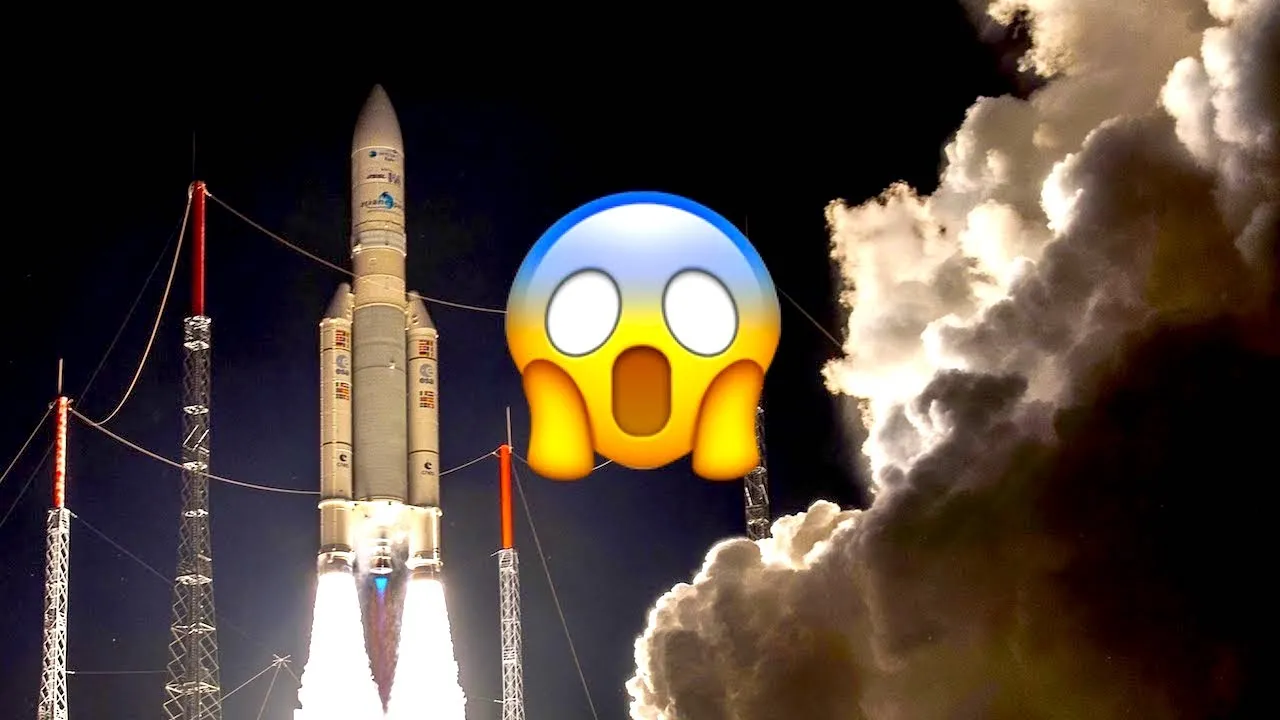
On June 4th 1996, The European Space Agency was ready to launch their newest rocket, the Ariane 5, which was an indirect follow up to their wildly successful Ariane 4.
One of the most exciting features was this was designed to be able to fly humans as well.
The Ariane 5 launches from a beautiful launch pad located at the Guiana Space Center in the French Guiana, an overseas region of France located on the north east tip of South America, and situated very close to the equator.
Speaking of launching from the equator this is something we need to talk about in an upcoming video.
Why it's advantageous to launch near the equator and why it's not more common to actually do so.
So, on a beautiful Tuesday the world watched as an exciting new heavy launch vehicle sat waiting for its maiden flight carrying four Cluster spacecraft for the European Space Agency.
The Ariane 5 first powers up its Vulcain 2 cryogenic main engines and then it sits on the pad until it achieves full thrust.
Then the two massive solid rocket boosters ignite and the vehicle leaps off the pad.
All was looking really quite good, but then suddenly around 30 seconds into the flight, the vehicle takes a hard 90 degree turn and disintegrates from the aerodynamic forces.
The resulting fireball was the automatic flight termination system which broke the vehicle apart.
It was found that a malfunction in the control software caused the vehicle to think it was 90 degrees off course.
The reason's simple.
The internal SRI software exception was caused during execution of a data conversion from 64-bit floating point to 16-bit signed integer value.
The floating point number had a value greater than what could be represented by a 16-bit signed integer.
This resulted in an Operand Error.
This unexpected high value for internal alignment function result called BH, or Horizontal Bias, related to the horizontal velocity sensed by the platform.
The value of BH was much higher than expected because the early part of the flight trajectory of the Ariane 5 differs from that of Ariane 4 and results in considerably higher horizontal velocity values.
Duh.
In other words, this was one of the most expensive software bugs in history, costing 370 million dollars.
This launch is definitely fodder for the biggest face palms of spaceflight history because they used the same initial reference system as the Ariane 4 but they didn't test it before hand with the Ariane 5's flight profile.
The data overwhelmed the computer causing it to error out.
It would've been easily avoidable and discovered with a simple ground simulation.
Whoops.
But since then the Ariane 5 has gone on to launch 97 times, with one more boomy failure and three more not so boomie failures.
Not bad, not bad.
I still think it's a super cool looking vehicle.
On July 2nd 2013, Russia prepared for a fairly routine launch of their Proton-M rocket to put three new GLONASS navigation satellites into space.
As a matter of fact, it was going to be the 388th launch of the Proton rocket, so this is about as routine as it gets.
The launch went off right on schedule at 8:38 local time from the Baikonur Cosmodrome site 81 pad 24 in Kazakhstan.
Almost immediately after leaving the pad, the rocket began to veer off in one direction, and then some of the six RD-276 engines would gimbal in the other direction as it began to clearly go off course.
Now hold on here.
At this point, wouldn't you think the Russian Space Agency or ROSCOSMOS would terminate this rocket?
I mean it's 90 degrees off course and that's a giant 19 story tall, 68 metric ton missile.
Well unlike pretty much the rest of the world, Russia doesn't believe in self destruct explosives.
Let's see how this one goes.
The payload fairing and upper stage gets ripped apart by the aerodynamic stresses as the vehicle plummets back to earth, engines still firing full bore.
The rocket didn't release all of its explosive energy until impacting the ground, resulting in a huge fireball.
There are so many videos of this particular crash from varying terrifyingly close vantage points that shakes spectators when the boom hits them.
- [Man] Is it coming this way?
- Investigators found out that three of the first stage angular velocity sensors were installed upside down.
And this took some serious physical effort.
In fact there's arrows that are pointing up on the sensors that were installed pointing down.
The sensors are only designed to fit in one direction, so it sounds like the technician potentially hit them in place with a hammer and this somehow went unnoticed by quality control and supervisors.
Okay, so again, this is another massive massive face palm.
But, this one is also such a big and dramatic boom.
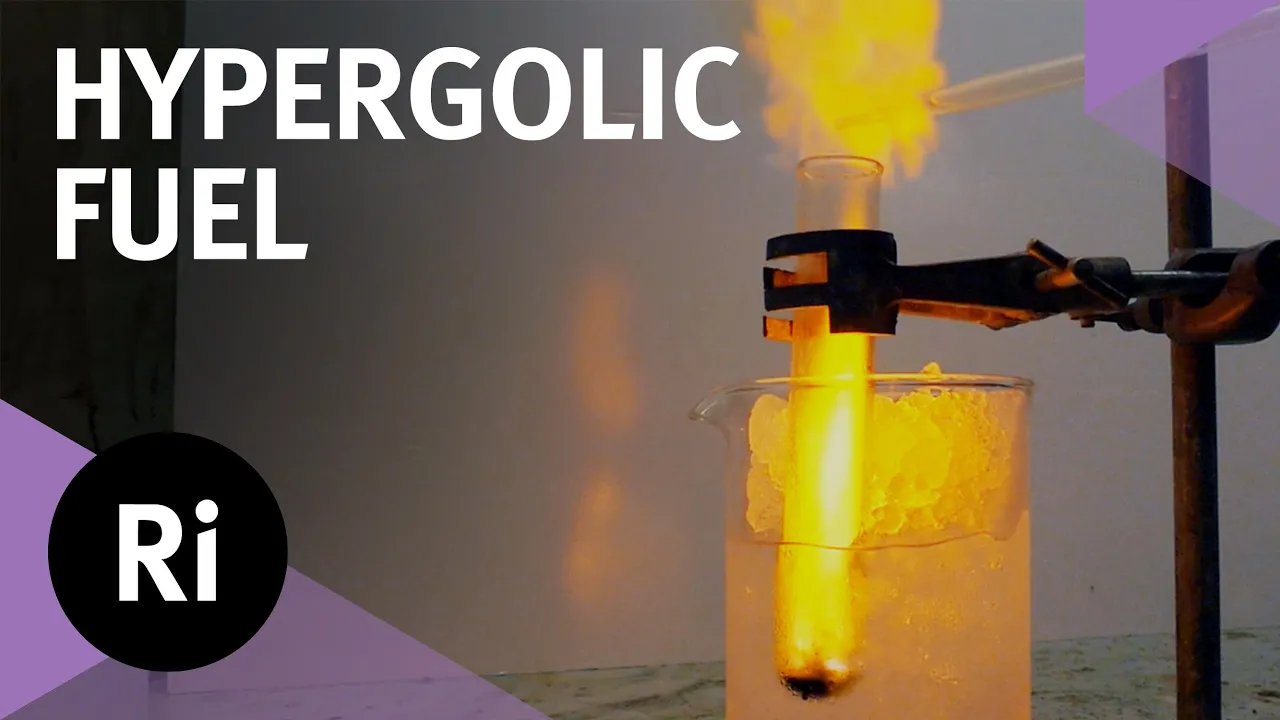
Due to the Proton utilizes super toxic hypergolic fuels, this event is considered by some to be the largest amount of ground pollution ever caused by a rocket.
The United States National Reconnaissance Office was set to launch their seventh secret satellite to geostationary orbit launching on top of a Titan IV rocket from Cape Canaveral Air Force Base in Florida.
The Titan IV comes from a long family tree of rockets and this is the most powerful and most capable version featuring two massive solid rocket boosters on either side of the rocket.
August 12, 1998 was a picture perfect morning, and the Titan IV had a successful lift off at 7:30 a.m. local time.
- [Announcer] Liftoff of America's silent hero the Air Force Titan IV.
The is the final Titan IV to be flown.
The vehicle has rolled to the proper flight admin.
We're at T plus, 18, 19, 20 seconds.
Currently the twin solid rocket motors are performing nominally.
T plus 40 seconds.
Oh no.
- But sometime just before the vehicle reached maximum aerodynamic pressure or Max Q, it suddenly burst into a dramatic fireworks display.
The cause was an electrical short which made the guidance computer momentarily shut down at T plus 39 seconds.
A mere second later its power was restored but the computer overreacted and sent commands to aggressively pitch and yaw the rocket to correct its course.
The rocket couldn't handle the significant change in course as it approached Max Q, and the forces ripped one of the solid rocket boosters right off, which triggered the self destruct sequence of that booster, and subsequently the rest of the vehicle.
An investigation showed that this particular booster, the last Titan IV-A to launch, had been sitting around for several years.
It had dozens of damaged or chafed wires that should never have been launched in the first place.
The Air Force was pushing for a launch on demand program for the DOD, and this particular failure made them reevaluate how to handle such tight deadlines.
Oh, number two huh?
This better be good.
Well, this one is something special I can tell you that.
On January 17th 1997, the US Air Force was set to launch their first GPS version II satellite on top of the most Kerbal of all rockets, of course I'm talking about the Delta II with nine strap on solid rocket boosters.
You can never have too many boosters, or can you?
Dun dun dun.
Well at 11:28 the Delta II had a successful lift off from Cape Canaveral Air Force Station's Space Launch Complex 17A.
- [Announcer] Delta II launch vehicle carrying the new GPS to our satellite.
We have had an anomaly.
- [Tim] Next thing you know the rocket turned into a giant firework raining fire all over Florida's Space Coast from only about 500 meters or 1600 feet above the ground.
- [Announcer] We need to secure the area.
- 250 tons of debris rained down within a full kilometer of the launch pad, even destroying around 20 cars parked outside the blockhouse where ground crew were safeish.
This led to some interesting insurance claims, like Brian Modsell, having to tell his insurance company that his truck got hit by a rocket.
The explosion was the result of a failure of one of the solid rocket boosters.
The casing was damaged during the transportation on a newly introduced system.
The rocket casing of the number 2 GEM-40 SRB started to grow at T plus six seconds and eventually ruptured, causing the number eight SRB to fail which then caused the entire vehicle to automatically self destruct.
And even so A few seconds later, the range safety officer sent commands to destroy the rest of the vehicle in case there were any large pieces remaining.
To me, that has to go down as one of the most epic booms in all of spaceflight history.
But not quite the most epic.
That has to go to.
You had to see this one coming right?
Well if you didn't get ready.
We definitely saved the best for last.
In the late 1960s the United States and the Soviet Union were deep in a space race with the new end goal of putting a human on the moon.
This led to the most feverish paced rocket evolution in spaceflight history going from just launching small sub orbital missiles to the largest rockets ever made still to this day in less than a decade.
It's easy to remember the wildly successful and iconic Saturn V that the United States developed, but did you know there was a Soviet counterpart that was even more powerful and in my opinion way, way crazier.
And maybe the craziest thing is we didn't really know much about the Soviet's lunar program until after the collapse of the Soviet Union in 1991.
Welcome the N1.
Although slightly shorter than the Saturn V the N1 was insanely massive.
The bottom of the vehicle was an insane 17 meters or 55 feet wide and had 30 NK-15 engines on it.
Yeah, and you thought the Falcon Heavy's 27 engines was a lot.
Now imagine trying to control 30 relatively new and not well very tested engines using a 1960s Soviet era flight computer.
You get where this is going.
The first launch went fairly well, I guess considering two engines were shut down by T plus 6 seconds, propellant leaked, a fire started, electrical shorts happened.
And by T plus 68 seconds the first stage was automatically shut down by the computer.
Not bad actually.
Well on July 3rd, 1969 the Soviet Union was set to launch their second N1 rocket.
So this second launch had some big shoes to fill.
The Soviets were hoping to do a moon flyby to take pictures of possible crewed landing sites.
So at 11:18 p.m. local time, site 110 at Baikonur Cosmodrome roared to life with the ignition of all 30 NK-15 engines.
For the first few seconds everything looked great.
Until.
You just witnessed the largest known non-nuclear, human made explosion in history.
Over 2000 metric tons of propellant blew up in an instant and some fuel even managed to rain down on the launch pad for the next hour and a half.
So what happened?
A lot.
As soon as the rocket cleared the tower we saw a large flash and a bunch of parts of the rocket falling off.
Um we might need those.
All but one engine, plucky ole engine 18, shutdown in an instant.
But due to number 18 staying on, the entire rocket pitched over to a 45 degree angle when it hit the ground.
The problem arose when before liftoff the number eight engine had its LOX turbo pump explode which then severed the surrounding prop lines.
The KORD computer system that controlled the engines automatically shuts down the opposite engine if one fails, so right away, number eight's opposite engine shut down, number 20, followed by number seven, number 19, and 21.
But perhaps the biggest failure is that the Soviets didn't have a way to test the rocket without launching it.
The first stage was so big, it couldn't be sent to the launch pad in one piece and instead it had to be assembled with each launch.
Worse of all, they only tested about two out of every six engines and none of those engines tested were the actual flight units because they used pyrotechnic valves that could only be used once instead of hydraulic or mechanical valves.
This in my opinion is where they truly went wrong.
With the pressure to keep up with the United States, and a lack of funding, they pushed their luck too far.
This launch destroyed the launch complex so bad it took 18 months to rebuild it.
By this point there was little motivation or funding to continue the N1 program so it only launched two more times before ultimately being canceled.
Dang it, I really really want to see an N1 succeed.
There were even three other N1's that could've flown that wound up being scrapped.
What a shame.
Let's start a Kickstarter to build a full scale N1 replica to put somewhere.
Maybe my backyard.
So there you have it.
We had some pretty serious booms there, huh?
I hope you had some fun watching this, but more importantly I really hope you learned something.
Let me know if you enjoyed this style of video.
I haven't really done a countdown like this so if you do like it perhaps I could be talked into doing the biggest face palms, the funniest moments and closest calls in space flight history What other questions do you have about spaceflight?
Well, let me know your thoughts or comments or video suggestions in the comments below.
What'd you think about me wearing just a spacesuit tee shirt instead of my spacesuit the whole time?
It's so hot and uncomfortable up here I couldn't imagine wearing that spacesuit for the hours, and hours, and hours that I recorded this video.
Take this poll here, let me know what you think.
As always I owe a huge thank you to my Patreon supporters for helping make this and every other everyday astronaut content possible.
I owe a super special thanks to those Patreons in our exclusive discord and exclusive subreddit for helping me script and research.
If you wanna help contribute please visit patreon.com/everydayastronaut.
Thank you.
Don't forget to check out my web store for shirts, hats, mugs, prints of rocket launches or other original artwork at everydayastronaut.com/shop.
Thanks everybody, that does it for me.
I'm Tim Dodd, the everyday astronaut bringing space down to earth for everyday people.
Up Next

49:33
NK-33 and RD-180: Soviet Staged Combustion Engines in the US
@MatthewTravis
452.9K views•2014-05-07

24:02
Decarbonizing Shipping: New Marine Technologies Explained
@business
138.8K views•2024-11-08

54:16
Polymer Environmental Degradation: Mechanisms & Stabilization
@iit
1.8K views•2012-07-10

55:00
The Advanced Engineering Behind ASML's EUV Lithography Machines
@veritasium
18.2M views•2025-12-31
Related Study Plans & Knowledge Roadmaps
Structured learning paths in Engineering
engineering
ECG Monitor Design: Op-Amps, Filters & Noise
01Electronics & Breadboard Basics
02Op-Amps and Instrumentation Amplifiers
03Bioelectricity and ECG Fundamentals
+ 2 more learning modules
18h5 modules
Explore Roadmap
engineering
Soft Robotics (Molding, Arduino & Control)
01Introduction to Soft Robotics & Pneumatic Actuation
02Arduino Programming and Electronics Foundations
03Pneumatic Circuit Design and Solenoid Control
+ 2 more learning modules
25h5 modules
Explore Roadmap
engineering
Building EMG Prosthetics: Arduino & 3D Print
01Intro to Myoelectric Signals & Muscle Anatomy
02Arduino & EMG Sensor Hardware Foundations
033D Printing & Tendon-Driven Mechanical Design
+ 2 more learning modules
28h5 modules
Explore Roadmap
engineering
Building a CNC Plotter: GRBL & G-Code Setup
01Introduction to CNC Mechanics & Motion Control
02DIY Plotter Mechanical Assembly
03Electronics: Arduino, CNC Shields & Stepper Drivers
+ 3 more learning modules
18h6 modules
Explore Roadmap