
























In David Fincher's Se7en, the serial killer John Doe strategically manipulates Detective Mills using chess gambit terminology (D-35 Queen's Gambit Declined, D-36, and C-24 Bishop's Opening), where he willingly surrenders to force Mills into a predetermined position, ultimately leading to Mills' emotional breakdown and the completion of Doe's plan to teach the world about the Seven Deadly Sins; this chess motif contrasts with Mills' impulsive basketball-style decision-making versus Somerset's strategic, patient approach, illustrating how psychological manipulation works like a calculated game where the killer sacrifices himself to orchestrate the final move.
7 Hidden Details in Se7en (1995) Explained: Subliminal Codes & Symbols
Added:Introduction to Neo-Noir Cinema: Understanding the thematic and stylistic elements of 1990s neo-noir films, including moral ambiguity, low-key lighting, and urban decay.
The Seven Deadly Sins in Literature and Theology: Familiarity with the biblical and literary history (such as Dante's Inferno) of the seven deadly sins that drive the film's narrative.
Basics of Film Semiotics and Symbolism: Understanding how directors use visual cues, recurring motifs, and objects (like chess pieces) to convey subtextual meaning.
Overview of David Fincher's Directorial Style: Awareness of Fincher's meticulous framing, color grading, and themes of obsession and psychological isolation.
Subliminal Editing and Psychoanalytic Film Theory: Investigating how single-frame inserts and sound design manipulate audience perception on a subconscious level.
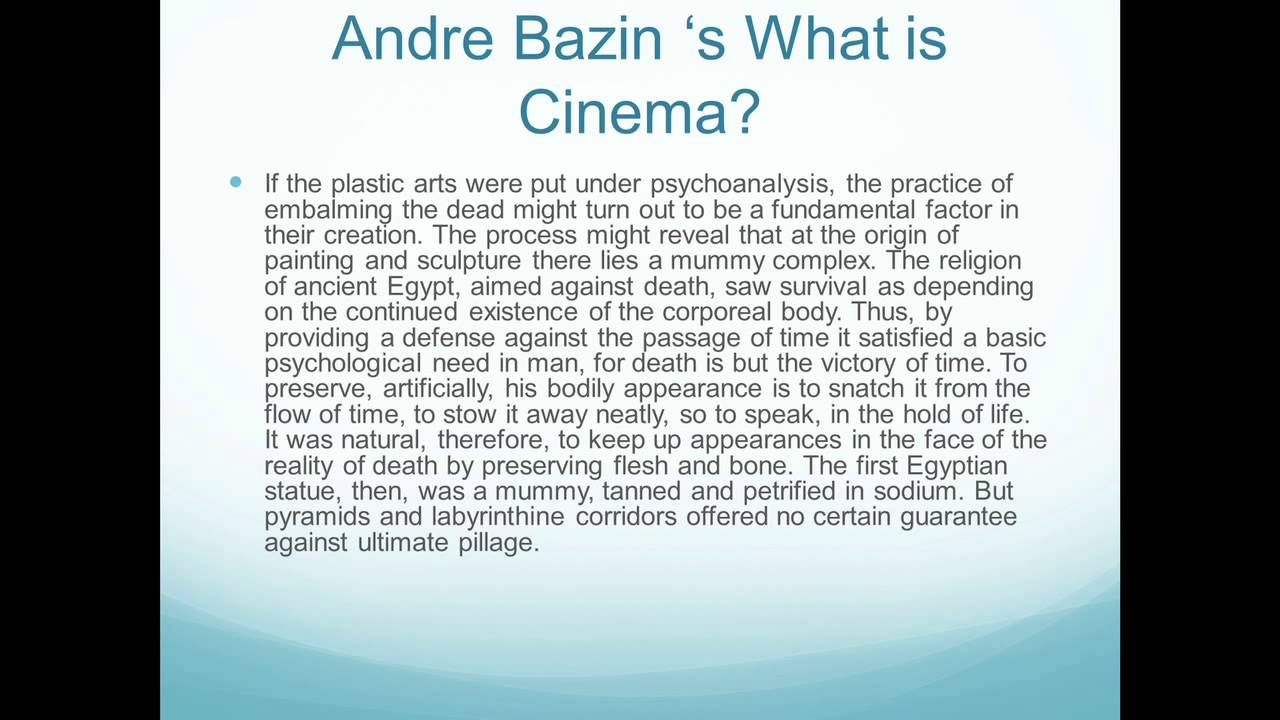
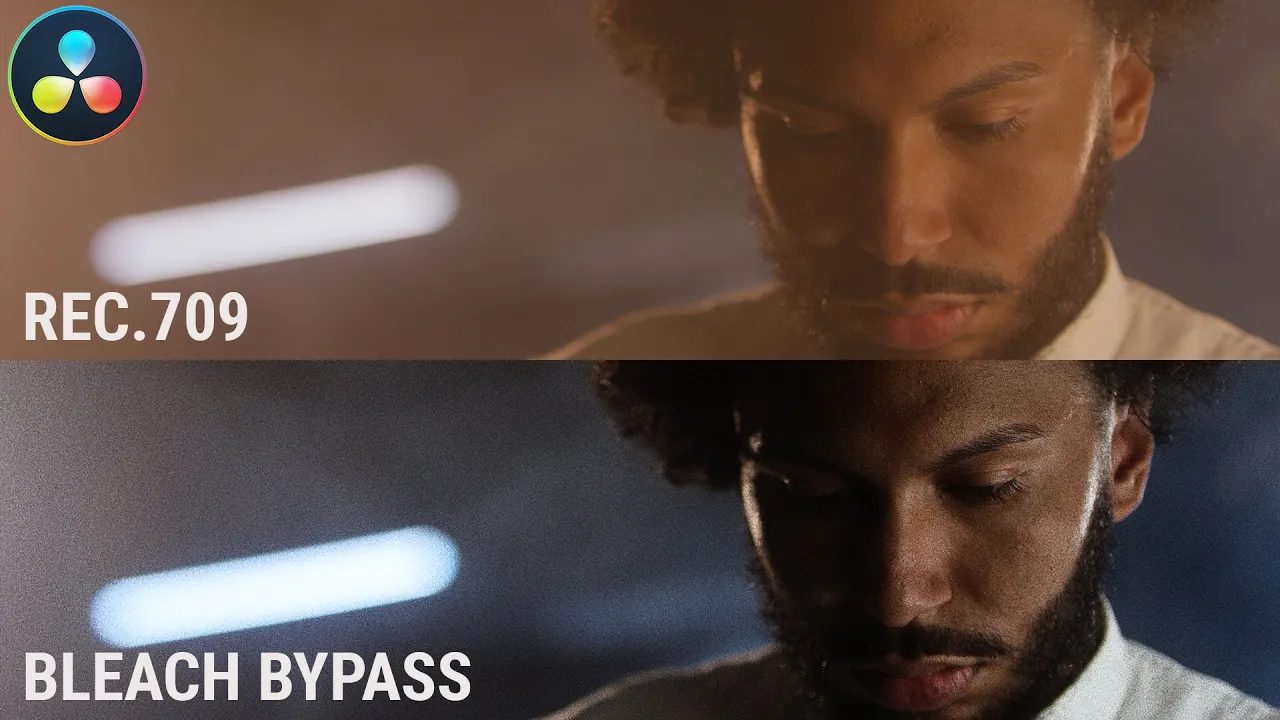
The Bleach Bypass Process and Cinematography: Studying the chemical and digital techniques used by cinematographer Darius Khondji to create the film's distinct, high-contrast look.
Deconstructing the 'Mind Hunter' Archetype: Analyzing the evolution of the fictional FBI/detective profiling genre in comparison to real-world criminal psychology.
Game Theory in Narrative Structure: Exploring how strategic games (like chess) serve as structural frameworks for conflict and character power dynamics in screenwriting.
221.1K views7.8Klikes12:24Original Release: 2020-08-15
There are a lot of ways we can break this movie down, so let’s start with the opening credits.
They are a montage of mysterious, grungy images and subliminal messages.
Many of these show preparations made by the serial killer, John Doe, such as him throwing himself into books about the Seven Deadly Sins, the Christian teachings upon which his crimes are based.
Detectives Somerset and Mills eventually use his library records to track him down.
There are also images of razor blades and John cutting the skin off of his fingers, which turns out to be part of the reason that law enforcement is unable to find any fingerprints at any of his crime scenes or even while searching his apartment.
“We haven’t found a fingerprint yet.
Not a single one.” “You’re right.
I don’t believe you.
Keep looking.” The title sequence also includes his darkroom for developing photos and his writing of personal manifestos, both part of his incredible collection of journals and photographic documentation of his work, which he expects to be remembered and studied for years to come.
“And what I’ve done is going to be puzzled over, and studied, and followed......forever.” I think the same could be said of David Fincher’s movie, but that’s beside the point.
A behind-the-scenes documentary shows how the art department created hand sewn notebooks, and they speak of wanting to nail the ‘personality’ of Doe’s penmanship.
“They wanted this kind of ‘obsessive’ quality to the handwriting.” And we see a similar style of writing overlaid on top of the title sequence.
Some of these messages only appear for as short as 1/24th of a second, but once deciphered, we can use them to better understand some of the hidden details in this film, so stick around to the end of this video, because I’ll be unpacking EVERYTHING.
This video is sponsored by Raycon.
Welcome to Things You Missed, in today’s episode I’ll be going over 7 things you might have missed in David Fincher’s sophomore film: Se-seven-en.
Now you may be angrily typing right now: “Why aren’t you starting with his first film: Alien cubed?” Well, I figure I’m gonna do the Alien franchise at some point, and when I do, I’m gonna do them all together.
So before I get to that, there is no shortage of excellent horror-thriller types in Fincher’s catalogue, and Se7en is an ideal place to start.
“You know this isn’t gonna have a happy ending.” Let’s get into the Things You Missed.
Some of the messages that briefly flash on screen during the title sequence look to be alphanumeric codes.
For example, D-35 comes up several times and there’s also a brief D-36.
Another one that comes up a couple times is C-24.
But what do these strange codes actually mean?
While there are a number of possibilities, I like to look at the psychological battle between the detectives and the killer they are trying to catch like a game of chess.
In chess, there are a number of strategies called gambits.
Simply put, a gambit is a calculated risk taken with the hope that it will give the player the upper hand.
So I might allow my opponent to take one of my pieces in order to ultimately get the positioning I want, and get a check-mate.
"If I accept this invitation I'll be giving into his intent.
I can't allow this.
This humiliation!
*gasps* One famous instance of this is the Queen’s Gambit Declined, which is known in the chess community as variation D-35.
There’s also a similar variation known as D-36.
C-24 is another gambit, known as the Bishop’s Opening.
If you think about it, John Doe’s strategy to get what he wants from Mills is basically a gambit.
He willingly gives himself up to the police in order to set things in motion.
This forces the detectives into the position he wants them in, because they have to take him outside of the city limits to find the two bodies that he supposedly hid out there.
And ultimately, it leads to a check-mate against Detective Mills, who can’t restrain himself after finding what John Doe did to his wife.
After killing her he delivers her head to the detectives inside of a box, and by doing so, he completes his mission.
She would be the sixth victim, Envy -- and Mills would take his revenge, making John Doe the seventh victim: Wrath.
John Doe set up the pieces perfectly, and Mills found himself to be nothing more than a piece in his masterful game of chess.
“He’s playing games.” “No ****.” “It’s a part of the game.” The experienced Detective Somerset is much better at not falling for John Doe’s tricks than Detective Mills, who lets his emotions overtake him, causing him to make stupid moves.
Perhaps this is because Somerset has some experience in the game of chess, while Mills is more of a basketball guy.
Basketball is also a game that requires strategy, spacing, and a good gameplan, but basketball has a much higher pace of play due to it’s 24 second shot clock.
Unlike chess, a lot of moves need to be made on the fly, which explains why Mills’ actions on the spot can get him into a lot of trouble, leaving him as a vulnerable target for a thoughtful, calculating villain such as John Doe.
Think of Mills like the JR Smith of this movie.
"Rebound goes to the Cavs, JR Smith brings it back out!
Throws it to Hill *buzzer* "It is one of the most brain dead, idiotic things that I've ever witnessed."
There are many scenes that highlight how Mills’s impulsiveness contrasts to Somerset’s guile.
Like how Somerset does his studying with long nights at the library, while Mills skims the Cliff’s Notes.
How Somerset has carefully thought about leaving his city for 34 years while Mills jumps to rent an apartment after five minute tours with a slimy realtor.
“The soothing, relaxing, vibrating home.” *laughter* How Mills recklessly runs into danger after a suspect while Somerset asks around for a back exit.
And ultimately, how Somerset is content with capturing John Doe, and doesn’t want to play into his hands any further, while Mills can’t just let him sit around in prison, and is more inclined to accept his offer and go out to find the remaining two victims.
“Full confession.
I’m in.” The differing approaches from the two detectives are a result of their circumstances, which are quite opposite of one another.
In both basketball and chess, opponents each have their own side.
Your teammate should be headed in the same direction that you are, but Mills is celebrating his first seven days on the job, while Somerset is counting down his last seven.
The movie shows us how their experience dictates how they interact with the city.
One of their first scenes together has them walking down the street together.
The experienced Somerset flows seamlessly through the pedestrian traffic, while Mills is bumping into people and going around people.
He has a lot to learn about his new environment.
“I worked homicide five years.” “Not here.” “I understand that.” “Well over the next seven days detective, you’ll do me the favor of remembering that.” As they investigate the first crime scene, the one that represents Gluttony, Somerset is focused on the job, looking for clues, but his partner is making small-talk, and again, the way the scene is presented says more than the screenplay itself.
The music almost overpowers the volume of Mills’s frivolous comments, like he’s trying to block out the distraction with his focus.
We see Somerset do essentially the same thing at home, using his metronome to help him sleep while horrible things are happening just outside his walls.
When I’m looking to drown out the noises and distractions of the outside world, I turn to my Raycon Everyday E25 Earbuds.
These earbuds are the best model yet.
I can’t tell you how freeing it is to just link these up to my phone, and move around the house all day, not having to worry about wires getting in my way, or getting tangled, or getting caught on something and yanking them out of my ears.
You can just drown out the sound of sirens, gunshots, or even your roommates!
And with six hours of playtime, more bass and a compact noise isolating design, Raycons are perfect for all your audio listening needs.
Click the link in the description, that’s buy raycon dot com slash czsworld to get fifteen percent off your order today!
Perhaps the biggest and most important difference between Detective Somerset and Detective Mills is highlighted in this bar scene, where Somerset explains why he’s quitting and leaving the city.
“I just don't think I can continue to live in a place that embraces and nurtures apathy as if it was virtue.” He’s trying to warn the younger detective that in this city, not caring is celebrated, and he thinks that attitude is the reason people in this community get involved with drugs, crime, and abuse.
Love, on the other hand, takes effort and work.
Somerset admits that he’s no better than anyone else, that he’s part of the problem, because he often takes the easy route by being apathetic.
But while he claims to have this cynical view of himself and his city, his actions suggest otherwise.
Early on he suggests to be taken off the case because he doesn’t want to end his career on something that will just drag on and on, but his supervisor, who he’s worked with for years doesn’t buy his story.
“I don’t think you’re leaving.
You can’t leave all this.
You do this work.
You were made for it and I don’t think you can deny that.
Maybe I'm wrong."
Somerset disagrees, however, in that same scene, he tells off a maintenance man who is scraping the detective’s name off of his door.
“Excuse me.
Excuse me.
Could you not do that please?” It’s almost like a subconscious part of him doesn’t want his name removed from that office, despite his insistence otherwise.
“I can’t get involved in this.” But moments later, he walks past a banner.
“Do you know what you’ve been getting into?
Are you positive?” Maybe he does, maybe he doesn’t.
But he does get more and more involved as the case goes on, and I think he is very much aware of it.
At the beginning of the movie, he tells a cab driver that he’s on his way out... “Where you headed?” “Far away from here.”...suggesting that he no longer wants to be involved with the city, the crime that comes with it, and of course, his job bringing those criminals to justice.
Going back to his line on the bar, love costs, love takes effort and work, but he just doesn’t want to put that effort in anymore.
But by the time the fifth murder has taken place, he’s decided to stay on to the end of the case.
He has no real reason to do that other than the fact that he cares about the outcome.
Then, at the end, even after John Doe gets his way, by putting Mills’ wife’s head in a box, causing Mills to retaliate and make John the seventh and final victim… even after all of that hurt and suffering, it sounds like Somerset is still going to stay on.
"Where are you gonna be?"
"Around."
“Ernest Hemingway once wrote, ‘The world is a fine place and worth fighting for.
I agree with the second part.’” One of my favorite movie quotes of all time.
And Se7en also contains one of the better movie villains of all time, but you probably won’t see me doing an episode of Horror History on John Doe, because the whole idea behind his character is that he doesn’t really have a history.
I already discussed the fact he’s basically removed himself from the crimes he committed by cutting the skin off of his fingers.
The name John Doe is also kind of ironic for Somerset and Mills because John Doe is oftentimes used as a placeholder name in the world of law enforcement when a person’s name is unknown or needs to be concealed.
There’s also the fact that for the first half of the movie, we don’t see John Doe, then when we do see him, he’s just a nondescript guy in a trenchcoat -- great lengths are taken to preserve his anonymity.
There is actually one exception to this.
After police discover the third victim, the one representing Sloth, a supposed media photographer comes to get some shots, but if we look very closely, it’s actually John Doe, returning to the scene of the crime to document what he had done, probably to add the images to his notebooks on top of notebooks about his work and the relation to the seven deadly sins.
What he gets instead, is a very pissed off Detective Mills, who swats at his camera and chases him away.
This gives John Doe the opportunity to rile him up, to test his restraint, which all plays into his plan to make him commit the final murder to represent Wrath.
This is the reason that he lets him live during their next encounter, when Mills chases him out of his apartment building into an alley, where John Doe is able to catch him by surprise and get the upper hand.
John’s objective is to use his crimes to teach the world of their sins.
He had religious reasons behind what he did, and he felt he had to do something big to get the world’s attention.
However, he seemed to believe that he was doing this entirely for the cause, and not at all to bring attention to himself.
And that is what made him so difficult to beat.
Despite being a criminal mastermind, he never acted like he was anything more than just another John Doe.
One of the images that comes up near the end of Se-seven-en would bring the movie full circle.
We started with subliminal messages being spliced in, and in the penultimate scene, an image of Mills’ wife, Tracy appears for just 1 frame.
Director David Fincher would bring back the idea of splicing single frames into movies for his 1999 film, Fight Club, where one of the characters in the movie literally does that.
"He had one part time job as a projectionist... because it affords him other interesting opportunities."
"Like splicing single frames of pornography into family films."
But Fight Club, and his previous work, the 1997 action film, The Game don’t really fit in any way into the horror-thriller genre.
For that we have to skip ahead a few years to 2002 for Panic Room, so lock your doors and join me for the next episode of Things You Missed.
And make sure you subscribe to CZsWorld for new horrors every week, ring the deathbell for notifications and I’ll see you in the next one.
Assuming we stay inside.
Up Next

5:39
The Evolution of TV Title Sequences: A Design History
@WIRED
435.3K views•2017-03-23

23:14
Visual Analysis Essay: How to Analyze Graphic Novels in College Writing
@nataliepleimann5941
1K views•2020-10-14
4:55
Film Blocking Techniques for Directors: Space, Shapes, Lines
@StudioBinder
1.9M views•2018-07-23

4:00
Evolution of Darth Vader: Anakin Skywalker's Animated Journey Across Star Wars Films
@TellItAnimated
13.4M views•2019-03-30
Related Study Plans & Knowledge Roadmaps
Structured learning paths in Film Analysis
film-analysis
Sensory Cinema: Foley, Haptic Sound & Texture
01Introduction to Film Sound and Foley Artistry
02Micro-Sounds, Textures, and Extreme Amplification
03Haptic Audition and Film Phenomenology
+ 1 more learning modules
12h4 modules
Explore Roadmap
film-analysis
Breaking the Fourth Wall: Mockumentary & Satire
01The Invisible Wall: Basics of Cinematic Illusion
02Looking at the Lens: Direct Address & Character Glances
03The Mockumentary: Satire, Realism, and Complicity
+ 2 more learning modules
12h5 modules
Explore Roadmap
film-analysis
Analyzing the Long Take: Cinema, Space & Ethics
01Foundations of Film Grammar: Montage vs. The Long Take
02Choreography and Mechanics of the Simulated One-Shot
03Phenomenology of Film: Real-Time Spatial Continuity
+ 1 more learning modules
14h4 modules
Explore Roadmap
film-analysis
Anachronistic Music: Period Drama & Subversion
01Foundations of Film Sound and the 'Needle Drop'
02Traditional Authenticity vs. Revisionist History
03The Rise of the Anachronistic Soundtrack
+ 2 more learning modules
12h5 modules
Explore Roadmap