















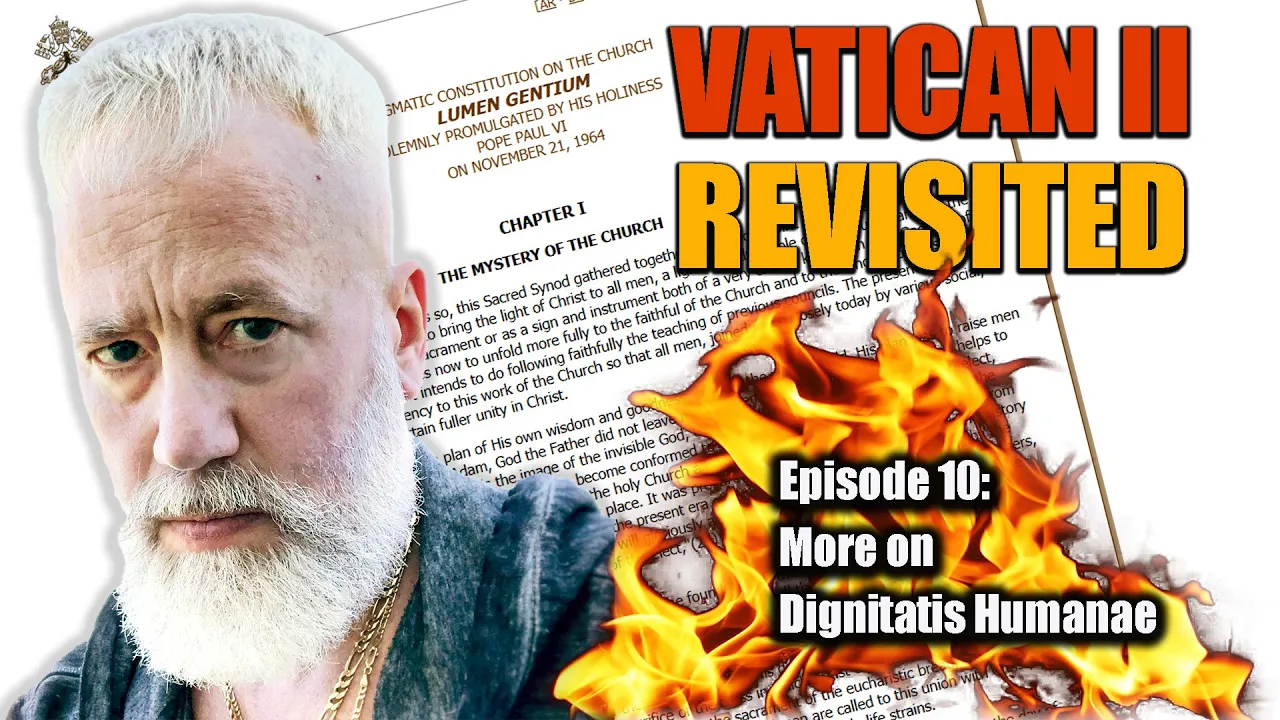
In times of spiritual revolution characterized by deception and confusion, Christians must recognize that false prophets disguise themselves as harmless sheep while promoting impurity and falsehood; rather than identifying specific false prophets, believers should focus on self-examination, building personal barriers against harmful influences (such as avoiding inappropriate media and maintaining modesty), and trusting in the unchanging Word of God as the immovable rock of truth.
False Prophets and the Index of Forbidden Books
Added:Understanding the concept of the Magisterium, which is the official teaching authority of the Roman Catholic Church and its role in defining dogma.
Basic historical context of the Counter-Reformation, the period during which the Index of Forbidden Books (Index Librorum Prohibitorum) was formally established to combat the spread of Protestantism.
Familiarity with Christian biblical teachings regarding 'false prophets', heresy, and the early Church's efforts to maintain orthodoxy.
The fundamental Catholic doctrine of spiritual discernment and the belief in the ongoing spiritual battle between truth and deceptive teachings.
Analysis of the abolition of the Index of Forbidden Books in 1966 by Pope Paul VI and the modern shift toward personal conscience and moral warning over strict legal prohibition.
Case studies of prominent scientific and philosophical works historically placed on the Index (e.g., works by Galileo, Descartes, and Kant) and the resulting impact on intellectual history.
Exploration of modern Catholic frameworks for media literacy and how the Church encourages believers to evaluate contemporary theology, literature, and digital media.
Theological study of the tension between intellectual freedom, individual conscience (as articulated in Vatican II documents like Dignitatis Humanae), and ecclesiastical authority.
48.4K views1.6Klikes30:27Original Release: 2014-09-20
at that time Jesus said to his disciples beware of false prophets who come to you in clothing of sheep but inwardly they are ravening wolves words taken from the holy gospel in the name of the father and of the son and of the Holy Ghost amen his majesty our blessed Lord and King repeated himself a number of times about these false prophets for example the 13th chapter of Mark we hear take heed lest any man deceive you for many shall come in my name saying I am he and they shall deceive many they shall deceive many in another place in the same chapter If any man say to you Lo here is Christ Lo he is here do not believe for there will rise up false christs and false prophets words taken from St Mark's gospel now Although our Lord is speaking of the worst of all times the world shall ever know namely the end times or the major chastisement these same descriptions also include something of those periods that prefigure them or typify them just as there are many little antichrists that prefigure the Antichrist at the end so too there are various times of deception and trial before the last most trying time of tribulation and deception so in each of these various eras these periods of History we must take the word of Our Lord to heart and be cautious to take heed lest we be deceived as he said we would if we're not careful he especially commanded us to watch be vigilent now at this time in history most reasonable people agree H that the church and the world around her are going through a period of upheaval disorientation confusion a Time filled with deceivers and deceptions in other words folks we can backtrack from that fact and realize there must be a false prophet hanging around somewhere or have hanged around in the past listen to Pope Paul I 6 I think he was referring to this in some ways in his famous statement 1972 Feast of Saints Peter and Paul his anniversary 9th anniversary to the pontificate that's what he said we have the impression that through some cracks in the wall the smoke of Satan has entered the temple of God the sanctuary it is doubt it is uncertainty questioning dissatisfaction confrontation we thought that after the council a day of sunshine would have dawned for the history of the church what dawned instead was a day of clouds and storms of Darkness of searching and uncertainties Pope Paul v 6 1972 now everybody knows how dangerous smoke is causes disorientation causes confusion it impairs respiration it can easily lead to death in a burning house or a burning building it is the smoke that kills people more quickly than the fire does hm let's think about this smoke disorientation deception false prophets confusion uncertainties now it seems to me if we were to capture all these Concepts these bad fruits as it were in a single word what would it be I propose to you that word is Revolution these in other words are revolutionary times many many have said so both inside and outside the church some in a positive way oh this is revolutionary yeah some say in a negative way we're under a revolution hang on tight nevertheless this word and no matter how you use it sums up what is going on well because revolutions bring about what disorder shakeups and shakedowns and radical changes and disorientations and so on that's what revolutions do they produce a lot of bad fruit to be quite honest now it's well established that revolutions are at root philosophical they are about words and their meanings about books and their contents about education of our children and our people about getting people to think and act along a new line our Lord himself indicates this in his descriptions of the future trials facing the apostles and the church at such moments he said they shall deliver you up to counsels you shall stand before Governors and Kings for my sake for a testimony unto them and when they shall lead you and deliver you up be not thoughtful beforehand what you shall speak but whatsoever shall be given to you in that hour that speak speak ye for it is not you that speak but the Holy Ghost okay words must be spoken and exchanged cases must be heard words are used in those times right they're going to conflict they're going to contradict each other and it's going to expose the revolution in the world and in the hearts of men that's why the Lord wants them to go and bear testimony stand in front of these people let them know you're part of the word of God that does not change so on the one hand we have the word of God which is the firm and unchangeable immovable rock it does not change as his majesty our Lord and the word incarnate said himself he said Heaven and Earth will pass away but my word shall not pass away it's immovable in another place not in bread alone doth Man live but in every word that proceedeth forth from the mouth of God to St Teresa of Jesus the great Carmelite Mystic our lord said all the harm that comes to the world comes from it not knowing the truths of scripture in Clarity and Truth alas daughter how few there are who truthfully love me do you know what it is to love me truthfully it is to understand that everything that is displeasing to me is a lie words of Our Lord to St Teresa now that's the one hand the immovable Rock of God that's truth doesn't change on the other hand we have St John describing the opposing word the word that is coming forth from the devil he says the serpent cast out of his mouth after the woman which is the church this is the apocalypse CH 12 the serpent the Dragon cast out of his mouth after the woman water as if it were a river that he might cause her to be carried away by the river okay the serpent is the devil the father of Lies he speaks of flood of lying words to cause confusion to cause trouble why so he can go fishing it's that simple folks as alaisha St alaisha said the devil loves to fish in Troubled Waters he's going to give us a lot of Troubled Waters confusion uncertainties doubts so he can go fishing for our souls his word lying word is unsettled it's changing it's uncertain it's evolutionary it's Progressive it is filled with deception have truths and lies now God foretold of our confused time that we're living in now he foretold of it as far back as the 17th century for example we can find Our Lady of good success speaking the venerable mother Mariana of Jesus in keto Ecuador fully approved multiple times she spoke directly of the 19th and 20th Century so we're feeling the effects of it now in the 21st century she said it would be an Epoch when the education of our youth would be controlled by the evil sect of Freemasons who hate the church they are Antichrist their God is the devil they love that word flowing out from his mouth she said that many bad books would spread and Saints would be few our lady also visit visited the mountain children at lelet to speak of this age in which we're living she said to Melanie evil books will be abundant on the earth to St John bosow he saw a vision of our day and the church was a large ship being barraged and nearly sunk by Bad Books although much more could be said of this revolution let us add one more important note before we decide what are we going to do about this what am I called to do father let's add one more important note this is very important I can't stress this enough and it's this words have a grammar words have a syntax they have a structure when you're writing with words you got to follow the grammar the Lord's got his grammar Holiness sanctity and the devil has his grammar Hammer too and what's that lust impurity especially the unnatural kind that's found in Sodom and Gomorrah that's where he heads that's where he wants it to go that's the grammar of the Revolution willy-nilly it is inescapable that's what it's about let force you into it so when you're listening to the word coming from the Devil's Mouth it will get you to get into a certain structure that is impure that's the grammar of this word why is it that the whole world now is being forced to look at this stuff the sins of Sodom and Gomorrah because this is how deep we are in the flooding Waters from the devil it's in a escapable Our Lady of good success to Venable mother Marana the spirit of impurity will saturate the atmosphere in those times like a filthy ocean it's high flood tide it will run through the streets the squares and the public places with un astonishing Liberty there will be almost no virgin souls in the world innocence will almost no longer be found in children does this ring true or not nor modesty in women masonry which will then be in power will enact iniquitous laws with the objective of doing away with the sacrament of holy matrimony hello we're there it's here present the holy matrimony the sacrament is being completely undermined even inside the church must be some false prophets hanging around making it easy for everyone to live in sin all right now be warned this grammar will be at us one way or the other can't avoid it either we give into it or it will attack Us in some way in other words false accusations will be leveled sad to say people will tend to believe them because they love to hear of the downfall of the righteous as d Ki so rightly said yeah that Priestly celibacy you know it's just maybe we should get rid of that they can't do it that's what's being floated around now what to do what are we going to do St Augustine teaches us not to flee at such times he says the sheep have no obligation to shed their own skins just because the Wolves sometimes use them for disguise St Francis toell says we must not commit spiritual suicide because someone commits spiritual murder in other words we're not going to run away don't run away that's not the answer many people are running away that's not the answer when in the desert we see a mirage the only reason we find it credible we see a mirage of something we're looking for because we know that the real thing exists we know what it looks like that's how come we see mirages otherwise we'd go what's that we wouldn't be deceived think about it when thirsting in a dry desert we long for a pool of clear limpid water cool cool water and we tend to see it in the heat waves of the sand it is a deception now there's a hint here in times of trial we'll want and desire something a great leader perhaps who can blame us another Christ a great prophet or Shepherd to put things back in good order and save us for it's too late but that is precisely when the false prophets come in abundance in an attempt to satisfy our desires and to lead us astray but in reality as strange as it may sound this too even the presence of false prophets in its own way is a sign that we should take courage and be of good heart it means that really there is a Good Shepherd he's around a true prophet he will come as the devils and his minions can only ape what is real if there's a false prophet that means there's a real one I say this because because we should not despair never give in to the despair or flee never flee so you think about it we should be more confident something's going to happen hang on tight now at Lords the false apparitions that followed the real one were a definite sign that there was a real Apparition and everybody knew it even the scoffers and the disbelievers they understood that point St John viani knew something was going to happen something big when the devil started to cause a stir now please do not think this is very important what I'm going to say because we're like this as we are Fallen humans please do not think that I'm referring to any particular false prophet living now they are certainly around yes to deny that I think would be a confusion in your own mind we have to admit that we have enough bad fruits to to know that somewhere there is a false prophet both inside and outside of the church we know they probably have websites and surely they have positions of authority they can confuse many people we know they're around by all the rotten fruits being reaped at this time Jesus said you know them by the fruits we have a whole lot of rotten fruits I have that on the authority of Pope Paul v 6 you make the conclusion now it seems to me though to be a waste of time to research and to determine just who is and who is not a false prophet since few of us are really qualified to make a definitive judgment in that department to make a definitive judgment is to risk becoming a false prophit ourselves we need to fight the revolution not by becoming Revolution Ary in the process nor is it healthy for our spiritual life to do these things no all we really need to know is that this is a time of Revolution yes predicted by our Lord and King so that we can seek to obey his Commandments given for such moments and what did he say what did his Majesty say here it is look to yourselves Mark 13 look to yourselves it's what he said instead of pointing fingers at all the false prophets we're to look to ourselves not trying to increase doubts and despairing here I'm trying to increase your vigilance and Conformity to God's will truth set you free you admit what's going on you start doing things about it that appropriate listen to St Barnabas this is really early in the church St Barnabas in his letter he wrote when evil days are upon us and the worker of malice gains power okay that just describes our time to a te when the evil days are upon us and the worker of malice gains power we must attend to our own souls and seek to know the ways of the Lord in those times reverential fear and the perseverance will sustain our faith and we will find need of forbearance and self-restraint as well in other words we're not going to look around that guy's a false prophet I'm going to read all the websites I can about this guy restrain yourselves we don't need to know all that minutia and how much of it is really true anyway he goes on St Barnabas provided that we hold fast to these virtues and look to the Lord then wisdom understanding knowledge and insight will make joyous company with them St Barnabas now how can we do what our Lord his majesty commands and St Barnabas recommends with some Assurance what can we do well recall that revolutions are at root philosophical they're about words so the church at time of the Council of Trent recognized in the abuses of the printing press and the Insidious power of bad books established what is called the index of forbidden books the index of prohibited books this was to help curb the effects of those flood waters flowing from The Devil's Mouth to help maintain true Liberty and not be taken away by the river now the primary factors the church used in determining which books were on the index were head heresy anticlerical themes if it attacks the priesthood put it on the index lwd and indecent conduct those are the main things but the index also shows us that the church wants us to study and to read good books that's why we have an index read good books don't read these waste of time and she always recommends the safest ones are those books written by her Saints books that have an author's first name begins with s St trce of Jesus St Francis to sales St Thomas aquinus Etc now the church in her faithful Shepherds also formed various sylli of Errors a listing of condemned propositions or ideas that show us what is true and false in many writings that can be found on the index okay so when you look through the denzinger you'll find all these listings of Errors although these flood barriers the index of forbidden books the sylli of Errors they're no longer really being used are they we don't have them anymore no one talks about them we ourselves can still employ them we can also employ the concepts the church used to build them up in other words words we can look to ourselves by forming as it were our own index of forbidden books and a Syllabus of Errors maybe not so much listing errors themselves as the church does but what leads a person to drink of the deadly revolutionary Waters okay perhaps it could be called the syllabus of things to be shunned things to be avoided things to be resisted I think every family needs some of these things the index and syllabus some examples David says in the Psalms guard innocence guard innocence okay in order to guard innocence accessing the internet is forbidden in private list of forbidden actions don't access the internet alone not in our house you do it out here in the open another list accessing without blocks and barriers don't be thinking oh we're okay we don't got a problem no one here has got that problem what was that right put a block on it quit playing around with the devil that's very dangerous stuff this should be on everyone's syllabus as King David says in the Psalms I walked in the innocence of my heart in the midst of my house I did not set before my eyes any unjust thing that's worth meditating on I did not set before my eyes any unjust thing he goes on I hated the workers of iniquities that's from the divine revelation folks let's face it it's clear to me that few today hate the workers of iniquity how quickly people watch movies made by Hollywood professed anti Catholic people who hate the church hate everything she stands for are working to undermine her in every way they can to blow her up let's go watch this movie made by these unbelievable anti-catholic Satanist people wake up I will not set before my eyes any unjust thing there it is hard to get around that one and well I'm just watching sports father what about those commercials those things are Insidious they should be banned now as for banned books I would suggest I'm not making any friends today I would suggest adding to the list any and all books in the fantasy category fantasy it is a useless category one that has occult Roots fantasy literature is almost every single time occult in its roots it is drinking even if only by little sips of the wat is Flowing from the dragon's mouth there's a reason why every one of these fantasy things have dragons in them another example anything that is done to kill time that should be on our list what are you doing killing time killing time I don't know where that's recommended by any saint father Mato who popularized and thr into the Sacred Heart said to kill time this is the great sin of our day to kill time we're called to redeem the time not kill it but father you're taking away all my fun can't I just have a little fun now late wait a minute true and Lasting fun is more of the Soul than of the body you want a passing fun fine go drink things of this world flowing from The Devil's Mouth spies the foamy chalice it won't last long and it'll give you an upset stomach give you a headache true fun is more of the Soul than of the body and it flows over into the body and it comes by fulfilling the will of God he supplies the reward Joy Springs up and makes even difficult things fun when you do God's will everything works out now another example we could go on for a while but I'm going to give you a few more since the grammar of the Revolutionary Waters is impurity then logically high on the list of things that should be shunned avoided is a modest dress tight clothing resist the waters when our lady of good success mentioned the problem of immodesty in women and the lack of innocence in children she said in this supreme moment of need of the church those who should speak will fall silent in other words what she's saying is don't wait for the leaders of the church to tell you this is wrong it won't happen again the words of Our Lord ring true at this time look to yourselves finally a principle that should run through the our index and our syllabus is simply this always seek to resist the flood waters if the world presents you a new Gadget say some new phone then resist it as long as you can use the lower models until you're forced to upgrade if the world is all a craze about something say using some internet networking device or some page Facebook comes to mind be suspicious resist using them or having anything to do with these things resist this may sound backwards father can't we just baptize it and make it good no you can't baptize the water coming out of the Devil's Mouth it won't work this may sound backwards that I'm resisting all these good things of the world but my index will be just like the index of the church and her syllabi of Errors they're always ridiculed and mocked as being backward old-fashioned our lord said you will be hated by all men for my name's sake it is hardly a secret that we're living through a time of Revolution when lies and confusion smoke and deception are common every day occurrences our lord said these times would come and he also said they would go commanding us to be vigilant and to watch and to look to ourselves and do what the church has always done through her good Shepherds and her true prophets erect barriers around your families your souls now Noah didn't wait until the water started to rise to build the ark start building them now in this way by acting thus we fortify ourselves to persevere to the end and to be saved thank you for listening in the name of the father and of the son and of the Holy Ghost amen
Up Next

17:08
Patreon vs Substack: Selecting the Ideal Membership Platform (2025 Guide)
@bestfrndsclub
4.2K views•2022-06-16

26:22
Walking in the City: Urban Rituals and the Flâneur in Contemporary India
@PSBTIndia
1.9K views•2016-08-02

9:49
FastAPI vs Flask vs Django: Choosing the Right Python Web Framework
@TechWithTim
302.5K views•2024-05-26

1:42
Game of Thrones Opening Credits: A Cinematic Analysis
@gameofthrones
46.3M views•2011-04-18
Related Study Plans & Knowledge Roadmaps
Structured learning paths in General & Interdisciplinary Studies
general-studies
Artificial Light: History, Tech & Human Impact
01The Pre-Electric Era: Fire, Oil, and Gas Lighting
02The Incandescent Revolution and Grid Electrification
03Gas Discharge and Fluorescent Illumination
+ 3 more learning modules
14h6 modules
Explore Roadmap
general-studies
Elevator Engineering: History, Physics & Cities
01From Hoists to Safety Brakes: The Dawn of Vertical Lift
02Hydraulic vs. Traction: The Engineering Physics of Elevators
03Modern Speed, Safety, and Algorithms
+ 2 more learning modules
12h5 modules
Explore Roadmap
general-studies
Rubber: Material Science, History & Geopolitics
01Origins of Natural Rubber & Mesoamerican History
02The Chemistry of Natural Rubber & Vulcanization
03The Geopolitics of the Rubber Boom & Colonization
+ 2 more learning modules
12h5 modules
Explore Roadmap
general-studies
Containerization: Evolution, Logistics & Trade
01Ancient Trade & Bulk Cargo: Amphorae to Barrels
02The Industrial Revolution & Cardboard Packaging
03The Containerization Revolution: Malcom McLean
+ 2 more learning modules
12h5 modules
Explore Roadmap