














![[시장함께읽기] 8월 14일, 금리인하 기대감 증폭, 쉬어가는 시장(소비, 반도체, 디스플레이, 로봇, 철강, 항공, 자동차, 배터리)](https://i.ytimg.com/vi/KMagXWtgxHA/maxresdefault.jpg)












Airlines go bankrupt primarily due to seasonal cash flow challenges, where summer profits (concentrated in July-September) are insufficient to sustain operations through the low-demand winter months, especially in Europe where winter demand can be half of summer levels; this creates a vicious cycle where declining bookings lead to debt accumulation, plane repossessions, and eventual collapse, as demonstrated by the pattern of European airline failures in September-October 2017-2019.
The Economics of European Airline Bankruptcies Explained
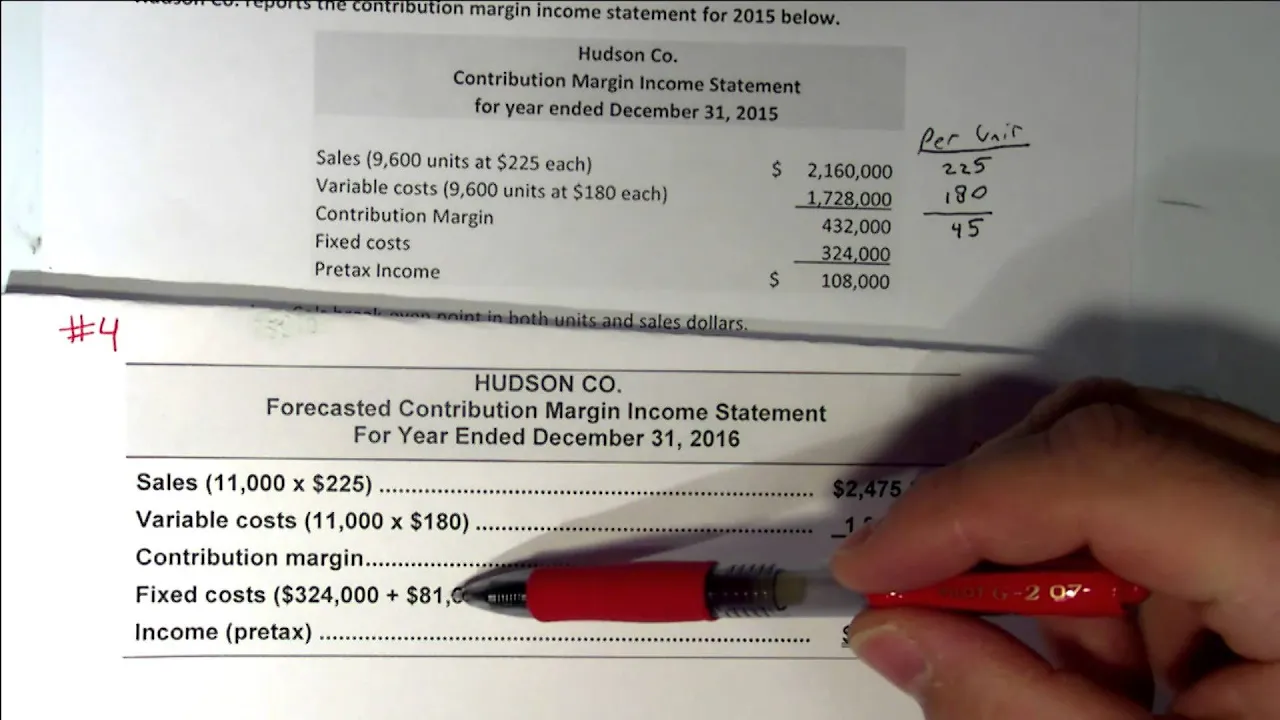
Added:Understanding of Fixed vs. Variable Cost Structures: How high capital expenditures and fixed overheads, such as aircraft leases and labor, impact operating leverage in capital-intensive industries.
The Basics of Seasonal Cash Flow Management: How cyclical businesses manage working capital and liquidity during off-peak periods to survive revenue dips.
Market Structures and Overcapacity: The microeconomic concepts of perfect competition, low barriers to entry, and how excess supply drives down ticket prices.
Airline Business Models: The fundamental operational differences between legacy flag carriers (hub-and-spoke networks) and budget airlines (point-to-point networks).
Airline Consolidation and Antitrust Policy: How market exits lead to mergers and acquisitions, and how regulatory bodies like the European Commission manage airline monopolies.
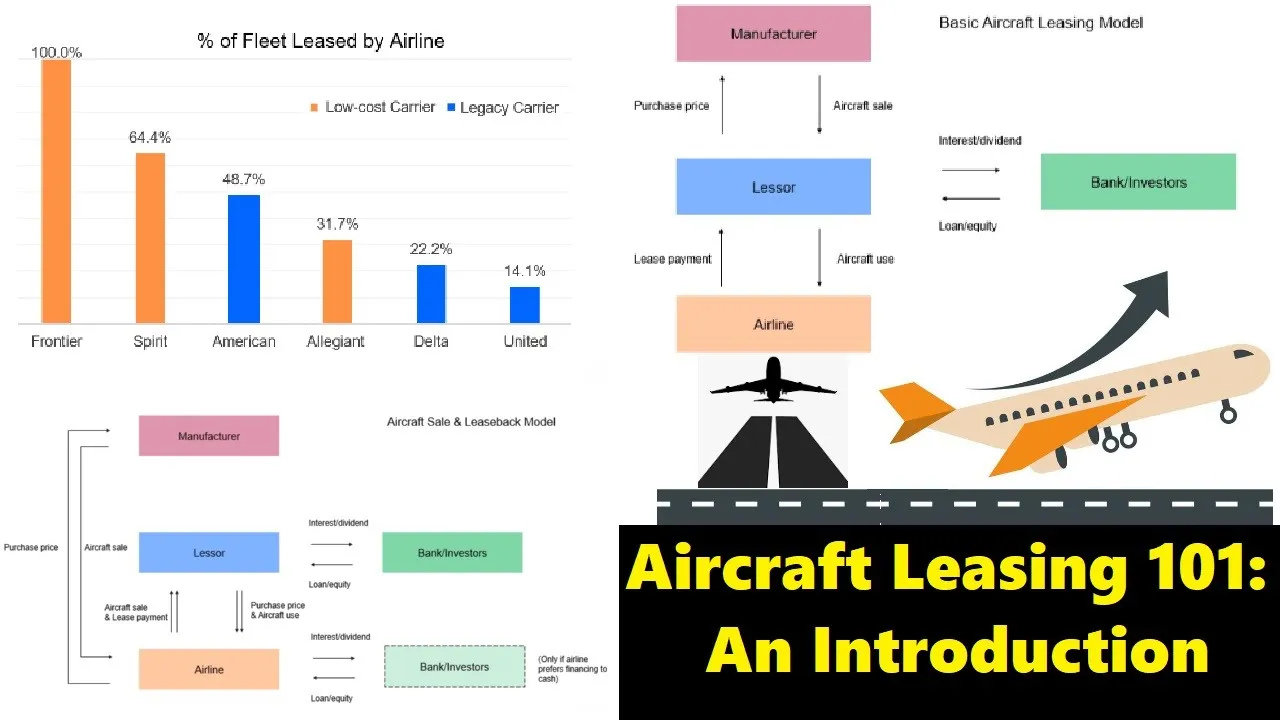
Aviation Finance and Aircraft Leasing Economics: An advanced look at sale-leaseback agreements, fleet optimization, and debt structuring in aviation.
Fuel Hedging and Derivative Strategies: How airlines utilize financial instruments to mitigate the risk of volatile jet fuel prices and the dangers of over-hedging.
The Political Economy of State Aid: Analyzing the economic and political debates surrounding government bailouts of national 'flag' carriers versus letting market forces dictate bankruptcy.
3M views64.1Klikes11:23Original Release: 2019-10-08
This video was made possible by Shopify—the platform behind Wendover and hundreds of thousands of others’ online stores.
The last five years have the most the consistently profitable and financially successful years ever for the world’s commercial airlines.
Including the 2019 forecast, they’ve earned more than $160 billion in combined profit over this period.
With a world economy more robust and connected than ever, the aviation industry is flying high… or at least most of it.
In these same five years, the world has seen some extremely high-profile airline collapses and the frequency of these seems to only be picking up.
The trend truly began in 2017 when Monarch, a well-respected British leisure airline with fifty years of history, went belly-up.
The very same month, Air Berlin, a massive airline with over 8,000 employees and 100 planes, also ceased operations.
2018 then saw the end of Primera Air—an airline that generated buzz but seemingly flew to close to the sun in its final days with its low-cost transatlantic flights—and Cobalt Air—a small Cypriot carrier.
2019, though, was the year of slaughter.
Wow Air, a huge player in the low-cost transatlantic market, stopped flying.
Aigle Azur, France’s second largest airline, stopped flying.
Xl Airways France, a long-existing transatlantic airline, stopped flying.
Adria Airways, a mid-sized Slovenian airline, stopped flying.
Then, after fifty years of history, Thomas Cook Airlines suddenly too stopped flying in what entered the record books as the largest UK airline collapse ever.
Worth noting is that the aforementioned airlines are not cherry picked names.
It’s certainly not the definitive list of airline collapses in the past three years, but they are most all the highest-profile ones, and with these, there are two interesting patterns.
Firstly, every single one of these airlines is based in Europe.
Secondly, and perhaps more strangely, every single one of these airlines, with the exception of Wow Air, stopped flying in either the month of September or October.
Neither the pattern in location or times of these collapses is a coincidence.
There are very good reasons behind these trends.
For the timing, you see, in general airlines’ most profitable season by far is summer since that’s when there’s the most demand.
There are certainly exceptions to this rule.
For example, an airline flying between the Northern and Southern Hemisphere a substantial amount, like Qantas, typically sees more more consistent month-to-month profits as it benefits from the demand in both the northern and southern summer.
The seasonality of demand also varies significantly by region.
For example, here are a few years of overall month-to-month passenger figures in the US.
You can see that there’s a clear peak each August and a clear valley each February, with smaller, secondary peaks each year for Thanksgiving and Christmas.
If you take a look at Europe’s month-to-month figures, though, you can see how relatively stable the US’ traffic is.
Relying much more on leisure travel, which is highly seasonal, European airlines have to cope with winter demand being almost half that of summer demand.
Airlines in the US, though, carry more business travelers, in proportion, who tend to book more consistently throughout the year and therefore they don’t have as much excess capacity in the winter.
There are even regions like Asia-Pacific that see nearly no seasonality in their demand, but the main thing to know is that Europe has highly seasonal traffic which means the timing of when its airlines make their money is highly seasonal.
For example, take a look at Ryanair’s quarterly gross profit graph.
In 2018, they made $901 million from January to March, $1.4 billion from April to June, then an enormous $2.1 billion from July to September.
The fall was then definitively their weakest quarter with only $877 million made.
Essentially, they made 3/4 of their profits in half the year.
The problem airlines then have, though, is cashflow.
For the busy summer season, airlines will get paid for tickets in the months leading up to those flights.
Therefore, most of the money for that season will get to them between March and August.
It’s therefore a season that can typically sustain even the financially weakest airlines.
Come September, though, bookings start to dry up and therefore so does cashflow.
With that, airlines will start to struggle to pay off their debts, let alone the costs for fuel and other operating expenses.
Once an airline starts to fall behind on their debts, it tends to be a vicious cycle.
Quickly, they might have planes repossessed, which means they have to cancel flights, which means they have to pay for hotels and penalties and for rebooking and pretty soon, the airline won’t have enough money to operate and will be declared bankrupt.
In Europe, unlike the US, there is little opportunity for businesses to restructure once bankrupt so, for the most part, that means they’re closed down immediately and indefinitely.
As the aviation industry is so volatile and capital intense, these bankruptcies can happen impressively fast.
In Thomas Cook’s case, there had been hints of its financial difficulties for months, but at the end of August, it seemed the company would likely be saved by a buyout deal.
It only truly became clear that the airline was headed towards its end the very week of its collapse but still, everything went on as normal from an operational standpoint.
On September 22nd, at 9:40 pm, the airline tweeted in response to a customer, saying, “our flights and holiday operations are operating as normal.” That was true… at the time.
All the flights were taking off, they were still selling tickets, everything was normal from the public perspective.
Behind closed doors, though, things were not ok.
Five and a half hours later, in the early hours of the morning of September 23rd, the company’s last tweet went out saying, “we are sorry to announce that Thomas Cook has ceased trading with immediate effect.” All around the world, at the very moment of their declaration of insolvency, flights were quite literally boarding, crews onboard, planes fueled, ready to go.
With the company now gone, though, everything had to stop.
Those crews were not longer employed, that fuel wouldn’t be paid for, the planes were no longer owned or leased by the airline, everything stopped.
Of course, once an airline collapses and its flights are cancelled, there is no longer an airline to rebook passengers onto other flights.
In most cases, passengers are just out of luck, but in the case of the UK, their Civil Aviation Authority essentially takes the place of any UK airline for the weeks following its collapse.
The CAA will either rebook passengers onto another airline or just actually run their own flights.
Of course, the CAA doesn’t have their own fleet of planes.
Rather, they have a number of airlines around the world essentially on retainer for anytime they need to run repatriation flights.
This includes plenty of charter operators like HiFly, Atlas Global, Wamos Air, and more, but perhaps the most unique aircraft used by the CAA was a Malaysian Airlines a380.
The airline dedicates some of its a380’s to charter operations and so, the day before Thomas Cook’s collapse, when it became clear that the end was nigh, the a380 flew empty all the way from Kuala Lumpur to Manchester.
It landed a couple minutes past midnight on September 23rd, just a few short hours before Thomas Cook was officially declared insolvent.
As this and plenty of other aircraft pre-positioned even while Thomas Cook flew its last flights, the CAA was able to start flying its repatriation flights the same day and many passengers were only a few hours delayed, even after their airline went belly-up.
The Malaysian a380 was assigned to fly flights from Palma de Mallorca, but part of the difficulty was that, from Palma, Thomas Cook had flown an enormous quantity of flights to an enormous number of destinations in the UK—London, Cardiff, Birmingham, East Midlands, Manchester, Newcastle, Glasgow, and Belfast.
Of course, it’s much more complicated to find eight small planes than just one large plane, so that’s what they did—they found the the largest passenger plane in the world.
Every flight the a380 flew ran just the two hours from Palma to Manchester and then from Manchester, buses ran to Glasgow, Newcastle, East Midlands, Birmingham, and London.
Using this system, with just one aircraft, the CAA was able to run up to three flights a day from Palma to the UK with capacity for nearly 1,500 passengers—the equivalent to almost seven Thomas Cook a321’s.
This whole process went on for weeks, making for a lucrative payday for the world’s charter companies and an expensive bill for the UK government, but it certainly is easier than having hundreds of thousands of passengers stranded worldwide.
Having a record-breaking airline collapse and then another record-breaking airline collapse in the span of two years is certainly not normal and it’s certainly not a coincidence.
Part of the problem is that the airline industry has been so robust in the past decade that it has allowed weaker airlines to survive.
Out of the bankrupted airlines mentioned at the start—Monarch, Air Berlin, Primera Air, Cobalt Air, Wow Air, Aigle Azur, XL Airways France, Adria Airways, and Thomas Cook—five were focused on long-haul, low-cost flying.
This business model is a rather new phenomenon made possible, at least on paper, by smaller, fuel efficient, long-haul aircraft and low fuel costs but, outside of Asia and Australia, no airline has really achieved sustained profitability with this model.
Air Asia X, Scoot, and Jetstar are really the only airlines worldwide that have seen long-term financial success flying long-haul, low cost.
After fuel prices plummeted in 2014, these airlines entered a period of rapid expansion as they were able to undercut the incumbents prices significantly, but then, in 2017, fuel prices starting ticking back up and these airlines had a tough choice—they could either raise prices and lose some of the market share they had built up or keep prices the same and grow further away from profitability.
Many chose the ladder and, as fuel prices continued to rise, the companies began to fall.
Many analysts have also suggested that another contributing factor to this spate of airline collapses is overcapacity.
Somewhat as a result of how successful and profitable the industry has been over the past decade, airlines have been buying planes like crazy and investors have been funding airlines like crazy.
For a while, the rule had been that adding more capacity means more profits, however, the industry has likely found the ceiling to that rule.
This is especially true in Europe’s market where buying an additional plane that you might be able to fill in the summer means paying for it throughout the long winter too, when it might sit empty.
What’s for sure, though, is that Thomas Cook will not be the last to fall.
It is only getting tougher to survive as an airline, especially in Europe, and each year, without fail, another big name too will topple in September or October—the latest victim in the world’s annual airline culling season.
One of the ways that Wendover Productions functions as a business, and stays out of bankruptcy, of course, is through merchandise sales.
We sell a few types of t-shirts for both Wendover and Half as Interesting which is a nice, predictable income source that we control.
Creating an online store at first seemed daunting, but then we came across Shopify.
Shopify is a super simple yet advanced solution to creating and running your online store.
They are designed to be a partner to independent businesses as features like a logo maker, plug and play store themes, marketing solutions, and much more make it easy to succeed.
For your customers, it makes for a great buying experience—one that you’ve probably already used as they’re used by over 800,000 business worldwide, including mine, you know, in case you want to try out the buying experience for a Wendover t-shirt.
By going to shopify.com/Wendover, you’ll be able to try Shopify for free for 14 days—no credit card required—and then after that, pricing is as low as $9 a month.
Up Next
8:52
Price Supports Explained: Effects on Surplus & Deadweight Loss
@Edspira
18.9K views•2017-02-26

5:07
Impact of Yuan in Indo-Russian Trade Amid Sanctions
@WION
261.9K views•2022-07-01

10:33
Behavioral Economics Explained: Rationality, Nudges, and Risk
@crashcourse
1.1M views•2016-03-12

113:18
The Age of Easy Money: Fed & Inflation | Full Documentary
@frontline
21.2M views•2023-03-15
Related Study Plans & Knowledge Roadmaps
Structured learning paths in Economics
economics
Sovereign Debt: Defaults, IMF & Restructuring
01Introduction to Sovereign Debt & Government Bonds
02Debt Sustainability & Credit Ratings
03Anatomy and History of Debt Crises
+ 2 more learning modules
12h5 modules
Explore Roadmap
economics
Market Design: Matching Theory & Gale-Shapley
01Introduction to Market Design and Price-Free Markets
02Two-Sided Matching & The Gale-Shapley Algorithm
03School Choice Systems and Mechanism Design
+ 2 more learning modules
10h5 modules
Explore Roadmap
economics
Impossible Trinity: Forex, Capital & Policy
01Introduction to Monetary Policy and Central Banking
02Exchange Rates and International Capital Flows
03The Mundell-Fleming Model
+ 2 more learning modules
8h5 modules
Explore Roadmap
economics
Healthcare Economics: Market Failures & Systems
01Introduction to Healthcare Markets and Market Failure
02Asymmetric Information and Adverse Selection
03Moral Hazard and Insurance Design
+ 2 more learning modules
12h5 modules
Explore Roadmap