




![[원샷123] 8. 소비자잉여와 생산자잉여](https://i.ytimg.com/vi_webp/XOJySh4li2g/maxresdefault.webp)













A price support is a government policy combining a price floor with a guarantee to purchase excess supply, which increases producer surplus but creates a net deadweight loss because the government's cost of purchasing excess supply outweighs the gains to producers, ultimately reducing social surplus.
Price Supports Explained: Effects on Surplus & Deadweight Loss
Added:The basic model of market demand and supply, including how equilibrium price and quantity are established.
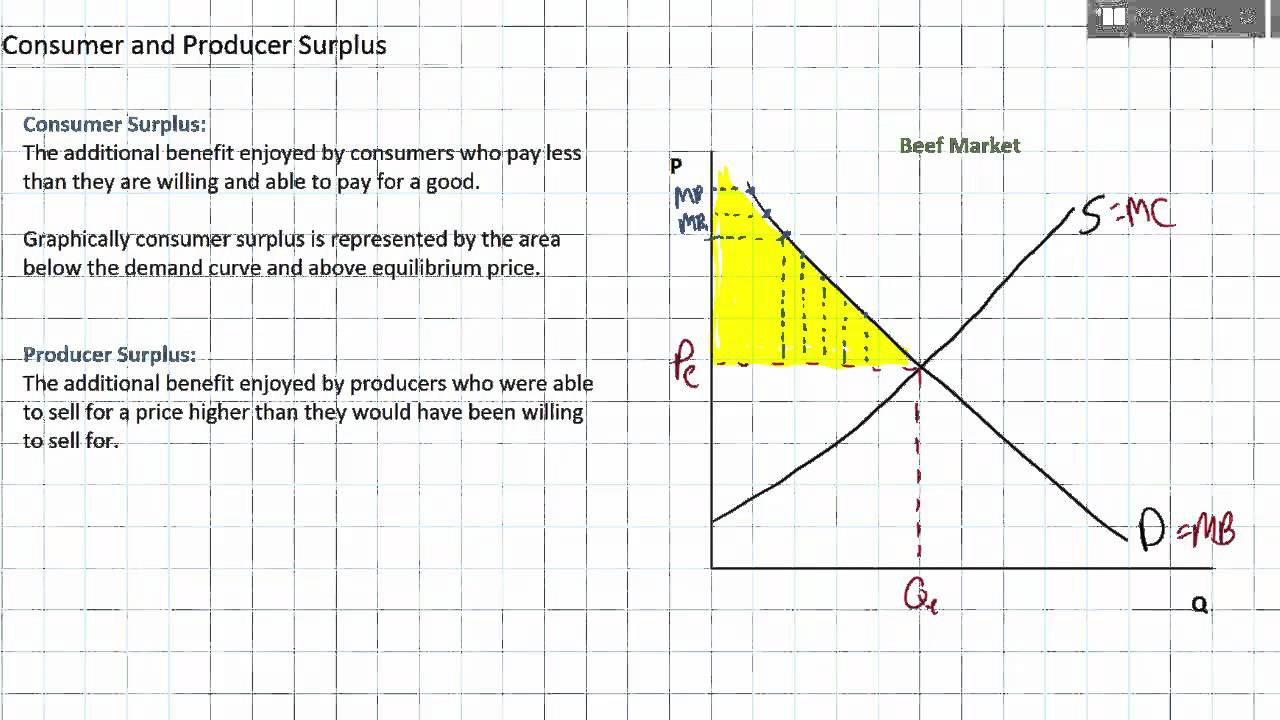
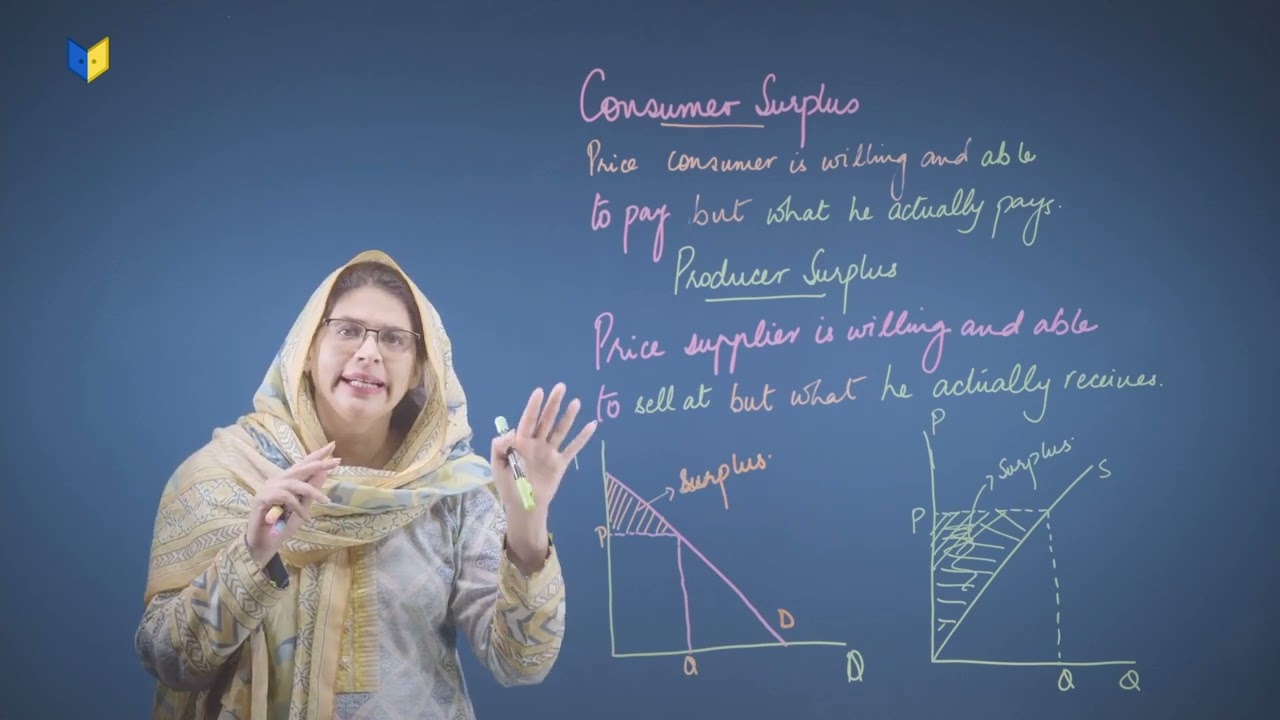
The concept of economic welfare, specifically how to define and graphically identify consumer surplus and producer surplus.
The definition of market efficiency and how competitive markets maximize total social surplus.
The general concept of price controls, particularly the distinction between price ceilings and price floors.
Analyzing the government budgetary costs of purchasing and storing surplus goods under price support programs.
Comparing price supports to alternative agricultural policies, such as direct subsidies, production quotas, or set-aside programs.
Real-world case studies of price supports, such as the U.S. Farm Bills or the European Union's Common Agricultural Policy.
The impact of domestic price supports on international trade, including tariffs, import quotas, and dumping.
18.9K views217likes8:52Original Release: 2017-02-26
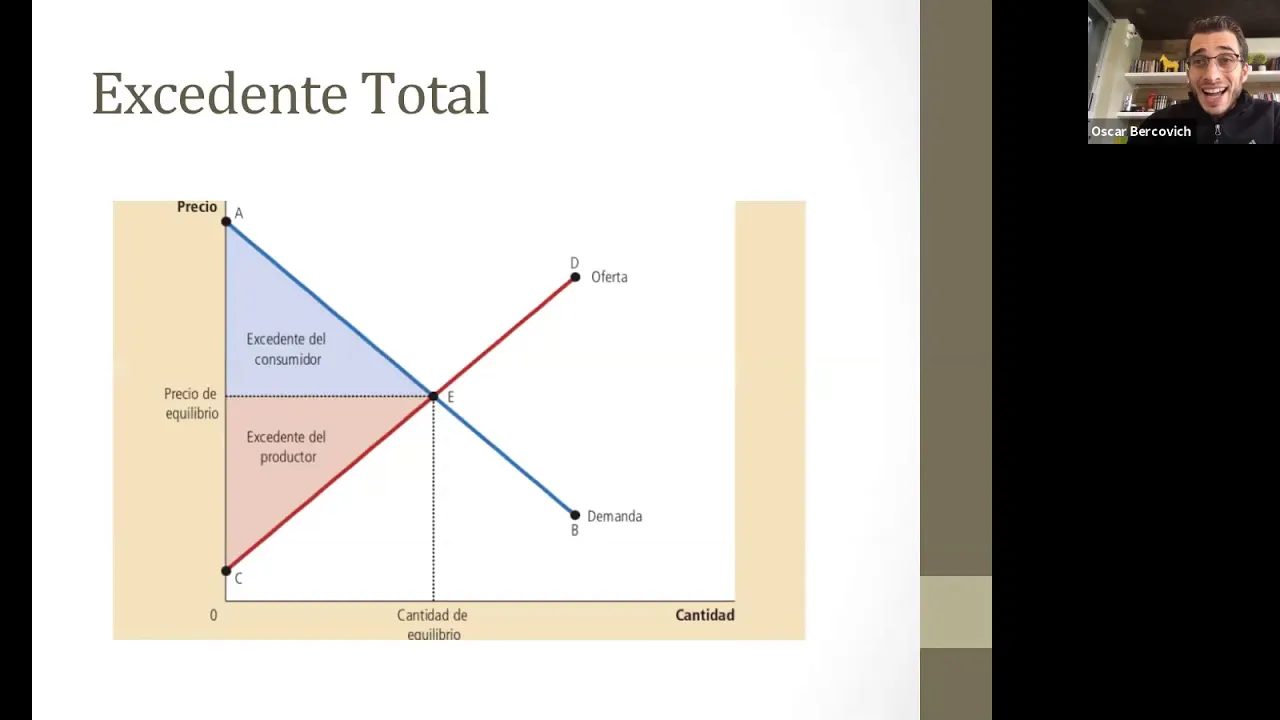
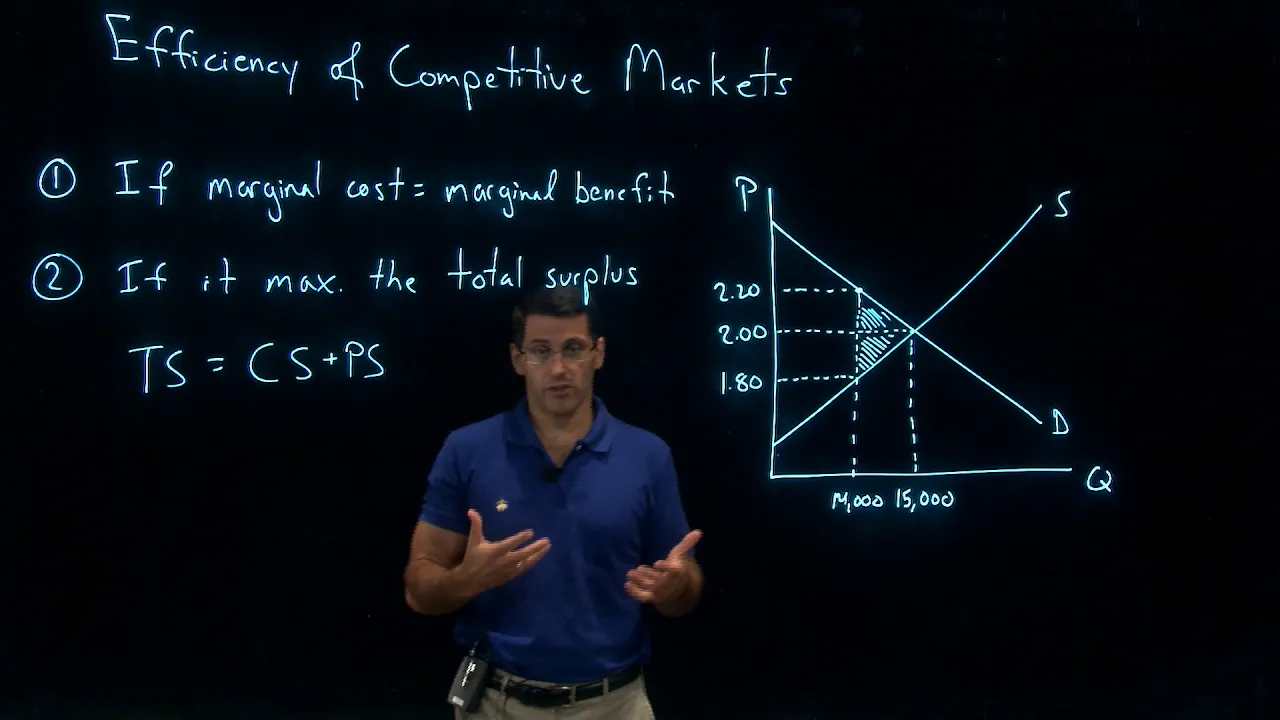
in this video we're going to talk about the effect of a price support So a price support consists of two things you have a price floor and you have a promise from the government to purchase any excess Supply so let's take the market for wheat for example and so let's say that before any price support we just let the market forces work we've got an equilibrium price of wheat of $133 and then we have an equilibrium quantity of 58 million tons of wheat so that's and now we've got our consumer surplus is here in blue and then we've got our producer Surplus is this orange triangle so if we were to add this up this this whole triangle here would be our total Surplus our consumer surplus plus producer Surplus okay so now let's say that the government comes in and says look we're going to Institute a price floor of $200 so the price of wheat has to be at least $200 so it can't go below that so we're going to put P subf that's our price floor of $200 a week so it's a it's illegal it's against the law to sell wheat for less than $200 now in addition to that the government does this second thing where it makes a promise and says look if we have any excess supply of farmers make too too much wheed or people aren't wanting to consume all the wheat that is produced then the government agrees to purchase that excess Supply okay so now in fact when we look at what is going to happen here at a price of $200 we see that the the amount supplied by the wheat Farmers is going going to be right here that's the amount supplied and that's going to exceed the amount demanded over here by consumers and so we could actually let me just we'll put some numbers to this let's say that the amount demanded is 25 million tons of Wheat and then let's say that over here the amount that is supplied is 100 million tons of wheat so we see that we have excess Supply we have excess Supply right here and some sometimes you'll see your economics textbook call that a surplus of wheat which is which is perfectly correct and everything but I don't want to use the term Surplus here I'm going to use the term excess Supply because I don't want to confuse you with consumer surplus and producer Surplus because we're talking about different things excess Supply means that the wheat Farmers produced a lot more wheat 100 million tons than what consumers were willing to buy which is 25 million tons okay now when we think about this though normally if we just had the price floor and we didn't have the government promis to purchase the uh the extra wheat we would end up here we would end up here because consumers are only demanding 25 tons so we would have uh basically this amount here would all be a dead weight loss and so forth that's what happens with just a price floor but now because we have this government promise to purchase that excess Supply we're actually going to see that the producers are going to get this area here this area here is going and you know what let me change colors because they're actually the producers are going to get a lot the producers are going to get this area here so that's all going to become part of producer Surplus but in addition to that in addition to getting this new area the producers are going to get some of what the consumers used to have so the consumer surplus is going to shrink and the producer Surplus is going to grow a lot you see why wheat Farmers would be really happy to get this all of this so the wheat farmers are getting some of the the consumer surplus now the consumer surplus is that small triangle and all this orange that big orange triangle is for the producers okay now let's think about this it looks like it looks like the total Surplus has gone up because even though consumers lose out they just have this tiny TR triangle now you might be thinking hey look the total Surplus used to be this triangle let me make sure you can see that this triangle like that that was the total Surplus but now we've added this triangle here so you might be thinking hey this price support is actually a great thing we've increased the total Surplus but don't forget something don't forget the government has promised to purchase all the extra wheat the government has promised so what we're going to have we're we're going to have a situation where we're going to have a cost of the government and who is the government who's paying for this taxpayers right so we can think of all of this this entire amount here this entire amount this big rectangle is going to be cost to taxpayers that's going to be the cost uh to to the government and so what we can actually do what we can actually do is we can actually calculate we can actually calculate the cost of that government so we can we can calculate we can also calculate the area here so that's not so so let me just calculate this small triangle here so just in case you're wondering what is the gain here let's see that amount so that gain is 2.51 125 billion the way I got that was 1 12 time the base times the height so we've got2 * 75 million * 200 - 133 just in case you're interested in the math that's the area of that triangle right there that the producers have gained also the producers gained some of the consumer surplus but that that doesn't affect society right so if we just think about the increase in the total Surplus we've got that amount but again remember that not only are we gaining this amount right if there was no cost to the government at all then yes this would be this would be an increase in the total Surplus but now let me let me show you so then not only do we have this and this is billions by the way that's the billion that's that that's that triangle call that the new triangle or however you want to think about it now we're going to have this whole area this whole area here I don't even know if I'm going to be able to color all this in I'm going to miss some spots but this whole area is the cost to the government so this is the cost cost to the government or cost to taxpayers of buying all the extra wheat and we can calculate the area of this rectangle here okay so what we're going to do to calculate the the area of that is we'll take 75 million and how did I get you might be wondering how I got this 75 million there 75 million here too so 75 million is the amount of the excess Supply that's 100 million that is actually supplied minus the 25 million that consumers actually want so the extra so the extra is 75 million that's the excess supply of wheat that's all the wheat that was Supply that consumers didn't want okay so that's 75 million and then we multiply it by the price floor multiply it by the price floor which is $200 because the government guaranteed that price right so it's it's $200 it guaranteed to to the wheat farmers and so that's going to come up with the ultimate cost to the government let me change colors here 15 billion and I hope you can see read this number here too it's I know it's a darker color 2.1 125 billion so if we think about the gain and the loss here what it happened is this we gain the producers gained they not they they gained some of obviously the consumers area as well but that's not that does if consu if producers win and consumers lose the total Surplus is unchanged right so the producers before we factor in the cost of the government they gained that 2.125 billion that was this amount here okay they gained that but then that that area plus all of this area the entire rectangle was lost as a cost to the government to taxpayers of this $15 billion so actually you could look and say okay well we gained 2.125 uh or 25125 billion but we had to pay 15 billion in taxes uh to to be able to fund this so we can actually take the net difference so the net 15 billion minus the 25125 billion so we'd say that that that amount is 12.48 75 billion so that is the cost that is the Lost value in terms of doing this price support and that's why price supports can be a very very bad idea
Up Next
10:22
What Is Supply and Demand? | Economics Explained
@crashcourse
4.8M views•2015-08-14
5:07
Impact of Yuan in Indo-Russian Trade Amid Sanctions
@WION
261.9K views•2022-07-01

11:02
Pigouvian Taxes Explained: Correcting Market Failures
@Edspira
106.3K views•2016-10-17

113:18
The Age of Easy Money: Fed & Inflation | Full Documentary
@frontline
21.2M views•2023-03-15
Related Study Plans & Knowledge Roadmaps
Structured learning paths in Economics
economics
Sovereign Debt: Defaults, IMF & Restructuring
01Introduction to Sovereign Debt & Government Bonds
02Debt Sustainability & Credit Ratings
03Anatomy and History of Debt Crises
+ 2 more learning modules
12h5 modules
Explore Roadmap
economics
Market Design: Matching Theory & Gale-Shapley
01Introduction to Market Design and Price-Free Markets
02Two-Sided Matching & The Gale-Shapley Algorithm
03School Choice Systems and Mechanism Design
+ 2 more learning modules
10h5 modules
Explore Roadmap
economics
Impossible Trinity: Forex, Capital & Policy
01Introduction to Monetary Policy and Central Banking
02Exchange Rates and International Capital Flows
03The Mundell-Fleming Model
+ 2 more learning modules
8h5 modules
Explore Roadmap
economics
Healthcare Economics: Market Failures & Systems
01Introduction to Healthcare Markets and Market Failure
02Asymmetric Information and Adverse Selection
03Moral Hazard and Insurance Design
+ 2 more learning modules
12h5 modules
Explore Roadmap