


![La connaissance c'est le pouvoir [conférence de Nath-Sakura]](https://i.ytimg.com/vi/k5X0DSjWc2w/maxresdefault.jpg)







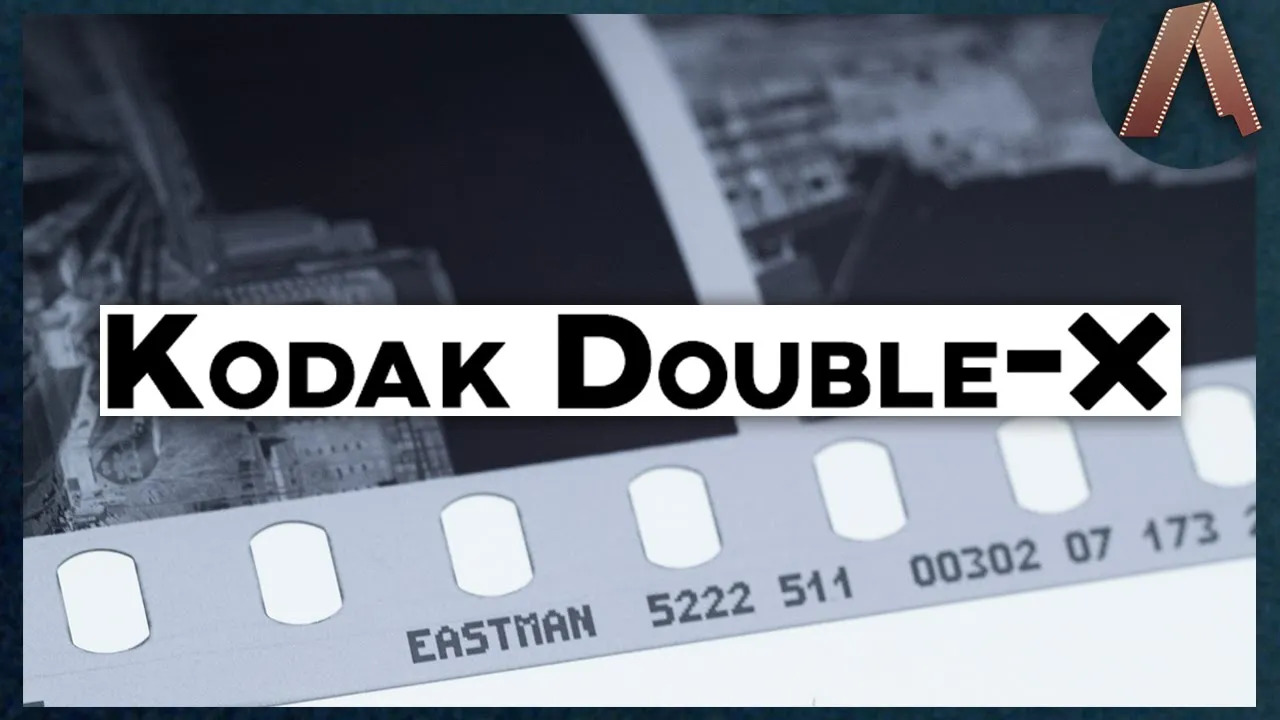






In Christopher Nolan's 'Oppenheimer,' cinematographer Hoyte van Hoytema used black and white and color cinematography as narrative tools to distinguish between Robert Downey Jr.'s character Strauss and Cillian Murphy's Oppenheimer, with black and white representing Strauss's perspective and color representing Oppenheimer's, demonstrating how color choices can serve as visual metaphors for character psychology and narrative structure in filmmaking.
Oppenheimer Cinematography: IMAX Black & White Film Explained
Added:The fundamentals of analog film formats, specifically the physical and resolution differences between standard 35mm, 70mm, and IMAX 15/70mm film gauges.
Basic principles of black-and-white cinematography, including how contrast, tonal range, and shadow textures substitute for color information.
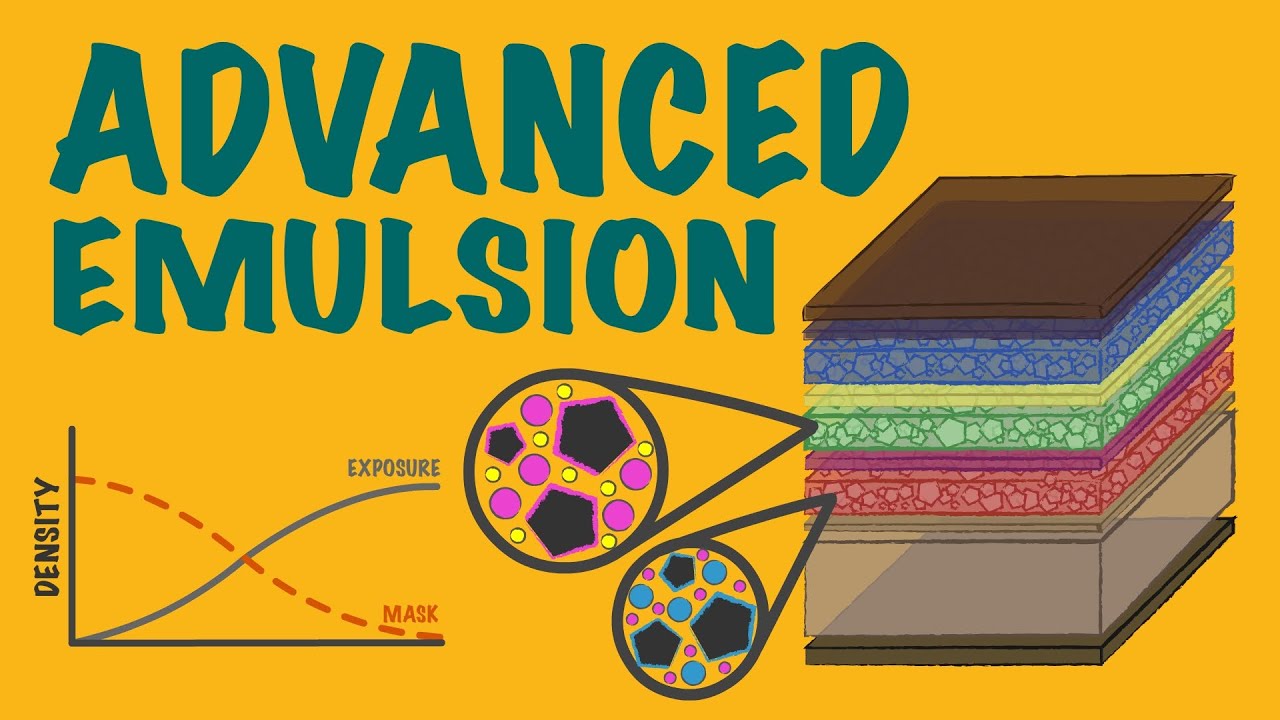
The basic chemical structure of photographic film emulsion and how silver halide crystals capture light differently compared to digital CMOS/CCD sensors.
Standard cinematographic concepts such as depth of field, lens speed, and the unique challenges of operating large-format cameras.
The industrial and chemical engineering processes involved in manufacturing custom, unprecedented film stocks (such as Kodak's development of 65mm Double-X B&W film).
Advanced lighting design and the practical application of the Zone System for high-contrast, large-format cinematic setups.
The hybrid photochemical and digital post-production pipeline, including high-resolution film scanning, digital intermediate (DI) color grading for B&W, and optical printing.
A comparative analysis of contemporary large-format digital cinematography (e.g., ARRI Alexa 65) versus large-format analog systems in terms of aesthetics and workflow.
399.2K views14.9Klikes12:10Original Release: 2024-02-20
- Hi, my name is Hoyte van Hoytema, I'm the cinematographer of "Oppenheimer."
(tense music) (engine rumbling) (siren blaring) (tense music continues) - [Strauss] Thanks.
- When he starts a movie, we kind of know that it's gonna be something special, and that it's gonna require kind of all our brain power.
But then you go in the office, and I always try to read the script as untouched.
I try to focus as little as possible on the difficulty of it or the technical details of it.
As soon as you put the script down, as soon as it's finished, you're kind of on the film.
You have like a plethora of complicated problems to solve and things to do.
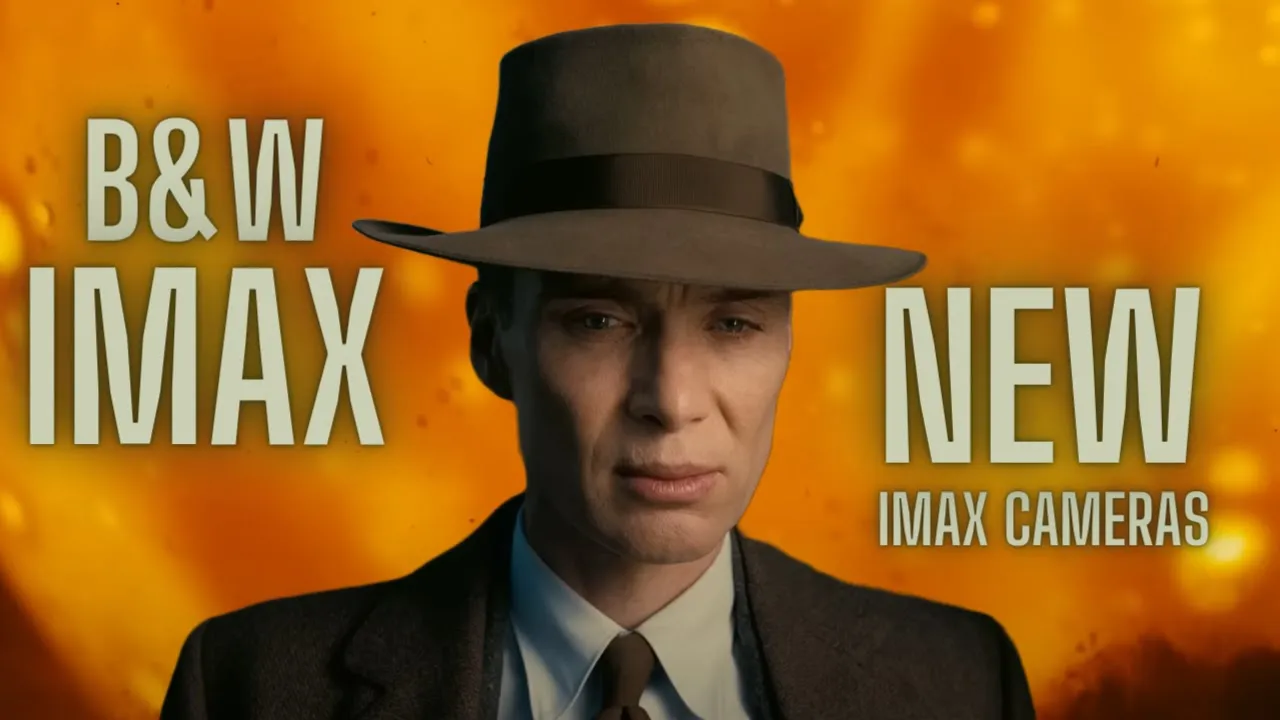
The black and white parts in the script, and the color parts, it's something that Chris had written in the script, it was for him some sort of a way to really separate those two narratives, Strauss's point of view and Oppenheimer's point of view.
It felt very much like a way to get it very clear to the filmmakers, or the people that were gonna work on the script, how to view into this world at the particular moment.
While we were making it, it was just very important for our mindsets to know when we wanted to really evolve around Oppenheimer, and his thought process, and the way he started to see a changing world.
But then of course we have the black and white as well.
- [Strauss] Catch me up. What do we know?
- One of our B29s over the North Pacific has detected radiation.
- Do we have the filter papers?
- There's no doubt what this is.
- We love shooting on 65 millimeter, and we have perfected, for ourselves, the workflow of working on 65 millimeter.
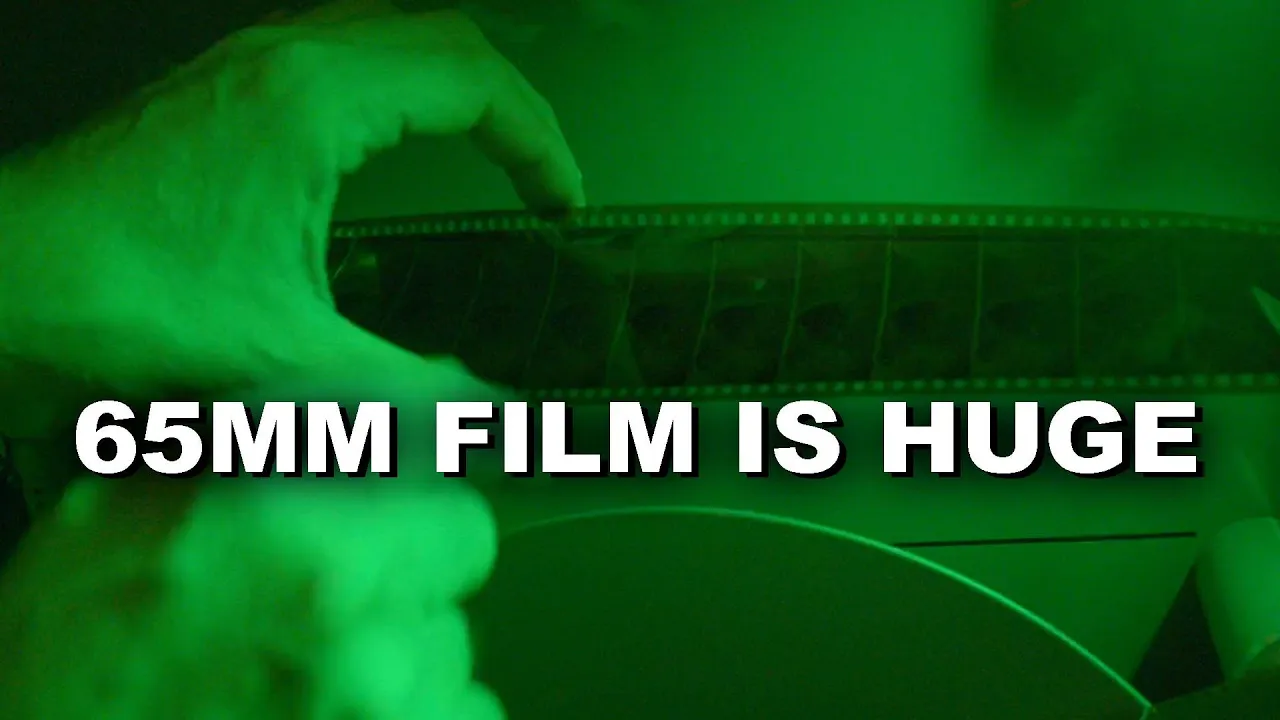
But reading black and white was also a little concerning because black and white film doesn't exist for 65 millimeter.
I think our first challenge was starting to talk to Kodak, if they could provide us with the necessary film stock that we needed for this film.
They really started manufacturing stock very similar to the 5222 35-millimeter stock.
What I didn't really realize is that, after we had that stock, there's this whole workflow after that that wasn't ready or non-existent, in terms of workflow.
We needed to re-engineer our cameras as well, because those cameras, they have these pressure plates behind the film gates that are made out of metal, and the backing of the Kodak stock is much thinner than a color stock, and the light that would fall onto our stock would bleed back into the films, creating all these artifacts.
And then there was the big conversation with Photo Camera, our lab, they had a workflow, and they literally have one pipeline, one workflow, which is for color, which has never been for black and white.
And then the question from us is, can you change that whole workflow into a black and white workflow.
And if you can do it, how quick can you do it?
So there was all these people that were helping us out and working on the singular thing of just us trying to shoot some frames on black and white film.
People ask me a lot about technical challenges in this film.
I kind of always answer that the technical challenges, for me, weren't the big or the sensational scenes, or the wide shots, or the actiony bits, but it was very much in the very mundane scenes, you know, when people are in rooms and they're talking, and they're explaining, and they're talking about threat, or talking about bias, or their ambiguous thoughts, and their doubts, this was not the kind of subject matter that we necessarily wanted to approach in a very sensationalist matter.
So I took a super low key scene, which is Stauss driving to the Atomic Commission meeting where they have just received word from Russia that they have also started to test a nuclear device.
(tense music) - The Russians have a bomb.
We're supposed to be years ahead of them, but.
What were you guys doing at Los Alamos?
Wasn't security tight?
- Extremely seemingly simple approach to framing.
With our working with 65 millimeter a lot, I've become very much a center puncher.
Center puncher basically means that the essential where you want your eye scanning of your audience to go, it happens sort of in the center of the frame.
And that is very much to do of what the IMAX screen provides to us in the cinema.
With shooting, for instance, on the big format, we are always striving to sort of engage the audience in a more visceral way than an intellectual way, sometimes.
As a cinematographer, you can sort of organize that frame.
You can say, okay, we frame it with the golden ratio, we frame something in the right side of the frame, and we leave a lot of negative space on the left, and this has this and this and this meaning to me, and this is how I show solitude.
Whereas with IMAX, a frame doesn't exist as such, because when you sit, the screen sort of bends away around you, and everything on the left side and the right side sort of gradually disappears on you as a viewer.
You suddenly become aware of that I have to look there, and that I have to look there, and that doesn't work like that.
It's something that will not come intuitively to a viewer.
So in that way, we are very much enslaved to the way we need to frame for an IMAX.
So the most important thing is in the center.
And then composition becomes, for me, very much about depth, the way we perceive depth.
The frame is very often a two-dimensional composition, but a composition can also happen in three dimensions.
- Forgive me, Doctor, (tense music) but I was there.
(marbles clinking) - You can now consider the actual mechanics of detonation - In this film, I used very little steady cam, close to no steady cam.
We tried to roll the dolly on the floor as much as possible.
I love sitting on the dolly, I love looking through the viewfinder.
That's one of the reasons why we wouldn't go necessarily on steady cam, or on like a stabilized hat, because the moment you do that, you prohibit yourself to look through the viewfinder, you know, you're reliant on the video system.
When you shoot a format like IMAX, it is very important that you keep checking through a viewfinder because the video quality is very, it's very low fi and it's very low res.
You can judge framing, but you cannot judge, for instance, focus on it.
There's some longer lenses, like for the closeups around the table, I would say that's mostly an 80.
So we are feeling a little bit more removed from it.
We're feeling like we are kind of listening in on a secret meeting.
We are not inside people's heads, but we are relatively close to them, but we're outside the circle, so to say.
Strauss in the car, which is shot with a much wider lens, where we, I hope that we literally feel much more in a space or in a protective bubble, if you may.
And these are close ups that are shot with wider angle lenses, which creates this much stronger depth perspective as well.
Because we are so close, we get so much shorter depth of field.
So this is, for us of course, another instrument to sort of control the viewer's focus, to really concentrate them, and to really understand that we are within somebody's space.
That we are not just observing somebody, but we're literally there with the camera.
If you shoot three closeups next to each other, this kind of dynamics you can play with.
We shoot three times the same closeup, but we shoot them in different lenses.
And all these lenses, they represent sort of different feeling or different proximity of us viewers or filmmakers to our subjects.
Those are these moments where we allow ourselves to be a little wider with the lenses, and to even push the camera a little bit closer.
And traditionally, that was very hard on IMAX cameras because they were very much made for vistas, and none of the wide lenses were engineered to have things close to the camera.
So our magical lens guru, Dan Sasaki at Panavision, he retweaked and he made a lot of lenses, and really pulled those close focus ranges very close to the lens.
He put a screwdriver in there and started engineering, and really made this a lens that we started utilizing a lot for certain, as we say, paranoia closeups, or these very sort of intimidating, in your face shots on "Oppenheimer."
- Its only intended target would be the largest cities.
It's a weapon of mass genocide.
- Izzy, draw some circles on this side of the map.
- Difference between black and white and color, essentially, apart from the color is, of course, that you judge your scene that you make, not in terms of color contrast on those kind of information, but really in terms of lightness and darkness.
When I'm shooting, I'm squinting a lot.
I'm all the time walking around like this because it really distinguishes things that are of low exposure and high exposure.
You start thinking about things much more graphical in that way.
And then you notice that black and white is also much more tolerant, for instance, towards the use of hard light opposed to soft light.
Whereas in color film, you very often try to avoid like harsh film lighting, because very quickly you become aware of where a light source is standing, where the light is coming from.
And if it's an artificial light source, very quickly you see that.
That's something that I gratefully took advantage of while shooting black and white.
It's also a stock that is a little bit less tolerant, it's not so prone to error.
In terms of lighting, I just allowed to use more traditional and more harder lights.
You don't have to be so careful with color.
So I worked a little bit more with tungsten lighting.
And I would mix light colors, because colors didn't really matter so much.
So I was a little bit freer for that.
And also the scenes in the big interrogation room in Washington, there's all these, I think they're called sky pens or something, which is a very harsh, rudimentary way that they would actually light it up for those other cameras that were there, which is hard light.
But then for instance, more complicated shots, like him sitting in the car through New York, that close up, we had to shoot in Pasadena, which basically means suddenly we need enough city lights.
So we sort of made a whole installation around the car with sky panels on there, on a dimmer board, connected to a volo fan, in which my dim operator is literally playing the light gags on the left side.
And then in the background, you have a bunch of crew cars that are just falling out of focus, taking advantage of the very short depth of field, creating those beautiful blooms in the back.
If you shoot analog, making a print is the only way to sustain every available resolution information that you have acquired on set.
If you shoot effectively in an IMAX frame, right, an IMAX frame, they say it's very hard to compare, but it can contain like about 18K of resolution, one frame.
It's unthinkable to scan that in that resolution, and then have a plausible workflow, that's too much information.
Now the only way to maintain that information is actually to print it on another piece of film and then project it.
And by doing that, you also have to do an analog coloring process, which I love.
I love especially for the reason that the way that you color your film analog is very intuitive and direct way, because opposed to sort of having a digital table in which you sort of go frame by frame forward, what you actually do, you color your film in real time, you know, reel by reel.
So you sit in a cinema, you watch your film in the fullest resolution possible, and you watch the film playing in front of you, like an audience would see it.
Every color change that you make, you call out.
And there's somebody sitting, Kristen Zimmerman in this way, and she's making notes.
So you know, Chris or I would say, "Can we have a couple of points more green in this one?"
Or, "This one doesn't really match, you have to have a look at that one," but all during the, when the film is playing, and with sound, and in a relatively ready version.
I just love that idea of putting the final touches onto your film exactly in the same way as an audience would experience that film.
It's, for me, it's total magic.
It's like, you know, and then it comes out in the end.
And I always feel that we did something right is when I look at a film and I totally, 100% can lose myself in it and buy into it, and then later realize that hey, those are three totally different parts of America where we shot this and okay, you know, you just kind of forget about it.
It's beautiful.
(subdued music) (subdued music continues)
Up Next
24:55
Isolation in Sofia Coppola's Directing Style: 7 Cinematic Elements
@StudioBinder
70.6K views•2023-10-23

12:54
Triumph of Orthodoxy Icon: Byzantine Art & History Explained
@BenCallan
2.1K views•2024-08-06

9:49
FastAPI vs Flask vs Django: Choosing the Right Python Web Framework
@TechWithTim
302.5K views•2024-05-26

1:42
Game of Thrones Opening Credits: A Cinematic Analysis
@gameofthrones
46.3M views•2011-04-18
Related Study Plans & Knowledge Roadmaps
Structured learning paths in General & Interdisciplinary Studies
general-studies
Elevator Engineering: History, Physics & Cities
01From Hoists to Safety Brakes: The Dawn of Vertical Lift
02Hydraulic vs. Traction: The Engineering Physics of Elevators
03Modern Speed, Safety, and Algorithms
+ 2 more learning modules
12h5 modules
Explore Roadmap
general-studies
Rubber: Material Science, History & Geopolitics
01Origins of Natural Rubber & Mesoamerican History
02The Chemistry of Natural Rubber & Vulcanization
03The Geopolitics of the Rubber Boom & Colonization
+ 2 more learning modules
12h5 modules
Explore Roadmap
general-studies
Containerization: Evolution, Logistics & Trade
01Ancient Trade & Bulk Cargo: Amphorae to Barrels
02The Industrial Revolution & Cardboard Packaging
03The Containerization Revolution: Malcom McLean
+ 2 more learning modules
12h5 modules
Explore Roadmap
general-studies
Textile Tech: Evolution, Labor & Global Impact
01Pre-Industrial Textiles: Handloom & Cottage Industry
02Mechanization: The Spinning Jenny to the Power Loom
03The Factory System & Global Labor Transformation
+ 2 more learning modules
10h5 modules
Explore Roadmap