

![[QUÍMICA] MATERIA Y ENERGÍA | SEMANA 01 | CICLO PARALELO CEPUNT](https://i.ytimg.com/vi_webp/8YVMXnRtST4/maxresdefault.webp)








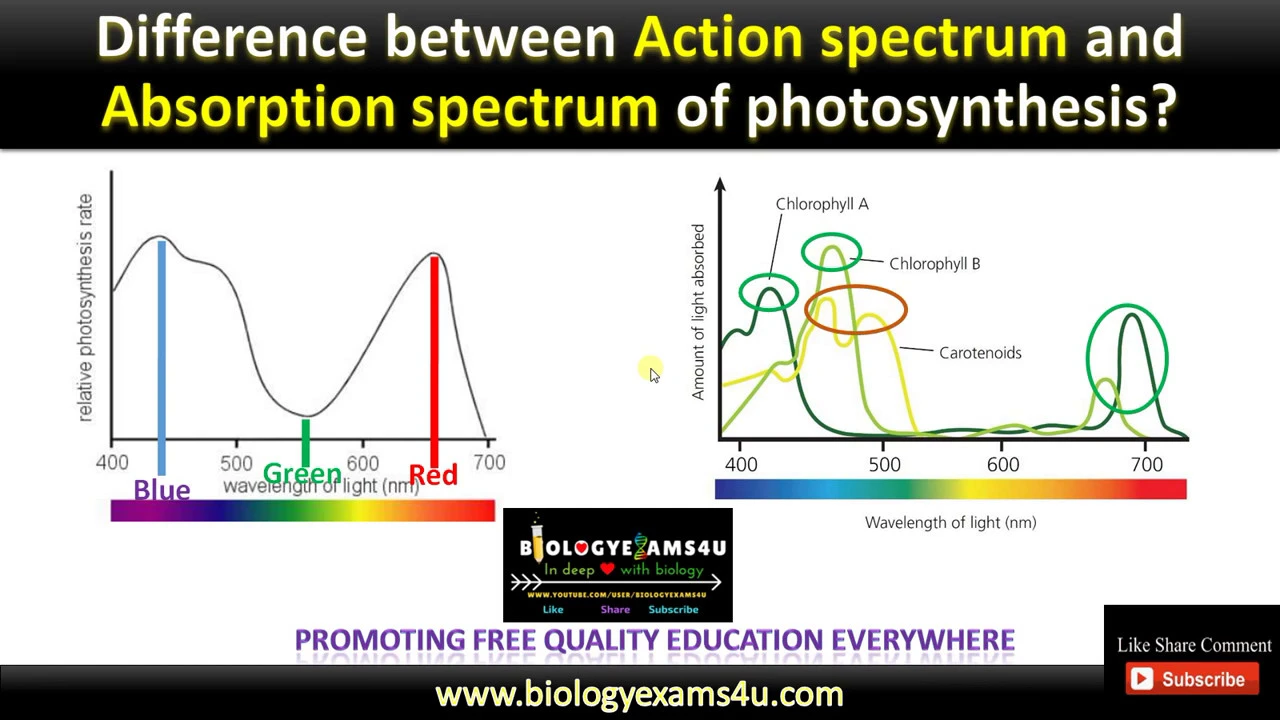
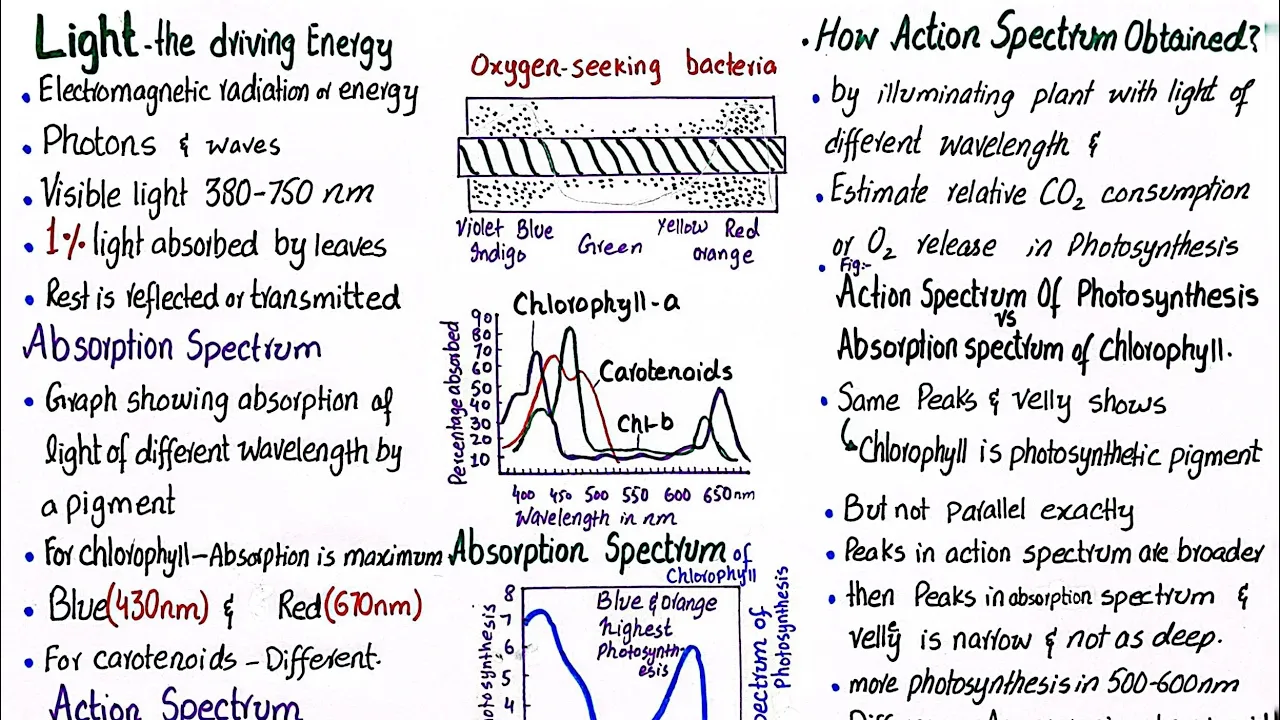



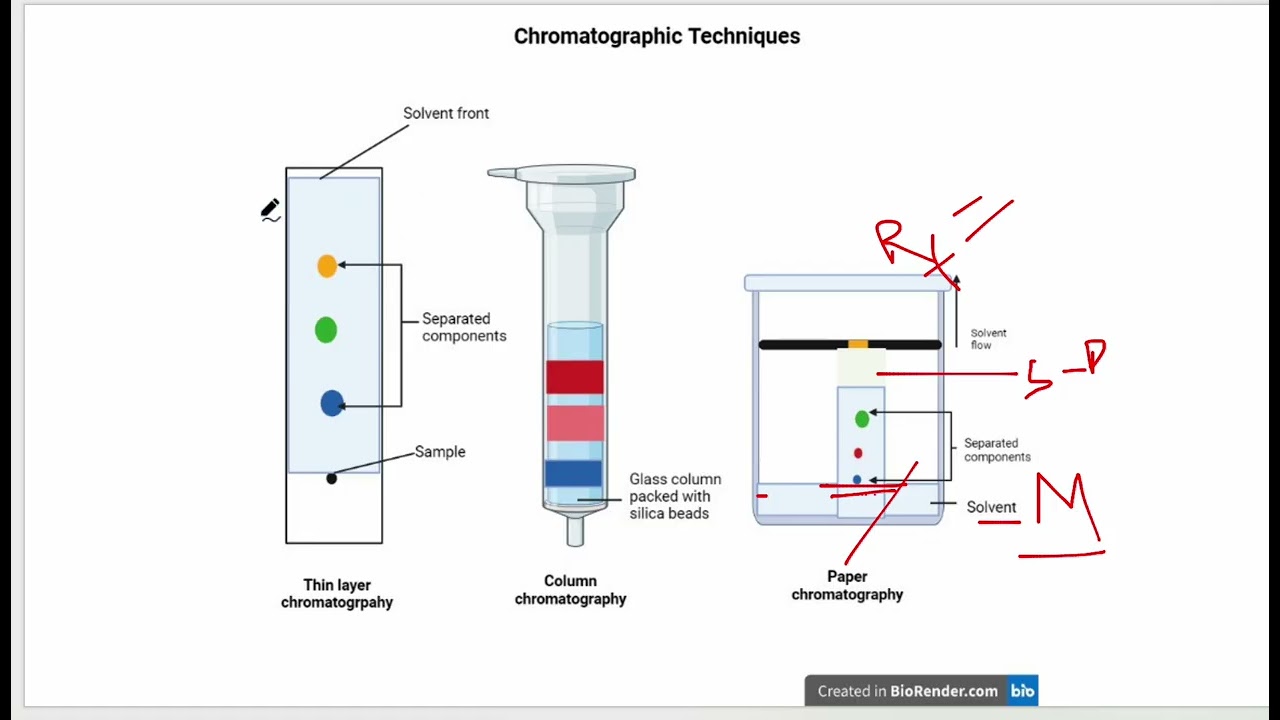






This video demonstrates how to measure the absorption spectra of photosynthetic pigments (carotene, xanthophyll, chlorophyll a, and chlorophyll b) using a spectrophotometer. The procedure involves first separating the pigments via paper chromatography, then extracting them with acetone, and finally measuring their absorbance at various wavelengths (starting from 380 nm and increasing in 10 nm increments). Key steps include warming up the spectrophotometer for approximately five minutes, setting it to absorbance mode, blanking the instrument with 80% acetone before each measurement series, and recording absorbance values within the acceptable range of 0.3 ± 0.1 at 380 nm. The blanking process ensures accurate baseline correction for each reading series.
Photosynthetic Pigment Absorption Spectra | Spectrophotometry Lab
Added:Now you cut each pigment and deposit them in each corresponding flask: c for carotene, x for xanthophyll, a for chlorophyll a, and b for chlorophyll b.
Add a little bit of acetone into each tube to extract the pigment back into solution.
Pour each pigment into the corresponding test tube: carotene to carotene, xanthophyll to xanthophyll, chlorophyll a, and chlolophyll b.
At each wavelength you would have six test tubes to read. The blank, four of your pigments and the crude extract, but then you only have five values with four pigment and the crude extract itself.
We will use a spectrophotometer to measure the absorption spectrum. First of all you want to connect the spectrophotometer or the spec machine for short into the plug first.
Second of all you use a toggle switch in the back to turn on the spec machine. It is noteworthy that you should leave the spec machine to warm up for about five minutes before it is ready to be used.
With this it's sufficiently already warmed up already so first of all you want to make sure that your setting is at A for absorbance.
Second of all you want to set your wavelength to the wavelength of choice. We start at the wavelength of 380, so use the up or down buttons right here to adjust to the wavelength of choice.
Before each series we have to blank before any readings. In this experiment the blank would be 80 percent acetone. In order to blank it you have a blank ready with your acetone, put in the slot and press zero abs.
At that time your spec machine will show the value of zero which means you already blanked successfully. Starting with the wavelength of 380 nanometer, start recording each of the reading of each of your pigments, starting with carotene.
Record now the absorbent values that the spec machine gives you. Proceed with xanthophyll, chlorophyll a, chlorophyll b, and the dilute extract that's already given to you on the bench.
It is noteworthy that you should label each tube correspondingly and label that on the top of the test tubes so that it does not interfere with the wavelength of the spec machine.
Furthermore of each reading make sure that your values are within range at the original wavelength of 380 nanometer. The spec reading should be within the range of 0.3 plus minus 0.1 for every numbers and all the values to be within the range.
After the first series you use the up value to increase your wavelength to the next one in the increment of 10 to 390 nanometer. With the second set of readings you do all the same tubes with the same values again starting with the blank.
Again before each series you have to press zero abs before reading of each pigment. Again we started with the same series of carotene record down the values of the absorption suspect machine provides.
Xanthophyll, chlorophyll a, chlorophyll b, crude extract.
Repeat the series with an increment of ten nanometer until you finish all the values and report in the table provided in your lab manual.
Up Next

Ball Milling Best Practices: Grinding Process Optimization Guide
@RetschHQ
662 views•2025-05-20

Triumph of Orthodoxy Icon: Byzantine Art & History Explained
@BenCallan
2.1K views•2024-08-06

FastAPI vs Flask vs Django: Choosing the Right Python Web Framework
@TechWithTim
302.5K views•2024-05-26

Game of Thrones Opening Credits: A Cinematic Analysis
@gameofthrones
46.3M views•2011-04-18
Related Study Plans & Knowledge Roadmaps
Structured learning paths in General & Interdisciplinary Studies