


















Flow is a psychological state of complete immersion in an activity, characterized by heightened focus and loss of self-consciousness, which occurs when there is a balanced relationship between perceived challenge and perceived skill; this concept was introduced by psychologist Mihaly Csikszentmihalyi and requires clear goals, immediate feedback, and extended practice to achieve.
Achieving Flow: The Psychology of Optimal Experience Explained
Added:Understanding the distinction between intrinsic motivation (internal drive) and extrinsic motivation (external rewards).
Basic concepts of Positive Psychology, particularly the shift from treating mental illness to fostering human flourishing and optimal functioning.
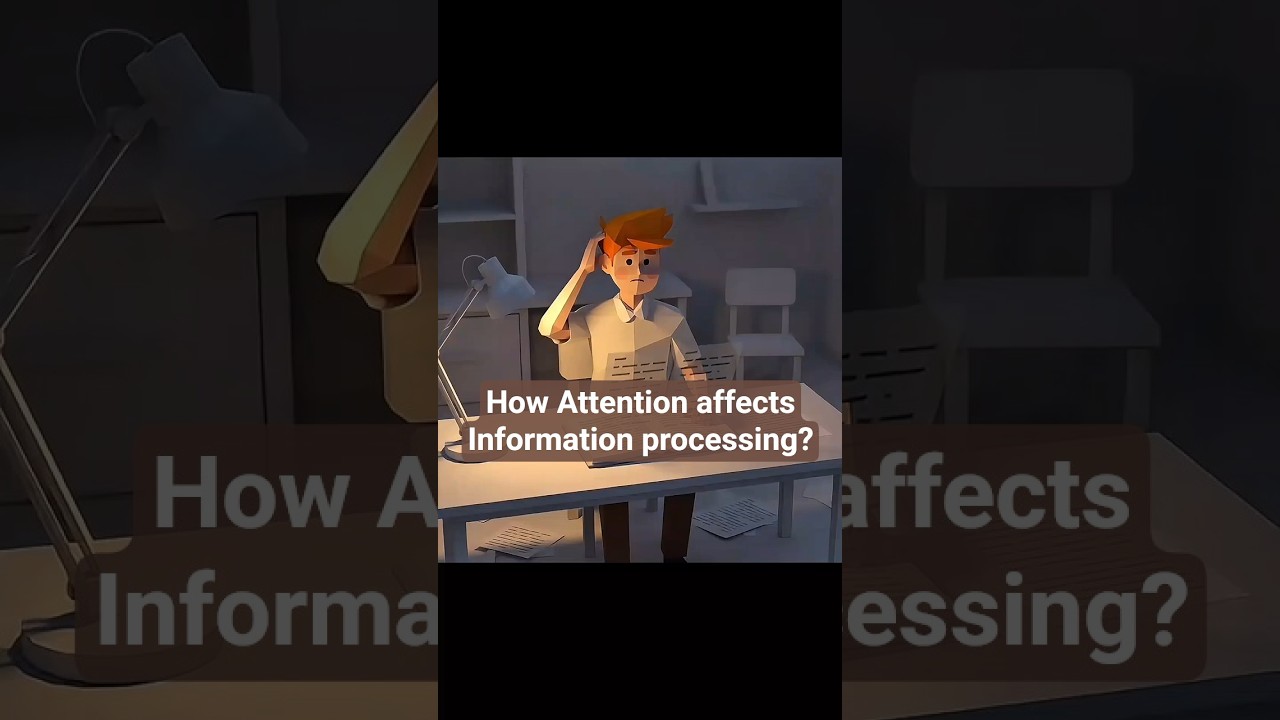
The fundamentals of cognitive attention and how the human brain processes and filters incoming information.
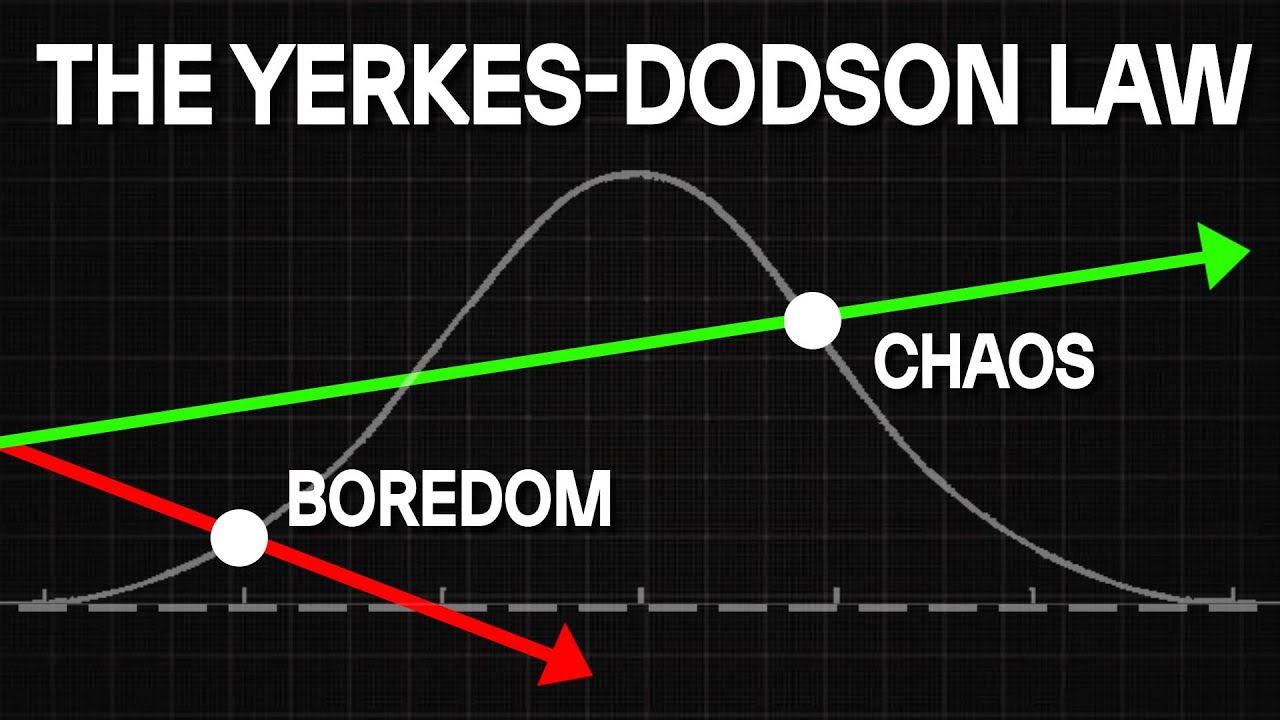
The Yerkes-Dodson Law, which describes the empirical relationship between physiological arousal/stress and performance.
The neurobiology of flow, including transient hypofrontality and the release of performance-enhancing neurotransmitters like dopamine and endorphins.
The concept of the 'Autotelic Personality' and how individual psychological traits influence one's capacity to enter flow.
Designing for Flow, specifically how video game developers, UX designers, and educators structure environments to induce optimal experiences.
Group Flow dynamics, exploring how teams and collaborative organizations achieve collective state-of-mind and peak synergy.
The contrast and integration between Flow State and Deliberate Practice in the pursuit of elite skill acquisition.
660.9K views22.7Klikes5:38Original Release: 2014-07-04
intellectually I understand that all of us are going to die that humanity will perish and fall back into perfect obscurity maybe not tomorrow or for a million years but eventually all we ever made will be dust and yet I keep making things other than for the reason that existential dread grips me only about once a week and that I have a concern for bettering my world along more modest timescales I make things because those things have intrinsic value to me that's not a simple concept intrinsic value and yet it's something we all assigned to the things we love to do it's why we love to do them because that activity is valuable for its own sake writing fiction that's something I do for its own sake making music this channel the nerd writer is intrinsically valuable to me it combines my love of learning and expression with the skills I've gained in video editing over years and years when I'm editing these blocks a process that takes about four to six hours I often find myself in a sort of super focused state where it almost seems like my awareness is merging with my actions on the computer and the next thing I know I'm feeling lightheaded because hours have passed and I've completely forgot to eat dinner and now it's 1:00 a.m. there's a psychological term for this feeling and it's called flow it's a concept introduced by Hungarian psychology professor Mihai Csikszentmihalyi when he became fascinated by how artists got lost in their work when Sheikh sent me I talked to painters or athletes or scientists they all described to him similar feelings of heightened focus one composer described it like this you are in an ecstatic state to such a point that you feel as though you almost don't exist my hand seems devoid of myself and I have nothing to do with what is happening I just sit there in a state of awe and wonder Minh and the music just flows out of it it was this continual reference to the image of being in a river or water flowing that gave G semi-high the name for his phenomenon and it seems about as old as humanity is historical sources suggest that Michelangelo may have been in a state of flow while painting the Sistine Chapel it's reported that he would paint four days at a time forsaking food or sleep in the Tao of Jeet Kune Do Bruce Lee instructs empty your mind be formless shapeless like water everyone can experience this feeling but to do so requires a few preconditions first you have to be involved in an activity with the clear set of goals and progress the task at hand must have clear and immediate feedback and most importantly there has to be a good balance between the perceived challenges of a task and one's perceived skills Sheikh semi-high developed a model for his idea and it looks like this on the y-axis is the challenge level and on the x-axis is the skill level as you can see when the challenge is really hard and the skills are really low that's gonna cause anxiety because you know what you want to do but you can't even get close to achieving any kind of representative drawing fits that category for me only when the challenge level is high and you have the skills to match can a state of flow be achieved the composure I quoted above had been working at his craft for decades the process was second nature tip a pro athlete who gets in the zone another synonym for flow practices for the balance of his life I've been video editing for 10 years and because of all those years of hard earned technique I can see what I want to do like a mechanic can see how the pieces of a car should come together and like a mechanic or a composer or an athlete I'm forced to push myself into new territory because the challenges eventually get easier and I fall back into a state of control when writing fiction I waver somewhere between arousal and anxiety it'll be many more years I suspect before my talent matches the gargantuan task of writing and I can slip into that space where the mutinous nest of my thoughts resolves into the lovely shapes I admire in other writers the key point here is that flow is possible in so many areas of experience art science sports at work in business or law or medicine but it's vital prerequisite in all those cases is an extended devotion to crap we all have the ability to distinguish between different qualities of pleasure being in a flow state seems to me to be made of pure stuff not just for what it achieves but for what it is I don't know why human beings can experience intrinsic value in the activities that they choose to love but I'm happy to go along for the ride so since I've been back from my last little break we've talked about Beach Wales comic book films Keane sugi the Diderot effect how nuclear weapons screwed art forgers video games architecture the right to be forgotten and now flow and the conversations and discussions in the weeks following all those videos have been more interesting to me in most cases than the videos themselves I want to thank everybody who's been watching since I've been back and engaging in these videos and these topics I'm glad you're part of this community if you're watching us thank you for watching and engaging and continue to do so I'm going to focus as much as I can on you ask me anything on tumblr where we can really sort of expand on these topics or comment below post this on reddit follow me on Twitter for short little thoughts all that good stuff I will see you next Friday
Up Next

18:56
Mihaly Csikszentmihalyi: What Makes a Life Worth Living
@silenceofacandle
315.6K views•2015-10-04

68:32
Cognitive Skills for Differentiated Instruction | Teacher PD
@BrainWareLearning
631 views•2017-12-17

9:55
Thinking, Fast and Slow: Daniel Kahneman Animated Book Summary
@FightMediocrity
2.3M views•2015-06-05

6:40
The Nocebo Effect: How Beliefs Can Cause Real Harm
@CGPGrey
10.4M views•2013-12-23
Related Study Plans & Knowledge Roadmaps
Structured learning paths in Psychology
psychology
Neuroscience of Creativity: Networks & Training
01Foundations of Creative Cognition
02The Cognitive Neuroscience of Insight & Fixation
03The Triple Network Model of Creativity
+ 1 more learning modules
15h4 modules
Explore Roadmap
psychology
Imposter Syndrome: Etiology & CBT Framework
01Defining the Imposter Phenomenon
02Socio-Developmental Etiologies
03CBT Fundamentals & Thought Distortions
+ 2 more learning modules
15h5 modules
Explore Roadmap
psychology
Adult ADHD: Executive Dysfunction & Scaffolding
01Neurobiology of the ADHD Brain
02The Core Triad of Executive Deficits
03Executive Dysfunction and Emotional Regulation
+ 2 more learning modules
12h5 modules
Explore Roadmap
psychology
Loneliness: Evolution, Neurobiology & CBT
01Evolutionary Origins of Human Connection and Loneliness
02The Neurobiology and Physiology of Chronic Loneliness
03Maladaptive Social Cognition: The Psychological Loop
+ 2 more learning modules
12h5 modules
Explore Roadmap