








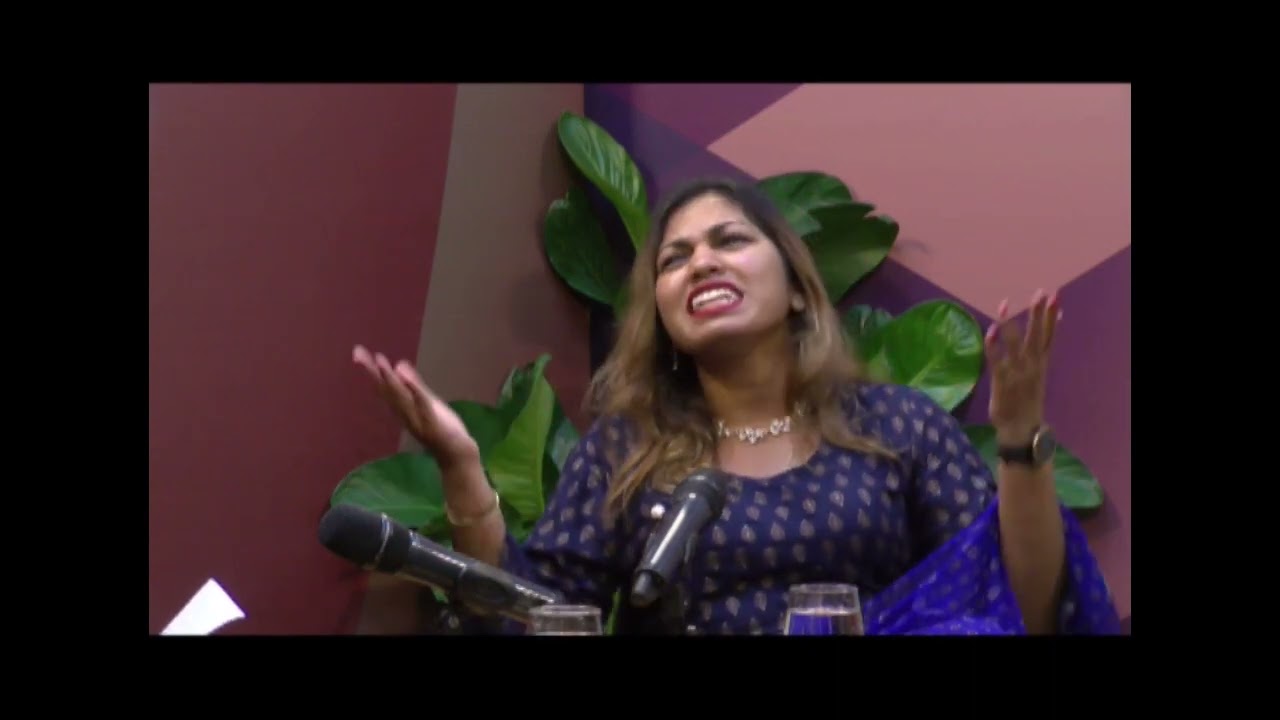

![Chhaap Tilak (Chatak Style) [Live] - Miss Renuka](https://i.ytimg.com/vi/r14XOxDP4oI/maxresdefault.jpg)





Trinidad Hindustani (Bhojpuri) is not merely 'broken Hindi' but a distinct language that evolved from the dialects spoken by indentured laborers from Bihar and Eastern Uttar Pradesh in India. Before the partition of India, these speakers referred to their language as 'Hindustani' as an umbrella term for Northern Indian dialects. The term 'Bhojpuri' emerged after partition as people sought to reclaim their vernacular identities. This language has its own unique vocabulary, grammar rules, and syntax, incorporating loanwords from French and English, and has developed distinct features over generations in Trinidad. The language faces preservation challenges as younger generations increasingly adopt English, similar to patterns observed in other post-colonial contexts.
The Language of Indentured Laborers: Trinidad Hindustani Origins
Added:[Music] for hello and welcome to one1 I'm bran ramesar and I'm pleased to say my guest today is Dr vishan biml Who is here to talk about the language of the indentured labor is not the concept itself but an actual event at the L best Institute being held to well tomorrow which will be today depending on when the program airs right which is Friday the 24th yes Dr M welcome to the program pleased to meet you we're one of the people who group we met through Facebook which I think one of the wonderful things about this show you can interact with Facebook and then do a show on it afterward true first of all I'm going to ask you I asked before the show but just for the benefit of of those in the you actually not just the doctor by title or from some obscure University you're an actual medical doctor yes and this is a linguistic exercise we're talking about a presentation how did you get involved in this um I grew up really close to my grandparents as my matal grandparents and um that environment that the language was there and it was something I always admired um when I started going to primary and secondary school which was Presbyterian um I actually was exposed to mainstream Trinidad and Christianity and all that which I was I didn't really I wasn't brought up in that what area of the country did you grow up in no with respect to at home traditions we practiced I it varies by by region of TR and Tobago as well if you're from south or central T be more intense exactly so um I mean from the media and so you learn about Christianity and it was less so in the community because it was more a Hindu Community not isolated so but we would have interaction but me didn't know about it was from secondary school and then um I thought to myself that a lot of things I grew up with most of the people who I interact with at school didn't really have a a general knowledge or in u the interaction at such a on a daily basis as much as me and uh I thought to myself even the language and I thought it was to me the concept of a language being a form of identity was a big deal I thought that um it was part of the tradition and it's something I always wanted to recapture um when I went to University I learned standard Hindi but I was able now to look at a comparison of what I heard at home versus what I was formal Hindi and it was two different things uh that made it more sense of identity for me because it individual it made me unique as a Trinidad Indian from Trinidad as opposed to of Indian descent than somebody from India um as a result of that I wanted to know everything about the language and I just went off on that while at the same time pursuing medicine yes because when I did pursue medicine I did Hindi and you at University as well at the same time because at that time I think the most people medine alone by itself isn't difficult enough sure but it was indeed mind you I did my post I'm not doing French on Saturdays at Alliance but it's just a hopeless case b that's so true I think it's interesting when you mentioned the fact that your background and and I'm bringing this in context of what we're talking about was such that you know you knew you were a little different and you learned about the of Christianity and things like that after you left home and S of presume your scho it was early after the age of five when I actually started going to school they were more interaction with than people who actually practiced those things and had conversations with them it became a real thing as oppos Asos something you would hear your parents would talk about over but a lot of people who when exposed to that will become there's a process of assimilation where you tend to sort of let yourself be assimilated into the larger homogeneous hole instead of necessarily holding on to your own unique sort of background what is it about you that made you want to sort of hold on to your background and not just say listen I'm part of the generic English speaking normal society and don't judge me it is a point I mean even being a Trinidadian and speaking Trin English recently you have known that they now actually the Ministry of Education is looking at teaching English as a second language to tr to trinidadians I was hearing that in and um as a result of that I thought to myself well finally they realize Trinidad Cal English is not standard English in a separate language just like P is to standard French it follows its own rules semantics uh grammar everything and um as a result as as a result of that me being Trinidadian and a lot of the things I would do and say sometimes because I grew up my grandparents so much I'd use words that even my peirs can't understand um and I do it so naturally for instance example uh so that an old cloth you'd use to pick up a pot or wipe the the kitchen table was called a sapi from the Hindi saf we don't say F in local dial we say p okay yeah and I knew it as a sapi and I knew a poth clot as as some a pot cloth as something else at home only when I got older I realized but it's the same thing so this is just one example of few words that I would have known the Hindi word because I grew up in my grandparents and then maybe at the age of uh 5 6 7 this assimilated it to the English word and realized but it was the same thing I was talking about but I just knew by something else that speaks of something unique you know and and when we talk of the language of the indent now I have something of an interest in this because I me my cousin Peggy Mohan Dr Peggy Mohan has been on this program before talking about her background and we're going to get in a little discussion about this cuz she wrote her PhD thesis on BJ Pui yes and I know that's a terminology that you yourself don't use right what you use a different term and I'm wondering why all right no when if I asked my grandparents what language they spoke they wouldn't say bojpuri they say two words they refer to it as one was Indian and the other one was hindustani um when I grew up as I was small when I was small and in school and we started learn about the history of tro bringing Indians into that context and they spoke about the language they said that it was a a toti py Hindi broken Hindi that they spoke um later on I realized that it was B Puri by formal name but when I go back to my grandparents and aam B Puri they were like we don't know what that is we know hindustani and then I it got me to think going back and thinking that um uh pre partian India the reference the language and the situation is completely different from postp partition India the India we see today is postp partition the India that the uh Colonial Indian diaspora in trinad came from is a pre-partition in before the separation of India and Pakistan and that whole philosophy and as a as a result of that uh if you go back to the references they would refer to any dialect in Northern India as hindustani Punjabi Gujarati BJ Puri aadii MTI magahi all was hindustani only after the partition of India did people want a sense of identity and they started reclaiming their own vernaculars and giving it a name so the name bojpuri from my research and what I've done seems to be something that came up after partition as a result the Indians in Trinidad didn't really know what bpur is because they came up after would have been the umbrella blanket term for any language of Northern India which 20 of them came from from India and in the in the postp partition perod you're saying that in fact they decided to have identifiable names but they are all they're all relatable to well language is something Dynamic language is something ever evolving and one looks at this linguistic situation Northern India specifically because they bear huri region for years uh they have fought these people fought un that no bhuri is not Hindi is a separate language whereas the government of India puts bihari bhuri being one of those languages in a Hindi belt that belt goes from west to east it goes Rajasthani Hindi or kibuli and then bihari which has now been divided later on now more classified into different languages and um that particular region even fought and I think uh Dr muhan mentioned to me we had conversations and she said well it will be maybe 3 years now by an act of Parliament that Buu is now recognized as a separate language from Hindi before it was just a dialect and that's still even a debatable topic because the visiting Professor from India well he's leaving now Dr Gupta and I had a discussion about it and he still is convinced that huri is a dialect when I was like no it's not a dialect and I gave examples of what my grandparents would have said versus what I learned in standard Hindi class right so so basically the words are not all the same the rules are not all the same so it's certainly in your estimation it can be classified as as separate yeah but then one wonders what is the definition of a language and what is standard um for instance let's look at in England what is the queen's English is southern English dialect and that was Standard English where Scots which is the closest language to English which is much North and further north was seen as broken English quote unquote was indecipherable to the normal Engish speaker but now same situation in India is happening there where the Scots want identity and said no we have our own rules we spell book buuk book which is the Scottish way of saying book and even the grammar rules have changed so there is an act right there's actually a drive right now in Scotland to look at Scots and it has actually if you look at it even if you Google it you'll see Scots as as now a separate language from from from the southern English dialect now if we look at the experience here in tran and Tobago obviously we're talking about the the language that some of those who came over would have spoken which whether you or bu Puri right was something that was peculiar to a region of India MH now I'm just guessing here maybe you can shed some light on this that in fact it would have primarily been an oral yes language at that point and having had no not being written necessarily because the people may not have been able to write there may have been some problems in maintaining it because there are no the formality of writing at least maintains things for a longer period And as also when you when you speak about language you speak about it in context of history and the situations that past um let's look at not only that brat region but why it is that um Bengali has its own standard and writing why it is Gujarat has its own uh why is it Punjab has its own when we look at the situation there economically and otherwise in Bihar that Buu region was always a situation a place that was uh downtrodden and a poor place so if you look at civilization in general if you at a point where it's um survival situation culture and language and standardization doesn't really have anything at that point language itself exists as an oral tradition but when you have acquired econ economic standing now you can go into focusing on culture and doing things like standardizing or documenting a language and it has always remained in that particular region even today is only recently that they actually have this outcry in that region to call it a separate language which is something that happened way in the past with Gujarati Punjabi and all these other languages because they know by an international recognition and that's at that SK at that um level considered separate languages from Hindi only recently that happened with with um with bu puuri our ancestors came at a time when it was seen as just one dialects of Northern India and um at at that point which you consider if you consider at that point when we now look back at India after all the changes have taken place now they actually look at that same language that they would have spoken as now a language separate from Hindi but you're right it is an a tradition now even today the oldest speakers of the languages nobody actually wrote in in bjur there's no written maybe in O tradition as opposed to songs the chatne music we listen to people would have written that's the only uh place you would probably find where authorship was ascribed of literature it makes it difficult for an academic doesn't it yes it does especially when a language is lost in a British system um a lot of people who do their phds and try to look at this aspect of the Indian culture language language is a big aspect of culture have a difficult time transcribing these uh these lyrics and these songs because over time the pronunciation has changed and it has become so perverted in some cases it's it's not recognizable at all um local classical you're aware of it mhm right um I've been around the block a few times I am usually last people and not everybody knows usually ask um I have been doing some work with respect to part of my language research personnel and I'm actually documenting the lyrics and because I listen to I know the language Hindi and I could speak and when you listen to some of these songs sometimes you can't understand because the words either is unclear recording that time was bad so the instruments would be above the voice and then the other thing is you play it over and over and realize that the word pronunciation isn't what you know it's to be accustomed to what it's supposed to be so I actually went through these songs and had to actually go to people from Surinam cuz suram the language is still alive they speak it still to look and sometimes it was so not it wasn't recognizable to the extent that we had to create words to fit into it for it to make sense so that change has taken place over all these uh these decades since inventorship no I have I know that the the presentation is the language of the indented labors I don't have languages regarded we regarded there as a plural but presumably there would have been different whether you want to call it dialects or languages that they would have spoken that what was the linga Franco or was there a lingua Franco yeah um a lot of these people came from this one particular region which is East Northeastern India so they talking at Patna so if I have if I was to Define that that will be uh so West Bihar and Eastern up on that border right that is a smack dab in the middle of a transition point between languages in India that was that's why I think it's so confusing [Music] um yes they would have speaking different Di Al some would have come from South India so they would have spoken something that couldn't be understood and that's an interesting I'll come back to you in a second um but these were mutually intelligible dialects at that point because it was in close vicinity but so much time has passed and they had to interact with each other that something new came out of it a new language evolved so that um so new that even they assimilated French words and they assimilated later on English words um I do some recordings um that uh Dr py moan does I does I actually do the same thing now um I would uh record all Indian people uh saying what we call Kissa which is a story and I would listen to it and translate and transcri transcribe it and um there would be a lot of English words in it and even French words uh two examples Dr moan draw drew to my attention when I was listening was a mle we say for factory here for hustan it comes to Mula in French and the other one is deas they say for Sunday or week comes from dear in French and one popular English would is table they say tablewa w is an ending they use at the end for definitiveness they say table W my grandmother would say that and kitchen table and kitchen a lot of English words from uh from the kitchen came into that vernacular as well we invented our own version of espiranto apparently exactly and I would call it one uh dialect of The Bu Puri it's interesting I guess because even though we we would somebody now would think well why couldn't they all just speak Hindi that was just as alien to many of them standard Hindi if there was such a thing even at the time that no yeah you're right the word Hindi it was after partition that that mention and okay to explain what is standard Hindi in a pre partition concept one looks at language in general and and looks at what determines what is the standard a lot of things determine that politically financially and otherwise English for example we took the Monarch spoke that southern dialect so what language a monarch speaks is the standard uh Spanish is the next example of that even though RP emerged even after that is of an invented version of English which is more proper yes ex right um so the British ruled from DHI so that they would document that language and the British would have they would have have to learn that a dialect to communicate so they learned that kiboi kibo is that dialect in DHI in New Delhi and because they learned and documented that through documentation as one process in which a language becomes standard and formalized exactly so uh that is how essentially that Koli became to be standard Hindi and that karoli dialect which is from dilhi um you want to call it more of a central vernacular of the hindustani languages um now has in present day postp partition in it become standard Hindi and taught in formal classes so almost the same idea with Germany Berlin German would have become the de facto standard of proper German even though there's nothing particularly special about it or saying it's any better than the dialect of Southern Germany exactly and that whole idea to use that that vernacular as a standard became more pervasive in a postp partition concept um but our ancestors I remember Dr Mohan asked me once to get in contact with uh a author who is doing something on bhuri Films which is something popular in India now from my my perspective as a as a as a somebody from Trinidad and I said I remember distinctly that our ancestors came here there was no media we didn't know what was going on in India until later in the 1940s when we started seeing the films but by that time things had changed partition wise and we heard Udu on the TV and we said but that's not the language we speak and if that is from India when what we speak probably is not the correct thing and that's just my idea of how it probably would have developed that they spoke AOK they would have been sort of a splitting away as one he kept moving in One Direction and the other one exactly I think of Quebec kbea French yes and standard French another parallel to what I'm speaking about yeah so that's really we only have about 7 minutes left and we could talk about this for hours and hours but before I I forget about the fact that you've got this this presentation coming up tomorrow the language of the indentured laborers what was the Genesis of that particular idea and it's coming up an Indian Arrival Day no small coincidence I'm sure yes um so the Kad Compass uh that are they operate through Lloyd best um I remember they were advertising a class for pwa for 12 weeks earlier this year and I I I jumped at that because language is something I do uh one of my passions apart from medicine um I joined that class and I saw that uh they they're taking the Trinidad pwa which is even not different but mutually intelligible but different from saluan pwa uh all the uh Anan Crees and um the standardized and formally teaching it and I thought but then Trinidad hindustani bhuri could be also something that we can consider to do in this way so I mentioned the idea and we took it and uh uh I said okay I have some research I have some material we could sit down and come up with a plan to actually formalize a Trinidad bojpuri course along the same lines so we thought about it uh it's still in the process of being made we still discussing ideas but out of that discussion came the presentation as an introduction to that course which would be hopefully what we're talking about kind of thing right yeah right exactly because it's a sensitization move to actually um tell the audience about the language of the ancestors its Origins it's um when it came to Trinidad how it changed um how is it different from standard Hindi because that's a question a lot of people ask uh it was a misconception at one point that it is broken Hindi it's not it's a separate language from Hindi it's own as we discuss grammar rules syntax semantics and all that right so that's and it's going to be taking place just to get this out of the way as well um tomorrow at what time tomorrow at the Lloyd best Institute Tunapuna Road in Tunapuna from 6:00 p.m. to 900 p.m. people just show up if they're registered and hope for the best they get a seat it it seems to me I mean I know Bui or or hindustani um from what I got I I remember when Peggy was doing her research I was a young kid then and I would drive around with her but then her concern was I guess many people in the field well there weren't that many in the field if I'm honest but the concern of others would have been that it's a dying it's a dying language and let's at least preserve it while we can when you do something like this and you're looking at having the court isn't that trying to like pin down Quicksilver because so many elements of it have sort of changed or become immutably changed over the years um to some extent yes and that is what would make it unique the speakers I record who usually over 80 still speak in uh from the standard Hindi I learned uh I could still understand what they say it will be mutually intelligible because one of the interviews I have somebody who is from Bihar came to Trad to live and she does some of the interviews with me she speaks uh Indian buj Puri or postan bu Puri and she speaks it to somebody from trinada and they have a normal conversation so the element still there yes it's dying even like Patwa but in a in an English society like Trinidad uh and like most of our U uh post Colonial countries all the indigenous languages and also the the uh ethnic languages have died it has happened in is happening in Surinam even though we want to say that still hindustani is alive in suram snami they call it slowly and slowly you find even the younger folk they don't understand it as much they understand but not as much as maybe their parents would have so the same process is taking place but at a at a much slower rate which in the next 100 years one wonders what would be the situation does it gradually become absorbed any language become absorbed into the sort of dominant language or the word suddenly start appearing in the let me use English as an example and tomor I think I'd want to use it as well um a lot of uh English is actually a Germanic language it comes from one of one of the sister language of of language of German from Anglo Saxon and it also has is a mixture of both Norman French which is a dialect of old French and that represents when France the the the Normans actually invaded England and and took her from the from the Anglo-Saxons form English at that point Old English is Anglo-Saxon which is similar to well same same Roots as as as modernly high German and even Dutch MH but then you had Norman French coming on top of it and so they interacted so now you have Anglo-Saxon uh grammar structure and they call it substrate with it's a vocabulary that comes from Norman French p is another example of that where you have West African languages forming the substrate and the superstate is standard fr French so now you have a dynamic where you would have um South I'm sorry uh West African language grammar structure and and foundation with a French vocabulary so um looking at language itself it is something Dynamic it is something that CH and it's just like a living being it lives with human beings as human beings move but you know there's a general assumption because we most of us will speak English that you know English always was this way and always will be this way and it came just exactly this way from the moment it was invented where is as you mentioned the history is long complex and exactly we shouldn't forget that English was called the bastard language for a very long time and probably still is by some people and even just to look at quickly the roots of Sanskrit and Latin for instance all the romance languages they say come from Latin but not classical Latin or the or the recorded stand well which was academic variety they came from the spoken vernaculars of pig Latin or um Vulgar Latin uh so French came from its own Frankish Latin uh that language spoken the kingdom the same thing happened in India where you had Sanskrit we call the the equivalent to vular Latin is prit prit comes from the Sanskrit word word prti which means natural and those were the spoken vernaculars the major ones were sha prit this is Western then you had magadii prit and then you had maharash prit bhuri comes from the Western van spoken vaka and Hindi comes from the sorry the eastern and Hindi comes from the Western so looking at that parallel with even uh with even Europe if France French and Italian is two separate languages on the basis that they come from different vernaculars of of of of Latin the same could be said for B Puri which comes from a Eastern or magadii PR whereas Hindi Koli comes from a shr this is all just really fascinating I'll have to have you on again when you're not actively healing people as is your normal job we should we completely out of time I want to mention that it's the language of the indentured labor is taking tomorrow place tomorrow the lloy best Institute 24th if it is tomorrow morning as well this program and people can just show up and hope they get a seat hope they get a seat I hope and it's not to teach you the language it's to talk about the language itself it's history it's where it is now and to lay the foundation for a course exactly you want to talk about language within the context of the history uh on an inventorship with with with in view of Indian Heritage Month Dr Vish it's been a pleasure having you in the program and seriously you have to come on again cuz this go on for hours thank you so much for being here I I enjoyed it it was a pleasure you've been watching 1onone join us again tomorrow for another [Music] [Music] Edition [Music]
Up Next

Psycholinguistics: The Language Bioprogram Hypothesis | ENG511 Lecture 20
@thevirtualuniversityofpakistan
718 views•2019-05-06
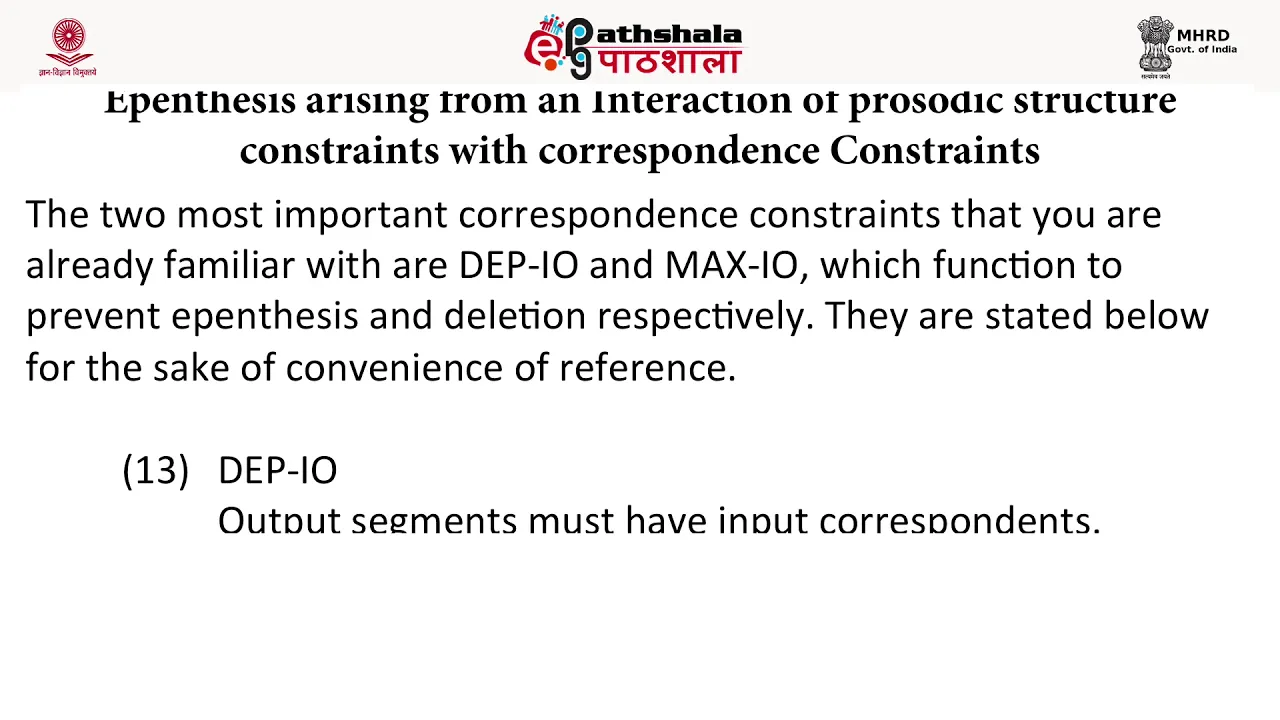
Constraint Interaction in Optimality Theory: Epenthesis & Deletion
@Vidyamitra
180 views•2018-08-20

Forensic Linguistics: How Language Solves Crimes | PBS
@pbsstoried
1M views•2024-01-25

Accent Expert Explains U.S. Regional Dialects | Part 1
@WIRED
9.3M views•2021-01-21
Related Study Plans & Knowledge Roadmaps
Structured learning paths in Linguistics