




![【EJ Lecture】現代に生きる 神話のふしぎ[最終回]ギリシャと日本――異なる神話の類似点](https://i.ytimg.com/vi_webp/owQQ2_nHZhs/maxresdefault.webp)
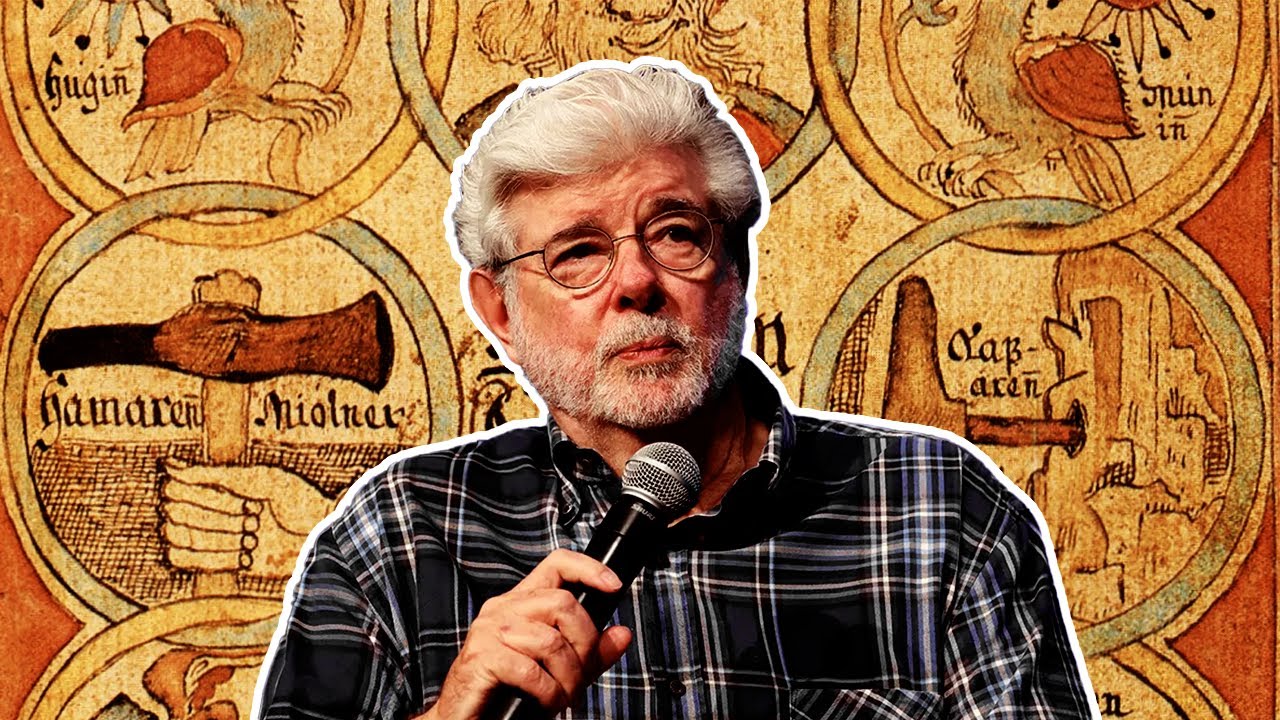










The Hero's Journey is a universal narrative structure identified by Joseph Campbell in his 1949 book 'The Hero with a Thousand Faces,' which describes a hero's transformative cycle of departure, initiation, and return; Christopher Vogler later adapted this into twelve practical stages for modern screenwriting, making it essential for understanding storytelling across films like Star Wars, which George Lucas explicitly credited with providing its structural foundation.
The Hero's Journey: Joseph Campbell's Story Structure Explained
Added:The fundamentals of narrative arc and the classic three-act story structure.
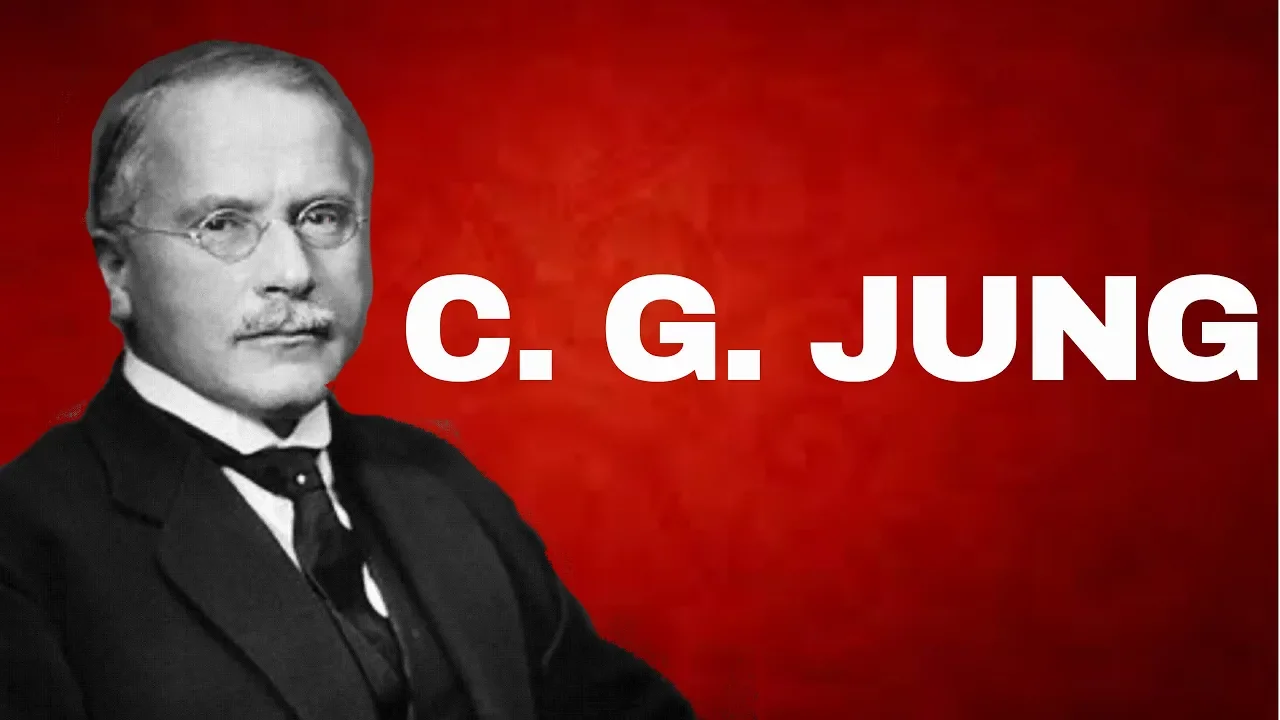
Carl Jung's psychological theory of archetypes and the collective unconscious.
The basic definition and cultural purpose of comparative mythology.
Analyzing and deconstructing popular modern films (e.g., Star Wars, The Matrix) using the 12-step Monomyth framework.
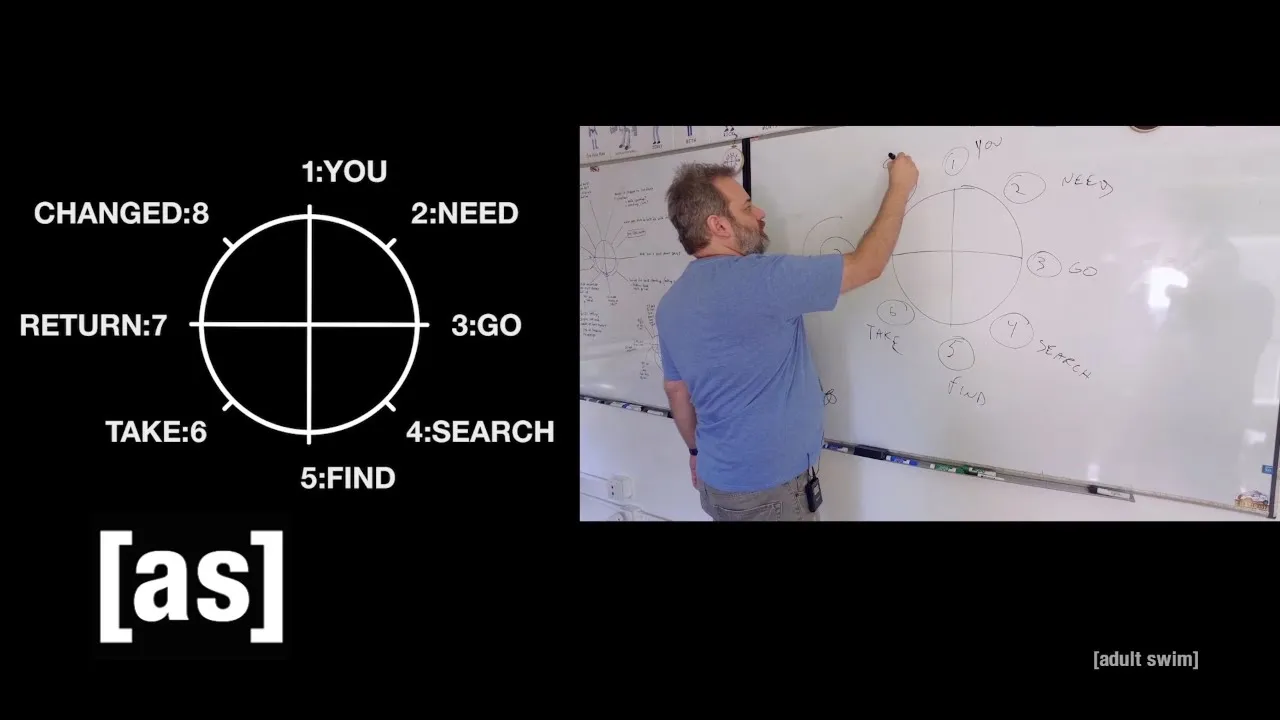
Studying alternative narrative structures, such as Maureen Murdock's 'Heroine's Journey' and Dan Harmon's 'Story Circle'.
Applying the Hero's Journey framework to creative writing, character development, and screenwriting.
Exploring how contemporary writers subvert and break the traditional Hero's Journey formula to create unpredictable plots.
82.3K views3Klikes30:20Original Release: 2025-08-04
Why the hero with a thousand faces?
>> There is a certain typical hero sequence of actions which can be detected in stories from all over the world and from many many periods of history. It's a cycle. It's a going and a return that the hero cycle represents. And uh I think it's uh essentially you might say the one deed done by many many different people.
The hero's journey is the backbone of the vast majority of stories. Elements of the seinal structure can be found even in the most subtle or avantguard narratives. So what makes the hero's journey so powerful and how do master storytellers use it?
This is what is the hero's journey.
[Music] Before we step into the unknown, be sure to subscribe to Studiobinder and click the bell to enable notifications.
Today, we will be joined by storytelling scholar KM Wayland to understand the lasting legacy of the hero's journey.
We'll be spoiling the following journeys.
Now, let's venture forth.
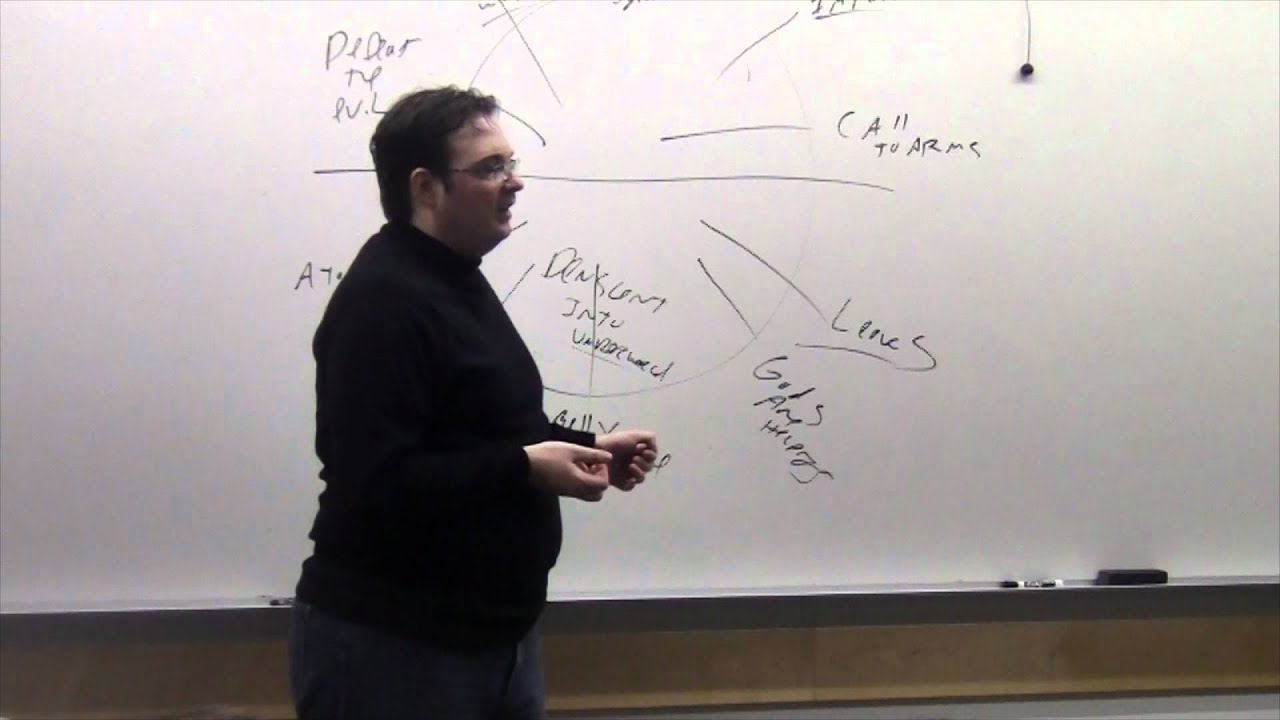
The hero's journey was first codified by Joseph Campbell in his 1949 book, The Hero with a Thousand Faces. In the book, Campbell laid out 17 narrative stages he saw repeated over and over in popular stories.
He summed the ark up as a hero ventures forth from the world of common day into a region of supernatural wonder.
Fabulous forces are there encountered and a decisive victory is won. The hero comes back from the mysterious adventure with the power to bestow boons on his fellow man.
As such, Campbell argued these stages could be divided into three sections: departure, initiation, and return.
Campbell also called this hero's journey the mono myth, a term lifted from James Joyce's Finnegan's Wake, referring to the fact that the story can be considered the ultimate archetype that stretches across time and cultures.
Campbell's theories were heavily influenced by the psychoanalytic approaches of Sigman Freud and Carl Young in particular. To Campbell, the mono myth is so often repeated because it is a reflection of the human psyche and its development.
>> I think ultimately the reason the hero's journey has had such a lasting impact is because it's true. It speaks to something that is not just true of the human experience as in in our lives and what we encounter on a day-to-day basis, but something that's true on a much deeper level that kind of cuts down to the cathonic depth of who we are and that deep psychological experience and resonance because it's something that's so deep and unconscious. It isn't necessarily something that we are used to encountering or being conscious of in our day-to-day lives. So when we encounter it in story, it's kind of this revelatory experience where it really strikes at the heart of something that in some ways we always knew but maybe we didn't know that we knew.
The term hero's journey didn't become widely used until the late8s, but Campbell's work already had big influences on high-profile acolytes, most notable of whom was George Lucas.
Lucas credited Campbell's work with providing the structure for Star Wars. I went around in circles for a long time trying to come up with stories and the script rambled all over and I ended up with hundreds of pages.
It was the hero with a thousand faces that just took what was about 500 pages and said, "Here is the story. Here's the end. Here's the focus. Here's the way it's all laid out." It was all there and had been there for thousands and thousands of years as Mr. Campbell pointed out and I said this is it. But as influential as Campbell's theories have been, they've also come under criticism for being male ccentric and selective in their examples.
In 2007, Christopher Vogler synthesized and broadened Campbell's ideas in his book, The Writer's Journey.
Today, the 12 steps Vogler laid out have become arguably more popular than Campbell's original structure.
We'll look at Vogler's 12 steps along with Campbell stages to give a comprehensive look at what the hero's journey looks like and how a wide variety of filmmakers use it.
Not every film follows the monoth completely, but many times a story will utilize at least some of the steps outlined by Vogler and Campbell.
Now, where to begin?
>> Vogler begins the hero's journey with the ordinary world.
>> It's wonderful to see you, Gandalf.
>> This introduces our hero and what their typical life looks like. By doing so, the audience can understand the magnitude of the journey and evolution to come. This first stage is original to Vogler. Campbell spent less time discussing the setting before the stories begin in earnest, but did note that it should be established as a place of comfort, which can then be juxtaposed with the growing pains to come.
Everywhere I lie, there's a dirty great root sticking into my back.
Just shut your eyes and imagine you're back in your own bed with a soft mattress and a lovely feather pillow.
>> The ordinary world often lays the groundwork for the story to come.
In Oceans 11, we are introduced to our main characters as bored and unfulfilled.
>> God, I'm bored. You look bored. I am bored.
>> Until a major heist activates them.
What? You want to knock over a casino?
[Music] In sci-fi and fantasy, this first stage is also used to establish the rules of the world. Mickey 17, for example, shows how Mickey's reincarnation works while also illustrating the hierarchy of the ship.
>> Expendable?
You're applying to be an expendable?
Seriously, >> you read through the whole application?
>> Uh, yeah, I should have read through it.
In Star Wars, the ordinary world is tattooing, where Luke lives a humble life with his aunt and uncle on a farm.
We see that Luke is kind but naive.
>> Take these two over to the garage, will you? I want them cleaned up for dinner.
>> But I was going into Tshi Station to pick up some power converters. You can waste time with your friends when your chores are done. Now, come on. Get to it.
>> All right. Come on.
>> He has a lot to learn.
>> I'll see you bright and early 9:00. Be there or be square. Voggler's second stage is the call to adventure.
Also referred to as the inciting incident. This is the event or piece of information that thrusts a task upon the hero.
The call to adventure is Campbell's first step. He argues that the task placed upon the hero should be in some way suited to them, something that they were always meant to do, even if they didn't know it. He writes, "That which has to be faced and is somehow profoundly familiar to the unconscious, though unknown, surprising, and even frightening to the conscious personality makes itself known.
The call to adventure can be subtle. in friendship. It's when Craig is invited over to Austin's house.
>> Oh, honey, the new neighbor, Austin, he uh he brought these over for us earlier.
He also invited you over for a drink at 8 tonight. I I said you'd go.
>> You don't know my schedule.
>> You sit there every night. Might be nice to have a pal, you know, a bud.
>> It may seem insignificant to us, but for Craig, this is a momentous change.
Whoa, buddy.
>> Oh. Oh.
>> A character may not even realize they're being called to an adventure.
>> Sandro.
[Music] >> In Lavanchera, Italian for the adventure, a friend's disappearance at first isn't taken seriously.
>> And it's only later when the characters realize their lives have been changed.
Help me Obi-Wan Kenobi.
>> In Star Wars, the call to adventure is the distress message from Princess Leia.
>> Help me Obi-Wan Kenobi.
>> Little does Luke or the audience know, but he is the only person in the galaxy up to this quest.
Sometimes change doesn't come easy.
>> You can either come with me and live up to your ultimate potential or lie here and live with the consequences. I want to lie here.
>> In the next stage, which both Vogler and Campbell dubbed the refusal of the call, the hero rejects the task, whether out of fear or feelings of inadequacy.
>> Would you accept this great honor that I have offered you with all my heart? No.
Campbell notes that the refusal of the call makes the ordinary world around the protagonist feel more intolerable.
They may feel like they're making the right decision to avoid the journey, but it is quickly clear they are not. He writes, "Refusal of the summons converts the adventure into its negative. Walled in boredom, hard work, or culture, the subject loses the power of significant affirmative action and becomes a victim to be saved.
A refusal of the call can tell an audience a lot about a character. In Michael Clayton, Michael rejects Arthur's claims about needing to do what's right, showing us that Michael is hardened and cynical.
>> I have blood on my hands.
>> You are the senior litigating partner of one of the largest, most respected law firms in the world. You are a legend.
>> I'm an accomplice.
>> You're a manic depressive.
>> I am Shiva, the god of death.
>> Let's get out of Milwaukee. We'll talk about it.
>> A refusal of the call may occur because the call seems immoral.
In the room next door, Ingred struggles with the morality of Martha's request to help her die.
>> I can't answer you now, Martha, but I promise you I'll think about it right now. I'm too confused and too terrified.
>> I understand. I understand. It's sudden and it's disconcerting.
I'll think of someone.
>> In a new hope, Luke must contemplate leaving his home planet.
>> You must learn the ways of the force if you're to come with me to Aldderan.
>> Aldderan? I'm not going to Aldderan. I'm going to get home. It's late. I'm in for as it is. I need your help, Luke.
>> A difficult decision showing us how unprepared Luke is for what's to come.
But something must convince the hero to commit to the journey ahead.
>> I can't do this without you.
>> Hey kid.
>> Vogler calls this stage the meeting with the mentor.
Typically this is where a wiser figure enters the picture to persuade the hero to re-evaluate the task presented with them giving them the confidence to move forward.
>> No such thing student only bad teacher.
teacher said student do.
>> Campbell labeled this stage supernatural aid, describing it as a moment when a magical figure gives the hero the tools or powers to begin the journey. He writes, "What such a figure represents is the benign protecting power of destiny. The fantasy is a reassurance."
Having responded to his own call and continuing to follow courageously as the consequences unfold, the hero finds all the forces of the unconscious at his side.
In the Matrix, this is when Morpheus gives Neo the red pill, blue pill speech.
>> This is your last chance. After this, there is no turning back. You take the blue pill, the story ends. You wake up in your bed and believe whatever you want to believe. You take the red pill, you stay in Wonderland, and I show you how deep the rabbit hole goes.
Remember, all I'm offering is the truth, nothing more.
Witness uses this stage to mislead the audience.
>> It's MC Paul. He's one of them anyway.
Positive ID from the Amish kid.
>> Chief Schaefer seems like a mentor, but he is actually the enemy. All the same, he pushes the hero to the next stage.
>> Right. FBI or maybe somebody from Treasury, I'll take care of that. I want maximum security on this. Where's the boy?
>> Um, my sister's house. He's going to have to be moved. Who else knows about this?
>> Just you and I.
>> Let's leave it that way.
>> In Star Wars, the wise figure is Obi-Wan Kenobi, who we technically meet before the refusal of the call, but who still serves the same purpose. He pushes Luke to leave Tatooine and encourages him to learn about the Force.
>> How am I ever going to explain this?
>> Learn about the Force, Luke.
Look, I can take you as far as Anchor Head. You You can get a transport there to mostly or wherever you're going.
>> You must do what you feel is right. Of course.
>> In the fifth stage, the hero agrees to heed the call and passes the point of no return.
Campbell describes the threshold as a stark transition from the known to the unknown, and includes an additional stage, the belly of the whale, where the hero is fully separated from their familiar world through a form of rebirth.
Campbell notes, "Beyond the hero is darkness, the unknown, and danger, just as beyond the protection of his society, danger to the members of the tribe." The usual person is more than content. He's even proud to remain within the indicated bounds, and popular belief gives him every reason to fear so much as the first step into the unexplored.
If a hero isn't about to go off on a literal journey, you can recognize this stage as when they agree to do whatever is being asked of them. In The Insider, this is when Jeffrey Wagan agrees to go public as a whistleblower.
>> What does it cost these people to do this to us? Nothing.
My girls are crying, so them. I want a tape. I'm done.
>> I heard you. I got to get you to testify in court. Get it on public record.
>> Then hold it off the air until you got that. But I want to go to New York and I want to go on the record right now.
>> Or it can be the moment where the characters can't go back to how things once were.
>> Yes, I'd like to hire you as an employee.
Would you consider spending the week with me?
I will pay you to be at my beck and crawl.
>> Holy sh.
>> This stage in Star Wars is when Luke and Obi-Wan leave for Aldderon after discovering his aunt and uncle have been murdered.
There is no returning to his old life.
Now >> I want to come with you to Aldderon.
There's nothing for me here now. I want to learn the ways of the Force and become a Jedi like my father.
With the journey underway, the hero finds their footing in the new world they've entered into. Bogler calls this initial stage tests, allies, and enemies. A hero may find friends and be introduced to foes, all while confronting their first obstacles.
This is a combination of three of Campbell's stages. The road of trials, which is a series of challenges the hero must overcome. The meeting with the goddess when the hero gains more knowledge that will help them down the line and the woman as the temptress where the hero is exposed to temptations which distract them from their quest.
In battleship pmpkin, this stage is the first conflict where the sailors begin their struggle against the officer class.
[Music] In Superb Bad, the stage begins after Fogle's arrest, and the characters embark on different shenanigans to accomplish their goal.
the nice >> came out. I took him down.
>> I mind you up.
>> The test allies an enemy stage in Star Wars has Luke meet friends such as Han Solo and Chewbacca with a few run-ins with the Empire and practice his lightsaber skills.
[Music] >> You see, you can do it.
After the hero's journey is well underway, preparation for the culminating conflict starts to occur.
>> I'd turn back if I were you.
>> This is what Voggler calls approach to the inmost cave and it can take many forms.
It is a combination of two of Campbell's stages. The first is the atonement with the father which is typically the midpoint of the story where the protagonist has to confront and get strength from a powerful figure.
The second is apotheiois, where the hero gains new knowledge and is prepared to tackle their final obstacle.
In Spider-Man, this is the Thanksgiving dinner, which sets up the larger conflicts to come. How did you say that happened?
Bike messenger knocked me down.
[Music] >> Excuse me. I've got to be gone.
>> Why? Something has come to my attention.
>> Lion King, meanwhile, directly follows Campbell's book by having Simba talk to the spirit of his father, who offers him guidance.
>> Remember who you are.
You are my son and the one true king.
Remember who you are.
No, please don't leave me.
>> In Star Wars, this stage occurs when Luke and his friends are pulled into the Death Star. The stakes have been raised.
[Music] Voggler's next stage is the ordeal when everything starts going wrong for the protagonist.
Campbell does not have a direct corollery to this stage, but he alludes to this step in his next stage. the ultimate boon, noting that a hero often has to face a test beforehand.
The ordeal often takes the form of losing a character close to the protagonist.
>> Please let me go. You need to let me go.
>> In War of the Worlds, it is when Robbie joins the military and Ray's primary goal to keep his kids safe seems to have failed.
[Music] But it can also be a quieter realization.
>> In Black Girl, the ordeal is when Yana receives a letter from her mother asking why she hasn't heard from her and asking for money.
This emphasizes her distance from home and the fruitless nature of her job.
The ordeal in Star Wars is when Obi-Wan sacrifices himself in a duel with Darth Vader so the others can escape.
This is devastating for Luke.
>> No, but solidifies his commitment to the resistance.
[Music] The ninth stage is the reward, also referred to as the seizing of the sword.
The hero has persevered and obtained what they have sought. That said, they haven't completed their journey quite yet. Their enemies and obstacles are not all vanquished.
This stage is what Campbell calls the ultimate boon.
>> The reward may conclude one arc while other arcs are left to continue.
>> In Punch Trunk Love, for example, the reward is when Barry meets Lena in Hawaii and kisses her.
But Barry still needs to address the fraudster story line.
>> The wizard will see you now.
>> Often the reward can be what the protagonist thought they wanted, leaving the rest of the story for them to find out they were wrong.
In Wicked, Alphaba and Galinda's reward is meeting the wizard, but they quickly realize all is not right.
Good luck.
>> In Star Wars, the reward is when Luke escapes with the plans to the Death Star and rescues Leia. He's achieved his goal, but hasn't finished his journey.
With the proverbial sword in hand, the hero must now return to their ordinary world while also confronting what their actions in the second act have wrought.
This is what Vogler dubs the road back and it is arguably where he diverges most from Campbell's stages. Whereas Vogler is focused on modern storytelling, Campbell is primarily focused on ancient myths and so Campbell includes three stages which are less common in today's story arcs. The first is the refusal of the return where the hero is hesitant to share their boon with their ordinary world. The next is the magic flight where the hero has to escape the beings who were protecting the boon. And the third is rescue from without where the hero enlists help from others to get back to the ordinary world.
In some like hot Joe and Jerry successfully evade the mob and the road back involves dealing with the repercussions of their disguises.
>> What am I going to tell him?
>> You're going to alope with him.
>> Elope.
There are laws, conventions.
>> There's a convention. All right. There's also the lady's morg >> in Midsomar. Meanwhile, Dany is accepted by the community and becomes the May Queen. But this false resolution is disrupted when she witnesses Christian cheating on her.
Voggler's road back can include many of Campbell's elements, as Star Wars does, where in this stage, the rebels analyze the Death Star plans and prepare for a final battle, and Luke prepares to use what he's learned to fight.
>> Luke, the Force will be with you.
[Music] What Vogler calls the resurrection is also known as the climax of the story.
The hero must wage the most dangerous battle yet, exhibiting all the powers they have earned on their journey.
Vogler describes this stage as a death and rebirth. Campbell, meanwhile, calls this step the crossing of the return threshold. Here, the hero crosses back to the ordinary world and faces the ultimate task to integrate what they've learned among their peers.
Campbell writes, "Many failures attest to the difficulties of this life affirmative threshold. The first problem of the returning hero is to accept as real after an experience of the sole satisfying vision of fulfillment the passing joys and sorrows, benalities and noisy obscenities of life.
In romance stories, the resurrection is often the last ditch attempt to revive a relationship thought dead, like Benjamin's interrupting of the wedding in The Graduate.
[Music] In horror films, the resurrection is typically a near-death experience with the monster, who is subsequently vanquished.
[Music] The resurrection in Star Wars is the climactic space battle where Luke relies on the Force to conquer his foes.
>> Great shot, kid. That was one in a million.
>> Remember, the Force will be with you always.
>> Having conquered all their obstacles, the protagonist enters Vogler's final stage. return with the elixir. The protagonist has completed their journey and they are a changed person.
This is a combination of Campbell's two final stages. The master of the two worlds where the hero has to balance their experiences from their journeys with their lives in the ordinary world and freedom to live where the protagonist achieves peace in their life. Campbell explains that this final stage accomplishes what the majority of heroes journey set out to accomplish.
the reconciliation of the individual consciousness with the universal will.
In Sideways, we see Miles quietly reconciled with his divorce and receive hope for a new relationship.
But not all stories have happy resolutions.
>> In Lost in America, David has failed in his goal to live outside of society and is swallowed back up by conformity.
This little town, >> how are you?
>> The subversion of this final stage adds to the pointed satire of the film.
>> In Star Wars, Luke returns as a hero, matured and aligned with his destiny.
The elixir is his successful use of the force which provides hope for the rebellion.
As the title of Campbell's book tells us, there are countless ways to tell the hero's journey, as well as to interpret, analyze, and adapt it. As a archetypal experience, it inherently is foundational. At least that's our understanding of archetype. And so what I think has evolved though is our understanding of it and our ability to interact with it. And you know, some of that has come through these deeply subjective truths that people are bringing to it through their own experiences that often can feel very very different, but when you examine it and you start really looking at what's happening under the surface, it is, you know, it's still there. Like those mythic architectural underpinnings are still there.
>> In the end, a good story is a good story. I think the foremost way in which writers can get the most out of the hero's journey is first and foremost by recognizing it for what it is. And that is as this deep and mythic structure that allows us to tap into something that's really primal and universal within the human experience.
>> Start telling your own story with Studio Binder pre-production software, which includes tools for screenwriting, storyboarding, and shortlisting. Until next time, good luck on your journey.
[Music]
Up Next

30:02
Homeric Epics and Their Impact on Greek Culture | Lecture Part 1
@taipeiforum
233 views•2013-03-25

12:54
Triumph of Orthodoxy Icon: Byzantine Art & History Explained
@BenCallan
2.1K views•2024-08-06

25:19
Post-Production Sound for Film: The Complete Process Guide
@StudioBinder
142.4K views•2025-03-17

1:42
Game of Thrones Opening Credits: A Cinematic Analysis
@gameofthrones
46.3M views•2011-04-18
Related Study Plans & Knowledge Roadmaps
Structured learning paths in General & Interdisciplinary Studies
general-studies
Elevator Engineering: History, Physics & Cities
01From Hoists to Safety Brakes: The Dawn of Vertical Lift
02Hydraulic vs. Traction: The Engineering Physics of Elevators
03Modern Speed, Safety, and Algorithms
+ 2 more learning modules
12h5 modules
Explore Roadmap
general-studies
Rubber: Material Science, History & Geopolitics
01Origins of Natural Rubber & Mesoamerican History
02The Chemistry of Natural Rubber & Vulcanization
03The Geopolitics of the Rubber Boom & Colonization
+ 2 more learning modules
12h5 modules
Explore Roadmap
general-studies
Containerization: Evolution, Logistics & Trade
01Ancient Trade & Bulk Cargo: Amphorae to Barrels
02The Industrial Revolution & Cardboard Packaging
03The Containerization Revolution: Malcom McLean
+ 2 more learning modules
12h5 modules
Explore Roadmap
general-studies
Textile Tech: Evolution, Labor & Global Impact
01Pre-Industrial Textiles: Handloom & Cottage Industry
02Mechanization: The Spinning Jenny to the Power Loom
03The Factory System & Global Labor Transformation
+ 2 more learning modules
10h5 modules
Explore Roadmap