


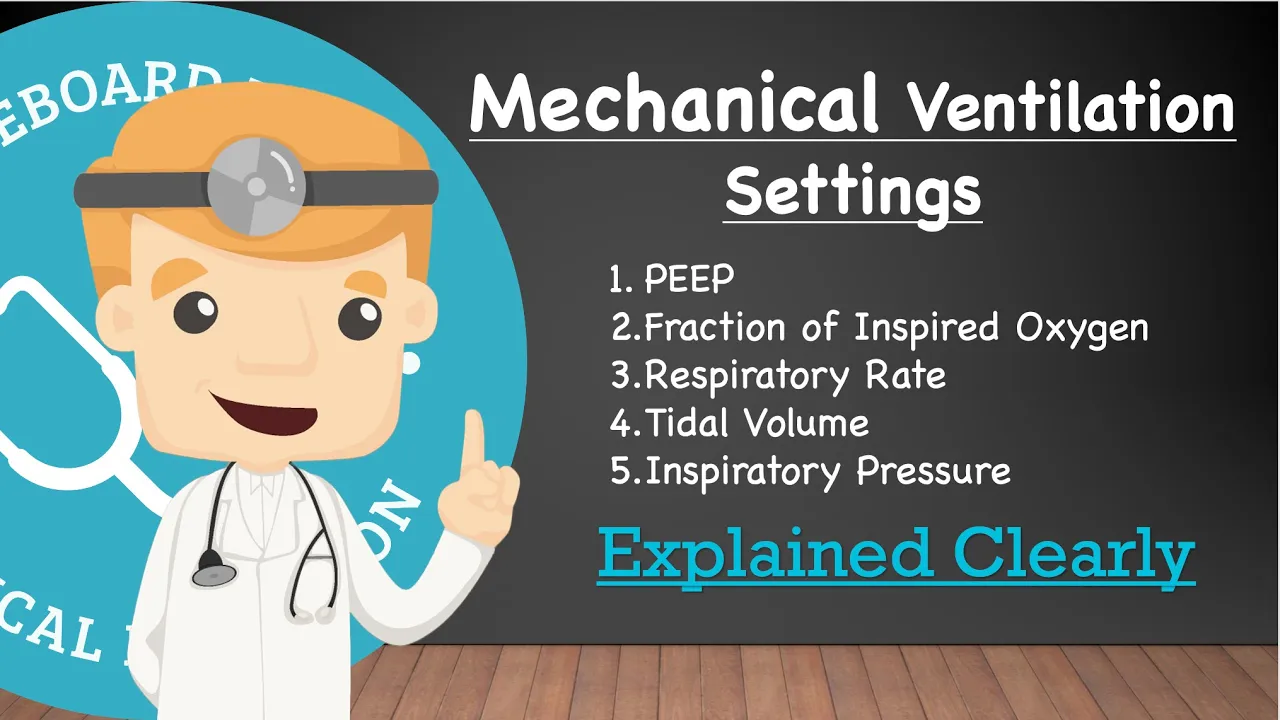

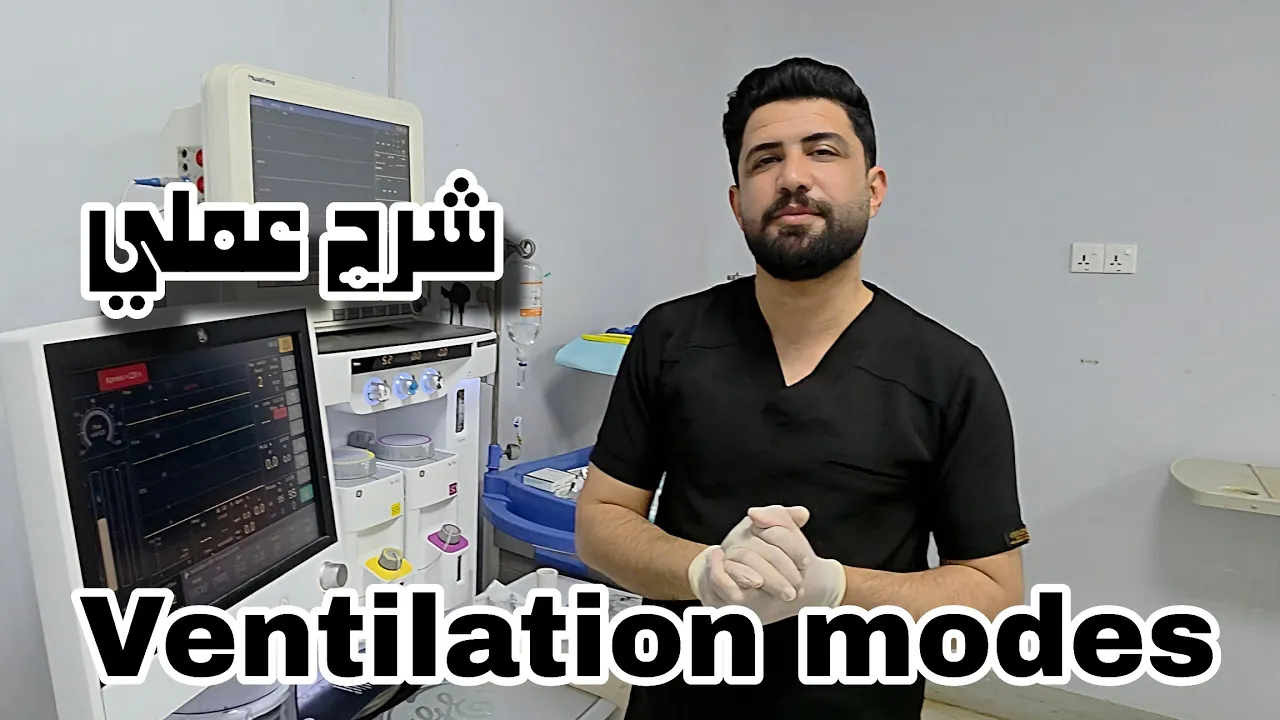






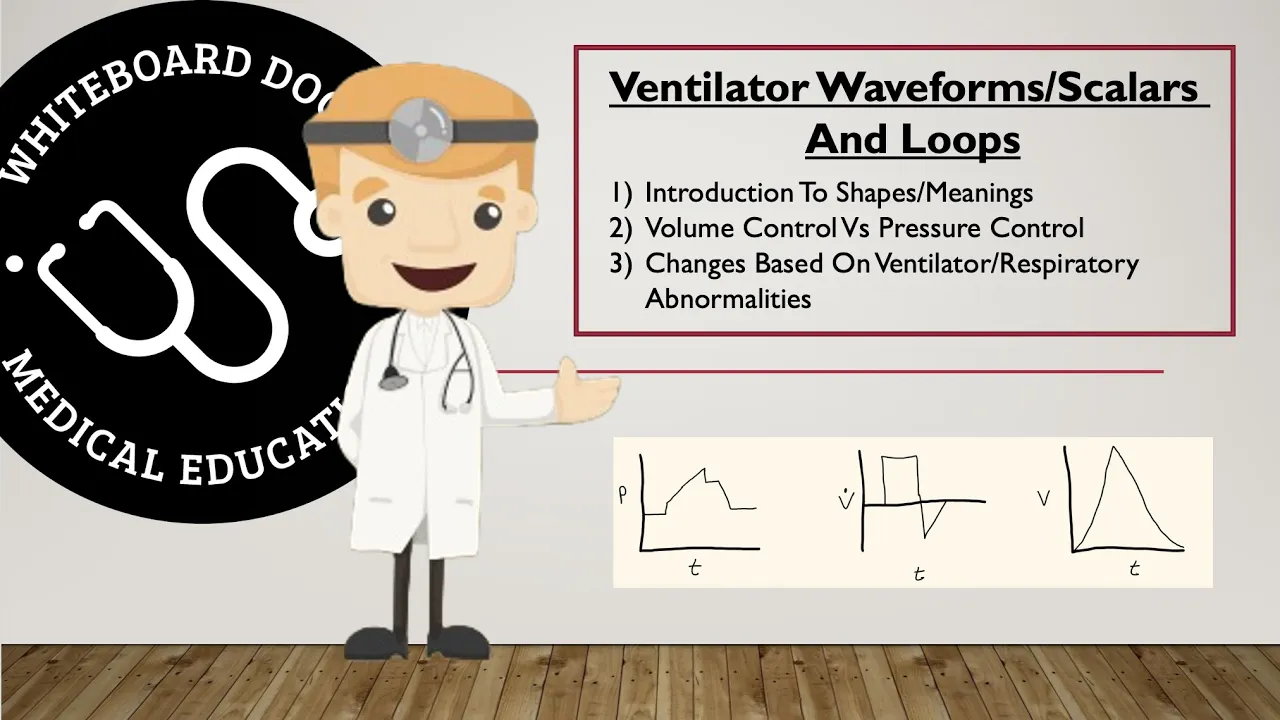






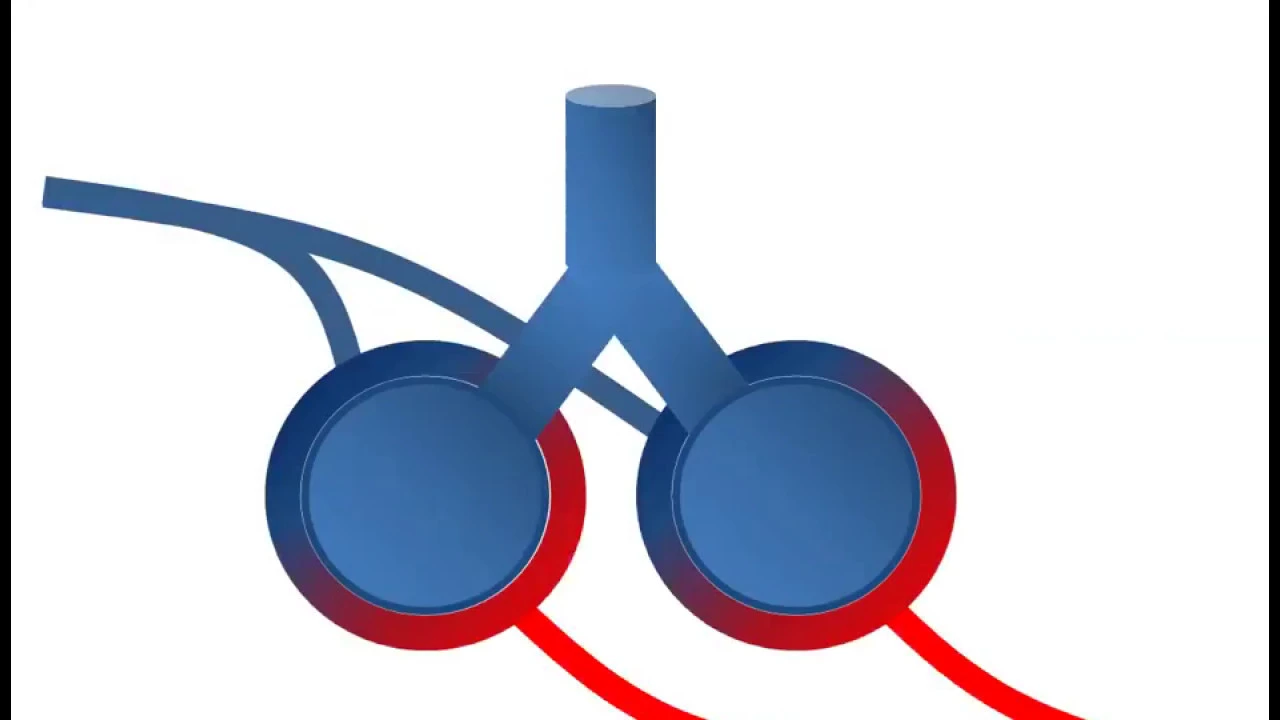




In pressure control ventilation, clinicians set a target pressure change (pressure control level) and inspiratory time, which then determines the tidal volume delivered based on lung compliance; unlike volume control where pressure varies with lung compliance, pressure control maintains constant pressure delivery while volume and flow become the variables that change, following the pressure-volume relationship principle where increasing pressure in the lungs results in increased volume.
Modes of Mechanical Ventilation: Pressure Control Explained
Added:Basic respiratory physiology, including the concepts of lung compliance, airway resistance, and the physical relationship between pressure, volume, and flow.
Fundamental definitions of key ventilator settings such as Tidal Volume (Vt), Positive End-Expiratory Pressure (PEEP), and Respiratory Rate (RR).
The core operating principles of Volume Control Ventilation (VCV), where tidal volume is the independent variable and airway pressure is the dependent variable.
The mechanisms of ventilator-induced lung injury (VILI), specifically the distinction between barotrauma (pressure-induced) and volutrauma (volume-induced).
Interpretation of ventilator graphics and scalar waveforms (flow, pressure, and volume over time) to identify patient-ventilator asynchrony in pressure control modes.
Advanced dual-controlled ventilator modes, such as Pressure Regulated Volume Control (PRVC), which dynamically combine the safety of pressure control with the guaranteed volume of volume control.
Clinical application of pressure control ventilation in managing restrictive lung pathologies, such as Acute Respiratory Distress Syndrome (ARDS), using lung-protective ventilation protocols.
Understanding Pressure Support Ventilation (PSV) and weaning protocols to transition patients from mandatory pressure control to spontaneous breathing.
37.6K views324likes11:38Original Release: 2014-08-20
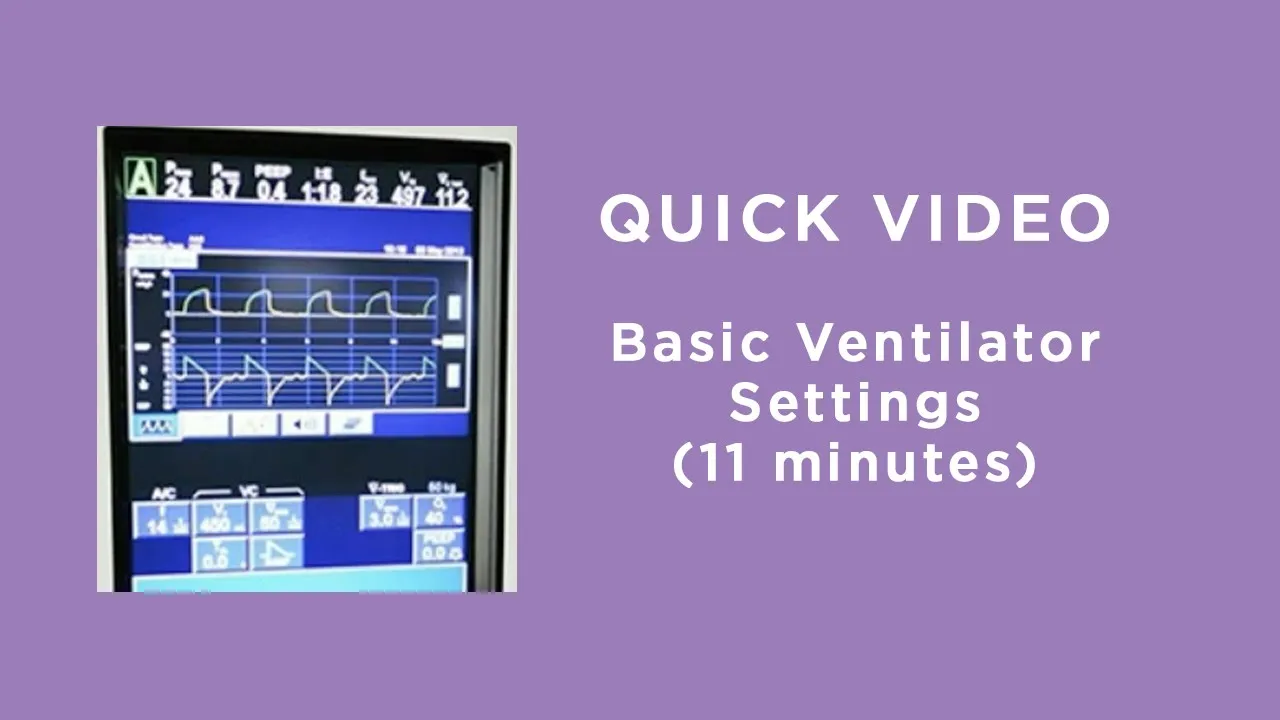
hello and welcome to this video um this is the 11th video now in the series of principles of mechanical ventilation in this one we're going to cover the mode the mode of ventilation that we know as pressure control okay so we're going to cover pressure control um and we're going to sort of cover it by comparing it to one we've already covered so we've already looked at volume control so we're going to we're going to try and get our heads around pressure control um by sort of comparing it to volume control and I'm going to bring up a ventilator wave form here and and you're going to have a look at it and we'll and we'll see what we're doing okay so um we're going to use the ventilated screen is going to be using the example of assist control pressure control right and remember that we um we talked a lot about assist control and he said that in assist control mode you can get controlled breaths and you can get assisted breaths and we know what these are if you don't need to go back and watch the videos before because we've covered all this already so sisted brats are triggered by the patient but are identical to control breaths control breaths are triggered by time based on the respiratory rate that we set okay so when we looked at volume control we said that we let's just write VC over here okay so we set the volume right and we set the flow okay and um the resulting variable of that the the variable that's sorry that I keep variable is like a word we use like pressure is a variable and flow is a variable and volume is variable but in volume control we control volume and flow and pressure is variable right pressure varies based on um how compliant the lungs are like if they're easy to open the pressure is going to be lower for a given volume at a set flow and if the the compliance is very bad if they have very poor compliance and the lungs don't open easily then the pressure is going to be quite high for the same given volume and flow right so pressure varies in volume control in pressure control and you can probably imagine we we control the pressure that is why it's called pressure control um so we let's just put PC we set a pressure okay we set a pressure control which I'll explain in a second and we set a time so it's it's that it's similar in that we set two things here we set a a volume and how fast we want that volume to be delivered and in pressure control we set a pressure change and how long we want that pressure change to be applied for so the factor that's variable well its factors is going to be volume and flow okay they're going to be variable based on again the lung compliance how easy the lungs are to inflate how stiff they are how floppy they are okay so in pressure control we we set the pressure change and we set how long we want that pressure change to be applied for to the lungs okay and then as a result of that we're going to get a change in volume in the lungs because if you increase the pressure in the lungs we've seen in the compliance videos we've seen in the pressure volume relationship videos is that if you create a change in pressure there's going to be a change in volume okay so in in volume control we were taking the volume side of that picking a volume and seeing what pressure we end up with because the pressure is going to vary and in pressure control we pick a set pressure we pick a change in pressure and then we're going to end up with a volume and that's going to vary okay so if we imagine let's take a different color here maybe we'll just use this one if we imagine a this is a pressure time graph so we have time on this axis and pressure on this axis okay so we we touched on Peep and we talked a little bit about what peep is positive end expiratory pressure we're going to do a whole video on it but for now just take it take my word for it that it's just an elevated level of pressure in the circuit which is includes the patient's lungs that is there all the time it's there at Baseline so instead of the we're going starting from zero pressure we start from slightly higher so let's say our Peep's five okay so this is our Baseline what we call a basine so this is this is the patient in exhalation then this they're in the expiratory phase right now and then we decide we want to deliver a breath okay so in pressure control we what what we do is we just pick how how high we want this pressure change to be so let's say this is 25 okay so that means that the difference in pressure between our Peep and our Peak pressure here is 20 right so our pressure control is 20 and this is our pressure control okay because it's the change in pressure in the circuit so we set how high we want this to be this could be 15 20 25 we we select how high we want that to be um and then we say okay how long do we want that 20 of pressure to be held for okay so this is our inspiratory time so we set a pressure and we set a time that we want that pressure to be applied for and if you think about Bo's law the larger the change in pressure the larger the title volume okay so the title volume is going to vary but we can change we can kind of get the title volume we're looking for by adjusting how high or how low this change in pressure is this pressure control is okay and that's it that's that's the breath that's all we do and then we just repeat this 10 times a minute or 12 times a minute or 14 times a minute whatever whatever we're doing for our respiratory rate okay so this is really all there is to pressure control we set a pressure in this case it's 20 because it's 20 centimet of water above the five that we started with giving us a peak of 25 so we set the 20 of pressure control and then we we did this for a certain amount of time let's say this is 1 second okay so we set 20 of pressure control for 1 second and as a result of these two we're going to get a title volume so let's have a look at the ventilator screen and then we can um see what we're talking about so this is the same ventilator that we used for the volume control video I wanted to keep it consistent um so let's look at just remind ourselves what's going on here so the remember that we set some variables on the ventilator these are the ones that we set we pick all of these things all of these blue boxes here we pick those um and up here here we have measured variables right this is just to re familiarize you with the ventilator these these things here we don't pick them these These are being measured by the ventilator the ventilator is measuring the peak pressure it's measuring the mean pressure it's measuring the peak measuring na ratio these are all measured things we don't select these okay but we do select these boxes down here so let's look at them and really the the part that we actually care about for this video is this part and it's convenient L been given this bracket with the PC here this is what actually relates to our pressure control right we set a pressure and we've I've used the same ones here for the example and we set a time so this over here is our pressure waveform and you can see that this is essentially what we just drawn here right we have zero at the bottom we have time on the uh the x- axis here and we have pressure on the y- axis and you can see that that's about well that is 25 there okay so where the the top of the green is and the yellow so that top there is 25 you can see the 20 there it's a little small I apologize for that but so we can see that we've taken the pressure in the circuit from five our Baseline pressure which is our peep okay and we've elevated it to 20 above that five okay which gets us to 25 and we've held it there for one second right so that's pressure control that's all we do and as a result of that as a result of that pressure change we get a title volume so this is our title volume over here 579 and I picked this one from all the pictures I took because it kind of emphasizes that nobody would pick 579 Ms as a title volume but no one would no one would choose that and set it into the ventilator right it's just we' pick a whole number like 580 or 600 or something right so you can see that this this is just that's just the title volume that's been generated as a result of our pressure change okay so that's basically pressure control so it's it's one of those things which people think is complicated but it really isn't if you understand pressure volume relationships like as you increase the pressure in the system the volume's going to increase right and in the and similarly if you're in volume control you increase the volume in the system then the pressure is going to increase as long as you know that relationship and you understand boils law pressure control is pretty simple you elevate the pressure to wherever you want it to be and for a certain amount of time and as a result of that you're going to get a title volume okay and then you do that a certain number of times a minute right in this case we're doing that 10 times a minute but say 10 times a minute we're going to elevate the pressure 20 above our peep for one second that's pressure control okay so um let's um let's calculate our IE ratio really quick right so we talked about this before if we want to do IE ratio in pressure control it's actually really easy now because we have we've got a set I time right so our I time is 1 second now what's our expiratory time well our total cycle time is 6 seconds right um which means every 6 seconds we're going to get a breath our inspiratory time is 1 second so 1 second of that is inspiration which means 5 Seconds of it is exhalation so our IDE ratio is 1 to five okay and you can see up here our ID ratio is 1 to five right so one thing you may have caught out on this picture is that it looks like there's a sort of mistake in in the image if you've really got the concept of pressure control down you'll see here that our Peak pressure is 26 and you say to yourself oh H hang on a sec why is the peak pressure 26 when we've got five of Baseline pressure and then 20 of pressure control shouldn't the the peak pressure be 25 and if you're thinking that then congratulations yes the pressure should be 25 this this system right now is hooked up to a test lung on a ventilator so they're not completely accurate and this won't always be 25 but it should be 25 if we're doing exactly what we're saying here okay so if you thought that then well done because you've you've got it that's it should be 25 but it's 26 just because we're on A tes line okay so that's project control um in the next couple of videos will start to delve a little deeper into it um but if you understand pressure volume relationships you can understand pressure control
Up Next

18:23
Pressure Support Ventilation: Principles of Mechanical Ventilation 13
@RespiratoryReview
55.5K views•2015-07-21

48:47
Graphic Medicine: Comics for Collaborative Healthcare Communication
@nationalpatientadvocate
189 views•2023-12-04

10:28
Neuroanatomy: Central and Peripheral Nervous System Divisions Explained
@AKLECTURES
136.2K views•2014-09-20
3:05
Stages of Labor and Vaginal Birth | Childbirth Animation
@nucleusmedicalmedia
52.1M views•2017-08-18
Related Study Plans & Knowledge Roadmaps
Structured learning paths in Medicine
medicine
Abnormal LFTs: Diagnostic Workup & Pathology
01Liver Anatomy and Basic Physiology
02Introduction to Liver Function Tests (LFTs)
03Hepatocellular vs. Cholestatic Patterns
+ 3 more learning modules
12h6 modules
Explore Roadmap
medicine
Analyzing Blood Smears: RBC, WBC & Platelets
01Introduction to Blood Components & Smear Preparation
02Normal Morphology of Blood Cells
03Erythrocyte Pathologies & Morphological Variants
+ 2 more learning modules
12h5 modules
Explore Roadmap
medicine
Mechanical Ventilation: Waveforms & Alarms
01Anatomy and Physiology of Breathing
02Introduction to Mechanical Ventilation & Core Modes
03Ventilator Settings and Waveform Interpretation
+ 2 more learning modules
12h5 modules
Explore Roadmap
medicine
Neuro Exam: Localization & Stroke Syndromes
01Foundations of Neuroanatomy and Vascular Supply
02The Neurological Examination: Step-by-Step
03Principles of Neurological Localization
+ 3 more learning modules
18h6 modules
Explore Roadmap