



















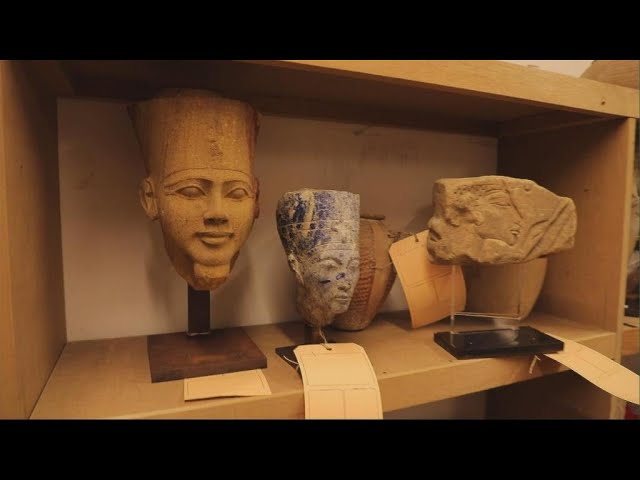

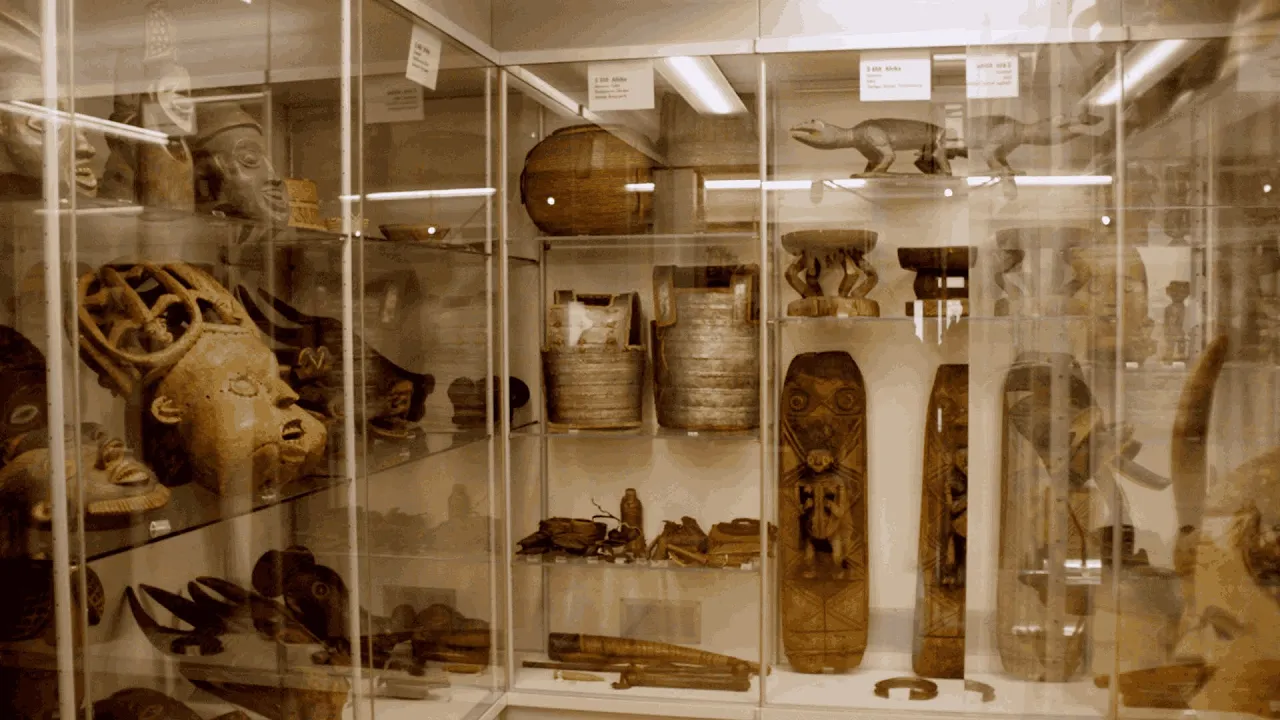
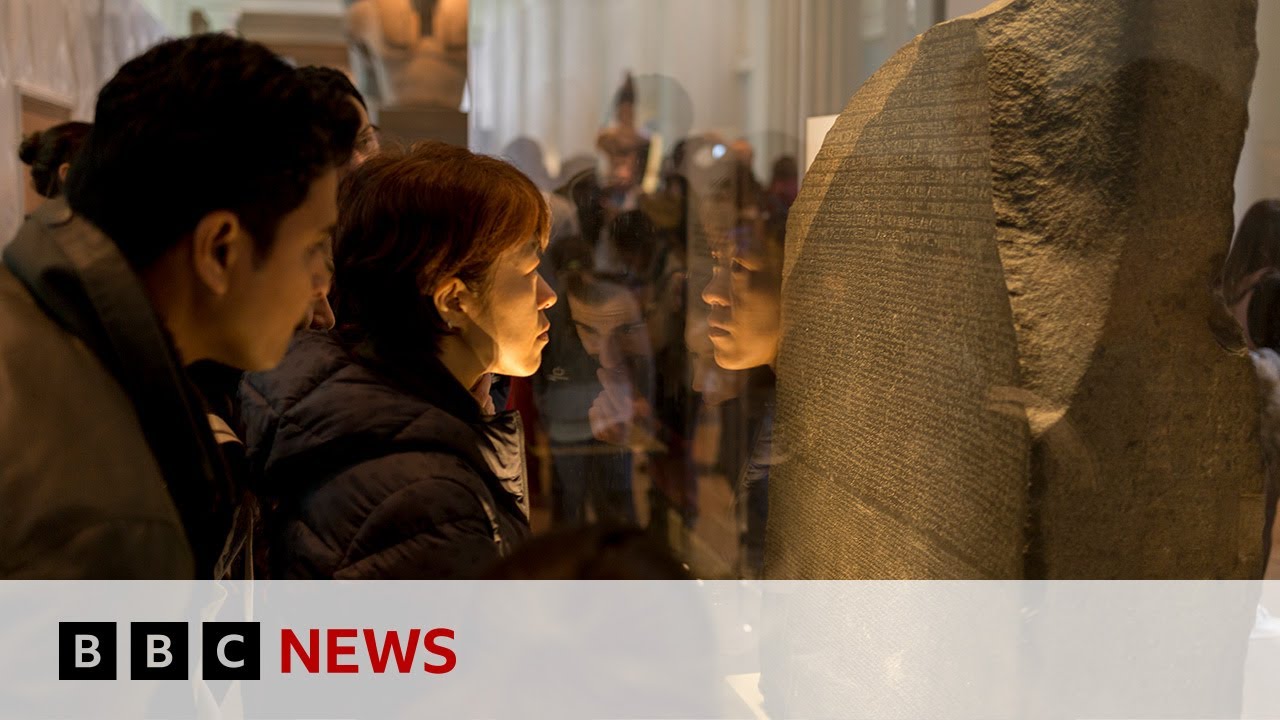


Many prestigious Western museums contain artifacts that were looted or stolen during colonial periods, raising ongoing debates about repatriation; for example, the British Museum holds the Parthenon Marbles (stolen by Lord Elgin in 1801) and Benin Bronzes (looted from Nigeria in 1897), while a 2018 French report found that over 90% of Africa's cultural heritage is held outside Africa in Western museums, with modern markets continuing to supply stolen antiquities through inadequate provenance research and institutional complicity.
Museums and Stolen Artifacts: Colonial Looting in World Museums
Added:Understanding the history of Western imperialism and colonialism, specifically how European powers extracted resources and cultural objects from colonized nations.
The concept of 'provenance' in art history and museology, which refers to the documented history of an object's ownership and custody.
The fundamental role and historical mission of major public encyclopedic museums (e.g., the British Museum, the Louvre) as repositories of global cultural heritage.
An introduction to the UNESCO 1970 Convention, which established international standards to prevent the illicit import, export, and transfer of cultural property.
In-depth study of ongoing repatriation and restitution legal disputes, including specific case studies like the Parthenon Sculptures (Elgin Marbles) or the Benin Bronzes.
The philosophy and practice of 'decolonizing museums,' which involves restructuring curatorial authority, representation, and collaborative stewardship with source communities.
The economic and legal dynamics of the modern illicit antiquities trade, including how looting operates in conflict zones and the role of private auction houses.
Alternative solutions to physical repatriation, such as digital repatriation, 3D scanning, and collaborative joint-custody exhibition agreements.
12M views198Klikes34:09Original Release: 2022-10-03
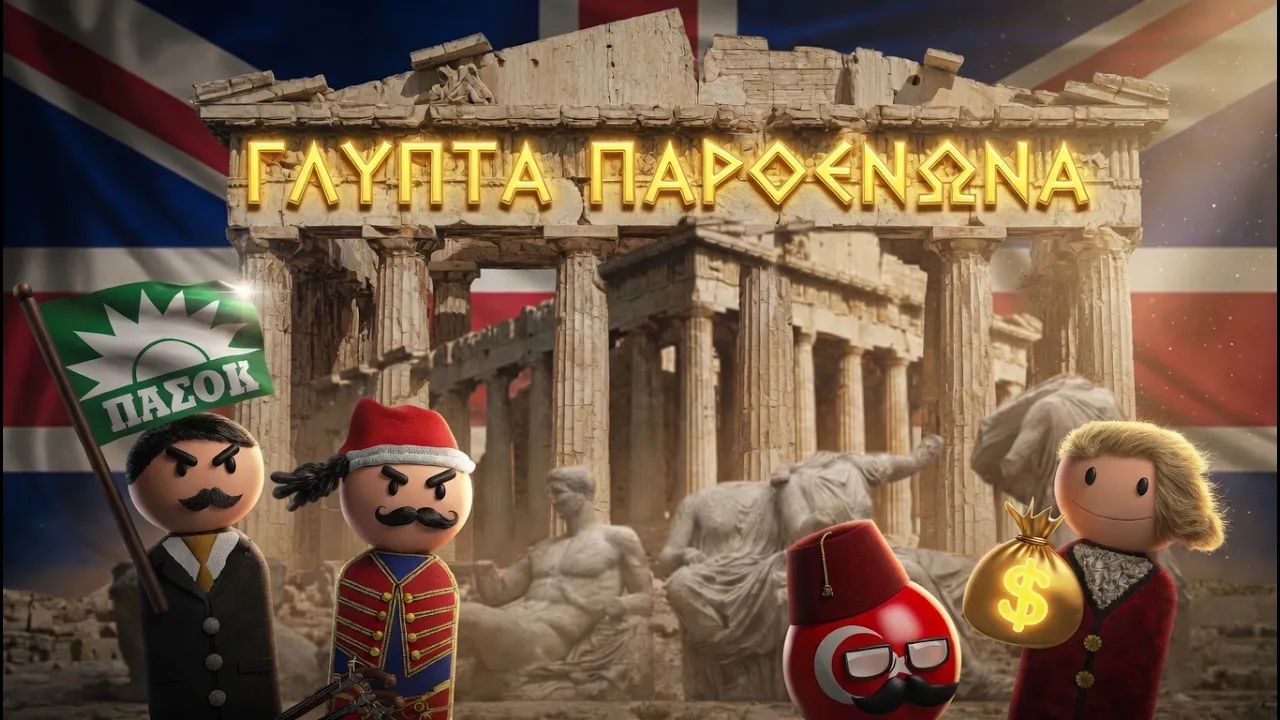
moving on our main story tonight concerns Antiquities basically relics from bygone times that can tell us stories about people from the past like your nana but less overtly racist specifically our story concerns what happens when those relics go missing and I'll start by giving you just one example if you go to Greece you might go to the Acropolis Museum and while you're marveling at sculptures that are over two Millennia old you might notice some odd details like this sculpture which appears to have a white foot or this one where someone's whole upper half seems to be suddenly and overwhelmingly white it's what's known in the artwor as season 2 of The Wire well there is an explanation for where those missing pieces are and as a British person I'm a little bit implicated so the darker stone is the original whereas this white Plaster that represents what's in the British museum yes exactly and here it is in the British museum the missing marble head and chest floating in a display space yep we took it honestly if you are ever looking for a missing artifact nine times out of 10 it's in the British museum it's basically the world's largest lost and found with both lost and found in the heaviest possible quotation marks there specifically those marbles known in England as the Elgen marbles were taken by Lord Elgen a 19th century British Lord who hacked them off the pathon it's something that the Greeks are understandably Furious about because they weren't lost they were taken which is clearly worse it's like being unable to find the last puzzle piece and learning that you didn't actually misplace it a British ear snuck into your house stole it and then sold it to a museum over a thousand miles away Greece has been demanding the return of the Elgen marbles for decades now but the response from some of the British Museum's Defenders has been even by British standards unbelievably patronizing one can't even think about returning the elegan marbles to Athens until the Greeks start caring for what they already have I'm sure they'd take great care of the path and sculptures if they were returned but if you knew a woman was abusing her child you wouldn't let her adopt another and that's what the Greeks were asking for what that is not a great comparison especially because it admits the fact that the woman's child in this example was basically kidnapped so it's less a woman asking to adopt another child than is her demanding the return of her first one and look the parnon marbles should absolutely be returned to Greece even that woman you just saw now says that she thinks they should go back but those marbles are just the tip of the iceberg here the fact is Antiquities largely from the global South which includes Latin America Africa Asia and the mid East have been taken and enshrined in European and American museums on a much larger scale than you may realize in 2018 a report commissioned by the French President found that over 90% of all Africa's cultural heritage is held outside Africa by Major museums but as the voices arguing for Antiquities to be returned are getting louder others are resisting any change in 2010 when asked whether the UK would ever return the Coen or Diamond to India prime minister David Cameron refused saying if you say yes to one you suddenly find the British museum would be empty which is incredibly frustrating and it's frankly no wonder that some are now taking matters into their own hands in June a conges activist removed a 19th century chadin funeral poll from the cab Hol Museum in Paris as part of a protest campaign against plundering during the colonial era yeah that happened and obviously that man was unaware of the Museum's very clear policy No Stealing African Antiquities starting now so given just how many Antiquities in some of the world's most prestigious museums are essentially stolen goods tonight let's talk about museums and this is going to be a larger story than normal and we're going to do it in two main parts first concerning how Antiquities ended up in museums in the past and then about the thriving modern Market that keeps them supplied with objects to this very day and look we don't have time to recap the entire history of colonialism and the plunder of Antiquities there are so so many stolen artifacts that we could talk about tonight from the treasures of tipu suan to the Zodiac of dendera but in order to say a lot in a little let's stay with the British museum in its own promotional materials it makes a big feature of just how important and influential its founding was in January 1759 the British museum opened its doors the first national public Museum of the world initially the objects were based on the founding collection of Sir Hans Sloan and this is Hans Sloan scholar entrepreneur physician who was connected with the best minds of his time in fact our collection has always been about Connecting People okay first I'm going to say what we're all thinking that guy has definitely Googled could Night at the Museum actually happen not because he's scared of a big bony dinosaur chasing him but because when no one is around he definitely the art and he definitely doesn't want any of it talking but that notion of museums as a place for people to connect with our shared history and with cultures all over the world clearly isn't fundamentally that but it's also not wholly representative of the actual history of how many museums came to be for instance H Sloan who on his best day looked like that had some interesting connections of his own specifically the fact that he was married to an aess to Sugar plantations in Jamaica worked by enslaved people and bought many objects in his collection with that wealth meaning that the museums very foundations are inextricably tied up in slavery and colonialism with the same being true of many of its most prized Holdings take the Benin bronzes it's a term that refers to a huge range of objects produced in the Kingdom of benine which is currently part of modern day Nigeria now the benine bronzes were looted from the Palace of the king of benine or the obber in 1897 after the British military invaded and violently toppled him that mission was vindictive and it was destructive but it was also extremely targeted the British soldiers armed with machine guns conquered the city and burned it to the ground but not before carefully taking thousands of artifacts they piled them up neatly photographed them and even labeled them loot this photo taken at the benine palace after the raid shows Soldiers with the dismantled plaques that were brought to the British Museum and sold all over the world okay first that's obviously awful but second it is pretty remarkable that a British soldier went to the trouble of carefully labeling each of those photos and the captions he used were Loot and more loot at the very least you could have chosen something more descriptive like I don't know Dan Terry and I after doing cultural genocide but the Looting of the benine bronzes wasn't just a physical loss it was a cultural and historical one take these plaques they are not just pieces of art there's something much more important as this member of the benine royal family explained those things are like our own vales whatever was significant to would tell the Guild of bronze casters to cast it in bronze to keep a record so taking them away was like yanking of pages of our history right for that Kingdom these were their memories made physical and these plaques were laid out in a very specific order which was then lost when the British tore them from the palace walls meaning that the British in effect stole and scrambled a nation's memories a crime so up even Black Mirror hasn't thought of it yet the bronzes are currently scattered among 161 museums and institutions around the world with only nine such institutions located in Nigeria and understandably there have been called for the return of the bronzes for decades now and a handful of museums have complied but the British museum which holds more brones than anyone has repeatedly refused pointing to the British museum Act of 1963 which explicitly forbids it from giving an item in its collection away with very limited exceptions and the thing is that law does exist but laws can also be changed if you want to and the more you hear British officials talk the clearer it becomes that that is not what they want at all well I think that they properly reside in the British museum the collections of our great National institutions have been developed over many many centuries in many many times in uh questionable uh circumstances I think the question now is about what we do with these I love the Benin uh bronzes I've seen them many times throughout my life and I think them being in the British museum which is a world repositive of Heritage allows people to see yeah that offensively English man loves the Bene brones and while I'm so glad that Oliver James Dowden MP for harsmar has seen them many times throughout his life the fact is not everyone gets to do that as this Nigerian artist and art historian will attest 1995 in London that was my first time of seeing an original uh ancient Bain artwork was yes at the British museum to see for the first time these objects it was a mixture of pride in the achievement of these ancient artists and anger mixed with a sense of loss most Nigerians will never see them exactly the generations of British children who've grown up loving the benine bronzes come at the expense of generations of Nigerians who haven't and again this is just one example of so so many and whenever the question of returning stolen objects comes up there are usually a few stock responses which are worth quickly addressing the first is basically that these were acquired in a different time and you can't judge the present by the standards of the past when France was recently roiled by a debate of whether to return African art this catastrophically French art historian basically made that exact case these artifacts who do they belong to they belong to the museums where they are now because they are lows you know and uh if even for the the artifacts which were looted in the 19th century in the 19th century the the war there was laws and the Looting of war was legal maybe it's not moral but it's legal and if you want to come back on this why don't you come back 19th century 17th century 16th century you cannot stop you don't know where to stop okay so how do I explain this so that that man will understand yes uh there may not have been lows explicitly making looting illegal but the idea that that gives you C blanch is how you say or sheit and setting aside that D reer the Looting apologist art historian seems less like a real person and more like a character in tint in how he saved the Egyptians from themselves the fact is looting wasn't just an acceptable unavoidable byproduct of War under Zelo it was sometimes baked into the plan from the outset in fact during one notorious British raid in Northern Ethiopia in 1868 the Army even brought along an expert from the British museum to bid for some of the choicest items and importantly people knew the practice was wrong even back then after that raid on Ethiopia the British prime minister said he deeply lamented for the sake of the country and for the sake of all concerned that these articles were thought fit to be brought Away by a British Army and urged that they be held only until they could be restored and he was saying that in 1868 we didn't even know how to fix a UTI without leeches back then but we knew that raiding other countries for their was deeply lamentable which is brittish for super up now the second common argument is that objects are actually safer under the care of Western institutions than they would be in their home country here is that case being made by an art dealer regarding pre-colombian Arts from Peru according to the law which I think like to think of as Solomon's law the one who loves the baby best gets the baby the one who pay the most for the baby gets the baby if Peru cannot properly take care of his National Treasures the rest of the world will take care of it for the peruvians as it should be that man seems great but you know what you know what he is right it's exactly as King Solomon famously declared the real mother is whoever agrees to offer 200,000 over the asking price all cash inspection waved but that argument you can't be trusted with your own property you'll just damage it is hard to land even before you learn that the caretaking record of some museums is mixed at best remember that woman insisting that the Greeks couldn't possibly take care of the parnon marbles here is a fun fact multiple leaks have been reported in the British Museum's Greek Galleries and in the 1930s in what museum officials later admitted was a heavy-handed attempt to clean the sculptures they actively damaged them by scrubbing them with wire brushes and a harsh cleaning agent and look even under Solomon's law whoever loves the baby gets the baby but if you scrub the baby with wire brushes we take the baby be away and the final argument that you hear is that these museums are an open repository of the world's treasures and can actually increase the number of people who can enjoy them but you've already seen someone point out that is only true if you can get to the museum in question and also it's worth noting that most display only a tiny fraction of their collections the British museum for instance has a collection of 8 million objects although only around 880,000 of them just 1% are on public display at any one time and it can be pretty Ging for people to find that their Heritage which is often part of a vibrant present day culture is sitting in storage in the British Museum's underground loot prison here in the US we've stashed away many Native American artifacts and just watch as members of the eastern shishoni and Northern Arapaho tribes are allowed to visit artifacts in storage at Chicago's Field Museum so just beyond here is the store room where we'll be looking at some of the artifacts when I think about objects that belong to treble members that are just sitting there in the dark I felt angry and I felt sad you just walk in and there's just like rows and rows and rows of all these objects they've been boxed away since they were collected nobody can see them touch them be around them that is devastating and it gets a lot harder to pretend that these objects are fulfilling a mission of educating and connecting people when they're in a basement in a box labeled with a Sharpie and at this point you may well be thinking well obviously we shouldn't have taken those objects in the past but now we know better but you should know this practice is still very much going on which brings us to the second big part of our story The Modern Antiquities Market because items are still being bought sold and donated all the time between private individuals museums dealers and auction houses and when it comes to those items the key word to understand is Provence basically the full history of an object and the path it took to end up here because not every piece is like those famous benine bronzes where it is clear from our history books who took them for most items Research into Provence is absolutely critical it's not just how you know whether an item is real or fake but also whether or not it got to you legally the auction house sbeast even has a whole video on its website braging about how much it loves researching Providence even though it seems to view it as less an ethical imperative and more as a pretty sweet marketing perk so provenance that's my favorite part Pro is the history of ownership for a work since it was brought to life who that work of art had been made for whose walls it's been hanging on how many different hands has it passed through who else has looked at it in some cases who else has loved it who wore it when did she wear it how did she wear it how often did she wear it for me this is what we kind of live for is to get the great stories to tell and often the story of his ownership can be just as interesting if not more interesting than the artist ronance is something that in a way doesn't matter and yet and yet yeah and yet in another way it really does a quick side note never in my life has there been such an intimidatingly bougie collection of people you can almost hear them saying actually it's pronounced quas hor well I do not doubt the southern Beast loves Back stories that add luster and crucially value to the objects that they auction they and many others seem much less interested when those stories uncover something seier one Gallery owner who recently pled guilty for her part in trafficking looted Antiquities said that buying and selling objects with vague or even no Providence was so much the norm in the Art Market it was a conspiracy of the willing and to see exactly what that conspiracy can look like just look at one attempted sale where soube ignor some pretty glaring warning signs 3 years ago Cambodia learned that sbe's auction house in Manhattan was attempting to sell a thousand-year-old masterpiece for $3 million the feed of which were still at the temple in Cambodia s thees was warned by the very expert they hired to appraise the statue that it was quote definitely stolen they knew the feet were still there despite what their expert told them they decided to put the statue on the front of one of their more prominent auction cataloges of the year holy how did that conversation go the experts said this is definitely stolen and soube said yeah but it might not be right and the expert said no it is stolen and SBE said you're so funny and the expert said I'm sorry what and southerby said seriously Jamie you're too much and the expert said thanks but again it is stolen and sby said tell your mom I said hi and the expert said my mom's actually dead and then they printed it on the cover now legally I have to tell you sther bees insist that they did nothing wrong and that they conduct extensive due diligence before offering items up for auction but you should know in the case of that statute Federal prosecutors eventually intervened forcing s bees to hand it over to Cambodia where it was eventually happily reunited with its feet it's a real Cinderella Story isn't it if Cinderella had been amputated at the ankle and interestingly and to that point it is not uncommon to see statues missing feet or hands and while you might assume that it's damaged due to time it's often a sign that it has been stolen with looters or thieves soaring off head to sell separately or hacking a sculpture out from a temple wall so rapidly that they leave the feet behind and if I know this and you now know this then sou bees definitely did and again this is why Providence research is so vitally important but many buyers fail to do even the bare minimum meaning that the demand for stolen goods will always be met by a steady supply just watch as a dealer in nepales artifacts deac shakya basically someone through just how easy it can be to get paperwork to justify removing an object from the country by law the country's Department of archaeology cannot issue export papers on items more than a 100 years old but deac says he has a tried and proven way so government no problem getting these out no I mean we have to give some money to under table otherwise no problem okay I mean it's not legal oh okay but still I mean we can get the St it's no problem okay that is way too easy I don't know how hard it should be to illegally export a culture's treasured Antiquities but it should at least be harder than find a guy who has a guy that man was later arrested and charged presumably alarming any museums with large collections from Nepal and just look what happened when those documentary makers sat down with a representative from the Ruben Museum right here in New York to ask a pretty basic question in Nepal authorities recently arrested a number of antique dealers has the Ruben Museum done any dealings with Deepak shakya or his family the shakas I don't think we should answer that we the Museum's PR person interv look into you'd have to do a lot of research to know that do you want to say do you want us to like get back to about it that would be yeah that'd be good okay a pretty good rule when you're asked do you work with art thieves is there any answer that's not an immediate no is instantly suspicious and while the Reuben later claimed that to their best knowledge they didn't have any connection to dpack shaki or any objects from him they did return these two objects from their collection just this year that were very much stolen and the nepes group that pressured them to do that recently identified another object that they say is stolen which you will never guess just happens to be in the Rubin right now now but don't worry the Ruben told us they're looking into that one now too and I'm sure they'll get back to us after all it's what they do and the thing is there are lots of dealers around who use museums to launder their reputations take subash kapor he was once one of the leading sources of Asian arts for museums and collectors the Met currently has 86 objects from him in its collection and even through him a private reception in 2009 after he donated dozens of Indian drawings which was a real win-win because the Met got the drawings and kapor got to tell people that he had art in the met and it's not like they would work with a disreputable dealer right but kapor was ultimately identified as a prolific trafficker of stolen goods and he didn't even bother coming up with good cover Stories the most common one that he used was the objects had come from the family collection of his girlfriend and you might be thinking that is so stupid it would only work on a group of real ding-dongs which I'd say you're absolutely right it seems to have worked on the Met 86 times and buying art without doing proper Providence research can blow up in a Museum's face in spectacular fashion take what happened a few years back at the Met Gala the year 2018 Kim Kardashian made an appearance wearing head-to-toe atellier Versace that was notably gold just like this guy neaman or more specifically his coffin which the Met had recently acquired guys a photo op of the two of them had to happen didn't it well when it did the internet absolutely exploded but then this happened the Metropolitan Museum of Art New York receiving a tip after Kim's photo from the Met Gala went viral the Manhattan assistant district attorney was emailed a photo by an anonymous informant in the Middle East saying he recognized the coffin and knew it had been looted Museum officials saying they bought the sarcophagus for $4 million from an art dealer in Paris in 2017 but were fool by fake paper saying it had been legitimately exported decades ago wow say what you like about Kim Kardashian the woman has a real knack for producing incredible images just by standing next to men that look like they died a long time ago now it turns out it turns out nong's coffin had been stolen during the Egyptian Uprising in 2011 and as the story unraveled it became very clear that the Met should have been a lot more suspicious when it was offered to them because the red flags included three conflicting ownership histories the involvement of known traffickers and a forged export license that bore the stamp Arab Republic of Egypt before the country used that name and that is too many red flags it like if Madam two swords bought and displayed a clearly alive James Spader your only job was to make sure this celebrity was wax how did you this up so badly let the man go home now the Met has since relinquished the coffin and AP apologized to Egypt but a Museum's approach to Providence research cannot be do nothing until Kim Kardashian takes a photograph in front of one of our objects and we're humiliated on the international stage this cannot be all her responsibility she's too busy revolutionizing shapewear and and it's worth it's worth noting in The Last 5 Years the Met has had no fewer than nine search warrants executed on it resulting in 37 pieces being seized and none of this is a victimless crime because the trafficking of looted Antiquities has financed some of the world's worst actors from the genocidal CH Rouge in Cambodia to the Islamic State in Iraq and Syria and the harm also extends to the personal level because again if I could impress one thing on you it's that when these objects end up in the west we put them behind glass and we call them art but in their home context they can be much more for instance this stolen sacred statue was in a Dallas Museum until March of last year and when it was finally returned to Nepal it was immediately put back into use for religious worship there was just a level of abject callousness on display here which to be fair some institutions are finally coming to terms with take the University of abedine in Scotland it it recently began reassessing objects in its collection and facing the Grim realities of what it had been holding on to like this glass sphere now the story behind how it got to abedine is both fascinating and completely horrifying this Hindu holy man had been challenged to hold the glass Sphere for 12 years in order to obtain a beneficial afterlife he only managed eight subsequently we discovered that in the anatomical collection of human skulls we have his skull wow is that his head that is yeah let's have a look gosh that's him amazing and awful at the same time isn't it they're cremated aren't they Hindus and he hasn't been crated that's profoundly offensive isn't it and here we are in the 21st century and we still have haven't put this person to rest no God that's terrible isn't it yeah it is and for about a hundred different reasons because a head in a box is less something you'd expect to find at an academic institution and more in the basement of a serial killer and that's emblematic of so much here the fact that for so long not only did no one see the significance of that object to that man no one saw that man as significant period so what can be done well some institutions like the University of abedine have been taking this Reckoning seriously they are beginning discussions with a local Hindu temple about what to do with that man's remains they actually also had a benine bronze which they repatriated late last year which is great but too often the Reckoning only goes so far a few years ago the UK's National Army Army museum returned to Ethiopia a stolen lock of hair belonging to an Ethiopian Emperor but took pains to point out that it was an I quote definitely not a precedent look the fact is museums should be getting asked hard questions about every aspect of both their acquisition process and their collections as part of a long overdue conversation about where their items came from and whether anyone wants them back you know some countries might even be willing to loan items back back out to museums around the world but with a clear understanding of who actually owns them the point is that conversation should be led by the groups that those items originally belonged to because while obviously museums should not be violating the law they shouldn't be violating basic moral decency either there is so much that we need to do to reckon with the harms both past and present of colonialism but this should really be the easy part and until such time as we genuinely engage in that Reckoning I'd actually like to present a potential Plan B hi I'm Kamal Nani and I'm here to introduce you to the payback Museum the first Public Museum in the world devoted to providing recourse to Nations who've been plundered of their greatest treasures throughout history by Colonial this is a collection that's all about disconnecting people specifically disconnecting Western countries from their you know the way they did to everyone else come on I'll show you around Welcome to our Africa Wing this is where there should be banine bronzes the spectacular tablets that tell the comprehensive story of a glorious Kingdom but they were put in a bag shaken and dumped out all over Europe like a bunch of Scrabble letters so until we get them back this room is home to one of the Stonehenge arches yeah Britain you might have noticed you're missing one we took it because you were just leaving it out letting it get wet I mean look there's like grass and on it frankly you can't even think about returning it until you start caring for what you already have honestly I don't even like it I think Stonehenge sucks it's just big dumb rocks but I don't want to return them despite you you having fun I am let's move on in our Latin America Wing we wanted to feature a collection of gorgeous ancient indigenous Peruvian textiles but they're all in a museum in Philadelphia so instead we have have the Liberty Bell an early American example of a Bell and we didn't stop there we also have Mt Rushmore to be more accurate just the tip and to be more specific of George Washington's [Music] nose and you might be thinking why are you depriving thousands of bored school children the sight of this oversized schn and this up Dinger well you know the rules whoever loves the baby best gets the the baby and your baby got got now we've got something really special I'm thrilled to announce the grand opening of our brand new state-of-the-art Asia Wing where we are Beyond proud to display a number of Priceless 10th Century religious statues or at least we were now we only have their feet so instead we got a couple things from France oh we got most of the Mono Lisa overrated bunch of from Versa Eugene Delroy Liberty Leading the People which I swear we're going to frame at some point or at least get some poster putty tack it onto a wall like in a college dorm room next to a picture of Bob Marley you know what's fun the story of its ownership can be just as interesting as the art itself who's owned it who's loved it who you'll stop as we ran out of the museum with it if that would happen which it definitely didn't because we have the papers saying it's fine see don't worry we followed all the lows now if you come with me our last stop is with the real treasure are here we are in the store room where we keep some of our most prized possessions items so valuable we know it's morally indefensible for us to have them the good every one of these boxes here would blow your mind we've got loot more loot oh this one's very very special in this box lie three of Gerald Ford's ribs you're wondering why do we have three of Gerald Ford's ribs it's because we could not get four and you're probably thinking wait he hasn't been dead near nearly long enough for that to be okay and I say oh yeah how long do you have to be dead for it to be okay huh I'm serious give me a number for how long after his death it's okay to have a part of someone's body sweating in your Museum's hot storage H so please if you're from one of the countries that own this stuff come enjoy it our museum is a world repository so you can visit your stuff anytime between 9:00 a.m. and 400 p.m. and not on Mondays and I know you might want some of this stuff back and we would love to give it back to you but if we give it to you everyone else is going to line up and suddenly this whole place is empty so the answer is no it's all ours [Music] forever smells like payback rib dust that's our show thanks so much for watching we'll see you next week good night for
Up Next
37:29
Cultural Repatriation: Should Museums Return Artifacts? | Debate
@aljazeeraenglish
7.3K views•2015-04-28

12:54
Triumph of Orthodoxy Icon: Byzantine Art & History Explained
@BenCallan
2.1K views•2024-08-06
19:18
Stand Your Ground Laws: History, Disparities, and Impact on Violence
@LastWeekTonight
6.7M views•2021-05-17

1:42
Game of Thrones Opening Credits: A Cinematic Analysis
@gameofthrones
46.3M views•2011-04-18
Related Study Plans & Knowledge Roadmaps
Structured learning paths in General & Interdisciplinary Studies
general-studies
Elevator Engineering: History, Physics & Cities
01From Hoists to Safety Brakes: The Dawn of Vertical Lift
02Hydraulic vs. Traction: The Engineering Physics of Elevators
03Modern Speed, Safety, and Algorithms
+ 2 more learning modules
12h5 modules
Explore Roadmap
general-studies
Rubber: Material Science, History & Geopolitics
01Origins of Natural Rubber & Mesoamerican History
02The Chemistry of Natural Rubber & Vulcanization
03The Geopolitics of the Rubber Boom & Colonization
+ 2 more learning modules
12h5 modules
Explore Roadmap
general-studies
Containerization: Evolution, Logistics & Trade
01Ancient Trade & Bulk Cargo: Amphorae to Barrels
02The Industrial Revolution & Cardboard Packaging
03The Containerization Revolution: Malcom McLean
+ 2 more learning modules
12h5 modules
Explore Roadmap
general-studies
Textile Tech: Evolution, Labor & Global Impact
01Pre-Industrial Textiles: Handloom & Cottage Industry
02Mechanization: The Spinning Jenny to the Power Loom
03The Factory System & Global Labor Transformation
+ 2 more learning modules
10h5 modules
Explore Roadmap