























The human body utilizes three classes of levers to facilitate movement: first-class levers (fulcrum between effort and resistance, changing force direction, e.g., splenius muscle extending the head), second-class levers (resistance between effort and fulcrum, providing mechanical advantage greater than 1 but sacrificing range of motion, e.g., plantar flexion at the ankle), and third-class levers (effort between fulcrum and resistance, the most common type in the body, sacrificing force for distance gain, e.g., biceps brachii flexing the forearm); third-class levers predominate because muscle insertions are typically located close to joints, prioritizing speed and precision over force production.
Levers in Human Body: Biomechanics & Anatomical Examples
Added:Basic physics of simple machines, specifically the definitions of a fulcrum, effort (force), and load (resistance).
Fundamentals of human musculoskeletal anatomy, including how muscles, bones, and joints interact to produce movement.
The concept of torque (moment of force) and how the length of a lever arm affects rotational force.
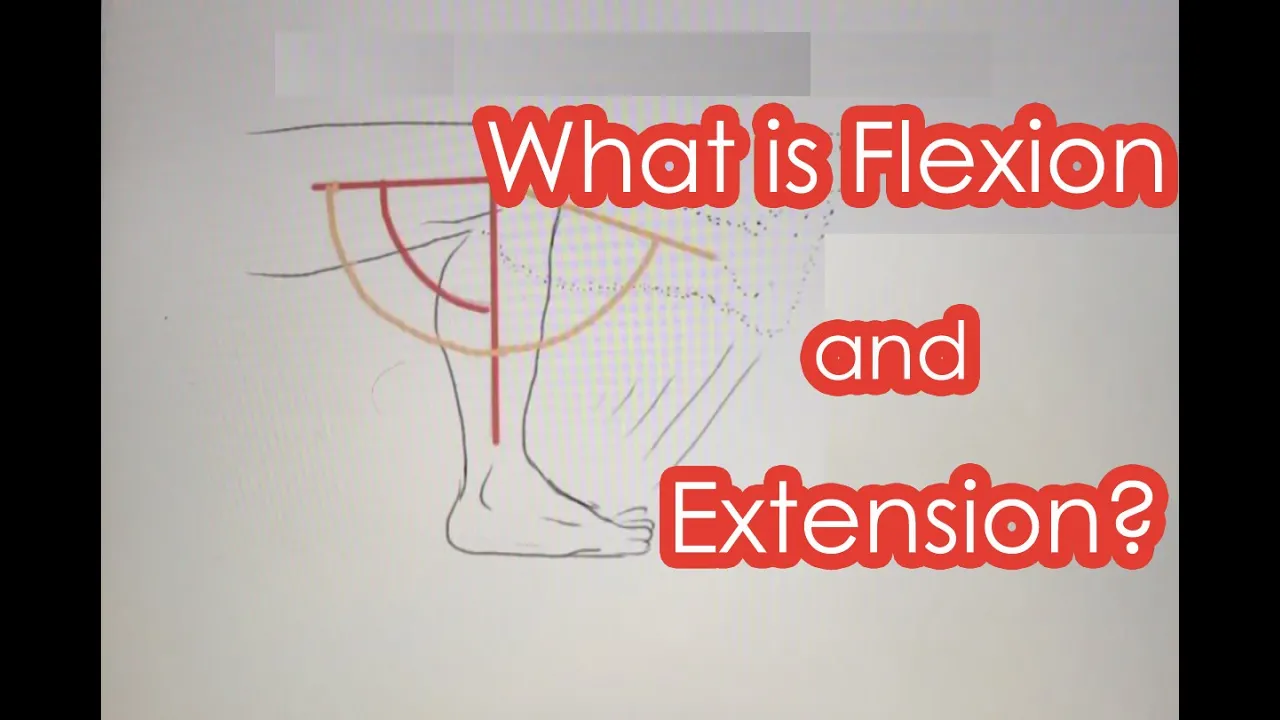
Basic anatomical terminology related to joint movements, such as flexion, extension, muscle origin, and muscle insertion.
Advanced biomechanical analysis of athletic movements, such as jumping, pitching, or Olympic lifting.
Clinical applications in physical therapy and rehabilitation, specifically how altered lever arms impact joint stress and recovery.
The role of mechanical advantage in prosthetic and orthotic design to restore natural human mobility.
Ergonomic workspace design, focusing on how tool placement and posture affect joint torque and muscle fatigue.
Muscle physiology concepts, such as the force-velocity and length-tension relationships during dynamic movements.
484.8K views3.9Klikes6:46Original Release: 2013-09-28
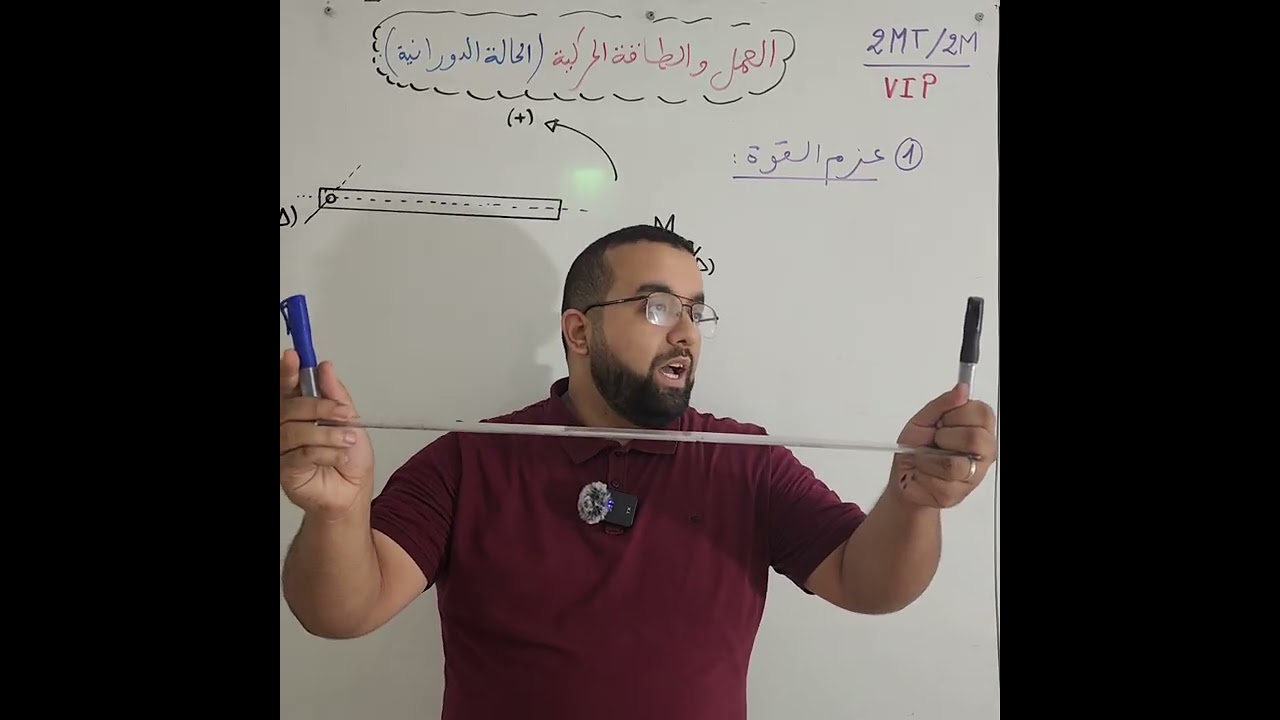
Lever systems and the human body. A lever is one of the simplest machines known.
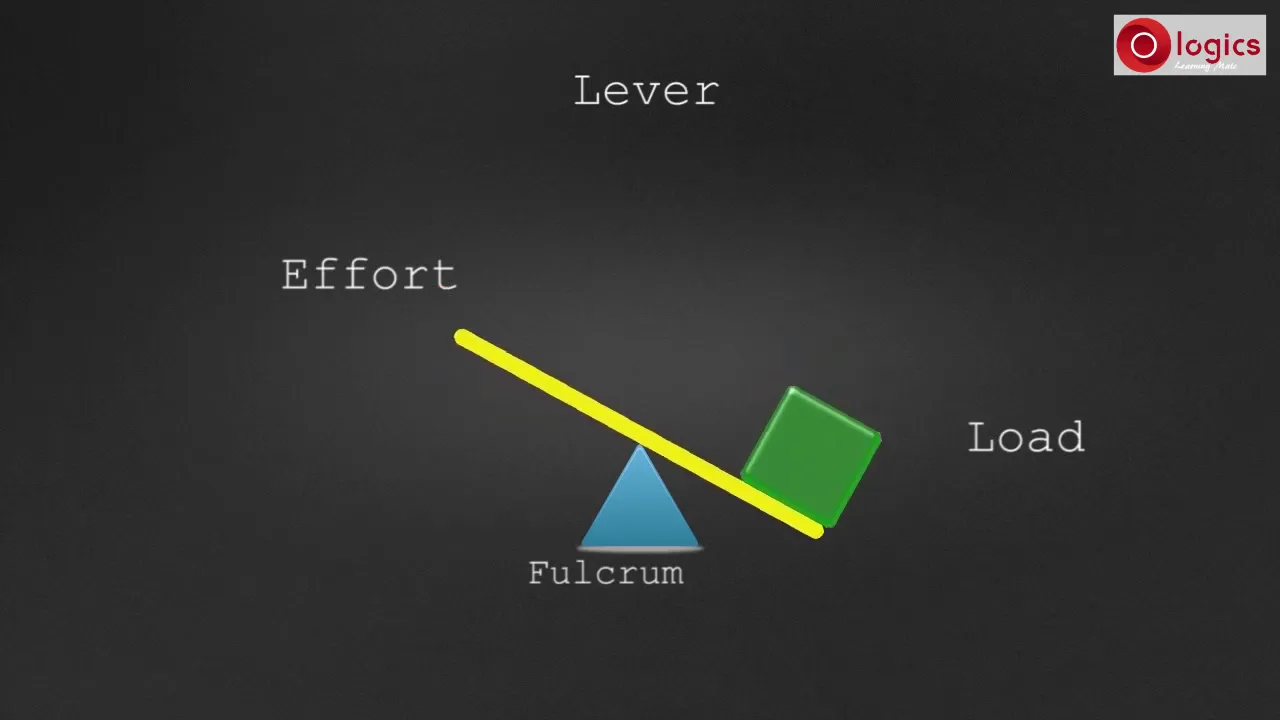
Basically, it consists of two forces an effort force and a resisting force acting around a pivot or a fulcrum. The distance from the effort force to the fulcrum is the force arm and the distance from the resisting force to the fulcrum is the resistance arm. At equilibrium the product of the force times the force arm is equal to the product of resistance times the resistance arm.
It should be emphasized that the force and the resistance refer only to the rotary components of the actual forces that's to say the components that are directed at 90 degrees to the lever arm the mechanical advantage the machine provides is determined by dividing the force arm distance by the resistance arm distance that's to say the mechanical advantage of a lever depends on where the forces are located. Regarding the uses of levers, there are three main uses of levers.
First, change the direction of effort force and this is what's going to be seen in first-class levers. Second, increase the force and that's what's going to be seen in second class levers; and third, as we have we are going to see in third class levers there is a gain of distance so levers are of three classes first class, second class, and third class and each class serves a specific function. In first-class levers they have the pivot or the fulcrum located between the effort and resistance, its mechanical advantage can be greater or less than one so here we can see that the mechanical advantage is more than one where the pivot is closely related or is at a short distance from the resistance that's why the resistance arm is shorter than the effort arm; however, the mechanical advantage can be less than one as in this kind of lever where the mechanical advantage is less than one because the resistance arm is longer than the effort arm or the force arm the teeter-totter is a good example of this class of lever and as we have said earlier that first class lever they change the direction of the effort force as an anatomical example of this kind of lever first-class lever is the action of the splenius muscle. The splenius muscle acts to extend the head across the atlanto-occipital joint, in fact, it's not only the splenius muscle but the muscles at the back of the neck while they act to balance the head across the atlanto-occipital joint they act as a first-class lever. In the second-class levers, the resistance is located between the effort and the fulcrum an example of a second-class lever is the wheelbarrow since the resistance arm is always less than the force arm therefore the mechanical advantage is always greater than one however in this arrangement the effort must always move a greater distance than the resistance that's to say the range of motion is sacrificed to gain force and this is the main function of this kind of lever that's to gain force. This type of lever is rare in the body and the fact that muscle insertions are so frequently found close to the joints they move precludes many muscles from acting in a lever system of the second class; however, plantar flexion of the foot at the ankle joint is an example. Here the pivot is at the metatarso-phalangeal joints the resistance is the line of gravity while the force is the pull of the triceps surae muscle on the calcaneus. Again I repeat that in this arrangement the effort must always move a greater distance than the resistance that's to say the range of motion is sacrificed to gain force and this is what we need here. Here we need to gain force in order to overcome the body weight in the third class of levers has the effort located between the fulcrum and the resistance a common example is found in a hammer pulling out a nail here exerting a lot of force to pull the handle a little results in a larger movement of the nail.
In this situation the effort arm is always less than the resistance arm to support resistance effort must be of greater magnitude than the resistance but the effort moves less distance than the resistance; hence, in third-class levers, there is a loss in effort but a gain in distance. This class of levers is one of the most common in the body since it permits muscles to produce distance of movement with minimal muscle shortening although at the sacrifice of force.
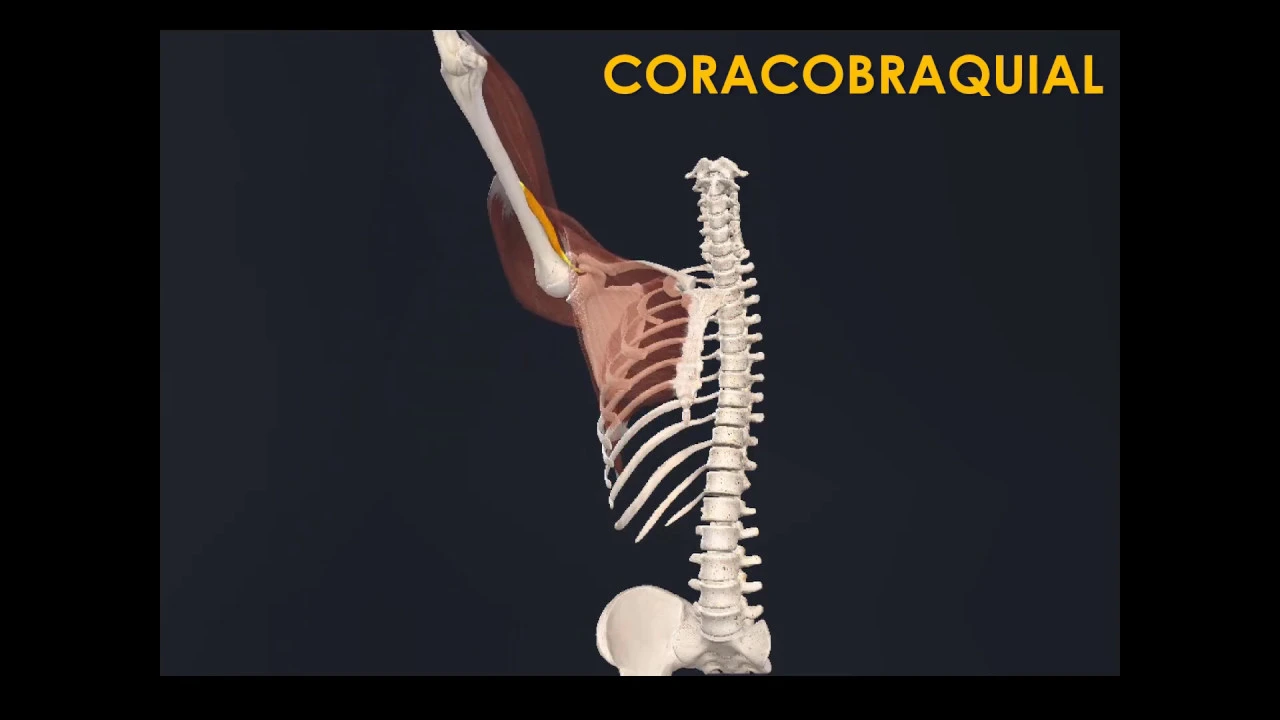
A typical example is found in the biceps when the forearm is flexed. Again I repeat that third-class levers are the most common levers in the body this is supported by the fact that muscle insertions are so frequently found close to the joints they move therefore the effort is located between the pivot and the resistance creating a third-class lever. Because the levers of the human body are adapted for range speed and precision of movement rather than for handling weight it's not surprising that the incidence of injuries attributed to lifting is high
Up Next
31:04
Introduction to Biomechanics: Principles of Forces & Vectors
@nptel-nociitm9240
11.9K views•2023-05-31

12:53
21cm Hyperfine Transition in Neutral Hydrogen: Radio Astronomy Basics
@AaronRobertParsons
12.4K views•2011-10-13

32:32
NMR Spin Physics I: Zeeman Effect, Resonance Condition & Larmor Frequency
@nptel-indianinstituteofsci8064
2.3K views•2024-01-17

27:14
Entropy and the Second Law of Thermodynamics Explained
@veritasium
27.5M views•2023-07-01
Related Study Plans & Knowledge Roadmaps
Structured learning paths in Physics
physics
Nuclear Physics (Decay, Fission & Reactors)
01Atomic Structure and the Binding Force
02Radioactive Decay and Half-Life
03Nuclear Fission Mechanics and Chain Reactions
+ 2 more learning modules
12h5 modules
Explore Roadmap
physics
Soft Matter (Polymers, Colloids & Rheology)
01Foundations of Soft Matter & Thermal Forces
02Polymer Physics and Macromolecules
03Colloids, Surfactants, and Self-Assembly
+ 2 more learning modules
38h5 modules
Explore Roadmap
physics
Analytical Mechanics: Lagrangian & Hamiltonian
01Mathematical Foundations: Calculus of Variations
02From Newtonian Mechanics to Constraint Dynamics
03The Principle of Least Action & Lagrangian Mechanics
+ 3 more learning modules
28h6 modules
Explore Roadmap
physics
General Relativity (Spacetime & Cosmology)
01Foundations of Relativity: Special Relativity
02The Geometry of Spacetime: Equivalence Principle & Curvature
03Einstein's Field Equations: The Mathematics of Gravity
+ 2 more learning modules
55h5 modules
Explore Roadmap