






![Terence McKenna on the Taxonomy of Illusion [must watch]](https://i.ytimg.com/vi/amUjyRM6bQo/hqdefault.jpg?sqp=-oaymwEmCOADEOgC8quKqQMa8AEB-AHeA4AC6AKKAgwIABABGHIgVCgtMA8=&rs=AOn4CLAyf67XBY94ILPhrRTA8sO7eRQLfA)




![[BBS 띵작 몰아보기]장현갑교수(한국심리학회 명예회장)2편-현대인의 스트레스와 명상(2019년)](https://i.ytimg.com/vi/sol4e0PK4cM/hqdefault.jpg)








Chronic stress causes measurable damage to the body including shrinking brain cells in the hippocampus, increasing abdominal fat, accelerating telomere shortening (cellular aging), and promoting atherosclerosis; research across baboons, macaques, and humans demonstrates that social hierarchy and lack of control correlate with worse health outcomes, while social affiliation and perceived control protect against these effects.
Stress: Portrait of a Killer – Neurobiology & Health Documentary (2008) HD
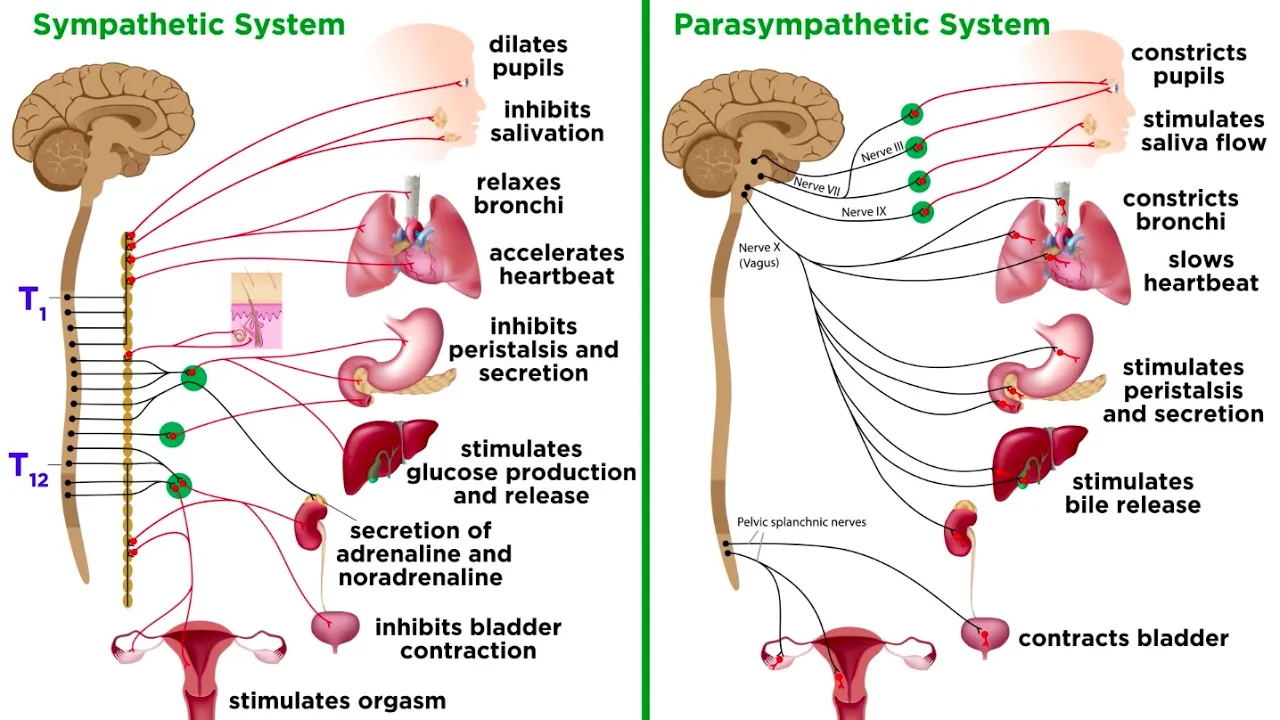
Added:Understanding the basic division of the Autonomic Nervous System, specifically the contrast between the sympathetic ('fight-or-flight') and parasympathetic ('rest-and-digest') pathways.
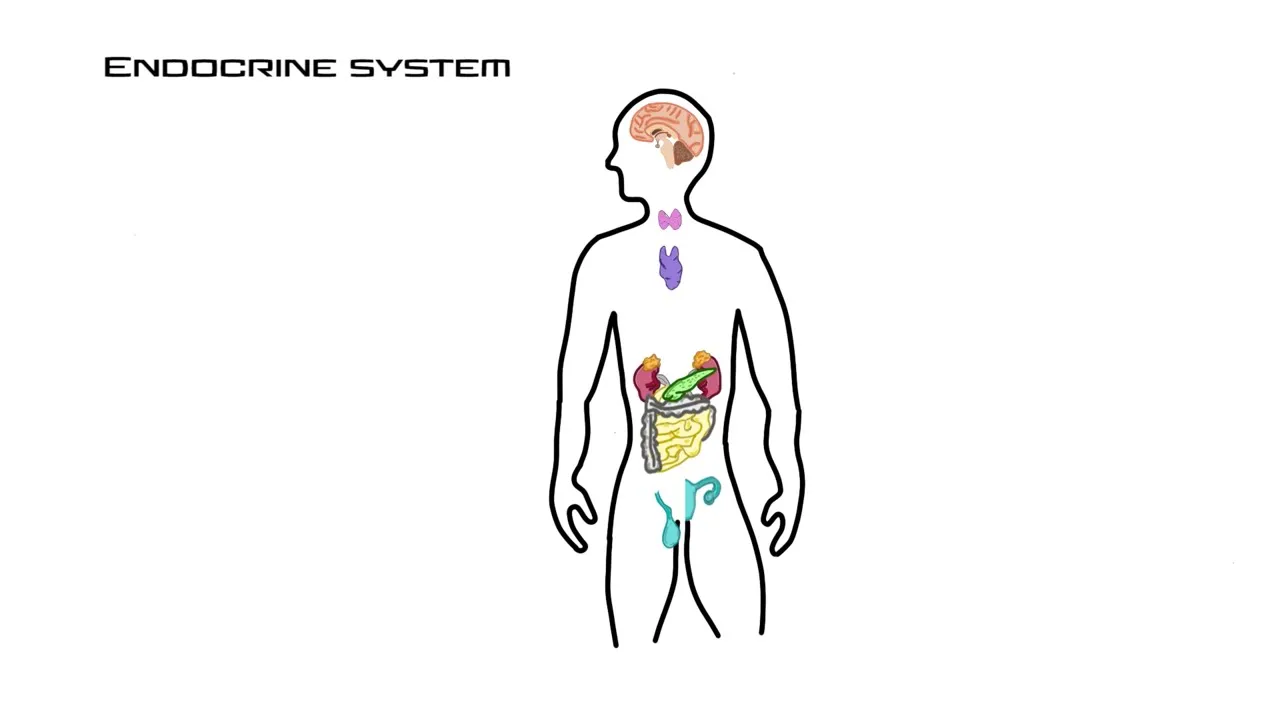
Fundamental knowledge of the endocrine system, specifically how hormones like adrenaline and cortisol function as chemical messengers in the body.
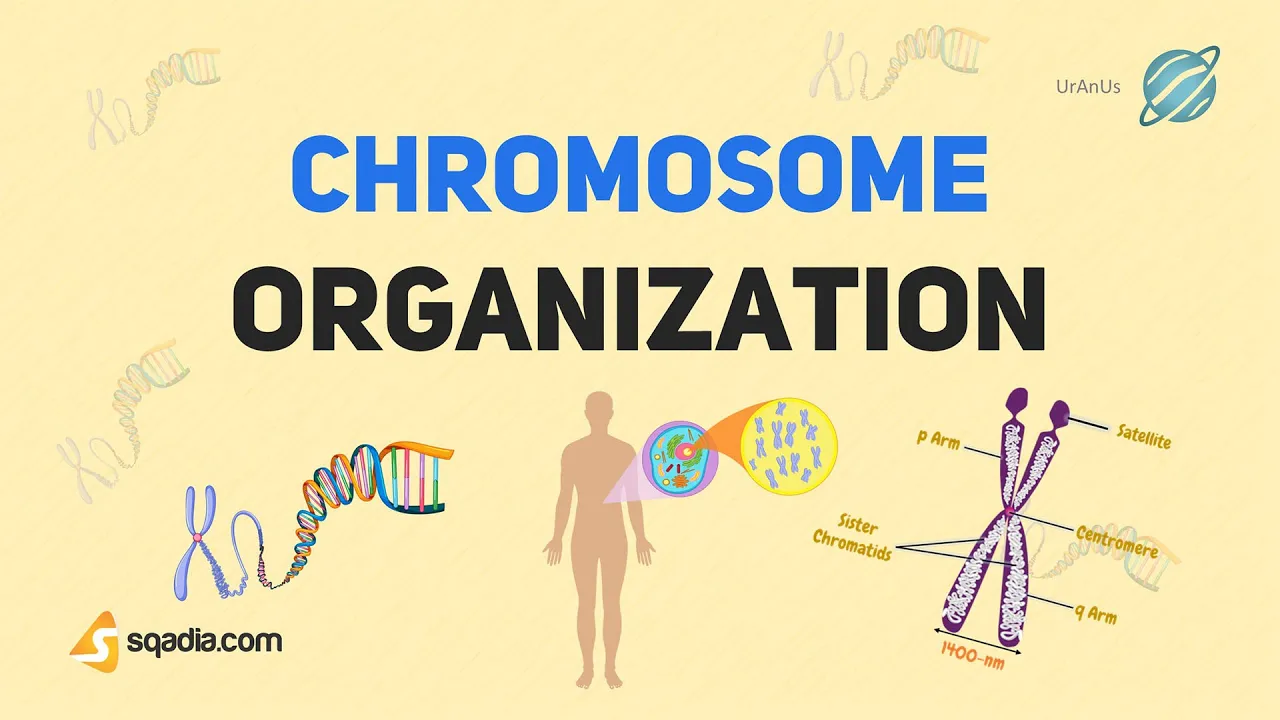
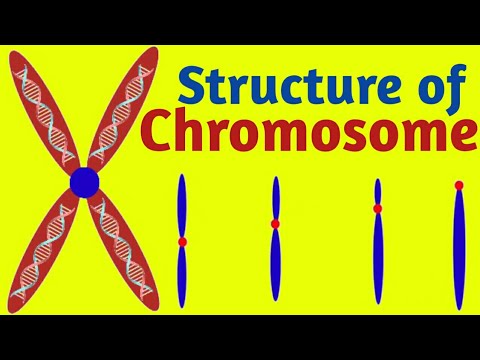
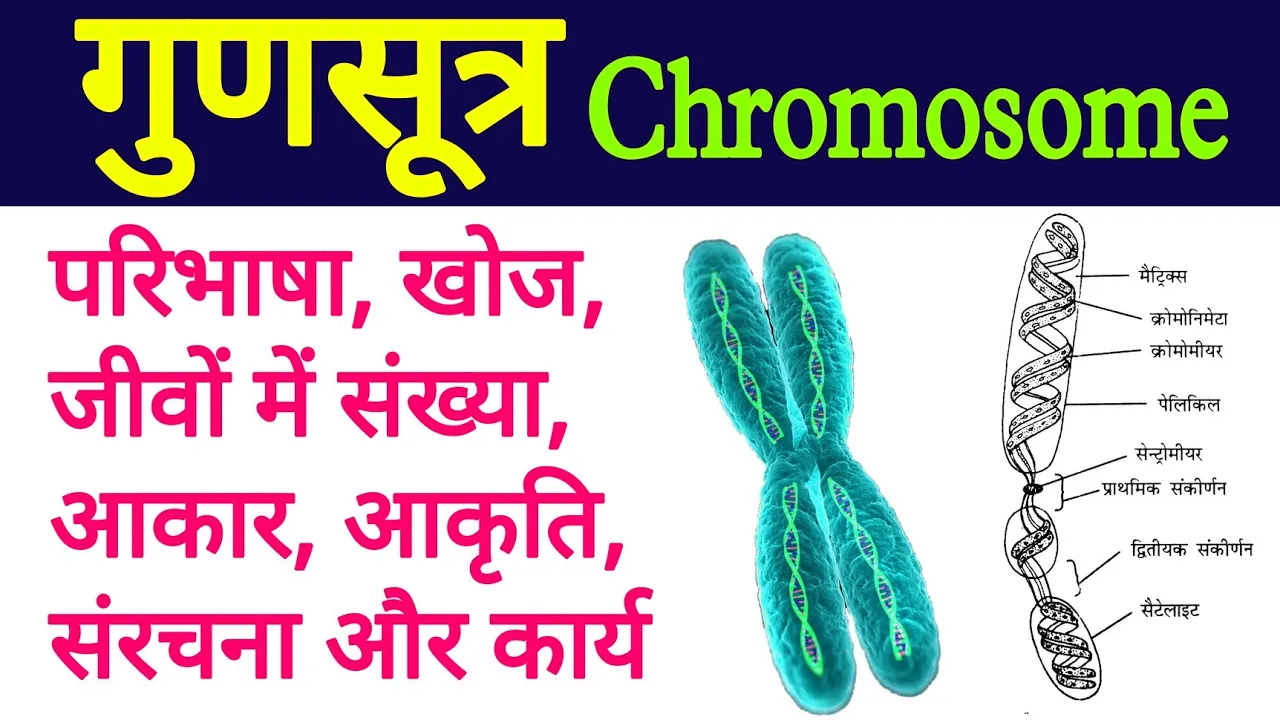
An introduction to genetics and cell biology, particularly the structure of chromosomes and the concept of cellular aging.
Basic evolutionary biology concepts regarding animal social hierarchies, dominance structures, and survival behaviors in primates.
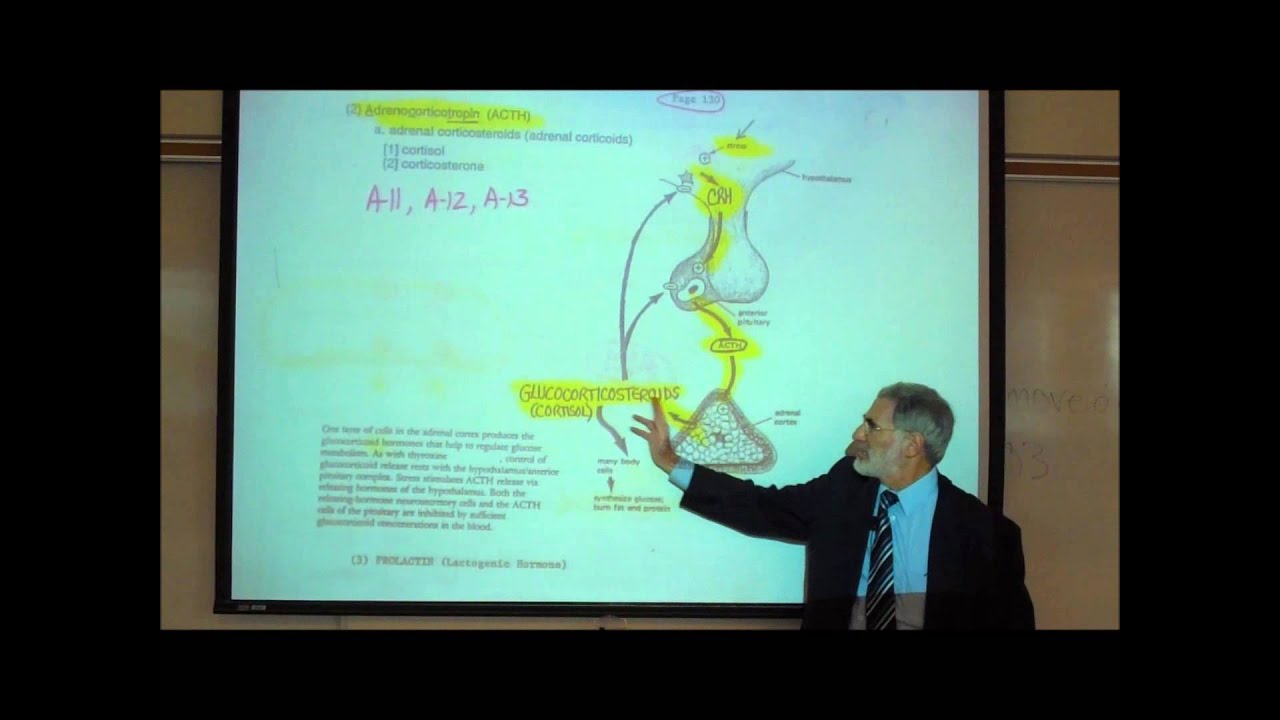
Advanced study of the Hypothalamic-Pituitary-Adrenal (HPA) axis and the neurobiology of chronic glucocorticoid exposure.
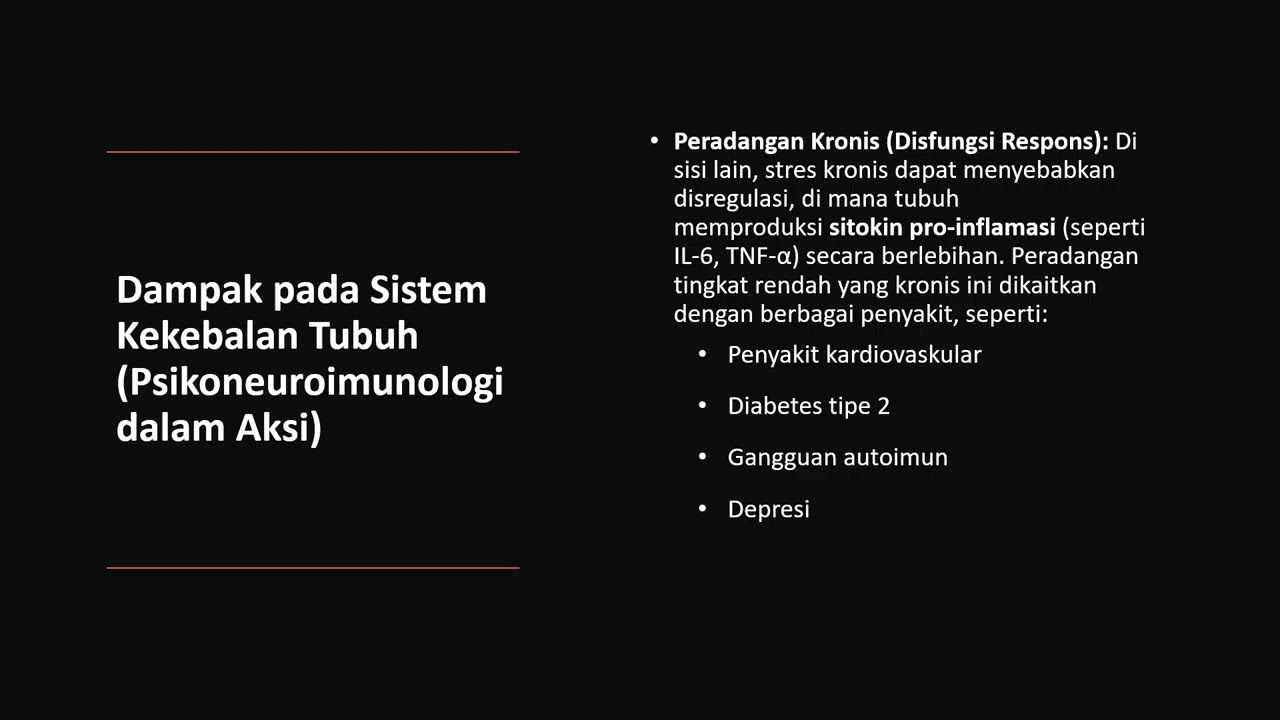
The field of Psychoneuroimmunology, exploring the precise biological mechanisms by which psychological stress suppresses immune system function.
Epigenetics and stress, specifically how early-life trauma or chronic stress can alter gene expression across generations.
Sociological and public health investigations into health disparities, such as the Whitehall Studies, analyzing how socioeconomic status and hierarchy impact long-term health outcomes.
The neurobiology of resilience, examining cognitive-behavioral strategies, mindfulness, and neuroplasticity in reversing the damage of chronic stress.
2.9M views17.1Klikes56:04Original Release: 2011-10-16
What am I thinking about?
Mortgage, debt, money pouring out... And I felt a lump...I know cancer when I feel it.
Where is she? What is she up to? Never calling, never saying a word... Stress.
It is everyone's inferno, bedevilling our minds, igniting our nights, upending our equilibrium, but it hasn't always been so.
Once, its purpose was to save us.
if you're a normal mammal, what stress about is three minutes of screaming terror on the savannah, after which it's either over with you or you are over with.
But everything changed.
What once helped us survive has now become the scourge of our lives.
And I just burst into tears, and wept, and wept.
Today, scientific discoveries, in the field and in the lab, prove that stress is not a state of mind, but something measurable and dangerous. This is not an abstract concept. It's not something that maybe someday you should do something about. You need to attend to it today. In some of the most unexpected places, scientists are revealing just how lethal stress can be.
Chronic stress could do something as unsubtle and grotesque as kill some of your brain cells.
The impact of stress can be found deep within us, shrinking our brains, adding fat to our bellies, even unraveling our chromosomes.
This is real this is not just somebody whining.
Stress... savior, tyrant, plague... its portrait revealed.
This program was made possible by contributions to your PBS station from viewers like you. Thank you.
All of us have a personal relationship with stress, but few of us know how it operates within us, or understand how the onslaught of the modern world can stress us to the point of death.
Fewer still know what we can do about it.
But over the last three decades, Stanford University neurobiologist Robert Sapolsky, has been advancing our understanding of stress, how it impacts our bodies, and how our social standing can make us more or less susceptible. Is the aggregate bad news and more... Most of the time, you can find him teaching and researching in the high-achieving, high-stressed world of brain science.
The paper is this huge contrast between... class... But that's only part of his story.
For a few weeks every year or so, Sapolsky shifts his lab to a place more than 9,000 miles away on the plaines of the Masai Mara Reserve, in Kenya, East Africa.
Robert Sapolsky first came to Africa over 30 years ago on a hunch.
He suspected he could find out more about human stress and disease by looking at non-humans, and he knew just the non-humans.
You live in a place like this, you are a baboon, and you only have to spend about three hours a day getting your calories.
And if you only have to work three hours a day, you got nine hours of free time every day to devote to making somebody else just miserable They're not being stressed by lions chasing them all the time, they are being stressed by each other. They're being stressed by social and psychological tumult invented by their own species. They are a perfect model for Westernized stress-related disease.
To determine just what toll stress was taking on their bodies, Sapolsky wanted to look inside these wild baboons at the cellular level for the very first time. To do this he would have to take their blood in the most unassuming way.
Basically, what you're trying to do is anaesthetize a baboon, without him knowing it's coming. Because you don't want to have any of this anticipatory stress, so you can't just, you know, get in your jeep and chase the baboon up and down the field for three hours, and finally when he's winded, dart him with an anesthetic.
Now, the big advantages of a blow gun are that it's pretty much silent, and hasn't a whole lot of moving parts, but the big drawback is that it doesn't go very far. So what you spend just a bizarre amount of time doing, is trying to figure out how to look nonchalant around a baboon.
Got him... Time?
Okay, he is wobbling now.
Whoop, there he goes.
From each baboon blood sample, Robert measured levels of hormones central to the stress response.
Well, to make sense of what's happening in your body, you've got these two hormones that are the workhorses of the whole stress response. One of them we all know adrenaline, American version, epinephrine, the other is a less known hormone called glucocorticoids that comes out of the adrenal gland along with adrenaline and these are the two backbones of the stress response.
That stress response and those two hormones are critical to our survival.
Because what stress is about is that somebody is very intent on eating you, or you are very intent on eating somebody, and there is immediate crisis going on.
When you run for your life, basics are all that matter. Lungs work overtime to pump mammoth quantities of oxygen into the bloodstream.
The heart races to pump that oxygen throughout the body so muscles respond instantly. You need your blood pressure up to deliver that energy.
You need to turn off anything that is not essential... growth, reproduction, you know, you're running for your life this is no time to ovulate, tissue repair, all that sort of thing... do it later, if there is a later.
When the zebra escapes, its stress response shuts down.
But human beings can't seem to find their off switch. We turn on the exact same stress response for purely psychological states... thinking about the ozone layer, the taxes coming up, mortality, 30-year mortgages... we turn on the same stress response and the key difference there is, we're not doing it for real physiological reason and we're doing it non-stop.
By not turning off the stress response when reacting to life's traffic jams, we wallow in a corrosive bath of hormones.
Even though it's not life or death, we hyperventilate, our hearts pound, muscles tense.
Ironically, after a while the stress response is more damaging than the stressor itself, because the stressor is some psychological nonsense that you're falling for.
No zebra on Earth, running for its life, would understand why... fear of speaking in public would cause you to secrete the same hormones that it's doing at that point to save its life.
Stress is the the body's way of rising to a challenge, whether the challenge is life-threatening, trivial or fun. You get the right amount of stress and we call it stimulation.
The goal in life is not to get rid of stress, the goal in life is to have the right type of stress, because when it is the right type, we love it.
We jump out of our seats to experience it, we pay good money to get stressed that way.
It tends to be a moderate stressor, where you've got a stressor that's transient... it's not for nothing roller coaster rides are not three weeks long.
And most of all, what they are about is that you relinquish a little bit of control in a setting that overall feels safe.
but in real life for so many of us primates including Roberts baboons control is not an option. Here you have a big male who loses a fight and chases a sub-adult who bites on a female who slaps a juvenile that knocks an infant out of a tree, all in fifteen seconds you know in so far as a huge component of stress is lack of control, lack of predictability you're sitting there and just watching the zebra and somebody else is having a bad day and it is your rear-end that is going to get slashed some tremendously psychologically stressful for for the folks further down on the hierarchy. One of Roberts early revelations was identifying the link between stress and hierarchy in baboons. Some baboons troops are over 100 strong like us they have evolved large brains to navigate the complexities of large societies survival here requires a kind of baboon political savvy with the most cunning and aggressive males gaining top rank and all the perks, females for the choosing, all the food they can eat and an endless retenue of willing groomers. Every male knows where he stands in society who can torture him whom he can torture and who in turn the torturee can torture Well it sound like a terrible thing to confess after thirty years but I don't actually like baboons all that much and there has been individual guys over the years that I absolutely love but they are these scheming, back-stabbing machiavellian bastards that hurt each other so they're great for my science, I mean I'm not out here to commune with them they're perfect for what I study. 22 years ago at the age of 30 Sapolsky's landmark research earned him the MacArthur Foundation's Genius fellowship his early work measuring stress hormones from extracted blood led to two remarkable discoveries a baboon's rank determine the level of stress hormone in his system so if you're a dominant male you can expect your stress hormones to be low and if you are submissive much higher, but there was an even more revealing find in Sapolsky's sample of low rankers the have-nots had increased heart rates and higher blood pressure. This was the first time anyone had linked stress to the deteriorating health of a primate in the wild. Basically if you're a stressed, unhealthy baboon in a typical troop high blood pressure. elevated levels of stress hormones, you have an immune system that doesn't work as well your reproductive system is more vulnerable to being knocked out of whack your brain chemistry is one that has some similarity to what you see in clinically depressed humans and all that stuff those are not predictors of a hale and hearty old age could this also be true for that other primate as Robert Sapolsky was monitoring stress in baboons professor Sir Michael Marmot was leading a study in Great Britain they tracked the health of more than 28,000 people over the course of forty years it was named for Whitehall, citadel of the British civil service where every job is ranked in a precise hierarchy the perfect laboratory to determine whether in humans there might be a link between rank and stress I mean that's the thing about stress I think you've got to look at it in both acute terms and chronic terms I think I've been under chronic stress in this organization simply because I'm a square peg in a round hole Kevin Brooks is a government lawyer, his rank level 7 means he has little seniority in his department he lives the life of a subordinate I think what I was most aware of at the time was the workload and how I had most of it under control but one of my cases wasn't wholly under control I let it slip and it was a bit like being in a car hitting an ice patch and skating but nonetheless I came in Monday morning and my immediate manager let's call him Ben, then wants a word with you, so we find a room he shuts the door, then he says you know what you have done you know what happened while you were away we couldn't find one of your files Do you know what that meant? He just gave me a good kicking, psychologically he did me over and at the end of it it was more threats. It was right that's maybe a disciplinary matter so I left the room crossed over the corridor to my own room and I just burst into tears and wept and wept Sarah Woodall also works for the government unlike Kevin she is a senior civil servant there about a hundred and sixty people reporting to me ultimately one way or another within the sector. I do really enjoy working with our service it's quite a dynamic environment, it can be quite exciting I like working with lots of people I do really enjoy my job. Such dramatically different reflections dramatize one of the most astounding scientific findings in the Whitehall study firstly it showed that the lower you were in the hierarchy the higher your risk of heart disease and other diseases, so people second from the top had higher risk than those at the top people third from the top had a higher risk than those second from the top and it ran all the way from top to bottom. We are dealing with people in stable jobs with no industrial exposures and yet your position in the hierarchy intimately related to your risk of disease and lenght of life. I've been very lucky I have never experienced any problems with my health since I've been in the senior service I haven't had a day off with ill health, I've been very fortunate In my own situation I think that my career is pretty much tainted, is pretty much arrested because I have had, for instance, for the last three years at work I've been off sick for probably half that time. This particular study is sort of the Rosetta Stone of a whole field because it's the British civil service system, everybody's got the same medical care everybody's got the same universal health care system just like the baboons all the baboons eat the same thing, they have the same level of activity it's not the stuff that oh if you're a low-ranking baboon you smoke to much and you drink too much and if you're a low-ranking british civil service guy you never go to the doctor and you don't get preventive vaccines both of this studies rule out all this confounds and they produce virtually identical findings. On both sides of the primate divide there are soul wrenching stories and life-threatening consequences For every subordinate like Kevin living a life of baboon uncertainty there is an alpha strutting his stuff, glorying in power over someone else someone unsuspecting someone low ranking Got him.
12:46 do either of you see where the dart is?
Yes. Okay guys who do you think is higher-ranking?
Our guy... Yes.
Much carefully make sure the other guy doesn't hassle him.
this year Robert brought his family to Africa his wife neuropsychologist Lisa Sapolsky has also done extensive research with baboons and for the first time they brought along their kids Benjamin and Rachel. As asleep as he looks... all the baboons are perfectly willing to get very freaked out by a human coming over and touching one of these guys but cover him with a burlap and he doesn't exist anymore oh my God he's there, he's... not there anymore this is not quite like taking your kids to work day but it's a pretty central feature of who I am by now and who my wife and I are and kids want to know where we came from and this is pretty fundamental. As in previous seasons Robert measures how individuals at every level of the baboon hierarchy reacts to and recovers from stress So what we're doing it is, we're now going to challenge the system with increasing doses of epinephrine the baboon's response is immediately picked up in its blood vital signs that can be deep frozen in perpetuity It's this storehouse of potential knowledge and I got 30 years of those blood samples frozen away at this point because you never know when some new hormone or some new something or other pops up and that is the thing to look at and start pulling out this samples back to when you know Jimmy Carter was president. 150... 125... Anticipating the long reach of stress is a recent idea, for one when robert was Rachel's age, scientists believed stress was the cause of only one major problem. This is a picture of a major american personnel problem... an ugly sore that doctors call a peptic ulcer eating away at the wall of a man's stomach.
Those stomach pains that you talk about, the gnawing, the burning, those are obvious symptoms of gastric ulcer.
Thirty years ago, what's the disease that comes to everybody's mind when you mention stress... it's ulcers, stress and ulcers. And this was the first stress related disease discovered, in fact 70 years ago.
What I want you to do is to work on your attitude.
My attitude? That's right. Ulcers breed on the wrong kind of feelings.
You've got to be honest with yourself about the way you feel about it.
Finding a new doctor sounds like a better answer to me.
The connection between stress and ulcers was mainstream medical gospel until the early 1980s.
Then Australian researchers identified a bacteria as the major cause of ulcers.
And this overthrew the entire field, this was, it's got nothing to do with stress, it's a bacterial disorder.
And I'm willing to bet half the gastroenterologists on Earth when they heard about this, went out and celebrated that night. This was, like, the greatest news... never again were they going to have to sit down their patients, and make eye contact and ask them how is it going, so, anything stressful... it's got nothing to do with stress, it's a bacterial disorder... So no longer would the solution be stress management, now it could be something as simple as a pill.
It was a major breakthrough. Stress didn't cause ulcers.
Case closed.
But a few years later, the research took a new twist. Scientists discovered that this ulcer-causing bacteria wasn't unique... in fact, as much as two thirds of the world's population has it.
So why do only a fraction of these people develop ulcers?
Research revealed that when stressed, the body begins shutting down all non-essential systems, including the immune system. And it became clear that, if you shut down the immune system, stomach bacteria can run amok... Because what the stress does, is wipe out the ability of your body to begin to repair your stomach walls when they start rotting away from this bacteria... So stress can cause ulcers by disrupting our body's ability to heal itself.
If stress can undermine the immune system, what other havoc can it wreak? One answer comes from a colony of captive macaque monkeys near Winston-Salem, North Carolina. People think of stress as something that keeps them up at night, or something that makes them yell at their kids.
But, when you ask me, what is stress, I say look at it, it's this huge plaque in this artery, that's what stress is.
For two decades doctor Carol Shively has been studying the arteries of macaques.
Like baboons and British Civil Servants, these primates organize themselves into distinctly hierarchical groups, and subject one another to social stress.
Stress hormones can trigger an intense negative cardiovascular response, a pounding heart, at increased blood pressure So if stress follows rank, would the cardiovascular system of a high-ranking macaque, call him a primate CEO, be different from his subordinate?
When Shively looked at the arteries of a dominant monkey, one with little history of stress, its arteries were clean.
But a subordinate monkey's arteries told a grim tale... A subordinate artery has lots more atherosclerosis build up inside it than a dominant artery has.
Stress, and the resulting flood of hormones, had increased blood pressure, damaging artery walls, making them repositories for plaque.
So now, when you feel threatened, your arteries don't expand, and your heart muscle doesn't get more blood, and that can lead to a heart attack. This is not an abstract concept, it's not something that maybe someday you should do something about, you need to attend to it today, because it's affecting the way your body functions, and a stress today will affect your health tomorrow and for years to come.
Social and psychological stress, whether macaque, human, or baboon, can clog our arteries, restrict blood flow, jeopardize the health of our heart... and that's just the beginning of stress's deadly curse.
Robert's early research demonstrated that stress can work on us in an even more frightening way.
Well, back when I was starting in this business what I wound up focusing on was what seemed an utterly implausible idea at the time, which was chronic stress and chronic exposure to glucocorticoids could do something as unsubtle and grotesque as kill some of your brain cells. As a PhD candidate at Rockefeller University in the early 80s, Sapolsky collaborated with his mentor, doctor Bruce McEwan, to follow the path of stress into the brain. They subjected lab rats to chronic stress, and then examined their brain cells. The team made an astonishing find.
While the cells of normal rat brains have extensive branches, stressed rats brain cells were dramatically smaller.
And what was most interesting in many ways was the part of the brain where this was happening... the hippocampus. You take Intro Neurobiology anytime for the last 5000 years and what you learn is: hippocampus is learning and memory. Stress in these rats shrank the part of their brain responsible for memory.
Stress affects memory in two ways.
Chronic stress can actually change brain circuits, so that we lose the capacity to remember things as we need to. Very severe acute stress can have another effect, which is often... we refer to as stress makes you stupid, which is making it impossible for you in, over short periods of time to remember things you know perfectly well.
We all know that phenomenon, we all know that one, from back when we stressed ourselves by not getting any sleep at all. And the next morning at nine o'clock, we couldn't remember a single thing for that final exam.
You take a human and stress them big-time, long time, and you're going to have a hippocampus that pays the price as well. In addition to undermining our health stress can make us feel plain miserable Carol Shively set out to find out why she began not with misery but with pleasure Shively suspected that there was a link between stress pleasure and where we stand on the social hierarchy just like stress, pleasure is linked to the chemistry of the brain when a neurotransmitter called dopamine is released in the brain it binds to receptors signaling pleasure Shively used a positron emission tomography scanner to examine the brain of a non-stressed primate our primate CEO. What we see is that the brains of dominant monkeys light up bright with lots of dopamine binding in this area that is so important to reward and feeling pleasure about life Shively then looked at the subordinates brain.
What we discovered is that the brains of the subordinate monkeys are very dull because there's much less receptor-binding going on in this area.
Why is that, what is it about this area of the brain?
When you have less dopamine everything around you that you would normally take pleasure in, is less pleasurable. So the Sun doesn't shine so bright, the grass is not so green, food doesn't taste as good. It's because of the way your brain is functioning that you're doing that, and your brain is functioning that way because you are low on the social status hierarchy. One feature of low rank is being low ranking the reality, an even stronger feature by the time you get to humans, is not just being low ranking or poor, it's feeling low ranking or poor and one of the best ways for society to make you feel like one of the have-nots is to rub your nose over and over and over again with what you don't have. Richmond California a town where societies extremes can be spotted right from your car this is the regular commute of cardiologist Jeffrey Ritterman You can learn a lot about the distress and health outcome just from the neighborhoods you visit and in this neighborhood the life expectancy is quite good and most of the people are pretty healthy and as we reach the top of the hill it gets to be a little bit less privileged and as we make this transition the social status begins to drop and correspondingly in those areas the health outcome is much worse and these people are not going to have the same life expectancy as the people in that middle class area we started in.
People are on guard, people are vigilant, they are living a more stressful life this is a community that produces high stress hormones in people and overtime it takes its toll. One of doctor Ritterman's patient is 65-year-old Emanuel Johnson his career is guidance counselor in one of America's most dangerous neighborhoods well last year actually I think we had forty seven homicides in the last four days we had 11 shootings three deaths and nine times out of ten it's going to be a relative or someone I bet the kids know. For Emanuel Johnson there is a price for chronic exposure to this stress five years ago I had a heart attack I'm a diabetic too. I have to work on it constantly because I've been in this business twenty years, so just it's stressful just working the job, so over the years that, you know the cholesterol, the blood pressure, the sugar came on later but the stress was always in before they came on Emanuel Johnson's body may be telling yet another story of stress the Whitehall study in england found an incredible link between stress, your position in the social hierarchy and how you put on weight. So it may not be just putting on weight but also the distribution of that weight and the distribution of that weight putting it on around the center is related to position in the hierarchy and that in turn may be related to chronic stress pathways.
So we said, does that happen in monkeys because they organize themselves in a hierarchy too and it turns out that it does.
Subordinate monkeys are more likely to have fat in their abdomen then are dominant monkeys. I think the most amazing observation that I've made in my lab is this idea that stress could actually change the way you deposit fat on your body to me that was a bizarre idea that you could actually alter the way fat is distributed Sapolsky, Shively and others think stress could be a critical factor in the global obesity epidemic Even worse fat brought on by stress is dangerous fat. You know that fat carried on the trunk or actually inside the abdomen is much worse for you than fat carried elsewhere in the body it behaves differently, it produces different kinds of hormones and chemicals and has different effects on your health whatever it is that works for an individual, they need to value stress reduction. I think the problem in our society is that we don't value stress reduction we in fact value the opposite We admire the person who not only multitasks and does two things at once but does five things at once. We admire that person. How they manage that you know that's an incredibly stressful way to live we have to change our values and value people who understand a balanced and serene life.
One heartbreaking moment in history reveals that stress may in fact damage us long before we are even aware Holland late 1944 a brutal winter and a merciless army of occupation conspire to starve a nation it is known as the Dutch hunger winter for those who survive today these are haunting memories.
I had nothing. I could no longer feed my son.
I was so sick.
And then you have to take care of a child.
I found that terrible.
I went to the church at the Dam next to the palace, and asked the priest's wife if she would raise my child as long as the war took place.
Because I can't do it anymore.
dutch researcher Tessa Roseboom had heard many of those tragic memories she and her team wanted to know if there were any lingering effects Roseboom knew that our bodies respond to famine in much the same way they respond to other stressors so she set out to see if the fetuses of women pregnant during these arduous days could possibly be affected by stress because of meticulous record-keeping by the Dutch Roseboom was able to identify over 2400 people who could have been impacted. She and her team analyzed the data from those born during and after the famine and came to a surprising conclusion. I think that you could say that these babies were exposed to stress in fetal life and they're still suffering the consequences of that now, sixty years later.
Many of the Dutch hunger winter children live today all in their sixties many still bear the scars of war we found that the babies who were conceived during the famine have an increased risk of cardiovascular disease they have more hypercholesterolemia they are more responsive to stress and generally are in poorer health than people who were born before the famine or conceived after it researchers think that stress hormones in a mother's blood triggered a change in the nervous system of the fetus as it struggled with starvation this was the fetuses first encounter with stress six decades later the bodies of these Dutch hunger winter children still haven't forgotten. What we now know is that it's not just your fat cells that wind up being vulnerable to build up towards events like this, it's your brain chemistry, it's your capacity to learn it's your capacity to respond to stress adaptively rather than maladaptively how readily you fall into depression, how vulnerable you are to psychiatric disorders yet another realm in which early experience and early stress can leave a very very bad footprint. If I had had an option I would not have opted to be bipolar but now that I am bipolar I'll have to live with it. It's hard for me to be flexible.
I am very quick to anger.
What the Dutch hunger winter phenomenon is about is experience, environments start long before birth and adverse stressful environments can imprint and leave scars lasting a whole lifetime.
We are taking fingerprints because no baboon has the same fingerprints as another one.
So we just took Gummibear's and I am hoping to get over to Riff and get his.
During this years multi-generational research, Robert who has spent his career documenting stresses effects on the individual and on the cell tracks the trail of stress even deeper into our bodies One of the most interesting new direction in stress research is taking the effects of stress down to a bolts and nuts level how cells work, how genes work, that half a dozen years ago nobody could have imagined.
the once unimaginable genetic structures called telomeres which protect the ends of our chromosomes from fraying as we age our telomeres shorten. What is interesting is stress, by way of stress hormones can accelerate the shortening of telomeres, so the assumption is for the exact same aged guys if you're a low-ranking guy who's just marinating in stress hormones your telomeres are going to be shorter. So how does this formidable finding apply to us San Rafael California once a week Janet Lawson keeps a very important appointment.
She joined other mothers who share circumstances that produce chronic unremitting stress. So... but she looses her balance and that's the scary part so we just went out actually last night and bought a new helmet just for fun She's getting older and wanting more independence, it's getting harder.
Each of these women is mother to a disabled child For us my son's only 8 and and there's enough I can handle and I don't allow myself to go too much out, i can't. I had a friend recently who said to me you know I think you really should consider putting Lexie at a home and that was really stressful in and of itself to think wahou so... so it's like how can you even say that? She is, you know a little girlfriend she's, even though she can't really communicate she loves she loves These remarkable women came to the attention of biologist doctor Elizabeth Blackburn. I didn't directly know the individuals but I know the stories and I am a mother myself and so when I heard about this cohort I really thought it was worthwhile finding out what really is happening at the heart of the cells in these mothers who are doing such a difficult thing for such a long time.
Doctor Blackburn is a leader in the field of telomere research.
We have 46 chromosomes and they are capped off at each end by telomeres. Nobody knew in humans wether telomeres and their fraying down over life would be affected by chronic stress, and so, we decided we would look at this cohort of chronically stressed mothers. And we decided to ask what's happening to their telomeres and to the maintenance of their telomeres.
What we found was the length of the telomeres directly relates to the amount of stress somebody is under, and the number of years that they've been under the stress. Such stressed mothers became the focus of a study by doctor Blackburn's colleague, psychologist Elissa Epel.
Mothers of young children are a highly stressed group.
They are often balancing competing demands like work and child rearing, and often don't have time to take care of themselves.
So, if you add on top of that, the extra burden of caring for a child with special needs, it can be overwhelming.
It can tax the very reserves that sustain people, and if they're stressed, if they report stress, they tend to die earlier.
These women have shortened telomeres, decreased activity of this enzyme, and a very very rough number for every year you were taking care of a chronically ill child, you got roughly six years worth of aging.
This is real, this is not just somebody whining... this is real, medically serious aging going on, and we can see that it is actually caused by the chronic stress.
But there is hope. Doctor Blackburn co-discovered an enzyme, telomerase, that can repair the damage.
It is what I always call the threat of hope... That's good. That's good... Yes.
Preliminary data suggests that a meeting of minds, such as this, may actually have a health benefit, by stimulating the healing effects of telomerase.
And laugh and laugh, if you don't laugh, forget it, you can't handle it... It's... What I found is that the humor is something... there's a certain level of black humor that we have about our kids that only we appreciate, we're the only ones who get the jokes, and in a way we are the only ones who are allowed to laugh at the jokes.
One of the questions in the stress field is, you know, what are the active ingredients that reduce stress and that promote longevity?
And compassion and and caring for others maybe one of those most important ingredients. So, those maybe the factors that promote longevity and increase telomerase, and keep our cells rejuvenating and regenerating.
So, perhaps connecting with and helping others can help us to mend ourselves, and maybe even live longer, healthier lives.
Twenty years ago, Robert got a shocking preview of this idea.
The first troop he ever studied, the baboons he felt closest to and had written books about, suffered a calamity.
It would have a profound effect on his research.
The Keekorok troop is the one I started with thirty years ago, and they were your basic old baboon troop at the time, and which means males were aggressive, and society was highly stratified, and females took a lot of grief, in your basic off the rack baboon troop.
And then about, by now almost twenty years ago something horrific and scientifically very interesting happened to that troop.
The Keekorok troop took to foraging for food in the garbage dump of a popular tourist lodge.
it was a fatal move. The trash included meat tainted with tuberculosis.
The result was that nearly half the males in the troop died.
Not unreasonably, I got depressed as hell and pretty damn angry about what happened.
You know, when you are 30 years old, you can afford to expend a lot of emotion on a baboon troop, and there was a lot of emotion there.
For Robert, a decade of research appeared to have been lost.
But then he made a curious observation about who had died and who had survived.
It wasn't random who died. In that troop, if you were aggressive, and if you were not particularly socially connected, socially affiliative, you didn't spend your time grooming and hanging out, if you were that kind of male you died.
Every alpha male was gone. The Keekorok troop had been transformed. And what you were left with was twice as many females as males. And the males who were remaining were, you know, just to use scientific jargon, they were good guys.
They were not aggressive jerks, they were nice to the females, they were very socially affiliative, it completely transformed the atmosphere in the troop.
When male baboons reach adolescence, they typically leave their home troop and roam, eventually finding a new troop.
And when new adolescent males would join the troop, they'd come in just as jerky as any adolescent males elsewhere on this planet, and it would take them about six months to learn... we're not like that in this troop.
We don't do stuff like that. We're not that aggressive. We spend more time grooming each other. Males are calmer with each other. You do not dump on a female if you're in a bad mood.
And it takes these new guys about six months, and they assimilate this style, and you have baboon culture. And this particular troop has a culture of of very low levels of aggression, and high levels of social affiliation, they're doing that twenty years later.
And so the tragedy had provided Robert with a fundamental lesson, not just about cells, but how the absence of stress could impact society. Do these guys have the same problems with high blood pressure?
No. Do these guys have the same problems with brain chemistry related to anxiety stress hormone levels? Not at all.
It's not just your rank, it is what your rank means in your society. And the same is true for humans, with only a slight variation. We belong to multiple hierarchies, and you may have the worst job in your corporation, and no autonomy and control and predictability, but you're the captain of the company softball team that year.
And you better bet you are going to have all sorts of psychological means to decide it's just a job, 9 to 5, that's not what the world is about, what the world is about is softball, I am the head of my team, people look up to me and you come out of that deciding you are on top of the hierarchy that matters to you.
Well, that worked... and lots of baboon excrement.
Which, under the right circumstances, with the right season's experiment is a gold mine.
Unfortunately, this time around it is just a cage that I have to clean now.
I am studying stress for thirty years now, and I even tell people how they should live differently, so presumably I should have incorporated all of this, and the reality is, like, I am unbelievably stressed, and type A, and poorly coping, and why else would I study the stuff 80 hours a week?
No doubt everything I advises could lose all its credibility if i keel over dead from a heart attack in my early 50s.
I'm not good at dealing with stress.
You know, one thing that works to my advantage is I love my work and I love every aspect of it, so that's good... Nonetheless, this is pretty clearly a different place than the savannah in East Africa.
You can do science here that's very different and more interesting in some ways, you can have hot showers on a more regular basis That is a more interesting, varied world in lots of ways but there is a lot out there that you sure miss.
There is a pretty miraculous place, where every meal tastes good, and your are ten times more aware of every sensation. This is a hard place to come to year after year without getting, I think, a very different metabolism and temperament.
I am more extroverted here, I am more, more happy... It is a hard place not to be happy.
So one antidote to stress may be finding a place where we have control but how do we reckon with all the time we spend at work I would say what we've learned from the Whitehall study, from the studies of non-human primates is the conditions in which people live and work are absolutely vital for the health Senior civil servant Sara Woodhall enjoys the benefits of control. I don't think I suffer from stress I don't work a 100 hours a week I control the amount of work that I do to make sure that I can continue to deliver long-term Control... the amount of control is intimately related to where you are in the occupational hierarchy and what we have found is in general people report to us that things have got worse.
That the amount of work stress has gone up.
Their illness rates go up. Where people report to us that they got more control they're being treated more fairly at work, there is more justice in the amount of treatment, so things are getting better, the amount of illness goes down. I've been very lucky I I have never experienced any problems with my health. But not everyone is so lucky.
So is there a prescription for the vast majority of us who aren't at the top? Give people more involvement in the work give them more say in what they're doing give them more reward for the amount of efforts they put out and it might well be you have not just a healthier workplace but a more productive workplace as well.
I've managed to achieve a degree of control at the moment I'm in a very good position this is the first time were I feel I have had a boss who appreciates me. He doesn't dominate team meetings he sits back he invites people to contribute, he lets other people chair He's a real manager and he, from the start when I returned of my latest sick leave just six months ago he was so positive I think I feel sufficiently empowered Who would have imagined that Robert's baboons would point us humans towards a stress-free utopia. This may sound a little fanciful but I think what we're trying to create is a better society. The implications both of the baboons and of the British civil services is how can we create a society that has the conditions that will allow people to flourish.
And that's where this is heading to create a better society that promotes human flourishing So what does the baboons teach the average person in there don't bite somebody because you're having a bad day don't just displace on them in any sort of manner, social affiliation is a remarkably powerful thing and that said by somebody who lives in a world where ambition and drive and type A things and all of that sort of things dominates those things are really important and one of the greatest forms of sociality is giving rather than receiving and all those things make for a better world Another one of the things that baboons teach us is if they are able to, in one generation transform what are supposed to be textbooks social systems, sort of engraved in stone, we don't have an excuse when we say they're certain inevitabilities about human social systems And so, the haunting question that endures from Robert's life work are we brave enough to learn from a baboon?
The Kikarak troop didn't just survive without stress they thrived.
Can we?
Up Next
7:36
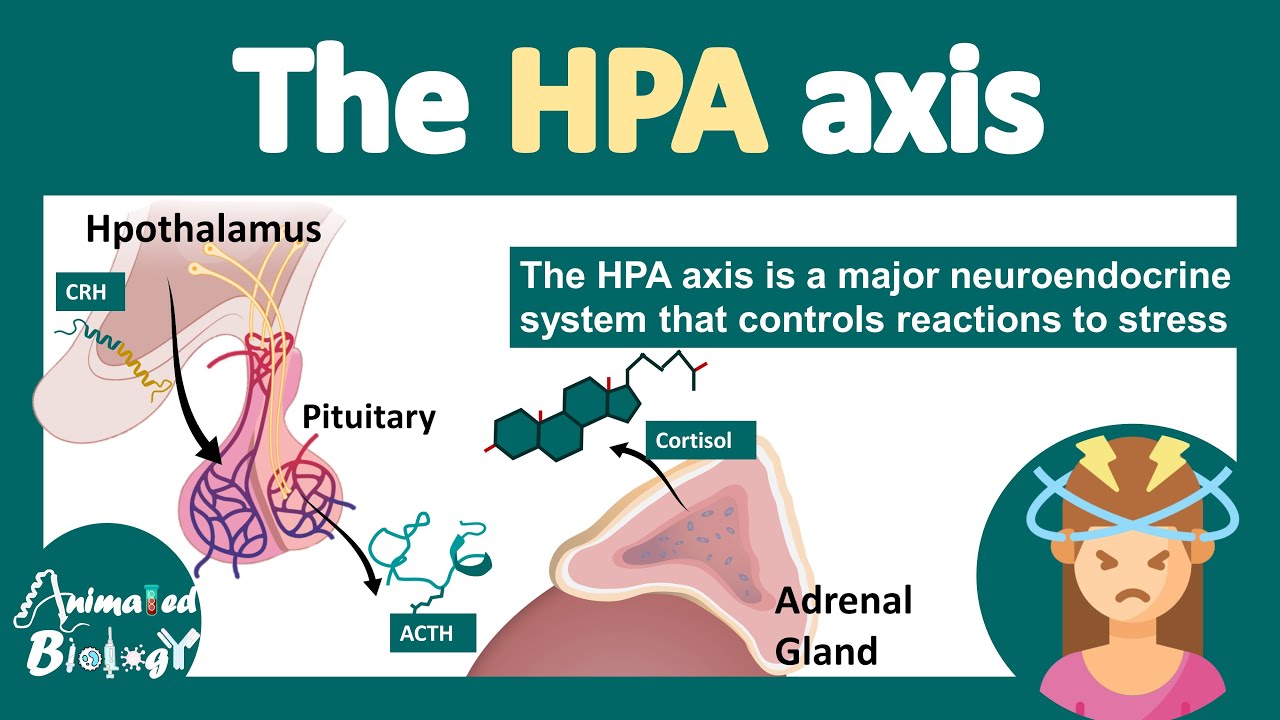
HPA Axis Explained: Hypothalamus-Pituitary-Adrenal in Stress
@animatedbiologywitharpan
70.6K views•2022-12-21

48:47
Graphic Medicine: Comics for Collaborative Healthcare Communication
@nationalpatientadvocate
189 views•2023-12-04

10:28
Neuroanatomy: Central and Peripheral Nervous System Divisions Explained
@AKLECTURES
136.2K views•2014-09-20
3:05
Stages of Labor and Vaginal Birth | Childbirth Animation
@nucleusmedicalmedia
52.1M views•2017-08-18
Related Study Plans & Knowledge Roadmaps
Structured learning paths in Medicine
medicine
Abnormal LFTs: Diagnostic Workup & Pathology
01Liver Anatomy and Basic Physiology
02Introduction to Liver Function Tests (LFTs)
03Hepatocellular vs. Cholestatic Patterns
+ 3 more learning modules
12h6 modules
Explore Roadmap
medicine
Analyzing Blood Smears: RBC, WBC & Platelets
01Introduction to Blood Components & Smear Preparation
02Normal Morphology of Blood Cells
03Erythrocyte Pathologies & Morphological Variants
+ 2 more learning modules
12h5 modules
Explore Roadmap
medicine
Mechanical Ventilation: Waveforms & Alarms
01Anatomy and Physiology of Breathing
02Introduction to Mechanical Ventilation & Core Modes
03Ventilator Settings and Waveform Interpretation
+ 2 more learning modules
12h5 modules
Explore Roadmap
medicine
Neuro Exam: Localization & Stroke Syndromes
01Foundations of Neuroanatomy and Vascular Supply
02The Neurological Examination: Step-by-Step
03Principles of Neurological Localization
+ 3 more learning modules
18h6 modules
Explore Roadmap