






![하버드 출신 언어학자 충격! 한글에 숨겨진 충격적 비밀, 한자는 한국의 글자입니다 [해외감동사연]](https://i.ytimg.com/vi/B2D-r6CdyR8/maxresdefault.jpg)







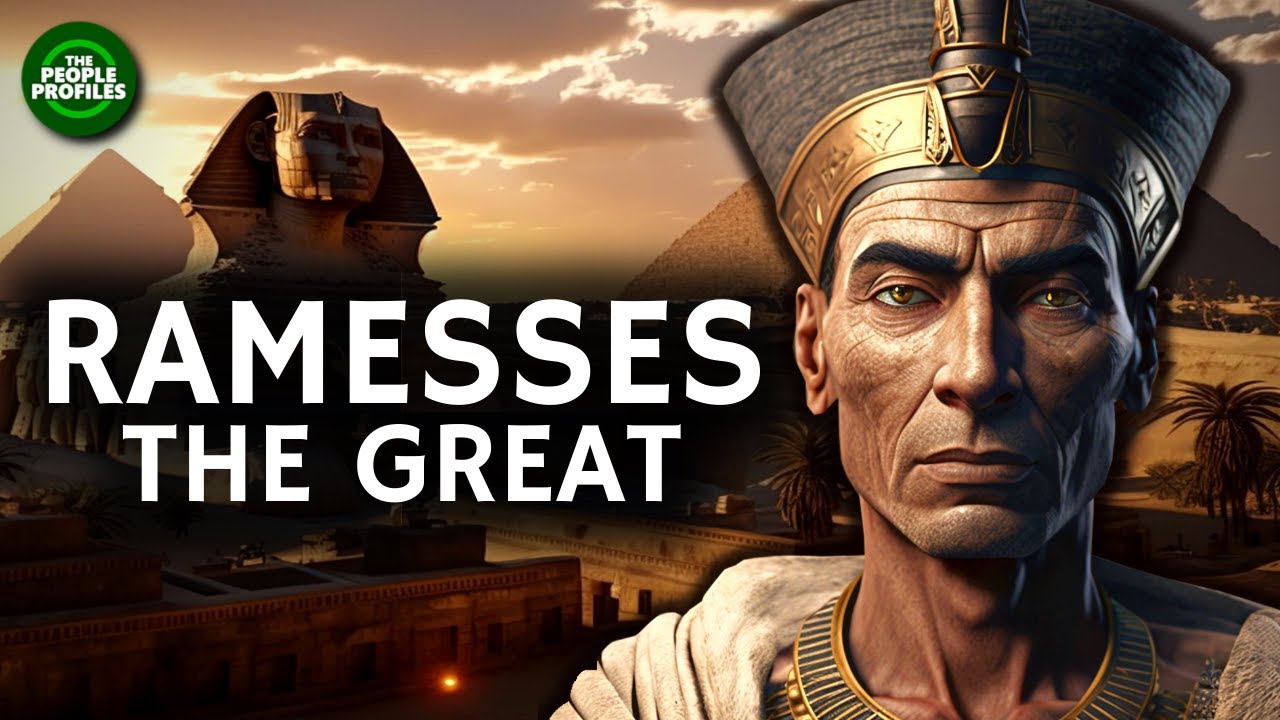
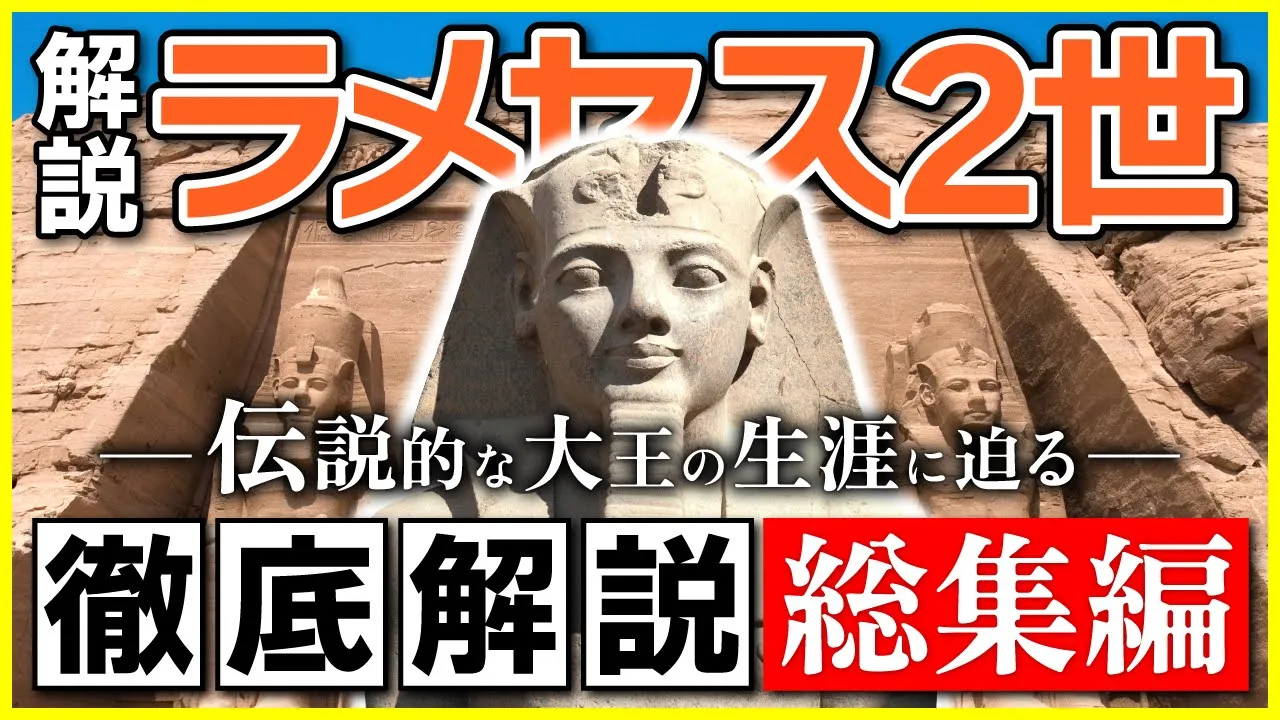
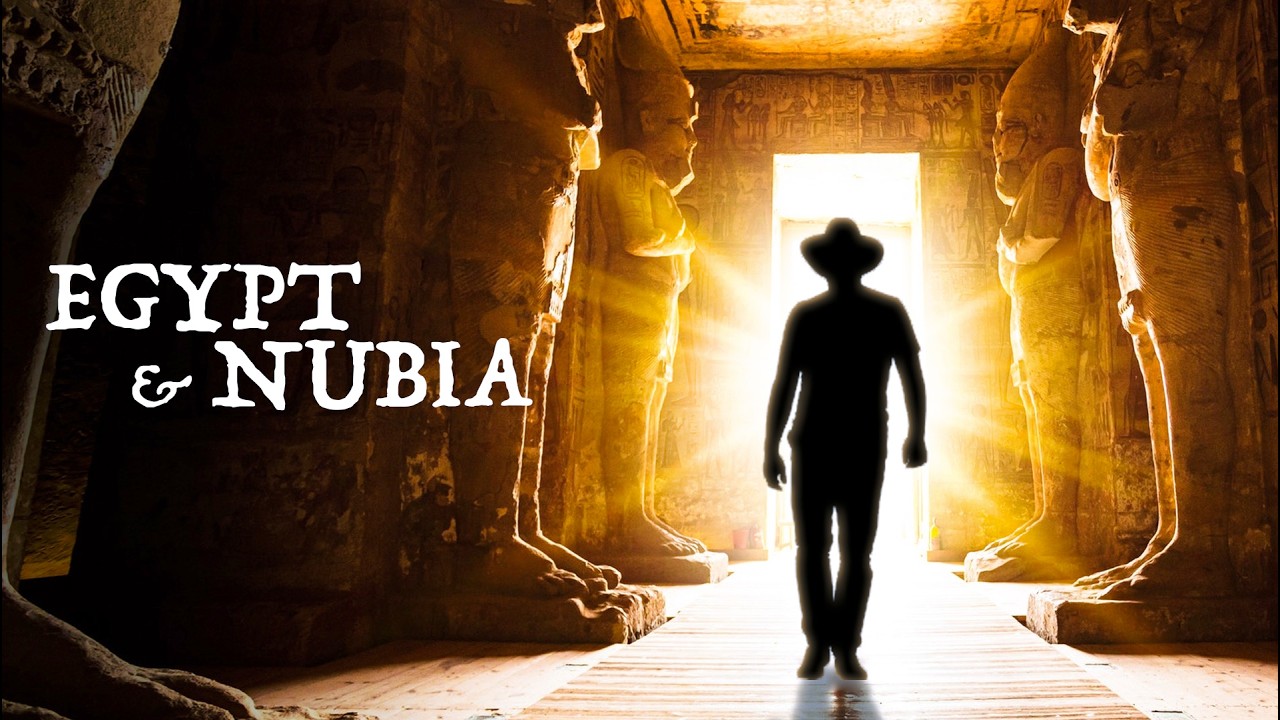
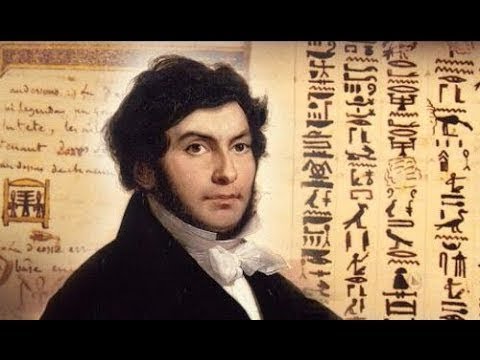



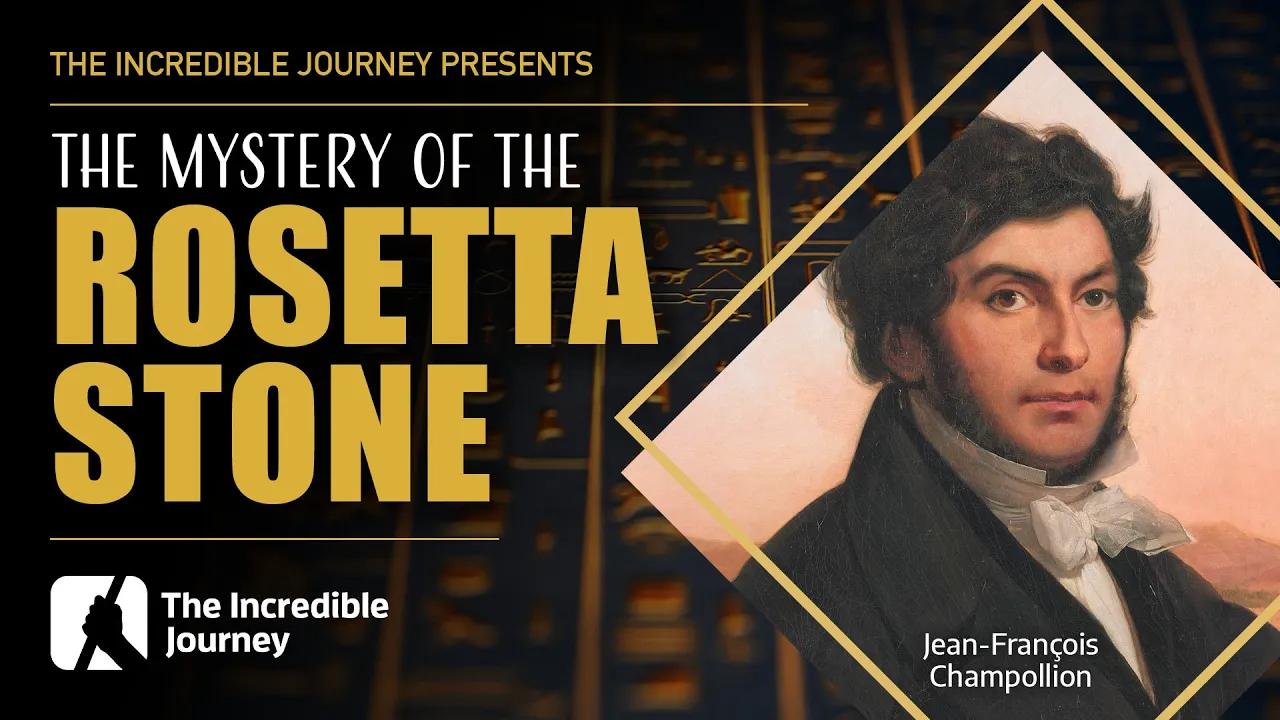
Jean-François Champollion, the French Egyptologist who successfully deciphered Egyptian hieroglyphs in 1822, embarked on his first expedition to Egypt in 1828, where he encountered Ramses II at Abu Simbel; two centuries later, modern forensic science has reconstructed the pharaoh's face using CT scans of his mummy, revealing the physical features of this legendary ruler who reigned for 70 years and whose legacy continues to captivate historians and archaeologists worldwide.
Decoding Hieroglyphs: Champollion's Egypt & Ramses II
Added:The significance of the Rosetta Stone and its role as a trilingual key (hieroglyphic, demotic, and Ancient Greek) for translation.
Basic chronology of Ancient Egypt, specifically distinguishing the New Kingdom era of Ramses II from the later Ptolemaic Period.
The conceptual distinction between logographic (idea-based) and phonetic (sound-based) writing systems.
The historical context of the 19th-century European fascination with Egypt, sparked by Napoleon's Egyptian Campaign.
The linguistic structure and grammar of Middle Egyptian, the classical stage of the hieroglyphic language.
The architectural and military legacy of Ramses II, including the Battle of Kadesh and the construction of Abu Simbel.
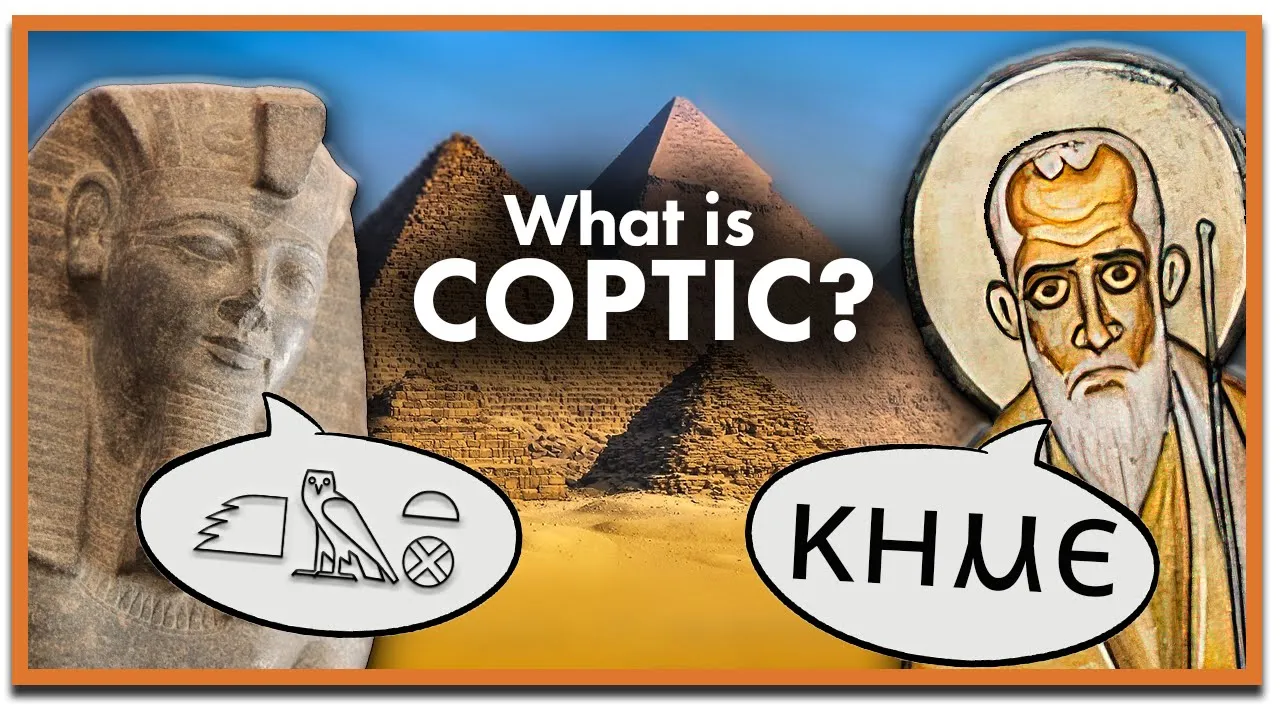
The role of the Coptic language as the final evolutionary stage of the Egyptian language, which proved vital to Champollion's work.
Comparative decipherment: How Champollion's phonetic methodology influenced the decoding of other ancient scripts, such as Mayan glyphs and cuneiform.
18K views344likes51:28Original Release: 2025-08-13
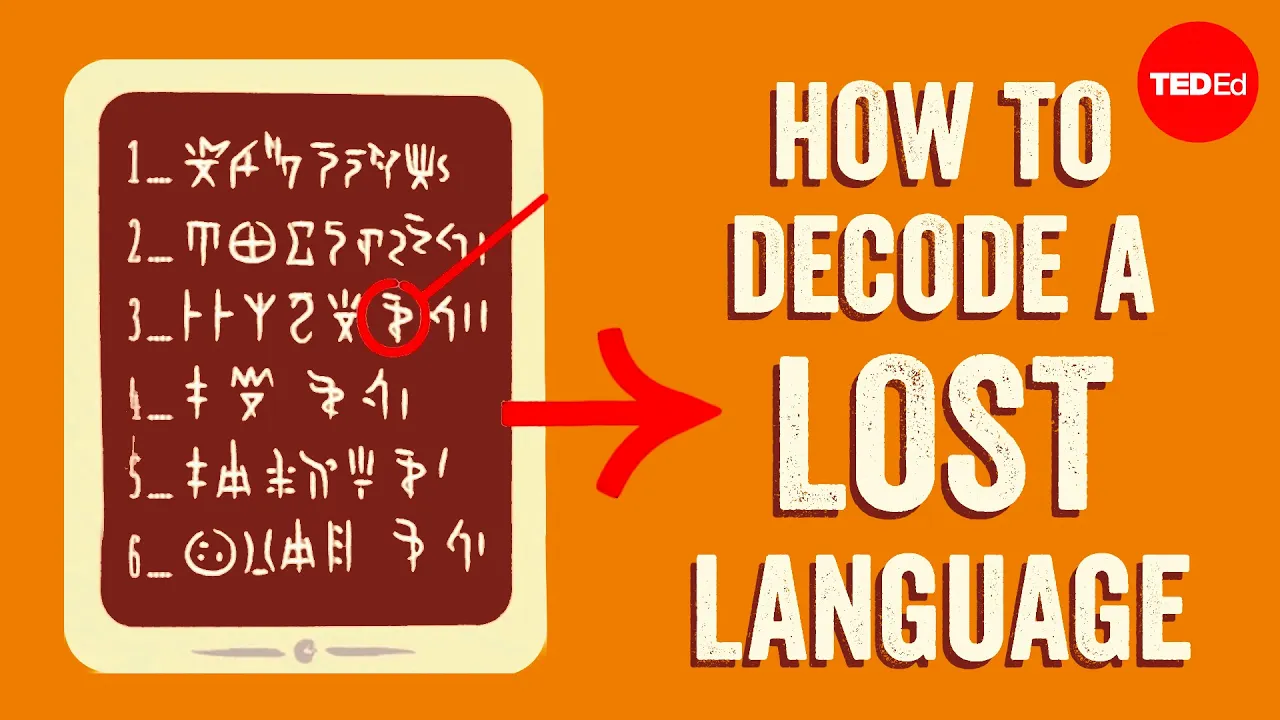
[Music] In 1822, this man from Grenobyl, France, goes down in history by unraveling the great mystery of hieroglyphics.
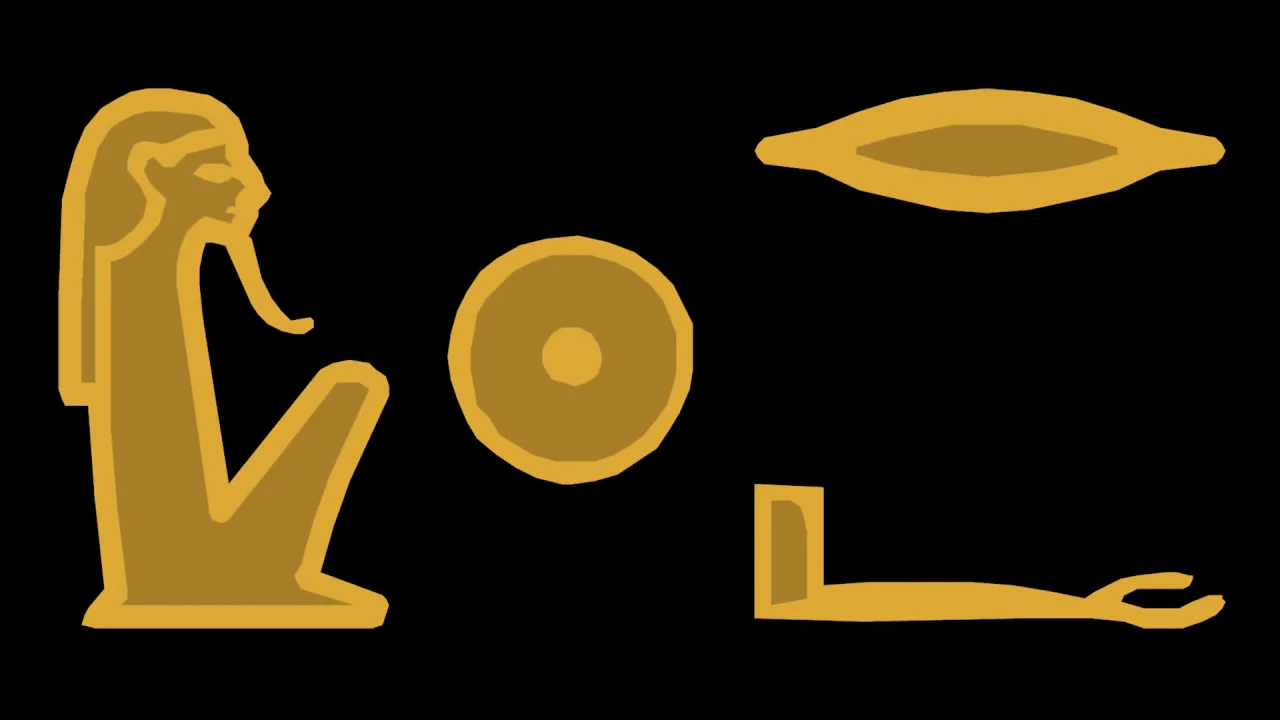
He succeeds in this feat thanks mainly to this cartogen by Ra the sun god designating the great Rammeses 2.
6 years later in 1828, Champolon fulfills his lifelong dream to tread on the soil of Egypt and he writes, >> "I kissed the Egyptian soil, touching it for the first time after having so long desired it. I am filled with confidence in the results of our journey.
I will spare no effort to succeed.
>> Throughout his expedition that will last 18 months from Alexandria to the temple of Abu Simbal, the fate of the greatest Egyptologist will constantly cross paths with the most illustrious pharaohs of ancient Egypt.
With Rammeses 2, Champon indeed discovers the pharaoh of abundance.
A 70-year reign, 11 wives, 200 concubines, a pharaoh, warlord, and builder, [Music] who a thousand years after the pyramids cross the country with temples of incredible beauty.
A sovereign who even in death explodes.
He dies at the age of 91, which is totally unheard of at the time.
[Music] 200 years after the decryting of hieroglyphics, a new feat is about to be undertaken.
[Music] Thanks to the pharaoh's mummy, a team of Egyptian doctors and English forensic specialists will try to reconstruct his face from the past.
Soon they will be able to plunge their eyes into those of the mythical pharaoh and continue the great Egyptian adventure initiated by Jean Franis Champolon.
>> I think Champolon would have been delighted to see the face of Rammeses II. It was such he was such an important and significant character that the idea of being able to see what he looked like would have been like the the perfect end to his story.
[Music] On December 26th, 1828, Champolon docks at Abu Simbel in ancient Nubia in the south of Egypt.
That is where the most remarkable encounter will take place between the discoverer of hieroglyphics and the great pharaoh. A veritable shock for Champolon.
Abu Simbel alone is worth the trip to Nubia. It's a marvel, a setting worthy of admiration.
[Music] At Abu Symbol, Champolon discovers a first facet of Rammeses 2, a builder king who left an exceptional heritage to posterity.
This masterpiece still fascinates archaeologists worldwide today.
This temple is magnificent.
There's something majestic about it.
It's a marvel. You can look at photos of it, but you really need to come here to admire the dimensions, the huggeeness of this temple. And just imagine when Champolon arrived in 1828, a sandflow coming from the plateau prevented him from getting into the temple easily.
Champolon managed. He paid some workers to clear the top of the entrance door and slipped inside. It was a real furnace, more than 40°, so he complained about the heat. But it so pleased him.
But what he discovers inside that tiredness doesn't get to him. And he spends several days inside copying out the text.
>> A constant and abundant stream of sweat running down his body and eyes drips onto the paper that is already soaked by the humid heat of this atmosphere, overheated like an autoclave.
What makes Abu symbol so particular can be found mainly in its building technique because this temple is a spos in other words a building dug directly in the mountain.
Imagine that you have a mountain here and that with patience and strikes of the pickaxe, all the stones were cleared to leave only the useful things, namely the walls and the pillars to support the ceiling.
But no blocks of stone were brought here. Everything you see was obtained by rock extraction to clear the spaces. And then the pillars and statues were worked on to obtain the shape they have today.
>> So everything had to be excavated and aligned with no room for error. For the pharaoh had demanded that the nouse of the temple, the most sacred part, be oriented so that the rising sun lit up its deified representation and the gods surrounding it.
a phenomenon that was only supposed to take place twice a year. The day of his ascent to the throne and the day he was born.
Champolon is amazed by this enormous space carved into the heart of the mountain. But what really surprises him is the study of the decor that Rammeses 2 put so much care into.
[Music] I regret not having a genie's lamp to transport them to the middle of the plast Louis the 15th in order to convince in one go the critics of Egyptian art.
Egyptologist and art historian Hurig Serusian regularly comes to document this temple. The most accomplished according to her of the reign of Rammeses 2.
[Music] There's a dynamic here as much in the royal representations which are full of dignity, strength and power as in the movements and bar reliefs. Everything is in movement. Everything is very lively.
I think it's magnificent.
And here there's a momentum. The galloping horses are jumping. It's extraordinary. It's a temple where the builder king was still very young, full of energy and dynamic. And we can see that transposed in the reliefs that are so full of life. It's fabulous.
[Music] For Champolon, Egyptian art reaches a sort of peak here [Music] and will not be equaled until centuries later with the Greek and Roman civilizations.
[Music] The convention was to have characters portrayed in profile as you can see in the bar reliefs.
They invented a form of representation that they really sublimated and repeated its true but with variations and a pronounced taste for the aesthetic impact.
So here the queen is represented standing. She advances carrying her offerings to the goddess.
her elongated almond-shaped eyes surrounded by stripes of makeup and her mouth and corners of her lips fleshy.
That is typically Egyptian. We don't find that in other cultures.
They were great artists trained since their childhood and from generations before.
>> And the care given to these representations is all the more important when it's a question of the pharaoh's image.
Rammeses 2 is going to order more statues and more colassi than any other pharaoh.
More than 300 of these masterpieces still stand.
>> You need some distance to admire these things.
>> Uh yes.
>> It's such a rare opportunity with this light.
>> I adore these statues. I love them because the sculpture is so well executed in respecting the rules and conventions.
But there is also the personality of the king himself in it too.
The face is rather oval. The eyes slightly turned towards the inside. The bridge of the nose here is a bit thick.
Whereas in other portraits, his nose is a little hooked, which isn't the case here.
But we recognize the mouth straight away with its shaped lips and the pierced ears.
>> The ears are always pierced.
>> With your smile, we might think that you're almost in love with him.
>> No, if it was a question of falling in love, I think it would have been a Meniteep 3 who is far more handsome.
Rammeses 2 also appeared to be deeply in love.
In any case, that's what this site indicates. For Abu Symbol is in fact two temples. The first one is dedicated to Rammeses as well as to the god Ammon.
The second is erected in tribute to Nefertitari, the Farah's favorite wife, and to the goddess Hathar.
Only two queens have had this privilege in the entire history of ancient Egypt.
For a king to dedicate a whole temple to his wife, he must have truly loved her a lot.
>> On the facade of his temple, the queen is sculpted in the same proportions as the pharaoh.
[Music] Here Rammeses makes Nephertari his equal, a sovereign and a goddess.
[Music] And these two temples allow us to understand how the world functions according to the Egyptians. The world functions thanks to a main god, the sun god. The sun god is brought to creation being inspired, it was said, by his wife, the goddess Hathor. And so the king and the queen Ramsis and Nefertitari embodied in a way the originating couple that enabled the creation of the world, the preservation of the world and the development of ancient Egypt.
>> This encounter at Abu Symbol is the apotheiois of Champolon's journey.
But this great Egyptian adventure began a few months earlier.
[Music] On August 18th, 1828, Champolon set foot for the first time in Egypt. And after exploring Cairo and Memphis, he begins his journey up the Nile. He adopts from then on the local style with a long dark beard and Turkish turban.
Feverish and excited, he has only one aim. To reach mythical thieves.
>> It was on the morning of November 20th that the wind, tired of disturbing us for two whole days and closing the entrance of the sanctuary to us, allowed me to finally approach thieves.
The Egyptologist goes first to the left bank of the Nile where an immense monument is found.
The Ramiseum.
Here he discovers another personality trait of Rammeses 2.
That of a great head of state.
>> Mustafa say Ahmed Christian Leblon has been digging here for 30 years with the same enthusiasm as his illustrious predecessor.
It's always an immense joy seeing the sun light up this monument every morning.
[Music] I must pay a justified tribute by saying that the Ramiseum is the noblelest and purest thing in thieves.
Champolon arrived in this monument seeing the name of Ramsy's engraved everywhere on the columns, pillars and walls. He saw the monument of Ramsy's there which became the Ramiseum.
>> In the mind of Champolon, this monument can indeed only be dedicated to a great pharaoh.
In one of the courtyards, this colossus in pieces leaves no room for doubt.
It was a colossus that measured almost 18 m high and weighed about a thousand tons that represented Ramsy's II seated and facing eastwards.
>> Christian Leblon's team carried out the stone blocking and managed to put the Colossus back together virtually.
It is the biggest statue ever sculpted in ancient Egypt.
What's interesting to see is that here we find ourselves today in front of a block, a statue in stone. And that at the time for the ancient Egyptians, this statue was alive. From the moment the colors were present, the image lived.
The image was alive.
Champolon understands that this image was adored by the visitors who came to see it. Just like a pharaoh is adored but also a god [Music] because the ramiseum that Christian Leblon's excavations allowed to reconstitute was at once an economic, administrative and religious center.
[Music] In the center of the building there was a temple richly decorated and dedicated to the worship of Rammeses.
[Music] In the Nouse there was a deified representation of the pharaoh in gold placed on a sacred gondola for worship.
But the Ramiseum was also an economic hub bustling with multiple warehouses where merchandise transited before being redistributed.
There were also kitchens, bakeries, breweries, and a whole administration that managed the ensemble.
[Music] >> What we have here is a prefiguration of the modern state. Egypt was going to live in a prosperous age. We have no trace during this era of the slightest revolt of the population towards the king. This will happen much later, however. So the reign of Ramsy's II is a very beautiful one [Music] by creating the foundations of an administered state. Rammeses 2 reinforced the aura that made him go down in history. But half man, half God, the impact of his colossus on the spirits ended up creating fear.
During the Christian era, this image will be destroyed because it's believed to be endowed with a power since it's alive. It has a power or even powers that may be benign or malign. So, it had to be destroyed. But what was being attacked? The face was attacked, the hands and the foot. In fact, it was all the active parts of the image that were destroyed.
>> At the time of Champolon, the pharaoh was therefore already disfigured. He showed concern.
>> You have to admire both the strength of the people who erected this marvelous colossus and that of the barbarians who mutilated it with so much skill.
But today, thanks to new technology, an international scientific team is going to take revenge on history.
In Cairo, the grand project of reconstructing the face of Rammeses is about to begin.
The radiologist Sahar Salim and the famous Egyptologists Zahi Hawas are going to base their conclusions on the study of exceptional remains. The mummy of the pharaoh discovered a few years after Champolon's journey to Egypt, which he probably would have loved to admire.
It arrived at the museum of Cairo in an incredible manner.
>> There was in that time actually a custom. The inspector of the custom refused the mummies to enter Cairo. Then his boss said why? He said because there is no word mommy written in the custom books. He told him you are stupid. Look there is a word here called salted fish.
Then all the mummies entered Cairo as salted fish >> today. This mummy holds the clues that are going to be vital for the scientists, notably the shape of his nose.
You can see the zygoma and the special features of the nose. The imbalmer's preserve this unique hooked appearance of the nose. If you go and see the other kings, they will see that their their nose is actually smashed from the effect of the wrappings. But here the imbalmer, they placed a bone of a small animal inside. And this is the pride of the king having his nose. All the mummification of the king Ramses the Great was really unique.
But this mummy isn't enough to scientifically reconstruct the physomy of the pharaoh.
Zahar Salem must enter the heart of the remains without impairing anything.
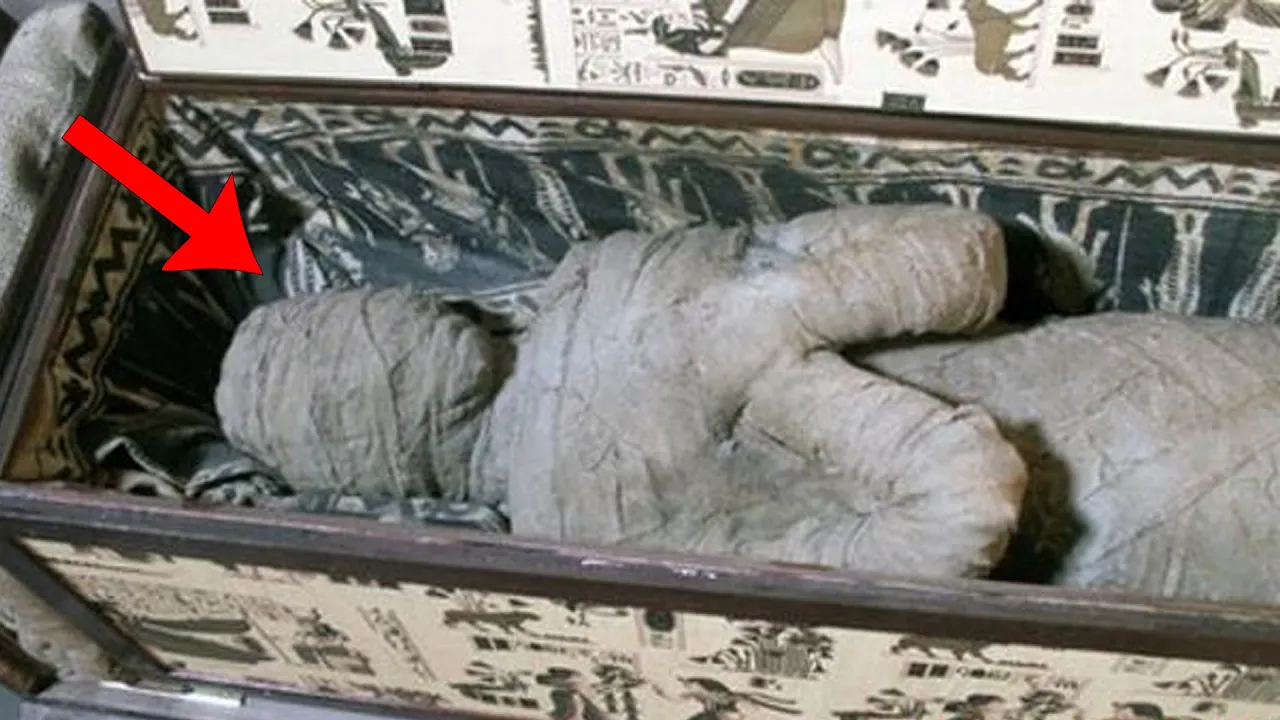
>> For that, she uses an advanced technique which allows her to pierce the secret of the mummies. Like today with this embalmed child still in its sarcophagus, Sahar is going to use a scanner like those used in hospitals.
In 30 minutes or so, the scanner will carry out transversal sections to the nearest millimeter with no risk to the mummy.
1.25 a mommy. It's like a time capsule. You can tell uh people from thousand of years what how they looked like uh what the diseases they had what kind of food they eat and all this can be the story can be told from the CT scan.
>> A few months ago Sahar was able to scan the most prestigious mummy of Egypt that of Rammeses 2.
This is the scan of its skull, the crucial element for facial reconstruction.
[Music] Reconstructing the vase of a pharaoh is a worldwide event. So, Sahar called upon one of the best legal anthropologists.
[Music] Some 2200 miles from here in Liverpool, England.
From her laboratory at John Moors University, Caroline Wilkinson collaborates with the British police and the FBI Academy of the United States to identify human skeletons.
Champolon knew how to decipher hieroglyphics, whereas Caroline knows how to read skulls. When you first look at a skull, I guess the things that we're looking for initially are are strong characteristic detail that you can see. Um for example, um on Rammeses, he's got very large um nasal root. So between the eyes, that bone there is very um high and pronouncer. So this is the soft nose. So most of your nose is cartilage, but there's bone at the top here between the eyes, and the shape of that bone predicts the shape of the the overall nose.
>> By studying each detail of the skull, Caroline is also going to be able to reposition the facial muscles.
So the stronger a muscle is where it attaches to the bone, the stronger those attachments will be visible on the surface. So look here on the chin. You can see these lines. That's where the muscles of the chin attach and it leaves a mark on the bone. And you can see that.
So I don't decide. It's anatomy decides.
Long weeks of work await Caroline before the face of the pharaoh resurges from the past.
a sovereign whose character Champolon is going to slowly decipher.
Soon it will be the shrewd politician and Rammeses 2 that he discovers.
On November 23rd, 1828 in thieves, he explores the right bank of the Nile as it is a crucial part of his expedition.
Some call it the Jerusalem of the pharaohs.
This name was already well in my thoughts. It had become so strong since visiting the ruins of the old capital, the oldest of all the cities in the world. For four whole days, I ran from marvel to marvel.
[Music] Today, the city is called Luxor and is still a must for all of Champolon's heirs.
Like Claude Obsimer, the archaeologist met in Abu Simba.
>> Here we are. And with a bit of luck, the goddess Sashot will be illuminated. And yes, here she is.
When arrived in Luxor, he was the first person able to read the hieroglyphs on the walls.
Thanks to his knowledge of cop, which is the final stage of the Egyptian language, he could understand certain words and sentences and the gist of what the Egyptians were inscribing here.
realized that the great Rammeses was also a master of propaganda. From the moment of his ascension to the throne in 1279 BC, he marked this highly symbolic place with his seal.
Indeed, according to Egyptian tradition, thieves represented the emergence of the world as these papyrus shaped columns bear witness to.
[Music] The columns you can see here are peppri form columns. This alludes to the papyrus of the Egyptian marshes in the north. It also alludes to primordial times when nothing existed apart from the primordial ocean. And one fine day a lotus emerged opened and let the sun break through. So here you have the lotuses that emerge and let the sun break through. And Ramsy's II took advantage and inscribed his name as the king is the incarnation of the sun god on earth.
[Music] >> Rammeses 2 had this cartou engraved all over the walls of the Luxer temple. For Champolon, this is proof of the sovereign's power.
Specialists today also interpret this as the premise of skillful political communication.
At the entrance of the temple, Champolon deciphers an enormous spa relief. It relates the battle of Kadesh.
Rammeses 2 stages a striking victory there. But what Champolon doesn't know, and what his successors are going to discover, is that in reality, the king manipulated the facts linked to his glory.
At the time, a great power led by the Hittites was threatening the north of Egypt.
They occupied central Anatolia, Asia Minor, and what is now known as Syria.
The Egyptians and the Hittites coveted two territories, Amaru on the Mediterranean, and the city of Kadesh, a strategic site at the crossroads of several commercial routes.
When Rammeses 2 took to the throne, Kadesh was in the hands of the Hittites, but he will do all he can to conquer it.
Setting up a good border in the north was going to help secure the Egyptian Empire. And one of the king's roles was to ensure the security and equilibrium of Egypt. And that took place by reestablishing and maintaining borders.
In 1274 BC, the young king therefore decides to launch a campaign with his army near the city of Kadesh.
Two Bedawins informed the Egyptians that the enemy is still less than 100 miles to the north.
[Music] So Rammeses 2 calmly sets up camp.
But these Bedawins are in fact spies who have deceived him. After a good beating, they tell the truth.
The Hittites are in fact very close.
And they soon start attacking.
It is a complete fiasco for the Egyptian camp.
>> During all this, Ramsis gets into his chariot represented on the other side of the pylon. He climbs into his chariot and the texts say, "I was alone without my army." Yes, he was alone, but he was with his entire escort.
And not any old escort. The Shamsu and the Narines were elite troops that managed to defeat the enemy in the shadow of the Pharaoh.
[Music] After the battle, the Egyptians count the prisoners and the severed hands of the killed enemies.
Though the battle of Kadesh that day was a stunning victory for Ramsy's II, he still hadn't in fact reached his goal, that of taking over the city.
So this campaign was a failure. He went back to Egypt and the Hittites progressed towards the south and captured territories in the south of Kadesh in the Becca Valley. It was therefore a victory for the Hittites in the end. Back in Egypt, Ramsy's II in his role of clever politician obviously doesn't explain all the details.
Instead, he emphasizes his outstanding and personal victory on the day of the battle and says nothing about what happened afterwards.
>> Champolon is impressed by the Almighty power of the pharaoh, but this is nothing compared to what he is going to discover a few miles from here.
[Music] On November 24th, 1828, he goes into the temple of Cararnach.
[Music] >> There before me was all the magnificence of the pharaohs, the best that mankind has ever imagined and constructed.
And what Champolon sees before him is quite simply the biggest temple of ancient Egypt with notably this immense room previously covered.
It has 134 majestic columns each almost 66 ft high.
[Music] When Champolio arrived, he was really astonished by the enormous size of these rooms compared to what was being built during his time in Europe. It was an emotional shock for him. Even though the large pillared room of Carac was in fact the same width as Notradam of Paris, >> this marvel wasn't built by Ramsy's 2, but by his father, the pharaoh Setiwan.
On his ascension to the throne, the young Rammeses added a sumptuous decor.
It's the decor after all that astounded and marked the spirit.
Rams II inherited this building fiber and intrepidness from his father and pursued the work the latter had started.
Obviously, it was also to leave the image of who he was to posterity by engraving his names and images. Of course, temples are made of stone and so are destined to be eternal.
3,300 years after his reign, the pharaoh's dream of eternity will soon come true.
>> In Liverpool, he is about to come back to life in the laboratory.
>> So, we can continue to check out this >> relationship between the soft tissues and the skull as well. Make sure that we're getting these creases right >> down here.
>> So, we make sure we add those in.
>> Thanks to the scan of Ramsey's mummy, a new stage is being reached.
>> And double check.
>> We're making sure that everything is following the reconstruction.
>> Yeah.
>> And there's been no distortion as we're sculpting.
>> We've produced the reconstruction from the skull to the shape of the face. And Mark is now adding 3D textures. So not not color but shape textures like wrinkles and skin pores and um lumps on the skin but is not information that we get from the skull. So this is the the kind of interpretative part that's based around age representation.
So a lot of um what we're seeing here on the sculpted face, we know from the musculature. So we know how certain muscles act. So they kind of contract, they close, especially the ones here on the forehead, we know the muscle fibers run vertically. So when you kind of frown or you pull your face down, that's going to crease the skin horizontally rather than vertically. So it's more that relationship between the skull, the muscles, and the remaining soft tissues.
And that means we can then kind of predict like these crease and fold patterns for the wrinkles not only here in the forehead but around the eyes around the mouth as well as those age related creases where we know things are going to sag and pull with gravity.
[Music] So now we're at the stage that we're happy with the shape of the face. We're happy with those age related textures, those creases, those sculpted textures.
Now we can start to paint the face.
But before starting this stage, Caroline must exchange with Sahar, the radiologist from Cairo.
>> Hi Saha.
>> Hi. How are you?
>> We're getting there. We're coming along.
Thanks for the data. Have you got some information for us in relation to appearance or is there any research that's been done on skin color of ancient Egyptians? They consider themselves brown color and it is not like the Libyan which are which have whiter color or fair color or like the African people who had very uh dark black color. I would choose this tone for the skin of the king. I won't go wrong by choosing this. So I I think that this color would would be good and I think also this would fit the king.
>> Thanks Saha. Nice to speak to you and thanks for the PowerPoint.
>> Soon, Rammeses is going to get his complexion and hair back.
And thanks to the software used in criminal investigations, Caroline hopes to achieve something that would no doubt have amazed Champolon, rejuvenating the pharaoh.
For the French Egyptologist, the importance of this sovereign is constantly being confirmed during his voyage. A powerful pharaoh in life who he will discover grandio in death.
[Music] In spring 1829, he enters the valley of the kings.
3,500 years ago, the pharaohs of the new empire set up their necropolis there.
[Music] It was a stay marked by death. There wasn't a blade of grass, nor a living being, except for the wolves and hyenas that devoured the donkey my servant was riding.
Here he made a new appointment with the great Rammeses in his tomb today close to the public.
The person that holds the key is the famous Egyptologist Zahi Hawas, a star in Egypt with whom tourists have their photo taken.
>> Thank you very much.
>> Finally, you're more famous than Rams II.
>> No, Ramsey is the one who made me famous.
>> Thank you.
Today, exceptionally, he is going to allow us to put ourselves in Champolon's shoes.
[Music] When the French Egyptologist stepped inside, he was surprised, [Music] for only the texts located at the entrance of the sephilar are accessible to him.
I had an overriding desire to find the tomb of the famous Ramsy's family. But the sephiler of this great man seemed to have been on the receiving end of either devastation by barbaric hands or flooded right up to the ceiling by accidental storms.
It was very important for Shambalo to come and visit this tomb. And maybe he stayed a long time and people thought that maybe he slept inside this tomb.
But at least we can imagine the magic of a great man like Shambolon to come to the valley of the kings and enter inside the tomb of Ramid II.
[Music] Zahihawas is in charge of restoring this monument and the building site is gigantic because the tomb of Rammeses is one of the largest in the necropolis 551 ft long.
[Music] At the end of this tunnel, the burial chamber can be found.
This is a burial chamber that contained the great sarcophagus of Ramsey II and the mummy. And the mummy was moved on dynasty 21st and dynasty 22nd by the priestess who really saved all the mummies of the kings of the new kingdom and they put them in two kashetts. One at bahi that was found in 1881 and the second one inside the tomb of i found in 1902.
[Music] Can you imagine what kind of treasures that the tomb of Rami could be? Look at the tomb of Tutan Kamun. A small tomb. It has the size only of this chamber, but contained 5,398 objects. Can you imagine how much this tomb contained of treasures?
Countless.
Because the reign of Ramsis II is the golden age of Egypt.
>> Hard to imagine today the magnificence of the Sephilar.
To get an idea, a visit not so far from here would be useful to the Valley of the Queens.
[Music] It is here that Nefertitari's tomb can be found. The favorite wife of Rammeses 2, who died 43 years before him.
Christian Leblon knows this place well as he has often done digs here, but Champolon didn't get the chance to visit this marvel.
It was discovered in 1904 after his expedition.
Here we are in what was the abode of eternity of Queen Nefitari.
I worked for more than 20 years in the Valley of the Queens and this tomb is very dear to me and above all Nefitari as I had the opportunity to study this queen closely in the course of my research.
You could say it's someone I feel I know well, like a relative.
[Music] It must be said that Nefertitari had everything to charm with her predestined name that meant the most beautiful of all. For Rammeses, Nefertari wasn't a choice. She was imposed on him by his father.
But it was love at first sight.
He never stopped paying homage to this woman all his life.
Rams II had at least 11 official wives.
I say official, but in any case, Nefertitari was certainly his favorite and for whom he had a lot of love. And I think that this tomb is the illustration of that when you see how it has been decorated so magnificently. It bears witness to the love Ramsy's II really felt for his beloved wife.
[Music] For Remmeses 2, the construction of this tomb establishes itself as a priority building site. So, it was entrusted to the best artists of the kingdom.
[Music] As you can see, she is adorned with a very beautiful necklace, earrings, and is clearly wearing a dress of highly transparent linen with very full sleeves.
What's quite extraordinary is that the artists managed so well to convey the transparency of the fabric because under the dress we can see the body of Nefertari that has been given a rosy finish.
And it's quite incredible to see that the artists were able to reproduce the transparency of a fabric.
It's important to know that all the colors are the original ones. They are the colors of the time when all scenes were represented by artisans.
>> It's exceptional.
>> When this tomb was sealed at the death of Nefertitari in 1256 BC, Rammeses 2 was devastated. He dedicated this poem to her.
My beloved is unique and no one can equal her. Dying, she stole my heart.
The tomb then endures thousands of years and miraculously comes back to us almost intact, except for one detail. The queen's mummy remains unfound.
When we studied the Valley of the Queens, I realized that none of the Queen's mummies had been found, which led me to imagine that hypothetically there's still a hideway that we haven't yet found and in which we will probably find not only the remains of Nepatari, but also those of other queens, princes, and princesses who had been buried in this necropolis.
We have no text to indicate where we might find this hideway of course. So we must understand that one day perhaps in generations to come this legendary hiding place of the queens once buried in this royal necropolis will perhaps be found.
[Music] Meanwhile, thousands of miles from here, another mummy is about to reveal its final secrets.
That of Rammeses 2.
In Liverpool, after several months of hard work, it's the big day for Caroline Wilkinson.
>> Hi, how are you? She is at last going to reveal to Sahar, the radiologist from Cairo, the face of the great king.
>> So, I think we're ready to show you the um depiction of Rammeses.
>> I can't wait.
>> Press play.
Elaborated from the scanned skull of his mummy.
Here is the face of Rammeses 2, great Pharaoh of Egypt just before his death.
>> Can you see Saha?
>> Yes.
Amazing and very important moment for me to be introduced to the king for for for the first time ever. It is so uh real.
It's a big moment for us all.
>> It brings back uh history to life. It brings back the greatness of the king, the greatness of the ancient Egyptian civilization back to life.
>> Caroline has a long experience in the field of facial reconstruction, so she knows how close to reality this is.
[Music] We know that about 70% of the surface of the reconstruction will have less than 2 mm of error.
And with him, because he's very old, uh, and we've seen a lot of those creases and wrinkles on the preserved soft tissues, we can be pretty certain that that's how he looked at that age. He should be recognizable to somebody who knew him at the time when he was alive.
>> There's a few of us. But Caroline still has a surprise for Sahar.
>> So we also wanted to try and show him as he looked in his prime. Um so we did a what's called an age regression. Would you be interested in that?
>> Very much. I'm eager.
[Music] And here he is at the height of his reign at the age of 45.
[Music] Um he was definitely handsome king and he is so Egyptian. You think >> he looks like many faces that I see um every day in Chiron and and and Egypt.
Yeah, it is. It is moment for the whole world to look at the king, the great king Ramses again.
>> In his wildest dreams, Jean Franis Champolon could never have imagined this face to face with Rammeses 2 that science has made possible today.
>> It's really amazing for archaeologists to to be able to see people from history. So for Champong to to finally see this pharaoh that he that he worked around and understood to see him as a a living breathing person must must be mindblowing for somebody from that period.
After decryting hieroglyphics, exploring the most beautiful temples of Egypt, and meeting the greatest pharaoh in history, Jean Francois Champolon ends his journey and goes back to France exhausted in December 1829.
He dies 2 years later at the age of 41 and will himself go down in history.
[Music] [Music] [Music]
Up Next

45:41
In Search of Eden: David Rohl's Theory on the Garden's Location — Documentary
@captainblack3518
1.3M views•2016-08-30

33:02
The Great Schism of 1054: Causes and Consequences
@SacredCathedrals
113.5K views•2026-02-19

53:22
Ku Klux Klan History: 150 Years of Racism and Violence
@SLICE_Full_Doc
2.2M views•2025-08-27

17:05
Understanding the Cold War: Superpower Conflicts and the Road to Détente
@OverSimplified
46.1M views•2019-01-24
Related Study Plans & Knowledge Roadmaps
Structured learning paths in History
history
Byzantine Iconoclasm: Theology, Art & Politics
01Foundations of Byzantium and Early Christian Images
02The First Iconoclasm: Leo III and the Crisis of Images
03Empress Irene, Nicaea II, and the Second Iconoclasm
+ 2 more learning modules
9h5 modules
Explore Roadmap
history
Iranian Revolution (Causes, Events & Legacy)
01The Pahlavi Dynasty and the Roots of Discontent
02The Spark of Rebellion and the Rise of Khomeini
031979: The Fall of the Shah and the Climax of the Revolution
+ 2 more learning modules
8h5 modules
Explore Roadmap
history
Mali Empire: Mansa Musa, Trade & Timbuktu
01Foundations of the Mali Empire
02The Trans-Saharan Gold and Salt Trade
03The Reign and Pilgrimage of Mansa Musa
+ 1 more learning modules
6h4 modules
Explore Roadmap
history
1947 Partition: Politics, Borders & Legacies
01Foundations of British India and the Divide
02The Political Negotiations and the Mountbatten Plan
03Drawing the Boundary: The Radcliffe Line
+ 2 more learning modules
8h5 modules
Explore Roadmap