













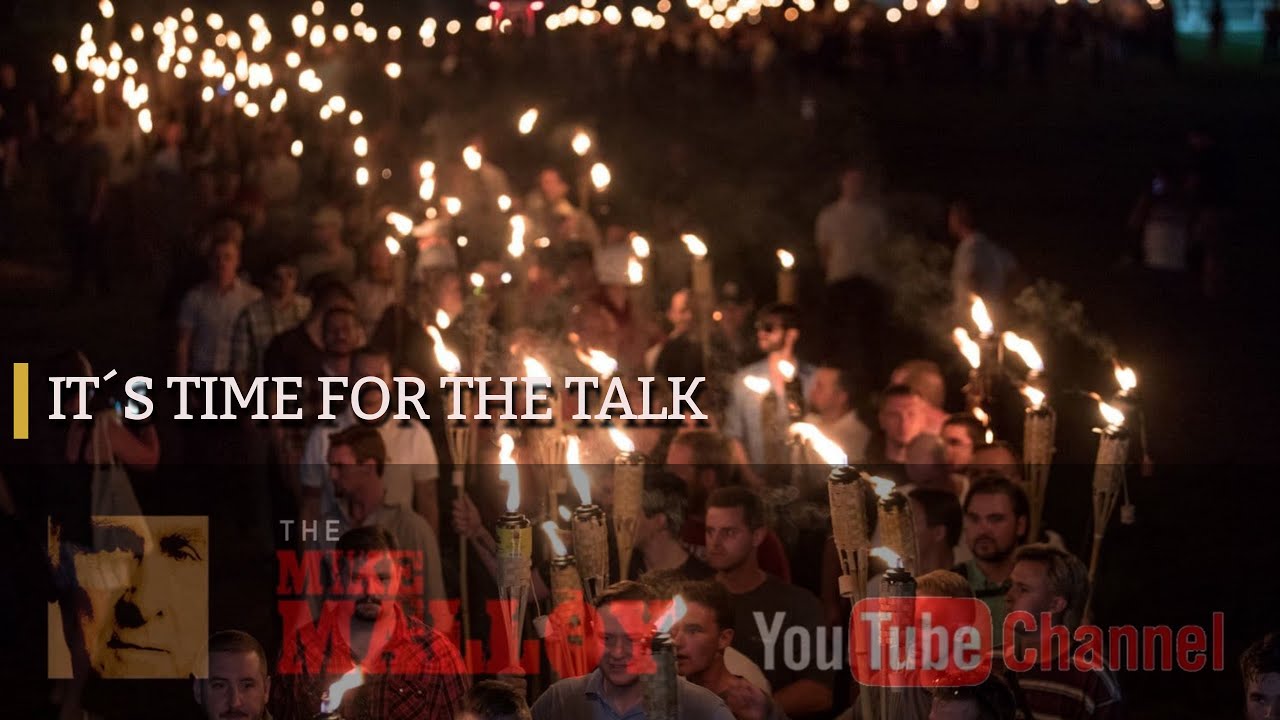




The Ku Klux Klan, founded in 1865 by Confederate veterans in Tennessee as a secret society, evolved through three distinct eras: the Reconstruction-era Klan (1865-1872) that terrorized African-Americans through violence to maintain white supremacy; the 1920s Klan (1915-1940s) that expanded to include anti-immigrant, anti-Semitic, and anti-Catholic positions, achieving 4 million members and significant political influence including helping pass the Immigration Act of 1924; and the post-WWII Klan (1946-present) that continues to exist in smaller numbers. The organization's survival and reinvention demonstrates how hate groups adapt their messaging and membership criteria to exploit social tensions and political climates, while maintaining core ideologies of racial and ethnic supremacy.
Ku Klux Klan History: 150 Years of Racism and Violence
Added:[Music] 1865, the United States. The Civil War finally came to an end.
After 4 years of deadly combat and more than 700,000 deaths, the pro-slavery southern states were defeated by the abolitionist North.
[Music] General Lee surrendered to General Grant at Appamatics.
[Music] Several months later, slavery was abolished.
Nearly 4 million of the South's 9 million inhabitants were enslaved.
And at last, they were free of their chains.
[Music] For plantation owners, this revolution was unbearable.
[Music] >> So a shock to their identity because their identity was very much tied up in being masters to being a class of people who were masters to slaves even if they had not themselves been slave owners.
Slave owners were of course uh terrified by the end of slavery. They were terrified uh economically that they would lose their very cheap labor force, but they were also terrified that African-American people would start to demand the rights of citizenship.
In 1865, a handful of Confederate veterans of Scottish descent decided to create a secret society in the town of Pilaski, Tennessee.
It was originally designed to be a fraternal order. It was designed as a joke. It was literally designed for a bunch of guys to have a reason to hang out and drink beer and and just like take care of each other.
>> If we were to ask why they created the clan, uh they claimed always that it started as a fraternal drinking society.
>> They were young men. They were bored.
They lived in a small town called Palaski, Tennessee, and they decided to form a little secret society.
>> The veterans initially wanted to share stories of battle and the good old times for the slaveowning south.
They gave their group a mysterious name, Ku Klux Clan.
>> We don't know why they chose the name Ku Klux Clan. People say it's because that's the sound a shotgun would make when it was you know, klux. Um, like that. The one that is most broadly accepted is meant to be named after the Greek word for circle klo. And that makes a certain amount of sense when you realize that the people who founded the clan were educated in Latin and Greek and did use Latin phrases in particular in some of their other writings. They were very invested in the fact that they were well educated. They harkked back to Greek uh mythology, Greek names. Um, it was really in many ways like a very uh adolescent fantasy of a kind of medieval uh bunch of warriors.
>> They added the word clan, a common term in Scotland to the Greek phrase cucllos and started each word with a K.
The clan was born.
Their first appearances in public in Pilaski were peaceful. But soon harassment and intimidation of former slaves became daily rituals.
>> The very first clan group in Pilaski uh was essentially a group that kind of played pranks. They would dress up uh in very elaborate costumes, not the white sheets that we see today. Um and they would go around and try and scare people uh or play pranks. uh they often would uh try and frighten freed slaves who they thought were so superstitious that they would believe they were ghosts and so on.
>> Sometimes they change their voices during the attacks. So they will make well they'll make animal noises and hoots and things like that. But they'll also speak really high or really low or one guy will speak high and the other guy will speak low or they'll take on a fake German accent.
They're somehow being playful with their violence. They're performing.
>> Rumors spread that the masked men were ghosts of Confederate soldiers killed in combat and back for revenge.
Fear spread among former slaves.
Soon, brotherhoods began to emerge across the South with names like the Knights of the White Rose, the White League, and the Red Shirts. They all used the same intimidation tactics.
Clansmen would stake out territory in front of voting booths to keep black men from participating in elections.
The South had to stay in white hands.
>> They became a kind of paramilitary organization or more properly said a bunch of little paramilitary organizations uh which uh very quickly in the course of a year or so became the violent enforcers of what black people could do and could not do.
[Music] African-Ameans resisted, sometimes armed, but the murders and lynchings continued.
[Music] >> Whipping were very common and that was a legacy of slavery. These men and one thing you notice is that when these clan when these Klux whip people, they know how to whip people. They know what kind of tree branch to use to get whatever effect that they want.
You have to remember that whipping can be deadly particularly in this era. You don't have the antibiotics, you get an infection, couple weeks later out of in terrible agony, you die, you know, from just the open wounds caused by these whippings.
It's very important to understand that in lynching an individual, their goal was to intimidate the whole mass. That is what terrorism is. And to a very large extent, they succeeded because while slavery was abolished, the complete subordination of African-Americans continued. Unable to vote, unable to get decent jobs, unable to have education, unable to have healthcare. It was a a very successful campaign by a small terrorist organization.
The clan and its so-called men of justice began to get a reputation.
Groups sprung up across the south and recruitment exploded.
The clan still needed a charismatic leader to lead the fight.
For the role, they chose a military man, a hero to Southerners from the War of Secession, [Music] General Nathan Bedford Forest.
[Music] They come together, they said, "Okay, who's going to be our leader?" And they took a vote and they all voted for who they thought should be a leader. Nathan Bedford Forest got the most votes. And they come to him and they're like, "Hey, we started this thing. It's called the Ku Klux Clan or the Kuclo and we we made you our leader. Nathan Bedford Forest didn't even realize that he was voted as the He wasn't even in the KKK.
>> Nathan Bedford Forest was a romantic figure. He was a celebrity. He was just kind of known as kind of like a a man who's going to do what needs to be done, right? So he was sort of he had that that reputation and he was happy to have his face put on it. He clearly indicated that he was the head of the clan.
For a group as violent as the clan, Forest was an ideal leader. His reputation preceded him. A former slave trader, he had committed a number of war crimes during the war.
During the Civil War, Nathan Bedford Forest presided over the massacre of 3 to 400 black men who were surrendering.
Uh they were actually Yankee troops.
They were surrendering to uh Forest's troops, but Forest allowed his troops to run rampage and in fact encouraged them to and murder all of these people.
I think that really tells you what the clan was all about. Nathan Bedford Forest was a slave trader, a war criminal, and the first leader of the national clan at its most violent moment.
With Forest in the lead, the clansmen began to take more punitive action.
The violence reached its peak in 1868.
With the presidential elections approaching, dozens of courouses, churches, and polling places went up in smoke.
More than a thousand murders were committed in four weeks.
Former slaves could not be allowed in any case to exercise their rights. Doing so would upset the system of white dominance.
The victims were not chosen randomly.
The main thing that the first clan was trying to accomplish was the deactivation, the politicide of African-Americans within the South. So they particularly targeted African-Americans who voted. They even more so targeted African-Americans who held office. And in many cases, they didn't go to the African-Americans who held office in order to say, "You need to resign your office or we're going to be back." They went in and they killed them outright because they understood that these were people that were already established as leaders. They understood that these were people that others in the community looked to as individuals who could kind of exemplify what it meant to assert oneself as a citizen within the society. And those people needed to be neutralized.
The reconstruction era clan was also happy to target white Republicans, those that they saw as acting in the political interests that would further African-American power.
>> And so this reminds us again that what we're talking about here is not only disorganized violence. It's not only depravity. It's not only terrorism. It's politics.
In Washington, plans were made to take down the Invisible Empire, whatever it took.
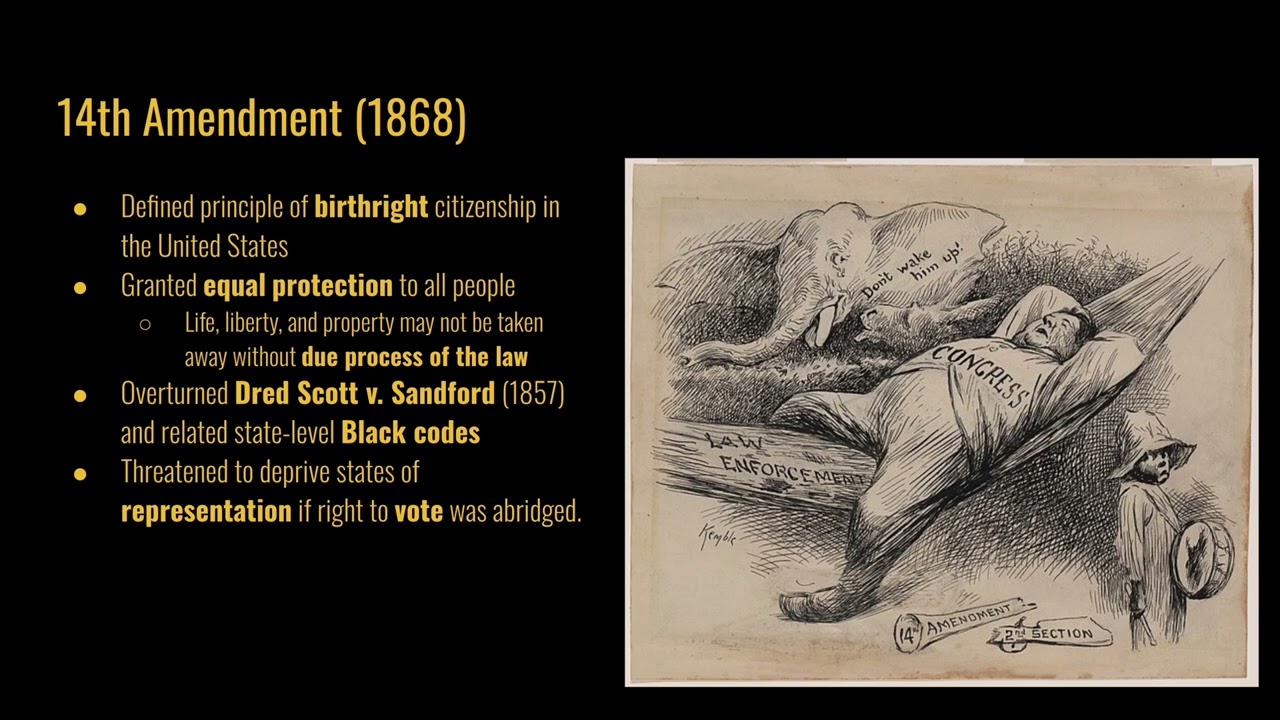
Congress adopted a series of laws to dismantle the clan.
Martial law was declared.
The Federal Army, still deployed in the South, was mobilized to fight the clan in order to protect black voters.
Slowly the clamp down began to take effect.
In 1872, the clan was officially declared destroyed.
[Music] But it was too late. White supremacists didn't need them anymore.
[Music] when uh freed black slaves and their sympathizers uh were pushed away, when uh black people became more and more afraid to vote because it could cost them their lives, uh the work of the clan was essentially done.
>> White Southerners are managing to get back legitimate power. Once they control the sheriff's office, the trial justices, once they are in in charge of those things, they don't need the clan anymore. And in fact, if you have legitimate power, you really don't like a bunch of young men running around deciding to attack people. You don't want to have to deal with whatever their priorities are. You want to be in charge.
In 1877, the Federal Army pulled out of the South with mixed results. The end of slavery was meant to give way to a regime of equality.
Instead, it was slowly replaced with segregation, which lasted nearly a century.
Blacks and whites wouldn't mix in daily life. Schools, shops, transportation, hospitals, and more were all affected.
[Music] African-Ameans would be separated from the white population which kept all the power.
Black people remained secondass citizens.
The values of the clan's invisible empire had spread amongst the general population.
Lynchings of African-Ameans became more common.
The federal government turned a blind eye.
Photos from lynchings would be sold and used as postcards. There would be souvenirs from these sorts of events.
People would want to take pictures uh in front of someone who was victimized in a lynching. So these are acts that involved directly or indirectly tacitly broad swaths of the white population.
Lynchings often went far beyond the stereotype of simply hangings. People may be shot. They could be burned alive.
They would be tied to the back of automobiles by the time we get to the 20th century and dragged through the streets and then have their body displayed publicly. And what you often had in some of these lynchings was the actual molestation of the body of the lynched person. They uh to be crude about it, one of the things they love to do would be to cuff off cut off a man's penis and stick it in his mouth. Uh, some of that was so sexualized that there also might seem to be some kind of white anxiety about black sexuality.
It was a ritual that was meant to publicly demonstrate to both blacks who heard the stories and whites who witnessed the crime that racial domination was something that would be enforced within society.
So it was a cultural process. It was a performance, a very macab performance as much as it was a kind of attempt to take legal matters into the hands of vigilantes. And in that sense, it meant to organize society in the same sort of way that a book or a speech or a sermon at church is meant to tell you what your values are.
[Music] At the beginning of the 20th century, a new world was taking shape. Vertical cities emerged and America became a country of immigration.
Millions of Europeans, Catholics from the south, Jews from the east, disembarked for the world's leading industrial powerhouse and the promise of a better future.
The clan had fallen into obscurity. 50 years after the Civil War, it was born again from its ashes.
In February 1915, The Birth of a Nation by DW Griffith came out. The film was an adaptation of a successful play called The Clansmen. A long feature film. It looked back at the Civil War and the reconstruction.
Griffith was an innovator. There were wide shots of battle scenes, realistic decor, and swelling music. The Birth of a Nation was a major cinematic show that broke with the silly homemade skits that were typical of early cinematography.
In the second half of the film, Griffith depicted scenes from the post-war era.
Clansmen were shown not as criminals but as justice doers.
Scholars of film look at it as very innovative and uh progressive in terms of its use of lighting, use of actress and so on. But the core of this was the understanding that in the in the movie that these black men are really threatening to kidnap and rape white women all over the place.
And the culmination or the de num of the film is quite terrifying because it shows uh all these black people who are like barbarian savages just running wild across the land and the brave uh Kukux clanners are defending morality and white womanhood. And that position about defending white womanhood was very very central to the southern clan.
>> It presented the Ku Klux Clan romantically. It presented the Ku Klux Clan as justified. All of this means that someone has to ride literally in on a white horse and not only restore order but restore honor.
And this is very important in terms of why people were attracted because for a certain kind of men it made you feel good. You were kind of heroic uh and a super patriot doing something to protect your society and country.
The writers of wrongs in the clan did their version of justice and the audiences wanted more.
The film roused new curiosity for the Ku Klux Clan. One man in particular took advantage of it.
William Joseph Simmons.
The former lay preacher born in Alabama was a member of Fraternal Orders.
In November 1915, he organized a climb of Stone Mountain near Atlanta.
[Music] Simmons dreamed of reestablishing the Ku Klux Clan to capitalize on Confederate heritage and make some money along the way.
Hiding his face in a skull mask, Simmons created a ritual, secret ceremonies, and coded words.
[Music] Charity begins at home. He proclaimed himself the grand imperial wizard and emperor of what he called the invisible empire.
He wrote the chloran, the clansman's code of honor.
A new KKK was born with a leader and laws.
While the birth of a nation was spreading its venom, Simmons made announcements in the press announcing the rebirth of the clan.
The film thus became a 180minute advertisement glorifying his movement.
Simmons Hooded Horsemen could be seen on film posters and in newspapers throughout the country.
[Music] The popular image of the clan as we often think about it is fundamentally created by Griffith's birth of a nation.
Uh that is the film that creates the image of the white hood and robes that then gets adopted by the second clan.
>> The clan didn't make the film Birth of a Nation, but used it to great effect. One of their major recruitment techniques was they would go into a new town. They would have a showing of the film. And you have to remember that for most people, film was very new and very thrilling in the early 1920s. I'm sure many many people had never seen a film before until they saw this. Furthermore, the clan would charge money for people to come and see the film. in a small town. This could be a really major uh exciting event.
The Birth of a Nation is considered the first Hollywood blockbuster.
More than 50 million Americans went and sat in awe at this racist film.
For most viewers, the spectacular battles, Lincoln's assassination, and of course, the clan's heroic victories were seen as truth.
It was a narrative fiction film that DW Griffith had constructed specifically to convey the idea of historical authenticity.
that he has title cards drawing on quotes from popular academics and historians to try to convey the idea that this was the truth of reconstruction and it was a truth that was widely accepted at the time. This movie was seen as in effect telling the story of the south after the civil war.
Um, and so it really becomes the predominant way that people in America understand uh, southern history and and which of course is bound up in our national history.
African-Ameans organized to fight back against this propaganda. The NAACP, a group created to defend their rights, tried to get the film banned and some cities boycotted it.
But people in power remained unmoved.
Griffith's work was the first feature film to be shown at the White House for a sitting president, the Democrat Woodro Wilson.
>> We think of Woodro Wilson as being essentially a progressive president. Uh but when Birth of a Nation was shown in a private showing in the White House to Woodro Wilson, he infamously said, "It's like writing history with lightning."
That's how incredibly good this movie was.
>> President Wilson praised it. He he thought it was great. He was absolutely a a racist and a segregationist.
Uh that doesn't mean that he would necessarily have approved of clansmen going around and lynching people. It's also important to understand that Wilson was himself a southerner.
He depended on votes from the south for his position.
In the south, you had basically an electorate that was only white. And Woodro Wilson could not afford to contradict them.
>> So Wilson's essentially endorsement uh of Birth of a Nation and therefore of the idea of the clan uh helped to popularize the clan enormously.
The birth of a nation gave the clan a nationwide audience. Joseph Simmons was ambitious. He understood that his little business had a big future.
That meant advertising.
So, the Grand Wizard hired two marketing experts, Elizabeth Tyler and Edward Clark. The two advertising specialists understood how to help the organization make money.
They concocted a pyramid scheme.
[Music] >> If I recruit you to be a member of the clan, uh, I can keep 40% 40 of your initiation fee. You can then go and recruit him and you can get his 40%. And that goes on and on until you run out of people to recruit. And the initiation fee at the beginning was $10. and $10 is worth well over $120 today. This is not an organization of poor people.
>> There is a business to the clan and it's called clan members. You play a membership fee and all the money that you pay every month, your dues go to the Imperial Wizard, and he uses that money to travel around and party with everybody at these damn clan lighting ceremonies, these cross light ceremonies. It pays his bills. He uses it to buy alcohol. He just He doesn't work. He doesn't have a job. We have jobs. It's just a scam, man. The whole thing is a scam. They built this up.
They also uh forced the clan members uh to rent their robes. You were not allowed to sew your own robes and so on.
They standardized the robes as these white sheets that we see today with the cross with the blood drop on the front and so on. And ultimately the clan grew incredibly quickly.
[Music] >> The sermons, meetings, and nighttime ceremonies drew in more and more people.
In just a few months, the group went from 2,000 to 300,000 members.
At $10 to join, the clan became rich and powerful.
Starting with its imperial wizard, His Majesty William Joseph Simmons.
[Music] Well, for a while in the 1920s, uh, the clan was exceedingly powerful and had a great deal of money. Uh William Joseph Simmons, for instance, the first leader of the second era clan, lived in a a multi-million dollar mansion. So for a while, with all of these dues coming in, uh it was incredibly successful.
The new world was changing and the fears of the Protestant majority did too.
You need to move with the times. The clan grew its business of hatred. In addition to hating black people, the clan adopted anti-immigrant, anti-urban, anti-communist, anti-semitic, and anti-atholic positions.
It claimed all sorts of virtues for itself and naturally advocated for prohibition.
The colonists were essentially Protestants. Uh so all the way, you know, they came from Europe with their prejudice against Catholics, uh so-called papists. They didn't really care about the United States. if the pope told them to go shoot the president, they would do that because they were all loyal slaves of the pope.
So, there was that idea. There was the idea that they drank too much, right?
They actually used wine in the communion service. Um, and this is, of course, at a time uh when prohibition has just been passed. So, Catholics were associated very strongly with alcohol. Also, Catholicism was connected to essentially poorer, darker skinned countries in Europe. So, you know, what they thought of was they thought of the Greeks and the Portuguese and the Spaniards and the Southern Italians. Uh, and at that time, those people were not really viewed as white.
They're not really white. They're just kind of white.
The organization grew spectacularly, as did its bank account.
The group became one of the most important political organizations in the country.
It spilled out of its southern base and flooded the rest of the country.
On August 8th, 1925, more than 40,000 members paraded down Pennsylvania Avenue.
It was a huge show of strength.
They were not afraid of showing their faces.
And their new leader, Hyram Evans, was at the march, too. As if there were nothing to hide. The Invisible Empire had never seemed so powerful.
>> Estimates put clan membership at somewhere upward of 4 million members, which was a really significant proportion of the country's population, especially when we consider all of the groups who were excluded from joining the clan. You were only allowed to become a clan member if you had been born in the United States if you were white and if you were a Protestant. And so when we think about it, uh narrowing the population down along those lines, 4 million members is a terrifyingly large percentage of that population.
>> As the cameras focused on the march, another scene was taking place offcreen.
Lobbyists for the clan were working overtime in the background.
Their influence on American political life was considerable. In the 1920s, the Invisible Empire got 11 governors, 75 representatives, and 16 senators elected.
Harry Truman, the future American president, admitted in his memoirs that he had briefly belonged to the clan in his youth for electoral reasons.
When we say that someone like Harry Truman was a member, you have to remember this was a completely respectable thing to be. Many places people joined the clan because it it brought them status. It was a highly respected community organization.
Furthermore, the clan chapters, the clavers functioned uh to do what we today call networking.
You meet other people. you meet people who might be your customers or who could give you a job or you could do a business deal with. There was an awful lot of uh economic uh incentive to be a part of the clan in certain locations.
>> The clan was powerful enough to make or break a career. At the Democratic National Convention of 1924, it blocked the nomination of candidate Al Smith.
For two good reasons.
Smith was a Catholic and an opponent of prohibition.
But the clan's greatest victory was getting a draconian immigration law passed.
The clan helped to pass the immigration act of 1924 which for the first time created an immigration quotota system in the United States that extremely much favored northern European whites. In other words, people from Germanic countries uh and the United Kingdom. So from 1924 until 1965 uh when the immigration system was reformed uh the United States uh essentially had a clan devised immigration system which limited more or less uh immigration to the United States to so-called Aryans.
>> Soon the clan's connections had extended everywhere including the cultural landscape of the roaring 20s.
belong to the Q plus clam. We belong to the Q plus cl. We'll protect the wives and mothers anywhere in this.
[Music] >> It produced its own music which it put out and played on its own radio stations.
The organization owned its own newspapers like The Fiery Cross and The Search Light, which published the positions of its leaders. Always anti-lack, anti-atholic, and anti-Semitic.
The announcers heeded the call. The KKK was king of the hour.
ads recommended the junior KKK for 12 to 18 year olds and pushed the accessories that all good clansmen needed to own.
The organization sponsored plays written in its own honor and it even financed films to promote its activities.
The secret society had never been so visible.
They are holding rodeos and jousting tournaments.
They are appearing in popular novels.
They are in popular films. They are in popular music. They are on the radio and they are selling you newspapers on the street corner. And so they really become a major part of American cultural life.
[Music] The faction society sold well. The clan was everywhere. Its hooded figures appeared in animated and short films.
Even Harold Lloyd performed escaping from their clutches in his extraordinary adventures.
[Music] In 1924, it even appeared in one of the first short films produced by Walt Disney in which kids mimic secret society members.
[Music] The clan was by far the biggest social movement of the 1920s.
And it was not only a mass organization with somewhere between 3 and 6 million people, but it was a family organization with activities for children, for young women, for young men.
clan events in the 1920s were very much family affairs. Uh people brought their wives, they brought their children, uh you know, and and there was a kind of festival atmosphere to much of it.
They had these giant giant picnics. Uh we're talking about picnics to which 25,000 people came. There were games with prizes. There were beauty contests.
There were brass bands playing. There were dances.
And you would get the impression that I certainly got that in many places a family could spend their whole lives surrounded by other clans people. the there were particular scripts for clan funerals, for clan weddings, for the christening of children. They were really part of the fabric of daily life for a lot of white Protestant people.
>> At the same time that the clan was hosting wholesome activities by day, its crimes continued in the shadows.
Heat. Heat.
[Music] The clan had managed to do the unthinkable. It had become respectable.
And its grand wizard even graced the cover of Time magazine.
[Music] I think the most important thing to understand and perhaps the most frightening thing is that they were they had achieved a certain kind of respectability. They were viewed by many people as a legitimate uh fraternal political group in the United States.
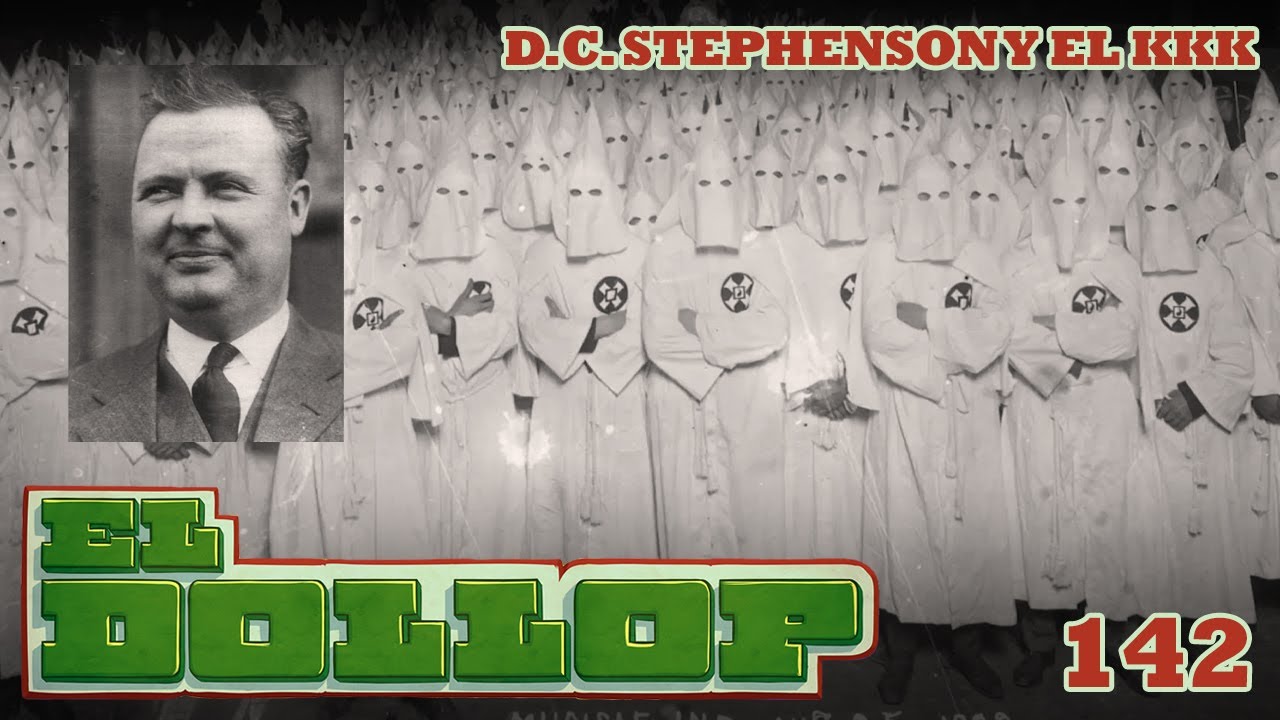
>> But this golden age wouldn't last. At the end of the 1920s, several scandals weakened the movement. David Stevenson, the KKK's new strongman, the Grand Dragon of Indiana, who oversaw over 100,000 clansmen, was convicted of raping and murdering his secretary.
[Music] >> He kidnapped, he tortured by biting, and he raped and killed his female assistant. And it was so shocking. This was covered in the New York Times in the West Coast. And I think for some people, well, this is going too far. We need to move away from this. One of the great uh aims of the clan of the 1920s was protecting the chastity of white women.
So, they were all about 100% Americanism, as they called it, standing up for white women and their honor and so on, their virtue. Uh well, you know, when you had uh arguably the most famous clansman in America convicted of this incredible rape and ultimately murder of Mad Overberholtzer, it completely uh destroyed first the Indiana clan and then in waves the rest of the clan collapsed.
>> Sentenced to life in prison, Stevenson had nothing to lose and began to share secrets. In July 1927, he sent documents to the press incriminating Indiana state officials who had been corrupted by the clan. The governor, Ed Jackson, and many others were implicated.
A letter from John Duval, the mayor of Indianapolis, revealed the extent of the rot.
In the event that I am elected mayor of Indianapolis, I promise not to appoint any person without they first have the endorsement of DC Stevenson.
[Applause] Soon it was Edward Clark's turn to be prosecuted.
The clan's communication man had regularly been seen in the company of prostitutes and sipping on whiskey with total contempt for the religious values promoted by the clan.
>> They used to say if Jesus was alive today, he would be a cleansman. One of the many contradictions associated with the KKK is the fact that the leaders are rarely if ever living up to the moral values that they are demanding of their members. People all over the country uh saw this and that was in a way the beginning of a kind of public awareness of this group wasn't really uh the heroic and uh patriotic organization that it claimed to be.
At the end of the 1920s, the Great Depression ravaging the United States further weakened the organization. Its members no longer had the money to pay their dues.
President Roosevelt's economic recovery policies transformed the rural south and created manufacturing jobs.
The clan was no longer a social stepladder. Poor whites moved on.
Following his election, Roosevelt reauthorized the consumption of alcohol.
The Invisible Empire had lost the battle over prohibition.
[Applause] It wouldn't be its last defeat.
In 1939, Hollywood adapted the bestseller Gone with the Wind, another panoramic tale of a Civil War stuffed full of racist prejudice. But though the clan had appeared in Margaret Mitchell's bestseller, it was completely cut from the film.
Excuse me.
>> In September 1939, the world went up in flames.
True to its hateful message, the clan temporarily allied itself with an American pro-Nazi party, the Boond.
Camp Nordland, owned by the German American Bund, says welcome in German and keep out in English. As the New Jersey Klux Clan rents the camp for one day, cameramen are not permitted to photograph everything. Only a few clansmen appear in pictures. None of uniform Boon's stormtroopers.
Grand giant of the clan, Arthur Bell, left, and Boon leader Claprock shake hands.
But the United States entered the war in December 1941 after the attack on Pearl Harbor.
The brown shirts of the Boon and the white hoods of the clan both disappeared from public life.
[Music] World War II had an impact in turning people away from the clan because the example of Nazi policy made various kinds of bigotry less popular, but also because there was a movement to publicize the diversity of the armed forces which then had so many Jews and so many Catholics fighting for America.
So it was a little hard to maintain that hostility uh toward those groups at that time.
>> May 8th, 1945, after 4 years of war, it was victory day in Europe. In September, Japan surrendered.
[Music] America was victorious, but the clan wasn't feeling festive.
The IRS began bankruptcy proceedings.
The Invisible Empire hadn't paid its taxes in the 1920s, and now they owed $685,000.
For the second time in its history, the clan disappeared.
But the Hydra's hooded heads didn't take long to grow back.
The post-war situation was ripe for its resurrection.
In addition to the creeping fear of communism, white supremacists were also worried about returning African-American GIS.
After the Second World War, we had enormous numbers of black servicemen coming back to this country for the first time. And they had seen in Europe, particularly in France, but in many countries, that they were treated completely different. They were treated as if they were actually people. Uh plus they had for the first time borne arms.
They had been given weapons. Uh many of them had shot white people. So uh people came back. African-Americans came back to the United States with a completely changed sensibility about who they were.
I fought for my country. I fought against racism, against anti-semitism.
Why can't I be a full citizen like everyone else?
>> Much effort had been expended within the United States on the part of African-American intellectuals, African-American journalists, African-American organizers, and institutional heads to say you can't fight a war against repression and reaction abroad and not address repression and reaction at home. There needs to be two victories. the victory against fascism and the victory against racism in the United States.
>> Faced with such old-fashioned discrimination, African-Ameans protested to exercise their rights. Many veterans refused to give up their seats in public transportation. There were more and more incidents.
White Southerners weren't ready to accept this thirst for freedom.
[Music] The Ku Klux Clan returns to the south, complete with traditional white hoods, the sheet shortage notwithstanding, about 700 clansmen prepare for the first meeting to be photographed since 1941.
The assembly point at top Stone Mountain is 16 mi east of Atlanta, Georgia. Clan leaders predict similar revivals throughout America.
In October 1946, the organization was taken over by Samuel Green, a member of the clan since the 1920s.
A doctor from Georgia, Green began organizing ceremonies and doing extensive advertising. He sold the rights to film them to the media, including to Life magazine.
>> We don't hate the Negro. God made him black and he made us white. And you will find this laid out in the 11th chapter of Genesis in which he segregated the races. And we knowing that for 5,000 years the white man has been the supreme race, we the knights of the pup clan intend to keep it the white race.
>> Despite going bankrupt, the clan had maintained an underground network. there were still thousands of people willing to pledge allegiance to the organization.
[Music] >> The ceremony that takes place, it's called the naturalization ceremony. Take an oath uh of allegiance and swear to protect the white race and you'll never turn your back on your brothers and you know just things like that. Just really it's really childish. But for me, when I felt I I just I felt enlightened. I felt like like I belong to something. Like I finally did it. I I earned this. I worked for it. And they make it a point to make you feel proud of it. Like they want you to feel proud of it.
The Invisible Empire was once again on the march, but an unexpected obstacle appeared in its way.
up in the sky. Look, it's a plane. It's a plane. It's Superman.
>> In 1946, this particular superhero was already very popular.
>> This looks like a job for Superman.
>> His adventures appeared in cartoons and comics. On a radio show, he fought a criminal organization oddly similar to the KKK.
Its name, the Clan of the Fiery Cross.
Now, the adventures of Superman.
Clark Kent tracked down a boy he believed knew the identity of the robed and hooded bigots. What has happened to the culling, half mad leader of the clan of the Fiery Cross? We'll find out in just a moment. So, stand by for the exciting climax of today's episode.
The originator of this project, Stson Kennedy, was a journalist who infiltrated the clan and learned its secrets.
He convinced the producers of the adventures of Superman to warn young Americans about its toxic ways. The program was a major success.
The idea of having Superman fight the Clan on the radio in the 1940s is a really important and effective piece of propaganda in putting forward the idea that the clan is unamerican. The tragic irony is that Superman's catchphrase of course was truth, justice, and the American way, which is phrasing that would have been very at home in a clan pamphlet of the 1920s.
[Music] Stson Kennedy didn't stop there. He went to Congress dressed as a clansman to raise awareness and denounce the lack of democracy in the American South.
His performance worked. Beginning in 1947, the clan was added to the list of subversive organizations by the Justice Department.
The KKK's post-war reemergence couldn't save it. It only had about 20,000 members, very few compared to the 4 million of the 1920s. But the threat had not been eradicated.
[Music] Soon, African-Ameans would demand civil rights much more forcefully.
The battle for equality would bring the clan back to life for a third time, riding a wave of violence.
[Music] [Music] [Music]
Up Next

Sharecropping After Emancipation: A Former Sharecropper's Story
@yourstory08
56.2K views•2010-09-25

The Great Schism of 1054: Causes and Consequences
@SacredCathedrals
113.5K views•2026-02-19
Decoding Hieroglyphs: Champollion's Egypt & Ramses II
@SLICE_Full_Doc
18K views•2025-08-13

Understanding the Cold War: Superpower Conflicts and the Road to Détente
@OverSimplified
46.1M views•2019-01-24
Related Study Plans & Knowledge Roadmaps
Structured learning paths in History