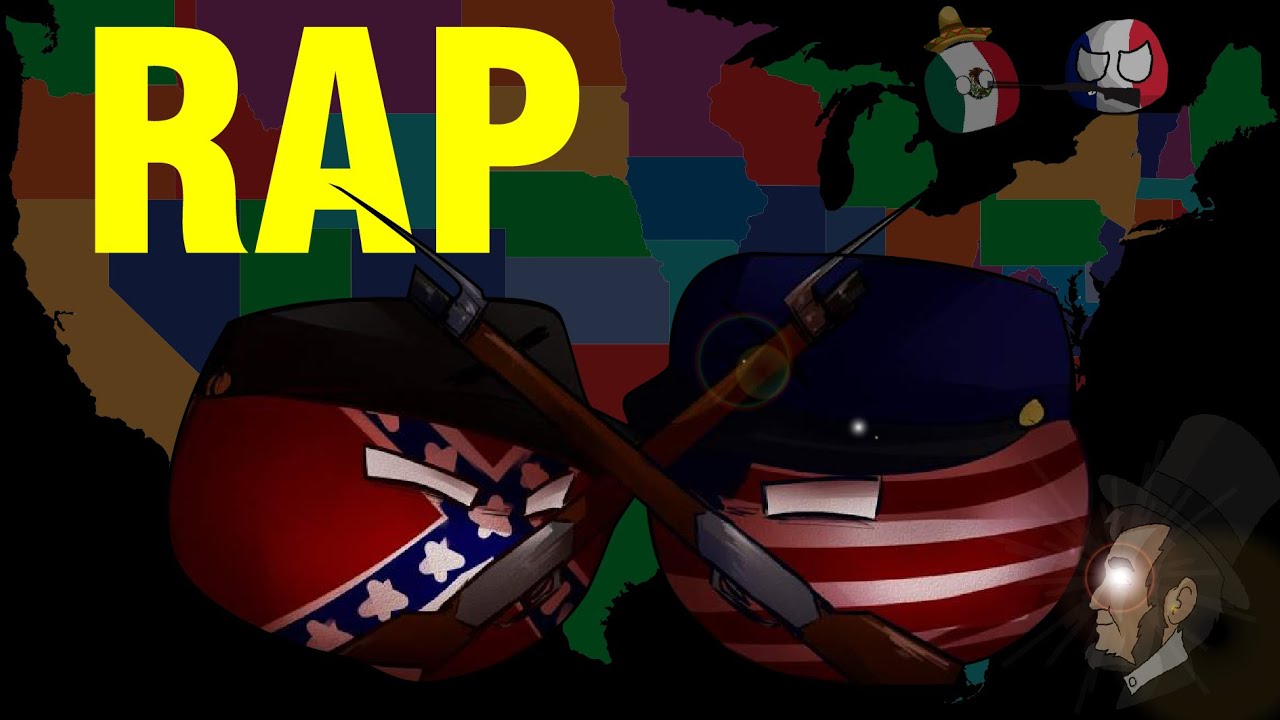
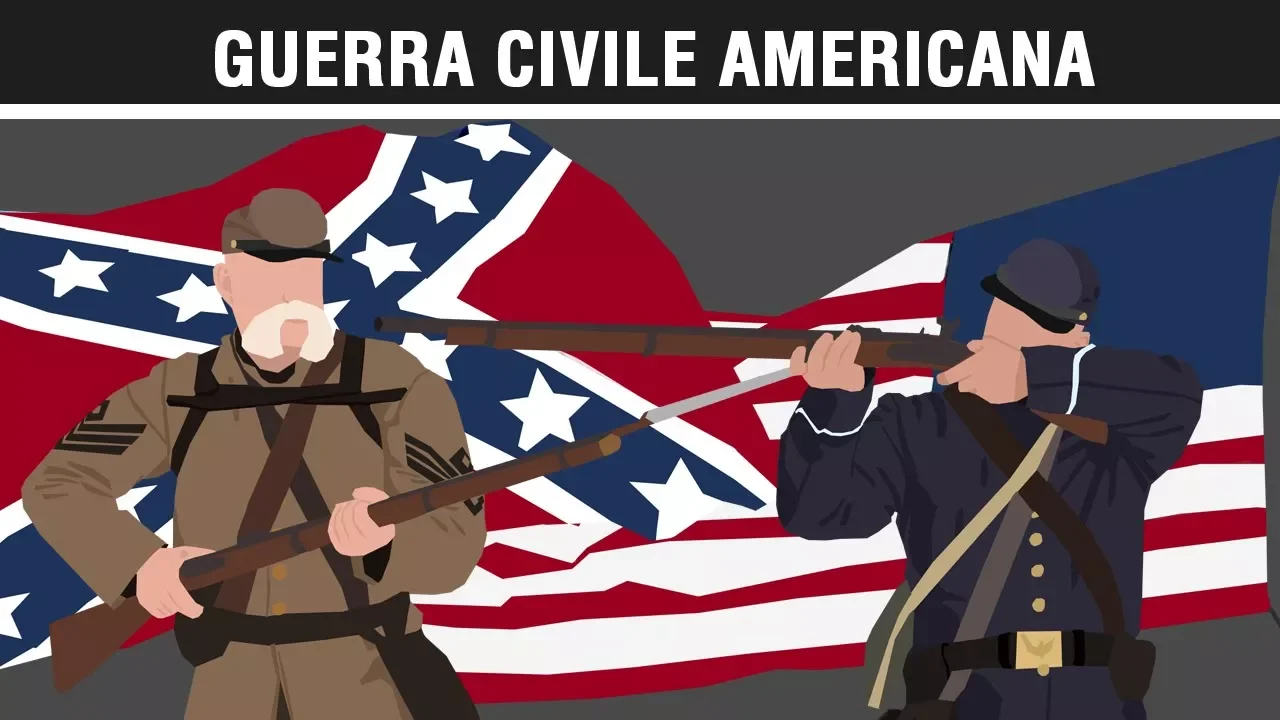
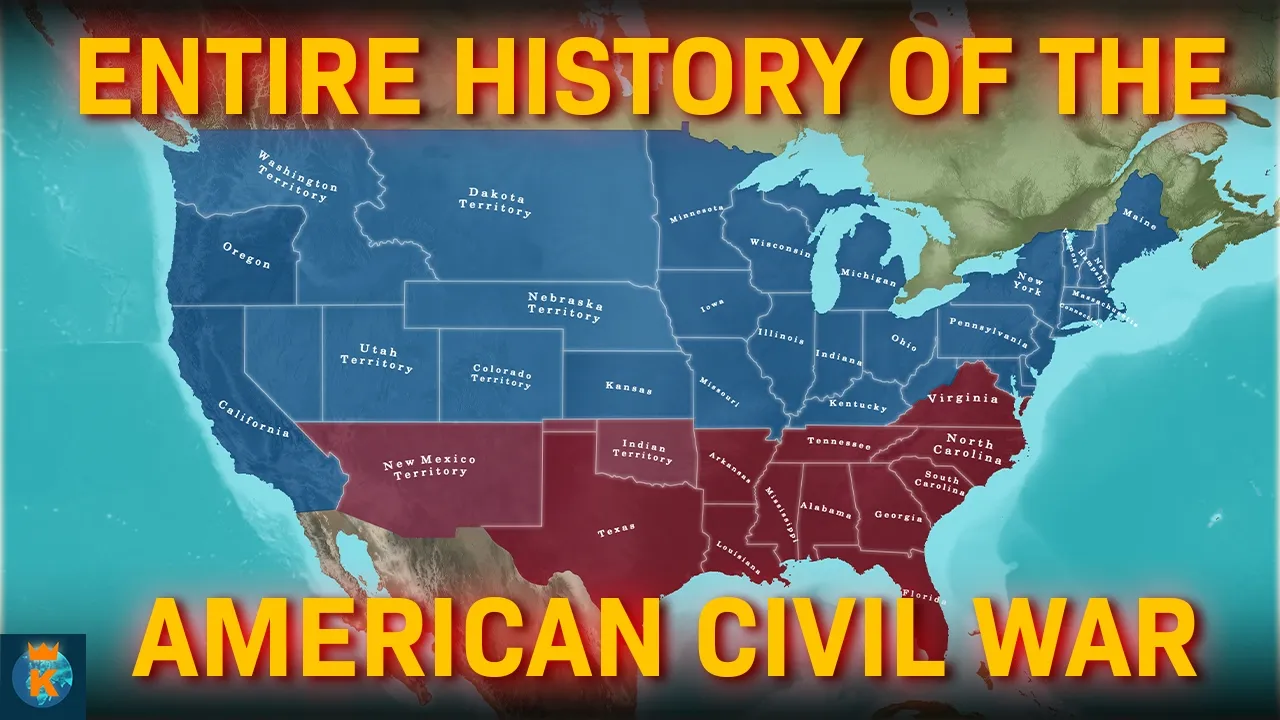




















The Reconstruction Amendments (13th, 14th, and 15th) were three constitutional amendments passed after the Civil War to address slavery and civil rights: the 13th Amendment abolished slavery in 1865; the 14th Amendment established birthright citizenship and protected civil liberties regardless of race in 1868; and the 15th Amendment guaranteed voting rights for all male citizens regardless of race in 1870. However, these amendments had significant limitations, as they excluded Native Americans and Asian Americans from citizenship, ignored women's suffrage, and southern states circumvented voting protections through literacy tests, poll taxes, and grandfather clauses, requiring the Civil Rights Act of 1965 to fully enforce these rights.
Reconstruction Amendments: 13th, 14th, 15th Explained
Added:The causes, progression, and outcome of the American Civil War, including the division between the Union and the Confederacy.
The institution of chattel slavery in the United States and the economic and constitutional tensions surrounding it prior to 1865.
The scope and legal limitations of Abraham Lincoln's 1863 Emancipation Proclamation.
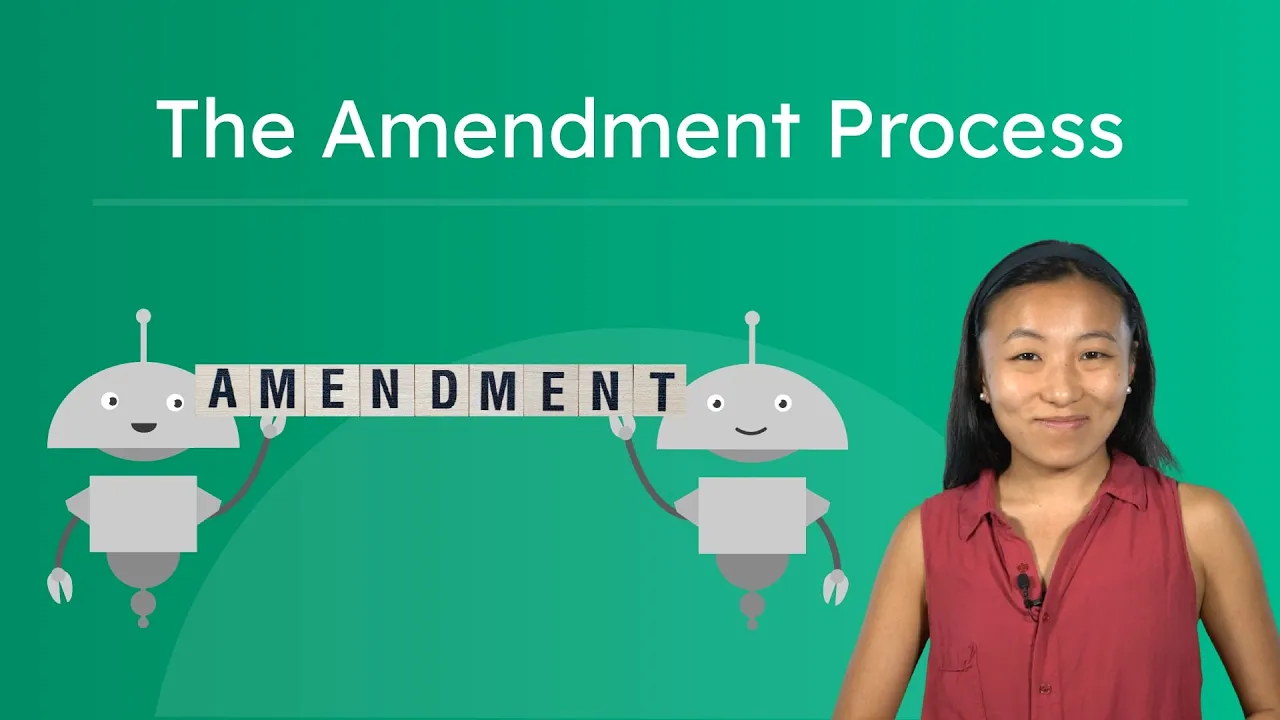
The basic structure of the U.S. Constitution, specifically the process by which amendments are proposed, ratified, and integrated into federal law.
The rise of Black Codes and Jim Crow laws, which systematically undermined the Reconstruction-era constitutional protections.
Key Supreme Court decisions that interpreted and shaped the application of these amendments, such as the Slaughterhouse Cases, Plessy v. Ferguson, and Brown v. Board of Education.
The mid-20th-century Civil Rights Movement and subsequent federal legislation, like the Civil Rights Act of 1964 and the Voting Rights Act of 1965, which sought to enforce the 14th and 15th Amendments.
Modern constitutional debates, including the 13th Amendment's exception clause regarding prison labor and the ongoing use of the 14th Amendment's Equal Protection Clause in contemporary civil rights cases.
84.2K views188likes5:37Original Release: 2021-01-04
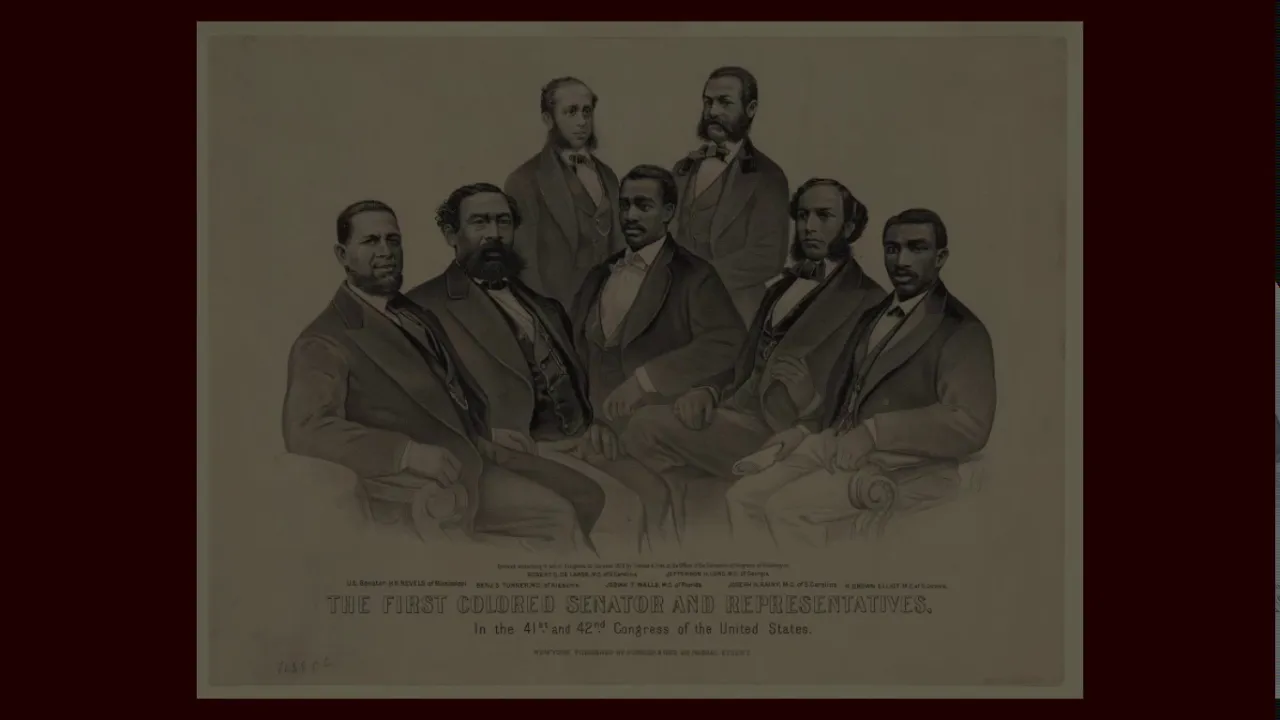
today we're looking at the reconstruction amendments hello welcome to the daily bell ringer please don't forget to subscribe and take a look at the questions down in the description as the american civil war came to an end in april of 1865 it was clear that radical changes needed to be made to the u.s constitution the primary changes that needed to be made concerned the issue of slavery and trying to guarantee civil rights and liberties to former enslaved african americans in 1862 during the civil war president abraham lincoln had issued the emancipation proclamation which was an executive order freeing all enslaved people in in southern states as a military measure to weaken the confederate cause however as the war was drawing to an end lincoln recognized that an amendment to the constitution would be really the only method of ensuring that slavery would be abolished in the united states forever this was a daunting task as if you recall back to article 5 of the us constitution that outlines how to amend or change the constitution it requires a two-thirds majority vote in congress or in other words in the senate and house representatives and then three quarters of the states to approve the amendment or to ratify it for the amendment than to be added to the constitution in april of 1864 a full year before the civil war would be over the senate passed the amendment to abolish slavery but then the amendment got held up in the house representatives as democrats refused to vote in favor of it in late 1864 lincoln and the republican leaders in congress such as thaddeus stevens pushed hard to get the amendment uh the required votes in the house on january 31st 1865 the amendment barely received the required votes but did pass in the house now the amendment had to go to the state legislatures where 27 of the 36 states would need to approve it in the meantime the civil war came to an end and of course president lincoln was assassinated in april of 1865 but on december 6th of 1865 the 13th amendment was officially ratified abolishing slavery as former confederate states were added back into the union it became very clear that many of these states were passing what were called black codes or laws that heavily discriminated against african americans and and many of these laws sought to basically keep former enslaved people in a state of slavery in order to permanently correct these practices thaddeus stevens and the leaders of the radical republicans in congress introduced an amendment that would seek to protect the civil liberties of all americans by june of 1866 the 14th amendment passed both houses of congress with the required majority votes and then went to the states for approval congress then added the stipulation that former confederate states had to ratify or approve the 13th and 14th amendments as conditions of rejoining the union president andrew johnson and southern states voiced their disapproval of the amendment but nonetheless on july 9 1868 louisiana and south carolina became the last two states needed to ratify the 14th amendment the 14th amendment declared that anyone born in the united states regardless of their racial background was automatically a citizen of the united states and the state that they resided in however the amendment did exclude native americans and those of asian descent this amendment completely overthrew the supreme court's controversial ruling in the dred scott case the amendment also said that no state could deny the rights of a citizen so states could not deny any citizen the right to vote the amendment went further by stating the federal government had the authority to take away a state's representation in congress if it was found that they were denying citizens especially former enslaved african-americans their rights now lastly the 15th amendment which guaranteed the right to vote for all male citizens regardless of their race or background at the time there was still some northern states where african americans were denied the right to vote the amendment was passed in congress in february of 1869 and then went to be ratified by the required number of states and by february of 1870 the 15th amendment was ratified by the states the amendment was celebrated as it opened the door for african-american involvement in government later in 1870 hiram rhodes rebels of mississippi became the first african-american member of congress when he was elected to the u.s senate although the amendment was celebrated there were several loopholes or problems with the 15th amendment many southern states began to place other requirements on voting such as passing a literacy test or paying a fee or what they called a poll tax in order to vote among many other strategies and these again were efforts to deny african americans their rights unfortunately these practices would last almost 100 years as it wouldn't be until the passage of the civil rights act in 1965 that the u.s government took action against these discriminatory laws furthermore the 15th amendment completely ignored the rights of women to vote rights were only guaranteed to men and it wouldn't be until 1920 with the passage of the 19th amendment that women would finally receive the right to vote although not perfect the 13th 14th and 15th amendments all took great strides in correcting evils that have been allowed to exist in our nation and although there are still problems to this day these amendments were very important steps towards giving equal rights to all americans so with that hopefully you learned something and thanks for watching
Up Next

5:48
Freedmen's Bureau During Reconstruction | US History
@thedailybellringer
73K views•2021-01-24

33:02
The Great Schism of 1054: Causes and Consequences
@SacredCathedrals
113.5K views•2026-02-19

91:57
The Geopolitics of the Ukraine War and the Rise of Global Autocracy
@JordanHarbingerShow
468K views•2025-04-19
17:05
Understanding the Cold War: Superpower Conflicts and the Road to Détente
@OverSimplified
46.1M views•2019-01-24
Related Study Plans & Knowledge Roadmaps
Structured learning paths in History
history
Byzantine Iconoclasm: Theology, Art & Politics
01Foundations of Byzantium and Early Christian Images
02The First Iconoclasm: Leo III and the Crisis of Images
03Empress Irene, Nicaea II, and the Second Iconoclasm
+ 2 more learning modules
9h5 modules
Explore Roadmap
history
Iranian Revolution (Causes, Events & Legacy)
01The Pahlavi Dynasty and the Roots of Discontent
02The Spark of Rebellion and the Rise of Khomeini
031979: The Fall of the Shah and the Climax of the Revolution
+ 2 more learning modules
8h5 modules
Explore Roadmap
history
Mali Empire: Mansa Musa, Trade & Timbuktu
01Foundations of the Mali Empire
02The Trans-Saharan Gold and Salt Trade
03The Reign and Pilgrimage of Mansa Musa
+ 1 more learning modules
6h4 modules
Explore Roadmap
history
1947 Partition: Politics, Borders & Legacies
01Foundations of British India and the Divide
02The Political Negotiations and the Mountbatten Plan
03Drawing the Boundary: The Radcliffe Line
+ 2 more learning modules
8h5 modules
Explore Roadmap