Simón Bolívar: Campaigns & Gran Colombia
Learning Goal: Evaluate the military campaigns and political vision of Simón Bolívar during the South American Wars of Independence (1808–1833), focusing on the creation and eventual collapse of Gran Colombia.
- Prerequisites: Basic understanding of the Age of Revolutions (American and French Revolutions) and global Napoleonic geopolitical shifts.
- Estimated Total Study Time: 9 Hours
Module 1: Colonial Backlash and Bolívar's Origins
This module explores the socio-political architecture of late Spanish colonial rule in South America, focusing on the systemic tensions generated by the Bourbon Reforms and the rigid casta (caste) social hierarchy. Learners will trace the formative years of Simón Bolívar, investigating how his aristocratic Creole upbringing, personal tragedies, and exposure to European Enlightenment thinkers (Locke, Rousseau, Voltaire) alongside mentors like Simón Rodríguez, laid the ideological foundation for his revolutionary destiny.
Recommended Videos
- Why this video: This video provides historical context on how Spain structured and modernized its vast empire in the 18th century. It highlights the implementation of the Bourbon Reforms under King Charles III, detailing the creation of new viceroyalties (such as New Granada) and administrative centralization which alienated local elites.
- Knowledge Checkpoint:
- Explain how the Bourbon Reforms centralized fiscal and political authority away from local American-born elites.
- Identify the new administrative entities (Viceroyalties) created in South America during this structural reorganization.
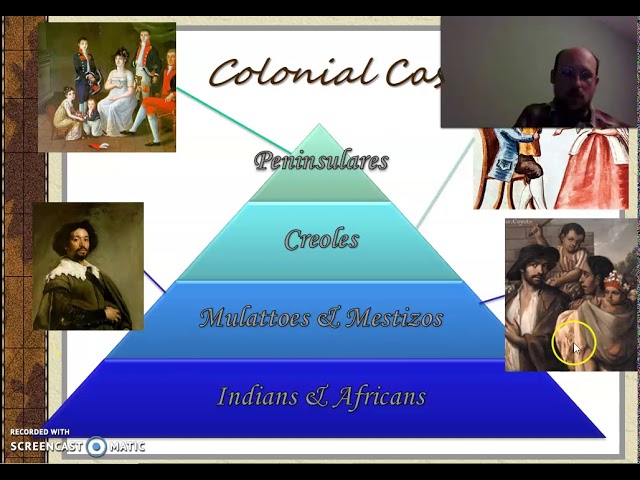
- Why this video: A deep-dive into the rigid colonial social hierarchy (sistema de castas) that governed Spanish America. It clarifies the divide between Peninsulares (Spanish-born administrators) and Criollos (Creoles; American-born Spaniards), illuminating the exact class frustrations that fueled the Creole-led revolutionary vanguard.
- Knowledge Checkpoint:
- Define the hierarchical positions of Peninsulares, Criollos, Mestizos, and enslaved populations.
- Analyze why wealthy Creole families, despite their economic power, resented their exclusion from high-ranking political offices.
- Why this video: This video introduces Simón Bolívar's early life, his privileged childhood in Caracas, his profound educational mentorship under radical thinker Simón Rodríguez, and his travels to Europe where he was immersed in Enlightenment philosophy.
- Knowledge Checkpoint:
- Describe the influence of Enlightenment figures like Jean-Jacques Rousseau on Bolívar's intellectual development.
- Explain how personal tragedy (the loss of his young wife, María Teresa Rodríguez del Toro) galvanized his singular focus on political revolution.
Gap Note: For a deeper academic understanding of the Bourbon Reforms, students are encouraged to read external texts on the expulsion of the Jesuits (1767) and economic mercantilism. If searching independently, use the query:
"Bourbon Reforms Latin American independence causes".
Module 2: The Military Campaigns of Liberation
This module transitions from theory to conflict, tracing Bolívar’s major military campaigns across the challenging topography of northern South America. Learners will examine his shifting military doctrines, his strategic alliances with diverse social groups, and the tactical maneuvers of three turning-point battles: Boyacá (1819), Carabobo (1821), and Ayacucho (1824).
Recommended Videos

- Why this video: Narrative historian Mike Duncan outlines the campaign of 1819, focusing on the tactical realities of Bolívar's legendary crossing of the icy Pisba Pass in the Andes and the subsequent decisive victory at the Battle of Boyacá, which secured the liberation of New Granada.
- Knowledge Checkpoint:
- Evaluate the logistical and physical hardships faced by Bolívar’s army during the high-altitude Andes crossing.
- Explain how the victory at the Battle of Boyacá (August 7, 1819) disrupted royalist logistics and changed the strategic map of New Granada.
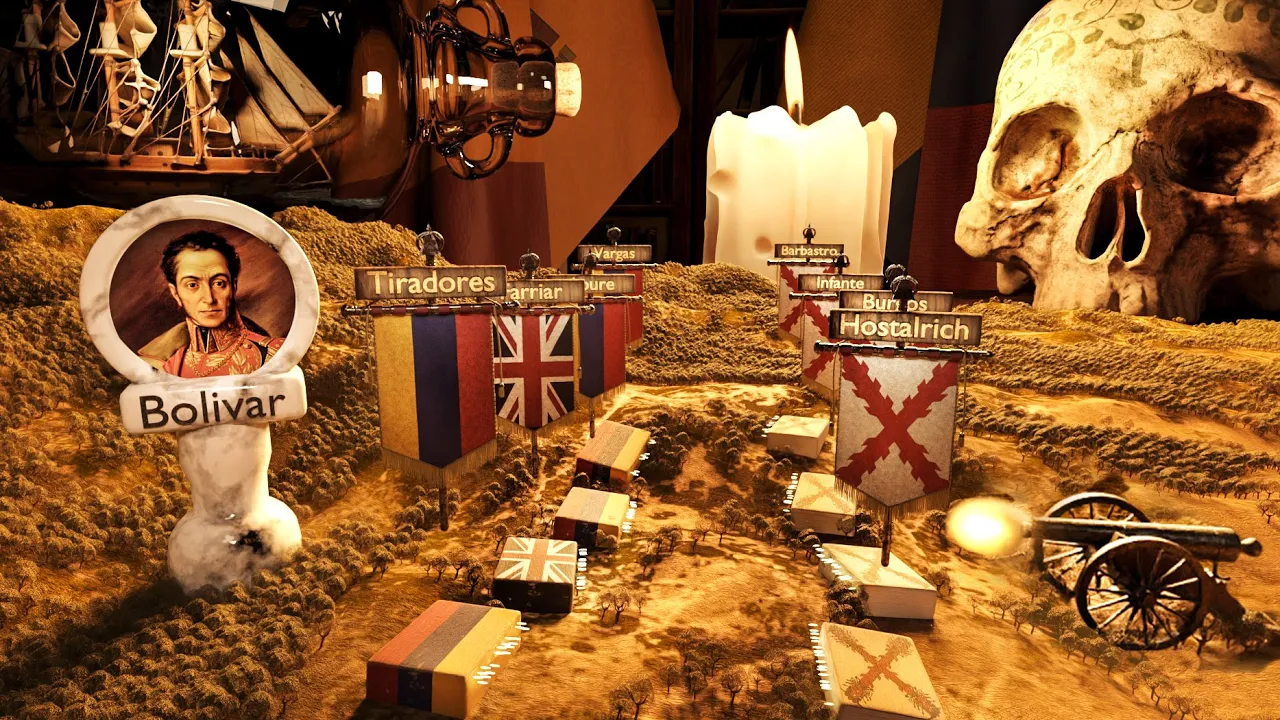
- Why this video: A tactical analysis of the Battle of Carabobo (June 24, 1821). This video illustrates how Bolívar, supported by the British Legion and José Antonio Páez's Llaneros (cowboys of the plains), utilized a daring flanking maneuver through dense terrain to break the Spanish defensive lines.
- Knowledge Checkpoint:
- Map out the key tactical maneuvers deployed by Bolívar and Páez to outflank royalist forces at Carabobo.
- Discuss the composition and strategic importance of Bolívar's coalition forces, including the British Legion and Llanero cavalry.
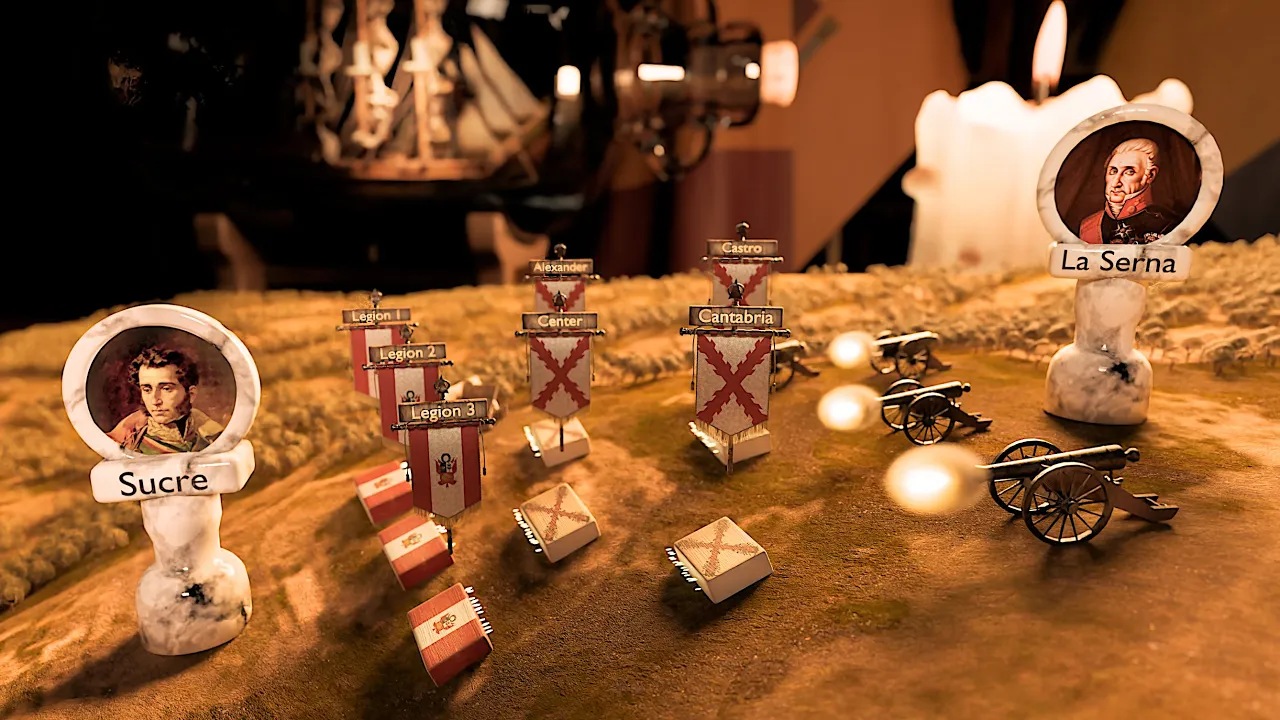
- Why this video: This video breaks down the Battle of Ayacucho (December 9, 1824), executed by Bolívar's trusted lieutenant, Marshal Antonio José de Sucre. It marks the final destruction of royalist power in the Peruvian highlands and the definitive end of the Spanish Empire in South America.
- Knowledge Checkpoint:
- Contrast the terrain-based tactical dilemmas faced by Republican and Royalist forces in the highlands of Ayacucho.
- Explain why the Battle of Ayacucho is characterized as the final blow to Spanish colonial military presence in South America.
Gap Note: Detailed animated map videos specifically breaking down the physical topography of the Andes crossing are rare. Learners seeking geographical visualizations are advised to search independent resources using the query:
"Crossing the Andes Simon Bolivar military strategy".
Module 3: The Political Vision: Centralism, Authority, and Constitutionalism
This module analyzes the evolution of Bolívar’s political philosophy, tracing how his ideas adapted to the realities of military setbacks and social fragmentation. Through close examination of his primary written manifestos and speeches—namely, the Jamaica Letter (1815) and the Angostura Address (1819)—learners will investigate his defense of strong executive centralism, warnings against blind adoption of federalism, and vision for integrated South American unity.
Recommended Videos

- Why this video: Provides the full primary text of Bolívar's landmark 1815 document, written during his exile in Jamaica. In it, he assesses the failures of early Venezuelan republics and predicts the future political systems of South American states.
- Knowledge Checkpoint:
- Explain Bolívar's critiques of federalism and local self-rule in the context of newly liberated colonies.
- Analyze his arguments for why direct democratic institutions, styled after the United States, might not be immediately viable for populations historically denied civic education under Spanish despotism.

- Why this video: This audio narrative segment focuses on the historic 1819 Congress of Angostura, where Bolívar gathered republican delegates to formally outline his constitutional blueprint for a unified state of Colombia.
- Knowledge Checkpoint:
- Explain the structural significance of the political system proposed by Bolívar at the Angostura Congress.
- Analyze Bolívar's vision of balancing democratic institutions with centralized power.

- Why this video: This educational segment analyzes how Bolívar's Angostura Address drew historical parallels to Rome, illustrating his intellectual engagement with classic governance structures.
- Knowledge Checkpoint:
- Interpret the Roman republic analogies Bolívar used to justify his proposed constitutional structures (such as a hereditary senate).
- Critique Bolívar's view that local political systems must match the cultural habits and history of their citizens, rather than copying foreign models.
Gap Note: For deep political and textual analysis of the Angostura Address, students should read the primary document in parallel. If searching for additional academic lectures, use the query:
"Simon Bolivar Angostura Address political analysis".
Module 4: The Rise and Collapse of Gran Colombia
This module evaluates the construction and rapid demise of the Republic of Gran Colombia (1819–1831), a massive state uniting modern Colombia, Venezuela, Ecuador, and Panama. Students will analyze the deep administrative, constitutional, and ideological divisions that emerged within the republic, highlighting the critical rivalry between Bolívar (who advocated for centralized executive rule) and his Vice President, Francisco de Paula Santander (who defended federalist constitutionalism).
Recommended Videos

- Why this video: This short documentary isolates the fundamental internal forces that fractured Gran Colombia, covering regional economic differences, challenging geography, and ideological differences over governance models.
- Knowledge Checkpoint:
- Identify the modern-day nation-states that comprised the territory of Gran Colombia.
- Detail the major structural obstacles, including geographical separation and regionalism, that undermined national unity.

- Why this video: This video analyzes how Bolívar’s centralization projects and autocratic solutions clashed directly with constitutionalist and federalist groups, illustrating how efforts to preserve unity through executive decrees ultimately accelerated the state's collapse.
- Knowledge Checkpoint:
- Explain how Bolívar's centralization initiatives clashed with local regional leaders.
- Assess the political impacts of Bolívar's decision to assume dictatorial powers in 1828 to keep the federation intact.
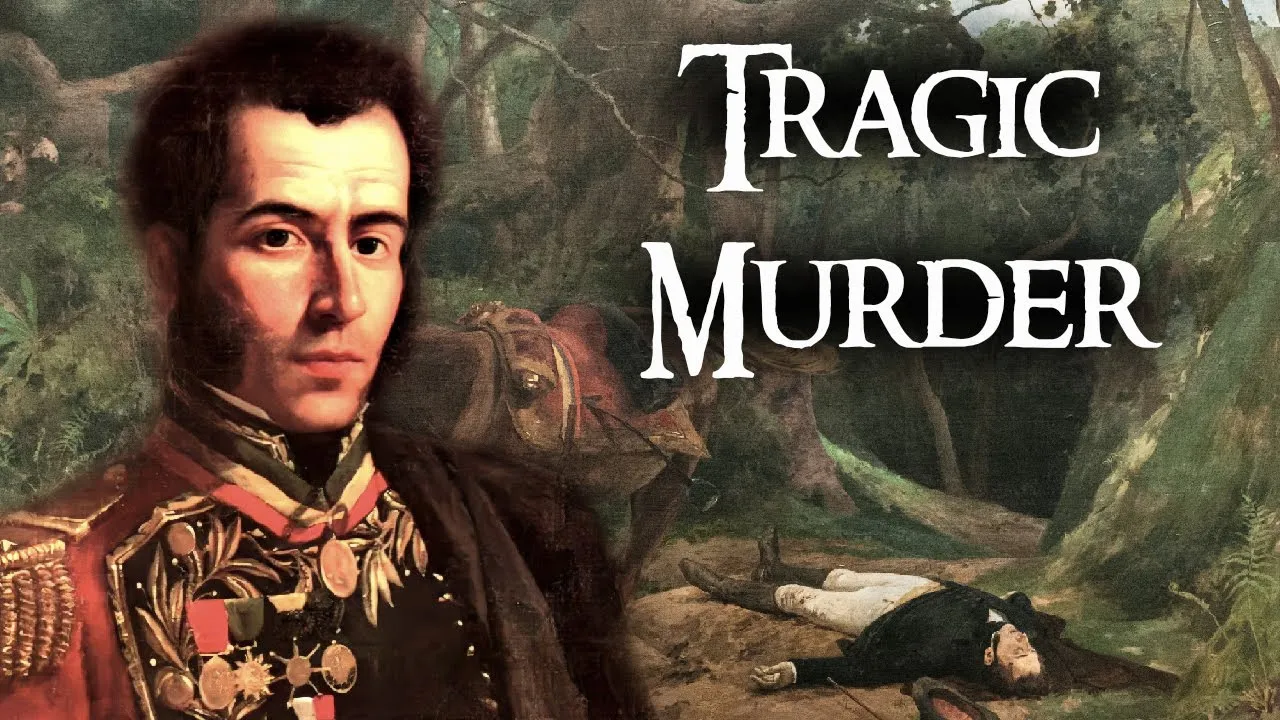
- Why this video: A concise historical overview of the violent factionalism that plagued Gran Colombia's final years, using the assassination of Grand Marshal Sucre (Bolívar's close ally and expected successor) to highlight the high stakes of the internal political struggle.
- Knowledge Checkpoint:
- Explain the wider political implications of Sucre's death for the survival of the union.
- Describe how the rivalry between Bolívar and Santander split the regional military elites into opposing factions.
Gap Note: To explore the intellectual debates between Bolívar (centralism/dictatorship) and Santander (rule of law/federalism), students are advised to search academic literature using the query:
"Bolivar vs Santander constitutional debate centralism federalism".
Module 5: Exile, Legacy, and the Bolivarian Myth
The final module investigates Bolívar’s rapid political decline, his self-imposed exile, and his lonely death from tuberculosis in Santa Marta (1830). It also explores the rise of the post-mortem "Bolivarian Myth," analyzing how diverse and opposing political factions across Latin America have adopted his legacy over the past two centuries.
Recommended Videos
- Why this video: Offers a primary historical tour of the Quinta de San Pedro Alejandrino in Colombia, the hacienda where an isolated, financially ruined Bolívar spent his final days under the care of a French physician.
- Knowledge Checkpoint:
- Describe the political conditions that forced Bolívar into retirement and planned exile in 1830.
- Explain how his physical illness reflected his political isolation as his dream of a unified nation collapsed.

- Why this video: This video frames the enduring historical debate surrounding Bolívar. It contrasts his status as "El Libertador" with his later-career use of authoritarian, centralized control and dictatorial powers.
- Knowledge Checkpoint:
- Contrast the arguments that view Bolívar as a democratic liberator with those that view him as an authoritarian autocrat.
- Explain how his background and education shaped his complex political record.
- Why this video: Captures the immediate political fallout of Bolívar’s resignation, the official fracturing of Gran Colombia into Colombia, Venezuela, and Ecuador, and how the political divisions he feared shaped the new states.
- Knowledge Checkpoint:
- Analyze Bolívar's famous warning that "America is ungovernable for us" and its relevance to subsequent civil conflicts.
- Track the immediate territorial splits that followed Bolívar's exit from political life.
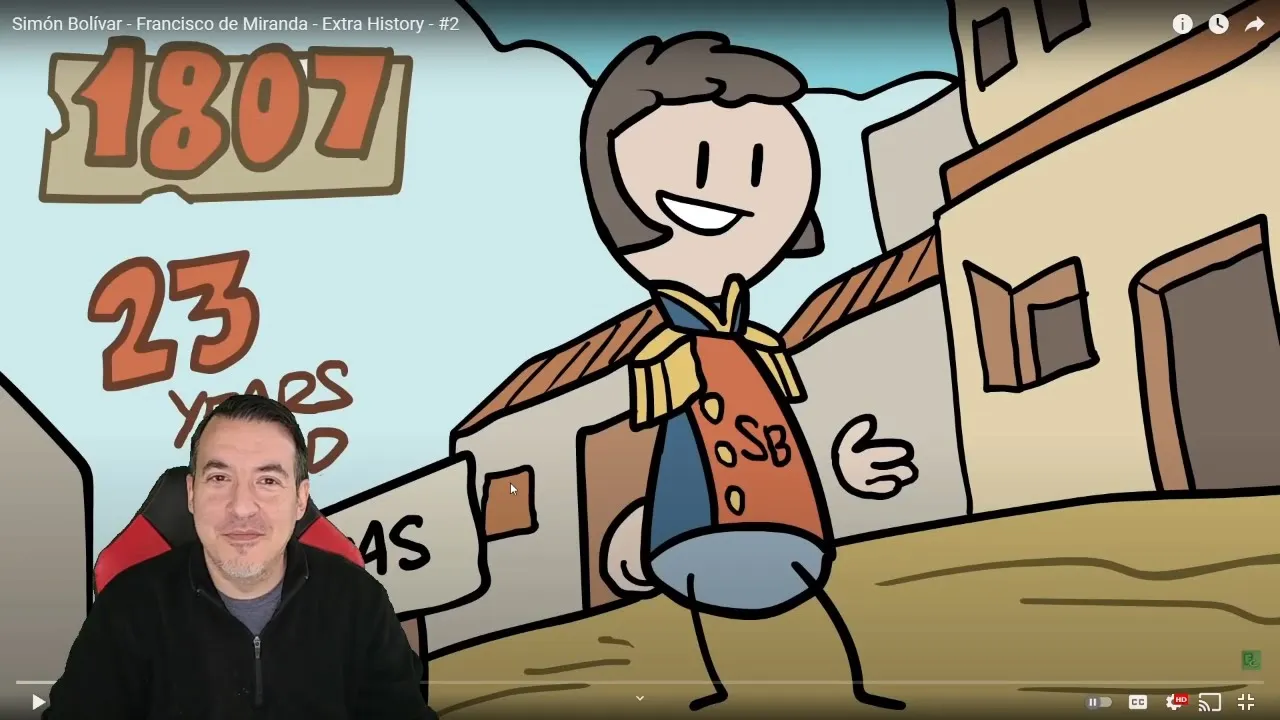
- Why this video: This historical reaction video highlights the post-mortem cult of personality built around Bolívar, pointing to developments such as the 2010 exhumation of his remains in Venezuela to illustrate how modern political factions continue to adapt his image.
- Knowledge Checkpoint:
- Define the "Bolivarian Myth" and analyze how his name is invoked by modern political movements across Latin America.
- Explain how later regimes have used historical memory to support their own political platforms.
Course Map
Key People Index
- Simón Bolívar (1783–1830): "El Libertador," the primary military commander and political architect of the northern South American wars of independence and president of Gran Colombia.
- Francisco de Paula Santander (1792–1840): Vice President of Gran Colombia; a legal scholar and military leader who became Bolívar's chief political opponent by defending federalism and the rule of law.
- Antonio José de Sucre (1795–1830): Grand Marshal of Ayacucho; Bolívar’s most trusted military general, diplomat, and president of Bolivia, whose assassination accelerated the collapse of the union.
- Simón Rodríguez (1769–1854): Bolívar's early tutor and mentor, whose radical educational philosophies and commitment to Enlightenment concepts helped shape Bolívar's political vision.
- José Antonio Páez (1790–1873): Leader of the Llanero cavalry forces whose alliances with Bolívar were critical for victory, but who later led Venezuela's secession from Gran Colombia.
- Mike Duncan: Prominent public historian and author whose work provides detailed narratives of the political and logistical challenges of the Spanish American revolutions.
Final Self-Assessment
Complete this comprehensive self-assessment to evaluate your understanding of the historical themes, military strategies, and political debates covered in this curriculum:
- I can explain the socio-economic divisions of the casta system, focusing on the specific grievances that drove the Creole elite to lead revolutions.
- I can describe how the Bourbon Reforms centralized Spanish control, upset colonial elites, and served as a catalyst for independence.
- I can explain the strategic and logistical challenges of Bolívar's 1819 Andes crossing and its impact on the Battle of Boyacá.
- I can describe the tactical maneuvers at the Battle of Carabobo, including the roles of the British Legion and Páez's Llaneros.
- I can evaluate the strategic importance of the Battle of Ayacucho under Marshal Sucre in ending royalist power.
- I can summarize the main political arguments of the 1815 Jamaica Letter, particularly regarding federalism and governance.
- I can detail the constitutional plans Bolívar proposed at the 1819 Congress of Angostura, including his ideas on a strong central executive and a hereditary senate.
- I can contrast Bolívar’s centralist governance model with Santander’s federalist, constitutional model for Gran Colombia.
- I can identify the internal conflicts, regional divides, and logistical issues that led to the breakup of Gran Colombia.
- I can describe the political circumstances surrounding Bolívar’s final years, his resignation, and his death in 1830.
- I can analyze how the "Bolivarian Myth" has been interpreted and adapted by modern political movements in Latin America.