


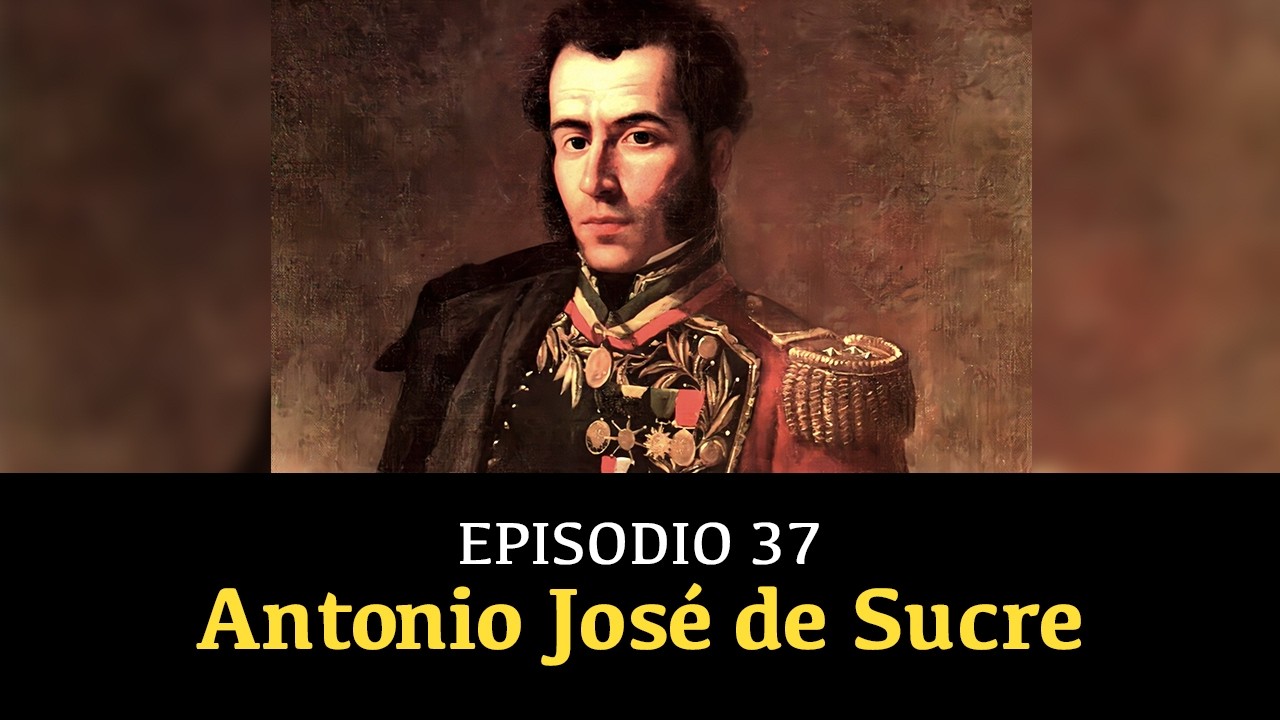












Antonio José de Sucre, known as the Gran Mariscal de Ayacucho, was a leading military commander in the Latin American independence movement who, despite his crucial role in liberating Ecuador and Peru from Spanish rule and serving as Bolivia's second president, was assassinated in 1830 at age 35 by fellow independence fighters General Juan José Flores and General José Maria Obando. The assassination occurred due to internal power struggles between centralist and federalist factions within the revolutionary movement, as these leaders sought greater autonomy for Ecuador and opposed Sucre's loyalty to Simón Bolívar's centralized vision for Gran Colombia. This tragic event exemplifies how revolutionary movements often fracture after achieving independence, with former allies turning against each other over political disagreements, ultimately undermining the stability of newly formed nations.
Antonio José de Sucre: The Assassination of a South American Liberator
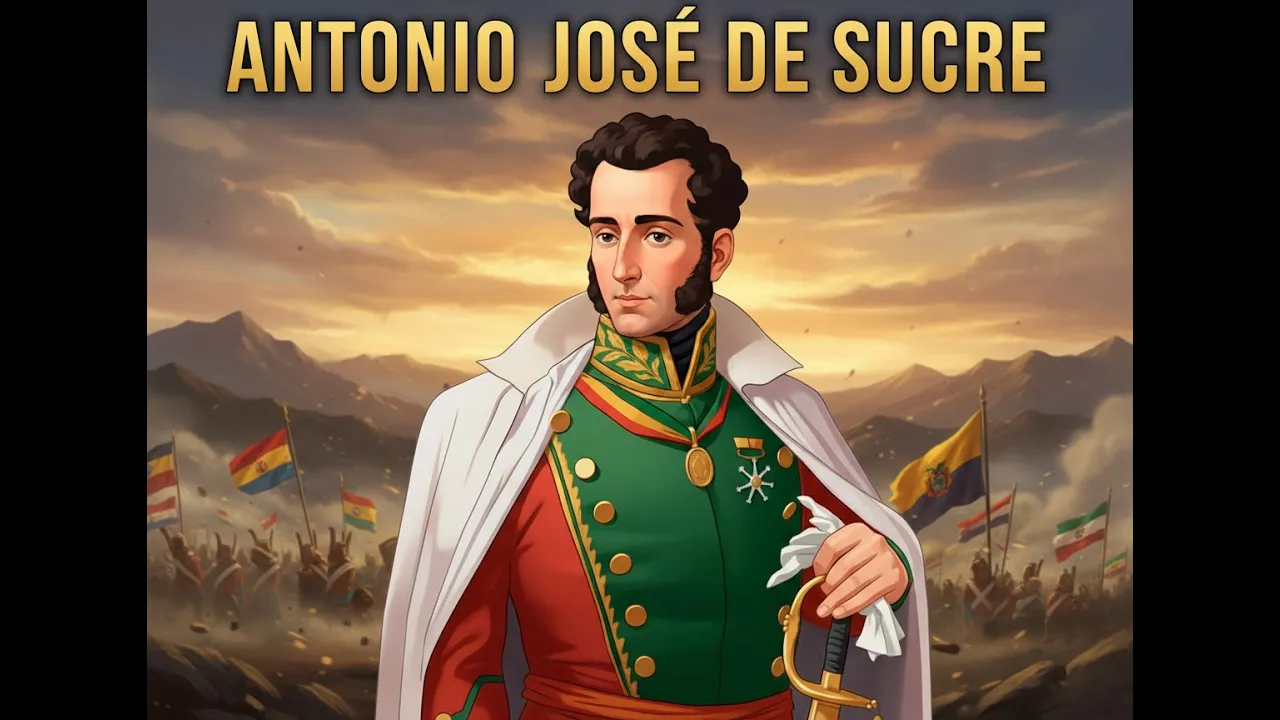
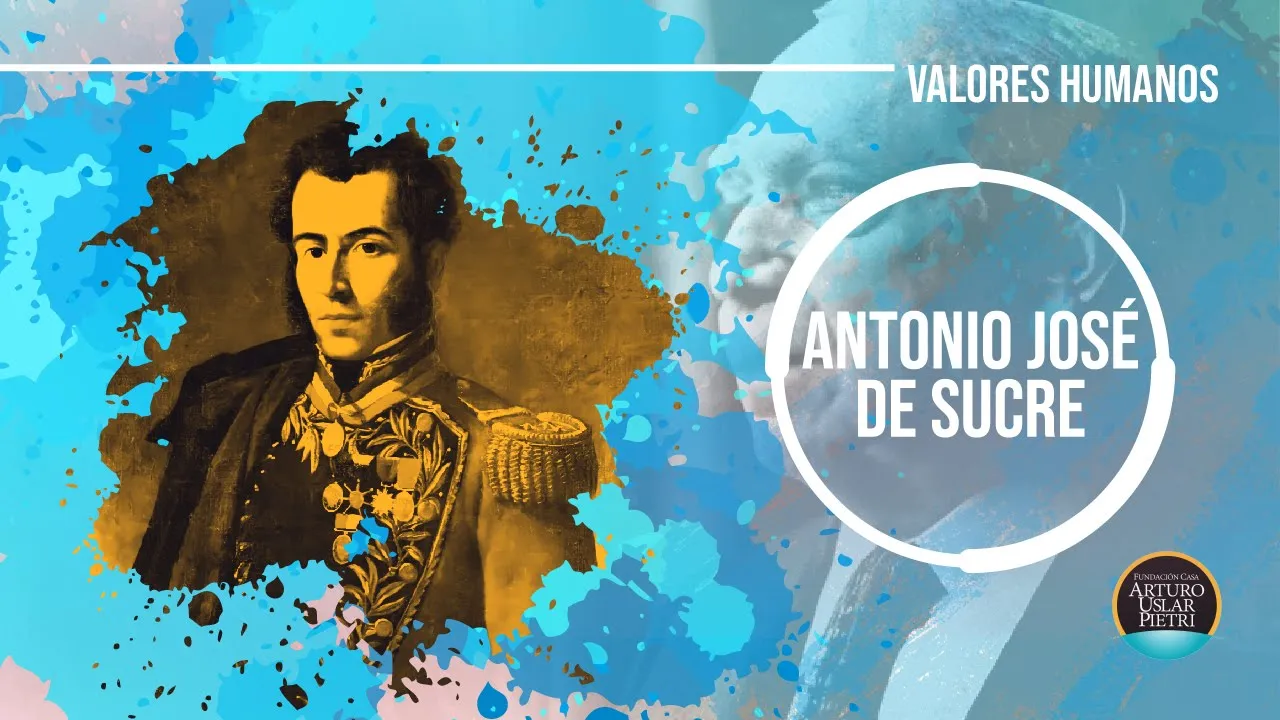
Added:hey everyone welcome to the channel hope you're having a good day and if you're new here what we do on this channel is talk about people who have a tragic and unfortunate ends to their life anyway let's jump straight into the video Antonio José de Sucre, known as the Gran Mariscal de Ayacucho or the Grand Marshal of Ayacucho, was one of the leading figures in the fight for Latin American independence from Spain in the 1810s and 1820s. He subsequently served as the second president of the new state of Bolivia, but in 1830, at just 35 years of age, he was assassinated. Who killed the Grand Marshal and why?
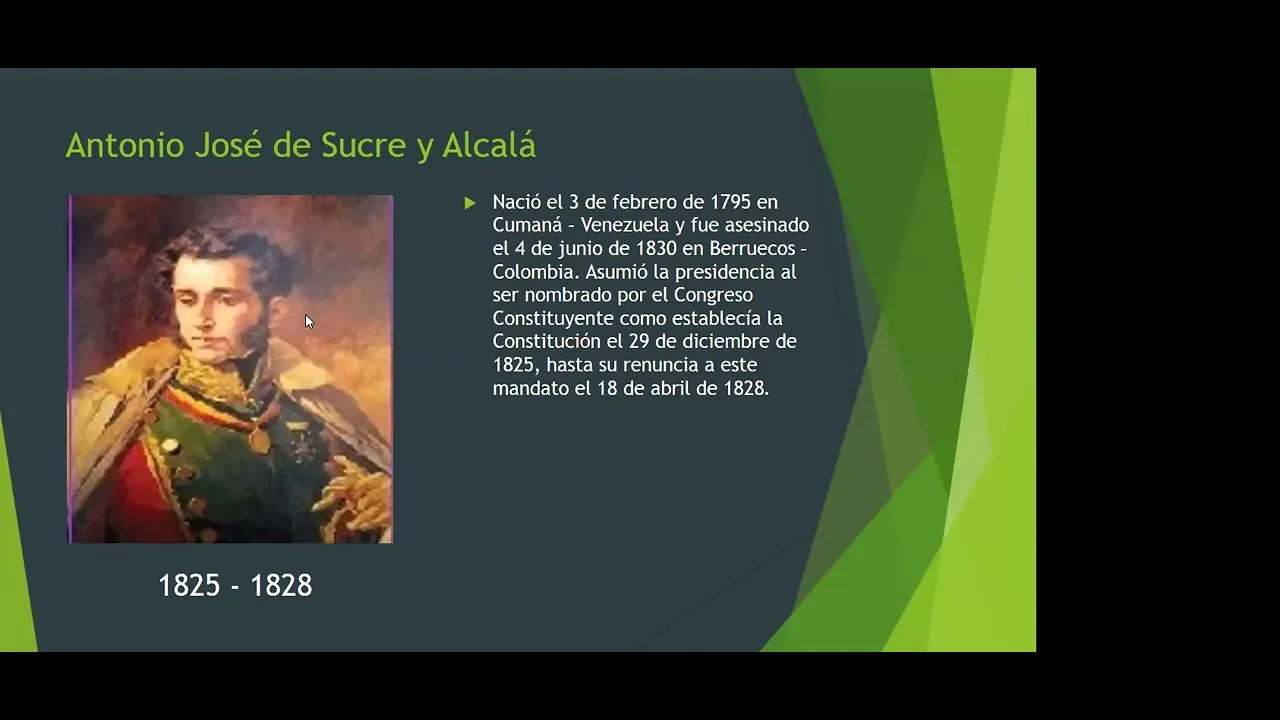
Antonio José de Sucre was born on the 3rd of February 1795 in Cumaná in what was then the viceroyalty of New Granada, a jurisdiction of the Spanish Empire, but which is now in Venezuela. He was born into an affluent family and his father had been sent to Cumaná as a governor of the region.
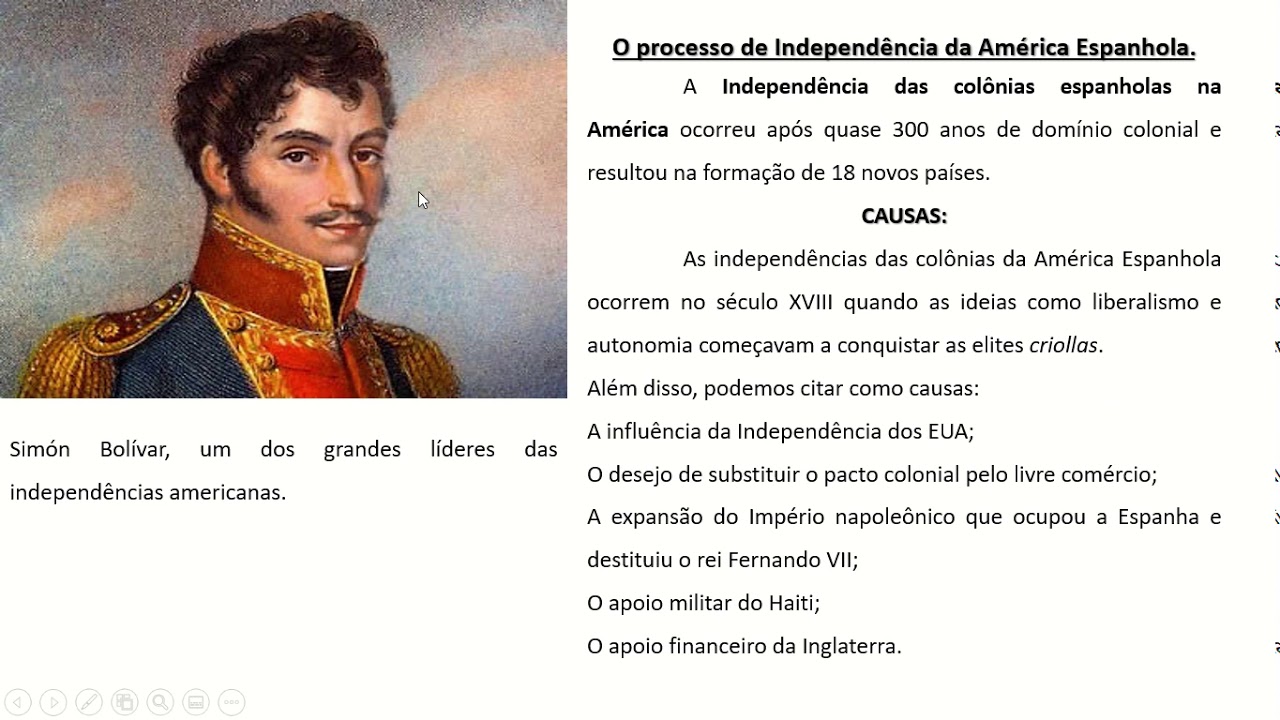
Nevertheless his childhood was tumultuous as Latin America was experiencing great change. Inspired by the example of the American Revolution of the 1770s and the formation of the United States, calls had been growing in the late eighteenth and early nineteenth centuries for parts of Latin America to break free from Spanish rule. In 1808 the great liberator of South America, Simón Bolívar, began an armed struggle in New Granada to achieve independence for this vast expanse of South America. Spain was weakened at the time as a result of the Napoleonic Wars in Europe and the time was ripe for South Americans to achieve their independence.
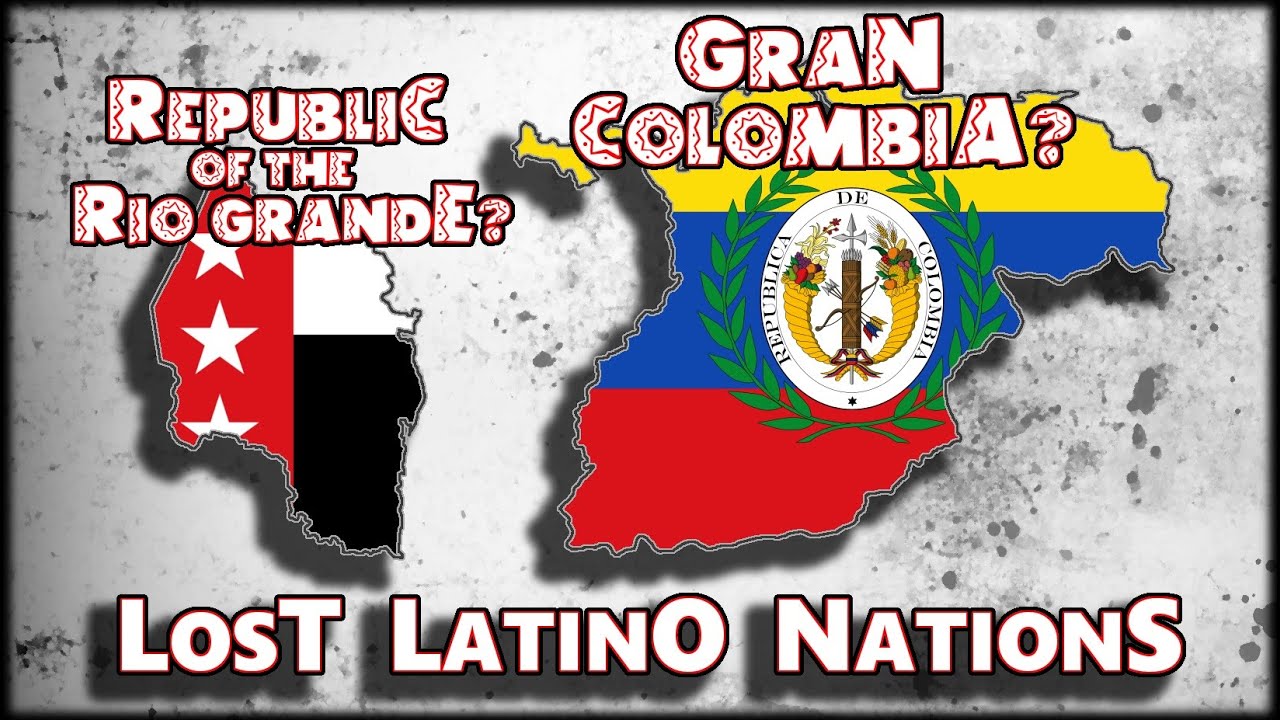
Legend has it that de Sucre joined Bolívar’s cause in 1810 when he was just fifteen years of age. Whether this is true or not is unclear, but he certainly had risen to a very senior position within the independence movement by his early twenties. This was just as the cause of Latin American independence was coming to fruition. On the 7th of August 1819 Bolívar’s armies defeated a Spanish imperial force at the Battle of Boyacá not far from modern-day Bogota in Colombia. This victory led to the establishment of the new state of Gran Colombia consisting of the region approximating to modern-day Colombia, Venezuela and Panama. Bolívar became its first president.
Shortly afterwards de Sucre had been promoted to become Bolívar’s military chief of staff. He was then given the task of leading an army to liberate the region to the south of Colombia, what is now Ecuador, from Spanish control and incorporate the area into the new state of Gran Colombia. De Sucre marched south and proclaimed the region as being under the control of Bolívar’s new independent state, a claim he backed up with victory over a Spanish royalist army at the Battle of Pichincha on the 24th of May 1822. Thus, de Sucre was responsible for extending the new state of Gran Colombia southwards to incorporate Ecuador.
Bolívar and de Sucre now turned their attentions further southwards. In 1824 they campaigned through, and quickly conquered, Peru, where a new republic was established to complement the earlier state of Gran Colombia to the north as independent Latin American republics.
De Sucre was pivotal in securing the independence of Peru in such a short period of time. He commanded the republican army’s against the Spanish royalist forces at the Battle of Ayacucho on the 9th of December 1824 at which de Sucre won a decisive victory against a numerically superior enemy. It was the key battle in the fight for Peru and the engagement which earned him his name, the Grand Marshal of Ayacucho.
With momentum on their side Bolívar and his followers continued their southward march and in 1825 they established a further republic in the region to the south of Peru. This was proclaimed independent that year and named after Bolívar himself. They called it Bolivia.
De Sucre would effectively be given control of this latest region to have fallen to the cause of Latin American independence. Bolívar was technically its first president briefly for several weeks in 1825, but on the 29th of December 1825 de Sucre entered office as the second president of the new Republic of Bolivia.
The Grand Marshal would rule Bolivia for three years until 1828. He oversaw the drawing up of a new constitution which reflected those established by Bolívar for Gran Colombia and Peru to the north. Efforts were also made to begin rebuilding the economy in a region which had been left damaged by the war and which had always been one of the poorer parts of South America. Overall de Sucre was responsible as Bolivia’s first president for the post-war reconstruction of the country.
In line with the progressive principles Bolívar favoured to the north de Sucre also went on the offensive against the aristocracy and the Roman Catholic Church in Bolivia, seeking to take some of their lands and wealth into state ownership. However, this met with some considerable resentment and opposition.
This opposition was becoming all too familiar in the newly independent Latin American states. No sooner had the independence of Gran Colombia, Peru and Bolivia been achieved, but the victors began squabbling amongst themselves about what future direction these new countries should take. Eventually de Sucre faced a local uprising in Bolivia and an incursion by the army of the republic of Peru to the north which caused him to resign as president of Bolivia in 1828, no doubt somewhat disillusioned with the direction of events in the countries whose independence he had fought so long and hard for throughout his youth and early adult years.
Following the end of his presidency in Bolivia, de Sucre made his way back north nearer to his childhood home in Gran Colombia. Bolívar had need of his old comrade as Peru attempted to invade Gran Colombia in 1829.
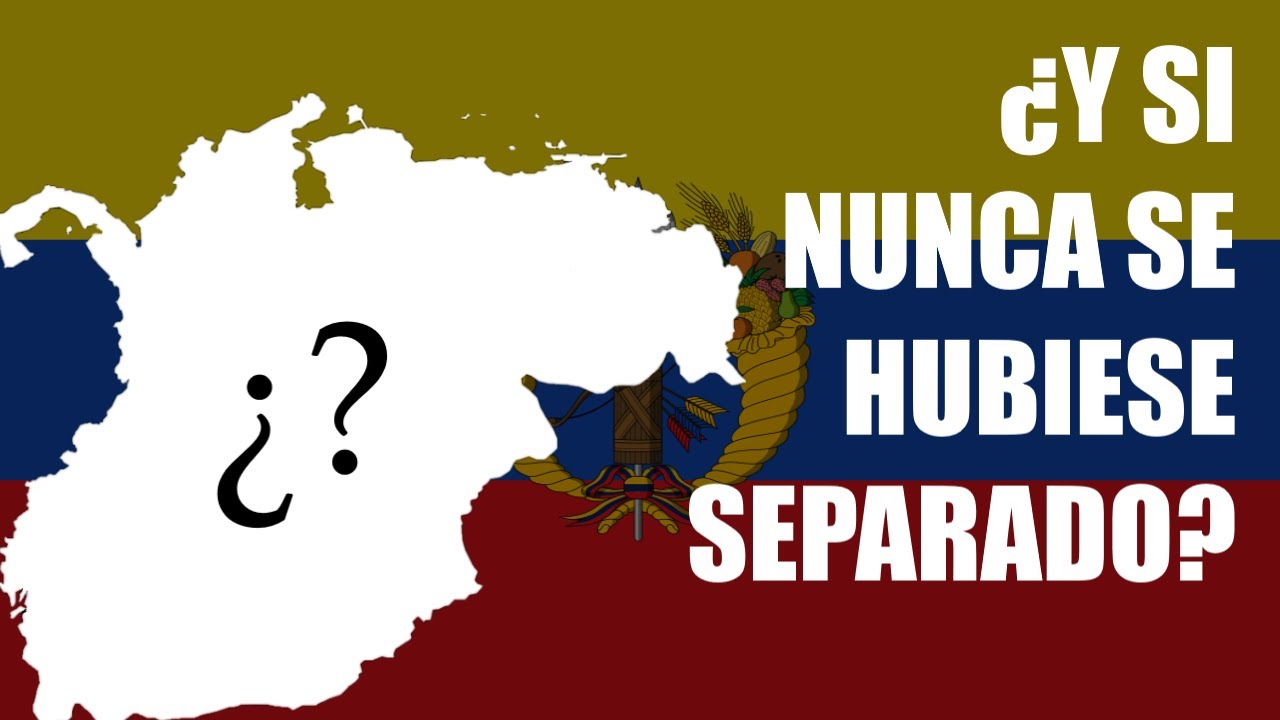
There were also increasing tensions with the largest Latin American state. At the heart of this conflict were two factions, one led by Bolívar which wanted a strong centralised state in Gran Colombia, and another which favoured a more federalist approach whereby the constituent regions such as Colombia, Venezuela, Ecuador and Panama would have their own self-governance within the Gran Colombia state.
It was this conflict between centralisation and federalism which led to de Sucre’s assassination. It was plotted and planned by General Juan José Flores and General José Maria Obando, two federalist military figures who wished for the provinces of what is now Ecuador to have a greater degree of independence from the central government of Gran Colombia. Flores ultimately hoped to establish an independent Ecuador and to make himself its president.
Now in 1830, perceiving de Sucre’s return to and presence in Gran Colombia as a major threat to these independence efforts, Flores and Obando plotted to murder him. They struck on the 4th of June 1830. The Grand Marshal was making his way along a path in the Berruecos Forest on the way from Bogota to Quito with a group of followers, probably being around ten men in total. Then as they marched along a pathway known as La Jacoba they were suddenly assailed. A group of six hitmen, who had been hired by Flores and Obando, were hiding in the trees nearby and opened fire on de Sucre. Four bullets were consequential. One struck the Marshal’s horse preventing his escape, two were non-fatal wounds to the man himself, but a fourth hit his chest and pierced his heart. It proved fatal and the great fighter of Latin American independence died there in the Berruecos Forest, gunned down by hitmen hired by fellow independence fighters.
In the ensuing chaos de Sucre’s companions fled and his body was simply left lying by the side of the pathway for a whole day. The following day his orderly, Lorenzo Caicedo, returned with several others and buried de Sucre in the forest itself. However, when his wife learned of what had happened she had his body disinterred and brought back to Quito where it is now entombed in the Metropolitan Cathedral of the Ecuadorian capital.
De Sucre was not the only victim of the infighting and disagreement which developed amongst the revolutionaries and independence fighters of South America in these years. In the months and years that followed the system which Bolívar and de Sucre had built fell apart. In August 1830, General Flores, the man who had partly planned de Sucre’s murder just weeks earlier was made president of an Ecuadorian state seeking to secede from Gran Colombia. Then, Bolívar died of tuberculosis in December 1830, just months after de Sucre’s assassination. At his death Bolívar was disillusioned with the cause of Latin American independence. The collapse of the state of Gran Colombia followed quickly thereafter. In 1831 Ecuador and Venezuela established their independence from Colombia, though Panama would remain joined with its southern neighbour until 1903.
The nineteenth century was further scarred in South America by deadly warfare between the newly independent states beginning with the War of the Confederation between 1836 and 1839 when Peru and Bolivia went to war with Chile and Argentina, two parts of the former Spanish colonial possessions in America which had also achieved independence in the first quarter of the nineteenth century.
Thus, the great wars of Latin American independence had resulted in a number of unstable states, who failed to unite in common cause in the years ahead and consequently left themselves open to exploitation from greed filled business interests from the United States when they came to exploit the region.
But there is no doubting the centrality of the man who was assassinated in 1830 to the independence movement. Indeed the great liberator of Latin American himself, Bolívar, had no reservations about expressing his reliance and admiration for de Sucre and all he had done. He once stated, “If god should give to men the right to select the members of their own family, I should select for a son General de Sucre”. There was perhaps no more fitting tribute to the man who had helped him so much in the cause of Latin American independence. thank you everyone for watching this video on antonio de sucre i hope you enjoyed if you did leave me like and a comment down below if you're new want to subscribe i'm gonna have videos every single week out about a new murder or assassination or an unfortunate end in general so if you enjoyed please stick around and if you have any comments or suggestions please let me know down below you know that's all from me so i'll see all of you in the next unfortunate end thanks
Up Next
Simón Bolívar's Final Days at Quinta de San Pedro Alejandrino
@FastFredRuddock
114 views•2023-12-13

The Great Schism of 1054: Causes and Consequences
@SacredCathedrals
113.5K views•2026-02-19
The Geopolitics of the Ukraine War and the Rise of Global Autocracy
@JordanHarbingerShow
468K views•2025-04-19
Understanding the Cold War: Superpower Conflicts and the Road to Détente
@OverSimplified
46.1M views•2019-01-24
Related Study Plans & Knowledge Roadmaps
Structured learning paths in History