

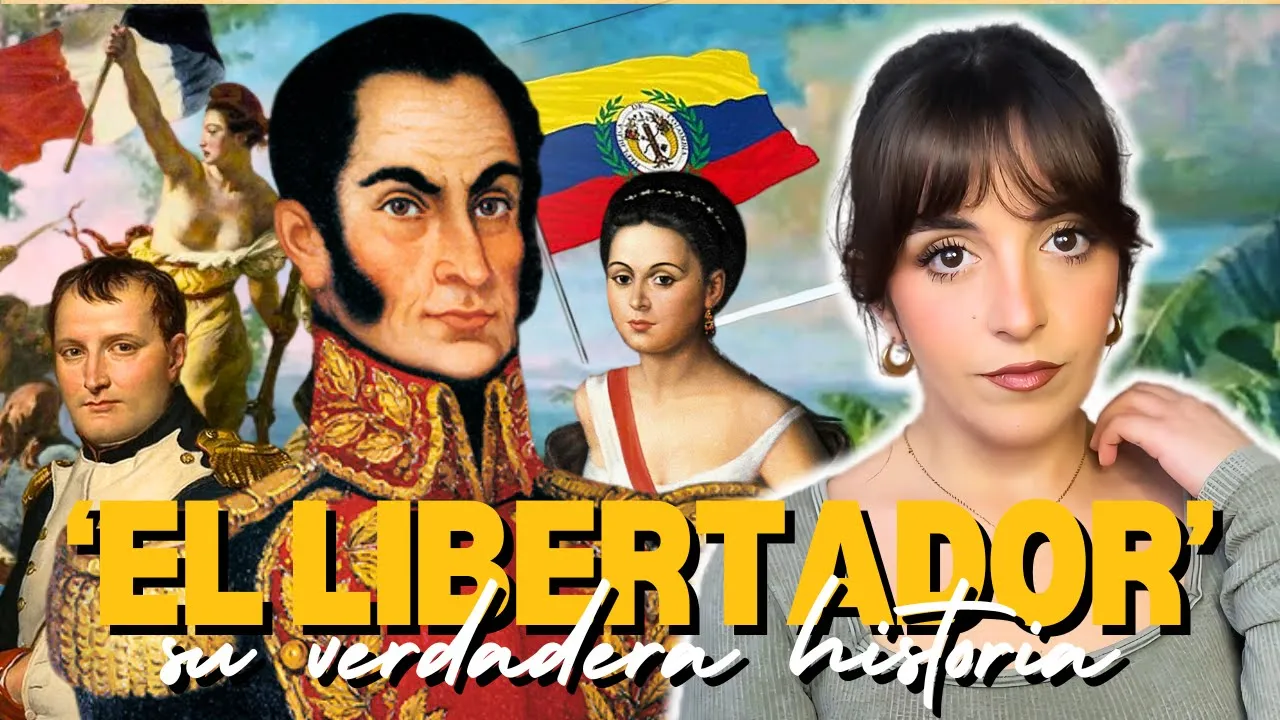



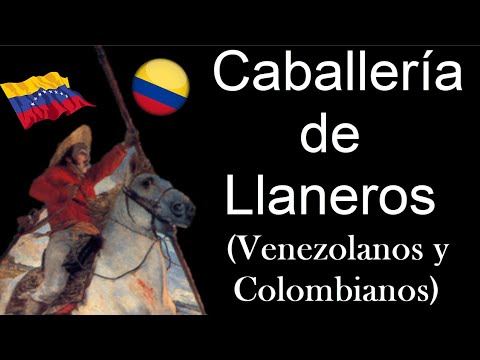




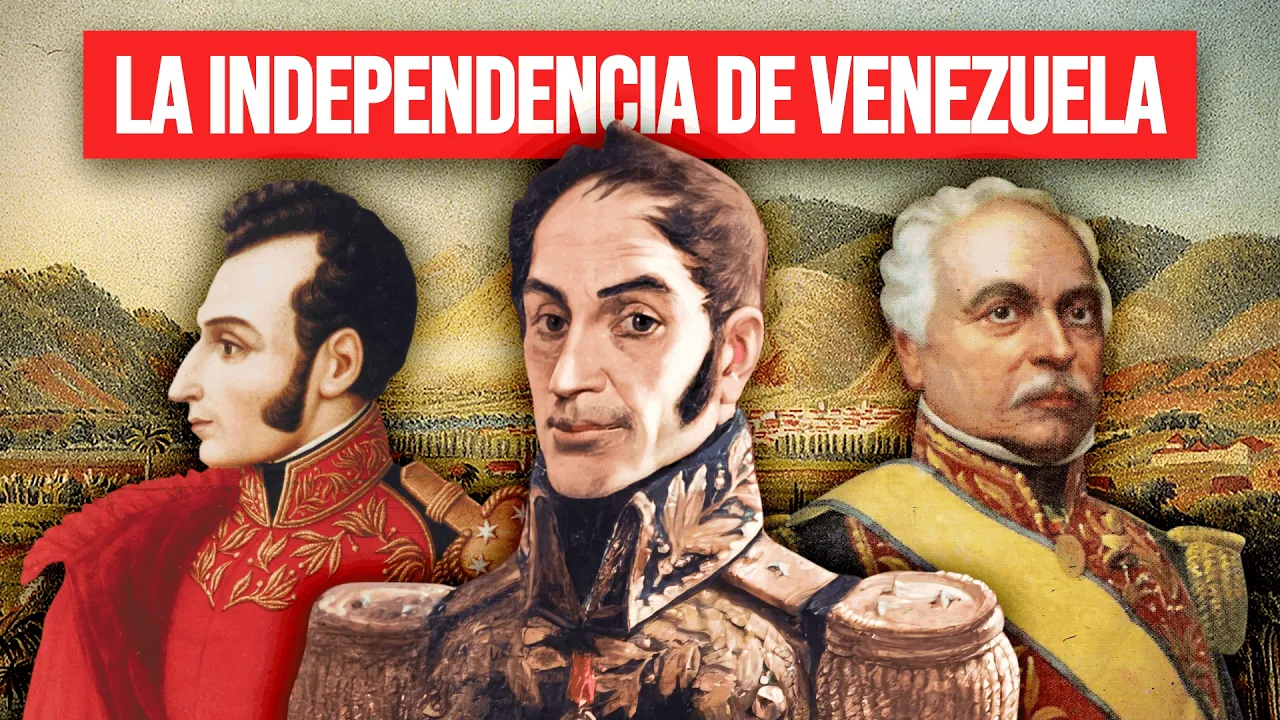








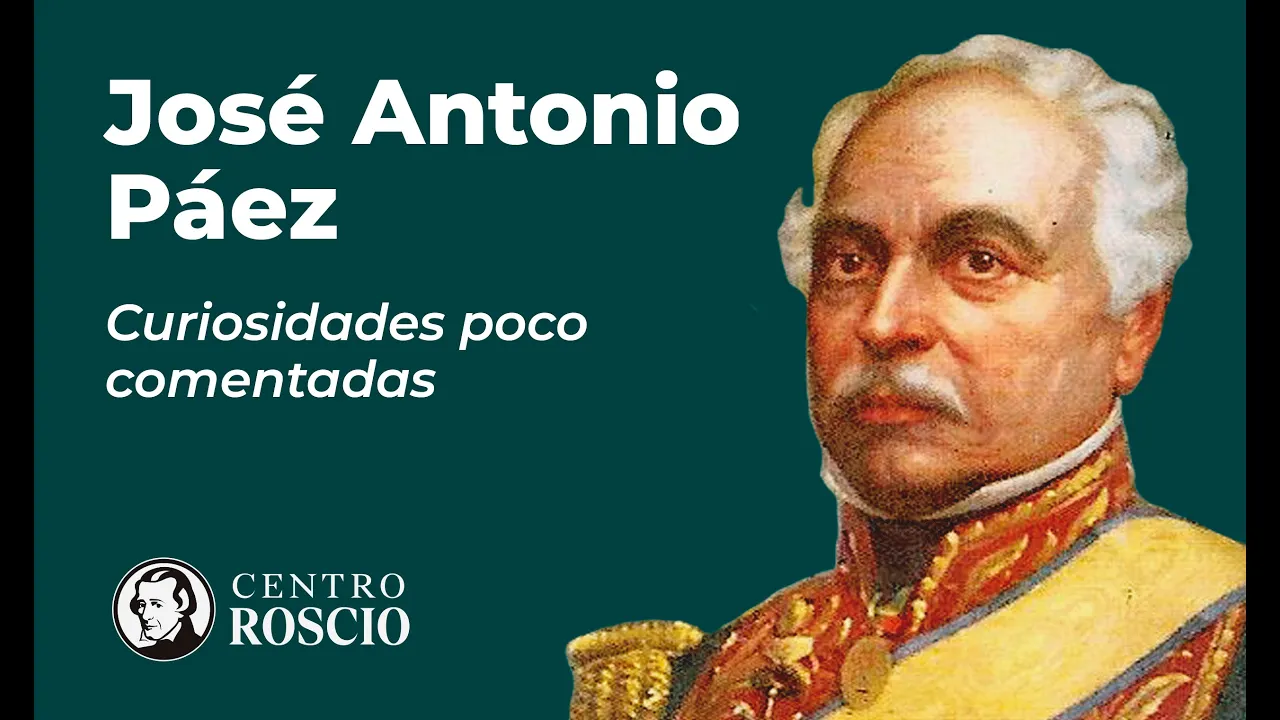
In January 1818, Simón Bolívar met José Antonio Páez, a self-taught cowboy who had risen from poverty to become a guerrilla leader commanding approximately 1,000 expert riders in the Venezuelan llanos. Despite initial skepticism from Páez about Bolívar's aristocratic credentials, the two leaders formed a crucial alliance that would prove essential for the success of the Venezuelan War of Independence. Páez's forces, known as the 'Centaur of the Plains,' had achieved remarkable victories against Spanish royalist forces, including the famous Battle of La Puerta where 1,100 men defeated 4,000 Spanish veterans. This partnership between Bolívar's disciplined army and Páez's mobile guerrilla forces represented the critical unification needed to ultimately liberate Venezuela from Spanish rule.
Simón Bolívar and José Páez Unite for Venezuelan Independence
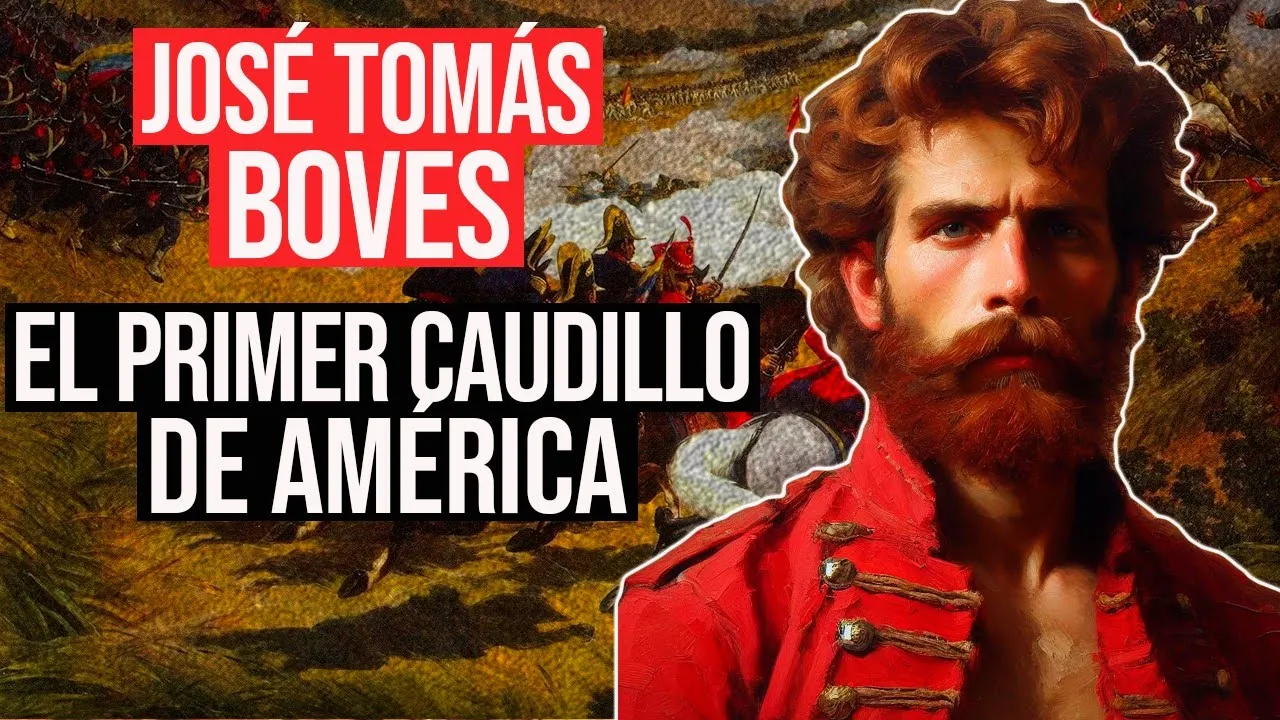
Added:[Music] hello and welcome to Revolutions episode 5.15 the Centaur of the Plains the cause of Spanish-American Independence was going quite well in the fall of 1817. Jose de San Martin had just LED his army on a remarkable push through the Andes mountains and after a brilliant campaign had liberated Chile and Bernardo o Higgins had now been installed as dictator of Chile once Bolivar is making his approach to Peru I'll go back and give you a bit more of the play-by-play because it really is something most especially because San Martin had already recognized the power of the non-creoyo population and his liberating Army was almost entirely non-white and then up north as we saw last week the campaign to believe are in the Eastern cowdeos had won control of huge swaths of territory in Venezuela and after capturing angostura in July 1817 now had a proper capital for the still somewhat ephemeral third Republic meanwhile on the other side the Spanish were starting to have a hell of a time of it now everything had started out according to plan Mario had landed in Venezuela in April 1815 at the head of 10 000 men and 60 ships and easily reasserted Spanish Authority then he had moved on over to Cartagena and captured it in December 1815 and then his Bolivar and Company were returning to Venezuela in 1816 Maria had led his men up the Magdalena River and taken Bogota crushing the union of new Granada and reinstalling a vice Regal government the Patriotic leaders who had collaborated with believer were forced to scatter and many were captured and president Camilo Torres who had organized and led the Federalist Union of New Granada was captured and executed in October 1816 and that's to say nothing of Antonio Mourinho who's already sitting in a jail cell back in Katis but after this nice run of initial success things started unraveling a bit by the time the re-conquest of new Granada was wrapping up most of Eastern Venezuela had fallen back into Rebel hands and that was to say nothing of the vast expanse of the genos the grasslands that stretched across the southern reaches of both Venezuela and new Granada that Wild Country proved itself surprisingly resistant to Spanish Authority a small Patriot Army led by Colonel Francisco De Paula Santander had taken refuge in the new Granada in Janos when the Spanish began their push into the interior in 1816 and then the Venezuelan genos well holy heck I'm going to tell you all about that here in a second so here the Spanish plants stalled out General Murio was supposed to pacify Venezuela then move on to pacify new Granada and then keep moving south to Lima to complete the reintegration of the Americas into the Spanish Empire but instead Maria now had to circle back to ground he had already covered with Venezuela falling back into Rebellion Mario LED his army Overland back across the border in January 1817 setting up a headquarters in calaboso from which he could direct the re-reconquest of the Venezuelan interior which turned out to be a grueling slog now one of Mario's biggest problems was that his forces were slowly being depleted both in terms of Manpower and morale now he arrived in South America in April 1815 at the head of 10 000 soldiers all well-trained veterans of the Peninsular War but as usual as soon as these men arrived they started dropping dead of tropical diseases now not quite at the epidemic rate of the LeClaire Expedition but still pretty bad and it was difficult for Maria to then replenish his ranks because he had been told to avoid recruiting from the native population the Geniuses back in Madrid wanted a Spanish Army to conquer the Americas so that there was no question about who was boss so rather than inviting possibly loyal Americans to join the struggle Maria's commanders just tried to make do with what they had and accepted attrition as a fact of life now this was not an absolute Rule and as soon as he arrived Maria augmented his Cavalry by incorporating men from the old Legions of hell but those guys had already been incorporated into the royalist military structure and it was a matter of transferring them rather than recruiting them but even if Mario had been allowed to go recruit it's not clear he would have had a ton of success in the mixed race populations that had so consistently joined the royalists going all the way back to monteverde's campaigns against Miranda because things have now flipped the royalists now stand for a re-entrenchment of the Old Colonial order with all the racist baggage that came with it while Bolivar and his fellow Republicans now proclaimed Liberty and equality so by the fall of 1817 the energy and momentum seemed to be with the Patriots and oh by the way General morio now headquartered in calaboso is routinely sending requests back to Madrid asking to be relieved of his command please Simone believe our meanwhile was situated on the other side of Venezuela on the Oronoco River in the city of angostura now mostly recognized as El Jefe Supremo Bolivar spent the last few months of 1817 trying to cement a professional military structure for the armies of the Republic to take the personal armies of the cowdeos and merge them into a single apparatus with a single chain of command and everybody divided up into armies and divisions and brigades and battalions on down the line and believe are at the top as commander-in-chief at the end of September he created a standing general staff to ensure continuity of strategy and tactics and Logistics to maintain discipline in the ranks he formalized a network of Courts Marshall to cut down both on arbitrary punishments handed down by commanders and Men escaping punishment for crimes and abuses and disobedience believer also created a tribunal that would regulate the seizure and distribution of captured property up until now The Spoils of War had been distributed by the cow dios to their men but believe are now centralized the process under a tribunal who would assume authority over all the plunder the prophets would mostly go to cover the expenses of the army I mean wages Provisions armaments they all needed to be paid for somehow anything left over would then be directed towards the burgeoning civilian government which for the moment was a council of state that had been established by Bolivar in angostura really it was just a small Committee of Civilian and military leaders who El Jefe Supremo believer turned to for advice but that was all they could offer advice El Jefe Supremo made all the final decisions then to further strengthen his army believe are also initiated a program that would introduce a whole new element into the struggle for Independence foreign Mercenaries up until now individual adventurers had been popping in and out of the picture but believe are now envisioned something bigger more systematic and hopefully more overwhelming to launch this program he wrote back to his old friend Luis Lopez Mendes in London now you've probably forgotten all about Luis Lopez Mendes but he was one of the three ambassadors the First Republic sent to London in the summer of 1811. the other two being Andres Bayo and believer but after believe our return to Venezuela the other two men stayed behind in London and lived in the house on Grafton Street and that is where Lopez Mendes still was in 1817. acting as an all-purpose Ambassador and trade Consul and booster of Republican Venezuela now over the past six years Lopez Mendez had done what he could to support the cause from London and most especially that meant purchasing Arms and Supplies when and where he could and after 1815 he started having a much easier time of it because with Waterloo come and gone the British army had excess stockpiles just sitting around that had to go somewhere and guys like Lopez Mendez could come around and get like used tents and boots or whatever at Cut Rate prices at the end of 1817 believe our now asked Lopez Mendes not just for supplies but for men he wanted veteran British soldiers to come fight for Spanish-American Independence so Lopez Mendez got started with the help of paid recruiters and then also men with military Ambitions of their own looking to raise personal Legions to go out a conquer and in South America and as you'd expect these guys painted a picture of Venezuela full of happy little trees and happy fluffy clouds it's a beautiful fertile land just waiting for some enterprising chap to recognize a golden opportunity when he sees it to achieve fame and fortune in an exotic land besides the war itself is nearly one and all you're going to have to do is show up kick out the last few degenerate Spaniards and then you'll live like a king this was all very enticing now if potential recruits were veterans they were promised higher pay and a bump in rank captains would be Colonels Colonels would be generals now it used to be pretty common to describe all of these guys as Veterans of the recently ended Napoleonic Wars soldiers who had been discarded along with all those tents and boots and were now just kind of loitering around looking for something to do but more recent research has shown that this was not really the case maybe 30 percent of their recruits had at some point served in the British army but the rest had likely never fired a gun in their lives and they were more attracted by the promise of establishing a profitable Colonial estate than the glory and plunder of battle a lot of guys did claim to be veterans who really just wandered in off the street and not many questions were ever asked about their service records because the point was to sign up as many men as possible and put them on a boat before they changed their minds and more than a few of these guys woke up with a vicious hangover to discover that they were in the middle of the Atlantic Ocean on their way to Venezuela now in all somewhere between six and seven thousand men made the trip across the Atlantic to fight in the wars of Spanish-American Independence about half of them were Irish a quarter English and then the rest a mixed from across Europe Scottish French German Dutch Italian what have you Wars have always been a multicultural affair now this six or seven thousand men did not all depart at the same time that number covers all of the Expeditions that sailed from 1817 to about 1825 when the wars wound down though most of them had departed by 1819 when the British government tried to put a stop to all this by passing a law forbidding British citizens from serving in the Spanish Americas that six or seven thousand also does not represent the total number of men who actually fought in the wars that they were being shipped off to from the minute the ship's left Port the steady attrition began men got sick on the ships and did not survive the crossing at least one ship sank and root many who did make it across contracted some tropical disease and died practically as soon as they landed and a bunch more quickly realized that they had been lied to by the recruiters about almost everything there were no wages there were very few provisions and the terrain was not full of happy little trees and fluffy clouds but rather enormous crocodiles and poisonous snakes who yes reduced their rank still further so now the sick and malnourished would-be legionnaires began deserting in Earnest so all told about a third of those who signed up either died or deserted before they got within a hundred miles of battle but that said the rest would go on to fight and occasionally play critical roles in the further campaigns of Spanish-American Independence most especially the famous British Legion who will fight with Bolivar on more than one occasion companies of foreign mercenaries fought heroically to the last man and at least 1800 would die in service to the cause of Spanish-American Independence most of the survivors would return home at the end of the wars and so of the nearly 7 000 men who signed up most with dreams of New World riches only about 500 actually live that dream and stayed in Spanish America after Independence had been won so the first wave of foreign legionaries finally started straggling up the Oronoco River in early 1818 but by then Bolivar had already moved on from angostura and after his few months of relative calm was returning to the tumult of War with the Eastern provinces settled and a command structure in place for the military allegedly anyway Bolivar felt secure enough to make the critical connection of the war of Venezuelan Independence because as the Expedition believer had led back to Venezuela from Haiti in 1816 took up the war in the East out in the western genos a short stocky illiterate 26 year old cowboy was arguably doing more to break the Spaniards than all of the Eastern cowdeos put together and as he racked up victories his Legend grew and as his Legend grew his Legions grew so it was clear that the most crucial part of bolivar's grand plans for final victory was bringing this man into the fold and so it is time to bring this man into the fold let's talk about Jose Antonio Paz Jose Antonio Paz was born in 1790 in a small village in the Venezuelan interior his father was of Canary Island stock and held a minor government post but the family was poor and young Jose was just one of a pile of children he never received a proper education he could not read or write British officers later claimed that they had to teach him what a fork was and how to use it and who knows what would have happened to Pius had his life stayed on a normal trajectory most likely he lives and dies in obscurity but his life did not stay on a normal trajectory because at the age of 15 Jose Antonio Pius killed a man now I've heard a few versions of the story and it's one of those things that gets all wrapped up in myth and Legend but the most famous account was that he had been given some money to head into town and make some necessary purchases and then come home but on the way home he was jumped by some Highwaymen in the ensuing standoff pies shot and killed one of the would-be thieves but now implicated in a murder the teenage Paws elected to skip town rather than take his chances with the authorities and so like so many other refugees escapees and runaways from civilized society Pius wound up deep in the genos trying to forge a new life for himself the teenage pies caught on at a ranch managed by a huge black slave named manuelote which roughly translates as big Manuel manuelote took the boy on as an apprentice and taught him the Cattleman's trade how to ride how to break Wild Horses had a Wrangle cattle how to care for animals how to endure the bugs how to live off the land but it was a hard apprenticeship manuelote was strict and unforgiving as I mentioned earlier racial rolls out in the genos were pretty upside down and so the light-skinned Pius dubbed the fair pies by those around him practically became the slave of a slave every night Pius had to wash Manuel otay's feet and then Rock the big man to sleep in his hammock after three years of this manuelote was ordered to a neighboring estate to help with some cattle branding and he took pause along with him and the owner of that estate took a liking to pass and hear no doubt being the fair Paws helped the young man catch the attention of the creoyo owner so Paz stayed on that estate and became a trusted agent before being set up with a herd of cattle of his own to go make his way in the world as an independent operator so in 1810 at the age of 20 Paz got married and settled into what was presumably going to be a long life as a marginally prosperous cattle rancher but of course 1810 is when everything went Bonkers in Spanish America after the people of Caracas expelled Captain General emperon Paz was recruited into a Cavalry company led by his old Patron but the genos was nowhere near the center of the action so after the Declaration of Independence in July 1811 Paz did not really participate in any of the subsequent military campaigns as Miranda gave way to Monteverde in 1812 and then his Monteverde gave way to Bolivar in 1813. after three years of service Paz had risen to the rank of Sergeant but decided that he had had enough and was granted an indefinite leave of absence just as Bolivar was beginning the admirable campaign but not long after the establishment of the second Republic the genos became a hotbed of royalism I mean this is just as bovase is Raising what will become the core of the legions of hell so Paz was recalled to service but now at the order of a royalist commander now Paz was a patriot though and so after Dooley reporting and being commissioned a captain Paz asked for a few days leave to prepare for the campaign and just never came back instead he joined a small company of patriotic gennaros who operated well away from the marauding armies being raised by Beauvais when the legions of Hell really got going in early 1814 and then rode North to take on believar Paz and his small band stayed behind in the genos to continue their own little rear guard Guerrilla War and his compatriots took the fall of the second Republic in the arrival of Pablo Maria's Armada in stride and just kept fighting soon discovering that the combination of the death of Beau vase and the influx of Republican refugees into the genos in 1815 was swelling their ranks considerably and no pause was at this point an inconsequential Junior officer he had stumbled onto something resembling ambition and started swearing that he could raise an army as mighty as the now disbanding Legions of hell and he turned out to be right by the time Pablo morio's Armada was disembarking for Cartagena at the end of 1815 Paz was leading a thousand men all of them expert Riders immune to hardship well-trained in Guerrilla tactics and able to operate independently with only the vagus of instructions with the rest of the Patriot forces now either destroyed or in Exile by 1816 Jose Antonio Pius was leading practically the only organized Republican Army in all of Venezuela and more than that he was winning battles and exhausting the supposedly Victorious Spaniards Now by now Colonel Santander had moved down into the Far Western genos over on the other side of the Border in new Granada and he recognized how successful Paz was being so in September 1816 Santander made a trip over to congratulate Paz but most especially to bring him under Santander's overall command still carrying a commission from the now defunct Union of New Granada Santander was under the impression that he outranked Paz which turned out to really not be the case and when it came out that Santander expected to displace pius's Chief pause his men got awfully unruly the past told Santander matter of factly they if he wanted to get out of this Camp alive he better acknowledge that Pius was actually the supreme leader of the genos so Santander left and pause remained boss so more than anything else it was the successes of past even more than those of the Eastern cowdeos that brought General Murillo back to Venezuela in January 1817.
and as soon as he arrived Mario discovered just how treacherous fighting against pies could be he dispatched four thousand men all experienced Veterans of the Peninsular Wars to go catch the Geno's Outlaws and instead they walked into pius's most famous victory leading just 1100 men against the 4 000 Spaniards Paws approached the Spanish camp at night and had his men kick up a stifling cloud of dust with the Spanish and sudden confusion pasa's Cowboys then charged in and drove the Spaniards backwards to a supposedly defensible position but as soon as they had settled in Paz Unleashed his next trick he ordered the dry grasslands lit on fire and that created a wall of smoke and dust and Ash and then he ordered his men to write straight at the Spanish through this fiery Haze crashing on top of them with a Relentless series of charges until the Spanish could take it no more these hardened Veterans of the Peninsular War had just been Smoked by a thousand Venezuelan Cowboys it was a major victory for Paz and it helped his Legend grow even further and they were now calling him the lion of the apure yapure being one of the principal river systems of the genos they also called him the Centaur of the Plains His Thousand men balloon possibly tenfold after this Victory and though Mario continued to try to launch pacification incursions into the genos there's very little to be done and he later admitted that the whole Enterprise was utterly demoralizing and oh yeah Mario is continuing to send in his request to be relieved of his command by the time Bolivar was re-landing in Venezuela in early 1817. it was well known that this man passed the lion of the apure was kicking ass out in the west and it will ultimately be essential for the two branches of the Patriotic cause to work together but it would be another year before that connection could be made Believe R had to First head Southeast into Guiana and then come up the Oronoco to angostura in July and then solidify the Patriot hold on the Eastern provinces but by December 1817 believe our and Paz were exchanging letters and they agreed to meet the following month to come to an agreement so believe our departed angostura on New Year's Eve 1817 at the head of 3 000 men and over the next 20 days they travel 250 miles up the Oronoco River and then out onto the plains for his fateful meeting with the Centaur of the Plains bolivar's goal was obviously to do what Santander had been unable to do to get pies to recognize him as El Jefe Supremo but you might at this point be asking yourself why would Poss do that and indeed Paz was very skeptical of this man believer Paz knew him by reputation but of course that reputation is not exactly great believer has won some great Victory sure and he's obviously committed to the cause but he kind of always winds up in Exile and that was to say nothing of the general generos disdain for soft creelio Aristocrats of whom Bolivar was surely won and so it came as much of a surprise to pass as anyone else that when this little Dandy wrote up with his Immaculate uniform and starched white shirt wreaking of cologne on January the 31st 1818. Paz found himself liking believar quite a bit as we've seen believar possessed a disarming charm he did not come off as imperious and arrogant but rather as an easy going down to earth soldier who was as immune to personal hardship as the gennaros themselves and over the course of their time together most of the Cowboys came to respect believe are quite a bit and he was quick to join in any Feats of Strength or physical challenges that the men amuse themselves with in Camp he managed once after a few tries to run up on a horse and Vault himself from its rear over the horse's head on another occasion he accepted a challenge to outswim a man with his hands tied behind his back which he did believe our as it turned out was not a soft aristocrat and then most impressively of all almost impossibly it turned out that Simone believer could outride them he could ride longer and farther than any of them and the generos soon gave him the greatest compliment that they could muster they started calling him iron ass but that would all unfold over the next few months at this first meeting it was believar's word more than his actions that one pass over and the lion of the apure came to believe that believer with all his education erudition and worldly experience was a better commander-in-chief for the Patriot armies than a humble illiterate Cowboy like himself plus believar did not come with nothing in hand with royalists controlling the northern coast the inhabitants of the genos had lost their ability to export their meats and hides and as a result their economy had long been crippled but believe our now controlled angostura and the ornonoko river and promised the sufferings in Narrows an outlet for their exports now Paz would never become a hardcore bolivarian but he did agree to call Bolivar El Jefe Supremo and let Bolivar take the lead in the next stage of the campaigns that next stage would unfold over the course of the first half of 1818 and Lead many to believe that pause not believar really should be Al Hefe Supremo believe art always had Grand plans and now he wanted to overrun all of Venezuela and push into new Granada to liberate their brothers in the East feeding this particular Vision was Colonel Santander who had written to join believer in pause when he heard that they were meeting he begged them to help him re-invade new Granada and this of course Bolivar was ready to do but pause was and would remain unconvinced he would remain thoroughly resistant to the idea of leaving the Janos behind his men were plainsmen and they would lose all their advantages in the mountains but the liberation of new Granada was now no longer the end of bolivar's Dreams he had even bigger dreams because reports by then had reached him that Jose de San Martin had been victorious in Chile and was planning an invasion of Peru believar wanted in on that action but all three men could agree that the first stage would be marching on General Mario's headquarters at calaboso and clearing the Spaniards out of the genos the pause contributed a thousand of his best men to the Expedition bringing the whole Army up to about 4 000 and they all rode together leading to a famous little moment that I cannot resist telling you about when they reach the apure river they came across a small flotilla of armed Spanish boats Bolivar said well what are we going to do about this and Paul said oh don't worry about it I'll go take care of it and before believar could respond Paz LED 50 Riders on a mad charge into the river straight at the boats the crews were so surprised that they abandoned the boats and fled and when you read about this incident it is often described as the only successful Cavalry attack on armed boats in military history but we know better because way back in episode 3.40 I told you about that time that the French Cavalry charged across the Frozen Harbor at Dan Helder to capture the Dutch Navy on January the 23rd 1795. now at the time I asked if anybody out there could dispute the claim that that was the only time in military history that ships had been captured by a cavalry charge I'd love to hear it but when I said that I did not yet know the details of this incident with pies so you can just consider this me disputing myself it never pays to say first or last or only when you're talking about history because there's just there's always something else lurking out there anyway the combined Patriot Army soon had calaboso surrounded and believe are offered to let Mario surrender you know if he wanted to but as much as Maria wanted to go home he was not going to give up so on a moonless night Mario LED his men out of town before the Patriots caught wise they then made their way towards Valencia with Mario issuing frantic orders to Caracas for all royalist forces to converge there now believe our wanted to pursue them but Pius thought it too Reckless he said no we need to finish the job here in the genos and go take San Fernando the one major royalist base left in the grasslands now believar was annoyed at this suggestion and believed that Paz wasn't interested in the grand plan so much as securing the whole of the genres for himself but not wanting to make this a test of leadership believer gave past leave to go besiege San Fernando meanwhile Bolivar himself refused to just sit around and wait so he marched in the direction of Valencia but he did not plan to attack Valencia directly instead he envisioned a pretty crazy plan to March up through the low mountains that separated the plains from the coast and attacked the Caracas Garrison before it could link up with Mario at Valencia now this was nuts especially without support from pies but Bolivar went ahead and did it anyway he led his men up into the same Hills where the forces of the second Republic had battled the legions of hell even stopping to camp at bolivar's now ruined San Mateo estate where he had once spent a month Under Siege at the beginning of 1814.
but that was as far as believer got while at San Mateo he learned that Mario had left Valencia and was headed straight for him so believe our broke off his approach on Caracas and instead retreated he planted a rear guard to cover the Escape while the rest of his men tried to make it back to the genos but they soon enough found themselves at La Puerta where twice before Republican forces had been crushed and there the royalists hit him and at the third battle of La Puerta made it a dismal hat trick for the Republican Army I believe ours forces were hit flush and blasted out of the water once again leaving a thousand dead on the field believe our fled back to calaboso with just a handful of men when Paz found out about the defeat he was like well yeah what did you think was going to happen and subordinate started whispering in his ear that you know you really ought to be running this thing not believar and over the next few months Bolivar would be leading just a few hundred men hardly a Grand Army worthy of the title El Jefe Supremo but though you could fault his recklessness you could not fault his resiliency and believar kept fighting he always kept fighting and now he was running an aggressive gorilla campaign on the edges of the Janos where the hills rise up towards the Steep Heights of the northern Andes across which believe our wanted to go if only he could in the midst of this campaign he dodged his second major assassination attempt after royalist soldiers managed to beat the password out of a captured Patriot believe our only woke up because his mule was started by the approaching assassins so the Bullet meant for his head missed in the confusion the Assassins got away but as usual believer lucky believer caught another break but this campaign was going nowhere fast and across Venezuela the gains of 1816 and 1817 were being reversed calabosa was retaken by royalist even Paz had to fall back to the relative safety of his home territory around baranas so in mid 1818 Bolivar decided to take a little break to take advantage of the fact that he did now have a secure capital and a refuge back at angostura when he reached the Republican Capital though he was inundated with complaints from the recently arrived foreign mercenaries where are the wages where is the glory where is the food that we can actually eat he tried to placate them but he didn't really have any answers Lopez Mendes had promised money that Bolivar didn't have and to believe our disingenuously claimed that they were supposed to have been paid before they Departed but that would all get worked out and these guys would eventually serve under believer because you do have to remember the old rule always pay your mercenaries in full so this now is the moment where you might expect Bolivar to be on the verge of his fifth exile but remember he is done being exiled though the Outlook was Grimmer than he would have liked the royalist forces did not have the ability to dislodge him from the Oronoco River and so instead of Exile believe our hunkered down he spent the back half of 1818 living in angostura occasionally heading out on inspection tours of the territory controlled by Republicans though occasionally finding that his forces held less territory than they had the last time he checked morale was low though and the whole project did seem to have stalled out so as usual believe our just dreamed an even bigger more impressive dream like Wiley Coyote deciding that the only way to make it to the other side of the gorge was to just run faster so he started plotting an invasion of new Granada as audacious an invasion as he would ever plan and he's had his share of audacious plans by the end of 1818 there had been enough of a reprieve that believar could train and organize some forces and then also come to some sort of terms with the Foreign Legion so that they would actually fight for him but before believe our departed on this latest madoffensive he wanted to make a grand gesture because it felt like the eyes of the world were now upon him and quite literally they were both the United States and Great Britain had sent representatives to investigate how real this independent republic of Venezuela was and whether it might actually be worth supporting remember this is right on the eve of the Monroe Doctrine so foreign policy attitudes in the United States are starting to shift unfortunately there wasn't really a republic of Venezuela to speak of there was the Army and the Council of state but that is hardly going to impress foreign emissaries so on February the 15th 1819 believe our convened the Congress of angostura 26 delegates representing not just Venezuela but also ambitiously new Granada and they all now claimed to be the Sovereign government of Colombia an independent nation that covered the whole of the old viceroyalty of new Granada from guayana to Quito it was an empty Declaration of course but it did fit with bolivar's Grand Vision and his latest grand plan and if that latest grand plan succeeded then the reality would soon line up with the fantasy the principal purpose of the Congress of angostura though was to allow believer to formally give up the political power he had wielded as El Jefe Supremo since taking up residence there in July 1817.
so at the opening of the Congress Bolivar delivered a speech declaring that his time as political dictator was at an end and that he now transferred that power to the Congress Not only was it Unbecoming a real Republic to have a military dictator but the longer he stayed in power the harder it would be to ultimately disentangle him from it which was his professed aim but in this way believe art was a lot like Oliver Cromwell constantly trying to give up power invest it in some sort of Representative institution and yet always winding back up with the scepter in hand so believar opened up the Congress on February the 15th 1819 with an address called now the angostuda address which is the third of the great bolvarian statements of political purpose and in it he recapitulated many of the same themes he had been working out since the Cartagena Manifesto that federalism would fail in the Spanish Americas because the Spaniards had saddled them under the triple yoke of ignorant tyranny and vice he said that the spanish-americans must adopt their own institutions to fit their own population to create the greatest good for the greatest number of citizens a theory now amalgamating Montesquieu and Jeremy Bentham he also reiterated his argument that the Americans were a new species neither Indian nor European but a combination though he did now introduce a new twist embracing Liberty and equality he finally included the African element as an essential feature of the new American race he said the European has mixed with the American and the African and the African has mixed with the Indian and with the Europeans all born in the womb of our common mother and then he literally begged for the abolition of slavery he said I beg the confirmation of absolute freedom for the slaves just as I would beg for my life and for the life of the Republic so believar does now see the whole population together and is not just focused on one sliver of it but the angostura address was not just believe our offering abstract advice that wasn't really his thing and really it was an explanation for the draft Constitution Bolivar had written and now presented to the Congress to debate and hopefully adopt Bolivar said that he believed that the British system provided the best working model with its combination of Commons Lords and King though he did see their roles to be played differently for one thing he was a republican so a president would stand in for the king and further he believed that the President should have more power than a British king that a weak executive had been a major problem for their run of failed Republic so far that had been built around juntas and congresses and triumvirs so believe our implored the Congress to create a strong central executive power that would be wielded by a single man not without checks and balances but also not powerless to the lower house who would be the tribunal of the people he assigned all the legislative functions but critically not the power to execute laws that would be the purview of the president but at the heart of bolivar's government was a hereditary Senate standing in for the House of Lords this body he said was the soul of the Republic and would quote be the pillar supporting the edifice of political and civil rights he dismissed the idea that the Senate would become some out-of-touch aristocracy and instead argue that they would act to simultaneously moderate the intemperate General will and curb the authority of a power hungry executive he said that the Senate would be the mediator that would calm the storms and maintain Harmony between the members and the head of this political body now whether the Senate would have been a bulwark of freedom and the nucleus to perpetuate the Republic as believer believed it would be we'll never know because it was never going to be put into effect but given that I'm currently writing a book about the failure of the Roman senate to do just that well I'm skeptical of its long-term viability Bolivar wrapped up his address by hammering home his key point that Unity Unity Unity must be the national motto but also that it was time for them to forge that Unity without him he would remain commander-in-chief of the army but his time as political dictator was now at an end gentlemen he concluded begin your work mine is done it should come as no surprise that his work was not done and like Cromwell before him believe our would find himself dragged back into politics over and over again but for now he did plan to depart angostura to return to the simple and straightforward life of a soldier and next time he will launch the greatest military campaign of his career greater even than the Magdalena campaign or the admirable campaign but I say next time and not next week because I will be taking next week off we are approaching the end of the year and I will remind you that I said as we approach the end of 2016 that I may find myself needing to crash on the manuscript of the storm before the storm well here we are now my intention was to have had Spanish-American Independence wrapped up by now but surprise surprise it's taken me longer to work this all out than I planned film at 11. so from now till the end of the year I will not be grinding out episodes every single week the final schedule is not set in stone but just know that new episodes won't be as frequent as they have been hopefully you'll thank me later when the book comes out but all that said I do have some other exciting news we are ramping up for another fundraiser blowout that will open for business in mid-october so just about four weeks from now details will come as we button up the final array of merchandise but if anyone is interested in new History of Rome material I have new History of Rome material for the first time in nearly five years so please keep your ears open for that and we will return in two weeks for bolivar's treacherous March up over the Andes where he will re-earn his most precious title El livertador [Music] thank you
Up Next

Global History Regents Review: Jan 2024 MCQ Explained by Mr. Cellini
@MrJCellini
33.9K views•2024-06-11

The Great Schism of 1054: Causes and Consequences
@SacredCathedrals
113.5K views•2026-02-19
The Geopolitics of the Ukraine War and the Rise of Global Autocracy
@JordanHarbingerShow
468K views•2025-04-19
Understanding the Cold War: Superpower Conflicts and the Road to Détente
@OverSimplified
46.1M views•2019-01-24
Related Study Plans & Knowledge Roadmaps
Structured learning paths in History