


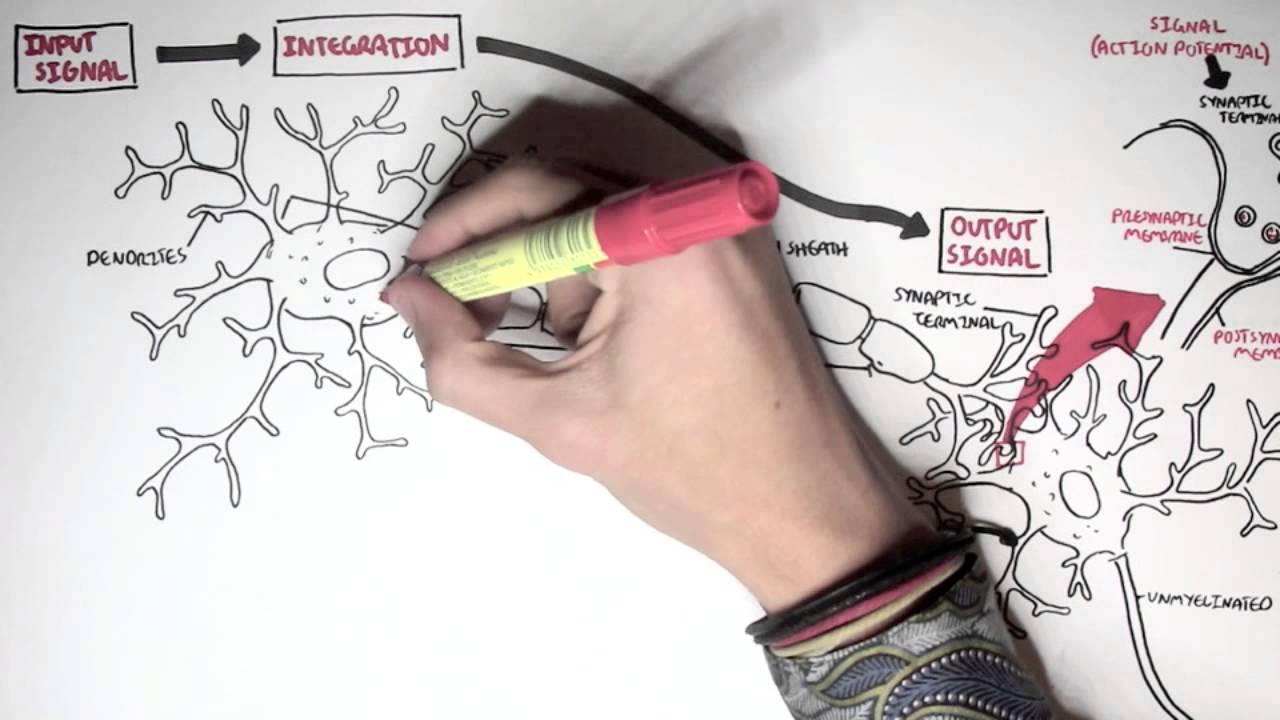
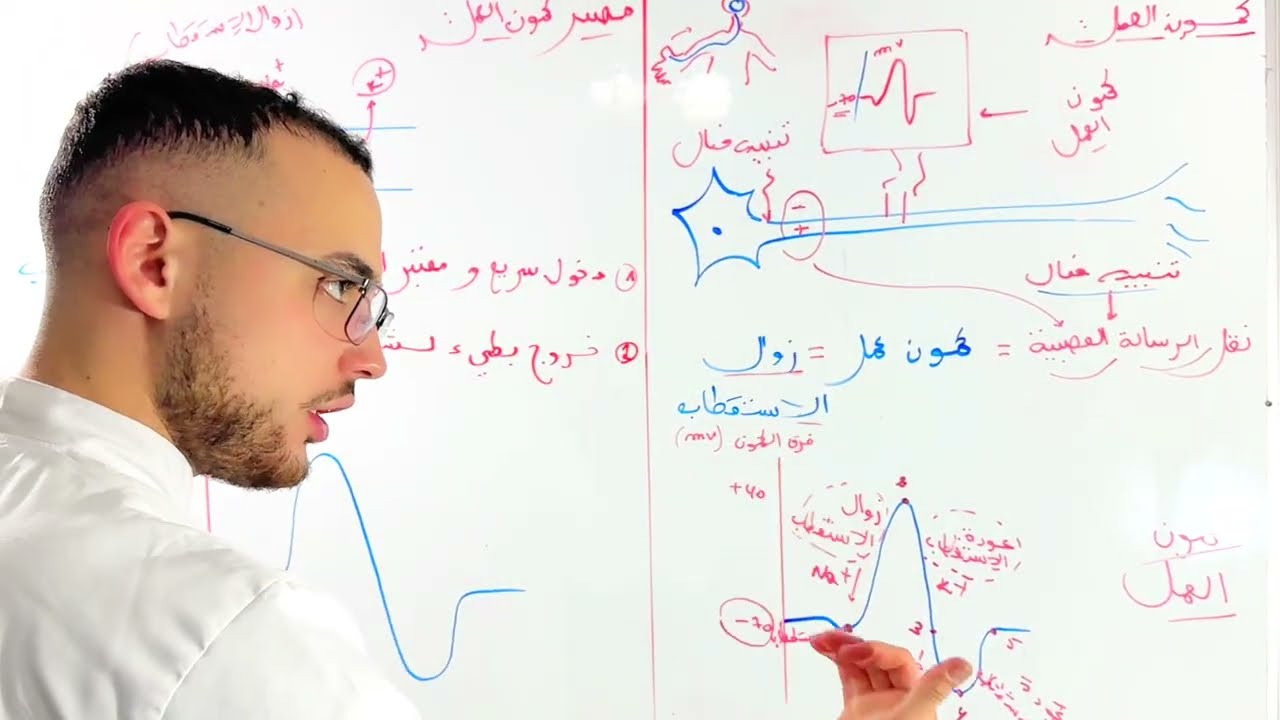






![Откуда в мозге ЭЛЕКТРИЧЕСТВО? [КР#10]](https://i.ytimg.com/vi_webp/39P-GbVotUw/maxresdefault.webp)


![Dr. Guilherme Freccia e Fernando Miguel: A Ciência da Nutrição e do Exercício Físico [Ep. 060]](https://i.ytimg.com/vi/TY8O60_lF3U/maxresdefault.jpg)




The motor system enables voluntary movement through a hierarchical pathway where primary motor cortex neurons in the brain send signals down the pyramidal tract to alpha motor neurons in the spinal cord's ventral horn, which then release acetylcholine at the neuromuscular junction to cause muscle contraction; this system also relies on proprioceptive feedback from muscle spindles and Golgi tendon organs to monitor body position and adjust movements, as demonstrated by brain-computer interfaces that can decode motor intentions from cortical activity to control external devices.
Motor System Lecture: Brain and Behavior Neuroscience
Added:Basic Neuroanatomy: Understanding the division between the central nervous system (CNS) and peripheral nervous system (PNS), including the basic structures of the brain and spinal cord.
Neuronal Communication: Mastery of action potentials, synaptic transmission, and specifically how the neuromuscular junction operates using acetylcholine.
Sensory vs. Motor Systems: Distinguishing between afferent (sensory input) and efferent (motor output) pathways in the nervous system.
Skeletal Muscle Physiology: Familiarity with the sliding filament theory of muscle contraction and the structure of motor units.
Neurological Motor Disorders: Studying the pathophysiology of movement disorders such as Parkinson's disease, Huntington's disease, and Amyotrophic Lateral Sclerosis (ALS).
Neuroprosthetics and Brain-Machine Interfaces (BMIs): Exploring the engineering and neurobiological principles of decoding cortical signals to control external robotic limbs or computers.
Motor Learning and Neural Plasticity: Investigating how the brain, particularly the cerebellum and basal ganglia, adapts to learn new motor skills and recover from brain injuries.
Spinal Reflexes and Central Pattern Generators: Analyzing self-contained spinal cord circuits that generate rhythmic movements like walking without direct brain control.
22.8K views225likes1:10:46Original Release: 2013-01-04
okay good morning everybody why don't we get started okay a couple of announcements um first I wanted to update you on the James Franco event um so uh this is an interview that um I okay okay um so I told you at the beginning of semester that I had proposed um to James Franco who's a faculty member here to do a um uh a presentation for all NYU students called um uh understanding the monkey mind a conversation with James Franco and Wendy Suzuki um uh in in response to his uh uh movie um Rise of the Planet of the Apes I'm sure he's fascinated with the monkey mind and all those things associated with it but he agreed he thought it was a great idea and so um we had wanted to try and get a date for this semester but it didn't turn out because he's not going to be in New York very much this semester but I got a promise from his Booker that um we would find a date in the spring so watch out for the um announcements it's going to be a university-wide event so hopefully um there'll be enough seats for everybody um so that uh that's for next semester um Next News not so happy uh next Wednesday is our second midterm exam um and this week in lab there is a lab this week no lab quiz but you're going to have another whole session devoted to review for next Wednesday's exam um there's also going to be a review session tomorrow uh an extra review session tomorrow night from o' 730 from 6 o'clock to 7:30 and where will review session B 8:15 Meer building on four Washington place for all of you that went to the last one it's the same um uh same room same building just down the street this way okay um same format as the last exam expect two false multiple choice Fillin the blank and a couple of different kinds of um uh short answer questions kind of short short answer questions and medium short answer questions where we'll ask you to to um describe these answers in in three or four sentences or maybe even a full paragraph so um same kind of uh format new topic of topic of course where we focused on sensory systems motor systems oh this is very important it uh we will cover all exams including next Monday's exam so we'll we'll finish the motor system today um on Wednesday we're going to go over motor diseases that will be covered next Monday we're going to be uh will be the first lecture in the learning and memory part of the um course and that lecture will be covered on the exam okay so everything up to Wednesday um next Wednesday will be covered on the exam any questions about that no okay great so um the other thing that I wanted to um just emphasize to you is um to point out to you something that you've probably all already realized and that is the difference between What's um stated in your book that you're all using as as a reference for this class and what real neuroscientists study okay so um if you take the book it's like a Bible of Neuroscience these are all the facts that we know about neuroscience and a lot of the facts you've learned you've learned about facts about neuron Anatomy names of structures where they are the facts of the pathways of the visual system the somata sensory system um the facts of how action potentials are propagated those are all facts but what neuroscientists like myself do is we're actually asking the new questions and I want to make sure that you are aware of what those questions really are so for example let's take the visual system that is the the the um uh the sensory system that we know the most about you you learn so many different facts about the sensory systems the past Pathways the rods and cones you might think okay I have to learn all this there's nothing more to learn but just to give you a flavor just recently in fact this year at this year's Society for Neuroscience meeting that's happening um November starting November 10th um there is a woman who won a big prize called the Lindley prize prize for the best thesis dissertation thesis in um behavioral neuroscience and she won this prize for identifying a whole new visual pathway a whole new set of retinal gangling cells there not a lot of them not nearly as many of them as rods and cones but it turns out there's a specialized subset that are important for what's called photoentrainment that is um being able to detect whether it's light or dark and modulating your your behavioral state is it nighttime should I be sleeping is it bright out should I be active and there is a specialized pathway that is not important for visualizing your face compared to your face or you know uh spatial relationships in the visual world but is only important for bringing light information into uh the parts of the brain important for determining your general uh patterns of kind of biorhythm functions whole new pathway completely new discovery she did not do it on her own there was a whole Lab and teen but she would wrote wrote a beautiful beautiful thesis on this completely new pathway and so it's not just like oh we know everything about the visual system we're still learning things about something as well studied as the visual system and what we're going to be talking about today is the motor system even more unknown because when we talked about sensory systems this is just kind of uh sensory path of information coming in and we talked about the fact that we're not seeing everything out there we're seeing a compilation of things we are filled filtering things um we're filtering things in our auditory system so a bat would hear different things than we would hear um an eagle sees a different scene that we see why because he has such more precise Vision than we do it would be a revelation to see what an eagle sees it's very very different but still relatively passive these things are coming in now we're starting to uh look at the motor system this is not a sensory information this is not sensory information in this is something generated by us I can decide to pick up this pointer press the button and get my little red dot up there how does my brain do this this is Free Will we're talking about we're talking about the brain areas that we are controlling to do what we want okay so if everybody just for a second everybody sit up really really straight oh okay everybody can do that shoulders back sitting up everybody has the free will to do that okay that was your decision what we're going to be talking about today is exactly what happens in your brain when you do that do I know what free will is from a neuroscience perspective I don't but we're going to talk about the pathways that we KN do know about how you were all able just to do that just to do a simple thing of sitting up straight in your chair okay so we're gonna uh continue on where we left off last time we talked about all the muscles in um in your body uh everybody knows what muscles are and you just you just uh uh stimulated a whole bunch of them particularly in your core in your abs and your back to do that sitting up straight thing those are slow twitch muscles we talked about fast twitch and slow twitch those those muscles that help maintain our posture are the ones that that continue that can fire for a long long time and even those get tired as we know as we get tired in a lecture and we start to slap and we start to move back in our chairs but um um all of those muscles are the ones that you just activated here each of the muscles are made up of lots of individual muscle fibers and the individual muscle fibers that we talked about are made up of two key elements that you need to know about actin which is the thinner element the blue strands here and mein the thicker element which is the thick thing in the middle and uh muscles what they do is contract and so what happens happens is uh the mein uh um hooks on to the actin and pulls it together and that's how a muscle like the bicep can um contract and you can uh um you can Flex um your arm uh with the contraction of the bicep okay we talked about fast twitch muscles slow twitch muscles uh the prototypical fast twist twitch muscle was your eye movement uh your your eye muscles controlled by cranial nerves okay and so those are very fast they're very precise but they don't have to lift a heavy load your eye is very light and they don't have to be lifting things like big books okay um slow twitch muscles are not nearly as fast and precise and and and can turn on a dime or can contract on a dime but they are more resistant to fatigue those are the muscles that are helping you maintain your posture your abdominal muscles your back muscles um another good analogy is the muscles that um sprinters use so we talked about the fact that uh dark meat in the um in the chicken that you eat is a lot of them are slow twitch muscles these are the ones that are maintained for a long time but within the legs there are in fact both fast twitch muscles and slow twitch muscles the fast twitch muscles are those muscles that help you help the runner um um um kick off at the beginning of the race when that when that that gun sounds those fast twitch muscles are the ones that um contract rapidly and um on a dime but it's the slow twitch muscles get that that gets the runner through the main part of the course um so again both of these are acting together okay so what is actually controlling the muscles and that's where we get into the central nervous system um to special muscles called motor neurons and in fact we're going to be focusing on um we're actually going to be talking about two types of motor neurons one is the Alpha motor neuron and those are the neurons that are controlling all our striad muscles our voluntary muscles so for example the heart and the stomach those are muscles but those are smooth muscles those are controlled by um uh uh unconscious autonomic and uh the autonomic nervous system striated muscles biceps triceps quadri hamstrings are all strided muscles and controlled by Alpha motor neurons where are the Alpha motor neurons Alpha motor neurons live in the ventral Horn of the spinal cord so we're going back to the spinal cord and um hitting kind of the second part of the spinal cord let me just jump here here is our nice spinal cord again here is the dorsal uh uh um Horn of the uh um uh spinal cord and here's the ventral horn um the ventral horn right here this gray matter where cell bodies are these are where the uh primary alphao neurons live those neurons are sending those axons out this root it's the ventral root of the spinal cord remember the dorsal root what what comes through the dorsal root sensory information right and what is sitting right here in this dorsal root ganglion what's in there cell bodies cell bodies of what of neurons what kind of neurons are they what are they doing this was the sensory part so remember these are the cell bodies of those neurons that are going out and sensing all of the uh uh sensory information from our body remember those those um the pacinian cor pusles uh rufini cor pusles uh those are um uh connecting to the afferent input um of these primary Sensory neurons in the uh um dorsal root gang gland and the axons of these neurons here are going through the dorsal root and then going up into those sensory Pathways that's half of the spinal cord the sensory half now we're finally getting getting to the vental half the motor half where we have the cell bodies of the um uh of the Alpha motor neurons sitting right here and making up this ventral Horn of the spinal cord again these neurons their axons are going out towards the vental root and then they come together so the spinal nerve remember the 31 pairs of spinal nerves now we're going go going back to the very beginning of our lectures those 31 pairs of spinal nerves going all the way up and down your spine are made up of both sensory um inputs from the periphery um whose cell bodies are in the dorsal root ganglion this this uh uh lump right here and the um uh motor neuron axons that are going out to stimulate the neurons okay so what happens when you cut a spinal nerve what would happen if you cut the spinal nerve and it's uh it's uh um inating the arms let's say one pair of spinal neuron inates the arms what would happen if you cut this you would be paralyzed what else so you couldn't move because you're cutting the motor neurons but what else you couldn't sense anything so you lose all sensory and motor actions for this part of the body that this nerve is innervating okay both sensory and motor okay and so it's it's be it it's it's that way because you have both sensory inputs coming in and and motor neurons going out this one individual nerve so that's why you don't want to have um nerve damage in your spinal cord you have Motor problems and you have sensory problems now if I only went in and lesioned the dorsal R gangling cells then I would have purely sensory problems if I cut the dorsal Roots right here I would only have Motor problems okay so you should you should have a a 3D understanding of this spinal cord because we've gone over it at multiple different points during the class and you should be able to understand that or predict that if I cut if I damage the cells here what would happen if I cut the spinal cord here what would happen if I cut the nerves here what would happen What would be the prediction does everybody get that does everybody have a clear idea of what would happen in those different situations yes question um so primary op are in the vental Horn of the spinal cord and the dorsal part of the spinal cord is primarily sensory okay that's where the sensory pathways are coming sensory uh neurons that are helping to convey sensory information are in this dorsal part of the horn and the ventral part of the spinal cord the vental horn and the vental part of the spinal cord are um are uh uh are dedicated to motor uh functions any other questions okay great so motor neurons um uh so those motor neurons are like any other neurons they generate Action potentials and the action potentials in these Alpha motor neurons travel down the motor neuron that branches into many terminals near its Target now this target of a motor neuron is a muscle okay it's not a neuron it is going to terminate in a muscle and it's action potentials from the motor neuron that allows your muscles to contract so my my neurons my neurons probably in the mid of my back are Contracting as I am uh flexing um sorry my as I'm Contracting my bicep muscle um and the neurotransmitter that this motor neuron uses at the level of the muscle is acetool okay so here is um a uh uh blow up of an alpha motor neuron it's the cell body it's just to show how many different inputs there are to uh the motor neuron the axon is coming out here has lots of dendrites and we're going to talk about uh the major uh uh input to this motor neuron in a second what controls this motor neuron that goes out to actually uh contract a muscle okay so but first before I do that I want to talk about um the uh uh actual uh um uh transmission of the action potentials from the motor neuron to the muscles and that happens as what's at What's called the neuromuscular Junction and that is where the neur motor neuron terminals uh um and the mo uh muscle fiber meet okay um this is a synapse like any other synapse except the post synaptic part is not another another neuron it happens to be um a muscle and the uh uh effect of acetylcholine is to actually help that muscle contract that actin and milin is sliding up against each other and Contracting because there's cocoline in the vicinity um neuromuscular Junction is very very effective synapse because almost every single action potential elicits a contraction um and important concept is the concept of a motor unit a Mot motor unit is a in a is a single motor neurons axon in all of its Target fibers so a motor unit are all the muscles that a single um U motor neuron is Contracting okay and that can be uh seen as analogous to something we talked about in the sensory system in the somata sensory system remember what I talked about a dermatome is a part of a skin inovated by a particular spinal nerve so we're not talking about individual uh Sensory neurons but it um and aome is like here is the arm dermatome one of the uh spinal nerves innovates this entire um uh part of the uh of the arm and uh um its uh um cutting of this particular spinal nerve will not only um cut off all sensory feeling to this arm the dermatome of this nerve but but also all the motor input so the sensory and motor kind of uh um uh flow in a specific spinal nerve is matched they're going to the same places okay so here is uh this uh picture again and now what we're seeing is um a spinal nerve coming out we're seeing the axon of a single uh neuron uh within the spinal tur nerve there's uh multiple alphao neurons going out each individual spinal nerve it comes down and you can see the termination in the muscles here's this person's bicep muscle and here is uh again these are melinated axons um we want obviously fast responses these are myelinated fast responding axons so that if you're a pingpong player or a tennis player um you can have very very fast uh responses or our football players we saw at the beginning of the last lecture um and here is the myelination terminating and here is the neuromuscular Junction the ter termination of the axon onto these striated muscle fibers okay and here is it here's it um here it is in a larger blowup here is the actin and mein and here is the axon terminal and this is where acetylcholine is U released in the same way with uh um um with vesicles containing acetylcholine the vesicles release and acetycholine then um uh contacts the muscle fiber that makes it control ract okay um we call just a term that you should know the Alpha motor neurons and the vental Horn of the spinal cord are What's called the final common pathway through which the brain and spinal cord controls muscles um so let me just clarify something you remember the I think it was the very first lecture I told you to um close your eyes for a second and wiggle your right pinky toe right and I said there was this long pathway a single axon that goes all the way down it's not really a single axon what's really happening there is by wiggling my little toe I have neurons in my little toe area of my primary motor cortex those are wiggling sorry those are wiggling those are firing Action potentials your brain isn't wiggling your toe is wiggling your brain in uh your brain in those uh um neurons and primary motor cortex in the cortex are firing those axons are long they're not quite as long as going all the way down to your toe but what they do do is they go from the top of your head probably down to the bottom of your back okay so that's still a very long um motor neuron um neuron from primary motor cortex those primary motor cortex neurons synapse on the Alpha motor neurons in the ventral horon at the at the base of your spine and those Monon neurons then go out and terminate in the muscles that are controlling the movement of your baby toe and that's uh that is a very very long pathway um perhaps not as long as I indicated the very first lecture but still quite long and imagine that for a giraff okay still hugely long neurons we're talking about in the motor um in the motor uh uh cortex and motor pathway okay so now we get to a really important concept um in motor function it's not just all about the um uh the ephant going out so ephant uh are the signals from the central nervous system out to the muscles that would be an epher an afference signal is information coming from the outside in so sensory information or is afferent information coming from the periphery towards uh the central nervous system you need to know the difference between an affrant and an ephant of the brain uh of the brain so in the motor system we're talking about um ephant uh um um signals and we think that's that's the main thing we have to get that signal from the brain to the muscle so we know where to move but it turns out that even the motor system not only has Ence but has important afference which is called uh which uh underlies our ability uh of what we call propioception with the collect uh collection of information about body movements and position it's not all about commanding what we're going to do but it's also about paying attention to where we are so that we we can monitor what's happening and adjust if necessary and we're going to talk about two different kinds of propioceptive um uh um uh uh mechanisms we have in the motor system muscle spindles and GGI tendon organs okay so first muscle spindles where are these muscle spindles consist of Afro and ephant elements um uh um intrafusal fibers uh lie within the spindles let me just show you a picture of this okay so this is a picture from the book it's a really nice illustration here is your bicep muscle and within the bicep so sorry let me just uh identify here's the muscle itself here is the tendon the tendon con uh connects muscles to bones okay so if you have a torn tendon that's really bad um but that is what's uh connecting your muscle to your bone now for the um um muscle spindles the muscle spindles are within the muscle itself and each muscle has two major types of fibers extrafusal muscle fibers which are basically the uh regular muscle fibers the striad muscle fibers and the infra fusal muscle fibers these are the specialized muscle fibers that make up uh the muscle spindle and they're kind of in inside the regular muscle and they're kind of a a cylindrical shape so it's basically a muscle spindle is a specialized kind of muscle fiber it's called an intrafusal muscle fiber and this muscle fiber has um sensory uh um information that is uh obtained from this muscle fiber there's two types of sensory endings one that that um that terminates on The Middle of the infra intrafusal muscle fiber right here and one that terminates on the end these are called secondary sensory endings that terminate on the edges and these are primary sensory endings what these sensory endings do is they um uh they uh uh sense stretch of the muscle so let's say my muscle is here uh hanging out my bicep muscle is here hanging out not doing anything just hanging out and I have a big book somebody hands me a big book and my bicep muscle stretches that stretch is what these afren fibers are very sensitive to and um you'll get uh activation um at the beginning of the stretch you'll get primary activation of the primary sensory endings these sensory endings these primary sensory endings are very sensitive to the Dynamics of new stretches of the muscles um and then the secondary sensory endings those are more sensitive to continuous stretch so if the stretch continues for a long time if I continue to hold this book here and nobody helps me uh um do something with it um then that's when my secondary sensory endings kick in okay and so what this intrafusal uh muscle fiber does what this muscle spindle mechanism does is that it detects stretches of muscles and um uh it can then inform the rest of the uh uh the uh of the motor system um to uh adjust accordingly so we want to know when our muscles are being stretched and when they're not and these extrafusal muscles are exactly what's what's doing it now uh so let's look at this for a second so here is the extrafusal muscle and we've plucked out the intrafusal muscle or the muscle spindle right here here the muscle is relaxed okay and there's not much activity just focus here on this top row the muscle spindle activity and here what we're monitoring each one of these dots is an action potential let's say it's from the um uh our primary sensory ending okay so these are action potentials from the primary sensory ending the muscle length is just normal but then we stretch the muscle something stretches the muscle the muscle stretches and um the uh then you get lots of activity in um the muscle spindle telling telling us the spindle has been activated and then what usually happens in other motor systems is the muscle then contracts to counteract that stretch and then you get uh lower activity in the muscle spindle but look what happened here this muscle is now significantly um shorter than it used to be because it's stretched and then we have a muscle uh spindle that's the same that's the same length so it's kind of hanging out there it's way too uh long and it's not sensitive anymore to stretches even of this level of contraction okay and so that's where the um uh the muscle uh ephant come in so here each muscle spindle doesn't only have primary and secondary sensory endings that inovate it but it also has what's called a gamma motor fiber a gamma motor fiber not an alpha motor fiber but a gamma motor fiber that comes in in and what this does is it can that it can control the length of the actual muscle spindle so let's say you have um you have a stretch and you contract your muscle well the gamma motor Fiber goes back and contracts this muscle spindle to match the length of the rest of the extrafusal muscle fibers so that this uh uh stretch receptor is now sensitive to whatever length your muscle is okay does that make sense it's just going in and realigning um the um uh the intrafusal muscle fiber to the rest of the muscle okay and um let's see right so we talked about Dynamic stretch is what the primary endings are sensitive to and static stretch is what the secondary endings uh are sensitive to uh and we talked about uh gamma motor neurons now the second uh kind of um uh propio mechanism that we have is called the GGI tendon organ the GGI tendon organ is not within the muscle itself but it's actually sits these are fibers that sit on the tendon uh that is connecting the muscle to the Bone okay so these are simply uh um sensory endings here that's monitoring the tension that you see at the level of the tendon okay so this is really a a safety valve if there's there's too much tension there that you have a really really hard load that's actually pulling on the tendon that is connecting the muscle to the Bone you have the GOI tendon organ which is a safety valve so let's see what happens here um we have uh the level uh we have a stretch here and um uh when the muscle is stretched um and this is stretched a lot you not only get activation of the uh muscle spindle but you get a stimulation of the uh uh tendon as well and so at this level you get gold G tendon organ activity and with the tendon uh this is actually only activated in in more vigorous stretching where there's actually tension put on the um on the tendon and so what happens there is once the Gogi tendon organ is activated you get signals back to the muscle um that um uh uh that release uh the the the stretch of of the muscle and actually uh releases tension on on the muscle so it's again a safety mechanism to try and um uh Safeguard your tendons so that they don't pop off of your uh of your bones okay so um that is Goldy tendon organ and one nice way to summarize um what's happening particularly for the muscle spindles is to go back to a uh um uh activity or or an example that we're very very familiar with and that is the stretch reflex do you remember at the beginning at the end of our um action potential lecture we use the example of a doctor hitting your your uh knee and giving you your um um kicking reflex right and um same thing this is another example of that this is a stretch reflex that we're going to uh talk about and this is a stretch reflex that is only happening within uh uh between the muscles and the spinal cord the the uh primary motor cortex is not involved at all so what happens here so again I'll translate this for our uh um hitting the uh the knee example um so what happens is uh the bicep is at a uh normal length right here and you put a weight in the person's hand and that stretches the hand you know outside force stretches the hand and um then these bicep M muscles are uh stimulated so you uh stretching of the muscle you get stimulation of the uh muscle spindle response and that goes in through these muscle spindles also have their cell bodies in the dorsal root gangling sensory all Sensory neurons are in here really important gangling right here these uh axons of these Sensory neurons go and they uh um they synapse uh on the uh motor neurons that control this uh muscle and so uh what this stretch reflex is doing is this monosynaptically sensory input is coming in going to a stretch that says Okay I want to contract this muscle that's being stretched so then you have a motor command going out and stretching uh sorry and Contracting the bicep muscle but you can't everybody can everybody just contract your bicep right now okay is that the only thing you're doing can anybody only contract their bicep and that's the only muscle that they contract is that possible no why is it not possible yes exactly perfect muscles come in pairs that are like opposites we talked about antagonistic muscles what is an antagonistic muscle for your bicep tricep right so when you contract your bicep you're stretching your tricep and so when you do this exercise in the gym you're Contracting your your triceps um and so these are antagonistic muscles so in a system like that you can't just stimulate your uh or contract your bicep this second neuron here is going to inhibit this purple neuron here is an inhibitory interneuron that is now going to inhibit the um um neurons of uh sorry not to inhibit but it relaxes the muscles of the triceps okay so um uh this reflex is a a stretch is detected you get stimulation of some muscles that causes a uh um uh contraction of the bicep and a relaxation of the tricep that's exactly the exact same pattern that we talked about in the beginning of class when we were talking about um Action potentials chemical and sensory Action potentials the same thing was happening what happens when we hit the knee you get a stretch you actually cause a stretch of uh the muscles in the quadriceps that caused the same Loop to happen but now you are um um you are Contracting the quadriceps and you're relaxing the hamstrings okay so this is a nice example of a motor uh uh kind of spinal reflex that now you know how exactly these muscle spin uh work in there so you think I've never heard of muscle spindles they can't be that that important well that's what uh uh a very uh um important physiologist um sharington thought as he was studying the sensory and motor system so he decided to uh cut off all of the afferent input that is um the uh uh uh proceptive input from the muscles uh back to to the SP spinal cord so these muscles had perfectly working ephant signals the acetylcholine was working they could they could stimulate something but he only cut these um muscle spindles and goldi tendon organs so what do you think would happen if you did that anything would would the animal or would you still be able to move around just F fine if you didn't have um input yes right exactly exactly your brain would have no understanding of what your muscles were doing and so what would happen is when they would cut off all the AER input from the motor neurons let's say from the right arm the right arm could could um uh the the um acetylcholine uh sorry the the alphao neurons were going perfectly well to the um to the muscles but with no afron input the animal stopped using that arm just it just went limp didn't know what to do with it couldn't do it until the they um they uh restrained the other arm and started training the animal and with time and effort the animal was able to slowly use um their uh um the the arm that had been deafferented but that just shows you how how important these asirin inputs are it's not all about the signals to move your muscles but it's about the proceptive information about what your muscles are doing that allows you to adjust and to continue to move it's all done unconsciously really um uh that is the proprioceptive part but it's critical to our ability to move and uh to learn very complex motor actions so that's why we spend so much time talking about both the muscle spindles and just two examples um appropiate option is much more complicated than that we're really giving you two uh uh simple examples of how propioception Works yes yeah if you cut off the ephant signals the the Alpha motor neurons you cannot move at all there's not a physical way to get the acetylcholine to the muscles um you can you can feel in the sense that you have the uh Alpha uh sorry the uh spindle afference coming back but you can't do anything with them because what that does is it just helps you move better right but what exactly as you said if you cut the um afference from the muscle spindles but leave the ephant um you uh you can still move but you have to be retrained to move because we're so this is so integrated both the afference and ephr in our motor system okay does that make sense any other questions about that okay good um okay and then so these uh that those examples are um uh focused on the major stried muscle groups of your whole body the muscles that allow you to walk to run to play the piano um to do everything like that um but there are uh as we learned a a whole group of muscles that are controlled by cranial nerves and that means that it's not uh the motor neurons are not in your spine they're actually in your brain stem so this is what the book calls um movements are controlled uh uh so some muscles are controlled directly by the brain and you already know these muscles you know them as the cranial nerves that have motor functions and these motor functions are all related to the head and neck including sternomastoid muscle um in in the back of the neck all of the eye movement muscles which are the um fast twitch muscles are controlled by very specific neurons um in um the different uh uh cranial nerves and so you should uh re familiarize yourself with the cranial nerves and which ones are motor particularly the motor neurons um important for eye movement oh one last thing that I forgot to go over is um um let's see this I I really like this concept the ination ratio okay the ination ratio of um refers to the number of fibers muscle fibers inovated by an axon okay by single axon so compare and contrast let's say I have an axon that inates 500 muscle fibers versus an axon that inates three muscle fibers what do you think the difference between those two things would be what would what would I use the muscle F the the axon that's inating 500 muscles versus the axon that's inating only two or three muscle fibers what would be the difference there yes it could be fast twitch but what do you think is the nature you're you're very close what what is the nature of those um of those muscles the the muscles that have uh just one axon innovating just a few muscle fibers yes they could be smaller yes back there sorry finer yes finer movement exactly so yes right right exactly so exactly it's it's the same concept he was referring to the concept of convergence versus Divergence and um but but what you said first was exactly what I was going for it you have to think about the the um finesse of the movements okay so try and write with your hand and then try and pick up a pen with your two elbows and write how what are you better at writing with your hand right so what what's the difference between motor control of your hand and motor control of your elbow yes right it's a um uh lower inovation ratio so you want um a uh small number of muscles to be inovated by a single neuron and so it's just think about all the parts of your body that you have fine motor control for and those are the ones where there is much more detailed inovation of individual neurons to small numbers of axons so you can imagine your hands have very small inovation ratios your eyes have very small inovation ratios but my quadriceps and my my uh hamstrings have much larger Innovation ratios okay it's not well maybe dancers can can refine that but um the rest of us uh but even dancers will have better uh and more intricate motor control in something like their hand okay um so now we're uh um um to the spot that we always talk about in sensory motor pathways uh sensory motor systems I should say what is the pathway so we spent a lot of time comparing and contrasting um uh the input from the smata sensory system the visual system the auditory system how there similar how they're different how on those sensory systems all of those sensory inputs are going through the thalamus um now we're going to talk about how information from primary motor cortex gets down to um the Alpha motor neurons and finally out to the um um to the muscles and this uh information is getting out through two major systems in the rest of this lecture we're going to be talking about um uh the paramal system or cortical spine system and the other system that we'll focus on um next lecture particularly in our discussions of different diseases of the motor system is called the extra parameter system because it's outside of the parameter um system um so what does the paramal system consist of uh these are neuronal cell bodies in the cerebral cortex primarily in primary motor cortex um their axons and their axons that pass through the brain stem to to the spinal cord forming What's called the paramal tract so let's see where that is here is primary motor cortex here all these neurons in this gray area where the cell bodies are are going down and they kind of uh travel in one part of the upper Medela they kind of make a little pyramid or a little lump on the uh Medela that uh we should have pointed out to you in your bra um in your sheep brain de you can see the pyramids of the Medela in the brain there's basically a bump on the uh on the Medela and that bump is consisted consists of all of the axons from primary mot cortex that are going down at the level of the lower Mulla these axons cross over because like the sensory systems right motor cortex controls the left side of the body and left motor cortex controls the right side of the body and so that desiccation or crossing over happens at the lower B the lower Medela and that's called the desiccation um of the paramal tract um the the paramal Trap just trap uh uh crosses over goes down and then um what it does is these neurons are terminating in the um vental Horn of the spinal cord at the level of the neuron that these uh uh primary motor cortex are are innovating okay so that is what's happening so your your um uh your wiggling your right little toe and we start from the left side let's say this is the left side of the brain um and it comes and it uh goes over to the right side we go down to the lower spinal cord way down here and uh this neuron from primary motor cortex uh uh then uh um synapses on a Alpha motor neuron or a set I should say of Alpha motor neurons in um the ventral horn those Alpha motor neurons then go out and exit through a spinal nerve and go down and inovate those muscles that are allowing you to wiggle that right right um uh little toe okay um let's see so what where is primary motor cortex we talked about this primary motor and primary sensory cortex are on either side of the Central sulcus and um here is something that you're very familiar with a representation of body parts in the primary motor cortex and just like in the sensory system there is a motor just like a sensory homunculus there is a motor homunculus with certain areas that are highly represented why because they have very low inovation ratios just um more neurons are controlling certain parts of the body because it has much more int intricate control of it and those parts you can imagine what they are the hand and if we look at our uh uh cheat sheet here uh obviously the hands are very highly represented and the mouth as well because the motor actions of actually speaking are some of the most complicated um motor functions that that we can do and some of us can speak very very quickly and and so that really uh uh increases this I should say that both uh the sensory homunculus and the motor homunculus are very very highly um um um simplified uh for these uh diagrams it's it's more complicated than this is just the huge hand area the hand area is more integrated and more intermixed with the wrist and the elbow and the rest of the arm than is is indicated here but this is a good way just to get a general feeling for um um um what parts of the brain are uh are controlling different motor functions okay so let's talk about about what exactly happens in primary motor cortex as you are voluntarily making um a movement and what has been studied in the laboratory has been reaching tasks so animals are taught to reach or move a joystick in different ways and in a reaching task muscle cells change firing rate according to the direction of movement so these cells are actually sensitive these cells uh fire whenever the animal has the uh is is is OV moving his hand in a particular direction and each cell has One Direction that elicits the highest activity and what you can do is record not only from one cell but a whole array of cells and get what's called a population Vector it's a population analysis of what the brain is telling the body to do and the secret and the key is can you decode without knowing what the animal actually did what he was going to do just by reading the output of neurons in primary motor cortex so here is an example of a neuron that was recorded in um primary motor cortex as an animal was doing a joystick kind of reaching task you can see he was instructed to either move the joystick here 90 degrees uh 45 0 degrees down down down all these different um three six uh uh eight different uh directions and he had a a joystick and we could tell exactly when he was making the movement and what we're looking at here are five individual trials zero is uh this point here in the trial that's going from here to here this is time on the um on the x axis zero is when his actual physical movement began in each of these individual ticks represents a single action potential that we're recording from these individual units so you can see that right before the animal makes the move movement the motor neurons are starting to fire indicating or signaling um a a a movement in a particular direction and so we can look at uh the pattern of activity whenever the animal moved um up um 90° up this way you can see a pretty good firing every single time so let's compare that to when the animal moved here at 0 degrees no activity in fact this neuron seemed uh uh inhibited right before this movement but over here here you see good movement or sorry good movement good uh uh strong Action potentials that are starting right before the movement right before this zero point and continuing on um through uh whatever to about 250 milliseconds after uh the movement but only for specific directions okay if you ask the animal or if the animal moves in other directions this neuron is not fine yes why is it that only response yeah because that is where the neuron happens to be recorded from so this neuron this one neuron it's a single neuron so this has sensitivity to movements in this direction but another neuron if I recorded in another location could have sensitivity over here some over here and this is kind of a a broad tuning you know what what if we had more uh sensitive um we wanted a very specific signal there are some neurons that only respond when uh the animal made a a um a movement in this direction so you have a whole mix of responses of these neurons some that respond for just a specific individual Direction and some for a large R so this is almost half of the whole you know pie chart here and and um some don't respond at all yeah so kind yeah exactly yes you could theoretically find a response uh beautiful response like this for every single Direction around if you record around in the motor cortex yes question over here this one yeah okay so ye yes the firing of action potentials for this one um as well as these um it starts a little bit before the movement and continues on after the movement so so you know they're still doing it they're still probably uh uh clutching the uh uh the the little Rod uh there and um you can see this neuron has quite a complex response um that differs uh that differs in subtle ways in all these directions that it's sensitive to so this one is mainly before the movement right and these continue after yes yes yes there are overlap and that's a really good question there is this wide range of different patterns of activity that that what we're trying to understand again is this population code all of that together um allows the animal to do his movements he's doing what he wants to do he's going to get a you know we cue the animal go here to get a reward and he does that okay and you have this wide range of cells some of them they're responding to all these different things not just when he goes up here to get a reward but he goes down here to get a reward and there's subtle differences and all of that complexity is um underlying our our great you know um um flexibility in all the different movements that that we can do any other questions this is really the first time we've gotten really deeply into kind of uh neural responses okay so so we're going to really talk about this a lot because this is a really fascinating uh topic and what I'm showing here is simply a um sensitivity or directional tuning curve of um uh of this particular neuron neuron so this neuron likes to respond uh primarily at 180° uh uh movement and it has good responses through a lot of it and very poor responses out here so again you can imagine that this is one neuron other neurons might have a very sharp curve like this other neurons may be like this other neurons may be just flat like this all of these types of neurons you can see in the motor cortex um and um so so before we go on to let's see do I want to do this first or do I want to do my exercise first um oh okay well let's let's let's do this first so um imagine an animal grasping a um uh a joystick and he's going like this and he's moving this way and that way and that way um one question that motor neuroscientists motor physiologists asks are are individual neurons that we're recording from are these individual neurons that we can get activity and measure their Action potentials are they coding for a particular movement a particular set of muscles that go this that that make you you know go like this or are they coding for a particular movement direction that is I can go like this but I could also go like that and I make I make the same kind of outward uh um uh movement and so that's exactly what they tested they tested a monkey here um and he was looking at a a monitor and he got queed there and with his arm he had to move his uh uh move this apparatus to this direction right here and he moved and rotated and um did all the he could do all these different directions but the cool thing is that they asked him to do it in two different grips one grip like this and one grip like this so so you can imagine that when you are moving the joystick like this you have different muscles being activated but you make the same kind of movement versus this same movement but using very different muscles so the question was are these individual neurons in primary motor cortex coding for the specific muscles that are activated or for the outcome of the movement which seems like more of a cognitive um outcome and what they found was uh some neurons coded for the specific muscles that is they differentiated between this movement and this movement okay they they could tell the difference the majority of the neurons recorded did not differentiate between this and this so that means these neurons were coding the actual outcome of uh the motor movement not the specific muscles uh that were being uh encoded okay so I wanted to do a little exercise just to uh um get you guys to understand what's going on and kind of uh uh uh make sure that you you get you get this okay so you guys in the center here you're going to be primary motor cortex okay this line right here guys are all cells that encode my movement over here okay firing of view makes me go like this you guys in the center you guys are all going to be fir neurons they control my movement this way and you guys over here are going to move uh activity there is going to control my movement to the right okay so you can make me do three different things you can make me go this way this way or this way this is a very simplified view but I want to give you an idea of what the whole cortex is doing not just an individual neuron okay so how are you going to fire you're going to go like this okay so you guys fire okay great you guys fire and you guys fire great okay so you guys are all action you are all action potentials you are all neurons okay and you have specific sensitivities okay so make me fire so I go this way great okay fire fire over there okay and fire over there okay so now I'm make make me go this way okay good so now imagine I am a I I can go and record and I can record your activity I am just I'm just monitoring how much you uh wave your hand as I'm moving my my arm okay so I'll get a specific pattern of activity if I if I ask the animal move his arm over there I get no activity out of you right but once I ask you to move your arm move my arm over here I see lots of activity or if I see if I have you have the movement go through this direction I see your activity so that's very very simplified it's not nearly as simple as that because some of you are sensitive to lots of different complex things some some of you actually some of you on this side are also sensitive a little bit to my movement over here so you have a larger kind of um sensitivity some of you are very very sensitive to only movement and I have to do this in a particular way for you to fire but the pattern as a whole is what's actually activating this set of muscles and now we know that it's not just a set of muscles but it's an actual motor outcome that we're we're signaling that is it doesn't matter whether the animal's arm is like this or like this firing of a particular neuron will uh um will uh be similar depending on the outcome yes can neurons fire over yeah any any pattern is possible what is your outcome that you're interested in yeah sure I mean I gave the example of making a a movement like that but you can certainly go this and that so so yeah it's uh it is kind of topographically organized but there are individual movements that you can do and you know imagine all did anybody is anybody going to fall for dance that that thing at the city center where you can get all the tickets to the dance I mean imagine all the different movements um this is a modern dance if you don't know about it you should you should go um uh modern dance Festival every every fall and for $10 you can see all kind of the world's uh best choreography uh um dance troops and you go there and you see all these different movements that people do for art sake and um yeah it it makes you realize that yeah you can train your motor cortex to do almost anything and the motor cortex of those dancers are very uh different from our motor cores if we're not you know professional dancers but the other cool thing is think about you guys as a cortex for a moment okay so you're controlling your firing is controlling this movement right here but it's only controlling the movement you're in the primary motor cortex if I have my Alpha motor neurons um uh viable right so I have to have my Alpha M neurons or I can't move the muscles right so let's say you're still fine you're still there you still know what to do you still kind of give the commands but now I'm paraplegic okay I can't move my motor my I can't move my legs um or I can't move my arms anymore this is what neuroscientists realize that there's paraplegic patients that have damaged the spinal cord that that um um that uh eliminate the ability to have um movement in the uh uh muscles because Alpha motor neurons are are done still have primary motor cortex you guys are still commanding these different movements so what if we were able to actually read you out in the same way I was able to read you out what would that be able to do that would be able to read out what my motor cortex is telling my body to do and instead have a computer do it so that's exactly what a neuroscientist at Brown University named John Donahue decided to work on he was a classic um uh physiologist recording in primary motor cortex recording in monkeys and tasks exactly like this but realized that this an implication of um uh understanding primary motor cortex is actually I could read out your motor intentions and if I knew what you wanted to do even if you were shut in even if you were paraplegic I could actually read that out and maybe have a computer do it or a robot do it or control your um uh your wheelchair so let's look at this uh look at this video which describes um this ability and what you're going to see is um this is one of the first uh paraplegic patients that was implanted with Elrod so they could actually record from large parts of her primary mtor cortex just like they were doing in the monkeys but this time what they're doing is taking that neural activity trying to really decode it and um because she tells it's not a secret you know she says okay now I'm thinking about moving my right hand my right hand my right hand and they they uh figure out how to um uh decode that that that means moving my right hand and let's see what they're able to do e Hutchinson is among the first humans to have her brain directly wired to a computer years ago Kathy suffered a stroke that left her mentally sharp but trapped inside a paralyzed body and unable to speak locked in like Scott mackler 3 years ago Kathy volunteered to have the same kind of sensors we saw in the monkeys implanted in her motor cortex which controls movement and is located right on the surface of the brain the sensors connect to the computer through this plug on her head the system is called brain gate and it was created by a team led by Brown University neuroscientist John Donahue if you look at this Square each one of these little black boxes is the electrical signal coming from one electrode in the brain and each one of those is a neuron firing right it's its electrical potential it lets out a 1,000th of a second pulse how well do we understand this language we have a somewhat of an understanding we know that there's a general pattern of for example left right up down even fast or slow Scott Kathy now has neural control over that cursor Dr Lee hawber of Massachusetts General Hospital is leading the clinical trial we watch together as Kathy showed us what she can do there's a handful of icons that have been placed on the screen here's Google The New York Times Boston Globe and here's Mass General Hospital stroke service y we're seeing Kathy moving this cursor with nothing but her mind that's right she's thinking about the movement of her hand and uh she's moving the cursor much much as if she had her hand on a mouse so if a patient who's paralyzed thinks move my left arm the brain fires those neurons yes even though the arm does not move yes it's very surprising it fires even though you're not moving cursor is still a little bit wavier some days moving the cursor with her mind is not as fluid or direct as using a mouse while we were there the cursor meandered a bit sometimes overshot but Kathy always hit her Target in the end you want to uh play some music all right she'll click on it imagine squeezing her hand which is the uh or doing something else for the click and she just clicked play yep she did that's pretty amazing and so I mean if Kathy can control a cursor she can control anything a computer is connected to that's the goal the lights the temperature in the room even even a wheelchair at some point right ready to try it for real in fact Kathy has already driven a wheelchair see if he can drive it right over to the door they haven't let her ride in it yet for her own safety but with monkeys adopting robot arms and a completely paralyzed person driving a chair imagine where this could be headed fantastic very good okay so I think you could understand the the implications of this if you could read out your motor intentions you can have robots do things you could um um and it doesn't have to be paraplegics it can be you know I think about turning off my lights I don't have to press that thing on my U my fancy new iPhone um and uh lights will turn off so um we'll continue this next on Wednesday
Up Next

80:46
Optimizing Brain-Machine Interfaces: Control & Learning
@MicrosoftResearch
1.2K views•2019-05-11
21:55
Deciphering Neural Circuits Controlling Anorexia in Mice | Richard Palmiter
@AllenInstitute
2.3K views•2011-10-10

64:22
Introduction to Brain and Behavior | Neuroscience Course Overview
@newyorkuniversity
188.7K views•2013-01-03
13:03
How Exercise Benefits Your Brain: Science Explained
@TED
11.4M views•2018-03-21
Related Study Plans & Knowledge Roadmaps
Structured learning paths in Neuroscience
neuroscience
Appetite Regulation: Brain Circuits & Hormones
01Foundations of Endocrinology and Brain Anatomy
02Introduction to Energy Homeostasis
03Peripheral Signals: Leptin, Ghrelin, and Insulin
+ 2 more learning modules
14h5 modules
Explore Roadmap
neuroscience
Neuroeconomics: Value, Risk & Brain Mechanisms
01Foundations of Neuroscience and Brain Anatomy
02Introduction to Neuroeconomics and Subjective Value
03Dopaminergic Prediction Errors & Reinforcement Learning
+ 3 more learning modules
18h6 modules
Explore Roadmap
neuroscience
Spatial Navigation: Cells, Grids & Brain Maps
01Foundations of Brain Anatomy and Memory
02Place Cells and Head-Direction Cells
03Grid Cells: The Brain's Coordinate System
+ 2 more learning modules
12h5 modules
Explore Roadmap
neuroscience
BCIs: Neural Decoding & Prosthetic Control
01Neuroscience Foundations: How the Brain Signals Intent
02Signal Acquisition: Recording the Brain's Activity
03Neural Decoding: Translating Brain Waves into Data
+ 2 more learning modules
25h5 modules
Explore Roadmap