





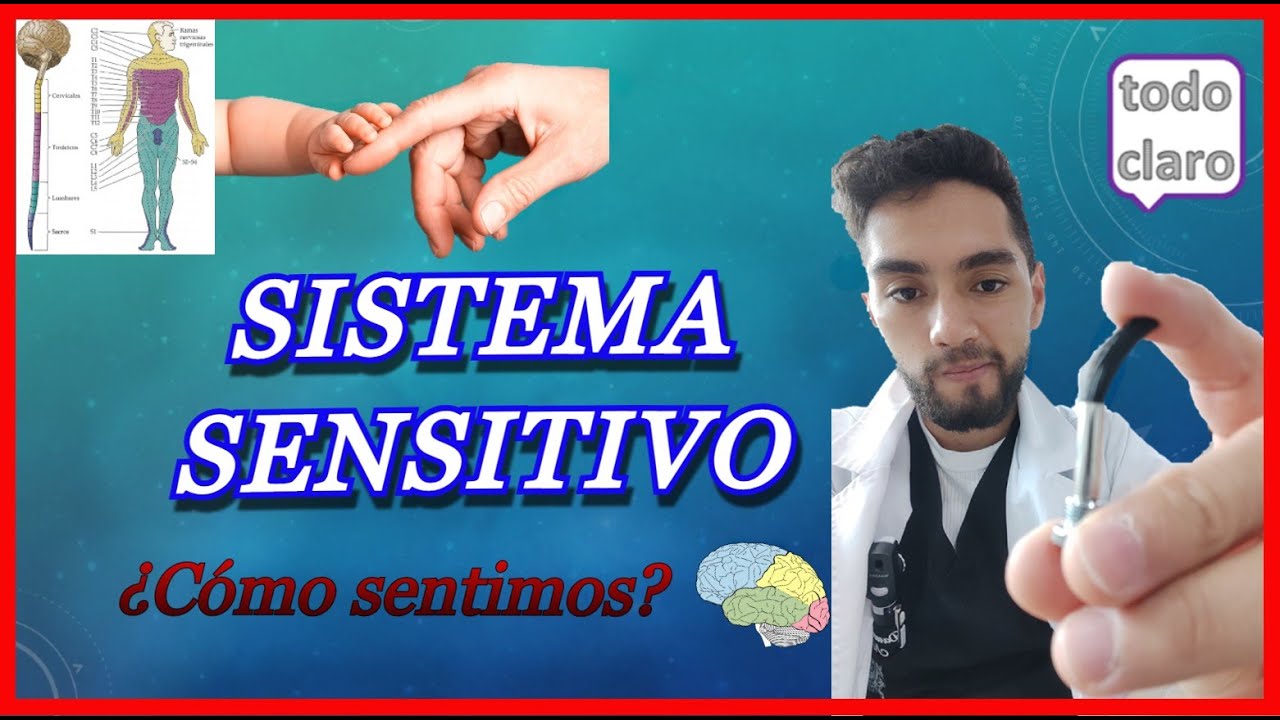










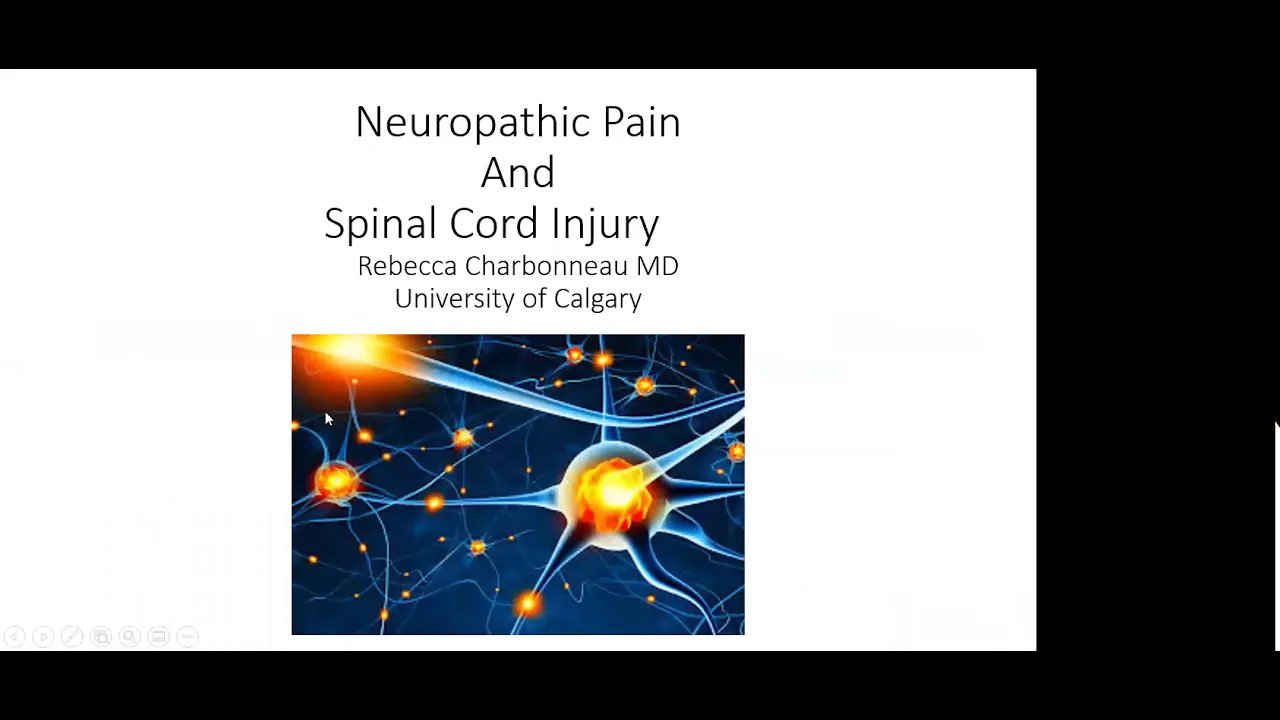
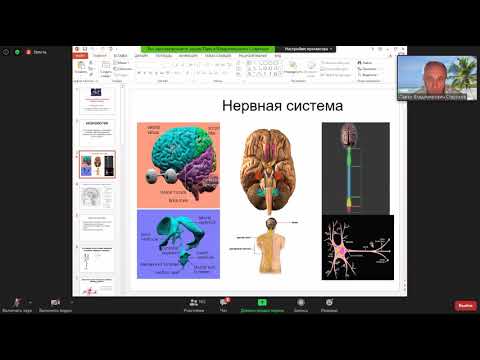

Sensory system examination in neurological assessment follows a systematic approach starting with patient education, using distal-to-proximal examination order, and assessing three categories of sensations: posterior column (fine touch, proprioception, vibration), lateral column (pain, temperature, crude touch), and cortical sensations (stereognosis, graphesthesia, two-point discrimination). The examination follows the 'length rule' where distal sensations are lost first in neuropathies, and dermatomal distribution helps localize lesions to specific spinal cord segments.
Sensory System Examination: A Simplified CNS Guide for Graduates
Added:Basic neuroanatomy of the ascending sensory pathways, specifically the dorsal column-medial lemniscal system and the spinothalamic tracts.
Understanding of spinal dermatomes and peripheral nerve cutaneous distributions.
Classification of sensory modalities, including superficial (pain, temperature, crude touch), deep (vibration, proprioception), and cortical (stereognosis, graphesthesia) sensations.
Familiarity with standard neurological examination tools, such as the tuning fork, monofilament, and neurological pin.
Localization of neurological lesions (e.g., Brown-Séquard syndrome, syringomyelia, or peripheral neuropathies) based on sensory deficit patterns.
Integration of sensory exam findings with motor system, reflex, and cranial nerve examinations for a comprehensive clinical diagnosis.
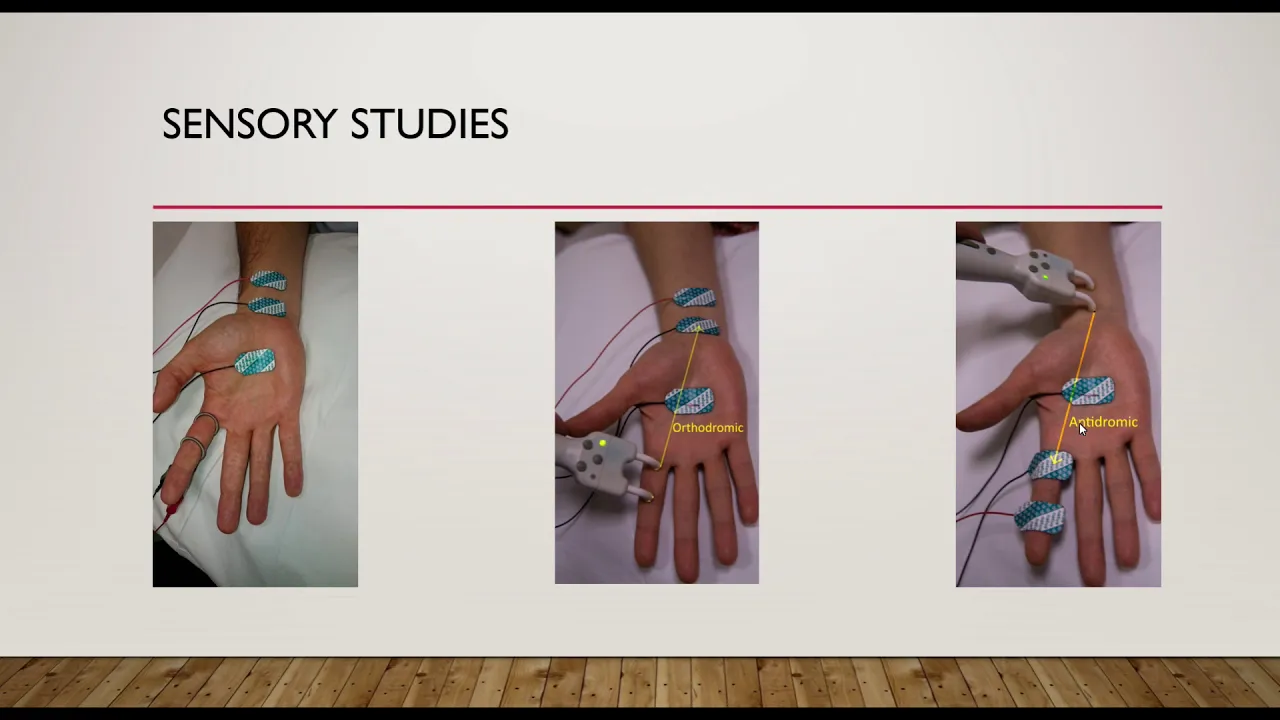
Advanced diagnostic workups, including electrodiagnostic studies (Nerve Conduction Velocity and Electromyography) and neuroimaging (MRI of the brain/spine).
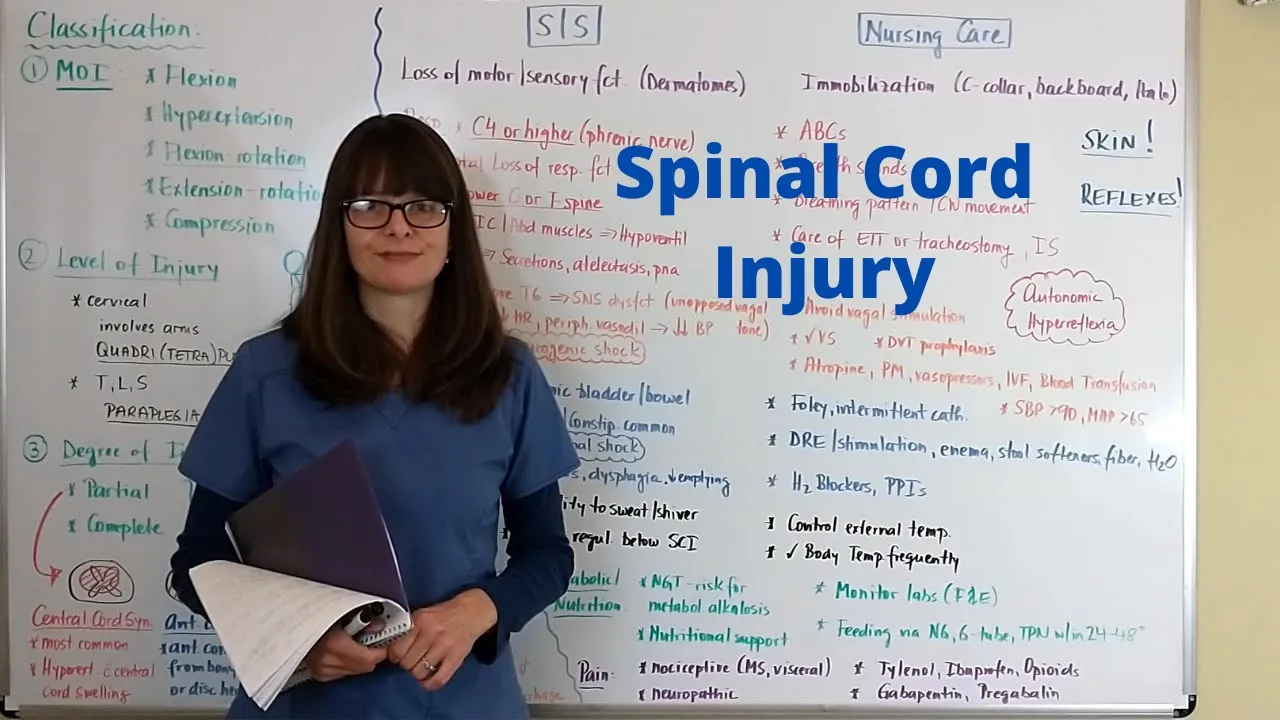
Clinical management and therapeutic approaches for patients presenting with sensory loss, neuropathic pain, or spinal cord injuries.
21.3K views388likes33:31Original Release: 2021-07-15
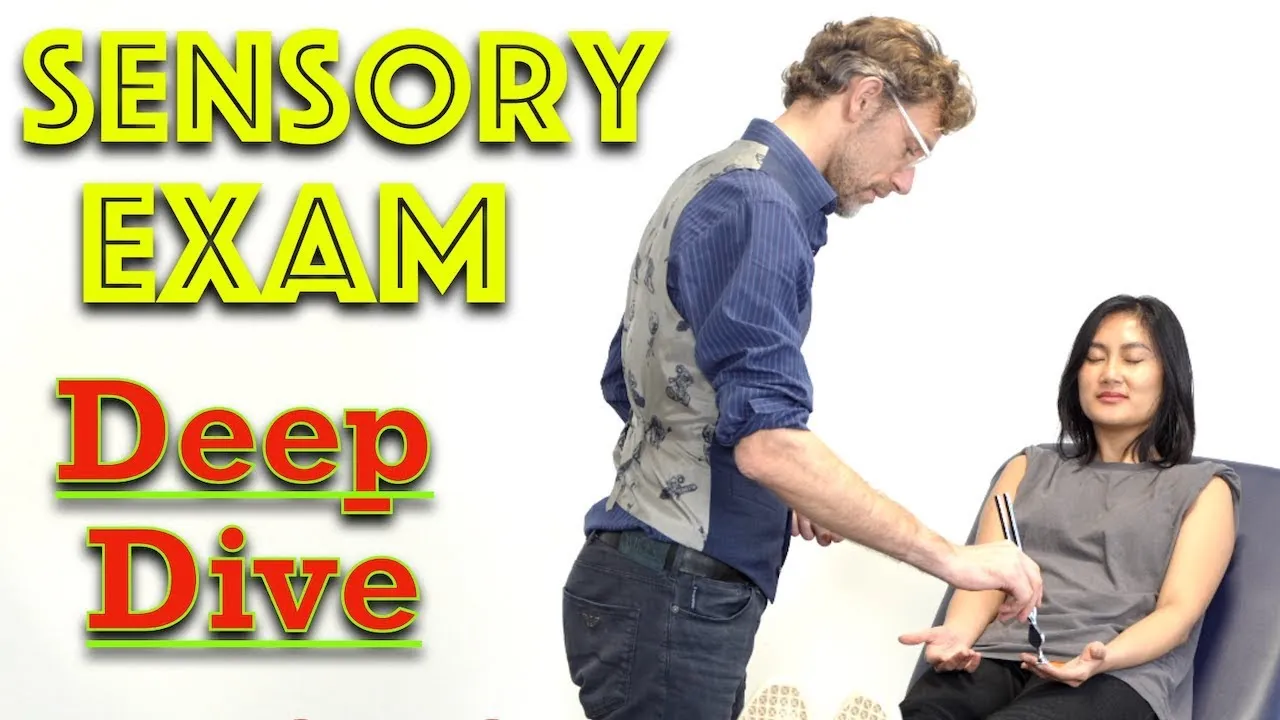
system examination it is part of neurological examination as we are giving commands to different students about the different neurological examinations in a certain patient we divide that neurological system in sensitive system examination motor system examination then there is cranial nerve examination cerebellar system is many a time asked in a separate way and then higher more motor functions our mental functions are there and speech examination is many a time asked in isolation and the same way the signs of meningeal irritation are asked in isolation many a time and motor system examination is considered as one of the most important most important part of that examination which which command is usually given to candidates in exams so talking about the sensory system examination the most important thing you guys need to understand is in that system more better you educate the patient your interpretation and your results will be way better but if you don't educate the patient the right way you won't be able to examine them the right way and your findings will not be appropriate so do spend some time in educating the patient the right way as per all examination principles remember four things at the start of examination and two things at the end of examination these four things are approach from the right side first second introduction turning your name to the patient asking about his name third proper exposure adequate and proper exposure whatever system you are going to examine you have to uh examine it in a way where you should properly expose the patient and then the fourth thing is constant so proper constant should be taken obviously for that exposure you are supposed to take proper constant first and then at end of examination saying thanks to the patient and recovering the exposed parts that's another important point before we start examining this sensitive system and we start doing all these things one thing is very important whatever command will be given to you in exam that examine the sensory system of this patient remember there are two ways how you can examine the patient one is in the dermatomal distribution and one is in the kind of glove and stocking type of distribution mean distributed proximally so remember if examiner has not exclusively asked you to examine the senses system in dermatomal distribution you should start examining yourself from distal to proximal approach will be start examining distally and keep on moving proximally and wherever say there is some abnormal sensation dislike and at a certain point you when you are examining you find that sensations are no more abnormal you just stop then and there so this is the approach digital to proximal is the rule of exam not internal dollar distribution but you should obviously be knowing about this derma double dissipation because any examiner may ask you in exam to do that examination that way only then you would be doing that with so to memorize these dermatomes just remember the c1 has no supply the c2 supply the name of the net the c3s fly this area of front of neck the c4 is supraclavicular area the c5 is up to insertion of deltoid c6 is hold your thumb and index c7 hold your middle finger see it hold your lateral two fingers it goes up to that point then t1 goes up to the mid of 4r t2 is axilla t4 is at the level of nipple e7 is at zephysternum t10 is at um lycus this is l1 then l2 is front of thigh l3 is knee l4 is medial side of lower leg l5 is lateral side of lower leg along with dorsum of foot and then s1 is the sole of the foot and goes up to the acula's tendon insertion and from acula's tendon insertion upward up to the buttock region this is s2 and then s3 and s4 and s5 they form rings around the anal region so these are the different dermal tones how do they help you that if somebody asked you that please examine the c7 dermatome obviously sensations will always be the same that you would be checking for uh sensation of fine dutch proprioception vibration that will give you information about the posterior column of the patient and then if you would be examining the sensation of pain temperature and true touch this will be helping you to localize a lesion in the lateral column of the patient sensation remain the same but you would just be examining that particular dermatology like you would be performing all the things on the same area i am asking as examiner that please examine c7 dermatome i'll be checking for touch on that particular area i'll be checking for sensation of pain on that particular area so just keep on checking the most important sensation out of these different sensations which we'll be assessing in this patient again before starting if we are examining the sensory system as a whole divide the sensory system in three three equal parts uh the three points for the question column sensations are sensation of fine touch proprioception and vibration and talking about the lateral column sensation the points are pain temperature crude touch and pressure both can be checked and then talking about the cortical sensation remember the three things a stereotype is graphesthesia and two point discrimination while examining i'll keep on telling you how to examine these sensations so what i have asked the patient here so his name is taher i have asked him that i need to examine your legs i need to examine your arms and for that i need adequate exposure the adequate exposure for sensory system examination is exposure up to the middle thigh as far as legs are concerned exposure up to the uh mid of ah as far as upper lips are concerned so i'm exposing the patient up to that part here just throw this excuse me and i'll be checking all the sensation on lower limbs obviously we have to perform exactly the same way on the upper limbs so we start with the sensation of fine touch i am checking posterior column sensations first fine touch drop reception and vibration these are the three transitions for fine touch what we need for fine touch we just need this cotton will be just making this shape of cotton and now the education part starts we need to educate the patient right way only then we can uh have good interference of our findings whatever we are performing on the patient the interpretation would be right that way yep you your feet legs with that cotton and whenever you can appreciate that this is touching your body part do let me know and obviously as i have to examine these sensations in low names so while educating the patient i have touched that cotton on his forehead on his face and you can ask from patient in exam that sensations of your face are all fine like you may find a certain patient who is having abnormal sensations already abnormal sensations on his face if a person is having trigeminal nerve leon this is the supply of the face so you can ask this thing from the patient as well so that his face sensations are normal and then you can obviously compare those face sensations with this leg sensation i'll be asking the patient to close his eyes to me and now i am going to what i am going to do now i have to move from distant to proximal part so this is so this is the next thing we are supposed to ask that when i'm touching this uh his big toe and i'm moving from the distal part towards the proximal part as soon as i touch he said that yes i can appreciate the next thing you are supposed to ask from the patient i asked him whether at both areas you are having same feeling or it's comparatively less on your feet in comparison with the face or forehead what it will tell us remember if there is no sensation here say up to that point ankle joint there is no sensation i would label it as patient is having absence sensation absent sensation of fine touch up to the ankle and then as i move ahead at this point patients say i can appreciate these sensations but in comparison with face i feel less so there is in comparison he cannot appreciate it that well the way he is appreciating it on his forehead or face what it will tell us it will tell us that sensations are impaired so there are two words one is say absent up to anger impaired up through mid of lord and then here my patients say that yes now i can appreciate that sensation exactly the same way as i'm appreciating on my forehead or face what it will tell us that now these sensations are comparable and this sensation modality of that fine touch this is now normal above mid of lower leg so remember these two things one is impaired one is absent altogether and you need to compare these things same way i'll be going to the other lane i'll again be moving proximally and an important point is if at a certain point patient tells you that now i can appreciate that sensation the same way as i am appreciating at forehead or my face stop then and here we are not supposed to move proximally so that's the point in sensory system examination at any point if patient can appreciate any sensation exactly the same way as we are comparing it with face or forehead we will stop that in there we are not supposed to move ahead but if some examiner asks you to examine the sensations in dharma double distribution will never stop because we have to check the sensation in every direction so that's the differentiating point right another thing is remember there is a very very important rule when we are checking sensations that way we and a patient is having loss of sensation we call it glove and stalking type of distribution mean the distal sensation why we are not moving possibly here remember the distal sensations are always lost first proximal sensations are lost lately that's another very important thing to understand in neurological examination remember one golden rule these neuropathies which may be sensory which may be motor which may be autonomic they always follow the length rule so remember that length rule what do we understand by this term length rule by length we mean that more distal more distant the fiber is from its cell body earlier the sensation will be lost so that's the rule more distant the nerve fiber is from its cell body the earlier its sensation will be lost so how we can interpret this thing we can interpret this thing by that way that if a somebody is having like lesion at the level of lumbar region that torah number vertebra is there and inside you know that there is spinal cord if somebody is having a problem at uh say spinal cord mid of the spinal cord level uh t12 level so what will be happening here you would be appreciating with the double terms you can understand that this is t10 this is uh so one thing is by knowing the dharma terms you know that where is the problem as you are moving distal to proximal what i want to highlight here by this word more distal the fiber is from its cell body earlier its sensation will be lost if you look at this part here our spinal cord ends at l2 f3 and just look at the distance of this part from your feet here is the big toe here is that part almost if we see the front side it will finish here now look at this distance and then then look at this distance from neck up to your hand the distance is short so as per wool the sensations will always be lost in the lower limbs first as patient will be having loss of sensation in the foot and as he will be having loss of sensation up to the middle of lower leg your patient will start saying now i am having numbness in my hands as well because now the distance is equal from cell body here up to that point from cell body here up to that point now this distance is equal so question would be saying that i am having loss of sensations here as a patient will be having proximal loss this loss is progressing as this thing will reach up to this elbow what your patient will be saying he will be saying i am having loss of sensations at this point and now i'm having loss of sensation up to that point i'm having lost associate up to that point why this thing is happening because the intercostal loves which are exiting from that spinal cord know their distance this thing is starting from here ending at this point this distance is now comparable with this distance from neck up to that elbow so as soon as the distance is equal the chances are that he would be having loss of sensation up to that part as well so neuropathies always follow the length rule more distal a fiber is from its cell body earlier its cessation will be lost therefore we do not move proximately we find loss of decision at the possible distance point we do not move proximately that's the point so next thing is that proprioception what is proprioception proprioception is basically the joint position whether patient can appreciate his joint is moving up or downward in whatever position it's moving we check it with the proprioception in proper section what i'll be doing first i'll be first educating the patient education is i'll be telling him that i am moving your big toe upwards downwards this is the mid position first i'll be educating him the right way and only lately i'll be asking now tell me whether you can appreciate it that it is moving upward or downward or it's static and always this is your responsibility to educate the patient the right way you should show him clearly what do you mean by this [Music] foreign so what i have done here i have educated the patient in detail that i am moving your big toe upwards ask him that this is upwards okay you understand it ask him now this is downwards you understand it now it is in the mid position you understand it when patient has developed good understanding only then you would be asking him now close your eyes and now i'll be moving it upward downward or in middle position you are supposed to tell me where it is keep on moving like that keep on moving like that up up so i'll be checking on both feet obviously i have to check on both feet and if this sensation is normal should i check at ankle joint the next is the angle joint there is no need to check your technology because patient can appreciate the distal ghost sensation and ankle obviously i'll be moving down i'll be moving up then the next one is knee i'll be flexing i'll be extending the knee and this question i'll be asking from the patient this is proper reception the next sensation fine touch proprioception vibration how to check for vibration for checking the sensation of vibration you need obviously tuning for this tuning fork should be 120 hertz preferably 15 20 hertz vibrate in a real good way and the patient can comfortably appreciate it right so what we do here again we will be comparing it with his forehead uh we'll be checking this vibration on joints i'll be placing first what i'll be doing i'll be just like that i'll be striking this tuning fork on my hand it will start vibrating i'll be placing it on the forehead and i'll be asking patient can you appreciate this uh sensation of vibration when a patient has developed a good understanding that he can appreciate this sensation of vibration then i'll start examining right [Music] so problem is if you are having 128 you can comfortably appreciate this is unlucky 512 this doesn't vibrate to that extent s [Music] so i'll be asking the patient whether you can appreciate the sensation of vibration or not because many a time you ask so can you appreciate it on your foot and patient reply goes like yes i can appreciate it now this would be sensation of touch merely it won't be a sensation of vibration so you need to speak those exact words and in urdu many a time you speak so complicated words that patients cannot appreciate many times students speak the word i mean these are quite difficult words probably you guys won't be able to understand this so please please speak the easy ones [Music] so why he said no obviously because it hasn't vibrated to that extent uh with the good tuning fork obviously there would be significant vibration and you can keep on you can keep on moving like that first i'll be placing it here then next i'll be placing it here and if patient can appreciate the distal most sensation you are not supposed to move proximally the rule will remain the same you are not supposed to move proximally if patient can appreciate the distal sensation so that was about the first three modalities fine touch prop reception vibration pain the sensation of pain it's quite easy to get it checked so i have one clipboard with me which i have lost probably so do you guys have another couple otherwise we can use something else [Music] you have got one fine thank you very much okay see now i haven't used the word i haven't used the word so we are supposed to have a pin in our hand with one blunt end the one end should be blunt and the one should be sharp we will keep on changing this sharp end with blunt and we'll be asking the patient whether you can appreciate the sensation of pain when we'll be placing this blunt side obviously the patient will just say that there is no sensation of foreign [Music] okay i would be telling you that this is blunt and then now he can appreciate that one part is blunt and he can just appreciate it the other part is sharp and obviously with that sharp part when you'll be touching patient would be able to appreciate it so there are two ways one is you keep on changing this blunt and sharp and the other is you keep on moving proximally once you ask from patient whether you can appreciate the sensation of pain and then just just keep moving so again the same thing will be done if patient can appreciate both sensation the same way it means pain sensation is intent if he would have told me up to ankle joint that i can appreciate but there is difference then i would have said that this is impaired right so this is how you keep on moving so patient can comfortably differentiate these two modalities so this is how you check these sensations of pain then the next is crude touch and temperature foreign as you are examining a certain patient and you have educated the patient multiple times things become quite easy for patient to understand the last one is then temperature in exam when you are uh going to assess that temperature sensation uh you can have certain tools or gadgets with you uh one end is usually cold you can have an object with one cold and one and which is of normal temperature and patient can assess those two modalities comfortably he or she can differentiate them comfortably again the lateral column sensation will be checked the same way like if you have got test tubes one is warm having warm water and say this is another test tube with cold water you would just be placing them distally uh on the patient's feet and you will keep on moving possibly if patient can appreciate this sleep the sensation of cold as well as the sensation of hot uh you are not supposed to move proximally so these sensations are done in the chat with the same way and finally the last thing in sensitive examination uh the cortical sensations cortical sensations can only be checked remember if in exam examiner gives you command to check the cortical sensation they can only be checked if patient is having normal sensation of touch if patient is having no sensation of touch this cannot be checked so whenever examiner gives you command to check the cortical sensation you can ask the examiner sir to check the cortical sensation i need to know whether patient is having normal sensation of touch or not so can i first check the sensation of touch most of the time examiner tells you that his sensation of touch is fine just go ahead with the particle sensation and then you can examine those suggestions because if somebody is not having sensational touch how he would be able to appreciate the texture of a certain thing or if you would be writing down certain thing he won't be able to appreciate so these three sensations are one is uh asteroid gnosis one is graphesthesia and the third one is two point discrimination how to check for a stereognosis you will be placing a certain thing in the hand of a patient and you would be asking the patient that in your opinion what it is you would ask him to close his eyes then you placing certain thing in his hand and he would ask this question from the patient so i asked the patient that i am going to place something in your hand please close your eyes and tell me what you can appreciate so this is the a stereo process then graphics these are in graphisia what you will be doing uh i will need a ball point thank you so what i will be doing i will be telling to the patient that i am going to i'm going to write down something on your hand please tell me what i have so it's very simple has appreciated that this is the circle and the last thing now the last thing is two point discrimination for two point discrimination say i am having two toothpicks i will be placing these two big toothpicks at a certain distance on the hands of the patient and how to what to do here i would be placing these two toothpicks say on the hand of the patient at a certain distance if they are at a certain distance patient would be able to appreciate them individually like he would be telling me that you have touched two things at the same time but if they are beyond a certain distance patient will not be able to if they are like very close patient will not be able to tell me but if they are at a certain distance patient can comfortably tell me the sensation in the palm it is very sensitive because there are a lot of nerves and these nerve endings are in close proximity so one can appreciate that sensation in a much better way on palm in comparison with soul or in comparison with the back so i am say placing uh i'm touching his palm with two toothpicks say and i would be first turning to the patient you need to tell me whether i have touched your arm with one thing or two things he can confidently man this is very close up so that's the differentiating feature that in palm if a thing is in very close proximity say patient won't be able to appreciate it as two sensations and do things separately and if i'll be placing the same thing on soul or food if it will be even at a certain distance uh these distances are different for palm for feet and for back the patient won't be able to appreciate uh that much in soul of the foot because nerve endings are a bit distant and the same way at back they are very distant so you need to place those things uh almost four to five centimeters away and patient can appreciate that these there are two things touching on the back of your mission thank you very much
Up Next
9:04
Deep Tendon Reflex Examination: Nursing Head-to-Toe Neuro Assessment
@RegisteredNurseRN
793K views•2016-04-01

48:47
Graphic Medicine: Comics for Collaborative Healthcare Communication
@nationalpatientadvocate
189 views•2023-12-04

10:28
Neuroanatomy: Central and Peripheral Nervous System Divisions Explained
@AKLECTURES
136.2K views•2014-09-20
3:05
Stages of Labor and Vaginal Birth | Childbirth Animation
@nucleusmedicalmedia
52.1M views•2017-08-18
Related Study Plans & Knowledge Roadmaps
Structured learning paths in Medicine
medicine
Abnormal LFTs: Diagnostic Workup & Pathology
01Liver Anatomy and Basic Physiology
02Introduction to Liver Function Tests (LFTs)
03Hepatocellular vs. Cholestatic Patterns
+ 3 more learning modules
12h6 modules
Explore Roadmap
medicine
Analyzing Blood Smears: RBC, WBC & Platelets
01Introduction to Blood Components & Smear Preparation
02Normal Morphology of Blood Cells
03Erythrocyte Pathologies & Morphological Variants
+ 2 more learning modules
12h5 modules
Explore Roadmap
medicine
Mechanical Ventilation: Waveforms & Alarms
01Anatomy and Physiology of Breathing
02Introduction to Mechanical Ventilation & Core Modes
03Ventilator Settings and Waveform Interpretation
+ 2 more learning modules
12h5 modules
Explore Roadmap
medicine
Neuro Exam: Localization & Stroke Syndromes
01Foundations of Neuroanatomy and Vascular Supply
02The Neurological Examination: Step-by-Step
03Principles of Neurological Localization
+ 3 more learning modules
18h6 modules
Explore Roadmap