






![[ASMR] Treating Your Head Injury](https://i.ytimg.com/vi_webp/T8oS0v8FnYs/maxresdefault.webp)









Deep tendon reflex examination is a neurological assessment technique used by nurses to evaluate the function of lower motor neurons at specific spinal levels (C5-C6, C7-C8, L2-L4, L5-S2) using a reflex hammer; the five major reflexes tested include biceps (C5-C6), triceps (C7-C8), brachioradialis (C5-C6), patellar (L2-L4), and Achilles (L5-S2), with responses graded on a scale from 0 (absent) to 4+ (hyperactive/clonus) to identify neurological abnormalities, electrolyte imbalances, or conditions like preclampsia that affect reflex activity.
Deep Tendon Reflex Examination: Nursing Head-to-Toe Neuro Assessment
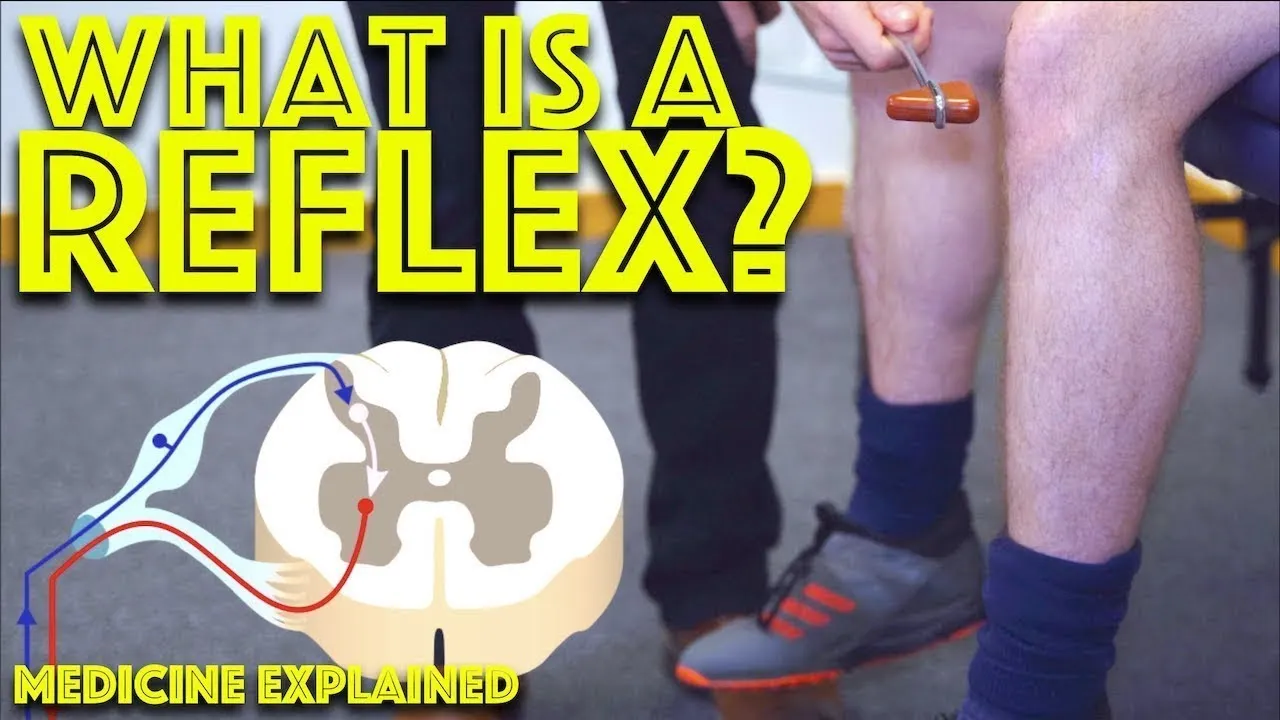
Added:Basic neuroanatomy of the reflex arc, including sensory receptors, afferent and efferent pathways, and spinal cord integration.
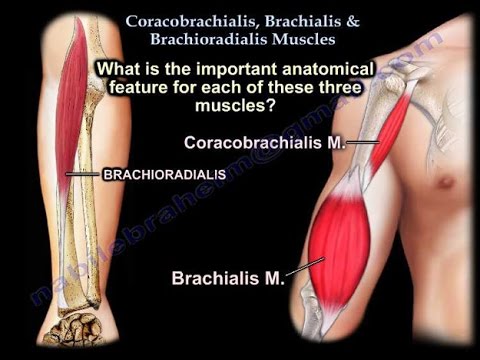
Anatomical locations of major tendons, specifically the biceps, triceps, brachioradialis, patellar, and Achilles tendons.
Spinal cord segment levels associated with major deep tendon reflexes (such as C5-C6 for biceps, L2-L4 for patellar, and S1 for Achilles).
The conceptual distinction between Upper Motor Neuron (UMN) and Lower Motor Neuron (LMN) lesions and their baseline effects on muscle tone and reflexes.
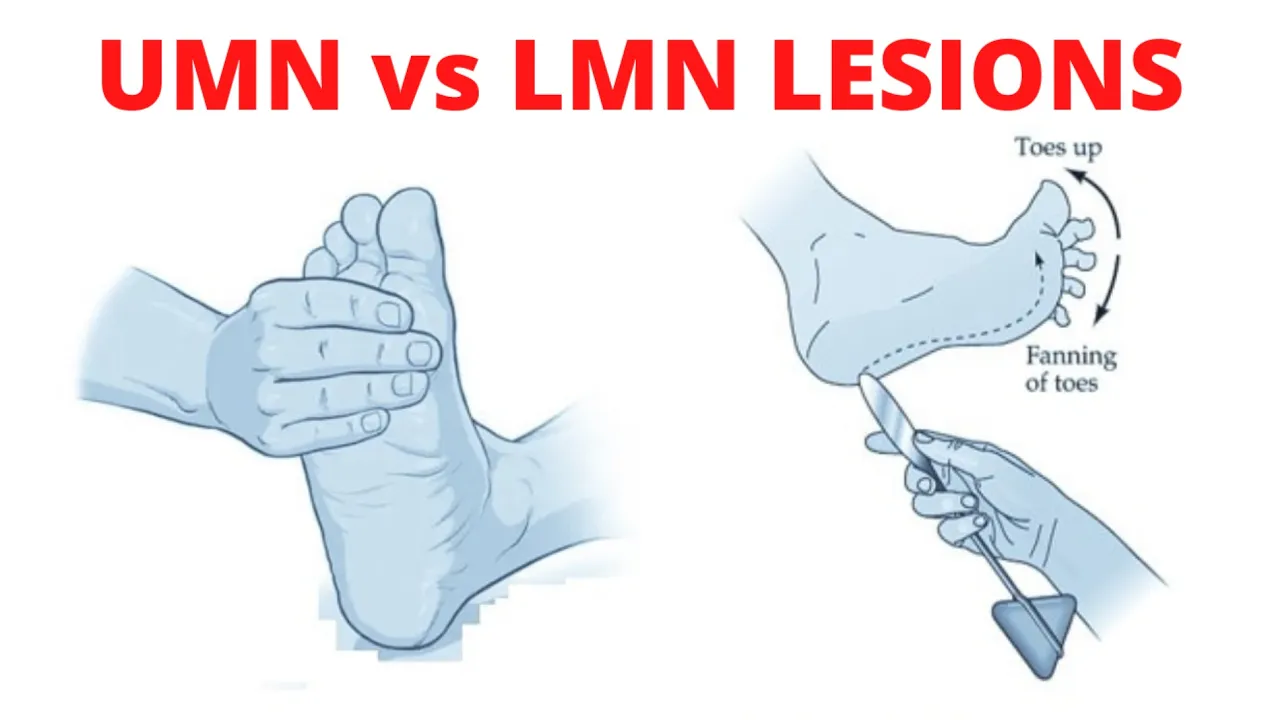
Assessment of pathological reflexes, such as the Babinski reflex, Hoffman's sign, and the evaluation of ankle clonus.
Clinical interpretation of abnormal reflex grades (0 to 4+), including systemic causes like magnesium toxicity, thyroid disorders, and spinal cord shock.
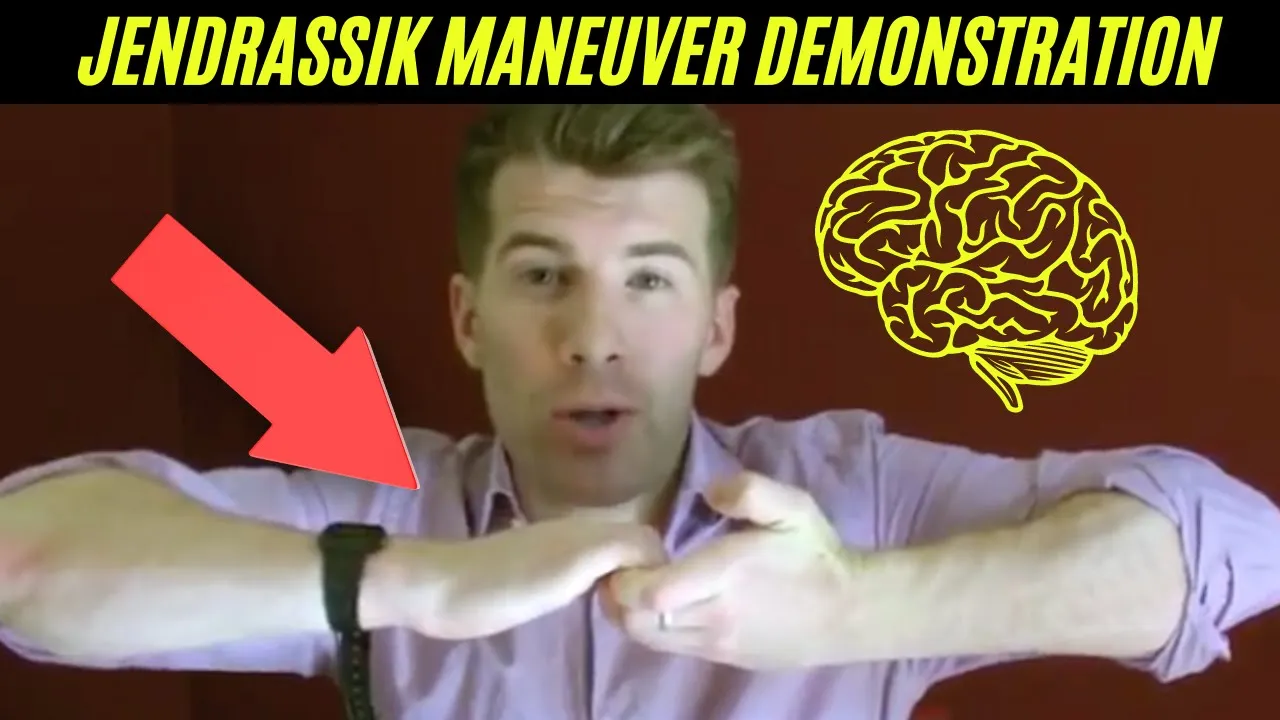
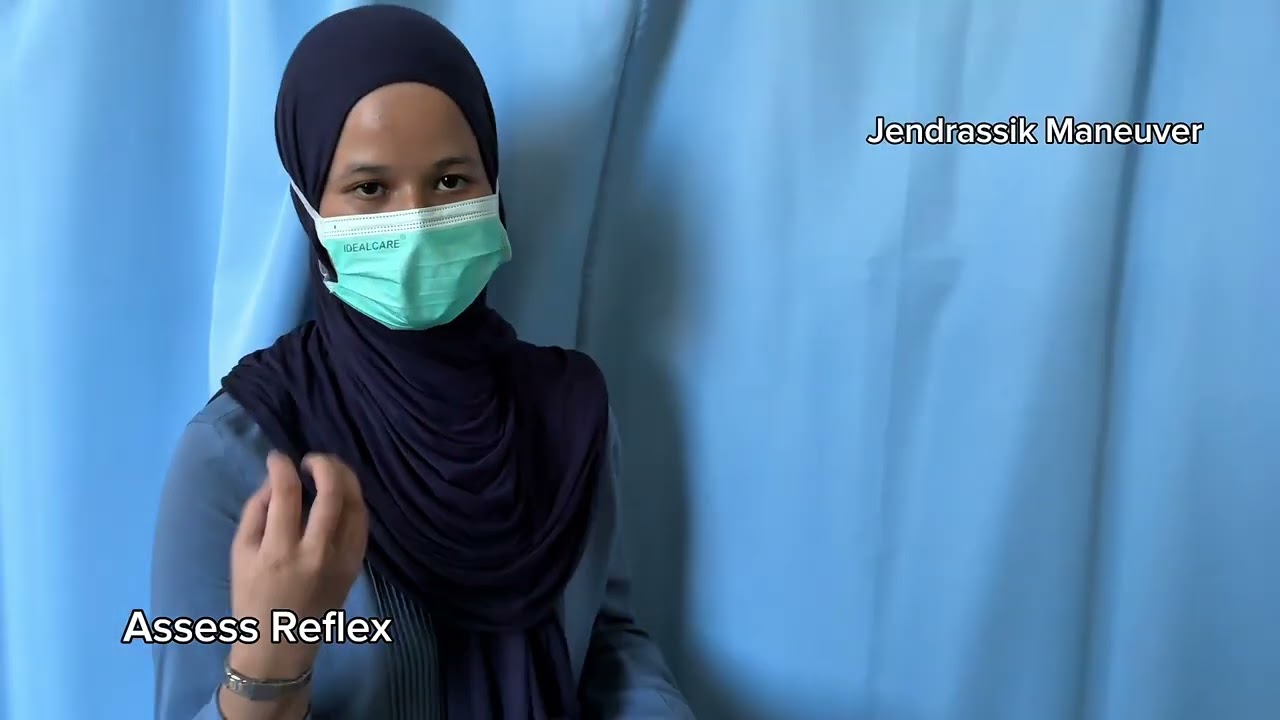
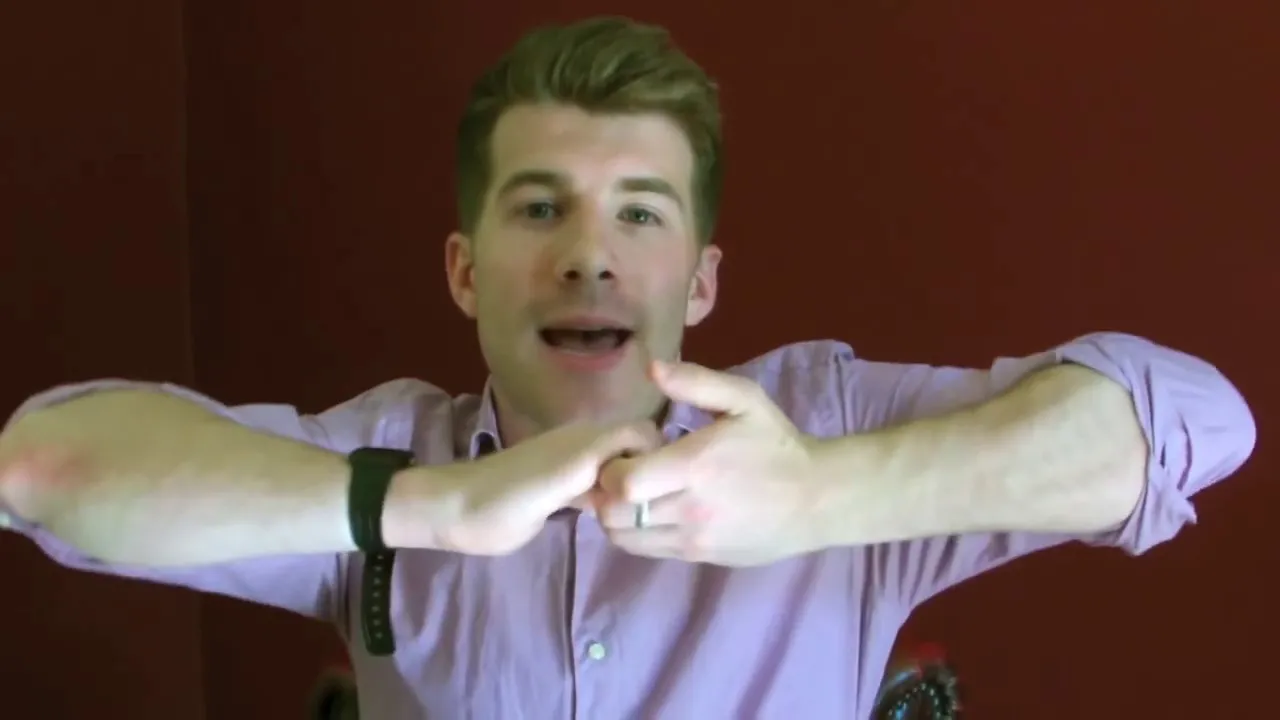
Advanced facilitation techniques, such as the Jendrassik maneuver, utilized when a patient's reflexes are difficult to elicit.
Integration of deep tendon reflex findings into a comprehensive head-to-toe neurological examination and electronic health record (EHR) documentation.
793K views8.8Klikes9:04Original Release: 2016-04-01
hey everyone it's Sarah register nurse rn.com and in this video I'm going to go over how to assess the Deep tendon reflexes what I'm going to do for you in this video is I am going to go over a short overview on how to assess the Deep tendon reflexes as a nursing student or nurse then I'm going to show you how to individually assess the following deep tender reflexes the bicep the tricep the bracho radialis the patella and the Achilles and in order to do this you will need a reflex hammer and this is what a common reflex Hammer looks like so you may be asking yourself what is the purpose why do we even assess the Deep tendon reflexes well the Deep tendon reflexes help us to evaluate the lower motor neurons fber fibers at specific levels in the body so what that means is say you going to take your reflex hammer and you're going to assess the bracho radialis tendon this tells us how the spinal nerve route C5 to C6 is working is it working appropriately or the tricep so you're going to hit on the tricep tendon it tells us how C7 to C8 is working and I'll go over those individually whenever I show you how to do them now as nurses whenever we are completing our assessments our head-to toe assessments this is generally conducted during the neuro assessment part and um depending on what specialty you work in as a nurse you will do this a lot more routinely than compared to other Specialties now in nursing school you're going to have to learn how to do this probably get checked off by your professor in a listening responses in those five deep tendons but as a nurse you're not going to do it as commonly as you are like listening to the lungs every nurse is going to listen to all their patients lungs but not necessarily check their deep tendon reflexes for instance neuros settings and labor and delivery settings are probably going to use this skill a lot more than compared to a um we'll say cardiac nurse because just to give you an idea in labor and delivery you have pregnant women and pregnant women are at risk for preclampsia so one of the signs and symptoms of preclampsia is hyperactive deep tendon reflexes so you're going to as a nurse you're going to be checking those deep tendon reflexes see if that's happening and also um these women sometimes get magnesium sulfate because of these conditions and you want to be also checking those deep tendon reflexes now we talked about in the electrolyte videos you know with um some of the electrolyte imbalances you can have diminished deep tendon reflexes so say you are working on a med surge floor and your patient has really low um electrolyte levels you or high electrolyte levels you'd want to check those deep tendons to make sure you have a baseline compared to um before so all of a sudden they're diminish how were they whenever you assess them earlier so that is why we want to do this as nurses now um for documentation purposes whenever you do a your deep tend and reflexes you use a grading scale now whenever you're checking deep tend and reflexes you need to practice this skill over and over because you have to understand what hyper reflexive versus hypo reflexive is because this scale is really subjective and it takes practice to understand it so let me go over how you would grade okay a four plus this is what is super really active this is the highest score you can get it's considered hyperactive or clonus next is a three plus this is where it's brisker than normal it's considered hyper reflexia reflexive and two this is where you want the patient this is normal so hopefully your patient is scoring a two plus and uh one plus is diminished they're not very reflexive and you would consider this hypo reflexive and zero a squore of zero means they're completely absent you get no response at all so now let's go over these five deep tendon reflexes and show you how to elicit response in one now let's elicit the responses of the deep tendon reflexes okay a lot of people whenever you're first starting out they have trouble eliciting a response so some tips whenever you are going to get that tendon to respond you want to make sure you swing your Hammer nice and brisk not too slowly not too fastly make sure you move it back because you don't want the hammer to rest on the tendon after you hit because you're not going to get the response you want also you want to make sure that you're hitting a tendon a lot of people whenever they're beginning they really don't know what they're hitting and what you're hitting is the tendon of that particular muscle so always make sure you're finding that and a good way to get to find that tendon is to have the patient Flex the muscle and you can feel a cordlike area which is the tendon of where you're supposed to hit so the first one we're going to hit is the bicep tendon okay the first tendon reflex we're going to check is the bicep tendon and the bicep tendon is located below the bicep muscle in the anticubital Fuca area if you're beginning out what you want to do is you want to find that tendon so to find the tendon we are going to have the patient Flex the arm and flex the bicep and you will find it right in there and it feels like a cordlike area and whenever you find it just put your thumb over it and this is going to list the response of C5 to C6 so I have my thumb over the tendon area and I'm going to have him relax the muscle and just drape his forearm over his lap and then I'm just going to hit with my hammer briskly and what you're looking for is contraction of the bicep and flexion of the forearm and we had a little bit of a response and there we go okay now let's do the tricep okay now we're going to um check the tricep deep tendon and it is located on the back of the arm right above the elbow and if you're just new you're trying to find it what you can do is just extend the arm out and you can feel just right above the elbow that deep tendon so what you're going to do is you want this whole area to be relaxed so we're going to help the patient dangle their arm tell them to let it go LMP and this is going to check C7 to C8 what we're going to do is we're going to take the hammer and just briskly hit on that deep tendon and what you'll see is extension of the forearm and a slight contraction of the tricep so here we go and seen that seen that flex and that contract it one more time there we go now let's check our brachial bracho radialis okay we're going to check the bracho radialis Deep tendon and this is checking C5 to C6 this can be one of the most difficult tendons to find because it's not as pronounced as the other tendon so what you want to do is you want to find the radial styloid process which is the nodule on the wrist and go about 2 to 3 cm above that have the patient turn wear their thumbs upward relaxing the forearm resting it on their um leg so we're going to go right above that and what we're looking for is for the hand to subate which the Palm will turn out upward and you will see a little bit of flexion in the forearm okay as you notice that right there okay now let's check our patella and our Achilles okay to check the patella reflex this is going to be looking at L2 to L4 and to find the tendon what you want to do is locate the kneecap and then go just a little bit right below it and the best way is to have the patient extend the leg out and then that tendon will pop out and that is where you're going to go okay after locating the tendon put your hand behind the knee just to support it have them relax and the tend right here and what you're going to do is you're just going to um tap briskly and what we're looking for is this lower leg to extend outward so here we go and we got a response there and one more time and got really good response there okay now let's check the Achilles Achilles is going to look for L5 to S2 and this is best done having the patient dangle their feet just like whenever you're checking the patella you usually want to check those two together and um what you're going to do is you're going to dors dorsa flex the foot up like that and you will see the tendon which is located right above the heel um it's right there and what we're going to do is we're looking for the foot to plant our Flex so it's going to go down like that till l a response but in order to do it you're going to dorsy flex the foot by supporting your hand underneath it and just tapping the bottom of it and flex and we'll do it again okay so that is how you check the Deep tendon reflexes please be sure to check out my my other nursing skill videos and consider subscribing to this YouTube channel thank you so much for watching
Up Next

0:38
Sensation Testing Guide: Light Touch & Sharp/Dull Exam
@ChloeHopkins_PTA
3K views•2024-11-27

48:47
Graphic Medicine: Comics for Collaborative Healthcare Communication
@nationalpatientadvocate
189 views•2023-12-04

26:48
Preeclampsia and Eclampsia Nursing Review: Pathophysiology
@RegisteredNurseRN
1.1M views•2020-04-01
3:05
Stages of Labor and Vaginal Birth | Childbirth Animation
@nucleusmedicalmedia
52.1M views•2017-08-18
Related Study Plans & Knowledge Roadmaps
Structured learning paths in Medicine
medicine
Abnormal LFTs: Diagnostic Workup & Pathology
01Liver Anatomy and Basic Physiology
02Introduction to Liver Function Tests (LFTs)
03Hepatocellular vs. Cholestatic Patterns
+ 3 more learning modules
12h6 modules
Explore Roadmap
medicine
Analyzing Blood Smears: RBC, WBC & Platelets
01Introduction to Blood Components & Smear Preparation
02Normal Morphology of Blood Cells
03Erythrocyte Pathologies & Morphological Variants
+ 2 more learning modules
12h5 modules
Explore Roadmap
medicine
Mechanical Ventilation: Waveforms & Alarms
01Anatomy and Physiology of Breathing
02Introduction to Mechanical Ventilation & Core Modes
03Ventilator Settings and Waveform Interpretation
+ 2 more learning modules
12h5 modules
Explore Roadmap
medicine
Neuro Exam: Localization & Stroke Syndromes
01Foundations of Neuroanatomy and Vascular Supply
02The Neurological Examination: Step-by-Step
03Principles of Neurological Localization
+ 3 more learning modules
18h6 modules
Explore Roadmap