

















![[Aljabar Linier] 6.1 Ruang Hasil Kali Dalam - Inner Product (1)](https://i.ytimg.com/vi/2b1OCuvy6t4/maxresdefault.jpg)


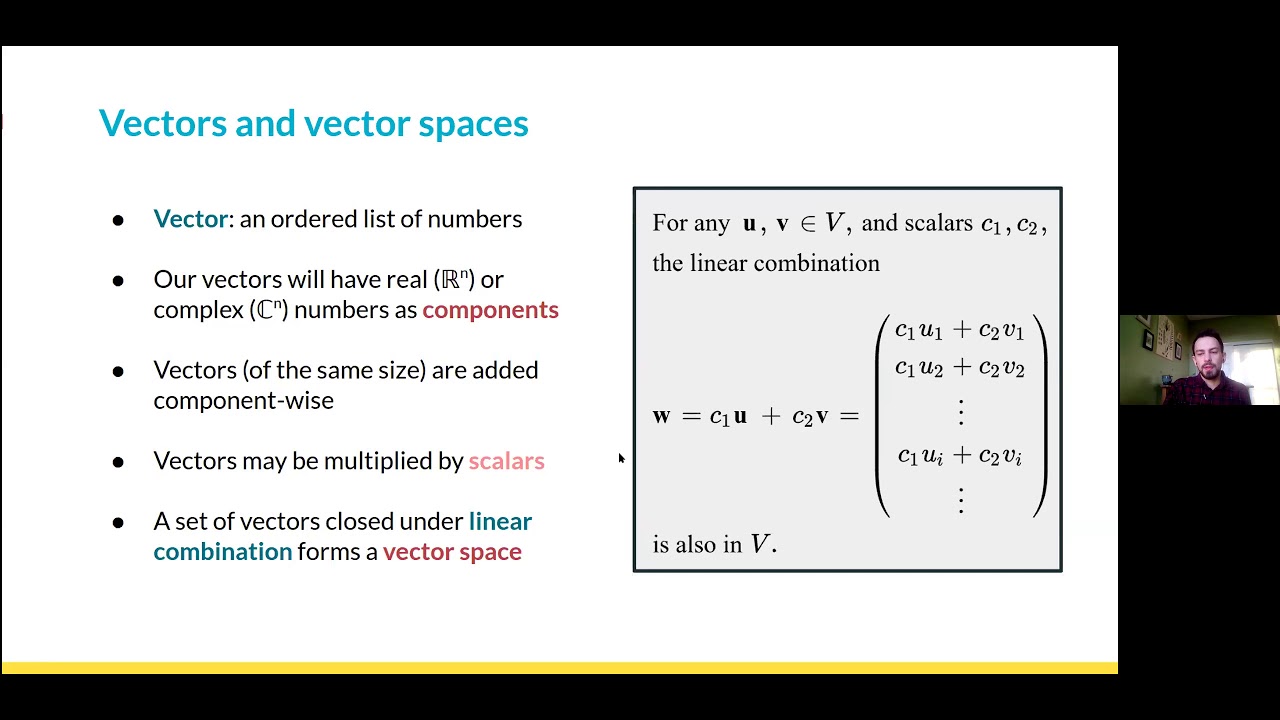
A vector space is a set of vectors equipped with two algebraic operations—vector addition and scalar multiplication—that satisfy closure properties, meaning any combination of these operations on vectors within the set always produces another vector within the same set. The video uses an intuitive analogy of walking instructions on a floor to explain that a vector space represents all the space reachable through combining and scaling vectors, and a key defining property is that this space extends infinitely without boundaries, unlike physical spaces that have walls or edges.
Vector Spaces Explained | Linear Algebra Intro
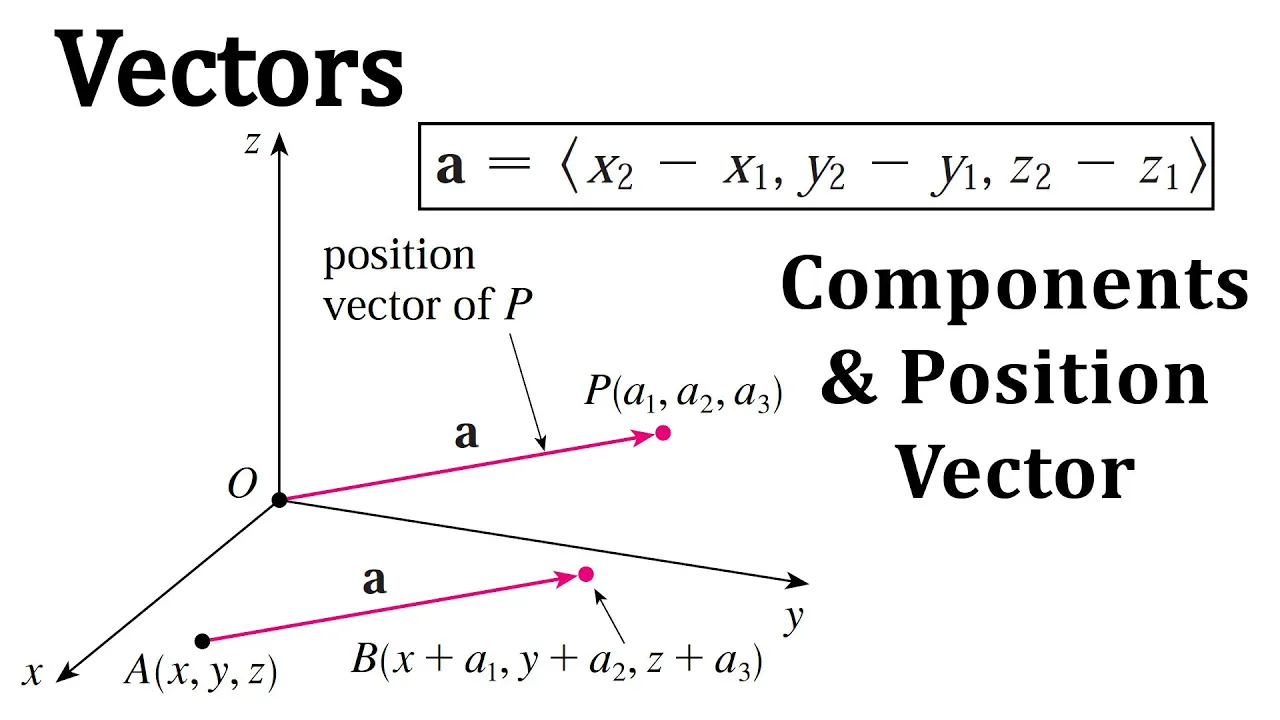
Added:Basic understanding of vectors in 2D and 3D space, including geometric representation (arrows) and algebraic representation (components).
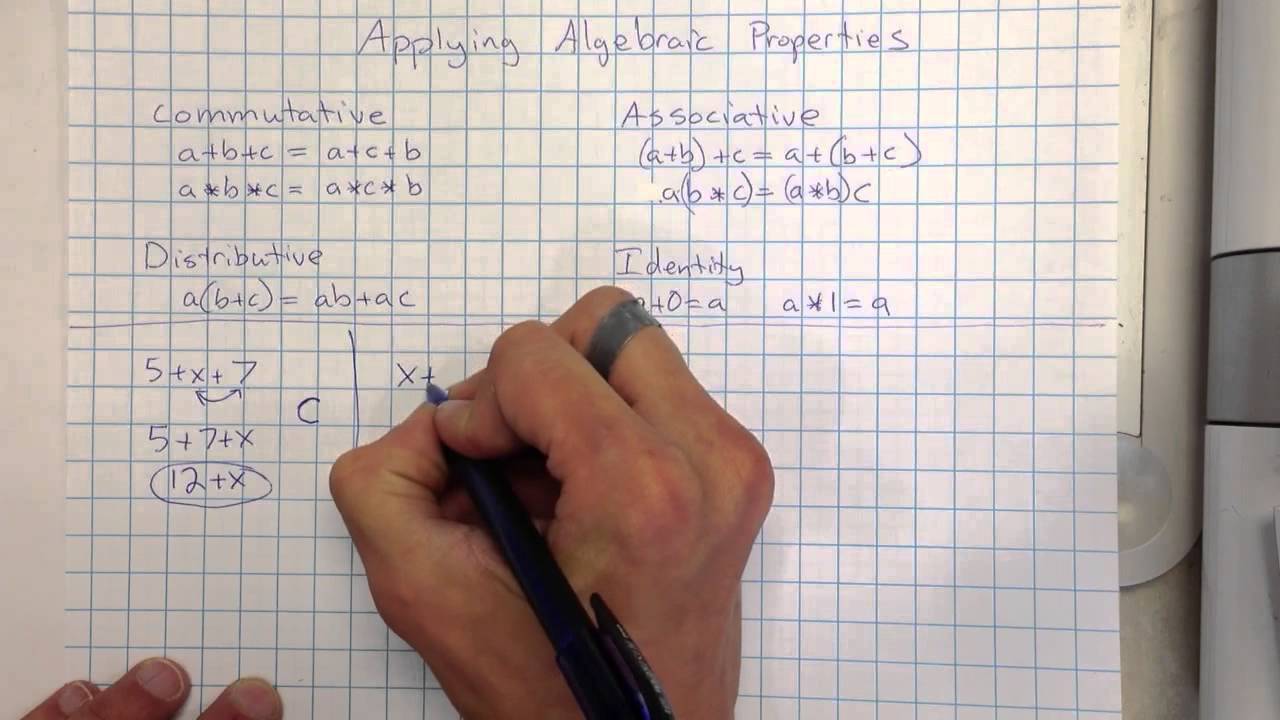
Familiarity with fundamental algebraic properties such as associativity, commutativity, and distributivity.
An introductory grasp of systems of linear equations and basic matrix operations.
Basic conceptual understanding of sets and real numbers acting as scalars.
The concepts of linear combinations, span, and linear independence.
Understanding bases (singular: basis) and the dimension of a vector space.
Linear transformations, which are functions between vector spaces that preserve vector addition and scalar multiplication.
Fundamental matrix subspaces, such as the column space, row space, and null space of a matrix.
Inner product spaces, which extend vector spaces to include notions of angle, length, and orthogonality.
117.8K views481likes7:11Original Release: 2010-03-14
linear algebra a lecture on the mathematical concept of vector spaces a vector space is a set V of vectors equipped with two algebraic operations vector addition and scalar multiplication the first vector addition says that there any two vectors in V so given vectors V 1 and V 2 in V their sum is also in V the second algebraic operation scalar multiplication says that if we have a vector v1 in the set capital V and a scalar alpha then alpha V 1 is also in V now intuitively what is going on here to give you an intuitive understanding of what's going on behind the symbols let's make an analogy a vector can be thought of as an instruction to relate it to normal life it might be an instruction to take one step forward say we'll take two steps to the right now suppose armed with these two instructions you find yourself on the third floor of a block of flats you can quite easily imagine that with just these two instructions you could walk everywhere on that third floor as long as you were allowed to do two things firstly do a combination of two instructions eg walk forward one step and then takes two two steps to the right the combined effect is this and secondly do the same instruction multiple times each you take one step forward three times the combined result is this or even take a negative multiple times each you take minus one steps forward so you take a step backwards with just these two instructions we can now walk everywhere on the third floor this is a useful analogy for the mathematical concept of vector spaces thus for a given set of vectors for instructions combining two instructions is like vector addition and doing the same vector or instruction multiple times is like scalar multiplication in this example the crucial thing for you to understand is that vector space is the whole of the third floor ie it's everywhere you can go with our two instructions and our laws for combining them note and this is an important point a vector space does not include the other floors in the flat of the block of flats why because we didn't have an instruction which allowed us to go to other floors eg allow us to take the left okay one final caveat our analogy isn't perfect and there are some distinctions that we need to make firstly a vector space doesn't have to be just two dimensions it could be one two three or infinitely many secondly the scalar and scalar multiplication isn't necessarily a real number you could have a complex complex vector space for example where the scalar is complex instead however the most important difference to understand is that a vet in a vector space no matter how many times you do vector addition or scalar multiplication you always always remain inside the vector space in fact this is a defining property of a vector space for example if you repeat an instruction in our analogy eg walking forward one step again and again eventually you'd reach the edge of the building a wall on your floor in a vector space this doesn't happen instead you can continue combining vectors infinitely many times ie the floor extends forever this is a hugely hugely important distinction and in fact we shall see later that a key test for vector space is whether the flow eventually stops or whether it extends onward so in other words the way we test later one will find whether something is a vector space is to see ok let's compete keep combining vectors are we going to reach a wall or is it going to keep allowing us to to combine and always remain inside the vector space in the next lectures we shall go into more detail about the properties and walls of vector spaces as well as introduce some specific examples of vector spaces the key takeaway from this lecture about vector spaces is to realize that a vector space is all the space that can be reached through scalar multiplication and vector addition of a and set of vectors or to use our analogy before analogy we use before the vector space is like the third floor of the flat block you
Up Next

46:01
Linear Algebra 6: Column Space and Nullspace | MIT 18.06
@mitocw
1M views•2009-05-07
4:43
Elliptic Curve Cryptography Explained: ECC, ECDSA, ECDH
@PracticalNetworking
28.5K views•2024-10-21
10:44
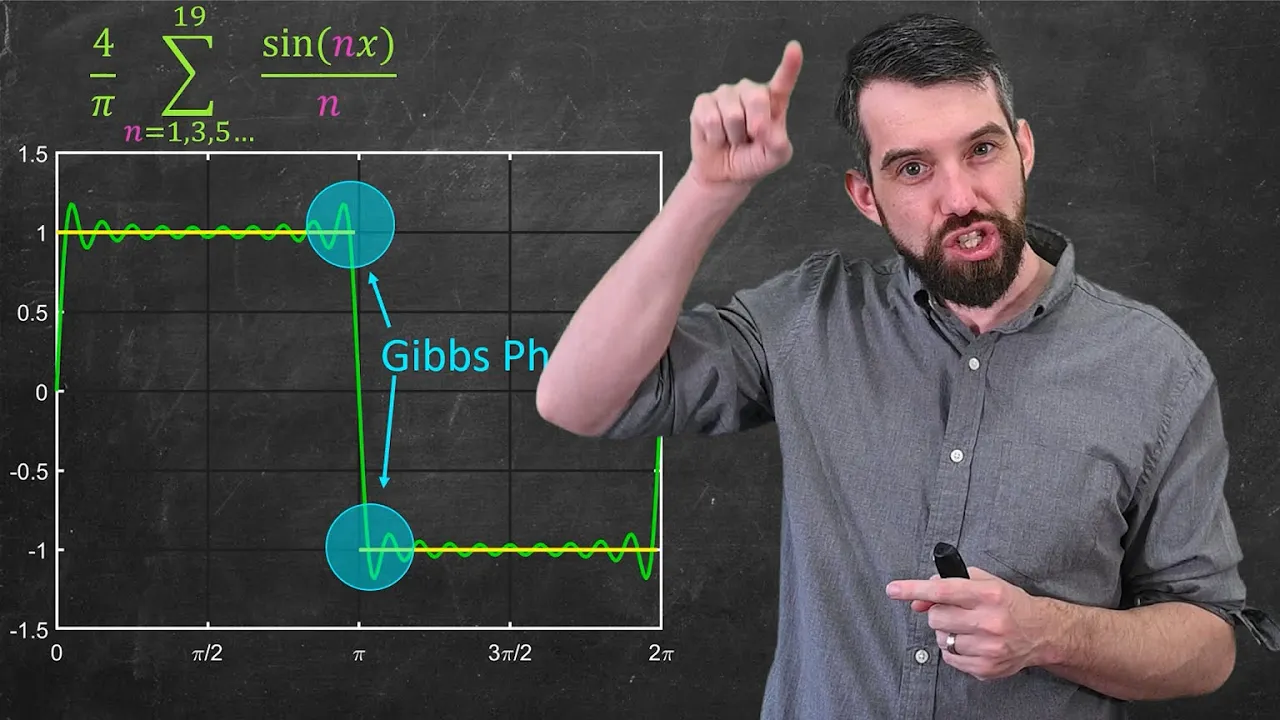
Fourier Series Introduction: The Big Idea Explained
@DrTrefor
387K views•2021-05-03

6:00
The Mathematical Impossibility of Accurate World Maps
@Vox
23.3M views•2016-12-02
Related Study Plans & Knowledge Roadmaps
Structured learning paths in Mathematics
mathematics
Tensor Calculus: Vectors to Riemann Curvature
01Mathematical Foundations: Linear Algebra & Calculus
02Covectors, Dual Spaces, and Tensor Basics
03The Metric Tensor and Index Gymnastics
+ 2 more learning modules
40h5 modules
Explore Roadmap
mathematics
Gödel's Incompleteness: Logic, Proofs & Limits
01Introduction to Formal Systems & Hilbert's Dream
02Set Theory, Cardinality, and Cantor's Diagonal Argument
03Arithmetization and Gödel Numbering
+ 2 more learning modules
14h5 modules
Explore Roadmap
mathematics
Galois Theory: Fields, Groups & Solvability
01Foundations of Abstract Algebra: Groups & Fields
02Polynomials & Field Extensions
03Splitting Fields & Symmetries
+ 2 more learning modules
24h5 modules
Explore Roadmap
mathematics
Non-Euclidean Geometry: Models & Geodesics
01Euclid's Fifth Postulate and the Birth of New Geometries
02Hyperbolic Space and the Poincaré Disk Model
03Geodesics: Defining Straight Lines in Curved Spaces
+ 2 more learning modules
15h5 modules
Explore Roadmap