


![Molecular basis of Inheritance LEC -2 [BIOLOGY] - Pandey Classes BY ALAUDDIN SIR](https://i.ytimg.com/vi/dUN6-6TmTuQ/maxresdefault.jpg)












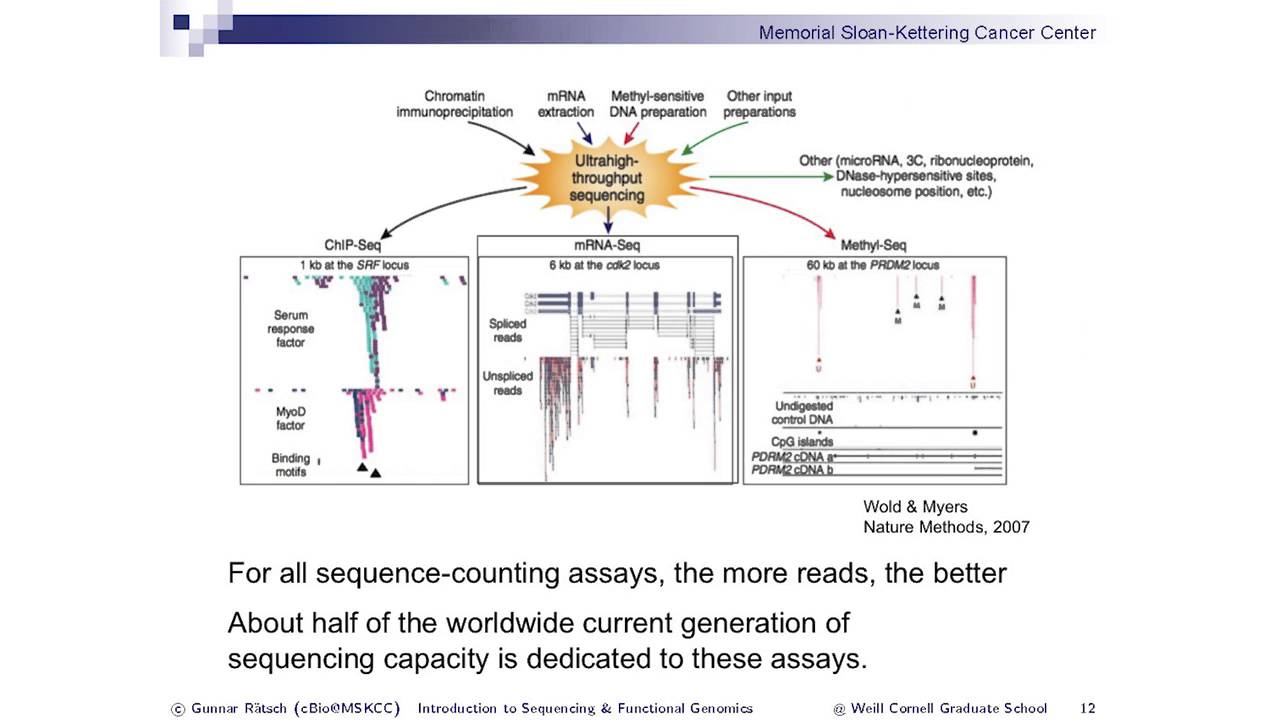


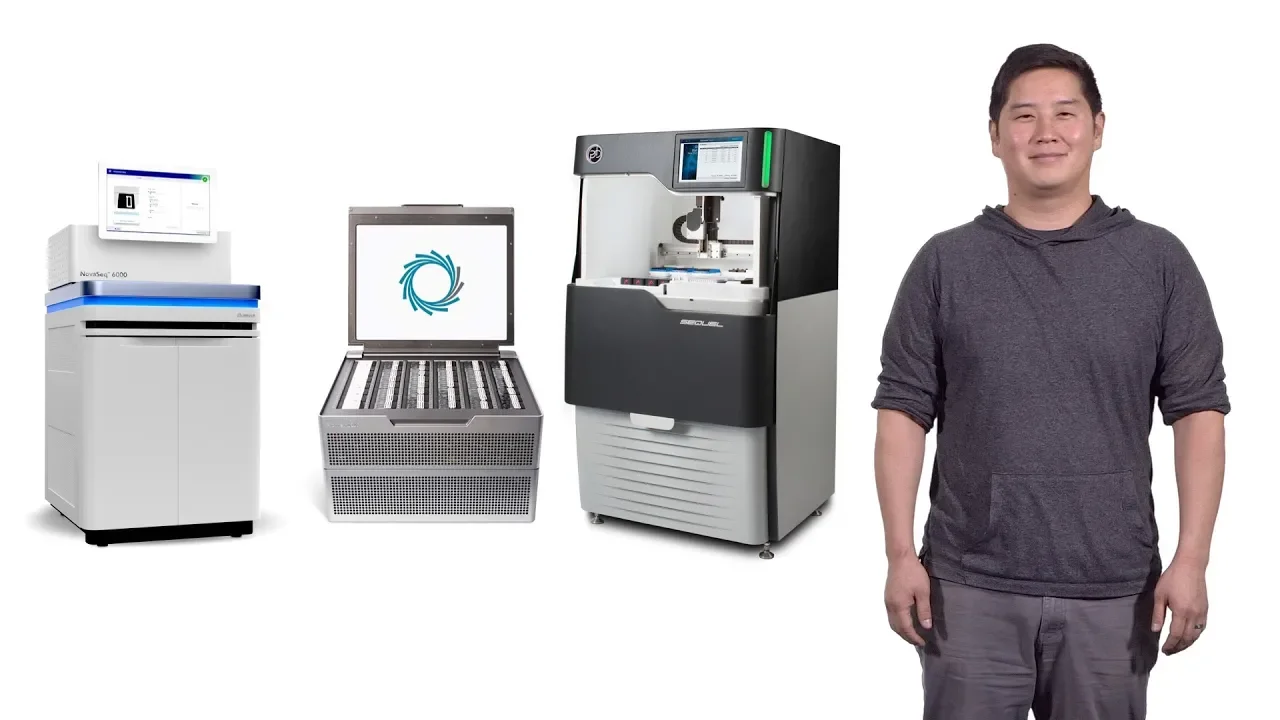

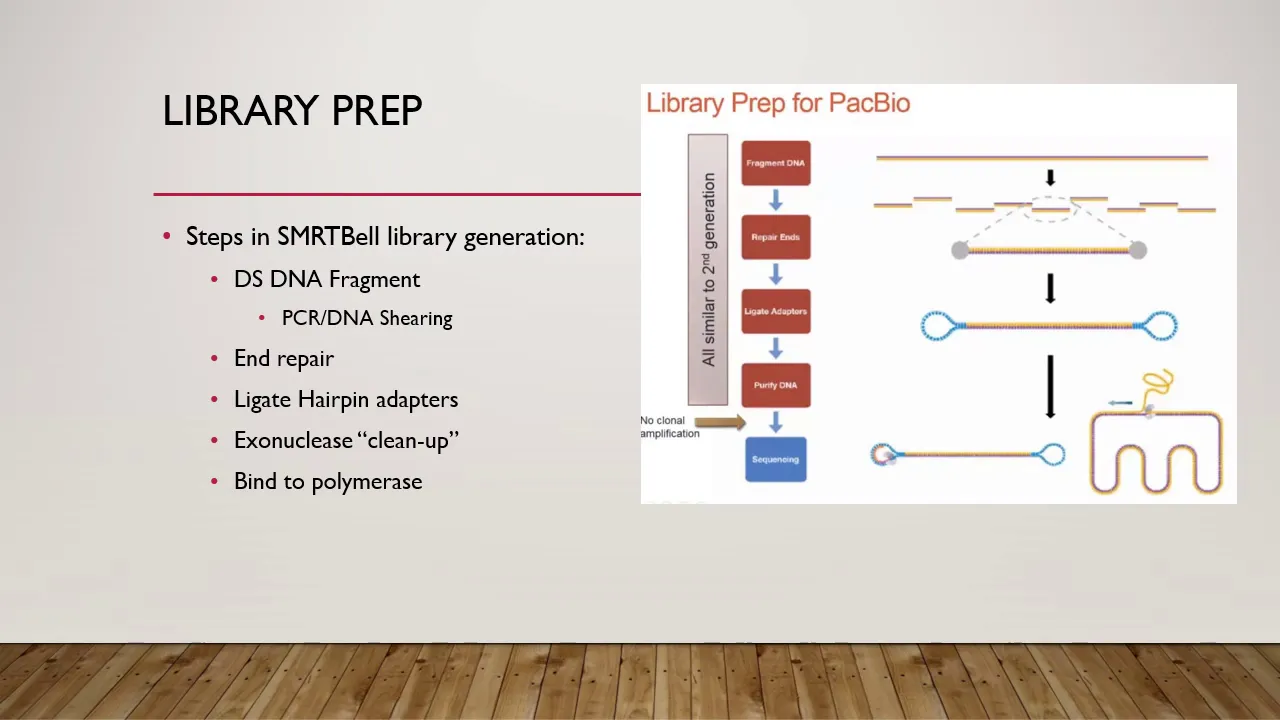


Illumina's Sequencing by Synthesis (SBS) technology enables high-throughput DNA sequencing through a four-step workflow: (1) Sample preparation adds adapters to DNA fragments and introduces sequencing motifs; (2) Cluster generation uses bridge amplification on a flow cell with complementary oligos to create millions of clonal DNA clusters; (3) Sequencing employs fluorescently labeled nucleotides that compete for incorporation, with each addition producing a detectable signal read by a camera; (4) Data analysis interprets these signals to determine the DNA sequence. The process achieves massively parallel sequencing where hundreds of millions of clusters are read simultaneously, with read length determined by the number of sequencing cycles performed.
Illumina Sequencing by Synthesis Workflow Overview
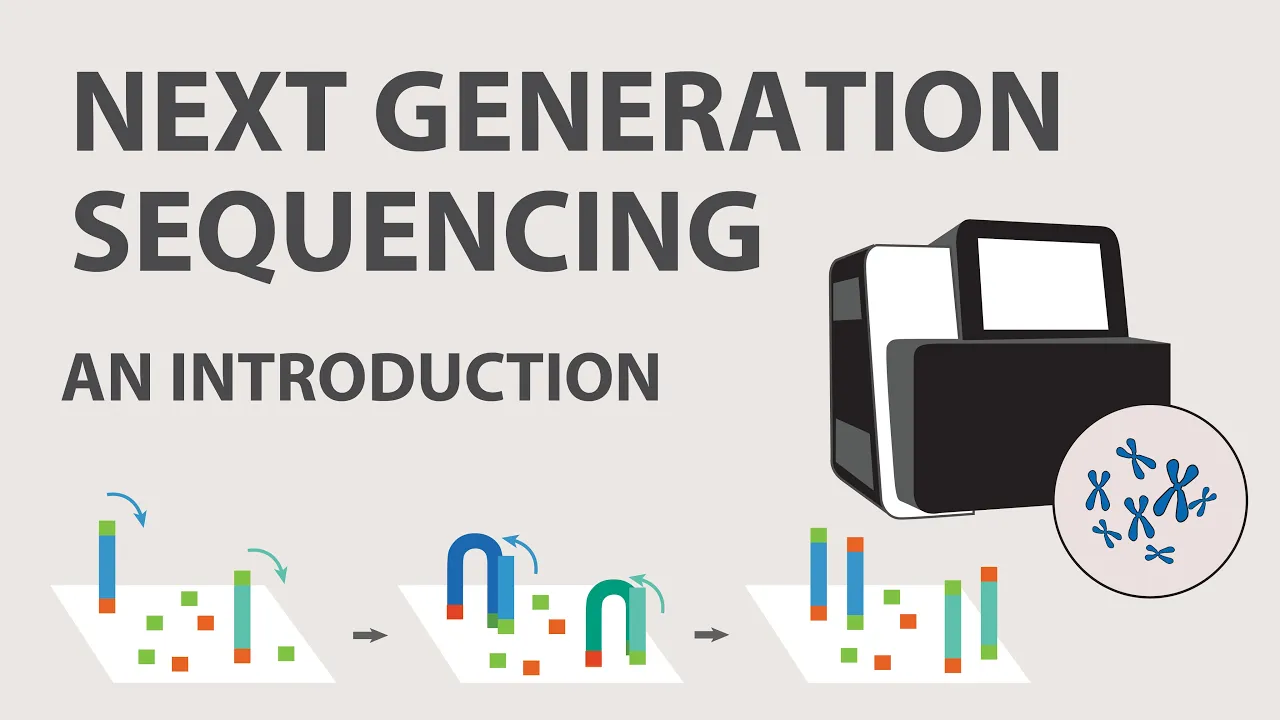
Added:The Illumina sequencing workflow is composed of 4 basic steps– sample prep, cluster generation, sequencing and data analysis.
There are a number of different ways to prepare samples.
All preparation methods add adaptors to the ends of the DNA fragments.
Through reduced cycle amplification, additional motifs are introduced, such as the sequencing binding site, indices and regions complementary to the flow cell oligos.
Clustering is a process where each fragment molecule is isothermally amplified.
The flow cell is a glass slide with lanes.
Each lane is a channel coated with a lawn, composed of two types of oligos.
Hybridization is enabled by the first of the two types of oligos on the surface.
This oligo is complimentary to the adapter region on one of the fragment strands.
A polymerase creates a complement of the hybridized fragment.
The double stranded molecule is denatured and the original template is washed away.
The strands are clonally amplified through bridge amplification.
In this process the strand folds over and the adapter region hybridizes to the second type of oligo on the flow cell.
Polymerases generate the complimentary strand forming a double stranded bridge.
This bridge is denatured, resulting in 2 single stranded copies of the molecule that are tethered to the flow cell.
The process is then repeated over and over, and occurs simultaneously for millions of clusters resulting in clonal amplification of all the fragments.
After bridge amplification the reverse strands are cleaved and washed off, leaving only the forward strands.
The three prime ends are blocked to prevent unwanted priming.
Sequencing begins with the extension of the first sequencing primer to produce the first read.
With each cycle, fluorescently tagged nucleotides compete for addition to the growing chain.
Only one is incorporated based on the sequence of the template.
After the addition of each nucleotide the clusters are excited by a light source and a characteristic fluorescent signal is emitted.
This proprietary process is called Sequencing-by- Synthesis.
The number of cycles determines the length of the read.
The emission wave length, along with the signal intensity, determines the base call.
For a given cluster, all identical strands are read simultaneously.
Hundreds of millions of clusters are sequenced in a massively parallel process.
This image represents a small fraction of the flow cell.
After the completion of the first read, the read product is washed away.
In this step the index 1 read primer is introduced and hybridized to the template.
The read is generated, similar to the first read.
After completion of the index read, the read product is washed off, and the three prime ends of the template are deprotected.
The template now folds over and binds the second oligo on the flow cell.
Index 2 is read in the same manner as index 1.
Polymerases extend the second flow cell oligo forming a double stranded bridge.
This double stranded DNA is then linearized and the three prime ends are blocked.
The original forward strand is cleaved off and washed away leaving only the reverse strand.
Read 2 begins with the introduction of the read 2 sequencing primer.
As with read 1, the sequencing steps are repeated until the desired read length is achieved.
The read 2 product is then washed away.
Up Next

Oxford Nanopore Sequencing: Sample to Answer Masterclass
@OxfordNanoporeTechnologies
1.9K views•2025-08-19

Triumph of Orthodoxy Icon: Byzantine Art & History Explained
@BenCallan
2.1K views•2024-08-06

FastAPI vs Flask vs Django: Choosing the Right Python Web Framework
@TechWithTim
302.5K views•2024-05-26

Game of Thrones Opening Credits: A Cinematic Analysis
@gameofthrones
46.3M views•2011-04-18
Related Study Plans & Knowledge Roadmaps
Structured learning paths in General & Interdisciplinary Studies