








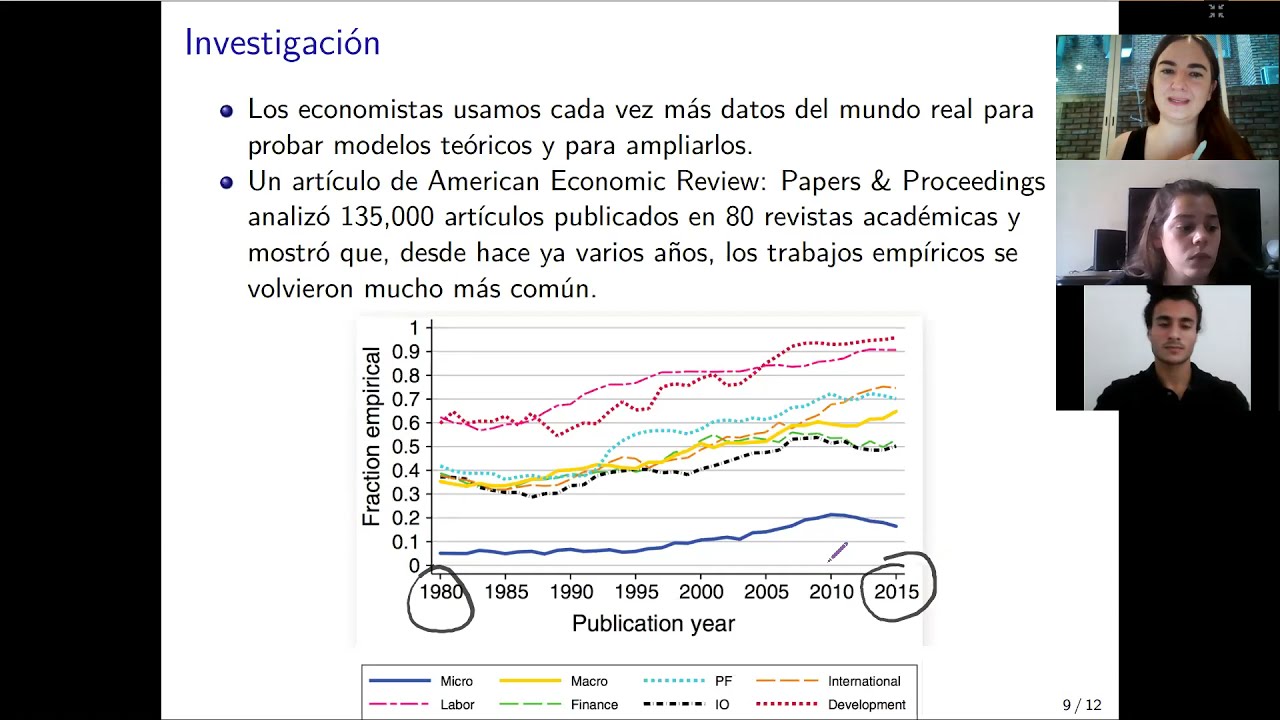















Development economics studies the enormous differences in income and living standards across countries, examining why some nations remain poor while others prosper, and exploring policy interventions to address these disparities through empirical analysis of market failures, poverty traps, and institutional factors.
Development Economics: Global Income Inequality & Poverty (MIT Lecture)
Added:Basic Macroeconomic Indicators: Understanding GDP, GDP per capita, and how Purchasing Power Parity (PPP) is used to compare living standards across different countries.
Fundamental Measures of Inequality: Familiarity with tools used to quantify economic disparity, such as the Gini Coefficient and the Lorenz Curve.
Concepts of Absolute vs. Relative Poverty: Knowing the distinction between absolute poverty lines (e.g., living on less than $1.90 or $2.15 a day) and relative poverty within societies.
Introduction to Empirical Economic Analysis: A basic grasp of how economists use data, statistics, and correlation to study real-world social issues.
Randomized Controlled Trials (RCTs) in Economics: Exploring the experimental methodology popularized by Esther Duflo and J-PAL to evaluate the effectiveness of anti-poverty interventions.
Micro-issues in Development: Investigating specific developmental sectors such as primary education quality, healthcare delivery, microfinance, and agricultural technology adoption.
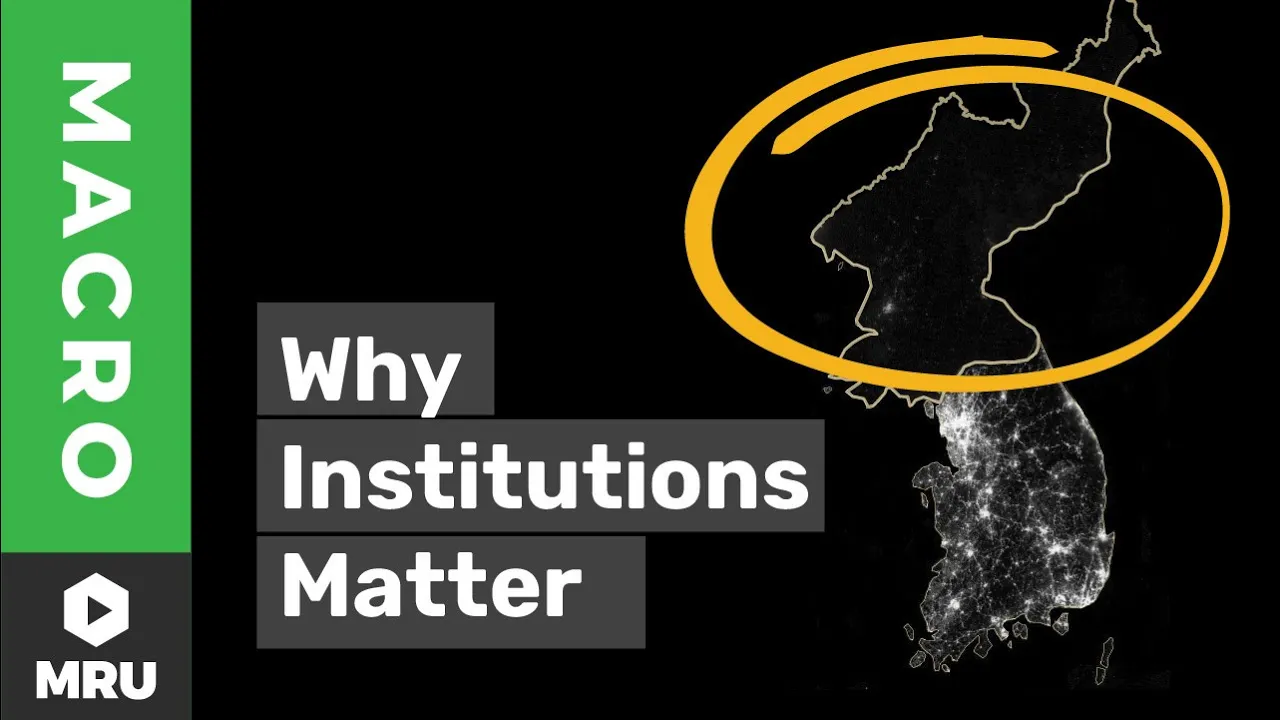
Institutions and Economic Growth: Studying how political, social, and legal institutions influence long-term economic development and resource distribution.
Impact Evaluation and Policy Design: Learning how to critically analyze and design targeted policy interventions like conditional cash transfers (CCTs) to alleviate global poverty.
389.1K views6.7Klikes1:11:10Original Release: 2023-04-05
foreign who is going to quickly introduce himself in a minute this is a part of two cross sequence on what we think are sort of the core uh things to know in development economics the I'll describe a little bit the full syllabus in the course of this lecture so I'm not going to say more just now but it's uh basically a sequence that we've worked on developed over the years between Abhijit Banerjee Rob Thomas and David Atkin Ben and and myself so we are excited to teach it happy to have all of you here and Ben will say a few words before here before he has to head out great I think I have to stand next to you to see if the microphone um so um it's great to see all of you and it's terrific to be back uh here in person so uh for those of you who don't know me I'm Ben olken um I'm a development Economist here at MIT and um my own areas of research are primarily in the last 10 years or so on the public sector and so the roles of the public sector and development and sort of understanding the different ways in which we think about public sector issues in developing contexts so I'm going to be teaching a variety of topics this semester I'm sure Esther will go over them today uh but that that'll be sort of what I'm covering at the end um so I think that's that's enough for now and I'm really looking forward to seeing all of you this semester so maybe little practicality get just getting the practicality out of the way so this is a class that how does it work it works in a fairly a classical way we are going to uh you you've seen uh you have received the syllabus uh on the canvas website if you the canvas I think should be open to the entire community so for the time being anybody who is here registered or not you can have access to the canvas as the enrollment stabilize people know what they are we are again to uh lock it to uh to the membership only but for now anybody who is here should have access or even who is not should have access to the to the syllabus and then describe a bit the the syllabus but otherwise it will have uh lectures on Monday Mondays and Wednesdays and recitation once a week in the lecture it's going to be so about once a week we'll ask you to read a paper before the lecture and the about 24 to 48 hours before the before the lecture to write down uh on the Piazza website a comment or a question that you have about the paper this is something we have found useful first of all first of all as a commitment device to make sure that you're actually reading the papers it's like you have to write the comment second offer because you you're doing that a little bit before the class I will have read the comments and it's then I can incorporate the comments and the question when I teach which is a first way to to get your input in uh in addition of course to anything that you would want to see uh to want to say in class um other than that we'll have a problem set that are going over in particular the the empirical method so it's a class that focuses a lot on on obviously on content and why you know how poor people live their lives and how to understand them but also as we go along on methods a little bit like the labor class which is both about liberal markets and about methods in Liberal economics this is in particular this first sequence is at the same time I'm going to introduce you especially in the first half of the class that I'll be teaching I'm going to introduce you as I go along to sort of the Workhorse methods in empirical economics that that will use so for some of you if you're second year or third year that's going to be review for some of you it's going to be brand new but it stood at a level that in principle everybody should find something uh stimulating or interesting and it shouldn't be a you shouldn't get lost too much and if you are then you should make sure to talk to Ed or talk to us Ed is going to in the recitation to emphasize some of the point go over some papers in more details in particular one thing we we really would like to get out of the the first Instagram years is not only that you have read content and you know papers but that you have a sense of how one builds the paper one builds a resultant Agenda One construct an empirical specification what sense it makes and so on and so forth um so in terms of requirement besides coming to class participating Etc I will have a few problems set that helps you look where you'll get your hands dirty on data and some such hopefully they are interesting and not make work then we'll have a replication on empirical exercise and a research proposal that you know you can start thinking about ideas that you can take forward assuming you want to continue in this field um this class is really for uh anybody who is interested in getting so first of all it's of course anybody who wants to do development as a field but I also think um that it's a good class for any Economist to take because the development issues are cross-cutting across all fields so of all the field of Economics development is the one that is the most wide tent where people you might think that oh at MIT we associate development with RCT but that's not true development economics research use a whole range of application of methods and all range of insights from behavioral from Public Finance from labor from from macro econometrics obviously there is really not like uh a cultural tradition of development economics it's super open which you will also find if you continue in the field as you go to conference that there are papers going all over the place which means that as a young Economist as a budding economist what you will find in the class is application of everything else that you are learning in other classes to the topic of how the poorest people live their lives and you might wonder why it's an interesting topic why it's an important topic where we should think about it but maybe you don't wonder because you're already here but it's always worth thinking a kind of I like to start every year regardless of whether I teach or not to remind me of the of the enormity of the facts so uh in the the note that Ed distributed you will find uh ghost national income tables produced by the world bank before the covid-19 crisis I will start talking about the covid-19 crisis in a minute um they use gross national income as opposed to GDP do you happen to know the difference between the two you go ahead cross national income is that produced by residents of the country regardless of where they are exactly it's the income that residents receive no matter where they no matter where the they've received it so that's a slightly different pleasure but it's relatively similar uh and maybe it's a border it's a better view of standard of living then it's given in PPP so just a reminder of what's the PVP adjustment what what does PPP stands for and and how do we purchasing our Theory yep and it's an adjustment for like how expensive a particular type of goods is exactly so uh it's more expensive to get a haircut in New York than in Delhi uh that's the extreme version because it's only labor but it's more expensive in general to live your life in in Norway than it is in France and in France than it is in uh in Burundi um so that's the effort so I should emphasize that so how do you think we do that or they do that or the PPP adjustment because once we've said well it's PPP adjusted I think it's useful to think for a minute about how one would do such a thing do they like send people out to basically try to assess if there's like a set of goods that are could be made the same quality uh across like many different countries yes so let's unpack that so she's saying that guy is saying you send people to find Goods that have the same quality first of all you need to reach good uh would you one one might pick which good might one pick food often so what you want yeah food but what you want is basically a basket and you want a basket that people consume and now you immediately have the problem that people do not consume the same Basket in Burundi and in Norway in the first place so the entire exercise it sounds very easy to say we are just for standard of living but in fact it's very tricky because uh this is the patch versus last person indices of inflation if it's from you know bring some Bell from uh from undergraduate economics but uh very very uh on on steroid in a sense that problem is which is uh in fact it's very nice to think that one could do PPP adjustment but one cannot very easily because the the baskets are not even the same and then there is the question of the the quality which I can emphasized and then there is a question of actually getting hold of the prices in rich countries there are scanners and people use scanners in poor countries you have indeed to send people out to markets where you send the people to the market is making a huge difference so if you're only sending them to the cities you get the prices in the cities and you get the goods in the city but you go to the countryside you go far from the city uh the the the the best goods are not the same some goods are going to be entirely missing and the price are not the same you're very far from the place where the things are being produced or shipped and so the price have gone up uh or maybe the demand is very loose so the price have gone down who knows but all that said it's not the same and so there is a project at the bank called the international price comparison project uh which is a victim of people which are doing that they are doing that all the time and they are from time to time they they give you a rabbis uh TPP adjustments and then they immediately get under Fire for not having done it right uh and it's not completely anecdotal because it becomes very very political how many poor people they are in a particular country at some moments countries want to have a lot of poor people because that help them in getting assistance at some people they want to show that they have eliminated poverty so they want to get rid of the so the moment this price lists come up uh um there is a big you know political hullabaloo so all that to say that when we look at the piece of paper just in this piece of paper of the gross national income there is a lot of assumption behind there is a lot of politics behind and you can make sure for example that Angus ditan will go after you for not having done it right but they are doing the best they can and they produced these synthesis and this and we are using them so conceptually we are trying to say that it adjusts for the for the price of living with all of that said what's the richest country in the world according to that uh to the to those tables well which is few countries in the world [Music] Singapore maybe I think there is one that's even richer sorry uh yeah that's definitely in the top I should have the piece of paper to verify I think it might be Macau uh who is a Dean gross national income per capita of uh 123 000 and then Singapore Qatar Bermuda luxembourne Switzerland Come Close by below now of course what's wrong with these countries all of these countries already in terms of thinking of the standard of living Yep they're all consist of essentially one large one or two large cities yeah yeah and and the physical products like that's not me so next if we remove them who comes next sort of through a real country foreign quite close there's one more that it's just no way yep we have Norway and then the US and then what's the poorest country and of course life is super expensive in Norway but remember it's PPP adjusted the poorest country in the world I I already put the slide up so I'm going to not let the suspense hold its bondy according to this list at 790 dollars so if we do the the ratio of the two uh that's a lot that's the large you know take care know where to uh to go indeed the ratio of almost a hundred one in 200. and remember remember that we've tried the PPP adjustment so it's hard to it's hard to think it's hard to fully visualize them even though we've know with those you're thinking and still of thinking of worldly and living in but with within principle done the ppv adjustment so this is uh as close as we have from this very simple measure that's an imperfect measure that is income of what standard of living are present now that's a lot and therefore um understanding where this comes from an understanding how people who is so little money live their life and manage and all of that is you know of time important it's hard to think of something that's that's more that's that's more key compared to I love Public Finance but we are thinking about you know improving the reducing the the some inefficiency and something reducing the triangle by two percent of talking about like differences in income of one in 200 so that has to be uh taking a lot of space in our brain and of course you could say well it's just money money is not everything there is to Poverty but this is income difference is of course matter for well-being outcomes more generally as well it's a fantastic we're making of equating GDP with well-being we're certainly not going to do that mistake in this class but we we can see that it is related so for example if you look at the under five mortality in Norway it's two deaths per thousand live births if you look at the infant mortality in in Bondi a similar number it's 57 deaths per thousand live bars um so this factor of one in two hundred and standard of living is also a factorized 1 into 25 in the chance to to make it past your first or first day or your fifth or your fifth birthday uh and although income is neither necessary nor sufficient so for example if you compare what is the under five mortality in the U.S it's seven thirty thousand seven per thousand so it's like three and a half time Norway with a very similar GDP per capita and now if we compare Sri Lanka and Guatemala foreign like the US and Guatemala 25 and Guatemala is if I'm not wrong in this in these tables so income is not uh sufficient it's not necessary Sri Lanka is just as good as U.S in this table I should say this is a pre-covid numbers the Sri Lanka is falling apart right now but this is pretty good number and and on the other hand you have countries that are a very similar level who are doing very differently showing the importance of probably policy but also you know maybe culture maybe the way people organize their lives Etc so showing that there is certainly a lot to understand about what can be done even with very little money with very little income in a country and what can be wasted even with a fair amount of money uh of course one with covid-19 crisis as uh you know maybe makes you think that you you should listen you should do Health economics but for me it's one more reason to uh why we need to to do development genomics the the you all know that the rate of vaccination is extraordinary Again by by income by income level so your thing this is the colors here is by uh is according to the the number of uh doses received this is relatively recent data I think I I retrieved the data towards the the end of July and you're seeing uh the U.S Europe dark blue as a lot of people get vaccinated Africa are almost you know almost white so as we are thinking about booster shots and and immunizing your children and things like that the the number of people who are vaccinated against kovid in Africa is less than less than a few percent another thing that was very different during the covet crisis and sets apart what it is to be poor and really just makes uh uh is probably a direct consequences of poverty is the uh um vegetarian fiscal support to uh to people and from so across the rich countries uh do you know this is so small that you probably can't train and therefore I can ask you the question do you know more or less what fraction of gdp-rich countries spent on fiscal stimulus measure during the covet crisis uh on average number more than five or less than five more than five more than 50 or less than 50.
less than 50. so somewhere between 5 and 50.
about 20 about 20 percent so the the EU the US the rich countries Korea spend about 20 percent of their GDP in fiscal stimulus measure now how when how much money in the poorest country spent Bull Pack as fraction of their GDP which are of course much smaller as we because they are the poorest country by definition about two percent so the poorest country spent about two percent of their much smaller GDP in uh to probably prop up their economy during the government crisis and then the Emerging Markets we spent about six percent so that's that's how different it was of course that's a direct consequence of money the rich countries could borrow essentially at zero interest rate with no impact on their uh on their credit rating or early anything it was basically magic money and understood as such which allowed them to do the whatever it takes that popped us up but the rich country didn't have that option if you are the country of uh you know even India it's not that you can go out on the international market and borrow in order to uh to to spend on your citizen it's just not possible and uh so the only way for the poor countries to have spent more on kovitz 19 stimulus measure would have to receive either a direct ad in the form of a budget support or something that the IMF has really worked on but it's not even fully finalized now to uh in a sense get the authorization to create money via a special growing rights which would be the equivalent to the whole world can decide to emit more money because the IMF calls the special drawing rights but to uh when the when we do that first of all it everyone has to agree to emit more special drawing rights second of all wants the special growing rights are emitted they are uh allocated according to contribution to the IMF which is roughly according to the GDP which is that those this money was created finally sometimes in May or June but then it was allocated to country as a fraction of their money so it went again in priority to the rich country and then they needed to do some complicated manipulation to get it to the to kind of give up their allocation to give it to the poor countries but they didn't the U.S refused to it didn't really happen so that means that this is something that we don't fully know of course the ramification of of the fact that two countries weren't able to spend as much to prop their economy but it means that uh um any it ended up being a much bigger shock on the lives of people who are much more fragile to start with even though at the beginning of the crisis in particular the health shock per se wasn't uh wasn't uh that land in the poor country compared to the Richer countries but that shows you you know the huge difference it means to be uh the huge difference in life because of course then it has implications because countries that could not support their citizen during lockdown couldn't really do lockdown beyond the point you remember the the terrible third wave in India or for them it was more like a second wave in India and then in Indonesia and in both cases we have now one in Sri Lanka in all cases it is known it's not that this government don't know that they should lock down but they cannot because they cannot uh they cannot afford it they are citizens cannot afford it so the two things are connected so this difference in GDP are coming also from uh so I have ramifications that are important that are really matters of life and death uh in normal time and in in the not normal time we are living today there are also massive differences in ghost rates uh so if you take a for example the difference between China grew at 6.5 percent the Bondi grew in the same period at about 0.15 percent Pakistan at about three percent in the middle uh like in Indonesia and Kenya at one point eighteen percent and you can see that uh this difference in growth rates are for countries that start at relatively uh similar level so this is something that that has of course uh puzzled and concerned Economist across Fields there is a whole study of of economic growth and in a minute I'll go to sort of various ways to to that people have a martial to try to understand these different rating growth rate one thing I want to also point out especially as I mentioned the the the difference in uh in in the quality of life between people in poor and richer country is the fact that um we shouldn't either be too uh depressed about the situation of the poor countries or maybe we can now post kovid but pre-covered in some sense what what happened in emerging economy over the last few decades is perhaps the best geopolitical news that there was in an environment where there was there is a lot of discontent in Rich and middle-income countries uh going inequality Etc one thing that happened to the poorest of the world is that they became less poor if you're looking at um this is what people called sometimes the elephant curve because it has kind of a big bag and then or maybe that's the head and that's the trunk or something like that and it's looking at uh per adult really income growth rate uh over the last uh since 1950 per adult income growth rate of um by income group in the world in the world and if you notice the axis the axis is not it's it's logarithmic so we are looking at the very very very rich here and then we are comparing towards the beginning of the graph we are comparing 10 points not even logarithmic but it's sort of stresses out towards the end of the graph so this is the part that you surely ever have heard about uh in many setting which is over that time period uh the top one percent of capture 27 of global growth income growth rate of the richest was uh 200 200 percent for the 0.0001 percent of the world uh and really it's the story of the top point in the top percent and even more perhaps the top uh one tenth of one percent of the world population uh becoming richer and richer and richer so we've we know that just from living in great countries but the other part of this graph is also interesting which is the income of the poor actually in proportion also went up more than that of the squeezed up bottom 90 percent in the U.S and Western Europe so the poorest people in the world the people are the 20th percentile 30th percent their income actually increased by hundred percent over this period on average which is about as much as the in as the growth of income of the top zero zero one percent so this was actually of course uh you know the the uh China becoming much richer India going very fast Brazil because going uh somewhat fast that has uh caused that even pre-covered this was flattening out because uh of China and India being Now sufficiently Rich yet we don't see so many of their citizen in the bottom 10 percent so that that elephant is slowly slowly flattening flattening its head out but it's uh it's a very important very important story yeah do you know if this graph is based on what their income representative decades ago or their income percentile as it is now oh so from the beginning so it's the income of over this time period the income of the people who were at the beginning from the from the uh at each so uh so that's something to to remember and so you could say well this is China and India this is a story mainly of China and India but the story of the world getting better post a pre-covid is a story that was not only China and India first of all there were a lot of extremely poor people in China and India so that's a good thing even if it was just that but the story of things getting better in the world is actually a little bit everywhere not necessarily in terms of income so in African countries I've had very diverse experiences from country to Country some have grown very fast and some not much but in terms of welfare for example if you look at the average years of cooling between 1950 and 2010 you can see a huge increase in years of schooling and this is you know this is the average years of schooling so of course this is this this takes into account all the adults so this moves slowly but you can see as the map is more on markets getting into school today again pre-covered uh the vast majority of children were on hold in Primary School vast majority of primary school children in the world were enrolled in Primary School literacy rate as a as a consequence by as also a change so this is looking at recent data but by comparing the older to the youngest we're among the old people it's very red not very many people are are literate but among the young people it's much Bluer still like along the getting better the global Malaria deaths by World region is on this picture you can see that most of them are in Africa but it's falling down at a incredible speed and those gains uh they are against that happened even in places they were GDP uh per capita almost didn't change um so these are so they have been gained in the welfare of people coming from better police coming and so that's something that's super interesting to to understand why it did come about from a geopolitical perspective that there was more focus on this issues and more ability to deliver as we move along as a result you have you know a decline in children mortality particularly fast in low-income country but unfortunately the question now is what's going to happen and that's what we don't know that's also why it's a particularly maybe fascinating time to study development because the the next I think we have a better sense of what the next few years will be in this country I don't think we have any sense of what the next few years will be in poor countries I don't have any sense and understanding what is happening now and what has happened in the past and how people how people react to different situations is something that is going to help us say something about this and also maybe make it better so pre-covid the projection was that the poverty rate was going to continue to to diminish uh of course at a lower rate simply because the South Asian country are becoming too too rich so they cannot they cannot contribute much to the poverty rate they don't have very many poor people to contribute um and uh but and they were already a little bit pessimistic about sub-Saharan Africa managing to further go down in terms of number of poor people and this is where we were before coming after kovid of course the the this has changed these are also projection for the World Bank of what they call the uh now casting which is of course uh the way we normally count the number of poor people uh actually do you know how we count the how they count the number of poor people so if we calculate the poverty rate how do we how do they go about doing that yep um you define a poverty line which is based on a basket of woods that people can afford and the price of that if the household earns less than that money that depends on the number of people that live in the household and then that household is qualified exactly so at the international level right now the poverty line is 1.90 in PvP dollar it keeps moving up by the way um it used to be one and then um so but again that's the same team that those PPP calculations who does it and there and then you need to send people out to survey people and what happened during the covid-19 crisis is also being stopped so we don't really know how many poor people there are the truth is we have no idea how many poor people there because it hasn't been possible to go survey people in person most statistical for example in India the national survey organization National example survey organization that is normally conducting large-scale survey every five years and a slightly smaller dipstick surveys every year I stopped doing it and even if they're doing it the government is not reporting what they are doing anyway so it's been replaced by private companies that will you know provide you with household survey data that who knows how they are sampled Etc uh so that's not really a replacement but we have completely lost the ability to even measure how many poor people they are so because we hate to not be able to say things even if we don't have the data what the what bank does is that the uh they use they do what they call now casting which is they predict how many people they should be based on the country's GDP so in a sense these numbers are just a translation of the fact that we could have looked directly which is the GDP of this country is collapsed but with that in mind so you don't one shouldn't take these numbers two two seriously but in that in mind of course there there has been a huge increase in number of poor people in 2020 which hasn't let down in 2021 of course we don't know what's happening next uh and why we don't know what's happening next is that at least at this point and that's one thing that I'm hoping that some of the thinking in this class will help us think too is we don't know whether this change in GDP and the change in individual standard of living will be transitory or permanent in many cases for example in rich countries you can be fairly confident that even if people are poor to that they can you know they'll bounce up and be and and go back in the swing of things but one of the things we are going to talk about a lot here is poverty trap and the question or the idea that that that possibly uh being poor keeps you poor and therefore that if and but we so we have no idea whether at the individual level their poverty type so some of the people who were kind of just edged out of the poverty trap will kind of fall back up and at the country level things like education system health system will be able to catch up the generation that they have missed so far or not yep um in terms of the historical Improvement like how much do you think came from like internal policy improvements and how much came from like accidentally or like external pressure on the countries to improve those outcomes so I think a fair uh summary is that nothing can come just from external pressure If you're looking at uh from for most country in the world the the fraction of Aid given as a fraction of GDP is is minuscule so uh there are some very small countries that are also very poor where it's a lot more important but in the world as a whole even in Africa the fraction of Aid as a fraction of the budget what do you think it is actually if we take Africa minor South Africa which is a rich rich economy that doesn't depend on Aid uh how much do you think is is it is sorry so it's more like 12.
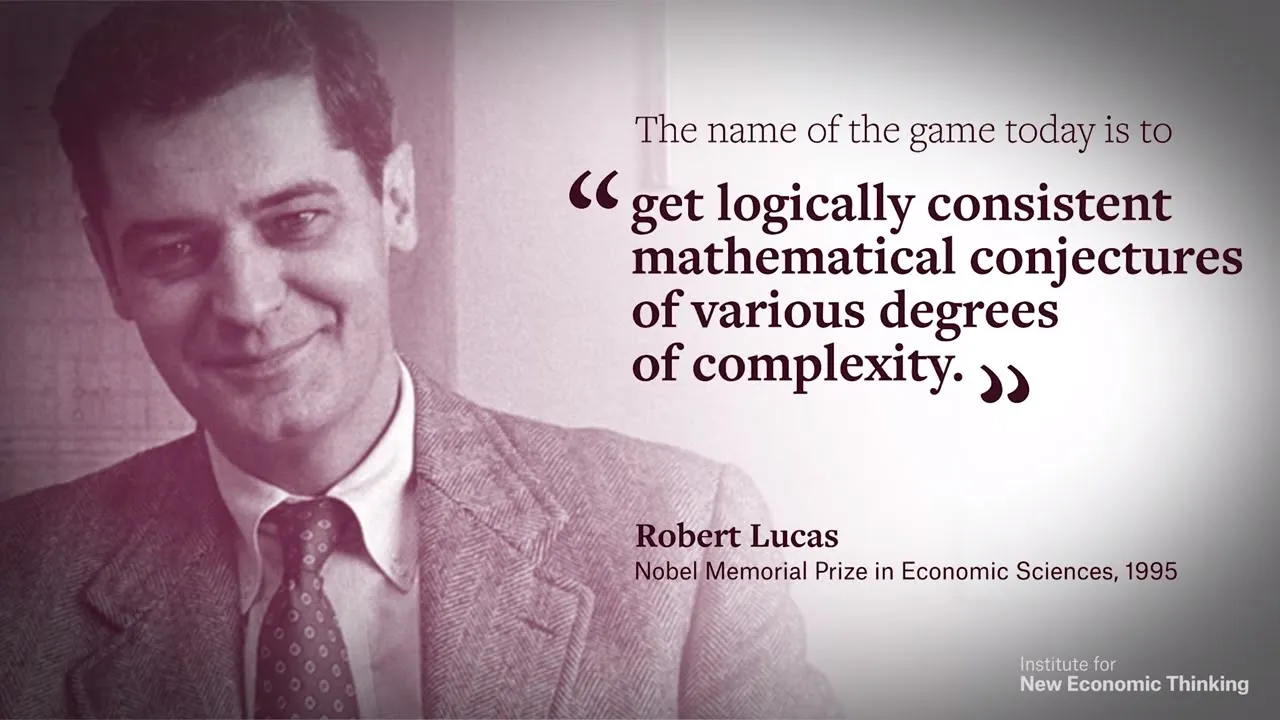
uh so it's it's and that you know without South Africa so it's actually not that important uh quantitatively even for for Africa so that's the first so so the first part of the answer is it has to come from Individual policy and individual money fundamentally this is this is where it has to have come from that said uh it is true that there has been a sort of global effort starting with a millennium development goals followed by the sustainable development goals to kind of focus policy attention on some core welfare issues like basic health measure basic education measure Etc and I do think that this has helped countries governments in in many countries to kind of become a bit pragmatic in terms of their policy goals and for example in particular as far as health and education are concerned so I wouldn't call it pressure in the sense of the UK coming to uh to Ghana and say you do this or else uh but more of a sort of a soft social Norm at the level of the world uh which is that these are important issues and bit more pragmatism uh I would also say and it's something we uh we we will discover as we move along that the the quality of policy making has improved where people understand governments and understand a little bit better what needs to be done what is what works what doesn't work and what they can do within their budget and so on and so forth so the point of this class is to uh to try and understand this massive income differences uh in true respects why are some countries so poor in some countries or Rich what are the particular economic problems that are specific to uh to the four countries and how we understand them and from a policy perspective what could be done to solve a particular these issues that we just discussed this particular market failure that arise because countries are poor so of course some of the problem of the poor countries need to be solved in the right countries like kovid vaccination doses is something that it's not really in their power but a lot of those things that that that countries do is in this discussion we were just having is about what countries should do for themselves and what went right what went wrong and how how we can do that and of course one question that we I think we should kind of keep thinking in the back of our mind um not necessarily because we have an answer but because it will help us think about the problems is is whether the covet crisis reversal is here to stay and how what to do to so that it's what can countries do what is within their power to make sure it's not here to stay so as I said this is the this is a question that has been with us understanding these differences has been with us for a long time and the the for a long time it was more of a macro field development economics was more about macroeconomics and the idea was to focus on the aggregate income differences themselves and to try to understand where they come from so if you start with an aggregate production function you have some income is produced by some technology that we don't really understand that's like the measure of our ignorance according to Bob Zulu another function of capital and human capital expressed here in little letters because it's a human capital per capita uh so the the idea of the of a physical development accounting was to see how much we can explain uh from this simple macro production function uh if we can explain a lot then that's great for example if we find that the differences are mostly k then it makes us one view is that the answer to Poverty is simple just you know give more K and if it's age then give them more each and will be good if it's a of course we don't know because a is what we don't know so it's much harder what to do so that's related to the philosophy of the World Bank in the 1960s where on The View was the problem that two countries don't have enough case so we need to build roads and we need to build Bridges and we need to build dams and uh big because the poor the poor countries can't borrow their credit constrained so we should that will help them catch up uh and then maybe a little bit later it moved the idea that it's more aged and so we can build more schools and then that's going to serve the problem uh there's a famous paper from the early 1990s that that showed that that was very optimistic about about this model uh they looked they use the data from cross-country data for with capital and um an enrollment rate and um they found that they found that they could explain 80 percent of the difference in income per capita across country so if that's the case then that's great you know everything there's so much you can do with the things you can measure and act upon unfortunately that has been revised and subsequent work suggests that this was this was way too optimistic um brought it down to 50 percent uh or by 50 and then by 90 for growth Caselli also went down to uh using probably as the best people on development accounting said that at least two-third is explained by a which is what precisely what we cannot explain so that's just in time of accounting so this is just in terms of what's quality with what without trying to give any causal interpretation just as a matter of is it the case that when country have more care they are culture but of course this is also getting complicated by the fact that all of these things are quality then I are jointly determined so in steady state and this is the point that solo made in a sense that in steady state it has to be that the return to Capital is equal to the discount rate because otherwise the people would would buy more capital and so people would save more otherwise so it has to be that they return to Capital equalize so if you give a lot of of care to a country then they are just going to save that's going to draw down the return to to saving people are going to stop saving and indigently adjust to that so that would suggest that only a can can can really durably affect growth so if that's the case then you can't just 2K if you go if you increase KB below the steady state level the return will be low people will stop improving and likewise for each uh instead you need to increase the E and that's all you need to do and you will see that even though that's the macro View that idea is actually quite pervasive in uh in in sort of the mental model of development of that people have uh even in micro development so we'll discuss education where many people of a certain generation think that the best education policy is no education policy because if you invest more in education people are going to reduce the return are going to full enough that people are going to reduce their own investment and it's self-defeating so instead you need to increase a because a will increase the return to education you will increase the return to investing in capital and people will respond accordingly so where are those a come from so one answer is that it's history so that's what you're getting saved from Darren's work and famously in particular are the Asimo glutens and Robinson paper looking at the quality of Institution it depends but also The Strife of Disney agenda it depends on who colonized you what they decided to do whether they were Desi without a set of good institutions or bad institution Etc whether you have the right kind of flu or their own kind of flu another is that it's it's geography so that's a Jeff sax view of the world so that's basically uh bad luck if you're in the middle of Africa the the climate is very conducive to mosquitoes and all the disease they bring you're very far from the sea um it's too hot so it's going to be very difficult to go that's it so that's why in the view of Dev sacks all you can do is to really help you have to kind of compensate people for the bad luck of being born where they are born so either of this just from uh from a descriptive perspective there is one problem with all of these views is that fine but then those factors are fixed uh geography of course doesn't change much uh and then who colonized you as unchanged in in a long time so how do we explain the fact that Bangladesh is sometimes doing great in terms of growth and sometimes doing badly in time of course and this is something which which is really true like for example so the um there are huge fluctuation in country groceries from time to time which is going to be related to these factors because they are fixed over time so maybe it's about variation in macroeconomic policies uh if it's not just longer in factors then maybe we can look at macro policies and see whether they that varies growth rate of a so what are those macro policies that we could look at all don't be shy I usually when I ask a question I wait trade policies trade absolutely poverty rate is more I would say an outcome than uh but uh so things to you know sorry quality of pots quotes yeah quality of courts that could change yeah from our government expenditures government expenditure or budget macro potential policy that kind of things how many schools people are building you know you can have a principle how budget in educational budget in health you can have a you can have a long list uh and of course property rights corruption so in the 1990s there was a huge industry of running ghost regression and uh there are a few issues with the support uh what is the what are the issues of yep if you're trying to determine whether or not the policy needs to grow because sustainable yes there is issues of of of causalities there are issues of uh because for example a country that is certainly has much better governance can start building schools they can also start controlling malaria so you don't know whether this is malaria the school or the better governance that itself led to Better Business climate that you that is harder to measure so all of these things typically go move together in ways that makes it very difficult to to interpret that even at the before you head to this problem the only 180 countries and many many variables more than 180 so you quickly run out of power you get into this so maybe you know machine learning can help you pick something or some but that one can see that logically it doesn't make much sense to try to estimate the effect of so many policies with so few countries um in fact uh so salai Martin who was a little bit the the king or the pope of that literature brought it in a sense to its uh conclusion and its end with the paper that's cool I just want four million regressions and so you run four million regulations in concrete I think that only savings rates really matters and as everyone said these policies are all endogenously determined and therefore it's very difficult to separate um and even if beyond that just at a descriptive level if you look uh ticket by ticket go back to my example of Bangladesh the policies themselves are very similar from year to year but the policy but the growth rate changes fluctuate a lot from the kid to decade so just as a purely descriptive level in growth rate it's very it is there is very little explanatory power so the bottom line is that the growth the the it's not just us developer economies who look at the macro literature and say you failed in that issue I think it's also the conclusion of the macro Community itself to say that they can they just cannot explain economic growth based only on aggregate facts therefore we have we have to get within the hood which is why we are starting uh the whole sequence in development by looking at micro and then we'll reaggregate it from the ground up in the second half of the semester to think about the macro from sound micro principle um so what Justified the so what's the what's our issue well one of the issue is that what justify the aggregate production function uh it's not the idea that there is one giant machine in the economy and one very smart worker with all of the human capital that's not the image right we realized that there are a lot of people who are rich going at their own business so why can you even um I can get them why can you even write why is it even okay to write an aggregate production function to describe the economy what's the Assumption that's under it so that it's not just an image but it's it makes it it's something that actually makes sense why can I go from you know MIT and Harvard and a Twinkle Twinkle store shop and all of that and and I can get them into one U.S economy yep it's like that everyone is perfectly optimizing that like the markets are an efficiency because that way if you're that gets your insurance exactly is that each factor gets allocated to its most productive use so the marginal return of this investment is equalized so even though there is not one big machine we can think of it as one big machine because the economy is allocating the capital so there is some such a thing as the return to human capital and there is such a thing as the return to physical capital okay if for some reason that's not true then we'll see uh some sector of the economy with a much higher return to Capital and some sector of the economy with higher return to human capital and this is actually entirely testable because what I just said well we can look we can look at whether it is in fact the case that within an economy the return to Investments are the same from place to place and the point is that it's not true at all uh the return to Capital and human capital very enormously within countries and if you remember the famous Lucas paper he was marveling at the difference in in return to Capital in the U.S and and India and say why isn't all the capital going to the U.S to uh sorry it was marveling at the difference in return to Capital and thinking it's smaller than it should be because there is less capital in India but the point is that the it shouldn't have been so surprised because within India there are huge difference in return to Capital and yet the country the the capital doesn't move from one place to another let alone not even within India Within one town in India do you have huge difference in return to Capital within one industry of one town in India you have huge difference in return to Capital uh Abhijit has a paper with Kevin Muncie on Tree on the town of tirupur which is the government of manufacturing needed garment manufacturer and they showed that there are two groups of of there are sort of the local boys and the um who are the the descendants of a rich agricultural community and got into this business and there are a lot of people from other Town who came to tirupur when it became a huge capital and when you look at the return to to Capital it is much lower for the local boys than for the for the people who have come to the city so you might think of course it's obvious the local boys are not particularly good at the Garment they just happen to be there and they do it like everyone whereas the other people have been drawn to this place but once you've said that well you say well if you live in tiruporn you have money to invest why don't you give it to The Strangers somehow something stops you right here what what would stop what would stop them why are the sort of well-established Europe orian with some amount of money you would prefer to set up your son uh with a little company versus to give it to someone who just came and who is evidently super good at this job yes sir just because of trust yes you might not trust that you're gonna get it back uh so that's the return the the market for capital is very imperfect and that means that there are huge difference in return to Capital that's that that that that that stays uh this is of course something that I'm giving one example from one town in India but this is something that has been that has been documented much more broadly and in particular bioclassic paper by Shane cleaner which shows that um there is huge heterogeneity in return and that it originates so this is the total Factor this is TF tfpq total Factor productivity so an idea of how productive a form is and you see that there is dispersion it's not one that's the first point and second that dispersion is actually greater uh in India than it is in China and the US so this uh um this is also something that we need to explain that's why you know that we can think about why are the markets not working as well to allocate the capital to its best use so that only the from the you know that we only the most productive from stay and the other one disappear that makes sense so where are we now so uh the fundamental Source in the difference in productivity across country is the fact that both H and K are misallocated due to a number of factors and a number of factors is basically what we are going to concern ourselves uh with uh in in this entire sequence um first we are going to look at whether there is some whether to some extent it comes from poverty itself whether there is something fundamentally different about poverty which means that you can't accumulate your way out of poverty so that's the idea of poverty trap then we look at where uh age comes from and why this heterogeneity might persist why people are not investing optimally so we look at Education Health Nutrition so that's the role of what I'm going to be doing then we look at heterogeneity in K so we look at credit and savings and Inland and then a location of the labor market that's another form we only put each but age is really L times times the education and health of each person so the labor markets itself which is a Super Active area in development these days and uh super fun and then finally we look at a uh in the second semester specifically looking at technology organizational firm we look at policies along the way of course when I talk about education I'm going to be talking about education policy when I talk about health I'm going to be talking about health policy but as as Ben mentioned there'll be a special sequence at the end which will be specifically about uh about the public sector so that gives you a sense of very broad uh roadmap for the course uh before so uh before I go in in more detail we have about a five minutes left I was going to give you some teasers uh but before that let me see if there is any question comments uh point of debate because what's coming now is not particular I mean we can go to it or not go through it so I would rather make sure you have a chance to each Express Yourself going going then I will speak so another view of the Cross and few fun facts I'm not going to give you the entire overview but I'm going to start so we're stuck with the idea of poverty two trap and the other question is simple is the fact that you're poor keeping you poor so why would it be the case uh well because of what will come will come to know and love as the s-shaped Curve this is from a paper by Claire Balboni who is teaching here and many other cultures are looking at people who are extremely poor because they were part of a program to help the extreme people and some of them received a transfer that made make them less poor and they are looking at they are they are looking at so this is not the impact of the transfer at all this is something that is purely descriptive uh where uh on the x-axis you have how much money the the how much money in total they had in assets including the transfer in 2007.
and then a productive Assets in 2011.
so it's how much they they grew between the two periods and you will notice so that that they have a uh that there is an interest in your curve here which is s-shaped so what does this mean suppose that you continue to um uh you know you do a next curve uh you that goes from 2011 to 2015 suppose the curve is the same and you're trying to find out someone who started in 2007 by five years later 10 year later 15 year later how where will it end up and suppose that's the that's the law is that if you start with this much money you'll end up with this much money okay you understand the aggressive exercise so uh take someone who starts with 2.6 whatever it is means some 2.6 Monies uh in 2011 they have uh 2. maybe seven Monies uh how do I know how much they are how do I continue this to know what they'll have in 2015.
yes going back to the x-axis and from the x-axis backup so we can even we can even skip the going down but we'll have so in 2000 um in 2007 they started 2.6 they end up here and then to know so this is the level so to know how they have in 2015 I go here and then back up and then 2000 uh what was it even five years later I continue continue so where does this end here where they cross right uh and then someone who who started here in 2007 they go here then they go here and they go here then they go here then there is a little thingy here but they end up roughly here that's just the East Street so that's the poverty trap it's the idea that there might be multiple steady state that where you start from uh has an impact of where you end up okay we're gonna go back to this we're going to spend a lot of time to this graph but that's the that's something which is so why we don't have poverty traps in in most of the models that you you know we work with that are appropriate for rich countries is that we have we assume concavity so we this part of the curve goes away so as people when people are poorer the the capital is very productive for them so they are making more money out of the little money they have proportionally then therefore they can progressively little by little build their nest their nest eggs to end up all in the same statistics with the poverty trap some people are so poor that they end up there and they end up staying pool and so the game oh the not the game the exact size is to think where does it come from and why uh this is in a sense a very reduced from picture but from real data telling you in Bangladesh there appear to be a poverty trap which by the way is the reasoning for this program in the first place which is a program that was started by an NGO called BRAC and was expanded since then in many countries with the idea that you you kind of Go Big push you give a lot of you give an asset to people and you help them for a while to kind of help them push if a lot of people had been on this part of the of the of the curve you try and push them and what's underlying this picture in a sense is that maybe the transfer was not large enough to push the poorest of the poor that were in these Villages even away from the poverty trap so they fell back while some of the people were that pushed them up and uh that that produced long-term impact of this program so we'll start with that uh we'll spend two lectures on poverty trap one on thinking about Theory one-on thing going back to to this to this program and similar program oops when we are done with that I know when we are done with that we'll so first we'll try to spend some time uh so I've already showed my spoiled and some spoiler alert they are poverty traps on the other hand why are they coming from that is something where there is still we still have no so it's like a super interesting exciting array of resources what causes poverty trap um there are many possible reasons then we'll talk about human capital we'll talk about the quality of Education the supply side of Education in particular the fact that the quality of education is terrible in developing countries so I said at the beginning that a lot of people go to school so that's great but they go to school and they learn nothing so this is a graph that some of you might have seen is from the annual status of Education report in India that looks at the fraction of kids who can in standard five so for end of primary school we can read at the level of standard 2 the beginning of primary school and you can see that not only it's not improving of our time it's if anything worsening over time of course we have a lot of key you can say it's and it's not just a composition effect uh in the sense that is it's not just because there are more kids in school and therefore the results are ours so we'll talk about education we'll talk about health obviously boost the supply and the demand then Ben will talk about Labor markets land markets credit technology will actually be in the second part of the course I'll talk about savings on the other end and finally Ben will finish with the uh the public sector what are the problems with redistribution what's the optimal shape of transfer are there problems in providing public goods are there problems labor market problems specific to the public sectors with incentives and things like that so that's going to be the the the game plan for this semester so I hope that uh it'll continue to be here uh I'm I wish you an excellent semester uh back here in person and uh we'll have fun in this class
Up Next

14:01
Why Institutions Matter in Economic Growth | Nobel Lecture Insights
@up.edu.ph.
23.7K views•2010-12-31
5:07
Impact of Yuan in Indo-Russian Trade Amid Sanctions
@WION
261.9K views•2022-07-01
48:22
Market Failures II: Informational Asymmetry | MIT 14.01
@mitocw
59.2K views•2020-07-16

113:18
The Age of Easy Money: Fed & Inflation | Full Documentary
@frontline
21.2M views•2023-03-15
Related Study Plans & Knowledge Roadmaps
Structured learning paths in Economics
economics
Sovereign Debt: Defaults, IMF & Restructuring
01Introduction to Sovereign Debt & Government Bonds
02Debt Sustainability & Credit Ratings
03Anatomy and History of Debt Crises
+ 2 more learning modules
12h5 modules
Explore Roadmap
economics
Market Design: Matching Theory & Gale-Shapley
01Introduction to Market Design and Price-Free Markets
02Two-Sided Matching & The Gale-Shapley Algorithm
03School Choice Systems and Mechanism Design
+ 2 more learning modules
10h5 modules
Explore Roadmap
economics
Impossible Trinity: Forex, Capital & Policy
01Introduction to Monetary Policy and Central Banking
02Exchange Rates and International Capital Flows
03The Mundell-Fleming Model
+ 2 more learning modules
8h5 modules
Explore Roadmap
economics
Healthcare Economics: Market Failures & Systems
01Introduction to Healthcare Markets and Market Failure
02Asymmetric Information and Adverse Selection
03Moral Hazard and Insurance Design
+ 2 more learning modules
12h5 modules
Explore Roadmap