








![[Pick 사이언스] "보고도 안 믿겨.." 상식을 뒤엎는 냉각 기술, 서버를 액체 속에 담갔더니 벌어진 일..?!!](https://i.ytimg.com/vi/AAkOTunBLEg/maxresdefault.jpg)





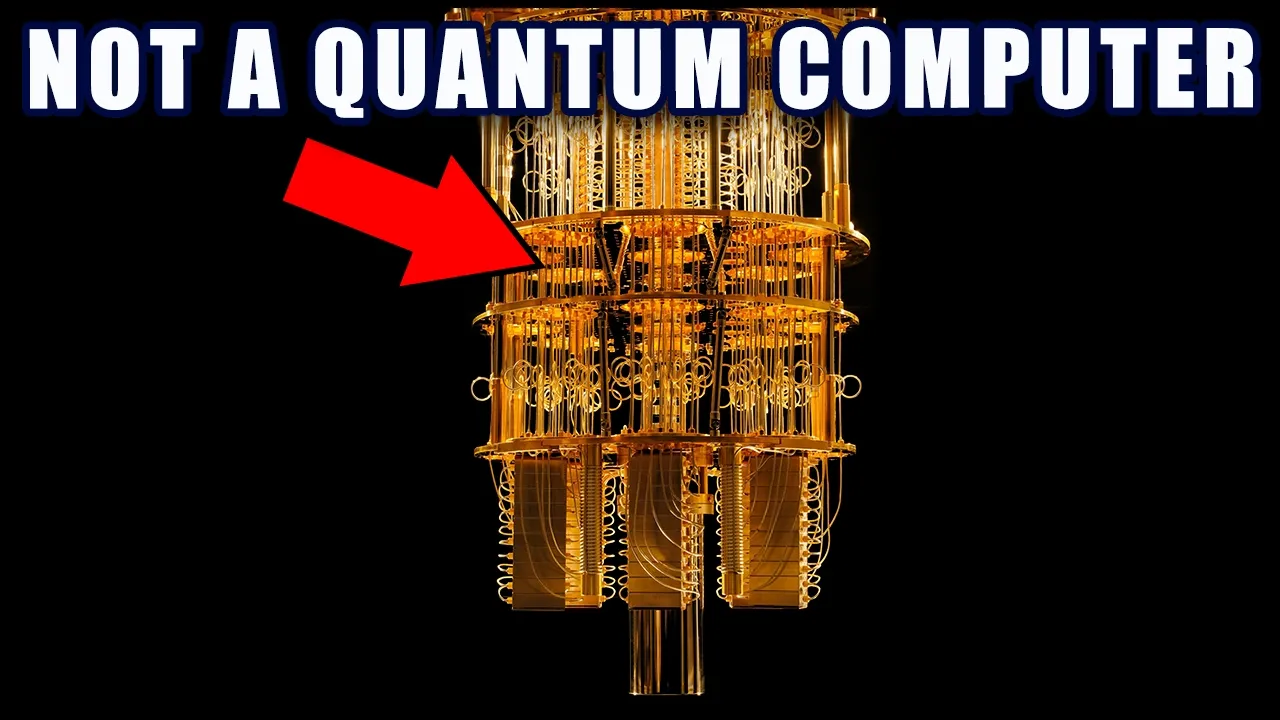


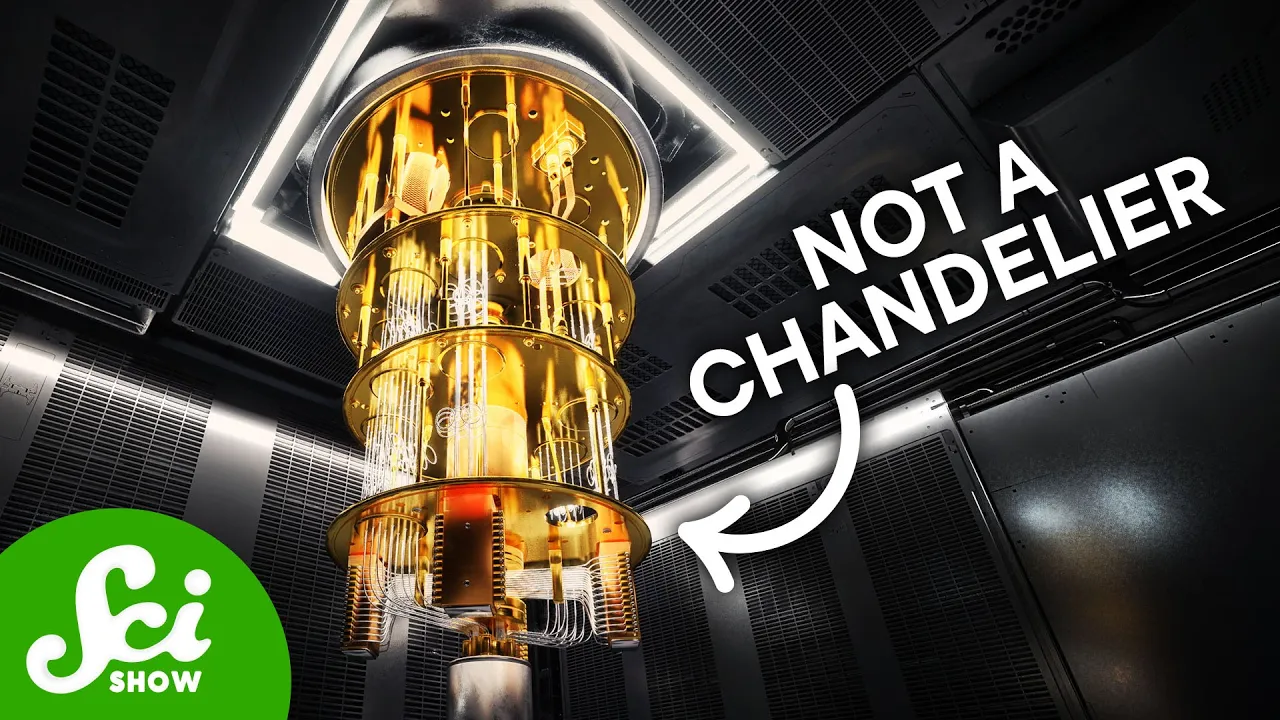
Quantum computers use superconducting circuits cooled to near absolute zero (7-10 millikelvin) inside cryostats with vacuum chambers and magnetic shielding to maintain quantum coherence; these qubits, visible as tiny dots on chips, are controlled via microwave pulses sent through control lines, allowing researchers to perform quantum operations like Rabi oscillations that demonstrate transitions between quantum states, though quantum computing remains in its infancy compared to classical computing's 60 years of development.
A 9-Year-Old Programs a Real Quantum Computer at ETH Zurich
Added:The difference between classical computing (which uses binary bits of 0 and 1) and quantum computing.
The basic concepts of quantum mechanics, specifically superposition (existing in multiple states simultaneously) and entanglement.
An introductory understanding of what a qubit is and how it serves as the basic unit of quantum information.
The general concept of absolute zero and why quantum processors require extreme cryogenic cooling to prevent decoherence.
Hands-on practice with accessible quantum programming frameworks and software development kits like IBM's Qiskit or Google's Cirq.
A deeper exploration of foundational quantum algorithms, such as Grover's search algorithm and Shor's factoring algorithm.
Study of the physical architectures of quantum computers, including superconducting qubits, trapped ions, and photonic quantum computing.
Investigation into quantum error correction and the engineering challenges of building fault-tolerant quantum hardware.
54.3K views162likes19:06Original Release: 2025-09-26
[Music] Hello, quantum explorers >> and mixed up quarks.
>> Quark. Cool.
>> Today, I'm going to introduce to you the biggest quark in the world. Can you help me?
>> That's our cat, Quark.
>> And quarks are not the food quark, but quarks are the smallest particles that we know. And this is a big quark.
>> He is pretty big. Welcome back to the quantum kid. I am Katya Mosquich, science communicator. and theoretical physicist.
>> Hi, I'm Kai the quantum kid and I really like dogs and cats and small particles.
>> So Kai, what's going to be so special today about our show?
>> We're going to see a real quantum computer beer and it will be really cool is I'm going to snap my fingers in three, two, one. We're going to go to the quant lab. Three, two, one. Wait, not Mars. Let's go to the quantum lab.
Oh, there we are. Now we're at the quantum lab. What quantum lab is this really? Again, >> we are indeed at the ETH quantum lab at ETH University in Zurich, Switzerland.
And by the way, fun fact, Albert Einstein first studied here and then worked here as a professor of physics more than a century ago now. And Kai, why do you think this lab is special today?
>> Well, because there will be a quantum computer. Well, we are very lucky to be here today and a pos researcher Dr. Anatoli Kulikov is going to welcome us and show us around. Hello Anatoli.
>> Indeed. Hello. Hello. Kai, welcome to the lab. So this is a place where we are trying to realize a useful universal quantum computer using a technology of superconducting circuits which we refrigerate in this kryostats. Have you seen a such a kryostat before?
>> Uh no. But like where are actually the screens or the keyboards really?
>> The quantum computer itself is this kryostat where quantum chips are right there in the heart of it inside. All right. Then um >> so this is it.
>> So this is just a picture of the photograph of a kryostat open. Right. So quantum chips are here in this um shields. These are magnetic shields and this is where we put our samples. Right?
Then all of these shiny cables, this is how we control our quantum bits and we control them using room temperature electronics which is here. And the screens are actually just the screens of classical computers. So they are in the corners of the lab. We don't need to attach a screen right to the to the computer.
>> So can you maybe explain using um the picture here of what's inside the cryostat how it actually works and where uh the cubits >> what you see outside is actually a vacuum can. So inside this kasta the first thing which we do is we create a very very high vacuum. Do you know what is a vacuum?
>> It's like some where there's no oxygen but I'm not completely sure.
>> Yes. Not not just no oxygen but uh so right now we we're breathing atmosphere right we are breathing air and uh there is a lot of pressure and a lot of particles are flying around. So >> so vacuum is where is none of those particles. The reason why we need to have no air is so we will be able to keep those structures colder and colder.
So as a matter of fact you see uh well our room temperature we measure temperature in Kelvin in physics we like to measure from absolute zero not from zero in Celsius and uh we are at at around 300 Kelvin the higher plate of this kryostat is you see here it's marked 35 Kelvin and then it goes even below so here we're as cold as 7 or 10 ml so it's 10,000 of a degree so it's very very very cold it's -273° that is what we need to cool down our chips so they actually show quantum effects and we can actually well do some quantum computing.
>> So how do you cool them down to such temperatures?
>> There are two types of helium. Helium 3 and helium 4. And uh effectively when the helium expands it can take a little bit of of heat with it. So we have helium going around in circles here going around all the way to this uh this small uh this small piece. Helium going here continuously takes heat from outside and there are several stages. Do you remember what helium does, Kai?
>> Uh, so, um, if you like breathe it in from a balloon from like your birthday party, then you duck like this with it because of the helium reaction. I would not really want to experiment with my laptop into a really cold fridge.
>> Yes. That's why we don't put our laptops inside. What we put inside is specially designed chips. Actually, I have one of those chips to show you. Do you want to see one?
>> Yeah.
>> Okay, let's have a look. I think it's it should be near here. So this is called a printed circuit board and the quantum chip itself is right here in the middle.
>> So can we actually see the cubits on the chip here?
>> Yes. Yes. Surprisingly we can. You can see the cubits with your bare eye. Small patterns and small electrical wires.
It's basically squares with cubits in the corners.
So there are there should be 17 cubits on this chip.
>> I actually see small dots.
>> Exactly. So those small dots, those small small circles and dots are the cubits. If you count, you will be be able to count 17 of them. The cubits are around micrometers in size, maybe even tens of micrometers, bigger bigger features. And there are things which are thousands of times smaller. And all these wires are used by us to send signals to our cubit to our cubits to control them and to read out their state. So to operate the quantum chip effectively. I thought that these were like small particles that you'd store in like that and then it'll be like all around flying around. I was not expecting it to be like tiny little wires.
>> What you described can be a technology.
It actually is one of the technologies for quantum computing. There are different as we call platforms. The cubit is already an abstraction. So any cubit is artificially made. It's the question how do we make them? So we can use real atoms as cubits or maybe photons. It's quite easy. Photons are one of the easiest systems to manipulate.
>> Remember what a photon is?
>> Uh like a light particle.
>> But you know, imagine if inside this crest that there are particles flying in all directions and you you need to catch them, you need to operate them. That wouldn't be very convenient, would it?
>> No.
>> So that's why uh people have created this technology where cubids don't try to escape you and they just stand stationary, stand still. You can even see them, right? So they are pretty big.
Why do do you see so many wires here? So these small lines going to the cubits, they're control lines, but we need to still deliver our signals to them, right? And you see the small ports going connectors.
>> Yeah.
>> Here is where we attach wires.
>> Oh, like that. Like that.
>> So this is already the next stage, but yes, absolutely. So these connectors using wires are connected to these things and these things here. And the wires go all the way to the top. And then we control this uh quantum computer or we control the quantum chip using uh room temperature electronics.
>> Could you tell us what's special about this lab here? Because I see that apart from the cryostats, you also have horizontal structures. So I assume it's something to do with scaling the technology and how many of these tiny wires we can actually put in a chip because at some point it will be just too many, right? So you need to find some solutions how to scale it. A big part of what we are doing in this lab is scaling let's say using the the most standard approach which is trying to put more of these small wires more more of the quantum bits on a single chip. But as you as you see we need to refrigerate this we need to put it on a cryostat and we need to have a lot of these classical wires going inside. So eventually we will we will come to a limit that we cannot really put more and for that we we are trying to do another sort of scaling which is a complimentary and actually it's used incredibly widely in classical computing as well uh which is a parallel in this case distributed or parallel quantum computing. This is very very in its infancy. So the labs like that are only a few in the world. And what you see here uh is a communication line to another kryostat 30 meters away where well another quantum chip is located on site and we can send photons to communicate between quantum bits and uh this is the main part of what we are working on in this very lab in this very uh room.
>> If you can show us how it all integrates with classical computing.
>> We use room temperature electronics to control our quantum bits but actually our time scales are very very short. So the pulses the control pulses we send to control the cubits and perform the computation are as short as nanoseconds.
Do you know what is a nanocond?
>> No I only know what a millisecond is.
>> Millisecond is. So what's a millisecond?
>> That is like uh so you got seconds and then you need 100 milliseconds to have 1 second.
>> Close enough. 1,000.
>> Oh >> 1,000 milliseconds form a second. So if you go yet to a smaller time scales 1,00 microsconds form a millisecond. So 1 million microcond form a second. And with nanocond it's yet 1,000 times more.
So 1 billion nconds form a second. And around 10 or 20 nconds is the length of the control pulses we send. So we can send uh I don't know several thousand control pulse pulses before you can even blink. Obviously we cannot control this with our hands. you know it's just way too fast and uh nobody would want to. Uh so what we do is we program these room temperature electronics from a classical computer and then we receive the output also on this room temperature electronics which we later analyze using a classical computer. So quantum computer is not a standalone machine which you I don't know press buttons or put some sort of uh helmet with the connection to your mind directly. No, we control it just using the usual classical computer programming devices, sending pulses, receiving outputs and seeing the result on the monitor in the way you want.
>> So here you have a monitor. So um what does it do?
>> Here is where we actually program our devices, our electronics and uh actually operate the quantum computer. So we have all of this multitude of room temperature devices which send uh signals which receive signals back and as I as I have explained it all happens on a very very tiny time scales. So tens of nanconds. Of course, completely unfeasible for for a person. So here we have a library. It's a Python based library. It's a Jupyter notebook. Maybe some of even some of your younger viewers have used it. We are executing calibration measurements to see if our cubits are even there. If we can send signals to them, if they if they respond to us and uh yeah and operate the quantum computer from here basically.
>> So can I control the quantum computer?
>> Actually you can. So uh this very quantum computer I have shown you we are preparing it for the cool down but we have more than this one. We have another one in the main uh in the main laboratory which is right now cold and operational. So you can you are in luck we will do something which is called raviolation. It's called after a person who actually received the Nobel Prize for his discoveries. It's basically the first calibration measurement we are doing with our quantum bits. Um we are sending pulses stronger and stronger pulses and seeing what the cubits will do. But I'll maybe explain this after you see the result. Do you want to press shift enter and run the >> can we also actually change the false to true?
>> Do you know what this false does?
>> Uh so like says don't >> update.
>> So it won't update now.
>> Okay. I mean we can you see you're you're changing a line in the quantum experiment. So press shift enter to run shift >> enter.
>> 3 2 1.
>> Ah look it does something. It starts the measurement on cubit number three. So let's have a look at the results.
So what you have uh run the measurements which you have right now executed.
Remember I have explained you we send the microwave pulses to our cubits.
>> So you see we we send pulse and the pulse is getting stronger and stronger and stronger and here when we start the cubid is in the what we call a ground state in the state zero and the stronger pulse we say we send the more and more cubid gets excited it gets into excited state or in the state one. And so you see this oscillation which goes up and then goes down.
>> So y is actually go down.
>> Yes. Very nice observation. So imagine a sphere and at the bottom of the sphere the cubid will be in the state zero. And on top of the sphere the cubid will be in the state one.
>> And so as you apply a stronger and stronger pulse what you do is you rotate the initial state of the cubid along this sphere more and more and more. But what happens if the cubid is already there and you keep rotating? Well, cubid goes on the other side and gets back to state zero.
>> Oh, then it goes down. So, it's like the sphere goes up and then it goes down.
Goes up, then it goes exactly >> goes up then it goes down >> and then it goes outside of the screen.
Yes.
>> It's very cool. Actually, today I actually programmed the quantum computer.
>> You controlled it. Yes. You executed the measurement. Congratulations.
How important is it right now to actually come up with new algorithms in your opinion?
>> I think it's very important if we create really good and powerful quantum computers that's great but then we need to run something on those computers and right now we don't have so many algorithms. This is a very very active area of research and part of the reason why it's an active area of research it's relatively new. So the whole uh kind of field of quantum computing started really in the early '9s and it was maybe a first kind of examples of algorithms which can be faster than classical ones.
It's not that quantum algorithms are not good. It's just we have all this classical computing which if you think about it has made tremendous and completely crazy progress in the last 60 years. Yeah. So the first transistor and the first classical bits were 1950s end of 1950s 1960s and in 1960s there were maybe eight transistors on a chip. So eight classical beats, right? And 1970s there were a couple of thousands. We are right now somewhere in between between 1960s and 1970s. But classical computing had uh well 50 more years of progress.
And now the requirement for quantum computing is not just to do something which will be useful or which will be like relatively useful to do something which will outperform uh the best classical computers. And the best classical computers are very good. They have billions of chips. they have huge data centers connecting multiple processors and that is what uh what we need to overcome and that's part of the reason why I don't think that quantum computing as something really useful and widespread will appear sooner than maybe five or 10 or 15 years and it's going to be a gradual process and in this case of course people who are working on algorithms are closing this gap from another side so we are closing the gap from the side of more cubits better cubits better performance and people who work on algorithms are closing this gap from the point of useful algorithms don't require a billion of quantum bits but maybe 100 million maybe 10 million maybe the length of computation is now not 10 weeks but maybe only one week both efforts I would say are equally as important one of the very interesting things about quantum computing is uh which also limits our performance very much is we cannot copy information in quantum world and this is part of the reason I've mentioned today also that quantum communication is secure well if we if somebody if your adversary cannot cop copy information. Naturally, it's very nice. So, you you can have a uh secure communication. But when we want to compute something, the fact that we cannot copy information precisely means that we cannot also protect ourselves from errors. So, part of the power of classical computation is this is something which is called redundancy.
So, we have more resources, we have more um let's say more data than we need. And then if some if some error happens, we can uh we can neglect this error, we can counteract it, right? we we can still know what's precise answer even though there have been some errors. Now in quantum computing it's much much much more difficult and in addition to that quantum quantum bits the cubits I have shown you uh they cannot really sustain a computation for a very very long time.
So very quickly they lose uh they lose their state and the computation is over.
And in our times I've told you that the length of the of of single pulses is maybe tens of nanconds. The time of computation which we can sustain is also very short. maybe microc maybe milliseconds but not more than 1 second and you know in 1 second there are not there's not so much you can calculate and one of the very important avenues of research which our lab and many other labs around the world are pursuing is trying to make this lifetime of lifetimes of cubits much longer so we can sustain longer computations and therefore deeper circuits and of course much more complicated real world problems >> since I'm programming in Python >> Mhm. Do I need to learn anything else so I can like program a quantum computer?
>> Knowing Python is already a very good start. As you can see, we are using Python as our programming language of choice to control our quantum computers.
I would say it depends on what do you want to work with. If you want to design algorithms, you more would want to learn things such as computer science and uh still quantum mechanics. I think you need to at least understand quantum mechanics on the basic level to understand how how quantum computation works. So that probably is inevitable.
If you want to work in physics then and maybe design quantum computers or try to implement this then well physics is is would be very useful. Uh engineering there's really a lot of different sub fields and it's more up to your interests and up to your curiosity what exactly do you want to work on. So now there are very nice kits um like kizkit is a language introduced by IBM which is very accessible. It it can run on IBM's quantum computer but it also can can run on a simulator is something which you can use already now to play with the quantum algorithms very primitive ones yes but you can do that um so I would say Python is a very good start and then you can see which which direction would you want to follow and specialize there and of course the more you know well the more uh the more interesting things you can discover.
>> Awesome. Well thank you so much Analy that's been wonderful and uh thank you very much for coming. Yeah thank you for welcoming us. I am Holly. Now, if I snap my fingers, we should go back home in in three, two, one.
Oh, here we are back to the studio.
>> Indeed. Well done. Good snapping, Kai.
And thank you so much for watching us today. We'll see you again next time on the Quantum Kit for more quantum adventures. And by the way, if you want to study quantum computing further, do consider going to various quantum events like for instance, there is quantum tech Europe happening in Rotterdam this year and there are lots of other interesting conferences. Also, if you want to learn how to program on a quantum computer, do subscribe to our webinars which we're actually launching this month. And don't forget to click that like button so it dings up. And also don't forget to click that big subscribe button as well.
>> And we'll see you again next time. Thank you and goodbye.
>> Bye.
[Music]
Up Next
6:20
General Relativity Explained: Curvature of Spacetime & Gravity
@ProfessorDaveExplains
629.6K views•2017-05-25

12:53
21cm Hyperfine Transition in Neutral Hydrogen: Radio Astronomy Basics
@AaronRobertParsons
12.4K views•2011-10-13

32:32
NMR Spin Physics I: Zeeman Effect, Resonance Condition & Larmor Frequency
@nptel-indianinstituteofsci8064
2.3K views•2024-01-17

27:14
Entropy and the Second Law of Thermodynamics Explained
@veritasium
27.5M views•2023-07-01
Related Study Plans & Knowledge Roadmaps
Structured learning paths in Physics
physics
Nuclear Physics (Decay, Fission & Reactors)
01Atomic Structure and the Binding Force
02Radioactive Decay and Half-Life
03Nuclear Fission Mechanics and Chain Reactions
+ 2 more learning modules
12h5 modules
Explore Roadmap
physics
Soft Matter (Polymers, Colloids & Rheology)
01Foundations of Soft Matter & Thermal Forces
02Polymer Physics and Macromolecules
03Colloids, Surfactants, and Self-Assembly
+ 2 more learning modules
38h5 modules
Explore Roadmap
physics
Analytical Mechanics: Lagrangian & Hamiltonian
01Mathematical Foundations: Calculus of Variations
02From Newtonian Mechanics to Constraint Dynamics
03The Principle of Least Action & Lagrangian Mechanics
+ 3 more learning modules
28h6 modules
Explore Roadmap
physics
General Relativity (Spacetime & Cosmology)
01Foundations of Relativity: Special Relativity
02The Geometry of Spacetime: Equivalence Principle & Curvature
03Einstein's Field Equations: The Mathematics of Gravity
+ 2 more learning modules
55h5 modules
Explore Roadmap