
![Suspension Bridges [Definition, Preferences, Limitations, Uses]](https://i.ytimg.com/vi_webp/jJW_m4Wznqc/maxresdefault.webp)












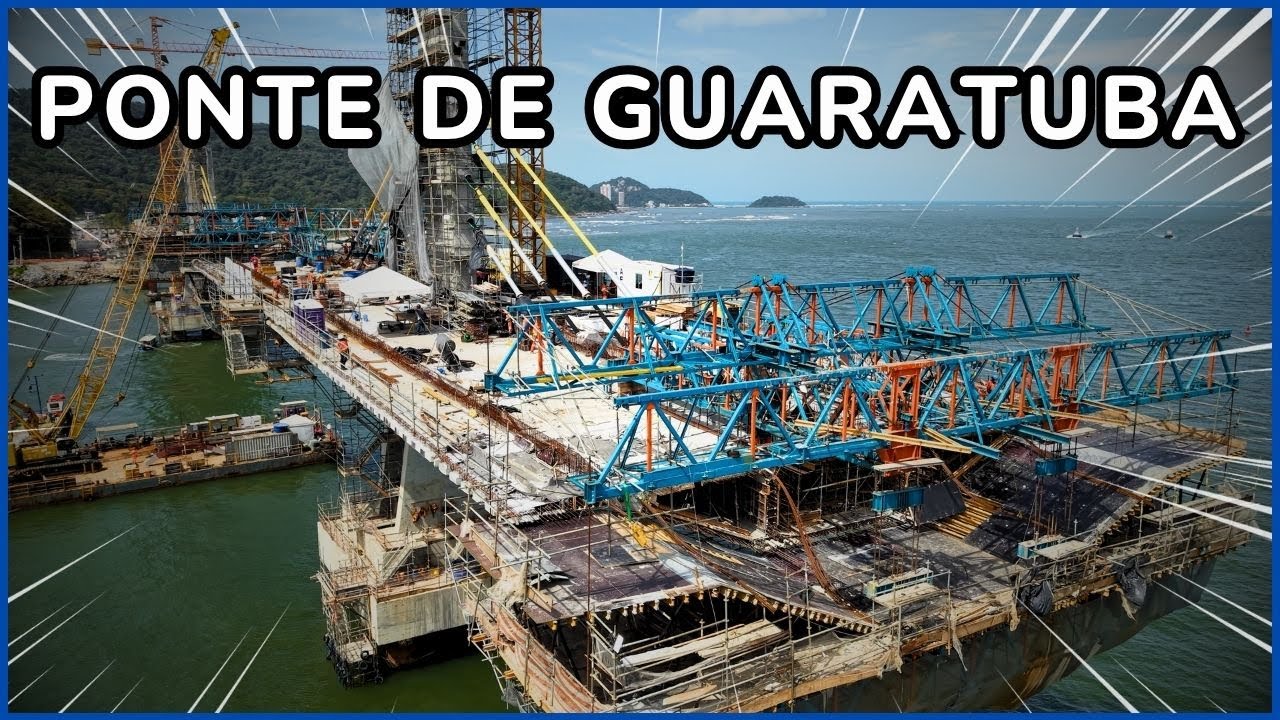












The Beipanjiang First Bridge in China's Guizhou Valley, standing at 565 meters high and 1.3 kilometers long, represents a landmark achievement in modern engineering that draws inspiration from historical innovations including John Roebling's hybrid suspension-cable stayed design for the Albert Bridge (1873), Andrew Peterson's climbing formwork technique for the Sway Tower (1885), and Benjamin Baker's self-balancing cantilever construction for the Forth Bridge (1890). Engineers overcame extreme challenges of soft geology, extreme altitude, and long spans by implementing a cable-stayed design with 224 cables carrying a 20,000-ton steel deck, using climbing formwork to construct 46,000 cubic meters of concrete towers, and employing an orthotropic deck to prevent fatigue damage from heavy truck traffic, demonstrating how historical engineering breakthroughs continue to inspire solutions for contemporary megastructures.
Beipanjiang Bridge Construction: Engineering the World's Highest Cable-Stayed Bridge (565m) Explained
Added:[Music] Joe Valley in China. 565 m deep. It's known as the crack in the earth. This immense chasm has separated the local community for centuries.
New York-based architect Wendy Faulk has traveled to this remote region to see how extraordinary engineering is pushing the boundaries of what's possible.
Canyons are pretty dramatic. It's beautiful around here.
She's attempting the hazardous journey to cross the valley.
It's kind of crazy a ride. Uh roads are really bumpy and the only way to get from one side of the county to the other is through this road. It's very frustrating because it's a 5hour drive. The long trip down the steep slope and up the other side is perilous.
It's dangerous the road because there's a lot of sharp rocks, lots of steep gorges. You also see a few landslides, so piles of rocks on the side of the road. So drivers have to be very careful. This divide has a devastating effect on the community. There's 35.8 million people in this region of Guauo. With all these windy roads and steep valleys, it's very difficult for the local farmers to get the goods out of this county to sell them. So, as you could imagine, is one of the poorest regions in China.
A solution is desperately needed.
But with over half a kilometer dropped to the valley floor, nobody has ever bridged a gorge this deep. Crossing canyons has always been tricky. In the second century BC, a Himalayan silk trade rope used 100 hairpins to zigzag down a canyon. But today, that makes for a treacherous drive. In 1936, inspired by banana hoists, engineer James Curran came up with the first chairlift. Great for skiers, but not if you have a car. And in 1974, evil conval tried to cross the Snake River Canyon with a rocket, but that didn't go to plan. Oh, darn.
The solution engineers in China have come up with is breathtaking.
This is the Bay Panjang first bridge with a deck 565 m above ground.
It's the highest bridge in the world. It is super dramatic to be under this bridge. It's beautiful and it is remarkable how high this bridge is and how long it extends.
At 1.3 km long, it's one of the longest cable stayed bridges on the planet.
It seems impossible build the bridge here. It's very challenging.
Leo Boore is deputy chief engineer of the bridge. So this is a behan bridge.
Normally off limits to pedestrians, he's giving two colleagues a unique tour.
It's very high. Very high. When we came here is very difficult to to go to the the two site. Yeah.
What's your feelings? Huh? It's really amazing. Amazing.
This is the first time that I come here.
Before today, I only see this bridge on computer, but when you see this real thing, it's really amazing. Is the highest bridge in the world now. Yeah, it's like a beautiful bridge.
The bridge is made up of a pair of massive concrete towers. The tallest 269 m high.
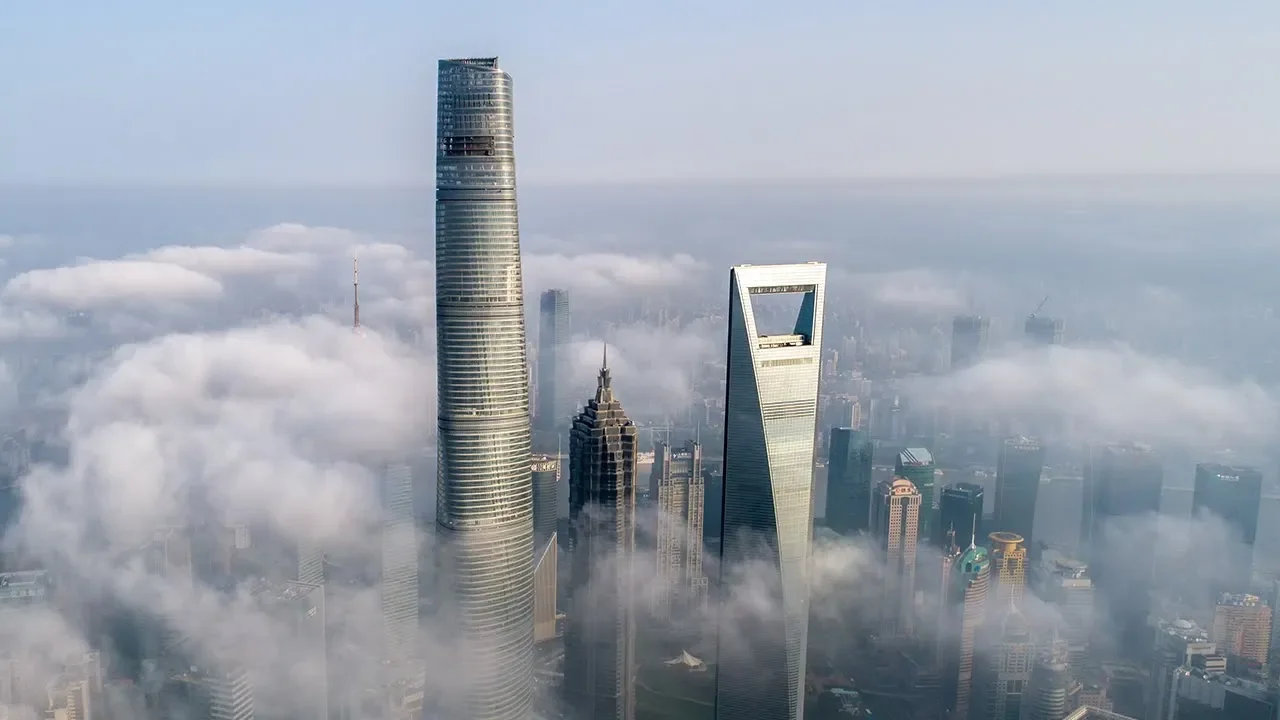
The 20,000 ton steel bridge deck is the length of five Titanics. It's so high one World Trade Center in New York could fit underneath. The deck is attached to the towers with 400 km of cables, enough to stretch from London to Amsterdam. There is no other bridge like this in the world.
But to create this unprecedented structure, the team need to solve many tough engineering challenges. How do you construct terrifyingly high concrete towers? It's very difficult to pump the concrete from the bottom to the top is really a critical issue during the construction.
How do you assemble a super long bridge deck in such a dangerous environment?
The valleys here are so deep you can't even see the bottom. This is too high to build temporary scaffolding for a bridge deck. But the biggest problem of all, what type of bridge do you build on vertical cliffs full of hidden caves and crumbling rock? To build a bridge here is really a great challenge for me. I'm not sure we can achieve or not.
More trucks.
Visiting architect Wendy Faulk is exploring the deep valley. The rocks around this region are very soft. Also, it's very steep. To make things even more difficult, there are a lot of hidden caves and cracks along the mountain. This poses a huge challenge for the engineers to design the bridge. The problem is that most types of long span bridges need support anchors built into the rocks.
For an arch bridge, weight pushes down and the bridge's curved shape moves the force sideways. So, they need gigantic anchors in the banks. On a suspension bridge, the deck hangs from two cables, which also need huge anchors to stop the bridge collapsing.
But the soft, crumbly, landslid prone rock in this region isn't suitable to hold massive bridge anchors. It's a huge problem for deputy chief engineer Leo Bore. This is an example of the difficult geology, the limestone rock and you can see so many chaos and cracks on the rock. This kind of chaos is adverse geology to the bridge foundations. That's quite a big issue for the bridge design and construction.
It's really a nightmare of the engineer.
The only option is to find a bridge design that doesn't need the support of anchors. So the team have to draw inspiration from the pioneers of the past.
This is amazing. A tour of London on a beautiful sunny morning on a boat on the river temps. Physicist Andrew Steele is exploring London from a unique perspective. Look at this absolutely beautiful structure. It's the iconic Tower Bridge. From down here, this structure just looks absolutely enormous. There's an astonishing range of bridges in the British capital which could help inspire the team in China. This is Black Friars's Bridge.
It's an arch bridge was constructed in 1869. And from underneath you can see these beautiful row iron ribs which are holding the whole structure up.
Here we have Chelsea Bridge, a suspension bridge. You can see that big red cable running along the top. That's the main cable. Amongst these famous giants, there's a lesser known bridge. That's actually one of the most important in the world. This is a piece of engineering history. An entirely new type of bridge that people didn't think at the time could even be constructed.
Built in 1873, this is Albert Bridge. From an engineering point of view, there is an awful lot going on here. You can see we've got these support columns. We've got the curved cables, the straight cables. It's 216 m long in total, and the main span is 137 m. Pretty daring for the time.
[Music] Albert Bridge is the brainchild of British engineer Roland Mason Orish, who was determined to build the impossible. The Victorians had managed to build loads of different kinds of bridges, but there was one particularly desirable design that remained elusive.
It's called the cable stayed bridge, and the idea actually dates from centuries before. It was in the 1600s that the first cable stayed designs were proposed, even before the existence of actual cables.
The design of a cable stage bridge means all the weight is carried up through the cables and down through the towers. So it doesn't need anchors on the banks. But in the 19th century, building a cable stage bridge had never been successful because the forces are so complex. The problem was the maths was just too hard. Imagine trying to calculate all the forces on one of these cable stay bridges. You've got loads of different cables all at different angles pulling on the bridge, pulling on each other. It's a trigonometry nightmare. Overtensioning even a single cable could lead to a catastrophic failure of the bridge. For 200 years, people thought the cable stayed bridge was never going to be built. Ordish knew the risks of building a cablestate bridge. So to ensure Albert Bridge didn't fail, he ingeniously combined it with a suspension bridge. From up here, you can really see what's going on with this bridge. Since we're in the middle, this is the main cable, the suspension bridge aspect of this structure. And we've then got these smaller suspenders. And what these do is connect the main cable to the span of the bridge, allowing it to support the bridge at multiple points along its length. And then finally, this is what makes this bridge so special. Here we find the cable stays and it's really clear from this angle what they do.
They're taking some of the load from this span and then transferring the force up into those towers there. This is two bridges in one. And that is the genius of Orch's revolutionary design. Albert Bridge was a major step towards building a pure cablestate bridge that didn't need anchors. Exactly what the engineers in China are looking for.
Odishu's success with this structure allowed engineers to look on this design with fresh eyes and suddenly what was formerly impossible seemed within reach. Today cablestate bridges are commonplace. So when you see a modern cable state bridge, it's all thanks to pioneers like Ordish who over 150 years ago showed this elegant and deceptively complex design could be done.
In China, engineers have built on Audish's groundbreaking work, superersizing it for the 21st [Music] century, creating the first cable stay crossing to ever hold the title of world's highest [Music] bridge. Wendy has special access to this engineering marvel.
This bridge is amazing. This is so exciting. I'm going to actually go and climb over this and take a closer look at the cable state myself. The view up here is absolutely insane. It's actually quite amazing that this bridge is held up by the cables and by these amazing towers that are on the left and the right of us.
So there are no anchors on this bridge.
The only way to build this bridge in this region is to have a cable stay design. The load from the 20,000 ton deck and everything on it is carried through 224 cables into the towers and down into the foundations, removing the need for anchors. But attaching each cable was an extensive job for engineers. There's actually a lot of smaller cables on the inside that's bundled up that is then connected onto the anchor point on the [Music] bottom. First, one of the cable strands is pushed through a waterproof casing.
It's then attached to one of the towers and joined to the bridge deck. More strands are then threaded through the casing. Up to 43 make up one cable bundle, the longest of which is 382 m. Each bundle is tightened to a carefully calculated strain. Getting the cables and the tension right in this bridge is crucial.
So inside of each of these cables is a gauge that measures the constant tension on this bridge.
If any of the strand cables fail, engineers in a control center can spot it straight away and replace it.
The marvelous aspect about this bridge is that even if you were to remove one cable, the bridge is still stable and that's pretty incredible.
But winter in Guo brings a whole new set of problems.
It's one of the most severely frozen areas in western China. And because of the bridgeg's altitude, ice could form on the cables. It's a potentially lethal problem that Leo Bore and his team must solve.
If the ice breathing comes, there will be uh some problems related to the safety of the traffic. So the eyes will cover the cable in winter time. Yeah, the ice will accumulate. Most bridge proposed the the cables in the middle just above the the carriage. Yes. When the ice accumulate on the cables, there will be ice fragment falling down onto the uh deck.
With the risk of falling ice causing a potentially fatal traffic accident, engineers came up with a brilliantly simple solution.
For this bridge, we propose the the cables out of the carriageway on the edge of the deck. Then ice drops out of the carriageway. That's very cool. Yeah.
Moving the cables to the edges of the bridge forces ice to fall safely into the valley, helping to keep this vital lifeline flowing all winter long.
Soaring over half a kilometer, the Bay Pang Jang first bridge is higher than any other on the planet. At 1.3 km long, it's engineering on a massive scale.
This bridge is incredibly long and it's really rare for a cable stay bridge to be this long.
Devising a super long cable stage bridge is extremely complex. Everything is connected. If one thing changes, everything else is affected too. Imagine my hands are the cables and as the span of the bridge gets longer, the angle of the cables get flatter and that's bad because it puts the deck under compression. There's an optimal angle for these cables which are 30 to 40°.
And in order to build a bridge this long, you need a very tall tower.
Basically, the longer the bridge, the taller the tower.
This exceptionally long bridge needs exceptionally high towers, throwing up a further problem. In order to build a tower, the engineers have to think about getting concrete all the way up to the top. It's just mindboggling.
So, how do you build soaring concrete towers? The answer lies with a pioneering innovation from the past. I'm pretty excited to be here.
This is a really special piece of engineering history and not many people get a chance to come here.
Physicist Susie Shei is in Hampshire in the south of England. Thank goodness I invented lifts, huh? That's 330 steps. I don't even think I'm halfway.
She's getting an exclusive look at a little known but vital piece of engineering history.
In the 1860s and 70s, there was a huge fascination with building stuff with concrete. People would build sculptures and other objects, but no one had yet dared to build something as audacious as a tower out of concrete. They all thought it would collapse under its own weight.
But one man was determined to prove everyone wrong.
Aha! Finally made it to the top. This is Sway Tower.
[Music] Wow, what a view.
Standing over 66 m high. When it was built in 1885, it was the tallest concrete structure in the world.
I can see the whole forest and I can see the sea. It's incredible. You can just see for miles in every direction framed by these beautiful, beautiful windows.
Definitely worth the climb.
Sway Tower was built by Andrew Peterson, a retired high court judge with a passion for architecture.
What's incredible is that all of this was built by Peterson who was just an amateur enthusiast and yet he made this huge impact in civil engineering.
Just like the engineers at the Bay Pang Jang Bridge in China, Peterson needed a way to build his tall concrete tower. The ingenious method he came up with would change the world. So, how do you make a concrete tower? Well, obviously concrete and a mold to form it in. And the concrete then gets pressed into the mold. The consistency of concrete in those days would have been pretty thick like my one. So, the next step to build my tower up is to get another mold and keep going. That's looking pretty good. So, I'm going to add a third one. But in the 1800s, the molds were the most expensive part of building with concrete.
Peterson came up with a brilliantly simple solution to use fewer molds but still build high.
By the time I've poured in the top two molds, the bottom one has set. So then I can remove the bottom mold and place it back on the top and keep going. And then you could just keep doing this, moving the different molds up, and the tower would grow floor by floor, and the only limit was how tall you dare to go. It's called climbing formwork. Yes, there we go. And it's still the go-to method for building tall concrete towers.
Oh goodness. There we go. I think if Peterson saw this, he'd think I need a little more practice before I build a real one.
Remarkably, Peterson used just three molds to build this entire concrete tower. It's still the tallest non-reinforced concrete structure in the world.
What's incredible is you can still see the lifts where each of the layers of concrete was poured. And it would have taken 2 days to fill each one. and then 2 days to move the bottom one up to the next layer. And it took 6 years to build. You can see the lines here between each layer. Peterson proved the world wrong.
He showed us 130 years ago that we could build a tall tower out of concrete. And that paved the way for us using concrete in structures today.
Engineers at the Bay Pang Jang First Bridge in China are taking Peterson's revolutionary construction method to the next level.
[Music] Two immense towers, the tallest 269 m. They are engineering mega structures in their own [Music] right. This thing is colossal. You could see from top to bottom. It's just so big. They're towering over you so much that you feel very small. This is such an amazing piece of engineering. These towers are just tremendous.
But before these towers could be built, engineers first had to work out how to make more than 120,000 tons of concrete. Joe Ping, director of the Be Jangpang Bridge, needs to tackle this issue. To make a bridge, we need tons of concrete. To make concrete, we need lots of sands. But you can see around here, there is no natural sands. It's a huge problem.
The answer was to use the difficult environment to their advantage.
To solve the problem, we produce millions of tons man-made sand. Just like this. We make it by crushing and grinding rocks into small pieces. Not only is crushing the soft rock to make sand an ingenious idea, but it has an added benefit. We can control the size of the manmade sand to make different strength of the concrete.
Finally, construction of the towers can start. Thousands of steel bars are formed into a grit to reinforce the concrete once it's poured. Just like at Sway Tower, climbing formwork is the key to raising these super towers. In order to build the tower, the engineers had to design a mold and then they added concrete into the mold and then lift it up manually so that they went up section by section. Assembling the molds manually enables precise control so engineers can form the demanding H-shaped design.
As the towers grow, so does the challenge. Initially, concrete is lifted in enormous vats by huge tower cranes.
But at greater heights, a pump is needed. Man-made sand is a little bit rougher than natural sun. So it is difficult to pump up to the top of the tower. So, we have to use a great pressure pump to pump it up.
A highowered gravitydeying pump is used to propel the thick concrete to a height of almost 270 m.
[Music] These towers seem to be going on forever. You can't even see the top of it. It is quite amazing here.
[Music] When they topped out, 46,000 cubic meters of concrete had been used to make this pair of colossal towers that soar over the landscape. And you can still see the lines that are left behind from the mold all the way to the top. And that's pretty cool. And it's pretty amazing to see like the inside of this tower. You could even hear your echo in there.
These exceptionally tall towers ensure the cables are at the optimum angle to take the weight of the massive bridge deck. Because the bridge needs to be so long, these towers need to be so high.
And the engineers definitely did that.
Engineers must now face the most dangerous phase of the project.
Constructing the bridge deck.
It's a gorgeous view. Super deep. New York-based architect Wendy Faulk is testing her head for heights. It's about 565 m deep. It's so difficult to even see to the bottom of this valley. It's impossible to build a scaffolding to reach up here to build a bridge deck.
So, the engineers had to find another way. Without scaffolding, how do you support the 1.3 km long bridge deck whilst it's being [Music] built? It's a problem that might prove impossible without the innovators of the past.
[Music] Engineer Luke Bisby is at the Further of Fourth River near Edinburgh in Scotland to see a piece of engineering that could prove vital to the team in China. In the early 1800s, engineers were in a desperate race to build a rail line between London and Aberdine along the shortest route. And this meant building a track along the east coast of Scotland. But this huge eststerie, the fth of forth, was standing in the way and presented a major obstacle. Building a railway bridge here seemed like an impossible task. The typical method of building bridges at the time was to use temporary scaffolding to hold up the span whilst it was constructed. Once complete, the scaffolding was removed, leaving the finished bridge. Here, it's completely impractical to build a bridge with a scaffold. Not only is the estie very wide, but it's also very deep. And even if you could get your scaffolding poles down that far, the bottom is completely full of mud and silt, and so they wouldn't hold. Here, it would take an incredibly bold engineer to build the bridge without a scaffold and of the enormous span lengths required, which had never been attempted before. British engineer Benjamin Baker risked his reputation when he took on this impossible challenge.
[Music] I really can't believe I get to do this.
Normally only engineers who work here get to be here. Morning. Come on, man.
Baker's solution is one of the most astonishing pieces of Victorian engineering anywhere in the world.
Now, this is just incredible.
This is the fourth [Music] bridge. Now that is a view. A 2.5 km long cantalivver design. The longest bridge in the world when it was built. That is amazing. Engineers bucket list this one.
But constructing such a long bridge here would not be easy.
However, Baker had a brainwave that might help the engineers at the Bay Pang Jang first bridge. Cantalver bridges are all about balance with the weight of the steel work on one side of the tower balanced out by the steel work on the other. Baker also used that counterbalancing act to construct the bridge. The towers were constructed first and then the bridge was built out symmetrically on either side. Every time a beam was added to one side of the bridge, an identical beam was added to the other side of the bridge. And in this way, the bridge became the scaffolding for its own construction, and it seemed to defy gravity. It was an incredible solution, and Baker's risk paid off. The fourth bridge opened in 1890. It now carries 200 trains a day and 3 million passengers a year. 130 years ago, Baker's ingenious balancing act changed the way that bridges are constructed. Engineers were no longer reliant on scaffolding beneath bridges during their construction. Provided the bridges were balanced about their central towers, they could be constructed to almost any length, regardless of what was or wasn't beneath them.
[Music] [Music] At the Bay Pang Jang First Bridge in China, engineers have taken Baker's simple yet brilliant idea to jaw-dropping new heights.
[Music] Like the fourth bridge, they've constructed the deck without scaffolding by balancing it around the towers using cables. In order to build a bridge without temporary scaffolding, let me show you what they did here. The approach span was already here. So, in order to add a new section over the gap, I'm adding a cable to hold it up.
To keep the forces balanced, I now need to add a cable on the other side of the tower.
Adding the cables symmetrically keeps the forces around the towers balanced and supports the deck. And now I'm adding another section over the gap. And every time I do so, I have to add a cable to hold it up. And another one on the other side of the tower to keep it balanced. I add another section. I add another cable on the front. And I add another one in the back. And there you go, a perfectly built cable stay bridge. During construction, instead of building beam by beam over the deadly drop, the main span is built in sections.
Then in a world first the deck sections are slid underneath the growing span. They're lifted into [Music] place then fixed to the end of the deck. Construction was twice as fast compared with traditional beam by beam building. After only 42 months, for the first time ever, the two sides of this vast valley were joined.
Seems like I'm walking forever on this bridge. Can't believe how long this bridge is. What an amazing piece of engineering.
[Music] But before traffic could cross the massive 720 m main span, Deputy Chief Engineer Leo Boore had one last problem to solve. There are so many highway trucks in this region. When we design our bridge, we we need to consider the loadings of highway truck. Yes. You know this this kind of highway trucks. Yes.
Is very highway. The stiminess is very important for the bridge safety, especially for such long span [Music] bridge. When heavy vehicles cross the bridge, if it's not stiff enough, the deck could sag. If this happens repeatedly, it will cause fatigue, which changes the metal, making it very brittle, risking a sudden collapse. Stopping this huge deck from flexing is a serious challenge.
The solution an orotropic deck.
Let me show you how the oropropic deck works. We select two piece of flat cut and uh we make a bridge here and then we put some uh weight on it. Wow. Straight away collapse.
The card isn't stiff enough. So next I will make aotropic deck.
It's still using the two pieces of card but this time the bottom one will be shaped differently. I'm folding the the card into box shape. It's just like the U beam of the OTropic deck. We can see what happened of the stiffness. When you bridge here and we put the same weight on it.
Oh, still working. Excellent. Just by changing the shape of one of these card, we can make it much stiffer. Now the bridge is stiffer. It doesn't flex when it takes heavy loads.
Still working. Solving the problem of fatigue. Oh, cannot imagine. Excellent.
[Music] The orotropic deck was installed in 31 ton sections. The finished span is so stiff it hardly flexes even in the middle. To see it, Leo Boore is taking his colleagues to an area off limits to the public inside the bridge deck itself.
[Music] Oh, look at this. Huh? Yeah.
Yeah, we can see the aropetic above including the top plate and the U ribs. We use small ribs so we can uh provide enough stiffness for the highway [Music] tracks. The orotropic deck is the final piece of the puzzle for this world record-breaking bridge.
It's hard for me to imagine how how they actually built this thing on this height. I think it's very incredible.
Actually, I'm quite proud of it. We will achieve it. It comes true.
It's very beautiful. Just beautiful.
[Music] The Bay Panzang first bridge is taking engineering to breathtaking new heights. I can't imagine how this bridge could be built if it weren't for modern-day technology.
For the team behind this astonishing project, the achievement is immeasurable.
For me as an young engineer, I think this bridge is very inspiring. You know, we we we really conquer so many challenges. Yes. From the very beginning stage. It's uh really impressive.
Spanning the mighty Gujo Valley, this astonishing bridge is engineering on a legendary scale. Over 1.3 km long with two landmark towers reaching up to 750 m above the river, it has 400 km of steel cables to hold up a 20,000 ton deck.
It's an epic structure unlike any other.
[Music] The Bay Panzang first bridge is cuttingedge engineering on a staggering scale. Finally joining two regions that have been separated for centuries. We're now doing the same journey again, but instead of 5 hours of only taking 1 hour to cross this region, this is absolutely amazing bridge. Just really elegant. The view here is breathtaking.
This bridge changed the local people's life. It is incredible engineering achievement. Inspired by the pioneers of the past, overcoming terrifying challenges, engineers have pushed forward the boundaries of innovation.
When I look at the bridge, I'm very proud of it. To me, it's more like a a child. It's grown up and now it can contribute to the society.
And they've succeeded in making the impossible possible.
[Applause]
Up Next

How NYC's Five Historic Bridges Shaped Its Urban Growth
@Archdigest
1.6M views•2023-08-17
Ultrasonic Transducers: Resonant Frequency Measurement and Horn Design
@imajeenyus42
229.9K views•2017-02-22
Engineering Challenges of Building Hudson Yards Over Live Rail Tracks
@BlueprintITVS
803.1K views•2025-06-11
How a Student's Question Saved a NYC Skyscraper from Collapse
@veritasium
22.8M views•2025-04-26
Related Study Plans & Knowledge Roadmaps
Structured learning paths in Engineering