



















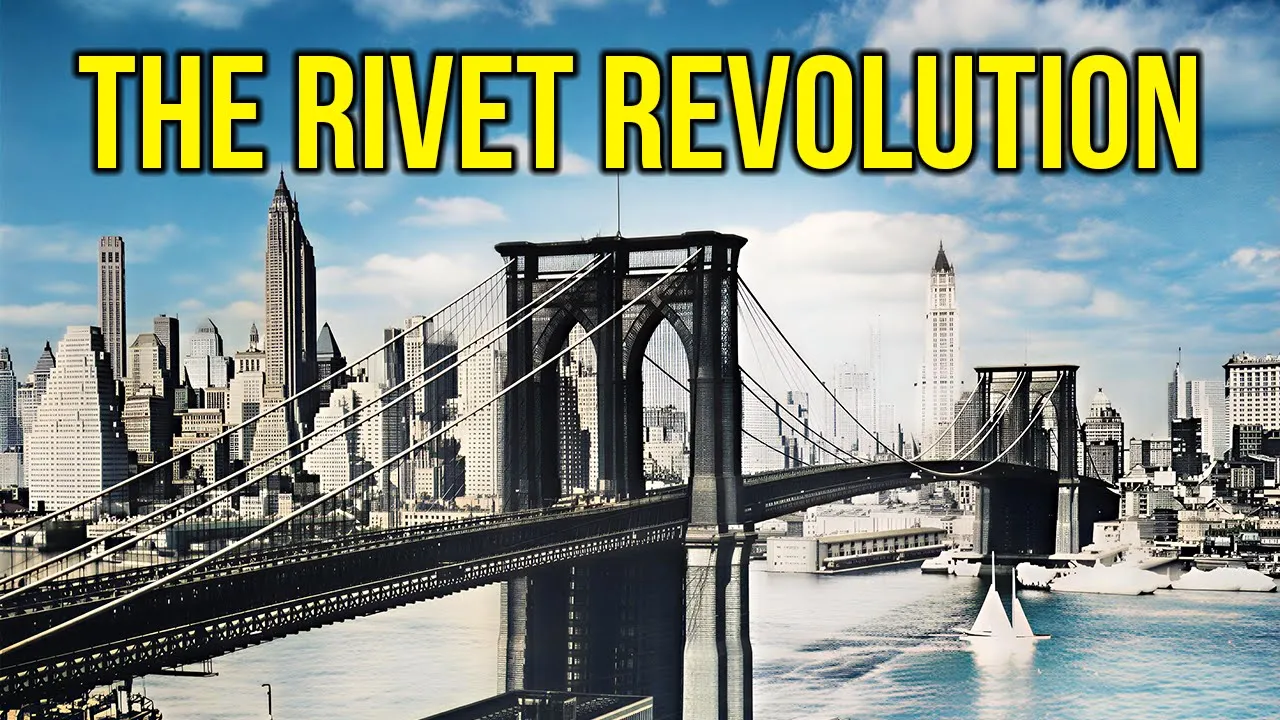





Five major bridges—the Brooklyn Bridge (1883), Hell Gate Bridge (1916), Macombs Dam Bridge (1889), High Bridge (1848), and George Washington Bridge (1931)—fundamentally transformed New York City by connecting its five boroughs across rivers and waterways, enabling the city's growth from isolated islands into a unified metropolis; these bridges employed innovative engineering solutions including caisson foundations, swing mechanisms, and suspension systems that addressed tidal challenges and transportation needs while shaping the city's modern identity.
How NYC's Five Historic Bridges Shaped Its Urban Growth
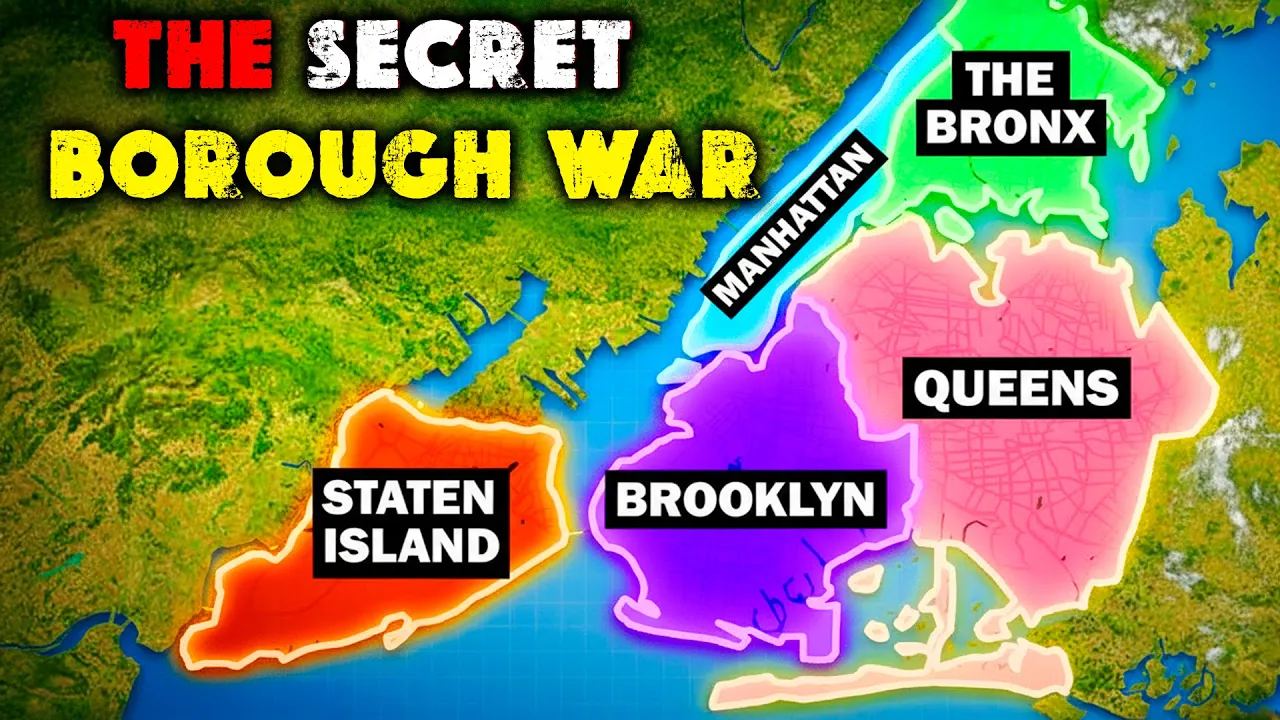
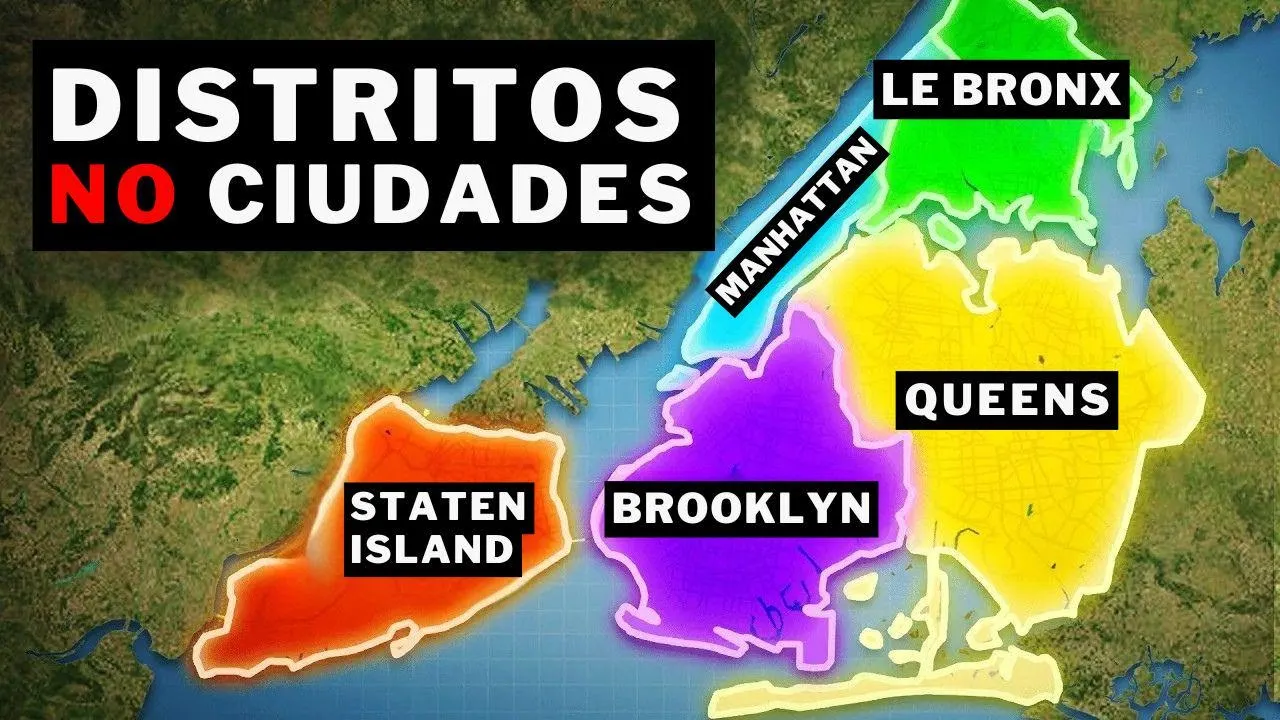
Added:Geography of New York City, specifically the layout of the five boroughs and the major waterways (East River, Hudson River, and NY Harbor) separating them.
The historical context of 19th-century urbanization, including population density shifts and the Industrial Revolution's impact on cities.
Basic concepts of civil engineering and architectural design, such as the structural differences between suspension, cantilever, and arch bridges.
The political consolidation of Greater New York in 1898, which politically unified the boroughs before they were fully connected physically.
The influence of Robert Moses and 20th-century urban planning on modern highway systems and car-centric infrastructure in NYC.
The socioeconomic impacts of infrastructure projects, such as gentrification, neighborhood displacement, and demographic shifts following transit expansion.
Advanced structural preservation and the engineering challenges of maintaining centenarian steel and masonry bridges under modern traffic loads.
Modern urban design theories focusing on transit-oriented development (TOD) and the integration of pedestrian and cycling infrastructure on historic bridges.
1.6M views26.5Klikes18:54Original Release: 2023-08-17
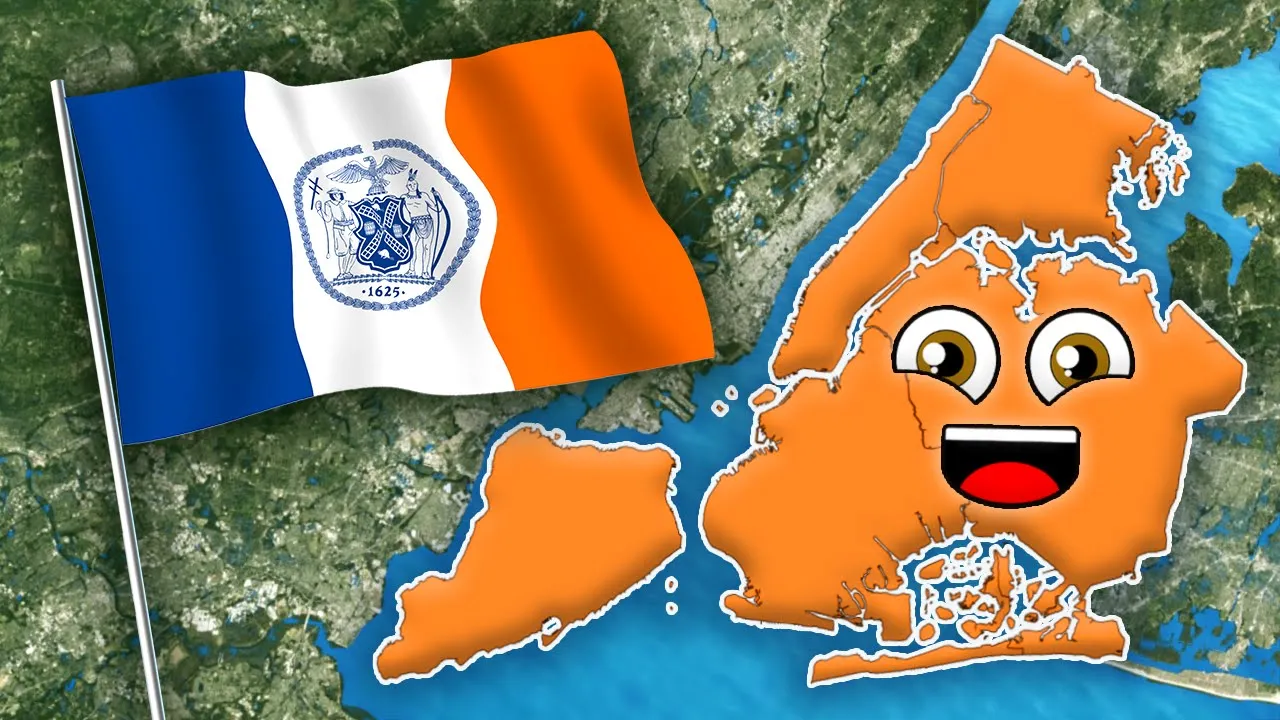
- Other than the Bronx, the other four boroughs of New York City are all on islands.
Originally, the only way to get between different parts of New York City was to use a ferry, and it became a danger as well as an inconvenience.
So bridges were conceived and built across some of the rivers that separate the five boroughs of New York City.
Hi, I'm Michael Wyetzner, and I've been an architect in New York for over 35 years.
And today, we're gonna talk about some of the architectural and engineering marvels that are the bridges that connect all five boroughs of New York and New Jersey.
As recently as the 1850s, the technology did not exist to span the East River, let alone the much wider, Hudson River.
And the first to do it is one of the great technological marvels of any age, and that's the Brooklyn Bridge.
So a few things about building this bridge.
First of all, shipping traffic could not be interrupted.
So the height of the bridge was made to be 135 ft above high tide.
And to this day, navy ships, that is the maximum height they can be in order to get underneath the Brooklyn Bridge.
So all these bridges are measured above high tide, because really, all the rivers that surround New York are subject to the tides, because they're so close to the ocean.
The towers themselves are 278 ft tall.
It's a time that these were built, these towers were actually the tallest structures in all of Manhattan and Brooklyn.
So Brooklyn wasn't always a borough.
In fact, at the time the bridge was conceived and built, it was the third largest city in America, and separate from New York.
And New York City became the five boroughs with consolidation in 1898.
So this photograph is actually looking towards Brooklyn from the Manhattan side, and you could see what a great span it was to go across the East River.
In fact, it's 1,595 ft from tower to tower.
So to achieve this took monumental effort and some really ingenious engineering from John Roebling.
Not only did he have to engineer the entire bridge, but he also had to manufacture the cable that was his own invention.
So a suspension bridge basically is you build these two towers, which you see here, and then you suspend this long cable from those towers, and then you drop cables down from that suspended catenary that supports the roadway.
The Brooklyn Bridge is known as a great suspension bridge, but it's actually also a cable stay bridge.
It's two in one.
A cable stay bridge takes two towers, and instead of suspending a catenary that anchors the roadway with direct cables.
So the crossing of these cables forms this lacy finery in contrast to these massive stone towers.
And the completed towers weigh 140 million pounds each.
So what people don't realize is actually, these great granite towers actually sit on a foundation of wood.
These towers sit on caissons, which is just a French word for chest like treasure chest.
And these caissons are actually like a huge trapezoidal dome made out of wood that was floated into the middle of the river, and they dropped them to the bottom of the river, at which point they pumped in compressed air and pumped out water, so that men could work in the space underneath this sort of wooden roof, and they can dig down with pick and shovel until they hit bedrock.
And when they finally did hit bedrock, they pumped the inner space with concrete, and that is what these towers sit on.
So as they were digging down into the riverbed, they were piling stones on top of the caisson.
So little by little, it sunk as they dug, and they added more stone, and it sung to the bottom of the river until they hit bedrock, and then the tower began.
This was such a great idea in theory, but they didn't know a lot about hydraulics, and certainly, they didn't know a lot about how it affected the human body.
In a sense, this was really low tech.
They were building these foundations with picks and shovels in these horrible conditions.
It was over 100 degrees under there.
The ceiling height was only 9 1/2 ft.
It was really heavy, heavy air, and a lot of people died.
It turned out to be what's known as the bends, which is essentially, just nitrogen bubbles in the bloodstream.
And years later, it was figured out that if as long as you came up slowly, you would not be affected by this.
So the chief engineer, John Roebling, he didn't really believe in modern medicine.
And when his foot was crushed by a boat against one of the piers, he refused medical attention, which would've saved his life.
And subsequently, in a matter of weeks, he came down with tetanus and died.
The engineering fell to his son, Washington, who had researched a lot of the case on technology, and he became the chief engineer, and oversaw the building of the bridge until he got a terrible case of the bends and was incapacitated, and then the rest of the bridge was left to his wife, Emily.
And what a lot of people don't realize is Emily Roebling essentially got the Brooklyn Bridge built.
One of the great unsung women in history.
And in 1883, when the bridge was finally complete, Emily was the first to cross the bridge with a rooster to symbolize victory.
Next up, the bridge over troubled water, the Hell Gate Bridge.
So I love about this bridge a lot like the Brooklyn Bridge is the contrast between the steel work of the span and the stone work of the towers.
But in this case, the towers are really just decorative and are there for show only.
They're not actually supporting the arch.
The arch is being supported at the base of those towers, but you didn't need a tower above that base.
So the bridge was begun in 1912 and completed in 1916 in the middle of World War I.
And it spans across one portion of the East River from Astoria, Queens to Wards Island.
It's 970 ft of which this arch spans, and this steel arch was using sort of a new kind of steel, which was carbon steel, and which was extremely strong.
It was designed to hold 60 200-ton locomotives all at once.
So it's called the Hell Gate Bridge, because ever since the Dutch were here, the confluence of the East River and the Harlem River right around Randalls and Wards Island were really dangerous waters.
By the 1850s, about a thousand ships a year would smash onto the rocks in the straits, hence the name Hell Gate.
So to move goods and people across this waterway, the most efficient way to do it was with a bridge.
And so they hired Gustav Lindenthal, a great German engineer to accomplish that.
Again, in order not to interrupt shipping traffic, the arch had to be built from either side, and then connected at the end in the middle.
And this bridge was built so precisely that it was only 5/16 of an inch that had to be accounted for at the end when the two met, which is exactly the width of the end of this pen, which is an amazing feat.
So this bridge is just for trains.
It was built by the Pennsylvania Railroad Company who also built Penn Station.
The Pennsylvania Rail Road Company had bought the Long Island Rail Road and they brought trains underneath the East River through tunnels to Penn Station.
But to get to New England, they needed a bridge to span across to Queens and the Bronx.
And so they built the Hell Gate Bridge, so it essentially connected Long Island to the mainland in the Bronx, which made it a very high value bridge, so high in fact that it was targeted by the Nazis during World War II.
Let's take a closer look at the towers.
This is a beautiful photograph.
I love this tower in contrast to this steel arch.
Again, like the Brooklyn Bridge, it's the contrast of this fine metal work against this heavy stone work.
But what I really find interesting about the towers is that the architect who was Henry Hornbostel who worked with Lindenthal on a number of bridges made these look like triumphal arches, like something you'd see in Rome or Paris.
And so there's the central arch in the middle that the trains run through, but then there's smaller arches at the ends for people to go through.
So in the 1990s, Congress allocated $55 million to repaint the bridge, and they chose this new color called Hell Gate Red.
Unfortunately, that paint didn't have the proper UV protection and it quickly faded, and had to be repainted, and each subsequent repainting also did not have the proper UV protection.
And subsequently, this bridge always looks faded and worn.
One New York City politician said, "It should be the jewel of the city, but instead, it's eight shades of lavender."
Next up, the oldest moving bridge in New York, Macombs Dam Bridge.
So the Macombs Dam Bridge spans the Harlem River between the Bronx and Upper Manhattan, essentially connecting Yankee Stadium to what was the Polo Grounds.
And now, Rucker Park, the famous basketball court, is at the foot of that bridge in Manhattan.
This bridge is only 25 ft above high tide, which boats can't get under.
So to counteract that, they created what's known as a Swing Bridge, and what this bridge does is it actually pivots on this drum.
And so the entire bridge from tower to tower disconnects, and actually pivots 90 degrees to let boat traffic come in on either side.
So to build this bridge, they had to create a man-made island in the middle of the river, which leaves 150 ft on either side, so that this bridge could have this drum, this central support.
So swing bridges are much longer lasting than other kinds of movable bridges like draw bridges, or lift bridges, or even retractable bridges, because the machinery is unstressed in its closed position, because they break the span in half essentially.
The others have to deal with the span and then the span as it's moving, which puts a lot of live load on it.
The bridge is essentially just a Pratt truss.
Pratt truss is essentially a truss that's taller in the middle and angles down at the ends.
And each vertical bay is divided by a single diagonal, that's a Pratt truss.
So the Macombs is basically a Pratt truss, but typically, Pratt trusses are not supported in the center like this one is.
And what I find interesting about the design, which was done by A.P. Boller, Alfred Pancoast Boller, is that he expresses that central support with this double vertical here in the middle with those little finials at the top, and then with these very strong diagonals here, where he almost creates another plane and it almost looks like it's opening out.
And at the ends of the bridges are these somewhat diminutive towers that almost look like little fairytale towers out of something the Grimm Brothers would write.
So not as famous as the Brooklyn Bridge, obviously, but it was memorialized by Edward Hopper in some of his paintings early in the 20th century.
In fact, Boller designed a number of these sorts of bridges, and they sort of stitch across the Harlem River and connect Manhattan with the Bronx.
So let's talk about how the Macombs Dam Bridge got its name.
So going all the way back to the early 1800s, Alexander Macomb ran a ferry service across at this very spot.
Later, his son took this over and then his son built a dam across the Harlem River to the chagrin of many other people along the river way, especially those who needed to navigate it.
And he only left a seven foot wide lock as it were.
And so basically, only one boat at a time could go through.
In fact, it was such a nuisance that at some point, a bunch of concerned citizens punched a hole in that bridge.
And actually, the New York State Supreme Court sided with the people who breached and destroyed the bridge.
Now, let's talk about the oldest surviving bridge in all of New York City, the High Bridge.
So the High Bridge crosses the Harlem River at 174th Street in Manhattan.
Today, it's a pedestrian bridge, but in fact, it was built as an aqueduct.
So it starts 40 miles upstate at the Croton Reservoir, and works its way down and crosses the Harlem River, and terminates at what was this Egiptoid-looking reservoir at 42nd and 5th Avenue where the main branch of the New York Public Library today stands.
This bridge was super important when it was built, because it brought fresh water to Manhattan.
Before that, most of the water was sourced locally, and quite often was polluted.
And in fact, there were cholera outbreaks, because the water was so dirty in most of Manhattan.
So if you subscribe to the theory, that it's the water that makes the bagels and the pizza so fantastic in New York, then one can really appreciate the High Bridge.
So even though it's designed to look like a Roman aqueduct, where the water runs in a trough on top of the arches, running at the top of this bridge actually are pipes that supply water to New York City.
And those pipes are covered by five feet of Earth, so that they don't freeze in the winter.
And in the distance, you can see the High Bridge Tower, which was actually a water tower that contained 47,000 gallons of water.
Those pipes are supported by these stone arches, that sort of walk across the river, and there's seven of them with 80 foot spans that actually cross the river, and then there's eight more with 50 foot spans that actually cross on the land.
This is the oldest surviving bridge in New York.
And when it was built, there was sort of parkland on either side and it was a popular recreation spot for many New Yorkers.
Before the Brooklyn Bridge became this great tourist attraction, actually, it was the High Bridge, that was a tourist attraction in Upper Manhattan.
This bridge was designed by John Bloomfield Jervis who was the chief engineer of the Erie Canal.
The Erie Canal runs from Buffalo and Lake Erie all the way east to Albany, and then down straight south to New York, and it made the New York Harbor the economic powerhouse that it is.
And it was created by DeWitt Clinton who was the governor of New York at the time, and he did two great things, DeWitt Clinton.
He did the Erie Canal and he did the 1811 Commissioners' Plan, which laid out the grid for the city of New York.
So this is how the bridge looked when it was originally built in 1848.
But during World War I, shipping traffic on the river increased greatly, and these arches became somewhat of a hazard to the boats.
In 1928, they eliminated the arches across the water, and put in a huge steel arch bridge.
It's unfortunate because the beauty of the High Bridge was that sort of rhythmic repetition of those arches, and that's all been destroyed by this huge 450 foot arch, even though one could certainly understand the reasons why they did it, but it's still a shame.
Today, it's a pedestrian bridge and it's sort of returned to what it originally was in that it's sort of just a novelty to walk across it.
Next up, the busiest bridge in the world, the George Washington Bridge.
The less than 50 years after the Brooklyn Bridge did the seemingly impossible job of spanning the East River, the George Washington Bridge more than doubled this span across the Hudson River.
And in this case, it was done as a pure suspension bridge.
So this is a view looking from the Manhattan side sort of northwest across to New Jersey.
And you could see the Manhattan Tower here with the Little Red Lighthouse just below it at Jeffrey's Hook.
And then these towers are 570 ft tall, and they drape a cable that's three feet in diameter across from the towers and from those cables that they drop than other cables that supports the roadway, 200 ft above the water at high tide.
Builders and engineers had been dreaming about spanning the Hudson River for over 100 years, but the technology just wasn't there.
Finally, in 1931, that was completed by Othmar Ammann who was a lieutenant to Gustav Lindenthal, the designer and engineer of the Hell Gate Bridge.
So the George Washington Bridge connects Fort Lee, New Jersey to Upper Manhattan at 178th Street.
And its two towers basically stand on the land, unlike the Brooklyn Bridge where they're in the water.
So on the Manhattan side, the tower sits on the shoreline just above the Little Red Lighthouse, which we'll talk about later.
And on the New Jersey side, they built out into the river just a bit to accommodate the New Jersey Tower.
The towers to the George Washington Bridge are really unique in that originally, they were designed by Cass Gilbert who was a pretty famous architect.
In fact, he designed the Woolworth Building in Lower Manhattan.
And they were originally supposed to be clad in granite and concrete, but it was the height of the depression when this bridge was being built and money was tight.
And when these towers first went up and everyone saw this muscular and robust steel structure, they were kind of awed by it, and they were like, "Hey, let's just leave them as they are, save some money, and leave this really expressive piece of architecture on its own."
That decision actually led to the project coming in under budget and ahead of schedule, something unheard of for a public infrastructure project of this scale, even back then.
So even though these towers looked super modern, in fact, they were built at the end of the 1920s, and that was before they had the technology to do rolled steel.
So unlike a rolled piece of steel, where you basically have a long I-beam that at the end gets either welded or bolted to the other beam, here, they'd have to build these towers out of smaller pieces of steel.
And what that required was that those pieces be riveted every few inches to other pieces, and it's an incredible amount of labor.
Let's take a look at how it appeared when it was first constructed.
And when the bridge was originally built, it was a single roadway.
So these towers were so strong and robust looking, but the roadway itself was super thin, which Ammann loved, but most people were completely unnerved by, and were almost afraid to drive across it.
It wasn't until 30 years later that they built the second roadway.
Traffic had increased amazingly by then, and as soon as the bridge was open, it was overcrowded and it needed more lanes.
So they filled in the middle and they decided to add a second roadway beneath the first roadway.
So when it was first built, it was just six lanes, but having added the second roadway, the lower roadway, it is now 14 lanes, and it's still the world's busiest bridge, with 108 million vehicles crossing it every year.
When it opened in 1931, the original toll price was just 50 cents to get into Manhattan.
By 1970s, it was $1.50.
And now, it's actually $16 to cross the bridge.
And if you're a truck, it could cause up to $100 to cross the bridge.
And what all that adds up to is $1 million a day in revenue for the Port Authority, which is actually $365 million a year.
Just to put it into context, this bridge costs $59 million to build.
So basically, every two months, it makes back what it costs.
One fun little fact about the George Washington Bridge is that on the Manhattan side, it actually terminates at an uptown bus station, which was designed by Pier Luigi Nervi, the great Italian engineer and architect.
And what's interesting about that is it's one of the best buildings in Manhattan, and no one's even heard of it.
So the Little Red Lighthouse, which you could see here in this photo, was there before the bridge was built.
And it was there to protect ships from what's known as Jeffrey's Hook, which a lot of ships would crash into, because of the currents in the Hudson River.
And when they built the bridge, originally, they were gonna knock it down, but there was a bit of an outcry and it was saved.
And to this day, the Little Red Lighthouse remains and it's the subject of a famous children's book.
So those are some of the most interesting bridges of New York City.
Tell us what other bridges you'd like to see in the comments below.
[upbeat music]
Up Next
7:20
Infrastructure Decision-Making: Repair vs. Rebuild NYC Bridges
@nytimes
366.6K views•2014-09-18
30:32
Ultrasonic Transducers: Resonant Frequency Measurement and Horn Design
@imajeenyus42
229.9K views•2017-02-22
54:16
Polymer Environmental Degradation: Mechanisms & Stabilization
@iit
1.8K views•2012-07-10
33:39
How a Student's Question Saved a NYC Skyscraper from Collapse
@veritasium
22.8M views•2025-04-26
Related Study Plans & Knowledge Roadmaps
Structured learning paths in Engineering
engineering
Building Acoustic Levitators: Physics & Arduino
01The Physics of Sound and Standing Waves
02Piezoelectric Transducers and H-Bridge Drivers
03Arduino Programming: Generating 40 kHz Signals
+ 2 more learning modules
14h5 modules
Explore Roadmap
engineering
Building Peltier Cloud Chambers: Particle Tracks
01Cosmic Rays & Cloud Chamber Physics
02Thermoelectric Cooling (TEC) Fundamentals
03Custom Liquid-Cooling Loop Design
+ 2 more learning modules
18h5 modules
Explore Roadmap
engineering
Yagi-Uda Antennas: Modeling, Build & VNA Test
01Introduction to RF and Antenna Fundamentals
02Yagi-Uda Antenna Design Principles
03Antenna Modeling and Simulation in 4NEC2
+ 2 more learning modules
18h5 modules
Explore Roadmap
engineering
ECG Monitor Design: Op-Amps, Filters & Noise
01Electronics & Breadboard Basics
02Op-Amps and Instrumentation Amplifiers
03Bioelectricity and ECG Fundamentals
+ 2 more learning modules
18h5 modules
Explore Roadmap