












![CDS 1 2022 Complete Physics. [NDA || CAPF]](https://i.ytimg.com/vi/O1fgcQF2yts/maxresdefault.jpg)
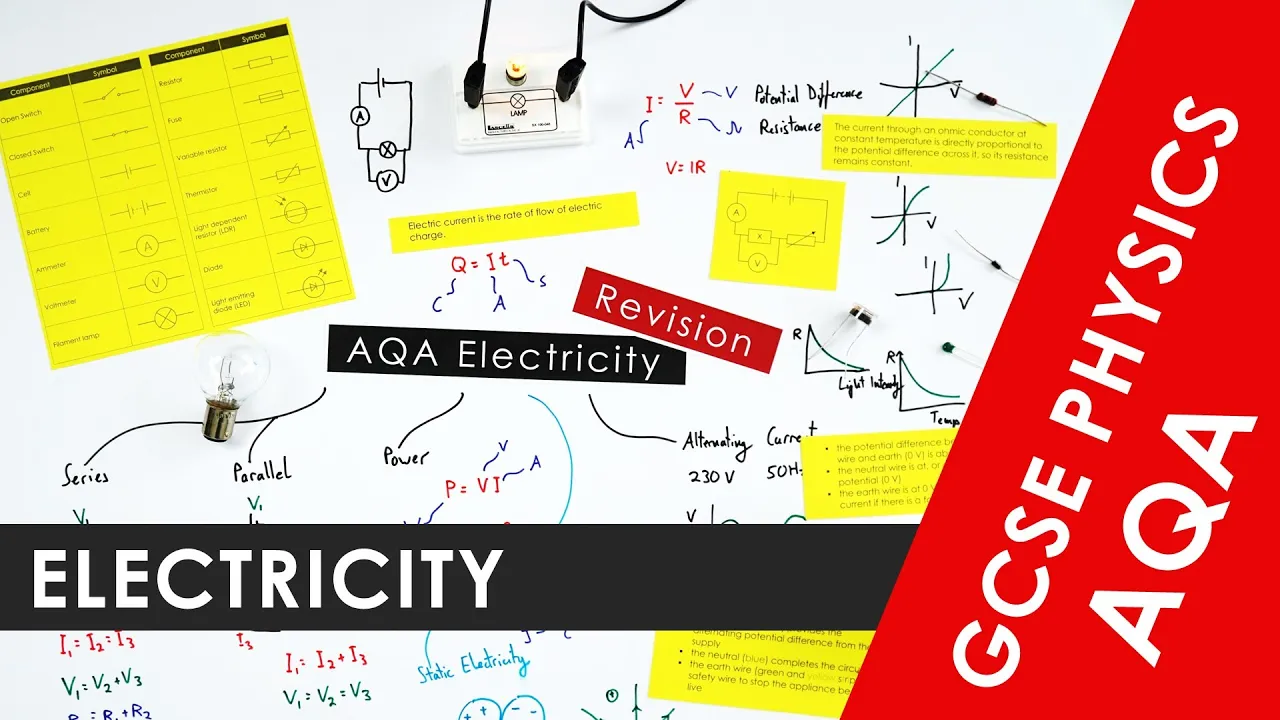

In the UK, electrical appliances are connected to mains electricity using three-core cable containing three wires: the brown live wire carries 230V potential difference from the supply, the blue neutral wire completes the circuit at approximately 0V, and the green/yellow earth wire serves as a safety mechanism that directs dangerous currents to the ground if an appliance's metal case becomes live, thereby preventing electric shocks through the fuse protection system.
GCSE Physics: Mains Electricity, Live, Neutral & Earth Wires
Added:Understanding the difference between Alternating Current (AC) and Direct Current (DC).
Basic electrical quantities including voltage (potential difference), current, and resistance.
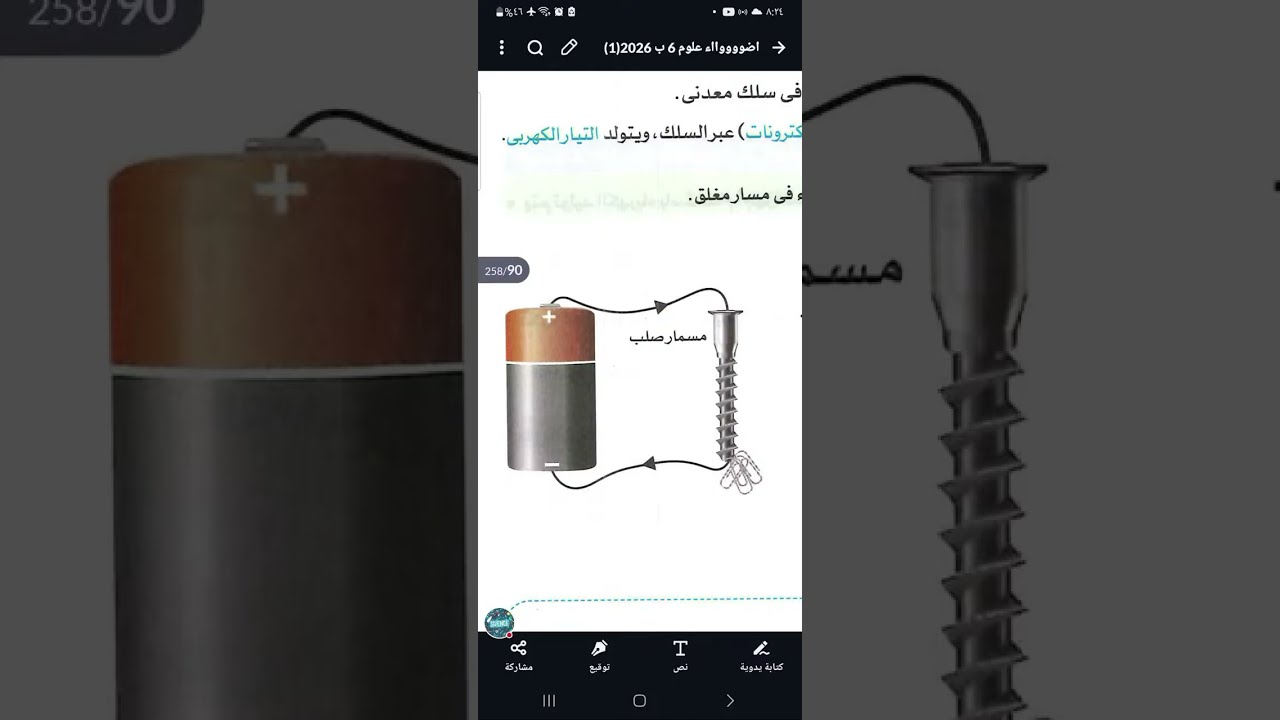
The fundamental concept of a closed electrical circuit and how current flows through a complete loop.
The distinction between electrical conductors and insulators, particularly regarding human safety.
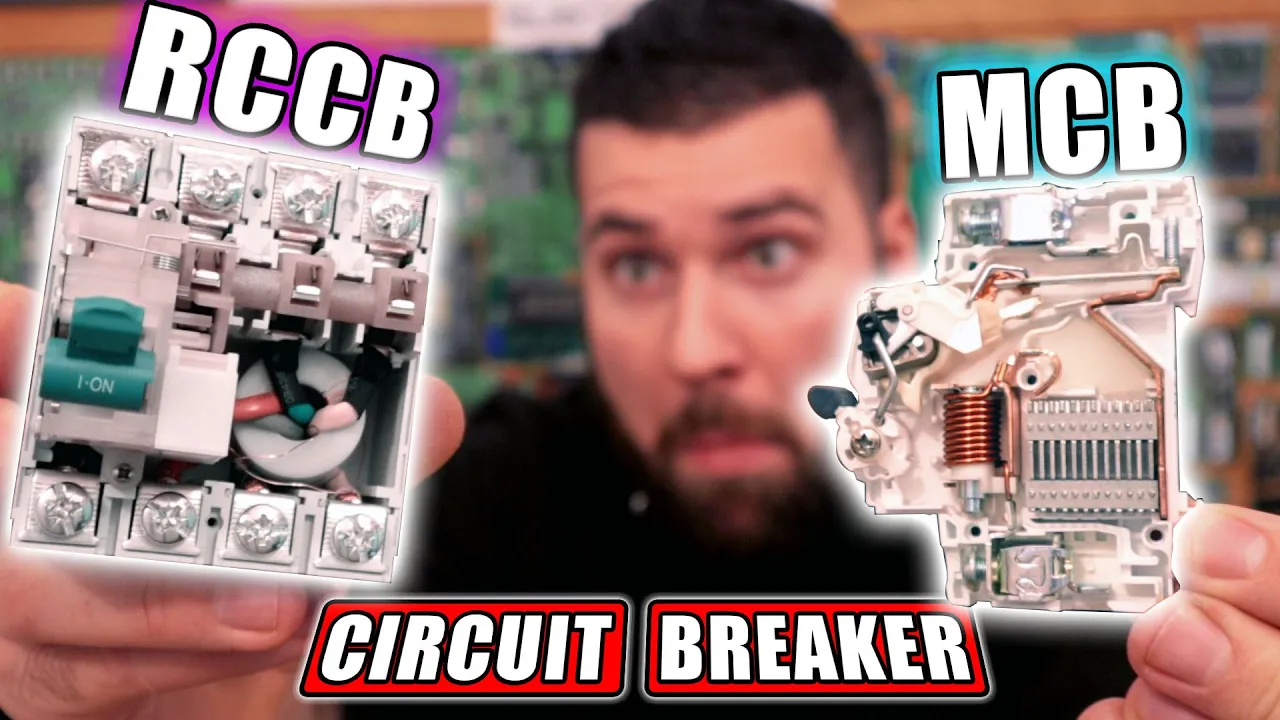
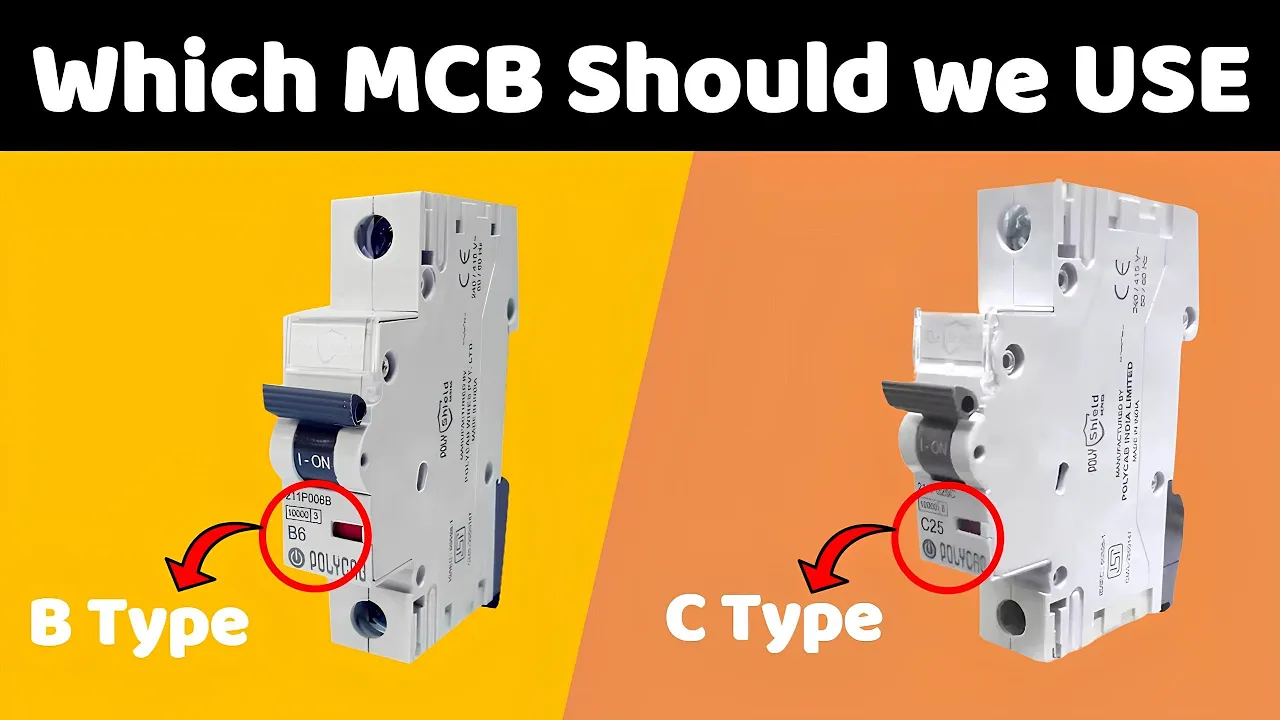
The operation of modern safety devices, specifically Miniature Circuit Breakers (MCBs) and Residual Current Circuit Breakers (RCCBs) compared to fuses.
The concept of 'double insulation' and why some appliances only require two-core cables (no earth wire).
How electrical power (P = IV) and energy transfer (E = Pt) are calculated for household appliances.
The structure of the National Grid, including how step-up and step-down transformers minimize energy loss during transmission.
523.5K views6.3Klikes4:33Original Release: 2017-07-03
[Music] hi and welcome back to frees science lessons.
co.uk by the end of this video you should be able to describe how appliances are connected to Mains electricity using Three core cable you should then be able to describe what's meant by the Live Wire the neutral wire and the Earth wire and finally you should be able to describe the functions of these wires in the last video we saw that Main's electricity in the UK is an alternating current or AC for short this means that the flow of electrons moves in the forward and then reverse directions in the UK alternating current has a frequency of 50 hertz and the potential difference of around 230 volts now electrical appliances in the UK are normally connected to the main Supply using Three core cable and I'm showing you that here as you can see there are three wires each wire is made of copper which is a Good Conduct of electricity however the Coatings are made of plastic which does not conduct electricity we're going to look at the functions of each wire in turn and you need to learn these the brown wire is called the live wire and the Live Wire carries a potential difference from this Supply and it's always around 230 volts the Live Wire is connected to a fuse in the plug and I'm showing you that here we're going to look at that later the blue wire is called the neutral wire and this completes the circuit with the Live Wire the potential difference of the neutral wire is around 0 volts compared to the live wire finally the green and yellow striped wire is called the Earth wire this is a safety wire and we're going to look at that in a minute I'm showing you here a simple circuit wire to the main Supply so the live wires carrying electricity with the poti potential difference of 230 volts from the electricity generators remember that the Live Wire is connected to the fuse and I'm shown you the symbol for a fuse here you need to learn that symbol energy is transferred as the electrical current passes through the appliance and finally the neutral wire completes the circuit now I should point out that this is a relatively simple model and if you do a level physics you'll discover that it's a bit more complicated than this however this is what you need to know at GCSE now there are a couple of points that we need to look at firstly the Live Wire can be extremely dangerous and it could easily be fatal if touched and that's true even if we open the switch like this that's because the first part of the Live Wire running to the switch still has a potential difference of 230 volts now the potential difference of the earth is 0 volt and by the earth I literally mean the ground that you're standing on so if someone touched the live wire a current would flow through the person into the Earth and they'd be electrocuted now most appliances in the UK are connected to an earth wire so we're going to look at that now I'm showing you here a washing machine with a metal case appliances with a metal case can be very dangerous and that's because if the live wire comes loose and touches the metal case the case can become live in other words it's got a potential difference of 230 volts now that could give someone a fatal electric shock if they touch the live case so this is where the Earth wire comes in the metal case is attached to the Earth wire and the Earth wire is connected into the ground with a metal rod like this so if the case does become live a huge current now flows to the Earth the fuse melts and shuts off the current this prevents anyone from getting an electric shock from touching the case remember you'll find plenty of questions on Main's electricity in my vision workbook and you can get that by clicking on the link above okay so hopefully now you should be able to describe how appliances are connected to Main's electricity using Three core cable you should then be able to describe what's meant by the Live Wire the neutral wire and the Earth wire and finally you should be able to describe the functions of these wires [Music]
Up Next

11:39
Superparamagnetism in Nanoparticles | Basics Explained
@PhysicsFundamentals-on3jg
1.3K views•2023-07-06

12:53
21cm Hyperfine Transition in Neutral Hydrogen: Radio Astronomy Basics
@AaronRobertParsons
12.4K views•2011-10-13

32:32
NMR Spin Physics I: Zeeman Effect, Resonance Condition & Larmor Frequency
@nptel-indianinstituteofsci8064
2.3K views•2024-01-17

27:14
Entropy and the Second Law of Thermodynamics Explained
@veritasium
27.5M views•2023-07-01
Related Study Plans & Knowledge Roadmaps
Structured learning paths in Physics
physics
Nuclear Physics (Decay, Fission & Reactors)
01Atomic Structure and the Binding Force
02Radioactive Decay and Half-Life
03Nuclear Fission Mechanics and Chain Reactions
+ 2 more learning modules
12h5 modules
Explore Roadmap
physics
Soft Matter (Polymers, Colloids & Rheology)
01Foundations of Soft Matter & Thermal Forces
02Polymer Physics and Macromolecules
03Colloids, Surfactants, and Self-Assembly
+ 2 more learning modules
38h5 modules
Explore Roadmap
physics
Analytical Mechanics: Lagrangian & Hamiltonian
01Mathematical Foundations: Calculus of Variations
02From Newtonian Mechanics to Constraint Dynamics
03The Principle of Least Action & Lagrangian Mechanics
+ 3 more learning modules
28h6 modules
Explore Roadmap
physics
General Relativity (Spacetime & Cosmology)
01Foundations of Relativity: Special Relativity
02The Geometry of Spacetime: Equivalence Principle & Curvature
03Einstein's Field Equations: The Mathematics of Gravity
+ 2 more learning modules
55h5 modules
Explore Roadmap