














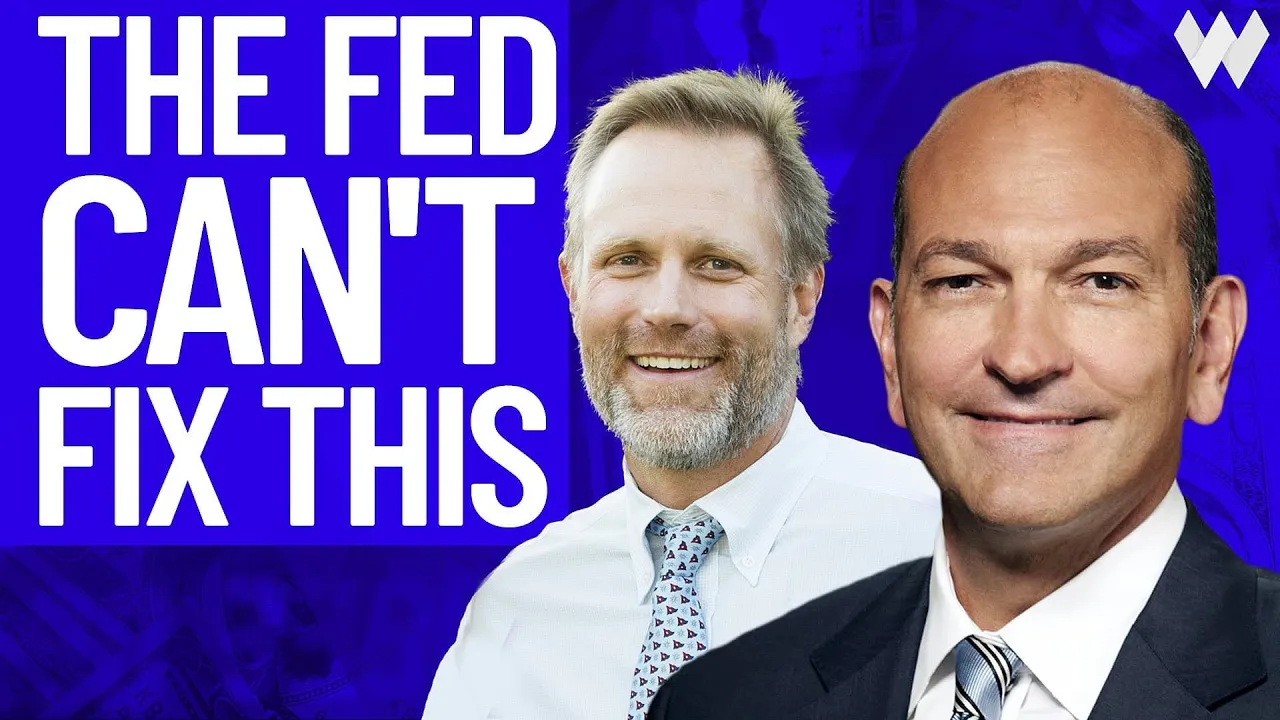


The Federal Reserve uses monetary policy tools like Quantitative Easing (QE) and Quantitative Tightening (QT) to manage the economy; QE involves creating money to buy assets and lower interest rates, which benefits investors and asset holders while potentially causing inflation that hurts savers, while QT reverses this by shrinking the balance sheet to fight inflation. When the Fed ends QT, it signals potential future rate cuts and increased liquidity, which can lead to inflation returning and savings losing value, making it crucial for individuals to invest rather than keep money in cash to protect against inflation and build long-term wealth.
Federal Reserve Policy Shift: Economic Impact Analysis for Investors
Added:The basic functions of the Federal Reserve, specifically its dual mandate of promoting maximum employment and price stability.
The mechanics of Quantitative Easing (QE) and Quantitative Tightening (QT), including how central bank balance sheets affect market liquidity.
The fundamental relationship between central bank interest rate decisions, inflation, bond yields, and stock market valuations.
An understanding of open market operations and how the federal funds rate serves as a benchmark for global credit markets.
Practical asset allocation and portfolio rebalancing strategies tailored for a transition from a contractionary to an expansionary monetary environment.
Analyzing yield curve dynamics (such as bear steepening or bull flattening) to forecast economic growth and credit market health.
The international spillover effects of Fed policy changes on foreign exchange rates, global trade, and emerging market debt.
Advanced monetary theory concepts, such as the 'neutral rate of interest' (r-star) and the effectiveness of forward guidance.
261.6K views8.2Klikes14:06Original Release: 2025-12-21
The Federal Reserve just made a major change to our money system, and most people aren't going to realize what happened [music] until it impacts their wallet. In this video, I'm going to explain what happened, how it's [music] going to impact your money, your savings, and your investments, and share how you can prepare yourself to [music] avoid falling behind. So, on December 1st, the Federal Reserve officially stopped their multi-year long effort of fighting inflation by shrinking its balance sheet, aka quantitive tightening, or QT.
It's one of those unnecessarily sounding complicated concepts. Now, the easiest way to understand what quantitive tightening is and how it impacts your money is to first understand the opposite of it, which is quantitative easing or QE. Basically, when an economy isn't doing too hot, then businesses and people tend to spend less money buying stuff. And when no one spends any more money, the economy just gets worse. To prevent this from happening, the Federal Reserve usually steps in. They wave their magic wand, and they lower the official interest rate. Because when interest rates fall, it becomes cheaper for businesses and people like you and me to borrow money, which in turns encourages everyone to spend more money.
And there we have it, problem solved.
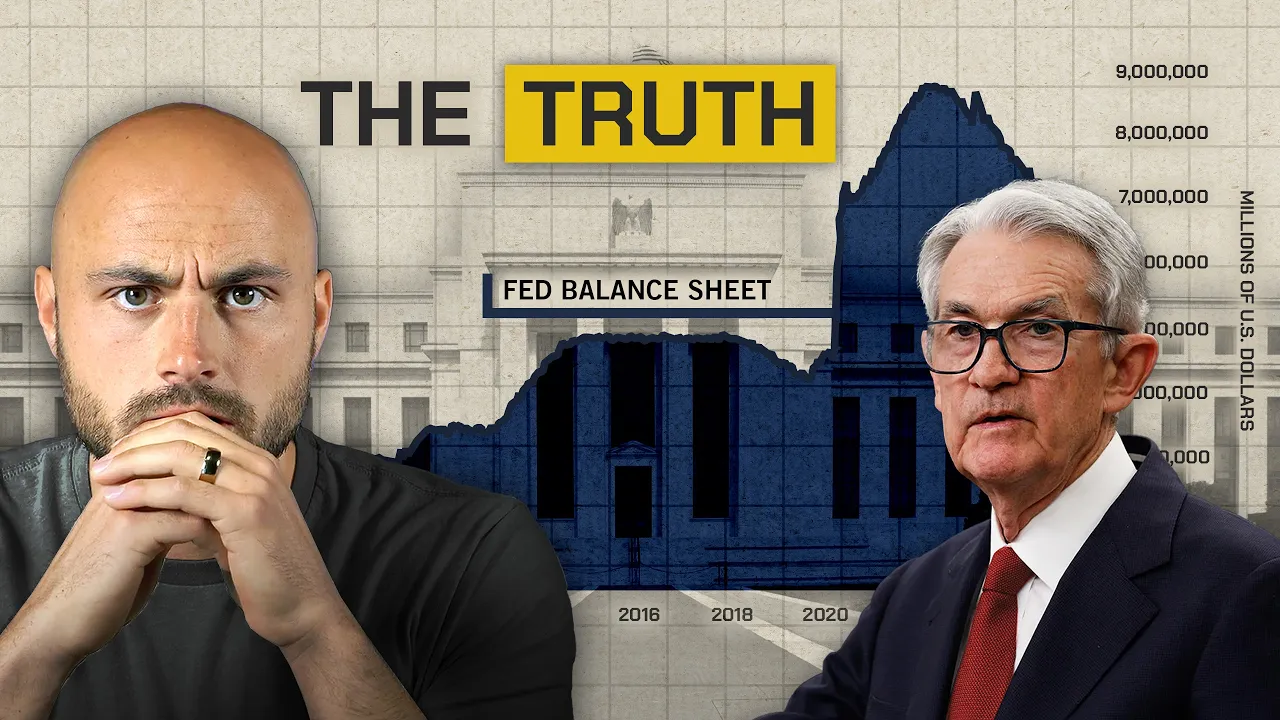
But what happens when the economy is both bad and interest rates are already really low that the Federal Reserve can't or won't use their magic wand to lower it even further? Well, friends, that is where quantitative easing or QE comes in, which is what the Fed did during the 2020 pandemic. And in simple terms, QE is basically when the Fed creates money or how the internet likes to call it, print money in order to do things like buy assets such as bonds to push market interest rates down. How does this magic work? Well, think about Mr. Magic lamp. All right, so if I am selling Mr. Magic lamps and I only have one magic lamp to sell and suddenly everyone in their mom wants to buy the magic lamp, then I can sell it for a lot more money. And bonds pretty much work the same way, right? when there is a giant new buyer in the market and in this case it is the Federal Reserve then the prices for bonds shoot up and the market interest rates for those bonds start to go down. So how much new money was created and how many bonds did the Fed actually buy? Well, let's take a look at this chart over here which basically shows the number of assets that the Federal Reserve holds on to. In the early 2020, the Fed owned about $4.2 trillion in assets, an amount that had barely moved for many years before. Once QE started, the Fed casually and very aggressively scooped up an additional $4 trillion worth of assets that by early 2022, the Fed's new balance sheet was sitting at around $9 trillion, meaning they printed a boatload of money and bought a boatload of bonds to encourage people to spend more and ultimately try to jumpstart the lagging economy. But at what cost, right? So, what I'm really interested in is how these consequences impacted everyday people because this could give us a big clue about what might happen after the Fed made their major change to our money system on December 1st. So, in order to see how quantitative easing or QE impacted everyday people, we want to look at this. This is called the K-shaped recovery chart, which shows who ended up benefiting and who ended up hurting from the quantitative easing efforts. Uh, which actually ties pretty well with one of my favorite songs, A Tale of Two Cities by J.Cole. The upward sloping line here shows who benefited the most from QE. And I'm sure you can guess who it is, Rich [clears throat] People. But just to show you how much this group benefited by, we got to look at two other charts. The first is this chart, and it comes with this table, which shows how much house prices have increased over time. So, pretty much since 2008, you'll notice that housing prices increased about 5% year-over-year. But then suddenly in 2021, we actually see a huge spike in prices where the prices shot up by 13% and then in 2022 it shoots up by another 18%. Why did this happen? Well, remember right, the Fed wanted people to spend more money by pushing market interest rates down which means that it was cheaper for people to borrow money. So suddenly a ton of new people wanted to buy houses and since there were only so many houses available, house sellers were like, "Hey, I'm going to increase my prices." Now I want us to look at this second chart which shows how the stock market grew over time. Now this specifically is the S&P 500 which is basically the 500 largest companies in the US essentially the stock market. Now on average the S&P 500 has historically returned around 7 to 10% year-over-year.
But in 2020 we actually see a huge jump of 18% growth and then in 2021 another 28%. Again, since it became cheaper to borrow money, businesses were like, "Heck yeah, let's spend more money to make more money." The point is, when interest rates go down, rich people, businesses, and investors, they tend to get a lot richer. In fact, we've seen more people become millionaires faster than ever before, and it's all thanks to investing. Now, what about this line?
All right, so this downward sloping line actually shows who was hurt the most by QE, aka the average person. But how did this happen, right? Well, since the Fed started creating all this money and injected it into the economy and the money system, inflation skyrocketed. In mid 2020, the inflation rate was nearly 0%. Uh, but by June of 2022, it started to jump to around 9%. Meaning things were getting really expensive fast. And what made it infinitely worse is that the Bureau of Labor Statistics reported that the real average weekly earning actually fell about 3% between early 2021 and early 2022. Which means the average worker they were effectively getting paid less money than before to do the same job. The point is if you did not invest your money then you effectively became poor because your salary did not keep up with inflation, your savings did not keep up with inflation and now everything is way more expensive. Now you have to understand that when everything gets more expensive, it is the rich people, it is the investors, the businesses who benefit from that, right? They are the ones that get even richer because they are the ones that are investing in assets and everyone else who is not investing unfortunately effectively gets left behind. By the way, for those of you who want to start investing or are investors, I actually put together a free 5-day investing email course where I'll show you how to invest without feeling overwhelmed and how to protect your money. Um, again, it's completely free. You can get it with the link down below or just scan the QR code over here. And now this is part of the story where quantitive tightening or QT comes in. So, when the Fed realized that things were getting really, really bad for the average Joe, they were like, "Oh crap, we got to figure out this inflation thing out." So, in 2022, the Fed decided to end quantitative easing and instead start quantitative tightening, which is the complete opposite. In simple terms, the goal of QT is to increase market interest rates because when interest rates go up, it's more expensive to borrow money and businesses and people tend to spend less, which lowers inflation. So, the Fed stop printing new money. They stop buying new bonds. They stop buying new assets and instead they just let the ones that it currently holds expire, which effectively removes the money that it created during QE. So going back to this chart, remember by early 2022, the Fed held around $9 trillion in assets.
But after implementing QT for a few years, they ended the year 2025 with just around $6.5 trillion in assets.
Meaning they effectively removed about $2.4 trillion from the Fed's balance sheet. Which brings us to today and how what's coming might impact our wallet and our savings and what you can do exactly to prepare yourself instead of potentially being left behind. So, as of December 1st, the Fed officially ended their QT efforts, meaning they stopped trying to fight inflation by shrinking its balance sheet. Now, there are three main reasons why they decided to end QT.
Uh, the first one being the Fed believes that they have accomplished their objective of getting the inflation rate down. As of late 2025, inflation has cooled from its peak of 9% back down to 3%, which is a bit better. Number two, the Fed saw that the bank reserves or all the money and liquidity in the banking system was getting a little bit too low for their comfort. If reserves get too tight, then this introduces a whole mess of issues that I'm not going to get into in this video. But just imagine that if you walked into your favorite bank and you asked to borrow money or you just wanted to take some of your own money out and they were like, "Yeah, sorry, we don't have enough money right now." Just imagine all the ruckus that that would cause. All right. So the third reason is that we are starting to see in the economic data that the job market is slowing down and the Fed is hoping that there if if there's more money floating around in the system um and it's cheaper to borrow money then companies will hire more people and which stimulates the job market. And now even more important is what does QT actually mean for you and the economy and how can you best prepare yourself for what's about to come. first just to clear the air because I think a lot of people they think that because a Fed ended QT it automatically means they're going to start QE again. But the reality is they are two completely different tools in the toolbox and just because you stop using one tool doesn't mean you're going to start using the other one. Now with that said, all right, here's what I think is going to happen.
This is based on what I've seen. Um so let's look at three major events on a timeline. So we know on December 1st the Fed officially stopped QT. Then on December 10th, the Fed officially announced that they're cutting interest rates, which is the third consecutive rate cut so far. And the reason for this is because again, the job market isn't looking great, right? They want to make it easier for companies to borrow and hire people. Now, what's interesting is that internally the Fed is like really mixed on whether they should have cut rates or not. Um, which is why when they announced the rate cut, they also said that they're going to start pausing future rate cuts until they have more economic data to base their decisions off of. But despite [snorts] what they're saying, uh I think there's a really high chance of rates continuously getting cut. And here's why. Now, normally the Federal Reserve is not supposed to be influenced by political pressure or by anyone, including the president, because the Fed as an entity is supposed to be independent, and its job is to balance many different economic datas and many different factors uh in order to make an effective decision and not just based on what people want. But here's where it's going to get dicey, right? the current Fed chair, Jerome Powell, his term ends in May of 2026, and Trump has already made it very, very clear that he wants to appoint someone who is going to do exactly what he wants, right? Someone who is more willing to cut rates very aggressively. Uh, basically a a yes man.
Now, to be fair, it's not just the Fed chair alone who decides whether or not they should lower or raise interest rates. It also involves the other bank presidents. But I think it's fair to say that the new Fed chair appointment from Trump is definitely going to give Trump a lot more influence over the entire process. All right, so moving on to December 11th. Now, on December 11th, the Fed announced that they're going to start implementing another tool called reserve management purchases or RMP.
Now, remember this tool is different from the past tools we used, right? In 2020, we saw QE implemented, then it stopped, then the Fed started QT, and then it stopped, and now this new tool called R&P. In simple terms, this means that the Fed is going to start buying a bunch of short-term Treasury bills. Why are they doing this? Well, the Fed said that it is to maintain an ample level of liquidity in the financial system to meet naturally growing demand.
Basically, putting more money into the money system. Now, the Fed has made it very clear that R&P is not QE. But if you recall from earlier, QE is basically when the Fed buys a bunch of bonds. On the other hand, R&P is basically when the Fed buys a bunch of short-term T bills. Technically, there is a bit more nuance between the two tools, but at the end of the day, R&P also has the effect of expanding the Fed's balance sheet and injecting liquidity into the financial system, just like QE. So, take that as you will. I'm not saying that R&P will 100% with definite certainty cause inflation to get worse because obviously no one knows for sure. It really depends on how extensive the R&P purchases will be. Now, what does this all mean and how can we best prepare ourselves? Well, basically, I think this K-shaped recovery chart is going to get even worse. And here's why. First, when interest rates fall, either from the Fed officially cutting the rates or from the effects of R&P, inflation typically creeps back up. It's cheaper to borrow money and people in businesses spend more and then sellers will charge higher prices. So meaning your groceries, your rent, and your gas and everything will tend to get more expensive, right? We already saw this play out before.
Second, your savings is going to lose value even faster, right? Let's say you have $10,000 sitting in a savings account that's earning maybe 3% interest rate, but if inflation goes up to let's say 4%, then you are effectively losing money every single year just by keeping it in cash. And third, the reality is we are not going to get raises fast enough to keep up with the pace of inflation if it happens. Right now, no one knows with a 100% certainty what's going to happen, and anyone who says otherwise is lying.
Um, but regardless of which direction the economy goes, right, it doesn't hurt to prepare yourself for what might come.
My recommendation for most people is to start investing in the stock market because I believe over the next few years interest rates are going to fall which means inflation is going to increase which means it's going to eat away at our money and our savings. And we've seen time and time and again that it is the investors who get richer and everyone else who does not invest tend to effectively lose wealth, lose money and get poorer. Again, if you are interested in investing or starting to invest, I have my 100% completely free investing course. Uh if you want to grab it, link down below or just the QR code over here. And the best part is you don't need to be rich to start investing, right? You can start investing with as little as $10, $5, even $1. The most important thing is for you to start. So, if you are wondering what is the easiest way to start investing to build long-term real wealth, then check out this video next.
It's a step-by-step beginner's guide to how to invest in 2026, where I'll show you exactly what to buy, when to buy it, and how to make your first investment without getting overwhelmed.
Up Next

6:47
Federal Reserve Stimulus Plan: Treasury Yields & Forward Guidance
@MeetKevin
138K views•2020-06-07
5:07
Impact of Yuan in Indo-Russian Trade Amid Sanctions
@WION
261.9K views•2022-07-01
10:33
Behavioral Economics Explained: Rationality, Nudges, and Risk
@crashcourse
1.1M views•2016-03-12

113:18
The Age of Easy Money: Fed & Inflation | Full Documentary
@frontline
21.2M views•2023-03-15
Related Study Plans & Knowledge Roadmaps
Structured learning paths in Economics
economics
Sovereign Debt: Defaults, IMF & Restructuring
01Introduction to Sovereign Debt & Government Bonds
02Debt Sustainability & Credit Ratings
03Anatomy and History of Debt Crises
+ 2 more learning modules
12h5 modules
Explore Roadmap
economics
Market Design: Matching Theory & Gale-Shapley
01Introduction to Market Design and Price-Free Markets
02Two-Sided Matching & The Gale-Shapley Algorithm
03School Choice Systems and Mechanism Design
+ 2 more learning modules
10h5 modules
Explore Roadmap
economics
Impossible Trinity: Forex, Capital & Policy
01Introduction to Monetary Policy and Central Banking
02Exchange Rates and International Capital Flows
03The Mundell-Fleming Model
+ 2 more learning modules
8h5 modules
Explore Roadmap
economics
Healthcare Economics: Market Failures & Systems
01Introduction to Healthcare Markets and Market Failure
02Asymmetric Information and Adverse Selection
03Moral Hazard and Insurance Design
+ 2 more learning modules
12h5 modules
Explore Roadmap