



![Biologische Invasionen [1]: Auslöser + 30 Begriffe erklärt! Indigene, Adventive, (invasive) Neobiota](https://i.ytimg.com/vi/DvdEq0tfWvY/hqdefault.jpg)


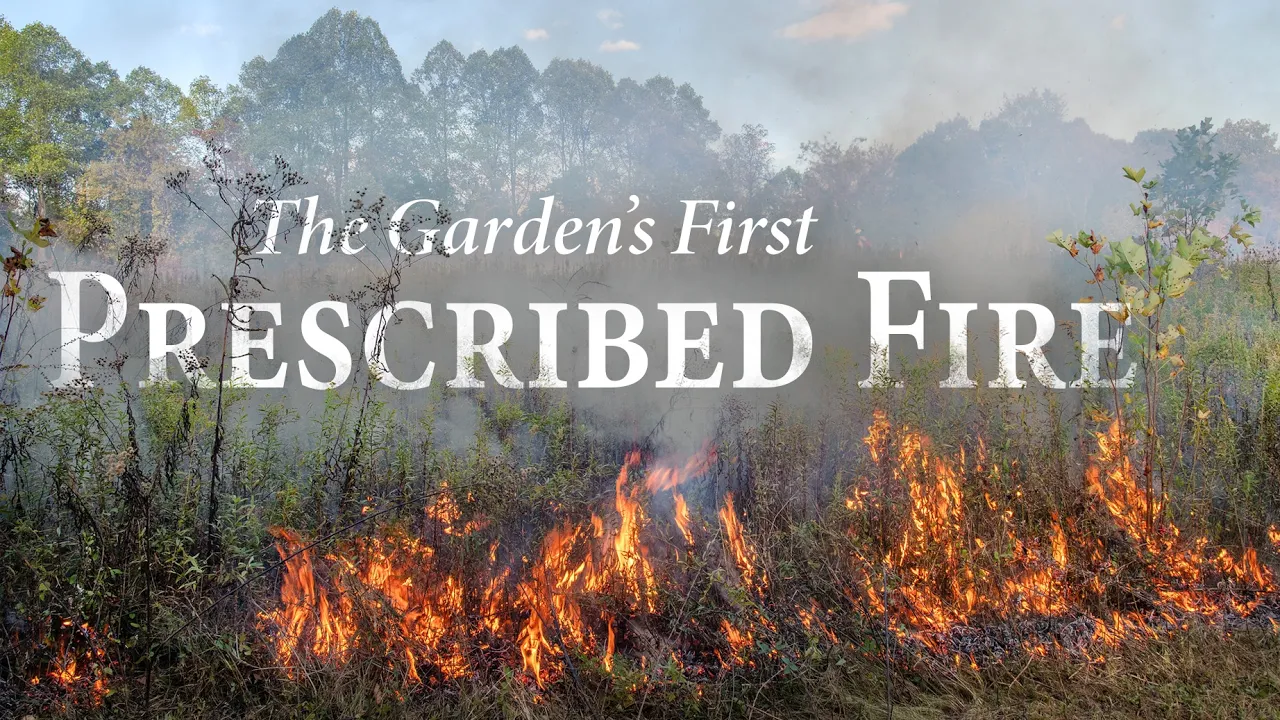









Prescribed fire is an effective tool for managing invasive plants by reducing fuel loads, promoting native plant regeneration, and creating conditions that favor native species over invasive ones; however, its successful implementation requires careful consideration of factors such as fire history, ecosystem type, timing, weather conditions, and safety protocols, as well as understanding that different plant communities respond differently to fire treatments.
Prescribed Fire for Invasive Plant Management: Expert Insights and Outcomes
Added:Basic principles of fire ecology, including how natural fire regimes historical maintain certain ecosystems like prairies and pine savannas.
The ecological definitions of native, non-native, and invasive plant species, and how biological invasions disrupt ecosystem functions.
Fundamental plant biology, particularly how different species reproduce (e.g., seed bank dynamics versus vegetative resprouting) and respond to physical stress.
General concepts of land stewardship and the overarching goals of habitat restoration.
Advanced fire behavior modeling and meteorology, focusing on how wind, humidity, and fuel loads dictate fire intensity and spread.
The regulatory, legal, and safety frameworks required to draft and execute a professional 'Prescribed Burn Plan'.
Integrated Vegetation Management (IVM) frameworks that synergize prescribed fire with chemical (herbicides) and mechanical control methods.
Post-burn ecological monitoring protocols to evaluate native species regeneration and measure long-term invasive suppression.
222 views4likes1:30:38Original Release: 2025-10-16
Good morning everyone. My name is Rowena Zimmerman and I am the director of communications and outreach for Blige Prism. We're so happy to have you here today for our fall quarterly meeting.
And this time we're going to be focusing on prescribed fire and all the ins and outs of that and how it can be utilized to address invasive plants and and just basically our experts are here to answer a lot of questions that you might have about that.
So before we go any further though, I wanted to make sure you can hear me. Um sometimes we get questions about that that's not working. So I've got on your screen the um different things you could do. You can re rejoin us um and make sure that you can hear. But if everything else fails, which I hope it doesn't, at the bottom of your screen um is your option to turn on closed captioning. and that will um enable you to see all of everything we're saying.
It's just gets typed out the bottom. If you don't see that CC symbol, click on those three dots on the right hand side of your screen on the bottom and it should pop up with more options.
Okay, so Zoom tips.
One thing that we um would like to do is make sure that you know how to ask us questions. We want to make sure we answer all the questions that you've got. And the way we want you to do that is to type into the Q&A option at the bottom of your screen. Again, you may have to check, you might have to click on your three little dots um to make sure that you see that. And that is where our panelists will be able to see your questions and answer them.
I can't guarantee they'll see them if you put them anywhere else. So, if you have questions for our experts or for Blige Prism, please put them in the Q&A tab there. Now, if you, like I just asked, want to share information about where you're joining us from or good websites for everyone to visit, go ahead and put that in the chat. I'm sure everybody will appreciate that. So, thank you so much for following that protocol. Just really helps us um handle the numbers and make sure that you know you're paying attention to what to what you want to know.
Really quick, this is such a busy time for Blueidge Prism. just finished three um workshops and now we have our our meeting today. And I just wanted you to know about just a few things coming up um up the pike. We've got our November brown bag webinar with Kevin Hfernon.
He's going to be his the title of his webinar is called How to be an invasive plant. And this is one of our brown bag webinars. So you could just join us for an hour during your lunch. And these are also recorded. So if you can't make it, I will send you a link to the recording.
and he'll just talk about how how a plant um gets categorized as invasive in in the Commonwealth of Virginia, what the different steps they have to go through to get on that invasive species um list.
And then back by popular demand in winter, we've got our winter invasive plant online workshops. We just finished up our fall online workshops and it on this December 3rd we're going to be um addressing identification of invasive plants and on December 4th Tim will be back and talking about management and control of invasive plants and these are all very seasonally based. So, this will be about what you can do in winter.
And if you know, as I said before, we want to be able to answer all your questions. If we don't get to them, please feel free to contact us at [email protected].
And we've got um more events than what I just highlighted. So, if you want to see the rest of our events, please go to our website and click on the events um tab option at the top of the screen.
So now I'm going to stop sharing and let Rod do you want to share your screen or you're just gonna talk?
>> No, I'm just gonna talk.
>> You're just gonna talk. Okay. So I'd like to introduce the president of Blige Prism and the founder of Blurge Prism, Rod Walker.
>> Good morning. Good morning. Thank Thank you, Rowena. And uh thank everybody thank you all everybody for joining today. I'm just going to give a few really short quick updates on the Prism.
Uh it has been an incredibly busy year for the Prism. Uh, for example, early in the year, we succeeded uh in getting legislation passed that now that will require signage uh at retail establishments uh for or the point of sale for invasive plants. This this is going to start and be effective on the 1st of January uh in 2027. So stay tuned for that one. Uh it's it's being worked through in terms of exactly how that's going to work. Uh you can see our website uh for discussion of our current legislative priorities for the upcoming legislative session. Uh also on our website you can find information on our new invasive plant ID and control app.
Uh so that's that's a new fun thing to to to work with. Uh and speaking of websites, uh you should check out www.vergirginiavas.org.
Uh this is the website of the Virginia Invasive Plant Coalition or VIPs. Uh this organization was formed d result of the 3-day statewide workshop we organized in December of 2023.
We had 80 attendees representing over 70 different organizations from all over the state. Uh and we now have a whole series of action groups u that are pursuing various topics including things like u legislative policy or research awareness and education, workforce development uh and h how limiting the sale of invasive plants and a variety of other important topics. Uh and in fact Rowena is going to be changing her role at the prism uh and taking on the lead for expanding and making vipsy even more effective. So if if if you're interested in getting involved in any of those action groups, uh send a note off to info at blueridprism.org.
Uh I I should mention we have on on here our two invasive management specialists, Natalie Walker and Jacob Adel. Uh they've been literally doing hundreds of visits uh with land owners to help the land owners understand what's growing on their properties and what they can do about it. So, if you're interested, uh, visit our website and request a visit.
Uh, and likewise, there's, I think, a link there to our newsletter where you can see a bunch of our other activities.
And of course, last but not least, here we are in Q4, uh, when we do our major fundraising campaign. This is when we receive most of our donations that allows us to operate the prism and launch new programs. Uh if you like what we're doing, uh please contribute whatever you can. Uh we will have matching donate matching donation programs that will double whatever you donate. Uh so thank you in advance for for all your assistance. And now I'm going to turn it back over to Rowena to move us on to today's main event. Thank you. Thank you.
>> Thanks so much, Rod. Great information.
And yes, I I'm I'm looking forward to um to meeting many of our partners or remitting many of our partners in the months to come.
So, back to the meat of our program. As you know, the um title of this webinar is reintroducing prescribed fire, managing invasive plants with control burns. And we've got a wonderful um very um knowledgeable guest panel, Adam Coats, Jean Lurair, and Paula Wyman. and each of them are are going to just talk to you for five minutes uh about very specific things that they they know about before we go right into our our Q&A and and we address many of the questions that you all sent us. So to start off I'm going to go with Dr. T.
Adam Coats who likes to go by Adam. Adam Coats is an associate professor of wildland fire ecology and management in the department of forest resources and environmental conservation at Virginia Tech. He also serves as the principal investigator for the consortium of Appalachian fire managers and scientists. Adam maintains an active research program focused on fire ecology in the eastern US covering a broad array of topics including fuels management, fire behavior, fire effects and silver culture. And with that, so Adam is going to share a lot of the basics right now of uh you know when you have think about um prescribed fire just um a lot we'll probably answer a lot of those questions for you right now. I'm going to stop sharing Adam.
Okay, let's see. Make sure I can do that.
>> Looks good.
>> You see that?
>> Um, right now I see a white column.
>> No.
>> Okay.
>> That always happens.
>> Try again.
>> Okay.
Now I see it. Yep. You're >> good. All right. Good. Thank you all.
It's a pleasure to be with you. Um hopefully we'll address some of your questions and um yeah, I just appreciate the opportunity. I went ahead on this slide. I put my email address there. So you feel free to email me any questions or comments, anything you want uh to be addressed post webinar. I'd be glad to to speak with you about that. Um, but I kind of want to lead with what are the historic uses of of fire on the landscape and what do we understand about the use of prescribed fire. Um, I'll show you a map here in a second that kind of documents a little bit of the um what we understand from a variety of sources of information to be able to understand historic fire frequency on the landscape. Um, but we know uh I'll go ahead and actually show that map uh for you guys so that you can actually see it. Um so based on some information related to climate uh soil soil charcoal carbon dating um looking at dendrochronology like fire scars and tree rings um understanding the historic frier frequency prior to 1850 so knowing that native peoples were actively engaged um in the management and use of fire um so you'll see everything um my kids say I am very bad with colors so what I describe to you as what these colors look like may not be 100% accurate but kind of that scale of darker brown to yellow um gets you into that mean fire return interval of uh 14 to 16 years or less. And so looking at that landscape and understanding like we had a landscape prior to 1850 that was fire was a very prominent source on the landscape. Um and so a lot of the vegetation would be shaped by that. The type of fire would be shaped by that too as it was recurring that the fires that we see oftentimes in wildfires that are very high intensity and very high severity, big flames producing a lot of heat actually reducing the organic matter on the soil surface. Um I think we would see that those fires would have been a lot different if they were occurring in a rapid fashion. Um, and so we we use that not to say necessarily that we want to return to using fire that frequently on the landscape, but I think that we understand that the ecology of our systems um were shaped by both by both fire that was started by lightning and natural ignitions and fire that was utilized by humans to manage landscapes. And so why would Native Americans have done that? Some of this is gleaned from um settlers observing Native American use of fire um in in locations where fire would have been pro prominently present. Um and so we understand kind of the control of pest and disease uh that fire is is helpful in doing that. Um clearing land for pasture or agriculture and creating different landscapes than just closed canopy forests. um access to water and travel corridors um which would actually provide routes for hunting also and the movement of animals that they would have utilized for a variety of sources not only for meals but then all of the sources resources that would have come from um utilizing those animals. um actually a tactic in warfare. Um I don't know how many of you all are familiar with the movie Braveheart, but I always teach my uh introductory students in introductory wildland fire at Virginia Tech that um when you're wanting to move people along and get them into a place where you want to attack them, um fire could be utilized to do that. Um tool making actually for being able to refine materials and then the fertilization effects of actually kind of more of a slash and burn um type of agricultural practice. And so that would lead to again looking at this map just the prevalence of fire on the landscape.
And again we look at this not to necessarily understand that we're going to use fire in all those places but the ecology of some of the plants um that we may no longer see as being dominant.
Some of our key keystone and foundation species that we think would be prevalent. We may no longer see them present on the landscape as fire has not been utilized. Um, I think we also look at locations in the Appalachins where if you kind of understand the trajectory of succession long term, um, American chestnut was a dominant part of our forest until chestnut black took that out. Kind of the co-ominant species that were there were a lot of oak and hickory species and we saw those rise to, you know, dominance with the the dying of chestnut. Um, fire was a part of keeping that oak in the system traditionally.
And so now when we're maybe struggling with a lack of recruitment or a lack of seeing it be the dominant species, maybe a lack of regeneration that we might see, um trying to understand how fire fits into the ecology of keeping that prevalent on the landscape, I think is something we're continuing to try to understand and um continuing try to use utilize management not only with fire but other practices to to kind of think about it being dominant on the landscape once again.
So kind of thinking about our established reasons for using prescribed fire today. Of course, we we think about hazardous wildland fuel reduction. And often we we kind of assume that means that prescribed fire is just taking away fuel and we're reducing the total amount of fuel. There's actually a a pretty important piece of what fire is doing also is that it is changing how those fuels are structured. And so to do prescribed fire, we actually need a certain amount of fuel there to carry the fire along. And often times when we use frequent and repeated fire, not only are we allowing there to be the right type of fuel there, we're ensuring that the right amount is there to be able to to move the type of fire we want to see.
Often times it's not things that are very high intensity or very high severity. It's kind of this low inensity, low severity surface fires um that are done on a repeated fashion to be able to maintain um a successional community oftentimes that would promote wildlife habitat and things like that that you see in this picture um from 2019 in a Mill Creek burn unit that is near Newcastle, Virginia. Um, traditionally we've often thought about prescribed fire as a site preparation practice and especially in pine management that after final harvest when there's material and debris left on site, the site preparation would suggest to use uh prescribed fire to actually consume some of that material and put some of the nutrients back into the soil. And we can actually promote desired vegetation and as we're talking about today, control some less desired vegetation. that can include invasive species, but it may also include native species that we aren't necessarily wanting to see along the successional gradient um in a particular location. Um we can think about pest and disease reduction. There's some really cool information that has come out recently in the last 5 to 10 years about the reduction of ticks um as as prescribed fire is used. Um I think that's a really cool um and kind of novel uh result that we see when using frequent prescribed fire. Of course, we think about being able to reduce some of the density of our our forest canopies. When you begin to reduce density, oftentimes that allows there to be not as much material for pest to actually come into and then to be able to spread rapidly. And so we think about reduction of density of the forest. Often times maybe we're not managing for closed canopy forest, but something that's more of like a woodland structure or a savannah. And then we often see people that really prefer the open landscapes that prescribed fire promotes. And so aesthetically is something that that private land owner land owners often prefer.
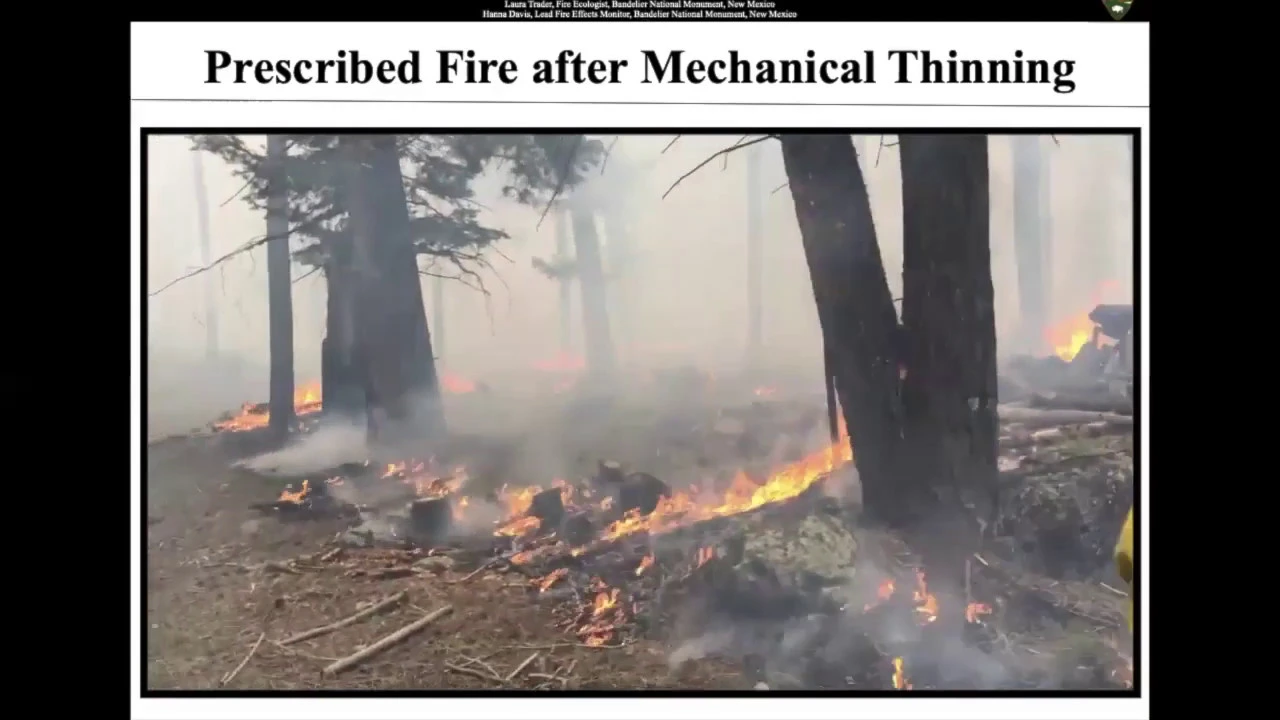
Really tricky question here of when should a burn be conducted. It it really depends on your long-term management objectives and the current condition of your desired burn unit. So I show you this picture here from some research we're working on with the National Park Service at Prince William Forest Park um in Eastern Virginia. Um really the public this is not far off of a trail and the public have always voiced some concern about the hazard trees that are located in this in this stand prescribed fire is an option for for what the uh park service managers could do to manage this long term. Um providing guidance to them based on the amount of fuel they have and how that fuel is structured. Um I think they could utilize burning in here to maintain the forest composition they want. However, it would not be the first practice I would recommend. I would recommend doing some thinning and actually some removal of material first and then utilizing prescribed fire in this particular location because burning has not been a part of that system for a really long period of time. And so to maintain a lot of the overstory trees, they would want to see maintained in this composition. Um and and to be able to see regeneration long term to basically fill in the gaps that these hazard trees are going to create when we we remove them. um more sunlight is going to be needed to be available on the ground surface. And so actually like a thinning in here um allowing that thinning to kind of settle for a year or two and then introducing prescribed fire more than likely in the dormant season when the fuels are not completely dry.
You're still slightly moist and weather conditions are conducive to have something that's very low intensity and low severity would be a very recommended practice, right? to be able to maintain that forest composition and not have a fire that comes um and is basically reducing too much of the fuel material all in one fail shot. Um and often when we do that, when we think of the layers of the forest floor, we want to make sure that we're not doing anything to disturb a lot of the feeder roots or the fine roots of the large trees because consuming too much of that duff material that's right underneath the litter. If we do that too quickly um with fire that maybe is producing too much heat for a long period of time, we might consume a lot of those feeder roots and the trees will they may not immediately die, but they may have delayed mortality um just from having too aggressive an approach right from the first shot. And so again, like that's just an example I would use from this picture is that it can be kind of um tricky based on the l the the particular unit you're looking at to burn and then also the objectives you have long term. Um, I will say often times in things that have gone a really long time without burning, one of the recommended practices for a first entry burn is to conduct that in the dormant season when maybe your fuels are not um completely cured. Um, and you can actually promote more of a low inensity, low severity type of of burning operation. But we can I can feel free to address more questions related to that.
There's a lot of really cool research that suggests um differing the seasonality of burn can create different mosaics of wildlife habitat that you might desire for management long term.
Um so there's there's a lot that can be discussed about this when a burn should be conducted.
Thinking about pros of prescribed fire.
Um there's emerging research that suggests drastic improvements to water quality and quantity um when prescribed fire is used. the far images on the right where I show managed and unmanaged landscapes there. Um that's coming from the coastal plane of South Carolina above Charleston um kind of between Charleston and Georgetown if you're familiar with that area. Um what we were able to see there is that a managed watershed actually produced less contaminants long term um in waters that needed to be treated for drinking water consumption. And we we think about this I put the image there of teaags sitting in water just that less material is there actually entering the wershed and the material that's actually entering the water the waterershed as a result of the burn that goes into that source water um it just produces less contaminants less needs to be treated and we actually know from a treatment standpoint for us to be able to consume that as drinking water the types of contaminants that are there don't produce carcinogenic materials um and actually that long-term the cost of treating those materials we can more actively kind of forecast the treatment of those materials at a reduced cost. And so just some really cool stuff. We're seeing that actually with some different studies of looking at different forest materials when they are burned that burning really is conducive to promoting enhanced water quality. Um when you compare prescribed fire to a lot of other management practices such as intensive harvesting or even applying herbicide, prescribed fire is pretty cost- effective. Um the the cost per acre is drastically less than a lot of other practices.
uh the management of fire dependent and fire adapted vegetation. There's things that fire does that no other management practice does. And so some of our fire dependent and fire adapted vegetation rely on the mechanisms, the biochemical reaction of fire does things that promote a lot of species um that we tend to they may still be present on the landscape um but they may not be in the dominant fashion that they would be like we would think about with longleaf pine in the coastal plane. Um the management of specific wildlife species. Um sometimes fire promotes the landscapes that specific wildlife species not only for the habitat but perhaps for the insects that certain species like to consume um as as an example. And then of course we think about with prescribed fire we could do wildfire mitigation by the reduction in the change of fuel structures that really are conducive to wildfires.
There's a host of things we could talk about with potential constraints to prescribed fire. Um I kind of list these in the realm of sustainability. how we would think about sustainable practices long term. Um some social perception probably is one of the larger things that we would have to deal with and and from a social construct in Virginia we have the 4pm law that is in effect um you know that that limits some of our burning activities from February to April unless you have permits to be able to and have an approved plan to be able to conduct a burn. You cannot do that until after 4 p.m. And so that that limits some of our burning in Virginia.
Um, we think about smoke management as one of the primary con potential constraints in that, um, producing smoke and not understanding where that smoke is going to go um, can limit our ability to to be able to conduct prescribed fires on a on a regular basis. We're really in that realm, that smoke management piece, um, I would say one of the biggest parts is just having weather that is conducive to promote the type of fire you would need on the landscape.
and and as we think about the Appalachins and the Rigiden Valley um topography really impacts that also. So it's kind of that combination of fire behav what the fire is going to do, what fire behavior is going to look like and the weather variables that create the ignitions that we're going to sustain to accomplish of our management objectives.
We want to make sure that those are able to be conducted in safe conditions. And so sometimes weather is just a primary limiting factor when we think about safety. I show this picture of someone who's completely outfitted with all of the the PPE that might be used by one of our federal agencies both in in wildfire and in prescribed fire. And oftentimes from land owners, I think we we get the question, do I really need all this gear if I burn my own property? And I think there there are differing levels of uh comfortability with PPE. And um I have I will be honest, I have completely burned in this type of setup. I have completely burned um not wearing any of these things except maybe gloves, right? And it's it's an understanding of where we're burning, what the conditions are, and when you burn. Um, and comfortability and training um, with a lot of those things. Um, and so I I think consider considering the desire or the required PPE is important. I have that as the second thing there on the list. Um, from a safety standpoint, the adequacy of your fire brakes, the number of trained personnel that would be needed to conduct your burn. uh making sure you have a burn management plan, you have a communication plan the day of a burn if you have multiple people involved that you've communicated with them how the burn is going to be conducted. Um thinking about the weather factors that involve having access to water just in case you need it um for for some of the fire management. If you're going to have other vehicles that are operational within the burn, so like some some of the smaller UTVs that people often use in burning. Um other equipment oftentimes that's really good in hardwood litter is to have a leaf blower available. that can definitely help uh create some of your fire brakes and your control lines. Um rakes and other equipment are always things that are are useful when being able to conduct burns also. Um but be glad to field any more questions about about safety also as we we move further in the webinar. But hopefully that gives at least a good broad introduction.
>> Thank you. Um thanks so much. And so that was a lot of great information. We might be asking you more in-depth questions about that later, Adam, but thank you for that really basic kind of introduction to prescribed burns. So, next we have Jean Lurbar, who is a forest ecologist with the Virginia chapter of the Nature Conservancy. Jean provides science and analytical leadership to TNC's conservation programs, primarily the Alagany Highlands program and its partners in the heart of the Appalachian's Fire Learning Network. He's been a member of TNC's prescribed fire team for more than 15 years and facilitates adaptive management discussions regarding the desired ecological outcomes of burning.
So I'm going to stop sharing Jean and um let you share your screen.
>> Great. Thanks Rina.
Get situated.
Great. So, love uh the amount of folks that are interested in learning more about prescribed fire and I can't wait to talk even more. I've just got a real quick series of slides because I would love to get into the question and answer and the further discussion. But big picture, you know, major questions. Why does TNC burn? And it's because um we see Hold on. PowerPoint's not I know what I'm saying, but PowerPoint's not letting me show you what I'm about to say.
>> Sometimes you have Yeah, you got it.
>> Yeah.
>> Okay.
>> You know, as Adam described, you know, there is a long history of fire in this ecosystem. You know, we inherited a forest ecosystem and the biodiversity on it that has been shaped by fire for millennia. So, why does TNC burn? We believe it's uh it is a tool to sustain Appalachin biodiversity, plain and simple. There's a lot of different aspects to that. But you know because this landscape and and all natural systems have some degree of disturbance built into them whether it's through weather or fire or insect outbreaks all of those u disturbance dynamics in the case of the appalachins have gone on to favor many species that can utilize that disturbance. And so here's just one piece of evidence. This is um on our Warm Springs Mountain Preserve in Ba County that TNC owns that we burn cooperatively with our fire learning network, which I'll show in a minute.
But this is um Aven monitoring, bird monitoring in our prescribed burn units that we did for a number of years. And so you'll see from 2011 to 2017, the blue bars are the number of acres that we burned cumulatively over those years. And that orange line is the number of birds that we observed on these per about a hundred permanent plots that we established within our Bernians that we were visited year after year after year. And basically the bird population doubled in a little over six years. And it's not just cardinals and robins, you know, those are great, but this is high conservation. This includes high conservation value species like chestnutsided warbler, eastern wood pee-wee, ovenbird, worm eating warbller, eastern tohi. So, you know, the the the aven community responded very favorably to burning. You know, this picture here embeds or showcases a lot of what we're trying to achieve.
We're restoring missing pieces of the Appalachin forest through burning because burning's been largely excluded since smoky bear showed up in the 1920s and that culture of not burning took over. But those misses those missing pieces in today's Appalachin forest are open canopy woodlands that you know on this slide here represent some of these moderately dense patches of trees.
smaller amounts of early successional habitat represented by almost no trees.
Um, a new generation of oak forest, so baby oaks that turn into older oaks. We don't have that in our modern Appalachin forest and we need it. The same is true for pines. So this mosaic here that you're seeing on this slide is a good representation of the type of change that we're seeking to implement or achieve through prescribed burning.
So where we burn, you know, TNC's conservation program is really focused primarily on public lands. And I'm talking about the Alagany Highlands program. That's Western Virginia as you see here. TNC has a in the state of Virginia has another program in the Pinelands in Eastern Virginia, Sussex County and Environs that are about est reestablishing native pine savannah. So u and you know TNC has analogous burning pro or fire programs across the continental US and internationally. But I'm just focusing on my little part of it. So what you see here uh represented is in dark blue is is public lands in western Virginia. I think this is just the George Washington Jefferson. There are some state game lands embedded throughout here as well and natural heritage lands. The red shown here that's actually has a boundary on it. So the the the areas look a bit bigger than they actually are. But the red are prescribed burn units again mostly on the George Washington and Jefferson. But they total you the GWF is about 1.8 8 million acres and in red here totals about let's say 10% of that a little less than 10% of that. So it's a largecale operation to m you know to initiate and then maintain prescribed fire at a landscape scale and really try to achieve these ecological outcomes that aren't likely to exist in many places besides where we're burning long-term with um with these that are designed to achieve these effects. So this is all about partnerships as I've been saying you know the nature conservancy is a part of a collaboration of state and federal agencies and through our fire learning network uh which is you know just an umbrella right for all of us to join resources together to do more than we could separately. So TNC is very much a partner and organizing principle, but the state and federal agencies are are also the the drivers as well of that collaboration that's been going on for a couple of decades now.
So the plant communities, you know, what do we target in that 150,000 acres? What sort what are the ideal fire adapted forest types that we tend to target?
So, I would uh we'll I'm sure we can provide this link in in the show notes as they say on podcasts, but this is a great guide that I would recommend to anybody who's more than a little casually interested in um fire ecology and learning about the ecosystems. This is a it's called the the fire manager guide to blue ridge ecosones. think forest types for eco zones, but it's published uh by TNC in North Carolina in the southern Blige where there's a very active fire program, but very much a collaborative effort in of itself that does a a deep dive into um a lot of these ecosystems. But basically, the drier end of the ecological spectrum is what we tend to focus on.
So what you're seeing here is a dry oak woodland probably dominated by chestnut oak, some white oak, black oak, your mix of oaks. And you see in at the ground level you see some regenerating oaks and hickories, but you also see native grasses like poverty oak grass I think is the one primarily featured here.
There's hundreds of species in the grass and uh and forb wildflower strata that were, you know, that that's definitely part of the ecological goal in those open woodlands or to some extent in those early successional habitats is to reestablish that part of the of the ecological diversity that again doesn't exist in our cool, shady uh closed canopy forests.
And so to achieve those outcomes, whether they be oak regeneration or open woodlands or grass forb understory, we know that we need to return and to the same sites again and again for a while at least. And uh at some regular interval, semi-regular interval because that's how these ecosystems developed.
That's how these elements, these missing pieces of diversity developed. It wasn't just a one burn and done. It was through repeated burning over time. And basically what you're seeing on this table is at the top are the driest uh end of the spectrum. Pine oak heath, right? These are your dry pitch pine ridge tops with uh blueberry or vaccinium understories.
They burn pretty regularly. At the bottom of the table, these are, you know, these are all um relatively fire adapted ecosystems.
Um but there is this continuum of dry at the top and less dry at the bottom. High elevation red oak. These are these can be you know um northern red oak dominated sites where the tree form is a bit stunted due to thin soils due to um just harsh environmental conditions. But they we we know that they historically received fire from time to time. And so basically the principle that you're seeing here is that while you would have regular fire in the Pine Oak Keith um because those sites were more receptive or in some cases they um the fuels were more receptive to burning when you got a random spark or indigenous peoples started burning. The fire would carry fairly easily through those drier sites.
But sometimes, you know, every so often the fire would also carry to these through these wetter sites or these less dry sites, let's say. And so again, you know, Pine Oak Heath, let's just take the lowest number at the top, 3 years.
Let's take the lowest number at high elevation red oak, 20 years. So every, you know, seven or so burns that would occur in the Pine Oak Heath. every seventh burn the conditions would be dry enough such that that burn that fire would spread to the uh the high elevation red oak sites. So fire existed you know fire moved unchecked across the historic landscape. There were no you know there's no firefighting operations to put it out. There was only weather basically. And so what we see is this natural expression of how fire would carry across a landscape that shows up in the fact that these pine oak heath dry sites burned more frequently, you know, seven times more frequently, let's say, than these high elevation red oak sites. So all of these sites are on the on the drier end of the spectrum. You know, we're not necessarily burning in coes or expect to see any sort of fire behavior in in cool, shady coves. So this is the sort of plant communities that we're we're focused on.
Real quick, just some examples of desired fire effects. These are fire effects monitoring plots that we visit before burning, which you see here on the left. And I've got a pay attention to that red triangle. And here is uh after two burns. This is one year after two burns. And that same that red triangle is pointing to that same tree.
And we can see that the understory in this case the understory is completely changed. This is mostly uh huckleberry or blueberry or kind of in that in that family of shrubs of of berry producing shrubs. So that's awesome. That's another goal um is to create that soft mass to feed a lot of critters. Um but there's also been a thinning of some of some of the midstory. We still have a tree canopy here as you can see, but some of these stems have been thinned out through this is just two pres two two prescribed burns several years apart.
Here's another example basically showing the same thing. Um here we can see I included this picture to look at more of the canopy structure. So here is the pre-burn and you can see that it's pretty dense. We have a pretty dense shady canopy you can't see through.
Whereas if you look at the right after three burns in this case, you can see, you know, clear to the next ridge, right? There's still a canopy, but it's scattered. It's been thinned out. And there's been a little bit of a response in the understory. It's I wouldn't say that's a huge one, but we've definitely created the enabling conditions through in uh repeated burning. We've created, we've thinned out the canopy that lets more light down to the forest floor and eventually we would expect to see a similar response and tree regeneration and uh shrubs and wild flowers and grasses. So that's my five slides. Uh thanks for your interest in fire and we'll see you on the on the the flip side once we're all done once all the panelists are done. Ruina, I will stop sharing and turn it back to you.
>> Thanks Sean. I would like to >> that was really really interesting. Um thank you for the for the great slides and um I learned a lot about what it looks like before and after. I think you're still sharing them.
>> Yeah. Well, something something's not liking something. I I might have to drop off the Zoom, but I'll be right back if that's required.
>> Oh, sure. Sure. Absolutely. Fine.
I was trying to make you trying to stop it myself. There you go. Okay. So, um now I am going to last but not least of our of our panelists. I would like to introduce you to Paula Wyman, whose book bad naturalist, one woman's ecological education on a wild Virginia mountain talk, was just published earlier this year, January 2025.
She's been featured on more than 50 podcasts and radio stations, including Margaret Roach's A Way to Garden and the Joe Gardener Show. and she's been invited to speak at at many different um conservation organizations including the Aldo Leopold Foundation, Missouri Botanical Gardens, and our own N Shannon National Park Trust, which is basically right here in Charlottesville. But one of the reasons Paula is here is she also is a is a is a land owner who has had to deal with prescribed burns. So, I'm going to stop sharing, Paula, and let you um share your slides.
Welcome.
Oops. I think you stopped sharing.
And there you go. And you are on mute.
So you might want to unmute yourself and then we can hear you.
Okay.
>> All right. There you go.
>> All right. So, um, uh, Jean and Adam talked a lot about burning forests. I am burning meadows.
Um, I have 75 acres of open meadow on a mountaintop, uh, surrounded by 130 acres of forest. And my goal here is to tip the balance to native plants in the meadow. These are old fields, so they're a combination of non-native grasses, hay grasses, orchard grass, fescues, invasive plants, and native plants. And these are all left over from a couple hundred years of agriculture. Uh hundreds, maybe thousands of years of um being a savannah. It was a savannah before it was agriculturally used. And it would have been maintained by lightning induced fires. Um, so why burn here? Uh, I'm trying to encourage native plants. And as we've already heard, native plants thrive with fire. They are fire evolved. They evolved in the presence of fire. They're fire adapted.
when I'm looking for a place to burn.
So, I just want to say that makes fire a crucial tool uh in increasing biodiversity um helping, you know, native plants come back for pollinators, for wildlife, and so on. When I'm looking for a place to burn, I look for a field with a high concentration of native plants already.
Why? because then I know those plants are probably in the seed bankank and um it could be a very wizzywig situation when I burn. I'm expecting to see what I already have come back plus whatever hasn't been able to express itself because of the conditions uh before the burn. I avoid burning na invasive plants that like to be burned like autumn olive and spotted napweed. And I'm sure there are others, but I specifically excluded those plants from burn areas. Um, let's see. How do I go? Oh, here we go.
On the left, that is a field, a slope of several acres was covered with dead mile a minute vine. Um, it covered up and smothered all these native plants. On the right, you see the upright plants are native grasses, and the plants that are all flopped over and creating that dense thatch on the ground are non-native grasses. I want to get that thatch out of the way so that native plants have room to grow. I want to get that dead mile a minute out of the way so that native plants can grow. So, this is where I burned fields like this. And uh the other benefit of that is for ground nesting birds like the bob white quail, they need more space to walk around. They can't manage in an area that looks like the area on the right there with all that thatch.
Now, so we burned a field in the winter, the dormant season, and uh several weeks later, we had uh this uh this field on the left where all these natives native plants are growing back. And I don't know if you can see in the background, there's a grove of autumn olive that I excluded from the burn area. And I'm just treating those with herbicide. Um, now this field was surveyed two years after the burn, so just recently by Virginia Working Landscapes, and they found that it was 80% native plants. And we even had orchids, native orchids, which you see on the right, um, come back two years in a row, which would not have happened with all the thatch that was there before. This is a tiny tiny orchid. And in fact, I was told that it was unlikely I would ever see orchids in this meadow because of the agriculture agricultural history of the place. But uh we did and I attribute it to those burns. Now, what are the downsides of burning? Well, uh what you see here is a fire line because I'm on top of a mountain. Uh uh it was Department of Forestry who conducted the burns.
They're very experienced at this. And they uh they basically bulldoze the fire line. They turn over the sod. The trade-off is I burning is a crucial tool in these meadows, but those fire lines create a new disturbance. They create a place for invasive plants to enter. They risk erosion, um damage to soil, organisms that that shouldn't be exposed. And um it's difficult to maintain um this very like rocky uneven um area that's left. Uh but the trade-off is worth it in my opinion. Uh at least so far it has been. Um the other issue is it's very difficult to schedule and plan. My plan in doing an ecological restoration is to burn fields on a three-year cycle, which is what is recommended in a meadow. Um, so ideally I would burn different fields each year and then burn them again, you know, in year three, but I can't do that if I have to wait 18 months to two years every time I'm burning. So that's been the problem. Department of Forestry is incredibly busy. Um, they have so many demands on them. I've tried to find contractors.
Either no one wants to do it or they are prohibitively expensive. I've considered doing it myself, but then I'd need all the uh equipment that you need for a burn and I would need uh labor. I would need people to help me. Um the other the other difficulty in scheduling is the weather is a factor in a place like a mountaintop. Uh the parameters are even stricter. The humidity needs to be higher, the wind speed needs to be lower to avoid, you know, risking a disaster.
Um, now, uh, Adam already talked about the safety precautions, so I'll just say that these are these are, uh, images from burns. The flare up on the left was caused by mile a minute vine, um, that had grown up a little sapling.
Um, otherwise, these are low temperature burns. They uh and you can see the the workers here wearing the backpacks and so on and the equipment that Adam showed in his picture. Now, I alerted neighbors. Uh DOF alerted the fire department and they put signs on the highway because of the risk of smoke um causing low visibility. Fortunately, that didn't happen. But what did happen was a very large snag caught fire because of an invasive vine. And despite the fire lines, it jumped the fire lines and it took them a couple of hours to put it out. So I was really glad that I had um you know a team there that was really experienced. There were seven people working this burn. There were enough people. They knew what they were doing. Um and so nothing bad happened.
And I'll stop there.
I could have keep kept watching. That was fascinating seeing all of your um of your you know in real time the the burns you were doing. Paula, thank you so much. Okay.
So, we got um a lot of questions from the audience um as they registered um more than we usually get and I love that you were all so wellversed in in FAR many of you and that you're also interested and one of the um questions that we kept getting was about training and certification on whether um you know on how to do prescribed fire and and how do you even learn about it? And Adam, do you have any slides about that that that you wanted to share? Did you just want to talk about it?
>> About the training and certification piece.
>> Yeah.
>> Oh man. Let me look real quick.
I thought I didn't hear. I may not have hit it.
Let me look real quick.
You know what? I did have a slide that I did not share. I apologize.
>> Oh, that's okay. Well, let let me stop sharing mine.
>> Okay.
>> And then let you share. There you go.
>> Perfect.
I apologize for that.
No, you're good.
Let's see if that goes. You able to see that?
>> Yep.
>> Okay, cool. Yeah. So, the training and certification piece, you know, it varies widely state by state and I saw that we had several folks from different states that were there and I didn't like I was trying to like look really quickly like where's all this information might be useful. Um, I can speak for specifically for for Virginia. Um, there is a certified prescribed burn manager course that is offered. Um, since I've been at Virginia Tech, I've been able to to be really involved pretty heavily with that program and it moved from a fiveday course in Charlottesville at Doof's headquarters to an online um online probably 12 hours module training course. Um, I teach I think three of those that are available, it's available to land owners and anyone that would be interested in taking it. Um, I will say one of the the kind of benefits of taking it if you're able to do that is to join some learn to burns after going through that course because I think um the hands-on experience is something that in a lot of states with their prescribed burn manager courses they really advocate for. And I think in Alabama is a good example. There's like five learn to burns that are required to be a certified burn manager. Um so the educational part in Virginia you can take and get that certified prescribed burn manager course. It's generally offered in the spring was the last time it was offered. Um essentially it it provides education and then liability protection when a prescribed burn management plan is followed. So let's say for example there were smoke management issues um related to a highway if you conducted a prescribed burn as a land owner. As long as you can document the weather conditions that you follow the plan, the ignition pattern and strategy that were recommended in your plan um it provides some liability protection if something were to go bad.
Um so it's generally recommended for folks within state uh agencies to take that course like DOS personnel themselves take that course. It's really good. um it's offered um there's a lot of hands-on done that on the online process and taking that course that you the Q&A can be followed and check-ins are done through the course of the two weeks I think that the course is generally offered and open for people to complete. Um to plug those learn to burns uh we've we've done several of those in both the spring and fall in Virginia recently. Um it kind of depends on the availability and the burn conditions of when those are offered and who's able to be a part of those. But that's something that I think all of us that are involved in prescribed fire are continuing to try to offer to land owners to get some of that hands-on experience, especially with building a burn management plan and getting advice on your property if it's something that you're going to attempt to do yourself, you know, and um someone had mentioned DOF being kind of over booked with having a lot of land owners that they're working with. um and being able to form those plans, having engagement to kind of walk through how you would conduct a burn and what would be the best time to do it and all of the logistics. It is called prescribe fire. So I often relay that to people of we have to build the right prescription. And as you know, you take medication for your body, prescribing the right medication for the land to get the effects and the benefits that you want. There are a lot of details that be are involved in that and things that you can tweak over time in being able to conduct the burns that may be more beneficial for your long-term goals. And so just keeping in mind that it's both art and science that are involved in how to do this. Um and which I think continually makes it an interesting experience um to be able to do it and learn from it. Um but that was the the realm of training and and certification stuff that I wanted to share with you.
>> Thank you. And I really I actually really liked how you um kind of explained the whole idea of prescribed and prescription that that kind of really sticks in your brain. Um thanks so much Adam.
>> So you know Bluage Prism we obviously deal with invasive plants and all of you touched on it. Um I know Paula really touched on it in her um in her slides.
We got a lot of questions um about which which native which invasive plants are the best to um you know which can be managed with fire and um and which ones perhaps thrive with fire and are there any that you need to to avoid like Paula did. So, if um one of you can just kind of talk with us a little bit about that if there you know I don't know if you have a checklist of here are the ones that you can burn, here are the ones that you can't burn, but it would be great to just kind of learn a little bit more about which ones are more conducive to a prescribed fire silence.
No, I'll you know in general I'll say so we have a fire effects monitoring program about 400 points permanent plots in within burn units pre and post burn that we continue to visit overall we see because or primarily because we focus on the drier end of the spectrum drier sites the invasive load tends to be less overall you know we're not having dense Atlantanthis and microgigium necessarily. These are thinner, rockier, drier soils, hotter sites and you know that's not the bulk of what the invasives the group of invasive species we have to deal with uh like so our mon and our monitoring data show that we have really negligible increase in invasives and in part we have and commensurately we have a huge response in native vegetation. And so in part there's just a lot of competing you know like you saw in that picture vaccinium you know ericacious shrubs tree regeneration there's a lot of growing space immediately taken up with a native plant response but um in when there are in these large burn units when there are codes that occasionally get more fire effects because it was a hotter day or for a number of reasons that's where we can see some you know very spatially discreet increases in things like microgium along roads, right? That'll creep up into the woods a bit. Uh autumn olive is one that you know is a you know is out there perennially and actually fire has a difficult time killing it you know because you could use fire we could use fire as a tool to control invasives particularly repeatedly. However, autumn olives uh foliage is kind of disables the spread of fire.
You know, oak trees, oak leaves enable the spread of fire because they curl up and they're drier and it's actually an adaptation for the species to, you know, enable fire to come through and and you know, clean out the understory to make room for baby oaks. Uh autumn olive ju does not share that does not share that feature. Um and so there are cases where if there's a lot of a lot of autumn olive we will um do you know invas non-native invasive species in an is control work before we do a prescribed burning but it doesn't um yeah it doesn't control autumn olive very well particularly when it's dense.
>> Thank you. That's that seems to be okay Paula go ahead. Uh yeah, I was just going to mention the field where we burned the mile a minute. Part of the reason I did that besides uh getting the dead mile a minute out of the way was because after a burn, you can see what's coming up. Whereas if you have a meadow with 4 foot or 6ft tall vegetation, you can't see it to do anything about it. So we spot treated it when it came back up.
I fully expected it to come back up because it's an annual, you know, it dropped seeds. Probably got seven years of seeds in there. And similarly with things um that we saw in other fields again I expected the invasives that I saw to come back and it was just a matter of um part of the benefit of the burn was to get all that thatch out of the way so I could see it and stop it.
Um in addition to encouraging the native plants to uh take over the area because they would be benefit from the burn. I I did want to mention that I I I looked at whether atlanthis um was helped or harmed by burning. Um and I saw some some study that said uh what well they they used herbicide and then they burned and that worked well.
But even when they used her when they didn't use herbicide and burned it it worked pretty well over time. Uh the the trees the saplings didn't do as well.
But that was in a forest. And I have to think that in a meadow where you don't have vegetation that's going to grow faster necessarily than those young atlanths trees, it may not have the same effect. And I would personally treat them first.
>> Great.
>> Or after.
>> Great. So that makes a lot of sense. And just for those who don't know, microgium is uh Japanese still grass. So this actually segus really well into the question. You both mentioned it. We got actually quite a few questions about seed. So, what happens when you do a prescribed fire? Does it affect the seeds at all of a native plant or an invasive plant? I think I know the answer. I'm going to let you guys answer it.
Yes. No. Yeah. Often the seedbank um responds the native seedbank responds pretty pretty favorably. uh I'll share a slide as somebody else as another panelist answers but uh there is you know very frequently the grass and forb species richness and amount of cover increases after a burn particularly where you've you know you've con you've consumed a lot of the litter a little bit of the duff you've consumed that midstory to let more light down to the forest floor so not a super low severity or intensity higher where you haven't essentially thinned out the forest at all. That doesn't really do anything necessarily. It's when you've amped it up just a notch and you've allowed more of that sunlight to hit the forest floor, remove some of the interfering litter layer, and very frequently uh you see a native plant response for sure.
Um, so but it seems like in general for let's say invasive plants, it doesn't really burn the seeds, right? They're in the they're in the they're in the seed bank. So it's usually just burning the the top the top part from what I understand, but correct me if I'm wrong, Paula.
>> Oh, I I don't have an answer to that. I was just going to add that there was a study, I think it was in Michigan, that there's a tribe that um has a practice of burning their blueberry plants.
>> And it was it was one of the studies that showed that native plants create more seeds and bear more fruit when they're burned.
>> Interesting. Yeah, we'd have to do some more more study on that. When we get to the shrub layer, our monitoring results show that maybe we have 30,000 stems per acre, you know, stem small >> of of vaccinium or blueberry family before a burn, after a burn, 150,000, you know, something in the order of magnitude. So, there's a massive sprouting response of a shrub layer and a heath layer. And sometimes that's a problem because we we sometimes want baby trees to get up through that native shrub layer. But >> you know, we'll we'll take it because that's again that slide I showed with the uh with the green understory after two burns >> fully occupied now. It was bare leaf litter before fully occupied by native shrub layer afterwards. So very much a vigorous response from you know a number of plant taxa native plant taxa. It's becoming clear to me that a prescribed burn when it's done well really does help the um the native flora um you know maybe it's something that they were more used to in the in the the many years past. So procedure um again all three of you did such a great job talking about the the different basics of what people should know about it. Paula talked about the break a fire break around it. Um, someone asked, "How far away should a prescribed burn area be from an HOA?" So, a lot of our people who are on this webinar don't live that far away from other people. They don't, you know, they don't live on top of a mountain or or or things like that. What are the, you know, what are the constraints to prescribe fire really for um for location wise? you know, would you would obviously not do one in the middle of a city, but can you talk a little bit about um I'll just ask this question. So, how far away should a prescribed burn be from an area that has an HOA or basically a neighborhood?
>> Do you know, Adam?
>> So, it's tricky, right? I mean, I I could point to you examples in Florida where they did some really aggressive messaging along uh in a nursing home community that directly abued a a wildlife preserve. Um, and they did all this messaging to the nursing home or the as I say assisted living nursing home community. Um, and they did all of this messaging to that community and burned right up to it. And literally people sat out there and watched it based on the messaging that they were able to promote. like it became this whole community experience like people made food and came out and like watched it and all this >> like a barbecue.
>> Yeah. So, but it was the messaging around it that made the program effective, right? Um and they chose specifically not to burn in times when the wind would push smoke from that preserve into that community, right? So, you know, you can make anything like people ask this all the time, like my students ask this all the time. They're super excited about being able to go and do burns. And it's like um you can make anything burn, right? Even if it's wet, you can put enough diesel fuel and gasoline on it and make it burn. Like we can come up, we are really hard-headed.
We can come up as many ways as possible to make something burn. But then what are the what's the benefit of doing it that way? Is it actually going to produce the effects that you want long term? Is it actually going to be, you know, something that would be promoted?
Is are you at risk of something else if you decide to to burn versus not burning?
Um, I think some of that is the it is the messaging. Can you actually produce an adequate fire line? Can you get the accurate wind to push smoke away from an area? Um, I think that's one of the things that I consider. Um, when we look at burning on the school forest here in Blackburg, actually, like that Virginia Tech uh manages, there are specific units I won't burn and one of them is close to a close to a major highway and it it we could go run right up to the highway and like it really it's the adjacent land owners have propane tanks in their backyard. They have a fence, but like I don't feel comfortable burning right up to the edge of that.
Um, and so there's one unit that would really benefit from prior, but we just are not really willing to push it into the wind in that area would be too erratic to push smoke into their to potentially push it into their home. And so um it it's really a it's hard to give like a textbook answer on that I'll say um of like best practice you know but it is those considerations of smoke the prevailing winds um to get the type of fire behavior you need would there be would it need to push into you know the direction would push into an area that really you should be cautious of due to other adjacent land owners or um just potential barriers to being able to control it actively.
>> Right. Well, like you said, you know, that made I think made us all think differently. Um it's it it's a prescription as if you're writing it for for someone. It's got to be very specifically tailored to the land and the people and the and the surrounding areas. So, I think that really helps everyone understand it better.
>> I will say one thing we we have done on a place that I thought could not be burned, right? and it was due to smoke moving.
>> Um, I rethought about how the fuels were configured. So, my initial approach was, uh, we're going to burn this and that's the first thing we're going to do. And really, I thought this is probably going to be like a low intensity, medium intensity fire, but it was going to require us at the end of the burn, there was really no way of thinking around it.
Like, it would slightly burn uphill.
Like, that's how the ignition would happen.
>> And so, I was like, well, we can't do that. like that's just not going to be smart. Like the fire will pick up intensity and potentially go into a residential community. So what we did was and and taking that off of the table and then walking back out and thinking about it is like what if we did something to reduce the fuel around that area like just kind of took the fuel away. We're not going to necessarily treat that area specifically or we're going to treat it differently. Um and what what we actually were able to do is we did conduct the burn but we went about it a completely different way than what my original intention was. and how I had it mapped out. Um, and so I I think there was a little bit of like creative thinking on that or maybe I was just too hard-headed at the beginning to think it through all the way. Um, but a little bit of pause to be like, okay, what is this specific objective on this?
Is there another way to approach this?
Um, some of that was useful at least in my in the process that I was going through. Right.
>> Thank you.
>> Sure.
So, we um I feel like several of all of you touched on safety um quite a bit.
So, I'm going to skip over that in the interest of time, but if um for any of our our guests, our participants, if you have any more questions about that, please go ahead and put it in the in the Q&A. So, you know, we've talked about this the the prescription and um what things have to be a certain way to to for for a prescribed fire to actually work and you have to look at all these these um these factors. We got a question from someone that said, "How can landscape architects and designers account for or design for controlled burns as a maintenance practice?" Is that even something they can do or should do? What is what's your feeling on that?
>> Um, I would say they should only do it if the homeowner or land owner has uh a set plan in place and the ability to manage regular burns, >> right? They would have to have a lot of equipment.
>> They would need the equipment. They would need the training. They would need uh people to staff the burn. Um like I said, I had seven people. We had a water truck, had a bulldozer to cut the fire lines.
Uh >> that's a lot.
>> There's a lot involved.
>> Yeah. Yeah. It's a lot. Okay. Thank you.
And Jean, I loved how you talked about the impact of um prescribed burns on some of the smaller mammals in the area. And we did we did get a question about what impact does control burns have on vertebrates, insects, and other invertebrates that call the forest home.
>> Yeah. So, >> so if you could address that a little more.
>> Yeah, absolutely. Um the a lot of research has been done on the long-term effects on different taxa of wildlife.
And basically the the overall conclusion is that while there might be um smallcale impacts within the boundaries, you know, on the day of the burn, we've probably killed a box turtle or two. um you know, anything that can move away from fire, whether it be moving laterally, you know, through the woods or going down, right? Those are, you know, the the the forest floor is a remarkable insulator against fire. You can get down a couple of inches into the soil. If you can get down a couple inches inches into the soil, you're basically totally safe from fire's effects. So, there's a lot of critters out there that can escape fire even though they can't run very fast. But whether we're talking bobcats, turkey, you know, certainly deer, elk, like we're seeing even herps, the overall consensus is that the while there are smallcale impacts, i.e. There are critters killed on the day of the burn.
The larger term, the larger scale changes in habitat, generally positive changes in habitat are far outweigh and enable higher, let's say, carrying capacity or higher productivity from those same animal populations over time.
Um there, you know, specific examples of, you know, a specific salamander, you know, on a specific mountain and, you know, if it's restricted to that area, you don't want to impact that area. But we're talking kind of landscape scale general. Um yeah, the it's pretty pretty benign and in fact positive, >> right? Thank you. Yeah, it sounds like um the from what you're saying the the positives for their habitat outweigh outweigh um most of the negatives.
>> So, thank you. So, we've got around 15 minutes left for audience questions. And I've been keeping an eye on the Q&A and I know that we've got a lot. So, um, let me go ahead and ask Natalie, can you, um, can you read, um, one of the questions that you have marked to be answered live by one of our panelists?
>> Um, one of the questions was, "How much do you feel releasing fixed carbon back into the atmosphere weighs into the cost benefit equation of a prescribed burn?"
Can you read that again, Natalie? Maybe a little louder.
>> Yep.
>> How much do you feel releasing fixed carbon back into the atmosphere weighs into the cost benefit equation of a prescribed burn?
>> Okay. One of you want to address that?
>> Sure. we so from some of the stuff that I've done kind of related to fire effects and thinking about smoke and smoke production and what's in smoke like the chemistry of smoke um one of my PhD project was really focused on nutrient dynamics in soil and one of the things we were wanting to do was actually kind of build an equation like kind of look at the whole structure of like when you burn what is actually in the fuel when you burn it what actually goes into the soil what was going into water we were kind of calculating and then we were trying to do some calculations of what was in smoke Um I think building an understanding of that and looking at a lot of the literature related to smoke um and doing a little bit of experimental testing ourselves.
Um if you consider that take somewhere like Gatlinburg and the wildfires in 2016, right? They have a fuel complex that when it was dry um it caught on fire, a lot of you know stored carbon was released into the atmosphere of smoke in a wildfire condition. So what we understand from wildfire smoke is not only is there a lot of carbon in that the carbon actually as it is emitted in the smoke begins to change in the atmosphere like there are volatile chemicals that are actually mixing with that and you're producing kind of other harmful products as there this is this mixing and lofting in the upper atmosphere.
Often times with wildfire we don't know when that smoke is going to end. We don't understand exactly the intensity and severity that smoke is going to be produced at. And we know that the chemistry of that smoke with higher intensity and higher severity does produce different chemicals inherently than it does at if it was burned at low intensity and low severity. So one way I think about it and approach it is if kind of the understanding and the risk assessment of things if wildfire is particularly a risk in a lot of locations and you're kind of weighing between well smoke is going to happen.
We either have wildfire smoke or we have prescribed fire smoke. Both are smoke.
Both have constituents in them that are very similar. But the risk in having wildfire smoke and the the risk in knowing how what kind of lack of control we have of the intensity and severity that smoke is produced at plus the risk of loss of life in a wildfire, plus the risk of property and other things and the loss of habitat and other things we might have when we fail to use prescribed fire. I think you're dealing with a a very big equation of kind of the cost benefit if that makes sense. um is because oftentimes in a lot of locations I know we're we're thinking about fuel changes, fuel mitigation, fuel reduction and and alteration of the complex that we're dealing with with fuels. Um I think that goes into the conversation about some of this offset and the balance of what we're looking at from carbon if that makes sense.
>> Yeah, thank you. And and I to build on that I do appreciate the spirit that the question was asked in because carbon you know carbon sequestration you know are the apple let's just focus on the appalachins for a second the appalachins have been a carbon sink right for decades there's been a they've been accumulating carbon decades decades decades right there's a lot of carbon stored up in the appalachin forest um that is a and that so if you prioritize the accumulation of carbon, right, as a climate change strategy. That's absolutely legitimate. That's one vi, you know, that's one currency, right?
We're trying to accumulate a lot of carbon to combat climate change. That's a se slightly separate question than what sustains biodiversity today, right? So, we know we're losing where, you know, we're we're improving, you know, rare native plant habitat, animal habitat through prescribed burning. It's a slightly different right currency of okay, we're trying to improve biodiversity outcomes. And so it's absolutely legitimate to hold those two valid goals side by side and ask how they relate. You know, are there is there a point where you know we where is there some point in the future where we need to focus just on carbon outcomes because of climate change and its impacts? Could be. Is there you know similarly ask that of the biodiversity side of things? you know, if we begin to lose, you know, oak forest that sustains a lot of other diversity by itself. Um, so that's an active question that's being asked in the conservation community. And but it's it's it's not just to Adam's point, it's not a simple we burn, we lose carbon. Uh, and that's the equation. Not necessarily, right?
Because of well, we could have we we definitely lessen hazardous fuels that could prevent catastrophic wildfire that even can happen, you know, in the Appalachins. floor. We burn we burn up some litter and the next year, as you saw, all you know, we have 150,000 stems per acre of of shrubs. All that's carbon, right? Those are woody stems that are sequestering a little bit of carbon and you know, a little bit in each stem times 150,000 stems. So there's this really complex equation that I don't think has been fully uh understood, but it is complex and it's but but it's a great kind of spirit to to look at big picture outcomes and what are we trying to achieve.
>> Could I just add that if if you're burning a meadow, the carbon is sequestered in the soil and it doesn't uh doesn't disappear like if there like in a forest wildfire.
>> Yeah, different dynamics, different ecosystem. Great point.
>> Yeah.
>> And I'll add the part we have about water quality is just when we've seen like long-term particularly again in the coastal plane and wersheds. Um very unique dynamics where hurricanes may actually push a lot of like uh standing overstory trees over and they decay for a really long period of time. But a lot of what's being added into that watershed that then goes into surface waters. we saw that the the load that is having to be treated for surface water consumption like for our consumption um the potential contaminants in that that were being treated were like so much higher also and so that's just another consideration of like this lack of burning versus burning right um one of the kind of cost benefits to kind of think about in that dynamic and that really again like Jean hit it really good again like that really complex equation we're kind of thinking about of like cost benefit and how to assess these variables over time >> that's Fascinating. And thank you to um who asked a question. It's definitely something that everyone's thinking about. Um I'm going to interrupt this by just saying we've gotten several questions from the audience about whether they can get a copy of the chat.
The chat has been unusually busy during this. You guys have been so inspiring that uh everyone's been sharing information and wanting to connect. And yes, I will um I will share that on the chat. I will try to take off. I don't like to share people's names that much just because of, you know, privacy, but I'll share all of the information that I can that's being um shared in the chat and put it in the follow-up email um that's going to come with the recording to this to this webinar that'll be going out in a few days. So, if you have any more questions about the chat, go ahead and and send that. But I will be sending as much information as I can that's sharable in the chat with all of you.
Okay. So, um, Lauren, do you have a question that, um, you can ask the panelists that the the audience has submitted?
>> Yes. So, we got, uh, a handful of related questions. Um, one version is, is there a minimum size of land for burning? I have 12 mostly wooded acres in the Piedmont that I believe would benefit greatly from burning. Uh and then related to that but slightly different is any advice for burning small urban patches. Has anyone used weed torches to do some smallcale thatch dieback in areas like an urban bog? So questions coming in about uh minimum size of a particular property and is it ever appropriate to be burning in an urban area.
Okay, John, you want to go first? Uh, >> you know, I'll stay away from appropriate because that's kind of a value laden term. You know, that's up to, you know, certainly there's ecological benefit. You know, if you're creating a patch of native grass. So, um, I don't have a sense about appropriateness.
Um I' we've not used uh you know different equipment in you know we tend to as I described we tend to work in these large uh remote forested landscapes and we're using prescribed fire with drip torches and helicopters even sometimes. So um that's our toolkit and the the the weed torches that somebody mentioned we have not used those. We've used those in a stewardship context for, you know, micro stegium control along an access road at a preserve.
Um, but that's about the extent of my knowledge with with that set of tools.
>> And Adam, I saw you nodding.
>> Yeah, this this is a good question. Um, because because like I'm a good example like uh my kids uh probably seven or eight years ago were super fascinated by wild wild flowers. Um, and I had a torch, like I had one of the the weed torches. Um, so I burned a patch of our yard. Um, not 100% understanding like if we were allowed to do that in town or not, but I did anyway. Um, and like we had these wild flowers come back. It was really cool. Um, so this is a very very small patch, right? Like uh gosh, maybe a quarter of an acre kind of deal. Um, and I'll say that I'll say this with like parcel size. Um it's tricky, right? Because when you're wanting to have adequate containment, you're wanting to construct fire lines, you then are thinking about um how many people are going to be required to keep that contained. And so I know I've been a part of prescribed fires that on the coast where we were burning towards uh marshes and actually burning towards the ocean and we might have had four people involved in like a thousand acre burn because literally the block there there's no risk of escape. There's no there's no inherent risk. Everything could be burned if we wanted it to. It would be fine. But we have these preferred containment lines. They're really large like 12 ft probably from the amount of burning that's been done.
So like maybe four people are involved in that and allowing the the burn to meander and be patchy and all the things that create this mosaic of wildlife habitat. And I've been a part of things where we've burned like five acres and we probably had 20 people out there, right? Because you're so concerned about maybe the topography is complex or the way you're going to do the ignition is going to be so complex to be able to fit it and make it work. You really want to keep it contained. Um and so some of it is the cost benefit, right? It's like is the investment of time and energy I'm going to have in this to to ultimately make it safe. Um, am I going to have enough people to be able to do that to ensure that it's not going to spread into a location that I that I don't desire it to go? Um, so those are some of the things I weigh like, you know, producing smoke, talking to adjacent land owners, making sure they understand what's going to be happening. Uh, can I get the weather to contain it the way that I want? Maybe maybe in March or like in the dormant season in that kind of ideal time where fuels would not be super super dry. Th those are all the things that I kind of consider. Um I like thinking about those things for sure because it's super it's super fun to go and do have those experiences on small small parcels where you can kind of watch the fire do pretty unique things in a small scale, you know. Um so yeah, a tricky question, a good question. Um, I don't know that I have textbook answers for you, but it's something to evaluate kind of on a case-by case basis, right? And how what your comfortability is with like maintaining the ignition. Um, and being able to have enough people to keep it exactly where you want it to, I think is one of the primary things I often think through.
I will share from my personal experience. I live on uh two acres in rural central Virginia and I asked a fire contractor in Virginia how small of a parcel they would burn and they said that they can burn as small as one acre.
However, the stipulations are it has to be 100 ft from any structure or any wood. And I have uh a wood house and I have a wood fence that goes around the property. And so by the time you got 100 ft away from any of those, the tiny patch left that you could safely burn was minuscule and not worth burning. So prescribed fire was removed from my personal options.
>> Very good point. And that that gives us some good numbers, Lauren. Thank you. We don't have a lot of time left, but I wanted to actually bring Paula back into the mix because she mentioned something to me that was really interesting in that she has done a prescribed burn and is about to do another one. I guess you did a prescribed burn a year or two ago and you're about to do another one in November, but you're going to do it differently. And I was wondering if you could share with the audience what did you learn and what are you going to do differently so you think it'll go better? Um, well, one of one of my targets uh this time is uh woody growth. So, I wanted to do a fall burn because a dormant season burn, at least from what I've told, doesn't get hot enough to control shrubby stuff like blackberry, and I have a whole lot of blackberry.
So, that is one of my targets. And we couldn't do it last fall because there was a drought. So, there was a long period of time with no burning. We never got a good day for it. Um, the other thing I'm doing this year that's also in the same uh area that will be burned. I brought in sheep and goats um to eat my Minute Vine because I had it in three fields where I was trying to control it and they actually eat the seeds. Um, and by the time they go through a goat's system, the seeds are not viable. Um, and the sheep really like it too. So, uh, those areas will be burned in the same, uh, at the same time as those blackberry areas. Um, and my goal is then to not have that dead mile a minute over everything because even though they eat it, you know, some of it dies and it still covers everything. Um, and also to try to see whether uh a fall burn will make a dent in some of that blackberry so that I can um maybe eliminate some of the platform for those invasive vines um that the blackberry serves as Paula I think has been a really inspirational example of someone who maybe went into stewardship not knowing a lot and has learned so much by doing and hopefully come you know talking to blidge prison but and the native plant societies, but it's been a pleasure to to watch your your process as you've as you've learned. So, that's why I wanted to give you the chance to share with us what you've what you would do differently.
>> Oh, thank you.
>> So, it's 1:00 and I know we didn't get to all the questions and I apologize.
It's it's been a really wonderful um rich discussion about invasive plants.
Um, if we did not get to your question and you'd like us to answer it, just go ahead and email us and um, we'll send it out to the panelists and and um, hopefully they, you know, I'll compile the uh, answers and send them back to you. But um, really quick, I'm just going to skip over all of these questions because we already touched on them. But this um as as Rod says, you know, it's it's fall, it's fundraising time, and we are a very small nonprofit and we're so glad to be able to um provide programs like this to the public for free, but it's not free for us to to produce this. And um if you feel find it in yourself to to donate big or little amounts to us to to help us keep going, we would really appreciate it. It really helps. Every little bit helps. And thank you so much for considering um supporting our work. We've got a lot of information about invasive plants um on our website and um as you can imagine and again um our events, our fact sheets, just lots of things. So go ahead and visit us at bluerichprism.org.
And again, if you have any questions for us, I really want to make sure we answer them. So please go ahead and contact us at infobluidprism.org.
We're active on social media, especially Facebook and Instagram. So, give us a follow and and stay up to date with what we're doing and the information we like to share. And we're always happy to have volunteers um help us with the different tasks that we've got.
Just a reminder, a recording of this webinar will be sent to you in a few days. So, I'll be sending it to you in a few days along with a list of the different resources that'd be helpful for you. And due to popular demand, um the um an annotated chat, the chat that you all have been, it's been really lively in the chat. We could have just made the whole thing about the chat, right? Because you guys have been really sharing a lot of great information. So, I'll make sure to pull all that information and put that in the follow-up email as well. So, no worries about that. And um that's it. It's 102.
So,
Up Next

9:49
Post-Fire Fungal Succession: Pyrophilous Fungi in Forest Regeneration
@PlanetFungi
40.6K views•2020-08-31

15:54
Life in Biosphere 2: Sustainable Ecosystems & Human Survival
@TED
334.9K views•2009-06-16
14:30
Microplastics Everywhere: How Plastic Impacts Our Lives
@TEDx
100.9K views•2018-05-08
10:28
Ice Stupa Artificial Glaciers: Solving Ladakh's Water Crisis
@SonamWangchuk66
3.2M views•2015-05-03
Related Study Plans & Knowledge Roadmaps
Structured learning paths in Environmental Science
environmental-science
Ocean Noise: Cetacean Impacts & Mitigation
01Fundamentals of Underwater Acoustics
02Marine Mammal Bioacoustics
03Anthropogenic Noise: Shipping & Seismic Surveying
+ 2 more learning modules
16h5 modules
Explore Roadmap
environmental-science
Road Ecology: Corridors, Overpasses & Fencing
01Foundations of Habitat Fragmentation and Carnivore Ecology
02The Road Barrier: Ecological Impacts of Transport Infrastructure
03Principles of Ecological Corridors and Connectivity Mapping
+ 3 more learning modules
14h6 modules
Explore Roadmap
environmental-science
Ocean Acidification: Kelp Buffering & Shellfish
01Fundamentals of Ocean Chemistry & pH
02Chemical Pathways of Coastal Acidification
03Bivalve Physiology & Calcification Under Stress
+ 2 more learning modules
18h5 modules
Explore Roadmap
environmental-science
Ice Stupas: Glacial Retreat & Water Security
01Foundations of Glaciology & Mountain Hydrology
02Climate Change and Glacial Retreat Dynamics
03The Science of Ice Stupas & Artificial Glaciers
+ 2 more learning modules
14h5 modules
Explore Roadmap