The 1970s was a transformative decade in fashion characterized by bold experimentation and genre-defying styles, including unisex jumpsuits popularized by David Bowie, exaggerated bell-bottoms championed by ABBA and Michael Jackson, revolutionary transparent clothing pioneered by Ossie Clark and YSL, gender-fluid platform shoes that challenged traditional fashion norms, and the rebellious punk aesthetic featuring leather, mohawks, and safety pins; these groundbreaking trends, which broke away from previous decades' conventions, have continued to inspire and influence fashion decades later, demonstrating how radical creative expression can transcend its era and shape future design movements.
The Evolution of 1970s Fashion: Key Trends and Cultural Impact
Added:Deep Dive
Understanding of 1960s counterculture and how youth movements (like the hippie movement) shifted societal norms and traditional dress codes.

Hippies Change a Generation - Decades TV Network
175.7K
The hippie movement emerged in the 1960s as a youth-led countercultural rebellion against rigid social conformity, war, and mainstream values, characterized by communal living, Eastern philosophies, marijuana use, and advocacy for peace and love, reaching its peak at the 1969 Woodstock festival before gradually fading by the late 1970s; despite not stopping the Vietnam War, this movement permanently transformed American society by relaxing standards of dress, sexuality, and recreational drug use.
Click to watch →

Love Or Hate Hippies From The 1960s Here Is The Best Documentary To Understand Them
3M
The hippie movement of the 1960s was a counterculture phenomenon characterized by distinctive symbols like long hair, alternative lifestyles, and rejection of mainstream American values, representing a generational shift toward prioritizing happiness, love, and personal freedom over traditional success metrics like career and material wealth.
Click to watch →
POURQUOI S'HABILLE-T-ON DE PLUS EN PLUS MAL ?
103.4K
Starting in the 1960s, counterculture emerged where young people and even some adults rejected rigid societal norms. This movement valued naturalness, spontaneity, and comfort over beauty, formality, and tradition. While this wasn't inherently negative, it initiated a broader cultural shift that continues to influence fashion attitudes today.
Click to watch →

Movimento Hippie - Brasil Escola
29.7K
The hippie movement represents the peak of 1960s counterculture, not merely a better or worse phase but the moment when the main characteristics of 1960s youth were most fully developed. This movement emerged during a period of generational conflict, marked by significant changes in both habits and a more complete shift in life posture. The hippie movement was not simply an organized movement but rather a philosophy of life and a different way of living that continues to influence people today. The movement marked a significant transition between generations, specifically between the generations of the 1930s and 1960s, with young people born in the 1950s challenging the behavioral patterns of their parents' generation.
Click to watch →
Explaining 1960s Hippie Style & Counterculture
25.3K
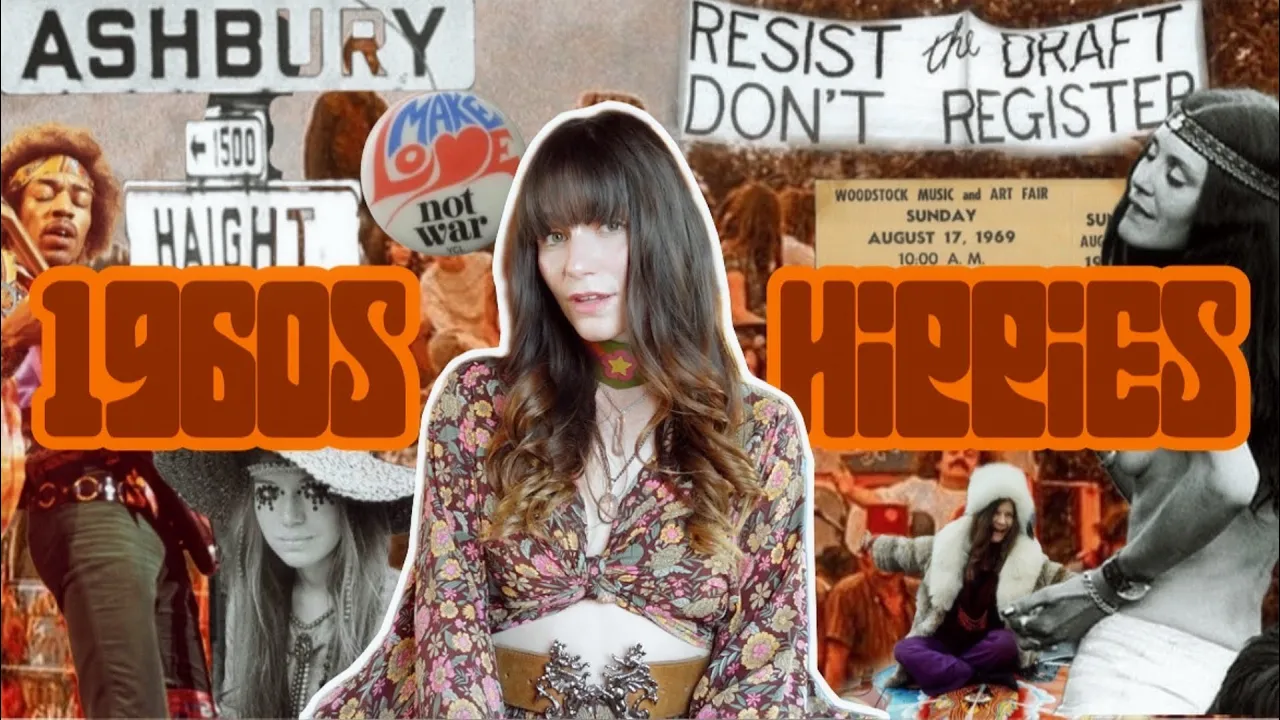
The 1960s hippie counterculture was a revolutionary youth movement that rejected mainstream values and embraced personal freedom, peace, and love, emerging as a powerful response to the Vietnam War and social injustices; characterized by distinctive fashion featuring tie-dye, bell-bottoms, and flowing garments made from natural fibers, along with androgynous styles and natural makeup, the movement was embodied by influential figures like Janis Joplin, Jimi Hendrix, and Grace Slick, and reached its peak at iconic events such as the Monterey Pop Festival (1967) and Woodstock (1969), though it eventually declined due to commercialization and internal challenges.
Click to watch →
Deep Dive
Basic knowledge of the socio-economic climate of the early-to-mid 1970s, including stagflation, the energy crisis, and second-wave feminism, which influenced consumer behavior.
Growing Up in the 70s? These Were Everywhere
7.9K
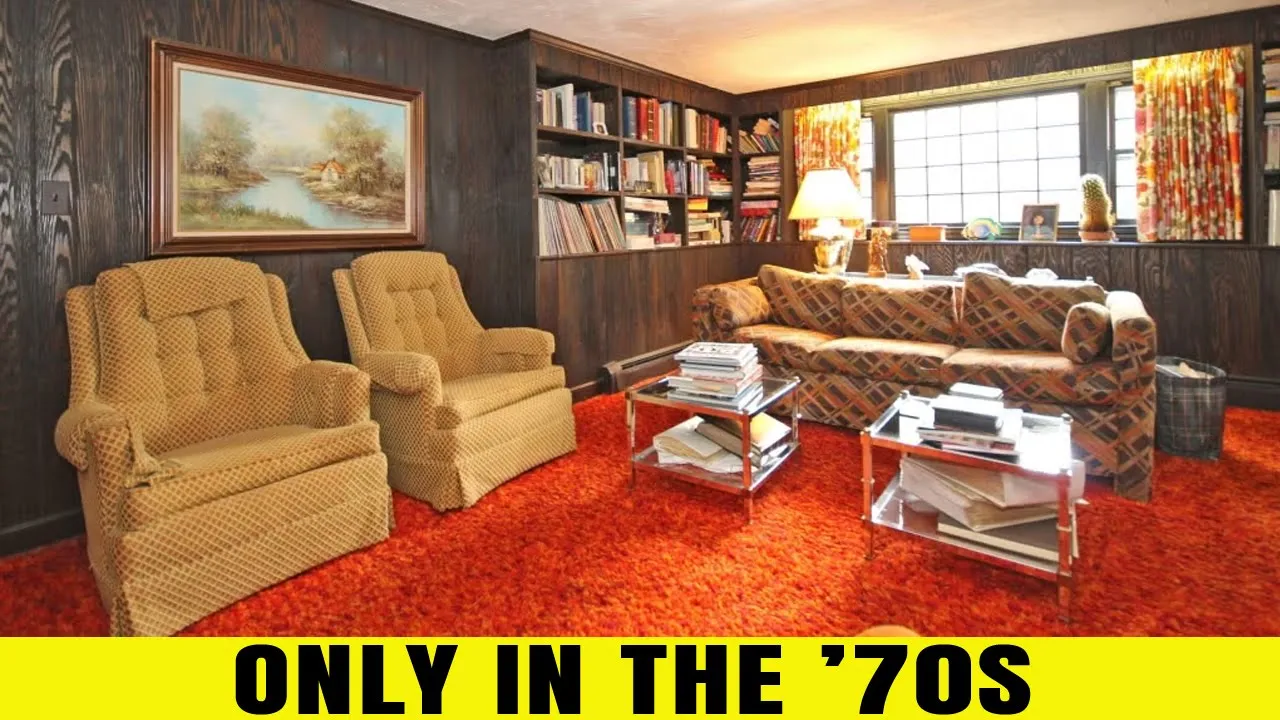
The 1970s were a complicated decade for the American middle class, with inflation averaging 7% throughout the decade and hitting double digits by the end. Life was a mix of post-war thriftiness and the rise of consumerism. Buying a starter home was the biggest expense and the clearest symbol of the middle class. Young people needed only half the down payment that young people today need. Once the house was secured, families needed reliable transportation. The energy crisis, starting with the 1973 oil crisis and escalating after the 1979 Iranian Revolution, profoundly impacted middle-class spending. Gas prices more than tripled between 1973 and 1980, from 36 cents to over $1.25 a gallon.
Click to watch →

Набиуллина боится стагфляции | Что это и почему нам всем нужно бояться (English subtitles) @Max_Katz
2M
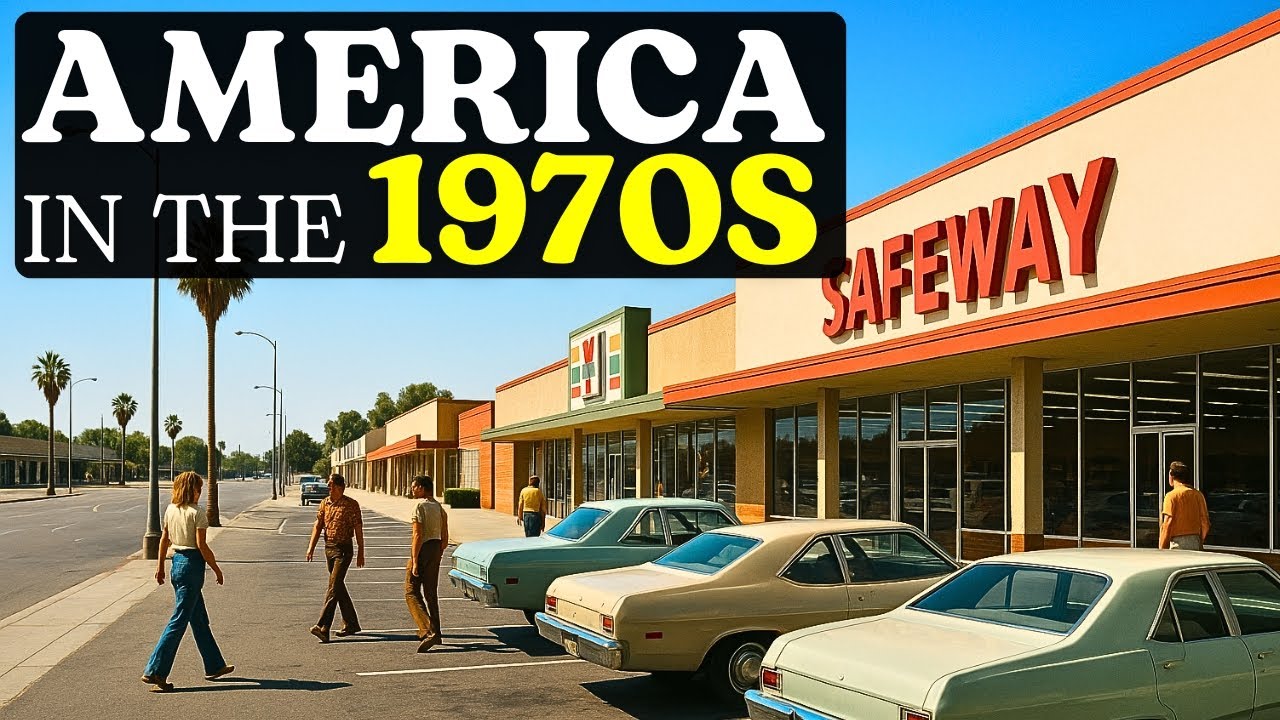
The 1970s in the United States represents the most prominent historical example of stagflation. This period followed the post-WWII economic boom and coincided with multiple converging negative factors: the end of 20 years of American economic dominance, the 1973 oil crisis (oil prices quadrupled from $3 to $12 per barrel), the end of the Vietnam War reducing military spending, and the rise of Asian economies (Japanese cars, Taiwanese electronics) competing with American manufacturers. The result was 9% unemployment and 15% inflation.
Click to watch →
What it Was Like to Live in AMERICA in the 1970s
361
The 1970s brought stagflation - high inflation and unemployment simultaneously - confusing economists. Inflation reached 13.5% by 1980, while wages couldn't keep pace. The Rust Belt emerged as factories closed and American companies couldn't compete with foreign products. Major events shattered American confidence: the Vietnam War ended in 1975 with America's defeat, Watergate ended with Nixon's resignation, and the Iran hostage crisis (1979-1981) left Americans helpless. Yet childhood remained relatively free - kids played outside unsupervised, rode bikes without helmets, and played elaborate games. The decade was messy and complicated, but Americans adapted, gaining honesty through loss of innocence.
Click to watch →
당신이 생각하는 최대, 상상 그 이상 더 높은 금리인상!! | 폴 볼커
81.6K
The 1970s US economy faced stagflation—simultaneous high inflation and economic stagnation—caused by Vietnam War spending, the 1971 Nixon shock ending gold-dollar convertibility, and the 1973 oil crisis quadrupling oil prices. Inflation reached 9% while the economy entered recession. Traditional economic theories (Phillips Curve) failed, as inflation and unemployment rose together. The Fed faced a fundamental choice between controlling inflation or maintaining growth. Paul Volcker, appointed in 1979, chose aggressive inflation control, believing both goals could not be achieved simultaneously.
Click to watch →

Ford, Carter, and the Economic Malaise: Crash Course US History #42
2.1M
The 1970s marked the end of 25 years of broad economic expansion in America. Instead of continued prosperity, the nation experienced both high inflation and extremely slow economic growth simultaneously—a phenomenon called stagflation. This represented a fundamental departure from previous economic patterns where inflation and unemployment typically moved in opposite directions. The crisis was so severe that it became known as 'the worst hangover ever' after the Great Depression and the 2008 recession.
Click to watch →
Deep Dive
Familiarity with key musical genres of the era, specifically the theatricality of glam rock and the anti-establishment ethos of early punk rock.
10 Classic Rock Bands Who Ruled the UK but Failed in America!
87.4K
This segment explores how theatricality and cultural specificity created barriers for British bands in America. T-Rex (early 1970s) scored four consecutive UK number one singles with Mark Bolan's glitter, mysticism, and swagger, but American rock culture favored grit and realism. Bolan's theatricality felt alien, and his death at 29 ended the phenomenon. The Jam (late 1970s) became punk's most precise voice, scoring four UK number one singles with songs about council estates and working class life. In America, none of it landed because they sang about Britain without translation. While other bands aimed for global slogans, The Jam focused on home. These cases demonstrate that artistic choices prioritizing authenticity over universal appeal can limit international reach.
Click to watch →

EVERYTHING ABOUT VIVINOS
30.5K
In 'Alien Stage Round 2,' Till smashes his guitar causing it to explode with green goop, and the creator notes that this is punk rock behavior. The creator interprets this as Till trying to break free from the constraints placed on him by higher powers. The creator notes that in the world of music, you can't get more anti-establishment and more 'do what you want' attitude than punk rock. The creator predicts that Till won't survive, noting that artwork released on Vivinos' Twitter shows Till and Mizy together, released a good minute or two before the video came out, suggesting foreshadowing. This demonstrates how horror creators use musical genres as symbolic representations of character themes and use promotional material to build anticipation and foreshadow narrative outcomes.
Click to watch →
پروندهی سید و ننسی؛ رومئو و ژولیت پانک، تاریخچه جنبش موسیقی پانک
356.1K
Punk rock emerged as an anti-establishment movement that rejected mainstream values. Punk rockers rejected capitalism, mainstream fashion, and traditional social norms. They made their own clothing, wore ripped jeans and spiked accessories, and rejected the polished appearance of mainstream pop culture. This demonstrates how punk rock served as a form of social commentary and how musical movements can emerge as responses to perceived cultural and social problems. The movement's emphasis on simplicity, with some punk rockers only knowing three chords, was seen as a deliberate artistic choice that rejected the technical sophistication of mainstream rock music.
Click to watch →

Explaining 1970's Fashion
26.5K
Punk fashion emerged as rebellion against disco's excess, materialism, and luxury. Punks ripped, damaged, and reattached clothing with safety pins, using tartans and darker shades for a DIY aesthetic. Big, bright spiked hair with gel completed the look. Vivienne Westwood and Malcolm McLaren from the Sex Pistols mainstreamed punk through their shop 'Sex,' selling offensive T-shirts and making the look accessible. Glam rock married disco elements with punkiness, featuring extreme camp and androgyny. Artists like David Bowie, Elton John, Queen (with Freddie Mercury's tight jumpsuits), and Iggy Pop embraced glitter, bright colors, and massive heels. While glam rock was more stage-oriented than streetwear, it profoundly influenced fashion through theatricality and bold self-expression.
Click to watch →

Dancefloors and Runways of The 1970s | Steve King and Scott Schiavone | Artfully Said
1.1K
Punk emerged as a rebellion against the existing music industry, where superstars had become distant from the youth. Malcolm McLaren and Vivienne Westwood created the punk aesthetic, with designs created by sewing chicken bones to T-shirts and using safety pins. Punk had two waves: the first was a shock wave that worried the establishment, while the second wave featured more sophisticated artists like Blondie and The Police. Glam rock began with Mark Bolan of T Rex, continuing the tradition of dandyism that originated in the late 18th century with Beau Brummel. The Peacocks on Carnaby Street continued this tradition, representing identity and occupying space in the world. Jimi Hendrix was considered a peacock, known for his distinctive style including velvet blazers and flares. Glam rock seemed to borrow from many different fashion trends, creating a melting pot of style.
Click to watch →
Deep Dive
The concept of fashion as a sociological tool for non-verbal communication, self-expression, and political protest.

김홍기'옷장 속 인문학'편,TV책방 북소리
7.4K
Fashion functions as powerful non-verbal communication conveying identity, values, and social positioning. Cicero's rhetorical principles of appropriateness and moderation apply directly to fashion styling, warning against extremes of excessive brand display or complete lack of style. Fashion serves as diplomatic and political tool, with leaders using clothing to convey messages beyond words, demonstrating how strategic fashion choices communicate respect, gratitude, and cultural identity in formal contexts.
Click to watch →
Fashion is Power — Clothes as Politics, Rebellion & Identity | Queer & Native Fashion History
2.9K
Fashion is one of the most immediate ways humans communicate without words. Through cuts, colors, and textures, people express mood, personality, values, and ideas. Even those who claim not to care about fashion are still making statements through their clothing choices. Fashion is unavoidable as a form of self-expression.
Click to watch →

La política está de moda | Andrea Vega | TEDxUniversidad de los Andes
298
Fashion serves as a powerful political communication tool where clothing choices function as non-verbal political statements that can express identity, challenge social norms, and influence collective consciousness, as demonstrated by historical examples like women's suffrage movements, designers like Coco Chanel and Christian Dior revolutionizing women's roles, and modern political figures using attire to convey messages such as the 2017 US congresswomen wearing white to commemorate women's voting rights.
Click to watch →

Como MODA e POLÍTICA se relacionam | Bielo Pereira
1.9K
Fashion communicates social roles and positions within society through costume design, where colors and styles delineate characters' social positions. Women designated as wives might wear red with white hats symbolizing their role as reproducers, while women outside marriage might wear green or pastel colors indicating marginal position. Men in positions of authority often wear dark, austere colors like black in suits, symbolizing control and power. Fashion serves as a powerful tool for political protest and collective action, as demonstrated by Zuzu Angel's protest runways during Brazil's military dictatorship and the #MeToo movement's black solidarity at the Golden Globes. Fashion items become symbols of political campaigns, such as the 'Make America Great Again' hat. Fashion challenges gender norms and promotes liberation when individuals wear clothing traditionally associated with different genders. Fashion serves as a historical and cultural record reflecting society's values, culture, and political moments, connecting past, present, and future as a mirror of societal evolution and a tool for expressing personal and collective identity.
Click to watch →
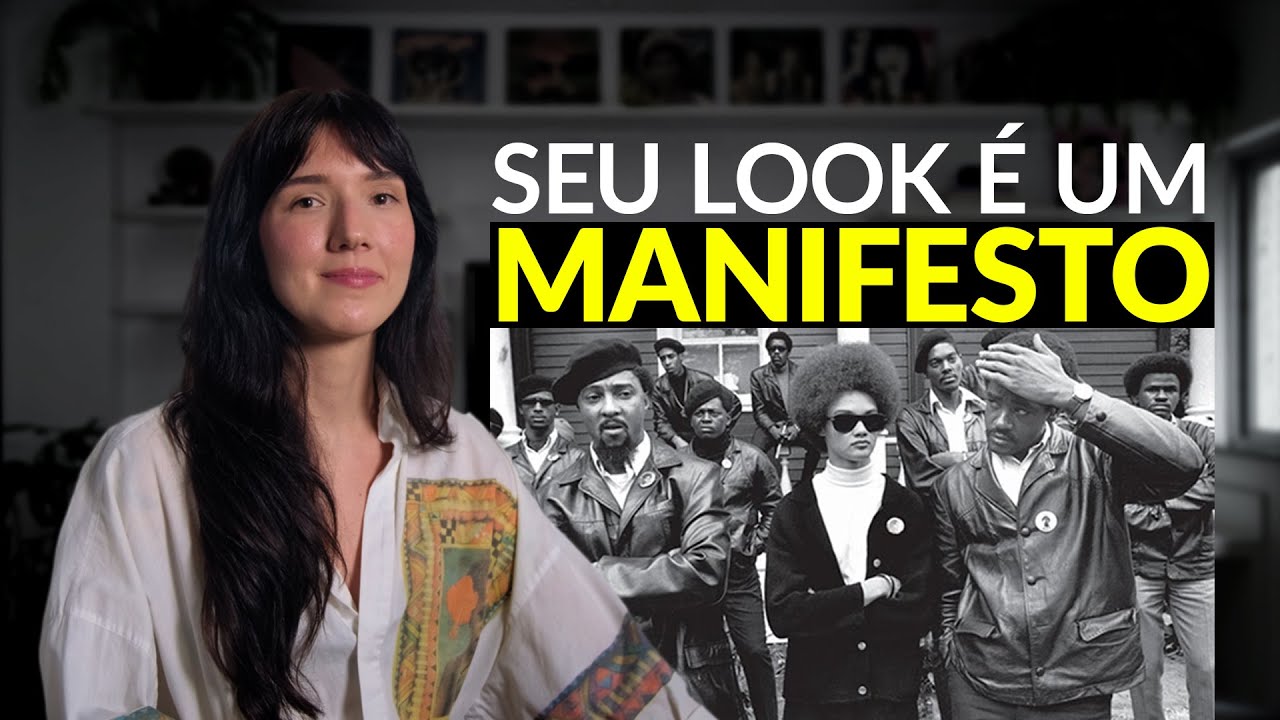
ROUPA FALA: MODA É POLÍTICA (o que você comunica sem saber)
4K
Fashion is a powerful form of political communication that has historically served as a tool for social expression, resistance, and identity formation, from medieval sumptuary laws that enforced social hierarchies through clothing to modern movements like Black Power, Punk, and feminist activism, where clothing choices communicate values, beliefs, and social statements without words.
Click to watch →
Prerequisite Knowledge
- Concept 01Understanding of 1960s counterculture and how youth movements (like the hippie movement) shifted societal norms and traditional dress codes.
- Concept 02Basic knowledge of the socio-economic climate of the early-to-mid 1970s, including stagflation, the energy crisis, and second-wave feminism, which influenced consumer behavior.
- Concept 03Familiarity with key musical genres of the era, specifically the theatricality of glam rock and the anti-establishment ethos of early punk rock.
- Concept 04The concept of fashion as a sociological tool for non-verbal communication, self-expression, and political protest.
Subsequent Learning
- Step 01An analysis of how 1970s fashion laid the groundwork for 1980s trends, including the transition from disco/glam to new wave and power dressing.
- Step 02The study of modern fashion cycles, specifically analyzing how and why 1970s silhouettes (such as platforms, wide-leg trousers, and bohemian prints) repeatedly cycle back into contemporary style.
- Step 03A deeper exploration of gender fluid fashion, tracing its modern roots back to the androgynous styles popularized by 1970s icons like David Bowie and Grace Jones.
- Step 04The environmental and material history of fashion, looking at how the 1970s boom in synthetic fibers like polyester shaped the modern fast fashion industry and global textile waste.
70s Trends
Legacy
70s Trends
0:00Playing Section
- 1
Jumpsuits and flared trousers defined the decade's bold style.
- 2
Sheer clothing and platform shoes made daring fashion statements.
Subcultural Co-optation and the Commodification of Rebellion
While 1970s fashion is often celebrated as an era of authentic, rebellious self-expression—epitomized by punk and glam rock—cultural theorists offer a more critical perspective. Critics, particularly those from the Birmingham School of Cultural Studies, argue that these subversive styles were rapidly co-opted, neutralized, and commercialized by the mainstream fashion industry. Instead of representing a lasting triumph of anti-establishment identity, punk's raw, DIY aesthetics (like safety pins and ripped fabrics) were quickly sanitized and sold back to the public as high-priced designer commodities. This critique suggests that the evolution of 1970s fashion was not purely a grassroots movement of cultural liberation, but rather a demonstration of how capitalism successfully absorbs dissent and packages it as consumer trends. Furthermore, the era's heavy reliance on cheap, synthetic textiles like polyester marked the birth of modern, environmentally damaging fast-fashion practices, challenging the romanticized view of the decade's style legacy.
Deep Dive
An analysis of how 1970s fashion laid the groundwork for 1980s trends, including the transition from disco/glam to new wave and power dressing.

What Teenagers Looked Like Growing Up In 1970's
2.4K
The transition from the 1970s to the 1980s represented a complete shift in fashion attitude—from free-spirited Bohemian vibes to high-energy power dressing. The 1970s were characterized by loose, flowy silhouettes, natural materials like cotton, linen, and suede, and earthy color palettes with browns, oranges, mustard yellows, and muted greens featuring psychedelic or Bohemian patterns. The 1980s transformed this with tight, structured fits, synthetic fabrics like polyester, spandex, and vinyl, and neon pinks, electric blues, and highlighter greens clashing chaotically. Casual wear evolved from denim-on-denim combinations, slouchy cardigans, and platform sandals to preppy polished looks with straight-legged jeans, polo shirts, and structured blazers. Music-driven fashion shifted from hippie culture and disco's free-spirited aesthetic to punk and rock rebellion inspired by bands like The Ramones and The Clash, causing teens to trade flowy outfits for ripped jeans, studded jackets, and leather everything. The athleisure movement emerged as fitness became a complete lifestyle, with leg warmers, spandex bodysuits, oversized sweatshirts, and neon workout gear becoming staples even for those not exercising.
Click to watch →

HISTORY OF WESTERN FASHION:1700s to 2000s
30.2K
The 1970s featured disco glamour (Halston, Studio 54) alongside UK glam rock (Bowie, McQueen). Vivienne Westwood and Malcolm McLaren created punk fashion—arguably the first time street style impacted high fashion. Power dressing borrowed menswear elements with shoulder pads and pleated trousers. Diana Spencer's 1981 wedding gown influenced wedding and prom fashion globally. Michael Jackson revived Regency military jackets. The decade showed fashion's ability to reflect both decadence and rebellion simultaneously.
Click to watch →

Every Style Generation Explained
1.6K
The 1970s embraced relaxed, effortless fashion with flowing fabrics, earthy tones, and bohemian influences. Wideleg trousers became timeless staples, paired with fitted blouses. Wrap dresses flattered every body type while defining the waist. Color palettes shifted to warm browns, deep oranges, and muted greens. The 1980s brought bold power dressing with big shoulders, bold colors, and unapologetic confidence. Power suits with structured blazers, pencil skirts, and silk blouses created commanding presences. Bold jewel tones, metallic fabrics, and sequins made their way into evening wear. Accessories were equally bold—chunky jewelry, oversized earrings, and statement belts. This era taught that style is a tool that can make you feel powerful, elegant, and completely in control.
Click to watch →

Why 1980s Britain Looked So Different from the 70s 😲
5.8K
The 1980s did not have one fashion look but approximately seventeen different styles coexisting simultaneously. Punks with bright mohawks stood next to new romantics in frilly shirts, while Sloane Rangers in Laura Ashley prints walked past casuals in feller and Lacoste. Power dressing dramatically changed Britain's silhouette through exaggerated shoulder pads that added literal inches to frames, making everyone look bigger, more angular, and more assertive. Paired with pencil skirts and high heels, professional women cut dramatically different figures from their 1970s counterparts in flowing florals and platform shoes.
Click to watch →
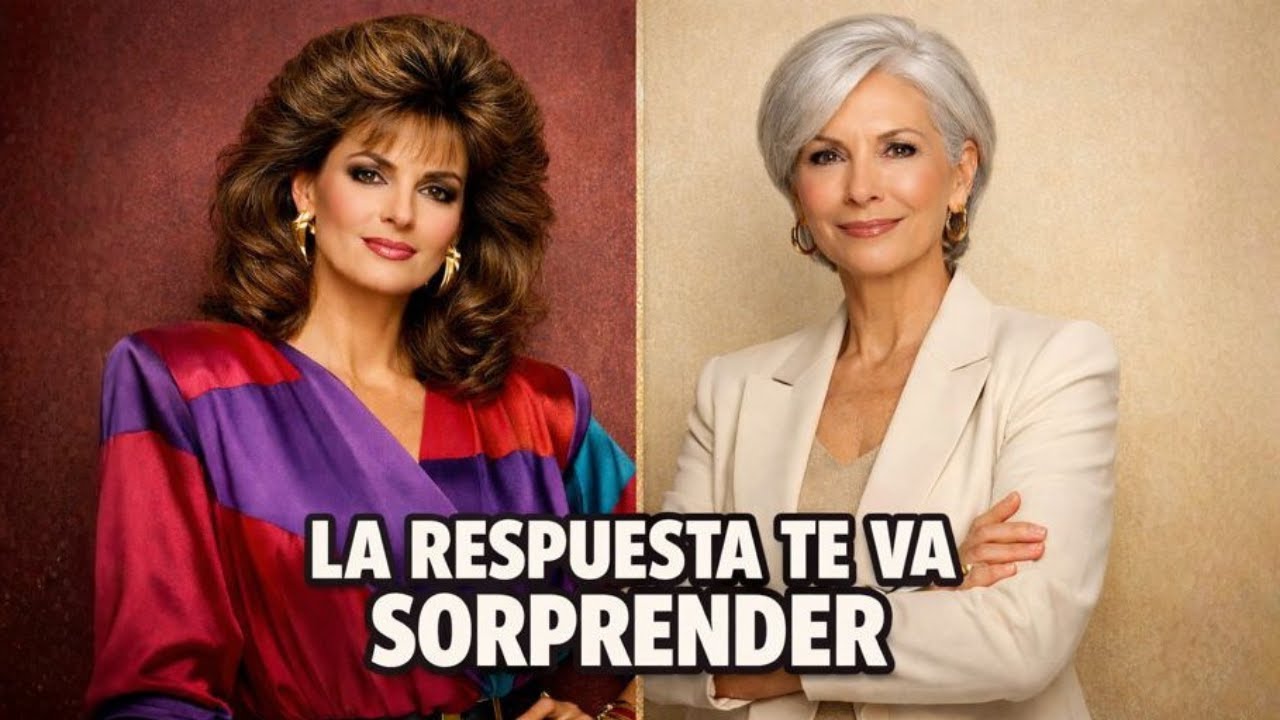
Cómo se vestían nuestras madres vs. cómo nos vestimos nosotras: ¿quién lo hacía mejor?
134
The 1970s represented female liberation with flared pants, ethnic prints, and earth tones reflecting women entering the workforce. Diane von Fürstenberg's wrap dresses symbolized female power. The 1980s shifted to power and structure with shoulder pads, neon colors, and athletic wear becoming urban fashion. Both eras had limitations: 1970s had excessive patterns and rigid social norms, while 1980s had visual noise and body-type pressures.
Click to watch →
Deep Dive
The study of modern fashion cycles, specifically analyzing how and why 1970s silhouettes (such as platforms, wide-leg trousers, and bohemian prints) repeatedly cycle back into contemporary style.
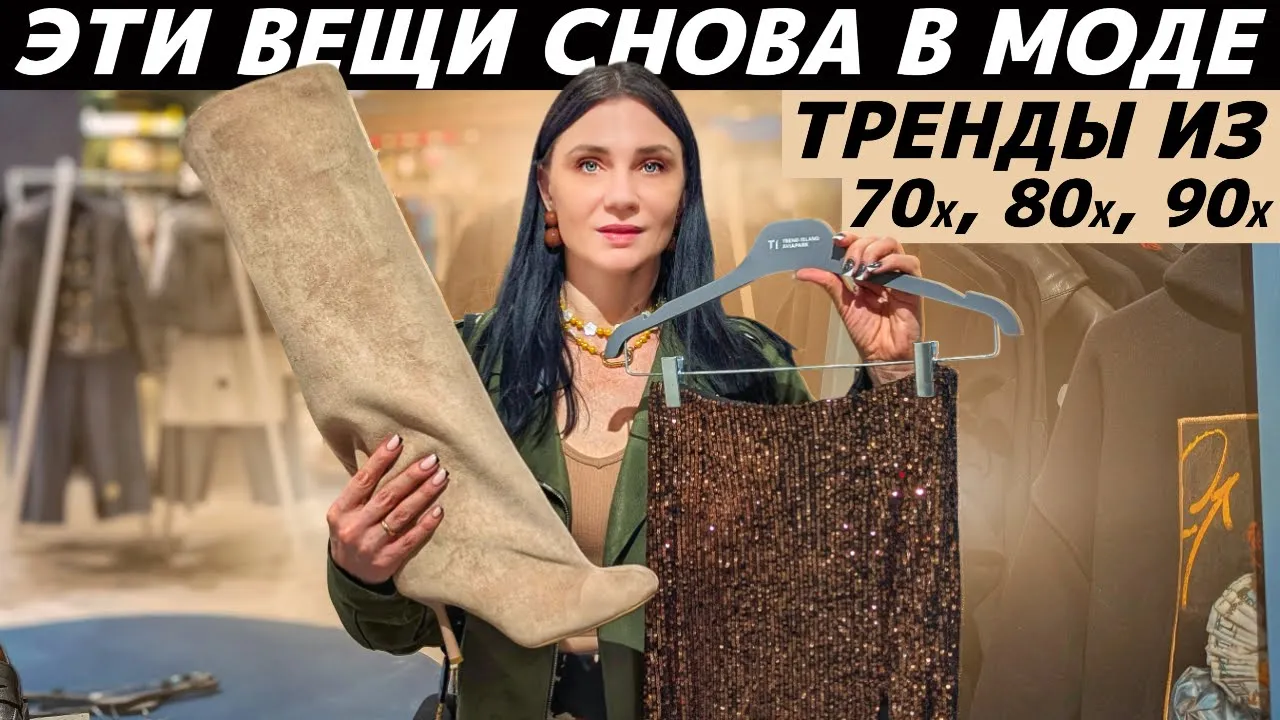
СНОВА В МОДЕ: ТОП 15 вещей из 70х, 80х, 90х вернулись в тренды! Реальные примеры: что вернулось?
9.2K
Fashion is cyclical, with many items from the 1970s, 1980s, and 1990s returning to current trends, but these vintage items require modern adaptations to be wearable today. Key returning trends include flared pants (which elongate legs but require careful fit selection), fringe (originally Western style, now versatile across bags, shoes, and garments), corduroy (from preppy Oxford style, with rib size selection based on body type), suede (now used in boots, bags, and accessories), sequins (for festive and everyday looks), crochet (modern oversized versions), camisoles (versatile for various styles), metallics (popular in 1990s futurism), oversized silhouettes (from 1980s business fashion), leggings (denser than tights), large-frame eyewear (1970s style), low-rise jeans (more refined modern versions), bomber jackets (versatile outerwear), and total denim (denim-on-denim styling). These trends demonstrate how vintage fashion elements can be reinterpreted for contemporary wardrobes.
Click to watch →
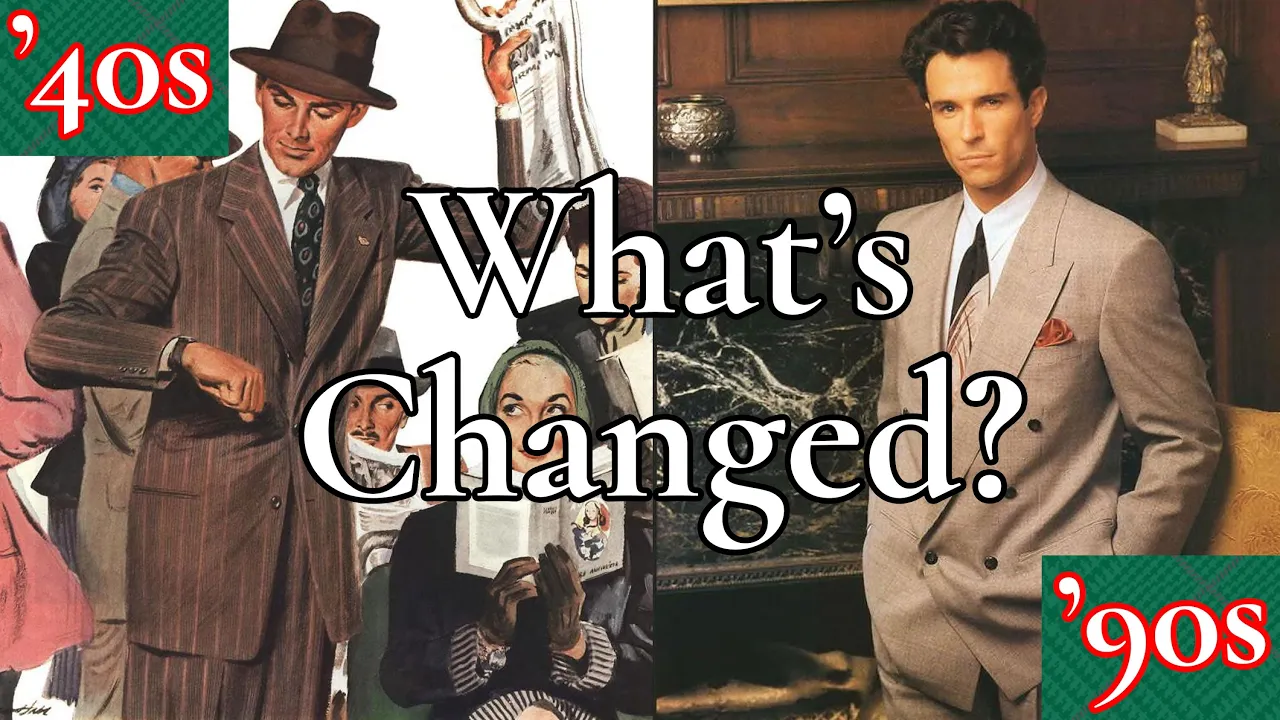
Don't Buy a New Suit, Search For THIS Instead
32.2K
The 1960s enforced strict uniform dressing with skinny lapels, sharkskin fabrics, and monochromatic color schemes requiring specific shirt-tie combinations. The 1970s rebelled with polyester materials, extended shoulders, and bell-bottom trousers—the last major three-piece suit revival. The 1980s returned to 1940s silhouettes following a 35-40 year cyclical pattern, featuring double-breasted suits with narrower lapels and pop art graphic ties. This demonstrates fashion's recurring nature where styles resurface after extended periods, creating predictable cycles that designers and retailers can anticipate.
Click to watch →
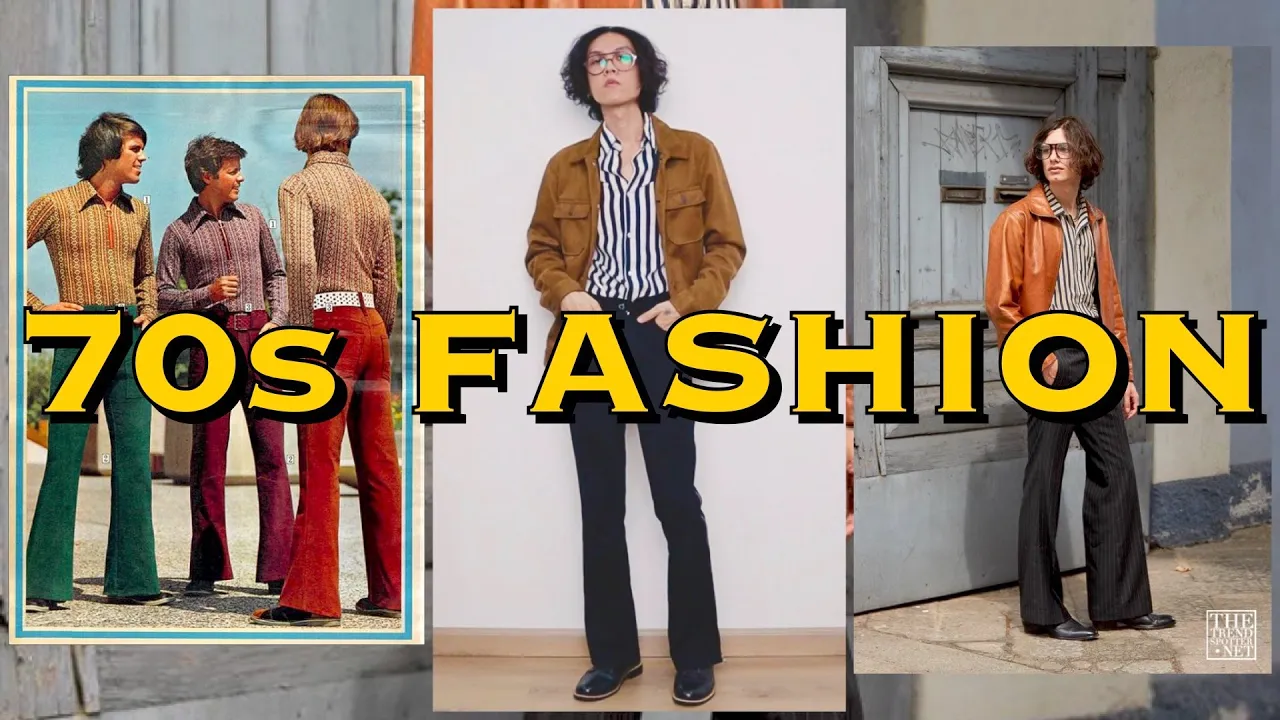
70s RETRO FASHION STYLE
145.4K
The key principle of 1970s fashion is the silhouette: the top should be fitted (skinny) while the bottom should be flared. This creates a distinctive hourglass-like shape that was characteristic of the era. The pants should widen significantly from the knee downward, resembling a bell shape. This silhouette principle applies across different sub-genres of 1970s fashion, from Disco to Punk Rock.
Click to watch →

1972 Kays Catalogue review. UK
919
The video illustrates how fashion trends demonstrate cyclical patterns spanning decades. 1970s clothing items—wire-front shoes, certain men's wear designs, and women's fashion silhouettes—have returned to contemporary fashion trends. This phenomenon shows that aesthetic preferences are not linear but rather follow recurring cycles where past styles become desirable again, influenced by cultural nostalgia and changing social attitudes toward vintage aesthetics.
Click to watch →

Anos 70 no Universo da Moda
28.3K
The 1970s fashion era was characterized by creative freedom, bold prints, bell-bottom pants, flare pants, crop tops, and disco-inspired glamour, representing a shift from the structured 1960s silhouettes; these iconic styles have been successfully reinterpreted for contemporary fashion, with modern adaptations like the flare pants (which better suit Brazilian body types) and crop tops returning to current runways, demonstrating how fashion cycles revive and evolve historical trends while adapting them to contemporary sensibilities and body proportions.
Click to watch →
Deep Dive
A deeper exploration of gender fluid fashion, tracing its modern roots back to the androgynous styles popularized by 1970s icons like David Bowie and Grace Jones.
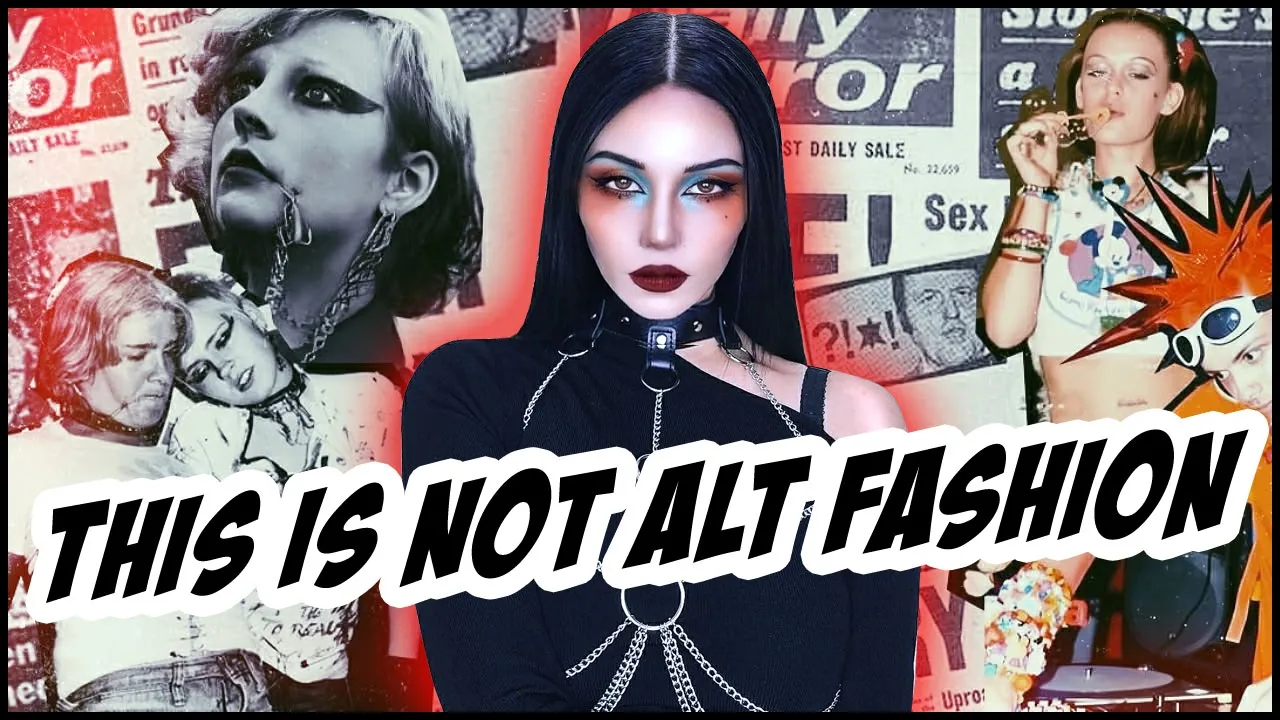
WTF Happened to REAL Alternative Fashion?
74.2K
Glam rock emerged in the 1970s with David Bowie as Iggy Stardust, introducing gender fluidity and androgyny to alternative fashion. This look included metallic jumpsuits, huge platform boots, shaved eyebrows, brightly colored hair, and the 'spiders from Mars' aesthetic. The fashion was decadent, gender-bending, and featured glitter, sparkles, and prismatic colors. This was the furthest alternative fashion had gone at the time, with headlines mocking the look and venues refusing entry to fans who emulated it. Despite the ridicule, people continued to express themselves through this fashion.
Click to watch →
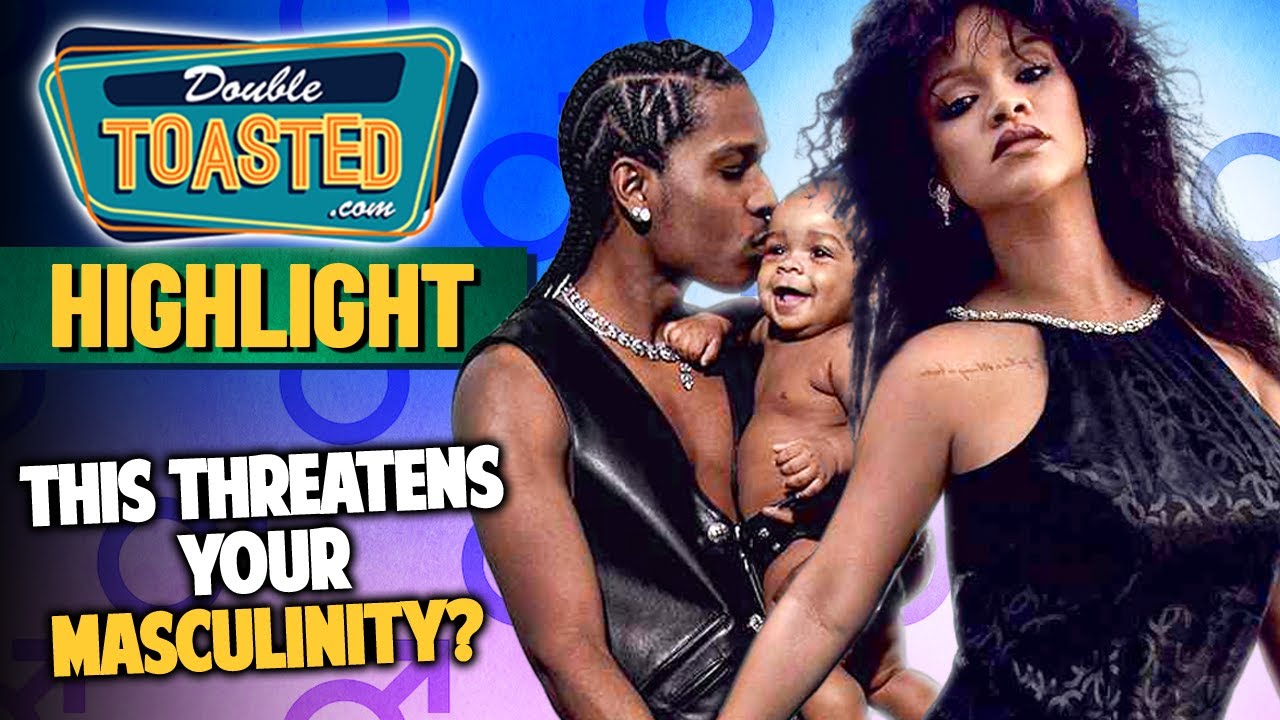
WAS A$AP ROCKY EMASCULATED IN RIHANNA VOGUE PHOTOSHOOT? | Double Toasted
24.9K
Gender fluidity and androgynous fashion have existed for decades in music culture. Terms like 'androgynous' and 'New Wave' were used in the 1980s. Artists like Prince, David Bowie, Poison, and Rick James embraced gender-fluid fashion, with Prince's feminine style influencing others. Rick James required band members to wear makeup and braids. Dr. Dre has embraced lip gloss. Historically, blue was for boys and pink for girls, but modern society has moved toward neutral colors. The speaker argues that people should not judge celebrities based on single photos or moments, as gender-fluid fashion has been common in popular culture for decades.
Click to watch →
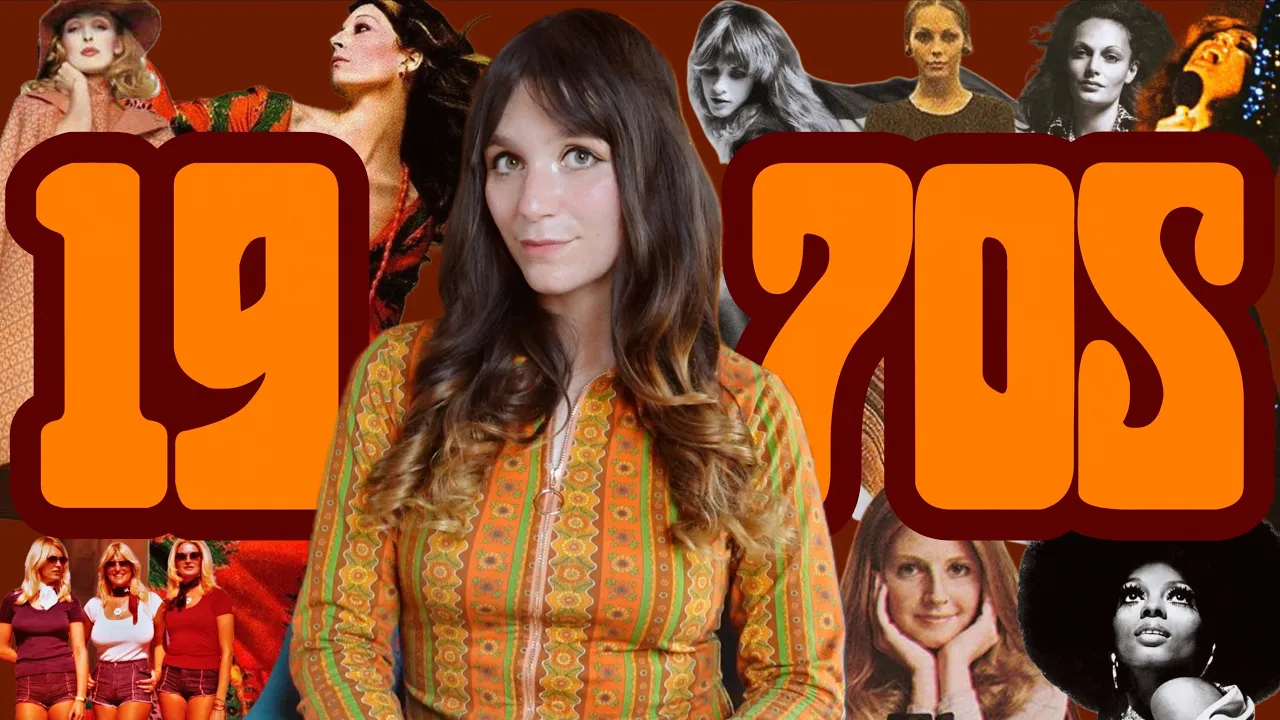
Explaining 1970s Fashion
97.8K
By 1973, androgynous glam rock had become mainstream among young British people of both sexes. This included embroidered western shirts, velvet sports coats, frilly shirts, synthetic fabrics like satin, white kipper ties, leather jackets, and platform shoes. Unisex outfits with minimal differences between men's and women's clothing became popular with colors like cream, burgundy, brown, and orange being all the rage.
Click to watch →

TENDÊNCIA: O QUE É MODA GENDERLESS? ESTILO TOMBOY, MODA AGÊNERO & MODA ANDRÓGINA
379
Androgynous fashion represents clothing designed for all bodies and genders, featuring neutral pieces with comfortable, non-restrictive modelings. This concept emerged from artistic movements, particularly in music. David Bowie pioneered this philosophy in the 1970s, famously stating his shoes were 'just shoes' when asked about gender. Boy George became internationally known in the 1980s for his androgynous presentation. Grace Jones transformed her distinctive features into a powerful androgynous image. Contemporary artists like Billy Porter and Måneskin continue this tradition, demonstrating that fashion serves as communication, strategy, expression, and art.
Click to watch →

Make-up History - 1940's to 1970's
625.9K
The 1970s represented a groundbreaking era of gender fluidity in fashion, where men and women embraced similar styles including long hair, makeup, and unisex clothing. The hippie movement challenged traditional gender norms, with individuals wearing items like beads and flowing garments regardless of gender. This period saw women dressing in men's jeans and men embracing makeup, marking a permanent shift toward more fluid concepts of gender expression in fashion and beauty.
Click to watch →
Deep Dive
The environmental and material history of fashion, looking at how the 1970s boom in synthetic fibers like polyester shaped the modern fast fashion industry and global textile waste.

O que NÃO te contaram sobre as marcas de luxo!
46.4K
Both luxury brands and fast fashion extensively use polyester, with luxury brands like Chanel, Dior, and YSL primarily using it in winter collections. Modern clothing frequently contains polyester blends, with even natural-looking garments containing significant polyester percentages. Polyester is a synthetic plastic material that takes 200 to 400 years to decompose in nature, contributing to massive textile waste accumulation. The fashion industry is described as being 'inundated' with polyester, acrílico, and nylon materials. Consumers can identify polyester by touching the fabric and feeling its synthetic texture. This environmental persistence creates long-term pollution problems as discarded polyester clothing remains in the environment for centuries.
Click to watch →

History of Fashion:1960's-1970's (Woodstock Era)
176
Polyester dominated 1970s fashion, earning the nickname 'bulletproof double knit.' This synthetic fiber was machine washable, dryer safe, and held pleats permanently through heat setting. Crystal pleating became a distinctive decorative element. Fashion dating can be accomplished by examining manufacturing processes and stitch types, as machinery has changed over time. Home sewing remained popular, with approximately 50% of young women still making their own clothes. This represented a significant difference from modern fashion consumption patterns.
Click to watch →

The Environmental and Human Cost of Fast Fashion | Maxine Bédat
244.6K
Polyester, a fossil fuel-derived plastic, now dominates modern clothing, replacing cotton since H&M opened in 2001. This synthetic fiber creates four major environmental crises: it is entirely non-biodegradable, meaning all polyester ever produced remains on Earth; washing releases thousands of microplastics into water systems, contaminating oceans and entering the food chain (one in four fish in California markets contain microplastics); polyester traps body heat, increasing sweating; and its production requires eight times more energy than natural fibers like linen. Combined with clothing production moving to China (where 75% of energy is coal), the apparel industry generates 10% of global carbon emissions—five times more than all airline travel combined—while also being the second greatest polluter of fresh water globally.
Click to watch →
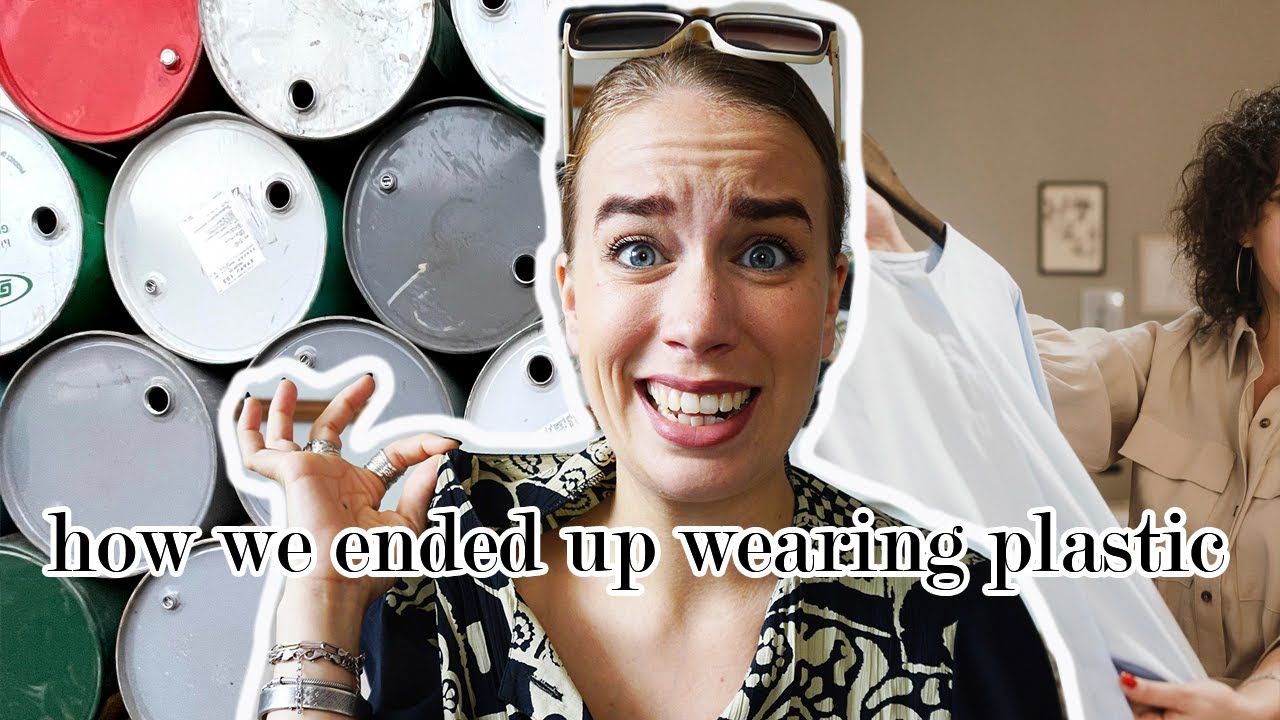
Polyester's Environmental Impact: Fashion's Plastic Problem
27K
Polyester, a synthetic fiber derived from petroleum that became the most widely used textile (representing 57.5% of global production), has driven the rise of fast fashion by offering an affordable, wrinkle-resistant alternative to organic fibers like cotton, but its production consumes vast amounts of fossil fuels (342 million barrels annually), releases microplastics during washing (accounting for 35% of primary microplastics in oceans), and creates non-biodegradable waste that persists for centuries; however, neither polyester nor cotton alone is the primary environmental problem—the core issue lies in the fashion industry's business model of mass production and disposable consumption, which requires systemic change rather than simply swapping materials.
Click to watch →

Por Que Tudo Estraga Tão Rápido: A Verdade Sobre As Roupas De Hoje
51.6K
Ultra Fast Fashion, exemplified by Shein, launches 10,000-100,000 items daily using 90-100% polyester, a petroleum-based plastic that takes 400+ years to decompose. Nature Reviews Earth and Environment reports clothing consumption doubled since 2000 while garment lifespan halved. The fashion industry causes 10% of global CO2 emissions (more than aviation), consumes 79 billion cubic meters of water annually, and generates 92 million tons of waste yearly. Rivers in Bangladesh, where 80% of fast fashion is produced, are contaminated with toxic dyes killing fish and harming communities.
Click to watch →
70s Trends
Legacy
70s Trends
0:00- 1
Jumpsuits and flared trousers defined the decade's bold style.
- 2
Sheer clothing and platform shoes made daring fashion statements.
Subcultural Co-optation and the Commodification of Rebellion
While 1970s fashion is often celebrated as an era of authentic, rebellious self-expression—epitomized by punk and glam rock—cultural theorists offer a more critical perspective. Critics, particularly those from the Birmingham School of Cultural Studies, argue that these subversive styles were rapidly co-opted, neutralized, and commercialized by the mainstream fashion industry. Instead of representing a lasting triumph of anti-establishment identity, punk's raw, DIY aesthetics (like safety pins and ripped fabrics) were quickly sanitized and sold back to the public as high-priced designer commodities. This critique suggests that the evolution of 1970s fashion was not purely a grassroots movement of cultural liberation, but rather a demonstration of how capitalism successfully absorbs dissent and packages it as consumer trends. Furthermore, the era's heavy reliance on cheap, synthetic textiles like polyester marked the birth of modern, environmentally damaging fast-fashion practices, challenging the romanticized view of the decade's style legacy.
Understanding of 1960s counterculture and how youth movements (like the hippie movement) shifted societal norms and traditional dress codes.
Basic knowledge of the socio-economic climate of the early-to-mid 1970s, including stagflation, the energy crisis, and second-wave feminism, which influenced consumer behavior.
Familiarity with key musical genres of the era, specifically the theatricality of glam rock and the anti-establishment ethos of early punk rock.
The concept of fashion as a sociological tool for non-verbal communication, self-expression, and political protest.
An analysis of how 1970s fashion laid the groundwork for 1980s trends, including the transition from disco/glam to new wave and power dressing.
The study of modern fashion cycles, specifically analyzing how and why 1970s silhouettes (such as platforms, wide-leg trousers, and bohemian prints) repeatedly cycle back into contemporary style.
A deeper exploration of gender fluid fashion, tracing its modern roots back to the androgynous styles popularized by 1970s icons like David Bowie and Grace Jones.
The environmental and material history of fashion, looking at how the 1970s boom in synthetic fibers like polyester shaped the modern fast fashion industry and global textile waste.
499.6K views5.8Klikes2:34@GettyImagesTVOriginal Release: 2017-09-27
it was a decade personified by sartorial Flair from cuts to creativity there are some standout trends that truly defined the 1970s some of the grooviest jumpsuits ever made were worn by both men and women in the 70s with legends like David Bowie leading the way [Music] bell-bottoms or flares were the ultimate statement piece made popular by the likes of ABBA share and even Michael Jackson when it came to flares the frillier wider and altogether more outrageous the better the miniskirts of the singing 60s were old news in comparison to the transparent clothing movement pioneered in the 70s by the likes of Ossie Clark and Eve Sandler on wearing a see-through dress with no undergarments was certainly a statement and this 70s model showed us that with any share garment the most important accessory was a sassy attitude if you're going to be afraid don't bother wear a turtleneck if you go into a toxic stress and put it on and forget about platforms are the most iconic pieces of footwear of the decade if not the 20th century this glam-rock footwear encouraged gender politics after both men and women chose to wear the height boosting shoes one of the prelim day is when you would be two or three inches taller than your girlfriend well now mr. Figgins shoe shops are striking a blow for men's lib by introducing a shoe with a five inch cork sole which will enable you to regain your rightful place and whilst attitudes have shifted since then this one unmistakable look that has barely changed since it came screaming into the limelight in the 1970s inspired by the anarchic underworld inhabited by the likes of the New York Dolls The Ramones and the Sex Pistols punk exploded onto the scene in the 70s with leather clad mohawk youth using safety pins like no generation before perhaps the biggest testament to the 1970s fashion is the way it's continued to inspire us even decades later [Music]
Up Next
18:05
Bell Hooks and Ballroom: A Critical Analysis of Queer Black Culture
@vudoomunkyfut
42.3K views•2022-12-10

12:54
Triumph of Orthodoxy Icon: Byzantine Art & History Explained
@BenCallan
2.1K views•2024-08-06

9:49
FastAPI vs Flask vs Django: Choosing the Right Python Web Framework
@TechWithTim
302.5K views•2024-05-26

1:42
Game of Thrones Opening Credits: A Cinematic Analysis
@gameofthrones
46.3M views•2011-04-18
Related Study Plans & Knowledge Roadmaps
Structured learning paths in General & Interdisciplinary Studies
general-studies
Elevator Engineering: History, Physics & Cities
01From Hoists to Safety Brakes: The Dawn of Vertical Lift
02Hydraulic vs. Traction: The Engineering Physics of Elevators
03Modern Speed, Safety, and Algorithms
+ 2 more learning modules
12h5 modules
Explore Roadmap
general-studies
Rubber: Material Science, History & Geopolitics
01Origins of Natural Rubber & Mesoamerican History
02The Chemistry of Natural Rubber & Vulcanization
03The Geopolitics of the Rubber Boom & Colonization
+ 2 more learning modules
12h5 modules
Explore Roadmap
general-studies
Containerization: Evolution, Logistics & Trade
01Ancient Trade & Bulk Cargo: Amphorae to Barrels
02The Industrial Revolution & Cardboard Packaging
03The Containerization Revolution: Malcom McLean
+ 2 more learning modules
12h5 modules
Explore Roadmap
general-studies
Textile Tech: Evolution, Labor & Global Impact
01Pre-Industrial Textiles: Handloom & Cottage Industry
02Mechanization: The Spinning Jenny to the Power Loom
03The Factory System & Global Labor Transformation
+ 2 more learning modules
10h5 modules
Explore Roadmap