


















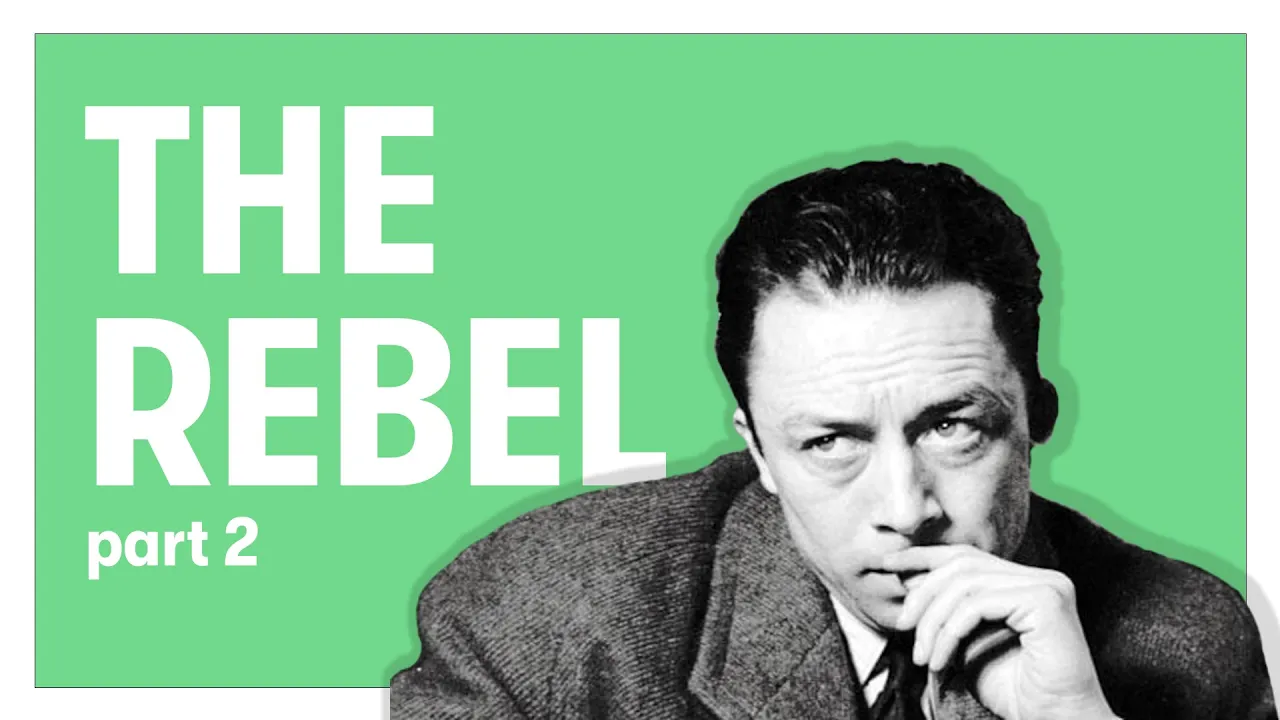
Albert Camus' The Rebel argues that neither nihilism (complete withdrawal from meaning) nor absolute faith (dogmatic commitment to values) provides adequate responses to the absurd; instead, an absurdist politics must embrace provisional humanist values, maintain tension between freedom and justice, and recognize our shared humanity while resisting violence and injustice.
Albert Camus on Absurdism and Political Rebellion: The Rebel Explained
Added:Camus' definition of 'The Absurd' as detailed in 'The Myth of Sisyphus', specifically the tension between the human desire for inherent meaning and a silent, indifferent universe.
The distinction between Existentialism (e.g., Jean-Paul Sartre's focus on radical freedom and essence) and Camus' Absurdism.
The historical context of mid-20th century Europe, particularly the rise of totalitarian regimes (Stalinism and Nazism) and the moral crises of World War II.
Basic concepts of political philosophy, including the definition of ideology, the justification of political violence, and the tension between individual liberty and state power.
The intellectual and personal fallout between Albert Camus and Jean-Paul Sartre following the publication of 'The Rebel', focusing on their debate over Marxism and revolutionary violence.
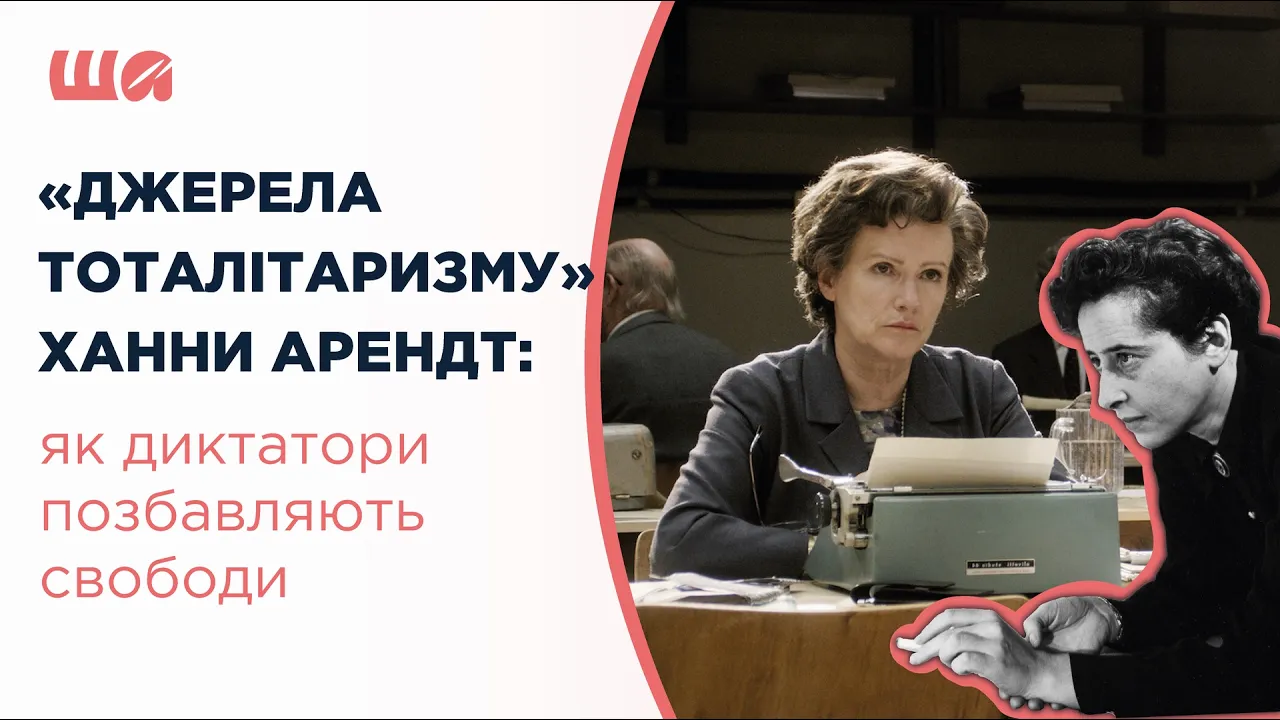
A comparative analysis of Camus' critique of totalitarianism alongside Hannah Arendt's 'The Origins of Totalitarianism'.
The application of Camus' ethics of solidarity and limited rebellion to modern human rights movements and theories of non-violent political resistance.
An in-depth study of Camus' concept of 'metaphysical rebellion' versus 'historical rebellion' as articulated throughout the specific chapters of 'The Rebel'.
162.8K views5.8Klikes39:56Original Release: 2025-06-14
This video is sponsored by Squarespace.
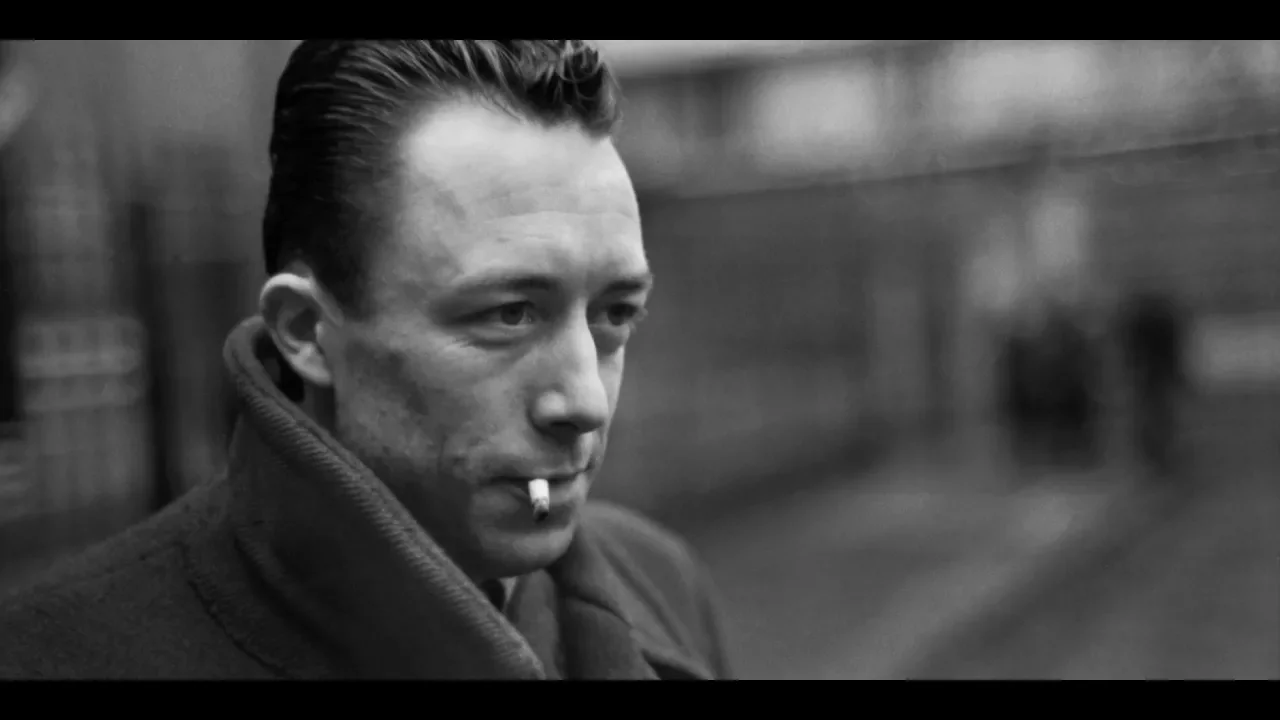
More about them in just a moment. Albear Camu is an absolutely iconic thinker. He created absurdism, coined the phrase imagine Seisphus happy, and actually made philosophers seem quite cool for a bit. I've already talked at length on the channel about his other works like the myth of Seisphus and the stranger.
But today I wanted to discuss by far his most controversial book, The Rebel, which tackles what absurdism can tell us about society, politics, violence, and dictators. Obviously, this is a very dense book and I can't cover all of it here. This video will just be a broad overview so that you can decide which parts you might want to delve into more deeply. Additionally, this is just my interpretation of the work, and this is one of those works where interpretations do get controversial. So, do take my opinion with a grain of salt. My name is Joe Foley and this is unsolicited advice. One, gazing into the absurd.
Before we get stuck into the rebel specifically, let's just recap where Kamu's thought came from so that we're all roughly on the same page going forward. The key pillar that Kamu's entire thought revolves around is the absurd. This is why his philosophy is called absurdism. And the absurd has a pretty specific meaning in Kamu's writings. It is not merely the world's meaninglessness, but the contradiction between mankind's search for absolute objective meaning in the universe and the universe's silence in face of our persistent questioning. This constant tension is what makes life absurd for Camu. If we had no real yearning for meaning or purpose, then the universe wouldn't really be absurd. We would be in line with its general purposelessness. The absurdity is that this purposeless universe could have within it purpose-seeking beings. It is like if we had thirst in a world without any water. Kamu's philosophy ultimately revolves around a single question. How should we react to the absurd? In the myth of Copus, Kamu looks at the problem of the absurd with regards to our own individual lives. Given that life is absurd, why should we bother going on living? He outlines three possible answers. The first is that we just don't go on living, which is a slightly depressing thought. The second is that we jump into the arms of a faith-based philosophy like a religion, which promises us a sense of absolute value and absolute meaning. And the third is that we become absurdists, recognizing the contradictions inherent in our living condition, yet deciding to go on living anyway. That is, we maintain this absurd tension in our heads, yet strive to live despite it. I just want to put a pin in this three-part division of reactions to the absurd because it will be pretty important later in the video.
The opening of the rebel sort of picks up where the myth of Seisphus left off.
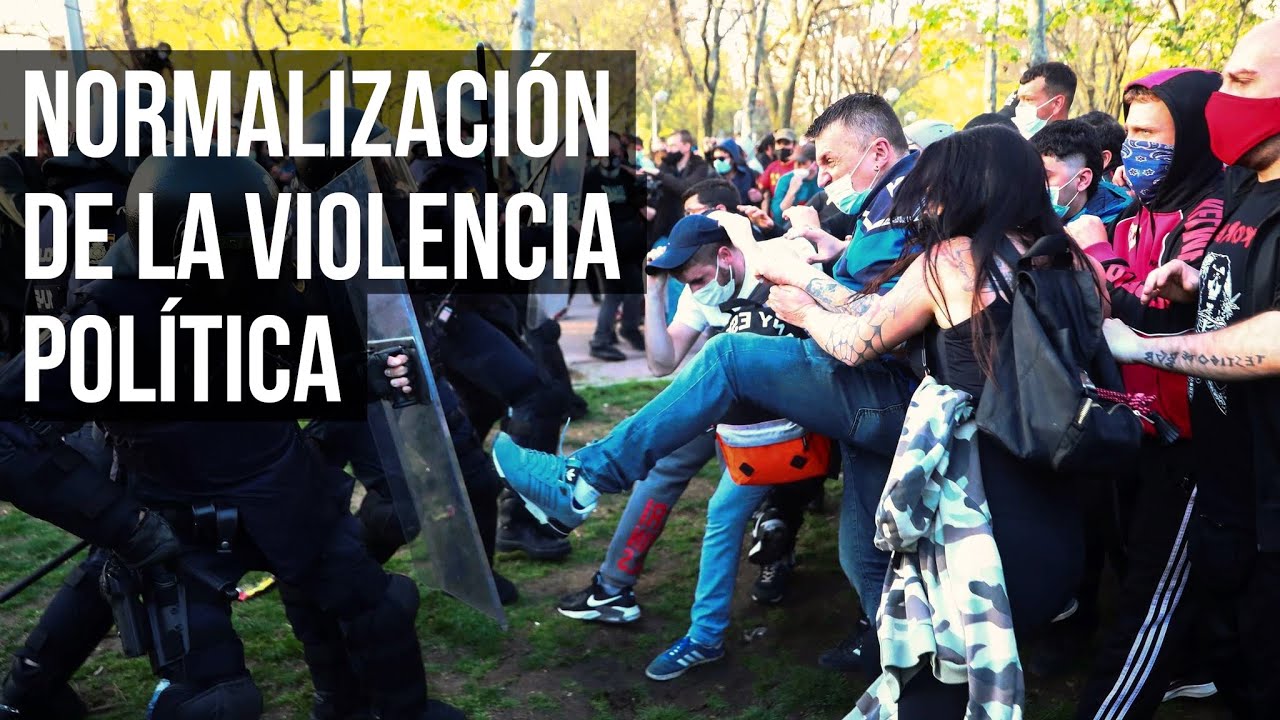
Kimu says that while that work dealt with the absurd turned inwards, that is with the decision of whether we individually can continue living in an absurd universe. The rebel deals with the absurd turned outwards. That is how the absurdist should behave towards others, including in situations of outright injustice. Kamu frames this as the problem of murder. But we might consider it more broadly as the problem of violence, politics, and social organization in a meaningless universe.
What does an absurdist politics or an absurdist society look like? And how does it contrast with others? To get perhaps even more to the point, how can an absurdist, with their admission that life is meaningless, not be completely silent and inactive in the face of violence and injustice, both towards us and towards our fellow man? If the myth of Cisphus outline the solitary reaction to the absurd, the rebel outlines the societal reaction to it. Kimu recognizes that this will be a pretty hard task.
After all, the first proposition of absurdism is precisely that nothing matters in an absolute sense. Kimu admits that this at first glance seems to entail a kind of moral withdrawal, an admission that all experience is the same and so just a base level amorality.
He even talks along these lines in the myth of Cisphus where he recommends that the absurdest exalt the quantity of life rather than the quality of it. He says that for a true absurd man, all experience ought to be roughly on a par.
However, he found he couldn't really maintain this position in the face of the Second World War and the horrors of Nazism. Nor as he learned more about Stalin's regime in the USSR.
Increasingly, he began to ask whether the absurdist could progress beyond this initial slightly isolated starting point. Can there be an absurdest morality and an absurdist solidarity with our fellow human being? Or as he puts it near the end of his book, how can we move beyond nihilism into shared rebellion? This is the subject of the opening of the rebel. Kamu argues that there is one value that the absurdist is seemingly already implicitly committed to. The value of human life itself. This might at first seem strange, but Kimu argues that it is there in the original absurdist decision to live in spite of the contradiction between their ultimate wish for meaning and the universe's meaninglessness. This is in a sense a stubborn clinging to life. And what could this express other than that the absurdist is implicitly holding some value in human existence? This value is certainly not absolute. But if the absurdists did not have it, then they would not have chosen to continue living. If life genuinely was of no worth to them, then they would have joined the legions of the dead. So at the very least, they are committed to a provisional value for human life. And this is how Kamu will build his wider absurdest protocol. Kamu also thinks that we naturally care not just about bare life, but about a particular kind of, let's call it dignified life. Again, I want to be clear. Kimu is not saying that there is some absolute value out in the world that supports caring about dignified living. He just thinks that we unavoidably do value this. It is in the same way that we value food. Not because of some sophisticated metaphysical system or philosophical argument, but because our instinct of hunger will not allow us to not care about it. Kamu thinks that our personal outrage just will not allow us to bear an undignified life if we can help it. In that case, if we can rebel, we will rebel. Kamu begins the rebel with a story rather appropriately about rebellion. He tells the tale of a master and a slave or just a powerful oppressive force and a person living under their yoke. This is a symbolic story. He's not referring to a particular point in history. The slave eventually decides that enough is enough and they will rebel against their master. Kimu states that in this moment we see the human wish for a dignified life. It's more of a reaction than an argument. But Kamu thinks we're just stuck with this urge even if we are absurdists. Secondly, Kimu thinks that when we rebel in this way, we're not just rebelling on behalf of ourselves, but on behalf of all humanity. This sounds a little bit peculiar, but think about it like this. The slave resisting the master is essentially saying, "You cannot come any further. This is where I draw the line and demarcate my territory." The same reaction can be carried out with every single human being. They might draw the line at different points, but fundamentally we all want to defend some modicum of freedom and dignity. And hence, Kamu thinks the rebel starts from a position of natural solidarity with humankind. as a whole. Importantly, he thinks there is even a strange sort of solidarity with whatever force the rebel is resisting.
Kimu thinks that they do not hate the master as a person. They hate him as a master. If the master were removed from that position of dominance, then there wouldn't be any quarrel already. This gives us one hallmark of Kimu's philosophy of rebellion. It's not necessarily totally nonviolent, but it's not vengeful. It doesn't divide people into immutable categories and separate them, but recognizes that we are all facing the absurd together and that any conflict we have with one another is in principle temporary. This leads us to his final point in this opening section.
Fundamentally, the way Kamu thinks we can resist the absurd together and most effectively is through unity. That is a shared recognition of our predicament as human beings stuck in an absurd world with a baseline level of humanist goodwill baked into our worldview because of this. Even when we're defending ourselves or others against other people or are otherwise in the midst of human conflict, Kimu thinks that an absurdist must keep this idea forever at the front of their minds. The only value they are already committed to, even if unintentionally is the value of any human life. This is part of what Kimu thinks separates his absurdist philosophy from simple nihilism. Kamu is not indifferent to life and to human life. He is in favor of it. Again, this idea is worth keeping in mind because it is the bedrock of Kamu's critique of other ways of approaching the absurd as a group or as a society. So with that, let's examine just one of these approaches, which I will call the nihilistic reaction. Though it's worth noting this is not Kamu's terminology. I just think it fits it rather nicely. But before moving on, I want to take a quick moment to thank our sponsors for this video, Squarespace. If you're looking to build a website, then you know it can be a real hassle. First, you have to find a domain name and then construct the entire thing. And there's always this underlying worry that you're messing up and creating something that doesn't just look messy, but outright unprofessional.
But this is where Squarespace comes into play. They compress all of that complexity into a single platform and use ready-made templates to take all of that complication and headache out of website building. They also have a feature called blueprint AI, which uses AI tools to help you make website design choices, which is really handy if, like me, you're not necessarily that gifted in that area and don't have the mind of a graphic designer. Head to squarespace.com/unsolited advice and use the code unsolicited advice to get 10% off your first purchase of a website or a domain name.
But anyway, back to the video. Two, the nihilistic revolt. The first major section of Kamu's book is entitled Metaphysical Rebellion and covers the more general attitude of the rebel towards the world's lack of meaning and the existence of injustice just generally or impersonally in the world.
If you don't like the word injustice here, you could just think about it as events in the world that cause us to despair. When we see cruelty or brutality or just suffering on a grand scale, it doesn't just trigger our sympathy with the victims. It also can make us despair at living in a world where this sort of thing just happens.
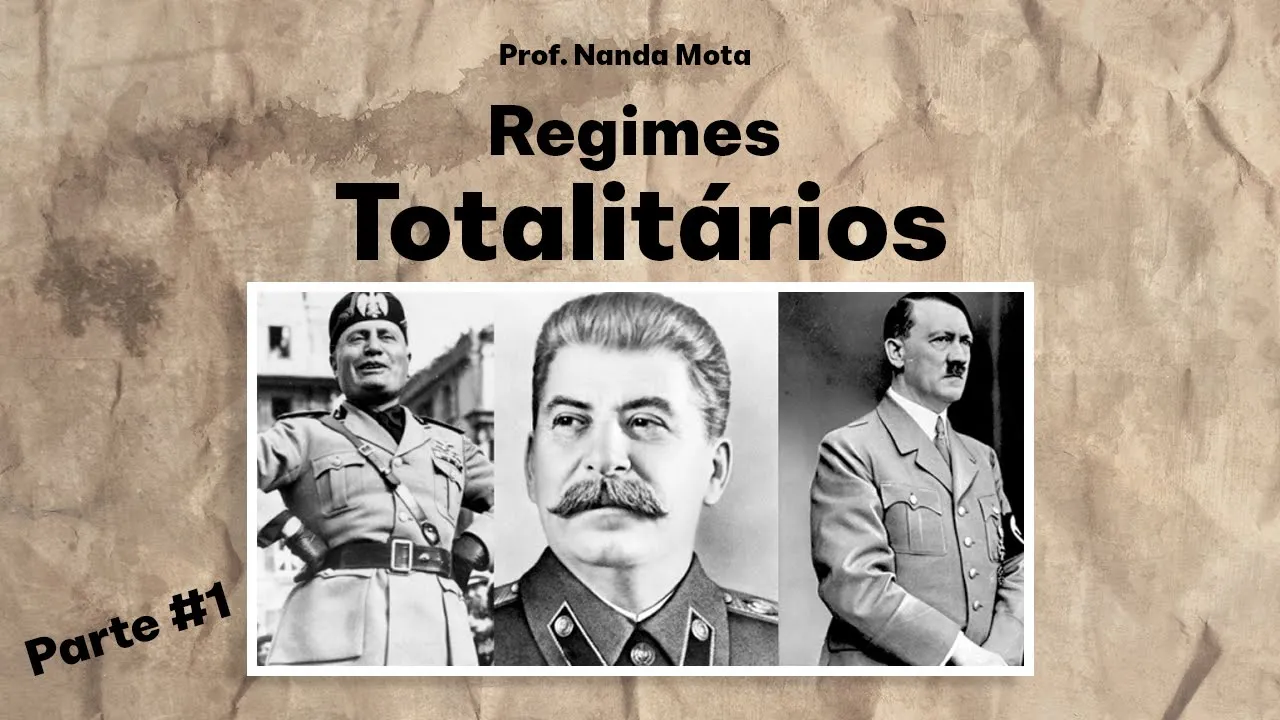
The character that embodies this most for Camu is Ivan Karamazov from Dossoyki's The Brothers Karamazov, who says that he would not consent to live in a utopia if it relied on the suffering of even one innocent child. He rebelss not against a particular government or a particular society, but against the very state of reality as embodied through an idea of God. Kimu contrasted this with historical rebellion which was directed at particular social systems. However, I want to analyze the rebel more through the ways the reactions to the absurd in this work cohhere with the two non-absurdist responses that Kamu outlined in the myth of Cphus. We'll call them the nihilist approach and the absolutist or faith-based approach. And the epitome of nihilistic rebellion is not found in Ivan Karamazov but in the marquee. Sard is a strange yet unrelentingly fascinating figure in the history of philosophy. His philosophy was almost entirely anti-moral and recognized no higher motivation than his momentto- moment desires. As Kamu puts it, his logic leads him to a lawless universe where the only master is the inordinate energy of desire. This is his impassioned kingdom where he finds the finest means of expression. What are all the creatures of the earth in comparison to a single one of our desires? The freedom he demands is one not of principles but of instincts. Here there is a small smattering of that yearning for freedom and dignity that Kamu thought defined absurdist rebellion. But it has in effect gone too far. Sad desires not freedom for all mankind and respect for all mankind in the process, but freedom only for himself. He has no wish to even acknowledge the wills of others, but wants to turn the entire world into an inferno of will against will until there's only ashes and petty kings over those ashes. In the figure of Sard, we see the tension between two human priorities. Freedom on the one hand which broadens what we can do and justice on the other hand which sets limits on what we can do and limits on what others can do to us. Sad sacrifices any and all justice on behalf of total unfettered freedom which is in effect then the freedom of the wolf to devour the sheep and the freedom of the master to beat the slave. The reasons Kamu thinks this is an unsatisfactory approach to the absurd are twofold. The first is that it's sort of self-contradictory. Eventually, Sard will find himself on the receiving end of a more powerful person, and so he will become the slave and be crushed under their feet. Thus, Sard will be destroyed in pursuit of his own philosophy. And this evidently won't make him happy or fulfilled. It's essentially a slow form of death worship. But the second is that it ignores the human desire for unity. We are social creatures and the vast majority of us want some kind of caring community around us. This is especially true when we are suffering and are ourselves confronted with the injustice of the world. Kamu's novel, The Plague, was partly about how one of the only comforts and sources of solace when we're struggling against any kind of overwhelming force, be it an occupying invasion like 1940s France or a deadly plague as in the novel or just the inevitability of death is banding together with those in the same situation. Kimu thinks that just as a matter of empirical observation, it is more effective to rebel against the absurd together than separately. Just as Sard prioritizes personal freedom over any kind of respect for other people, so too does he prize the individual above any kind of unity with others. These tensions between freedom and justice and between unity and the individual are going to be very important for Kimu's ultimate conclusions. At the political level, Kamu identifies fascism and specifically Hitler with this more nihilistic approach to the absurd. Just as Sard had a philosophy entirely geared around his personal freedom, including his freedom to harm and dominate others, Mussolini and Hitler geared their national regimes around a kind of group-based version of this. For Kimu, the axiom of their approaches was we and our nation will do whatever it likes regardless of the cost to others. Thus, it's the same Sardian formula just writ slightly larger. This is why Kimu calls it irrational terror. The state is terroristic, but not in advance of some universal principle, but rather out of a kind of partisan elitism. We have the right to do what we want is just the same as Sar declaring that he has the right to do what he wants. It is again the dissolution of the world into simply will against will and force against force. For Kimu, this represents the total rejection of any value, even provisional values, and including the value of life. One of the reasons he doesn't spend too much time on this kind of reaction to the absurd is because he thinks it's not born of any real philosophy, but is instead the sessation of philosophizing or attempting to reason entirely. In the world of the nihilist, force is the only law, and it's just foolish to quibble about how that force is used. Again, Kimu's critique is partly based on the abject failure of these regimes to achieve anything they wanted and then the destruction they wrought along the way.
For him, this nihilistic way of approaching life can only ever really end in defeat for the person advocating it in the long term. Eventually, they will find someone who will overpower them. And their logic entails that they then have no grounds for defense, mercy, or understanding. They were once the shark and now they are the minner. Or to quote another great philosopher, there is always a bigger fish. I want to link this group of people in the rebel back to the set of approaches to the absurd in the myth of Cisphus. I actually haven't come across people doing this much in the literature around the rebel.
So, it's quite exciting for me.
Essentially, the nihilistic revolt in the rebel corresponds with the nihilist in the myth of Seisphus who decides that their life is of no value and so resolves to end it. The similarities are there in two ways. The first is that both of them repudiate in the strongest possible terms any kind of value for human life, even relative or provisional value. And the second is that they are both destructive and self-destructive attempts to confront the absurd in Kamu's philosophy. Whereas the nihilist in the myth of Cisphus destroys themselves, the nihilist in the rebel ends up destroying everything, including themselves. Or if they don't say this explicitly, this is the end point of their philosophy. And again, we see that the nihilist rejects any sort of unity or solidarity with the rest of humanity.
In hindsight, I wonder whether Kamu would place some of his earlier characters like Caligula or even Muro in this cap. After all, they are characters who took lives with the understanding that nothing mattered anyway. So, who cared if someone lived or died? At the very least, Muro seemed to have this unconscious attitude. And so, in effect, they both do reject the value of human life and were left only with their wills. They are both also incredibly solitary figures who spurn unity with anyone else and make themselves strangers to humanity at large. In this way, the rebel marks a new stage in a developing absurdist philosophy. Whereas the stranger almost celebrates a solitary approach to life and Caligula is somewhat ambivalent about the value of all human life within the context of absurdism. The rebel implicitly condemns these earlier figures as at the very least only giving half the picture.
Sure, they did not fall into total despair, but they also did not recognize their shared humanity with the people around them and to that extent are incomplete absurdists by the likes of Kimu's later works. But many of us already have the idea that totally nihilistic approaches to the world are somewhat undesirable. Let's move on to the more unintuitive aspect of Kamu's critique that absolute meaning itself can become undesirable and perhaps even tyrannical. If you want to help me make more videos like this, then please consider subscribing either to the channel or if you're feeling very generous to the Patreon. The links are in the description. Three, faith, the absolute, and terror. In existential philosophy, we talk a lot about the troubles of having no meaning. The literature is full of characters that fall into despair from meaninglessness or otherwise just lose their faith in the world. There's the comfort seeking emptiness of nature's last man, the declaration of Kirilov that he doesn't care to live or the melancholic aimlessness of Dari's protagonists. But it is the characteristic contribution of Kimu to point out not just where meaninglessness brings disaster but where too much meaning or perhaps excessive confidence in a particular meaning can be just as destructive. Kamu mainly talks about this in his chapter entitled historical rebellion which focuses on the French Revolution and Stalin's regime in the USSR as two examples of absolute meaning managing to bring terror in its wake rather than human fulfillment or dignity. I ought to say before we get started that this is probably the most controversial part of Kamu's book and it was heavily critiqued by Jean Paul Sartra at the time among many others and it was actually the cause of the two of them falling out. I don't have space to go into the possible critiques here, but I just wanted to clarify that they are there. For Camu, movements like the French Revolution or Stalin's USSR eventually replace the idea of God with some other no less absolute value and in doing so made it possible to sacrifice real human lives on mass so that this absolute value might be achieved. They thus replicated what he thought were the worst aspects of religious thinking. Kamu's relationship with religious faith is pretty complicated. He clearly admired aspects of Christian doctrine and speaks pretty highly of the figure of Christ, but he nonetheless took issue with the absolute authority the religion placed in God's law. He then thought this could allow for the persecution of non-believers, heretics, and others as this would all be for the greater good of God's future kingdom and his absolute ability to command morality. The idea of an inquisition or of executing dissenters makes a certain degree of sense if it's in service to an absolute value. In this case, that absolute value would be God. And this is what worried Kamu about not just religion but any absolute value system. Take the French Revolution for example. While he praised their rebellious spirit, Kimu thought that the revolutionaries eventually replaced God with the idea of the people as the grounding for absolute value. In itself, this might not have been a bad thing. After all, if the one absurdest value is human life, then this does seem like a pretty good starting point for an absurdist society. However, Kamu says that the idea of people's self-determination was quickly replaced by the much more abstract idea of the general will of the people. That is, not so much what the people themselves wanted, but what the revolutionary government thought was good for them and good for France. The figure he uses to exemplify this is Louie Antoine de Sanjust, a major figure in the French Revolution. While Kamu admired him in many ways, he also thought that Sanjust became more interested in promoting an abstract idea of a virtuous society and creating a virtuous populace than in representing the genuine will of the people. That is, he'd gone from viewing himself as the humble servant of the popular will to someone worthy of dictating the popular will. The general will became the will of the state. And since now the general will was the value and thus could do no wrong. This gave the state license to do whatever it wanted in the name of the general will.
To quote Kamu directly, we are witnessing the dawn of a new religion with its martyrs, its aesthetics and its saints. But a moment comes when faith, if it becomes dogmatic, erects its own altars and demands unconditional adoration. Then scaffolds reappear and the masses of the new faith must now be celebrated with blood. This is a prime example of the danger Kamu thinks is just inherent in these sorts of inflexible absolute values. If people like Sanjust merely replaced God as the supreme moral legislature with this abstract will of the people as the supreme moral legislator, then they still have some kind of infallible absolute standard that they can appeal to in order to justify ultimately anything they like, be it executions or imprisonments or outright state terror.
For Kimu, there is too much confidence here in a rigid set of values. His portrait of Sanjust is far from wholly negative. However, he also praises him as willing to die for his beliefs and so accepting that his life was forfeit when he toyed with the lives of others.
Nonetheless, Kimu remains intensely skeptical of absolute values. When a person or group of people have something that they feel justified sacrificing anything to, including any number of lives, Kimu thinks that the absolute has shown its tyrannical face. The point Camu wishes to make with the French Revolution is that it had a deeply noble and rebellious ambition to free France from aristocratic rule. It was done in defense of mankind. Yet at the same time, it managed to recreate aspects of aristocratic rule almost immediately afterwards and then neglect its solidarity with all people. Kimu is not arguing that the French Revolution should not have happened, but rather he wants to demonstrate just how quickly defending your fellow human being can turn into oppressing them once your absolute values are solidified and they can give you license to do so. It is a critique both of sanctity and of abstraction. The other example Kimu draws upon very heavily is the USSR and specifically Stalinism. Kimu has a long critique of Hegel and Marx, but he's not so much attacking their particular philosophies, but rather how they've been used by others. Kamu himself is an ardent socialist and draws on many Marxist style critiques of 19th and 20th century capitalism. Nonetheless, he saw the idea of a definite semi-utotopian end of history that had become popular amongst his contemporaries as a potentially quite dangerous idea and is embodying the kind of absolute value that he found so very unsettling. Kamu's critique here is long and complex and it's this particular section that drew the most heated critique of the book when it was published, but we'll just give a brief overview here. In effect, Kimu charges Stalin's USSR and its defenders in France of having a worldview that would justify almost any atrocity as long as it was in the name of advancing towards a near utopian society. He was concerned at the level of emphasis placed on a future end of history where a stateless, classless, and moneyless society would eventually emerge. And he asked whether this was preventing the socialists of his day from focusing on the genuine harm done in the present and whether it was allowing them to turn a blind eye to some truly quite horrible events. This is part of what made Kimu one of the most hated men amongst the 1950s French Marxists even though only a few years before they were working together side by side in the French resistance. His critique here mirrors that made by the Russian anarchist thinker potkin. And we can see glimmerings of anarchist thought in Kimu's work here as well. Kamu argues that the notion of a future society was all well and good as an ideal to get closer to, but became dangerous when treated as a prophecy that had to be fulfilled. The idea that dialectical conflict within societies would one day draw to a close and that this would lead to eventual undisturbed harmony struck Kimu as an act of unjustified faith. He argues that even if we were to create a class to society, that would not eliminate other kinds of interoccietal conflict and that although he does desire an end to class systems, he approaches this from a standpoint of minimizing the pain he thinks they cause rather than as progressing the arc of history towards some ultimate teological end. Moreover, just like in the French Revolution, Kimu thinks that this end can quickly become an absolute value and so in turn can justify some pretty atrocious practices. For example, many farming peasants were killed over the course of Stalin's regime. And Kimu thinks that this could be internally justified if you were working towards the eventual near-perfect society. After all, whatever harm you commit now will be totally insignificant compared to the good that your new society will eventually do once it's reached this final form. Kimu worries that this kind of thinking makes every present life dispensable because their suffering will be justified in some future state to come. This is why Kamu condemns it and also views it as religious. He thinks that the future state serves the same function that heaven does in a lot of religions. It makes the suffering of today totally justifiable because it will be repaid 10 times over in the next life. This might be more defensible if the future state genuinely were guaranteed, but it's not. And Kamu thus thinks there is not a sound reason to sacrifice so many lives to it. Just like Sanjust could justify the reign of terror based on the morally legislating will of the people and in the dream of a virtuous society, Kimu says that the Stalinist regime can justify its own killings by its own dream of a great society to come. In both cases, Kimu condemns these as the excesses of absolute values gone wild. If SARD was the extreme triumph of freedom over justice and of the separation of people over their unity, this is value to the point of inflexibility and involuntary totalitarianism rather than voluntary unity or brotherhood. Again, people are used to leveling this critique at religions as even most religious people would admit that faith has been used to justify horrible things. Kamu is extending this critique beyond religion to encompass any system of absolute value. You can think what you like about these particular historical examples. I know that the French Revolution one in particular has come under a lot of fire.
I'm not a historian. I just want to look at the philosophical argument at play because it's really quite fascinating.
Today we often hear about the dangers of weakening our sense of meaning. Whether this is coming from public figures warning of the oncoming storm of moral relativism, politicians concerned about general cultural apathy or worries about nihilism amongst young people, we are constantly told about the perils of having too little meaning. Given this, it is easy to think that the opposite extreme is the solution, that having total confidence in a single unwavering principle would be the answer. Kamu points out that this comes with its own excesses and pitfalls as well. Is it really always a virtue to have supreme confidence in your moral position to be a perfect believer in a value framework that can always provide an answer? Camu thinks it is not. For him, the opposite end of nihilism is not fulfillment but fanaticism. And there is undeniably something in this idea. As Socrates once pointed out, sometimes wisdom comes not in always having the perfect answer, but in recognizing the limits of your own perspective. And this idea of limits is very important to Kimu's absurdest, rebellious approach. So let's see what he has to say about steering between these two poles of nihilism on the one hand and dogmatism on the other. Four, absurdest moderation. I'm so sorry. It got far too hot and I had to get that jumper off. But anyway, The Rebel is primarily a critical work. Kimu only gives provisional answers to what a positive absurdist society would look like. But characteristically, what he does say is defined by a series of contradictions kept in permanent tension. Firstly, there is the tension between freedom and justice. Kamu says the absurdist must recognize that there just is an inherent opposition here. To prize freedom is to give people license against a strict moral code. It is to label a course of action as morally indifferent enough that at the very least it doesn't require active prevention. On the other hand, a sense of justice is needed in order to defend people from the freedom of others. A totally free society for Kimu is only ever really free for the most powerful.
and even then only until their power waines. Whereas a totally just society has this habit of using that notion of justice as a pretext to commit horrific acts of state violence and of suppressing individual human lives.
Beyond defending a few specific ideas like the notion of human rights and of freedom of expression, Kimu doesn't go into too much detail here. And this is by design. Kimu is not trying to go back over all of those theories of freedom that liberal and conservative thinkers played philosophical tennis with over the course of the 18th and 19th centuries. He simply wants to note the tension and conclude that we cannot ever think that it has been solved permanently. That the issue of freedom versus justice has been put to bed once and for all. There is no grand theory coming to rescue us and no abstract ideal that can cover every case of excess freedom or repressive justice.
Rather, the absurdist adopts a defensive stance and commits to dealing with these cases as they arise while remaining intensely conscious of the contextual factors that are inevitably at play.
When conflict does occur, Kimu is clear that the absurdist is never violent merely for the sake of a promised future or in service to an abstract vision, but only in direct defense of the flesh and blood humans that inhabit the planet alongside them. This is what makes them a rebel. They are responding to direct suffering out in the world, wherever it happens to arise and whoever enacts it.
Remember, their only value is the value of human life. And so to hurt or take a human life is instinctively anathema.
Secondly, Kamu's rebel has a healthy dose of doubt in their own judgment and their own actions, especially when those actions could hurt the people around them. The idea here is to balance another pair of contradictory aims, being confident enough to act and being doubtful enough to ward off dogma with all of its potentially oppressive tendencies. For Kimu, the rebel should never be so confident in their ideas that they feel able to commit acts of violence or take lives unthinkingly in service to this just cause. If they are defending someone or defending something and in the process they have to be violent, this should always be considered an exception to the general rule. Kamu is not some naive optimist who thinks there will never be violent conflict. Nor is he a total pacifist, but he hates the notion that causing death could become merely habitual, a matter of just statistics rather than of names and people. In his play, The Just Assassins, the protagonist, Kv refuses to knowingly kill innocent people in pursuit of his rebellion and maintains that even to take the life of another combatant is still a tragedy. It's just a necessary one. This doesn't stop him from rebelling nor from combating injustice, but it does allow him to maintain a value in human life even in the midst of conflict. And it also saves his targets, wife and child, who have ultimately done nothing wrong. It's not so much death itself that Kimu has issue with, but the idea that death could ever be a trivial or weightless matter rather than the terrifying extinction of an experiencing agent. This commitment was one of the reasons that Kamu's critics started to call him sentimental. Kamu would probably reply that if you can't be sentimental over the value of human life, then this is not a virtue but a vice. Thirdly, the absurdest rebel should never lose sight of the common thread that binds humanity together. Our shared struggle against the absurd and against suffering. Kimu reiterates over and over again that the struggle of the rebel is one that at least in theory encompasses all mankind. Any enmity or conflict should only ever be provisional and done in the name of defending others. The rebels ultimate foe is not any individual but death and suffering itself. They only fight against people when those people are causing suffering and death. Kamu knows that humans are bound to conflict with one another, but he discourages anyone from seeing another human being as totally otherred from them. The struggle against the absurd is sort of his version of the Christian idea of being made in the image of God. It's a property that every human can share with every other human.
This is why the rebel is often referred to as a humanist piece of writing. It takes as one of its primary axioms the natural togetherness of all humanity and primarily argues against perceived threats to this. And if we look closely, this is yet another tension between two contradictory properties. Human conflict which ensures that we will eventually have to defend people from suffering caused by other people and human solidarity which aims to bind us together wherever possible. Kamu calls this absurdest philosophy a philosophy of limits. This is because the rebels task is to continually negotiate the limits of these contradictory properties to balance freedom with justice, doubt with action, and conflict with universal solidarity. Kimu rejects any notion that these tensions could be solved eternally and once and for all. He just doesn't think that this is how our absurd reality works. Instead, just like the absurdist in the myth of Cisphus must keep the contradiction between man's search for meaning and the universe's lack of meaning forever in their mind, the absurdist in the rebel must also bear in mind the inherent tensions in human interaction and the task of societal ethics. Any solution here will only ever be contextual and provisional, and it falls to us to ensure that we never become so fond of one of these properties that we neglect the other. It is a deliberately unsatisfying philosophy for a deeply unsatisfying universe. Nonetheless, Kamu thinks that the only other options are faith or force, each of which he rejects as fundamentally inhumane. But this is Kamu's most controversial book. So, let me know what you think. How often do people go too far in pursuit of absolute meaning and lose sight of humanity in the process? And how realistic is this more tension-based approach? Finally, do you think that we can get this much humanism out of the initial absurdest premise? Or has Kamu himself made a leap of faith somewhere in his philosophy?
Either way, if you want to see what I think is Kamu's most terrifying work, then I've got a video for you right here. Thank you so much for watching and have a wonderful day.
Up Next

44:40
Simone de Beauvoir: Ethics of Ambiguity Explained | Ch. 2, Personal Freedom & Others
@TravisTeachesPhilosophy
7.3K views•2015-09-14

164:01
John of Damascus on Holy Images: A Theological Defense
@BannedBooks
139 views•2026-04-25
37:07
Moral Relativism: A Philosophical Analysis & Critique
@unsolicitedadvice9198
210.4K views•2025-05-30
4:57
The Myth of Sisyphus: A Greek Legend of Eternal Punishment
@TEDEd
8.6M views•2018-11-13
Related Study Plans & Knowledge Roadmaps
Structured learning paths in Philosophy
philosophy
Frankfurt School: Critical Theory & Culture
01Foundations of the Frankfurt School and Critical Theory
02Horkheimer & Adorno: The Critique of Instrumental Reason
03The Culture Industry and Mass Deception
+ 2 more learning modules
12h5 modules
Explore Roadmap
philosophy
Philosophy of Language: From Frege to Austin
01The Linguistic Turn: An Introduction to Language in Philosophy
02Gottlob Frege: Sense and Reference
03Early Wittgenstein: The Picture Theory of Meaning
+ 3 more learning modules
15h6 modules
Explore Roadmap
philosophy
Feminist Epistemology: Standpoint & Injustice
01Introduction to Epistemology and Feminist Critiques
02Sandra Harding and Standpoint Theory
03Donna Haraway and Situated Knowledges
+ 2 more learning modules
12h5 modules
Explore Roadmap
philosophy
Environmental Philosophy: Ethics & Deep Ecology
01Foundations of Environmental Ethics & Anthropocentrism
02Biocentric Individualism and Animal Liberation
03Ecocentric Holism and Deep Ecology
+ 1 more learning modules
10h4 modules
Explore Roadmap