























Moral relativism is a metaethical position, not an ethical one, asserting that moral truths are relative to cultural contexts rather than being universally objective; it distinguishes itself from moral nihilism (which denies any moral facts) and moral objectivism (which holds moral truths exist independently of culture), and addresses challenges through sophisticated frameworks like David Wong's naturalistic approach that imposes constraints on what constitutes a valid moral system based on human social nature and the need to coordinate voluntary behavior.
Moral Relativism: A Philosophical Analysis & Critique
Added:The distinction between metaethics (the nature of moral judgments) and normative ethics (the rules of moral behavior).
The core tenets of Moral Objectivism or Moral Realism, which argue that universal moral truths exist independently of human opinion.
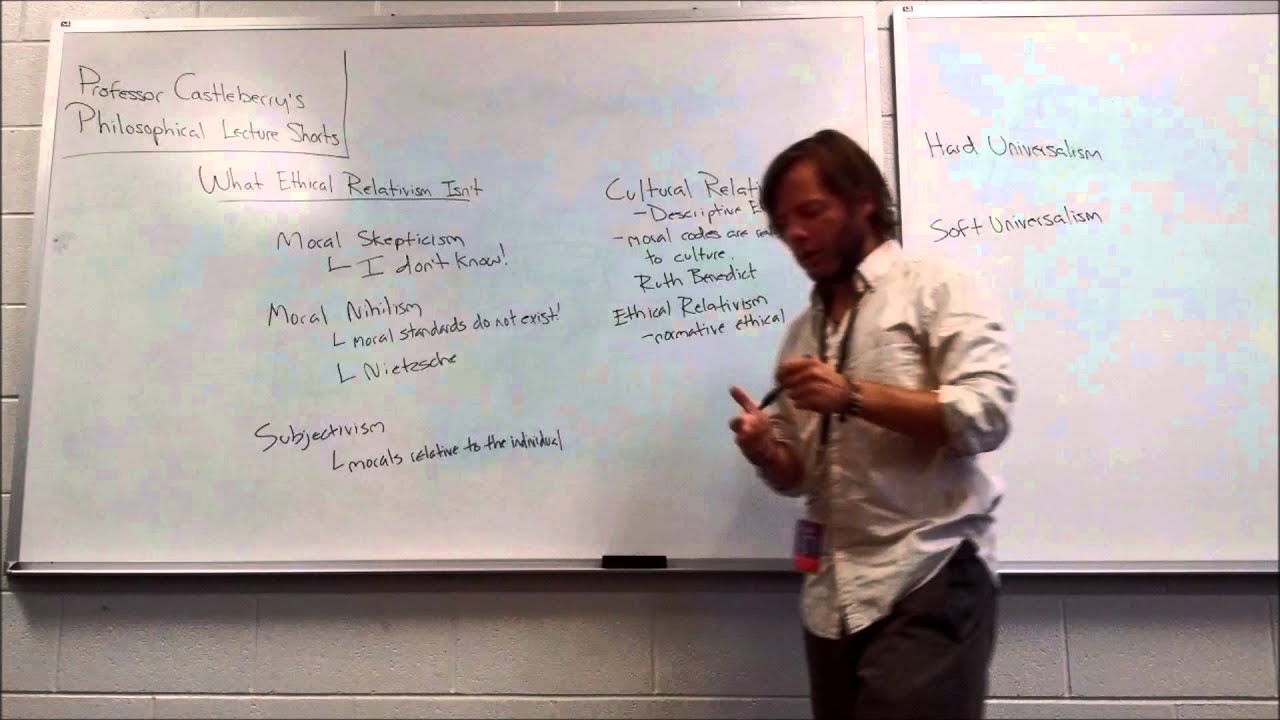
The difference between descriptive cultural relativism (the empirical observation that cultures have different moral codes) and normative moral relativism (the philosophical claim that moral truths are relative to culture or individual).
Basic familiarity with classical ethical frameworks, such as Utilitarianism, Deontology (Kantian ethics), and Virtue Ethics.
Deep dive into David Wong's 'constrained relativism' (pluralistic relativism) and how it attempts to bridge the gap between absolute relativism and rigid universalism.
The philosophical debate between Moral Relativism and Moral Pluralism (e.g., the works of Isaiah Berlin).
Application of relativist frameworks to international human rights law and cross-cultural ethical conflicts in global politics.
An exploration of evolutionary ethics and moral psychology to understand the biological and social constraints that shape human moral systems.
210.4K views8.2Klikes37:07Original Release: 2025-05-30
This video is sponsored by Squarespace.
More about them in just a moment. Moral relativism is the closest thing philosophy has to a bogeyman. You will see political pundits, religious leaders, and public figures all warning of the dangers of this idea. But despite this, there's not a lot of accessible information as to what moral relativism actually is and how it differs from other moral positions. So what is this strange and controversial philosophy and why does everyone seem to hate it so very much? Obviously I can't cover every aspect of the philosophy here, but I hope this can just give a taste of the wider literature and a sense of what the hell is going on. My name is Joe Folly and this is unsolicited advice. One, what is moral relativism and what isn't it? The first thing to know about moral relativism is that it's not really an ethical position at all, but rather a metaethical one. That is, moral relativism specifically does not tell you what is right or wrong. It is instead a theory about how to approach ethical claims as a whole. Speaking incredibly broadly, a moral relativist is someone who thinks different moral claims can be true in different cultural contexts and the same moral claim can be true or false depending on the cultural context. Following Chris Gowens's, we can divide moral relativism into roughly three claims. The first is descriptive moral relativism. This is merely the idea that people genuinely do disagree about ethics and not merely on a factual level, but on a moral one. This is a subtle distinction, but an example might help. Imagine that there are two people who disagree about capital punishment.
One is in favor and the other is not.
However, this may only be a factual disagreement. It could be that person A thinks that capital punishment is an effective deterrent for other potential crime and supports it on that basis, whereas person B thinks that capital punishment does not in fact deter crime and opposes it on that basis. At first, this can look like a moral disagreement, but it's only really a descriptive one.
If person B were convinced that capital punishment did deter crime, then they would change their minds and become in favor. This is substantively different to someone who is opposed to or in favor of capital punishment in principle. Say that person B was deeply religious and thought that the dignity of human life should always be upheld, especially by the states. And the person A thought that when someone takes a life, their life must be forfeit to balance the moral scales of the universe. Then even if all the material facts were the same, these people would still disagree on the issue of capital punishment. Some philosophers like AJ or CS Lewis thought that a large amount of moral disagreement was actually factual disagreement in disguise. To give CS Lewis's example of the witch trials, he argues, "We would probably agree with punishing witches who cause crop failures if we found out that they actually existed. It's just that they do not." And so we look back on punishing witches as morally apparent because it was based on a false premise and so was just punishing innocent people for doing nothing wrong. Descriptive moral relativists tend to think that substantively different moralities arise most often between different societies or different communities. So they might believe that different religions can come up with genuinely different moral schemes which don't just reduce to factual disagreements as in the case of Lewis. You can be a descriptive moral relativist without being a full moral relativist. For example, the official position of the Catholic Church is not that everyone agrees on morality, but that people disagree and some are wrong.
They are descriptively moral relativists in that they think there are genuine moral disagreements between people and between societies, but they think there's also an objectively right perspective, gods, and by extension theirs. A step beyond this is normative moral relativism. This doesn't just hold that people do disagree about morality, but that those disagreements can be irresolvable. that is different incompatible moral statements can be true at the same time in different cultural contexts. Perhaps the best analogy to explain this is language. And I've taken this from the moral relativist J. David Bellamman. There is no one universal language that everyone speaks and that we can say is correct.
Which language it is appropriate to speak will depend on your cultural context. Nonetheless, if I am speaking English, there are correct and incorrect ways of talking. There might be quite a lot of leeway, but if I produce the sentence, carrots have red eyes and behave erratically while trying to express the thought that the cat is on the mat, then I am using English incorrectly. Language is descriptive in that it tracks how people use certain words, but it's also prescriptive in that you can use a language in a way that is antithetical to the presumed intention of being understood. Most of us are linguistic relativists. We think that there are incorrect and correct ways to use language, but that they depend on which language you're speaking. This straddles the boundary between language having no norms, in which case it would just be a miracle that we understand one another at all, and there being one objectively correct language, which just seems strange and somewhat untenable. The normative moral relativist thinks the same about morality. They hold that within different moral systems, there are ways you can be genuinely right or wrong. If you're in a Christian community speaking the Christian moral language, then it is genuinely wrong to sleep with someone who's not your spouse. In a society populated entirely by swingers, then it probably wouldn't be wrong to do so within their specific sexual norms.
Within each of these communities, there are genuine moral prescriptions, but there's no way of arbitrating between the norms outside of a cultural context.
To use the moral relativist terminology, these systems are incommenurable. For them, it would make as much sense to say this community's morals are objectively right as to say French is the universally correct language. Normative moral relativists then use this theory to explain the descriptive moral relativism that we just went through.
This is part of what allows moral relativism to annoy a uniquely large set of people. On the one hand, it's at odds with moral objectivists who think that morality is a set of moral facts which govern all of us regardless of context.
Then murder is not just wrong within a particular cultural frame. It is wrong independent of any cultural frame and would still be wrong even if no person existed. This independence is important.
In theory, a moral relativist could say that murder is wrong will be true in every cultural frame just because any society that thought murder was not wrong would not survive. But that still wouldn't make it objective in the way the moral objectivist would like. To use Velman's terminology, it would be ubiquitous without being universal.
We'll come back to this point about ubiquity later, as it's become pretty important to more modern strands of moral relativism and purports to solve some of its classic problems. On the other hand, moral relativists also disagree with most moral anti-realists like emotivists or prescriptivists.
These are people who don't think that moral statements are true or false at all, but are best understood as the expression of an emotion or a will.
Moral relativists are also not moral nihilists. They explicitly do think that there are moral facts. They just think that those facts are frame relative. I mention this because some popular arguments against moral relativism are often not about relativism but these other positions instead. For example, it is a common refrain of many popular religious thinkers to say without God we will all be moral relativists. But sometimes they mean without God there are no moral facts. in which case their theory is about moral nihilism instead.
The final pillar of moral relativism is a loosely defined principle of tolerance. That is that one culture has little to no right to interfere with another cultures moral system. This is honestly really interesting because when I was researching this video, I found that almost all the mainstream academic moral relativists today are quite skeptical of this idea, especially in its extreme forms. And it's certainly also not an implication of the other two pillars. Nonetheless, it has come to be associated with moral relativism because it's sort of an easy conclusion to arrive at from normative moral relativism. If we have a moral frame that is incommenurable with another cultures and our frame is not better than theirs objectively, then how do we justify imposing our morals on them?
There are potential answers to this and we'll come back to them later in the video. But the important thing to note here is that this tolerance principle is incredibly controversial even among moral relativists. Additionally, as we've just noted, moral relativism is often mistaken for other positions. It's not the idea that there are no moral facts or no moral truths, nor is it the idea that each individual person has their own moral system. Nor does it mean that morality is merely emotion or sentiment with no truth value. The moral relativist thinks that there are moral truths, but that these are only true relative to a particular cultural context. Moral relativists are also not relativists about everything. You can be a moral relativist while still being an objectivist about empirical truth, for instance. Moral relativism is consigned to the domain of ethics. But enough with all of this groundwork. Let's move on to the far juicier business of the critiques. And it's fair to say that moral relativism has quite a few. But before moving on, I want to take a brief moment to thank today's sponsor, Squarespace. If you're looking to build a website, then you know it can be a real pain. First, you have to find a domain name, and then you need to design the entire thing, and there's always this underlying worry that you're getting it wrong and creating something that doesn't just look messy, but outright unprofessional. But this is where Squarespace comes into play. They take all of that complexity and headache and compress it down into a single platform. And they use ready-made templates to take all of that stress and pain out of website building. They also have a feature called blueprint AI, which uses AI models to help you make design choices, which is very handy if, like me, you're not necessarily graphically gifted and don't have the mind of a website designer. Head to squarespace.com/unsolicited advice and use the code unsolicited advice to get 10% off your first purchase of a website or a domain name. But anyway, back to the video. Two is relativism incoherent. Moral relativism is a pretty niche position in philosophy. The 2020 Philpapers poll on different philosophers views on various philosophical problems didn't even have moral relativism as a category, but had constructivism instead. A position that not only includes relativism, but also lots of non-relativistic ethical systems like Christine Cosgard's ethics.
Obviously, by itself, this doesn't mean that it's wrong. I'm just trying to give you a sense of the difference between the attention that moral relativism gets in the public eye versus how many philosophers actually hold this position. As a result, moral relativism has had an awful lot of critiques over the years, and a lot of them boil down to roughly the same general intuition.
Isn't this just incoherent? The most basic form of this critique is that if one society says capital punishment is wrong and another says capital punishment is right, they can't both be true at the same time. Yet, according to moral relativism, they are. Thus, it must be incoherent. But this is probably the weakest version of this challenge.
The moral relativists can just point back to the language example. Capital punishment is wrong for the first society in the same way that using dog to refer to a dog would be incorrect in French. We can still say that using dog to refer to a dog would be correct English. Indeed, the description doesn't even make sense without a language as context. Just like the relativist thinks that moral facts don't make sense without a cultural context. A stronger critique is to point out the contradiction between this idea that all morality is culturally relative and this strange principle of tolerance that sometimes comes with moral relativism.
James and Stuart Rachel's put this point very nicely in their book the elements of moral philosophy. To quote them directly, if moral relativism were true, then we would be barred from criticizing harmful practices. That is, we would have no basis on which to say that these practices were acting immorally. And beyond this, we would even have to concede that they are acting morally, at least by the likes of their society, whose standards are just as good as our own. But hang on, isn't the tolerance principle then a culturally transcendent ideal? If the moral relativist wants to say that all morality is culturally relative, but also say that culture shouldn't go about critiquing other cultures, then they're caught in a contradiction. Is this principle of tolerance culturally relative? If so, then culture does not have to subscribe to it and so the principle of tolerance just seems a bit moot. But if it's not, then there is an objective moral fact and relativism is refuted. Often relativists will reply by saying something like, "You're not morally bound to respect other incommenurable cultures, but you cannot critique them on a rational basis. That is, you can't think they're wrong, but you can enforce your own moral system if you have the power and the will to do so." Say, "My village has 10 tanks and yours has one, then there's a lot of physical scope for my moral system to be imposed on your village." What I could not do is say, "I am doing this because my culture is objectively better than yours." I would have to say my culture is better than yours by my culture standards, which just doesn't provide that comforting absoluteness that you want when you're imposing a moral standard on a group of people who disagree. That is, if the two moral systems truly are inccommenable, which we'll have to come back to later.
Nevertheless, I think that this second route is basically the moral relativist's best bet. Then tolerance is not a moral principle. You don't have to tolerate alternative moral systems. It's just a constraint on rational argumentation. You cannot use rationality to show that their morality is false. You can only overcome it with rhetoric or force. But this flies in the face of many people's intuitions that moral disagreements can and are solved.
That two people from different cultural backdrops could come together and resolve a moral disagreement using reason and conversation. For the moral relativist, if they do this, it can't have been a genuine baseline disagreement in principles. They must have had enough moral common ground initially to both turn to some shared values to arbitrate between them. Either that or the disagreement was not solved rationally but by some other means. The extent to which only being able to solve baseline moral disagreement through nonrational means matters may depend on how motivating you think objectivity is in ethics. So imagine tomorrow you are the ruler of a powerful nation and you've also just discovered a scroll written by God that decreed that there were no moral truths but only relative ones. Would that really stop you from moving to prevent slavery in other societies? Or would you go, I don't care whether it's objectively immoral, it is immoral to my society, and I'll use my power to enforce my morality. It seems to depend on whether you consider objective rationality a precondition for moral motivation. And on this point, I tend to lean towards no. I sort of think that I would probably act the same regardless of whether I discovered that moral relativism were absolutely true.
That is, I think that whether moral truths are objective and external, moral motivation is internal. But your mileage may vary. This is sometimes called the problem of moral confidence. Can we adequately stick up for our own morality if we don't believe it to be objectively true? One other potential consequence of moral relativism is that moral progress might be impossible. Again, we can think back to our language analogy. Across the 17th century, the English singular second person pronoun thou fell out of use and we ended up with one second person pronoun covering both the singular and the plural cases. You. Most European languages do keep the division between the singular and plural second person pronouns such as the French to and vu, the German do and z, and the Russian t and v. But it's not true that English progressed except in the sense that it got closer to our way of speaking today. There is no ultimately correct version of English that it's inexurably moving towards. Yet most people don't think this is true for moral systems. For example, many European nations moved from practicing slavery to abolishing it. The Persian Emperor Cyrus the Great increased religious toleration in the Persian Empire. The ancient Athenian states moved from tyranny to a quite limited form of democracy. We tend to think of these as examples of moral progress that is of things getting better. But this is very difficult to explain with moral relativism. Felman outlines some relativist ideas of moral progress where we just increasingly live up to a pre-existing moral system. For example, the Christian author Glenn Scrivener has argued that European nations abolishing slavery was just them getting nearer to their pre-existing Christian ethic rather than an outright ethical change.
If he's right, and I should say this is very much an open issue, then this would be a kind of moral progress that even the relativist could accommodate since there's not actually been a change in morality, but just how loyal we are to that morality. It's a bit like how you'll come across people like me who, if they think really hard, probably don't have a morally defensible reason to eat meat, but do so anyway. I would be less of a hypocrite if I were vegetarian. Likewise, relativist moral progress is more like a societywide move away from hypocrisy as opposed to a societywide change in morality. However, it doesn't seem like this can account for all moral progress and certainly not all possible moral progress. Say there's a society that practices the ritual killing of puppies. They don't do this because they believe it leads to some good end. They think it is good in and of itself. In this case, a member of that society who wants to put a stop to the puppy killing is for the relativist morally wrong. They are advocating for something that is not permitted by the current moral order and thus are incorrect. But this means that anyone agitating for a change in morality within their community is doing something morally wrong by definition.
So the moral relativist would have to look at someone like Buddha Sedatra who argued against ancient cast systems and say that he was morally wrong at time of speaking. But if we assume that doing something morally wrong is undesirable and I think that's a pretty minimal assumption. This seems to make any and all radical moral change intrinsically undesirable. Many people think this just flies in the face of how morals empirically develop and change out in the world and so reject moral relativism on these grounds. It makes radical moral progress completely irrational and more than that immoral. The moral relativist might give a causal account of just how morals change, but not why this change might be justified. But how does moral relativism respond to these critiques?
Well, the dominant strains of moral relativism today are arguably shaped by their responses to these very pots. So, it's worth taking a look at them. If you want to help me make more videos like this, then please consider becoming a subscriber for the channel or if you're feeling very generous subscribing to the Patreon. The links are in the description. Three, moral relativism strikes back. One of the hallmarks of more recent variants of moral relativism is that they tend to make some concessions towards moral objectivity.
This is partly motivated by a desire to just define what constitutes a moral system as opposed to any other kind of system. What separates morality, even relative morality, from manners, for example. Plus, some of the considerations from the previous section, such as accounting for moral progress, motivate the moral relativist to at least place some constraints on what could be moral. Different relativists do this in different ways.
J. David thinks that the basic goal of every moral system is to give people reasons for acting and thus develop a sophisticated idea of a full moral agent and that forms the basis for his constraints. But I want to focus on the constraints set by David B. Wong since he's probably done the most in recent years to clarify the constraints on his relativistic position. Though of course I'll have to simplify a little for the sake of brevity. Wong's moral relativism is grounded on his idea that the phenomenon of moral systems is best explained by humanity's nature as a social animal and thus social construction. That is that the best way to explain why we humans have moral systems and why some of them differ is with a sociological or anthropological story about how those moral systems fulfill certain human needs and coordinate voluntary behavior. However, this naturally will impose some constraints on what makes an adequate moral system since there are limits to what we as humans can naturalistically do. will be able to judge a system on whether it can achieve these initial purposes of voluntary behavior and fulfilling human needs. We can think of these as a sort of baseline criteria that any morality must fulfill. Again, language is quite an illustrative analogy. Some languages have a distinction between second person singular and second person plural pronouns and some don't. But anything worthy of the term language must facilitate communication between agents.
If my friend and I have two hand signals, one for dogs and one for cats, but no other signals, then this doesn't allow for enough communication to properly be considered a language. To quote Wong directly, and I apologize in advance for the long quote, but I promise it is helpful. Consider the intrapersonal function of morality that has to do with shaping character and specification of worthwhile lives. There are a limited number of goods that human beings seek given their nature and potentialities. The satisfaction of their physical needs. The goods of intimacy, sociability, and social status and approval. Perhaps the opportunity to discharge aggressive energy, having some degree of variety and challenge in activities, and knowledge either of the physical world or of the human world are good sought across many different cultures. Morality is not determined by these deep human propensities. But if it's to serve an effective guide to action, it must be limited by these propensities. In identifying positive goods that human beings are to seek, it cannot identify something human beings have no propensity to seek. That is, despite the variety of moral positions, Wong thinks there are limits to moral relativism. Unlike the more crude moral relativism we discussed in the last section, this relativism is not total, but flexible. It's no longer absolutely anything goes, but rather quite a lot goes. And this makes sense when you think about Wong's consideration of the human being and thus morality as naturalistic phenomena. For example, one of Wong's constraints on any moral system is reciprocity. If morality is to coordinate behavior, which again is one of its key functions, it will have to ensure that people are not generally speaking taken for a ride, or else they'll simply stop cooperating. That's just what humans do when they feel like they're a muck. He also suggests that a good moral system should encourage a degree of short-term altruistic behavior since some altruism is almost always needed to coordinate on larger scale projects where in the short term one person may have to sacrifice on behalf of another. But this will ultimately lead to a greater good for everyone further down the line. Wong also thinks that a moral system must be able to justify its behavior to those it governs. So, a bad moral system might place power in the hands of a few people who will eventually be overthrown by discontented masses. For Wong, this morality is bad, not in the sense of being itself immoral, but in the sense of not doing the job of moral systems.
It's bad in the same way that overly ambiguous language is bad at doing the communicative job of language, or a blunt knife is bad because it can't cut many things. Importantly, this allows Wong to say that certain things simply cannot be good. Brutal repression cannot be good because it cannot coordinate voluntary complex action, only involuntary action. It doesn't organize the reflective wills of moral agents, and so it simply can't serve as a moral system. It flouts the definition and purpose of morality. However, he still leaves room for an awful lot of variance, particularly with regards to any agent that can't contribute to the overall group. Say someone was born with sufficiently serious birth defects such that they could not perform coordinated reasoned action. It doesn't seem like it's disallowed by Wong's constraints for this person to have basically no moral standing within that community.
And this seems like it's at least a primmaacy critique of Wong's philosophical system. Wong's framework also allows for some idea of moral progress, albeit in a strange sort of way. In theory, we could call a moral community progressing if they were moving towards a moral system that was better at coordinating behavior and fulfilling these basic human needs. But we would still not mean better in a substantive moral sense, but in the weaker sense that we would call a sharper knife a better knife. I just worry that this distinction will get lost because we use the word better to designate both things. But whatever you think about Wong's particular ideas, this does open up a whole new world of positions for the budding moral relativists among you. For example, one of the main worries about moral relativism is that it will lead people to create more destructive moral systems. Without the use of an objective moral standard, what stops us from creating horrific moral frameworks and then calling them right by their own lights? Well, for Wong, there will always be some constraint on what systems can properly be called moral.
Maybe if one community has a perfectly well functioning moral system, while another has a moral system barely worth the name, that would justify the first community imposing their morality on the second. And this brings us on to the general point of tolerance. Wong does oppose extreme versions of the tolerance principle we found in crude moral relativism. He argues that moral relativism does encourage some attitude of accommodating moral difference, but only up to a point. Think about it this way. If morality's purpose is to coordinate voluntary behavior, then it cannot legislate everything because it would be too brittle to absorb the natural disagreements between members of its community. Humans aren't ants. Put enough of us in a room and you're guaranteed we will disagree about something. A moral system without some degree of moral accommodation will struggle with this. So Wong thinks that a good moral system will be able to accommodate some moral differences and then this pre-existing propensity will allow it to tolerate some alternative moral systems up to a point. However, this doesn't mean that no intervention is ever justified, nor does it mean that a moral community cannot be confident in their moral views. If these two moral systems are too divergent such that accommodation just is no longer possible, then moral conflict will ensue and be justified by the lights of each community. Wong ultimately thinks that where their intervention is justified is going to be a case-byase situation, not something that can be solved once and for all in a philosophy room. But this gives just a general sketch of the factors that he thinks are involved. And this leads us neatly onto our final point. Because even though moral relativism is widely considered to be a very flawed position, especially in its crudder forms, there are still some things we can learn from it and some very valuable questions that it raises.
Four, the lessons of moral relativism.
In philosophy, it's pretty good practice to see what even positions you disagree with might teach you. And I think in the case of moral relativism, its mere existence raises some quite important questions for both the moral objectivist and the moral nihilist. On the one hand, moral relativism challenges the moral objectivist to account for the diversity between different organically occurring moral systems and just how difficult it is to resolve moral disagreements. If we disagree about descriptive facts in the world, we can at least conduct an investigation into that world and start to resolve the dispute that way. But in moral matters, it seems like we can totally agree about the facts on the ground and any possible observation and yet still disagree about the morality of the situation. The moral relativist challenges the moral objectivist to explain this. This is especially troublesome for moral sense accounts where we perceive moral facts using a kind of intuitive sense for what is moral. Why is it that morality can diverge so much more than what we view with our other senses? On the other hand, moral relativism also challenges the moral nihilist to account for just how persuasive moral norms are within communities. If someone perceives something as the right thing to do, this can be very motivating. This is part of what's so valuable about morality. But for the moral nihilists, this must be a nonrational motivation and must be explained in other ways. Whereas for the relativist, it makes sense because within that agent's cultural context, there will be definite ways of behaving morally and immorally. Of course, both moral nihilists and moral objectivists do have responses to these challenges, and we can't go into them here, but moral relativism makes these problems salient by proposing an alternative framework. Secondly, while we've looked at relativism based on culture in this video, people tend to be more sympathetic to a kind of historical relativism. Here, morality is not relative to a culture, but instead the period in history in which it takes place. You often see people say it was a different time as a moral exonerator when talking about the past and the actions of historical figures. This is at the very least a loose form of relativism. It suggests that what can make someone a good person changes over time. Of course, this too can be cashed out in different ways. I think when some people say this, they mean that the moral law has not changed, but now we know that law to a greater degree and so are more morally culpable, whereas other people mean that moral standards genuinely have changed over time. The first is not technically relativism, but I think the second is. It is worth noting that in practice, a lot of people think that some moral statements are objectively true, but that others are relative. that is they mix moral objectivism and moral relativism in their worldview. This comes up in Chris Gowen's article where he surveys some empirical research that suggests that there are certain moral rules most people are very sure are objectively wrong, but there are others on which they are much less clear. For example, people are more likely to say that things like murder or robbery are objectively wrong than moral issues which are more commonly disputed like abortion. This is just surveying the ordinary intuitions on the subject, but it does highlight that moral relativism is not necessarily an all or nothing affair. It could be that certain actions just are wrong, but others are culturally relative. For instance, you might think that stealing someone's property is wrong, but that the specific nature of property rights might differ between cultures. I know this is kind of a flippant example, but in Harry Potter, the goblins have a theory of ownership where whoever makes an item retains permanent ownership over it. And what we would call buying, they merely think of as lending. Someone could say that robbery is always wrong, but within goblin morality, that robbery will look different to how it looks in our world.
This has one foot in the objectivist camp, but also requires a culture to see what the specifics of those objective morals turn out to be. We could think of the objective moral laws as then containing variables that are filled in by a cultural context. To use a real life example, almost everyone agrees that killing someone without reason is morally wrong. But communities often disagree about what a good reason to kill someone might be. For some, it's only if they are an active threat to your life. For others, it's if they've done something sufficiently heinous. In honor focused cultures, the bar may be significantly lower. The objective moral fact, killing without reason is wrong, remains, but it's incomplete without a culturally specified definition for without reason. Positions like these are rather interesting, and some people think they cut a middle ground that accounts for both the diversity of moral views, but also how they all tend to converge upon a set of reasonably stable ideas about unjustified killing or robbery. They would hopefully allow for rational moral disputes as well as moral progress while still accounting for the variety of different moral views in different cultures. But ultimately this too is incredibly controversial. Lastly, even if we find normative moral relativism unconscionable, and many of us do, there are still a lot of very interesting questions raised by descriptive moral relativism in terms of how we interact with people from radically different moral frames to our own. Are there as a matter of fact common principles upon which all or almost all moral systems agree so that we can build our moral conversations on that basis? Or are there truly radically different moralities such that no rational conversation could ever emerge?
This is a pretty crucial question cuz if there are shared standards then it means that one culture could freely recognize another culture as more moral by their own standards. If it turns out all cultures just happen to agree that all else being equal, suffering is bad, then it's possible for one culture to look to a more suffering minimizing culture and deem that as better. This would allow for rational conversations between those cultures on morality on the basis of minimizing suffering. On the other hand, if there are two moral systems that are fundamentally different, such that there is no crossover in their moral principles, then moral conversation between those two camps is just impossible. Even if the moral objectivist is right and there are objective moral facts, you would never be able to persuade this fundamentally different culture of that. This would have huge implications for how we would interact with that culture. And finally, there is the thorny matter of tolerance.
Whether or not you are a moral relativist, this raises an important question for almost any society. To what extent should moral differences be tolerated? And how do we deal with this?
After all, there are often substantive moral disagreements even within ethical communities. And any community has to balance the twin aims of having a moral center that they can all coordinate around and accommodating the inevitable moral disagreement that just will arise through natural human variation. Again, the Catholic Church is a good example of this. While believers and even popes have disagreed about where the capital punishment is permissible, opposition to the death penalty was not part of the catechism until 2018. And this is still considered not infallible. That is the church deemed it a moral issue about which Catholics could reasonably differ.
They certainly weren't relativists in any sense of the word but they were dealing with the difficulties of intra and intercom community moral difference and moral relativism brings these sorts of questions to the forefront of debate and they are deeply important. Moral difference is a substantial and quite scary issue. Almost no one thinks that everything should be tolerated. But if no difference is tolerated, then that sounds an awful lot like a totalitarian state. Questions like these are worth considering when we're crafting and shaping our own societies, whether you are sympathetic to moral relativism or a diehard opponent. Personally, I remain pretty much unconvinced by the relativist position. But let me know what you think about Wong's more sophisticated version and whether you think it solves some of relativism's classic issues. And if you want to know what happens if you live with absolutely no values, then check out this video to watch my analysis of DSTVKI's terrifying novella, Notes from Underground. Thank you so much for watching and have a wonderful day.
Up Next
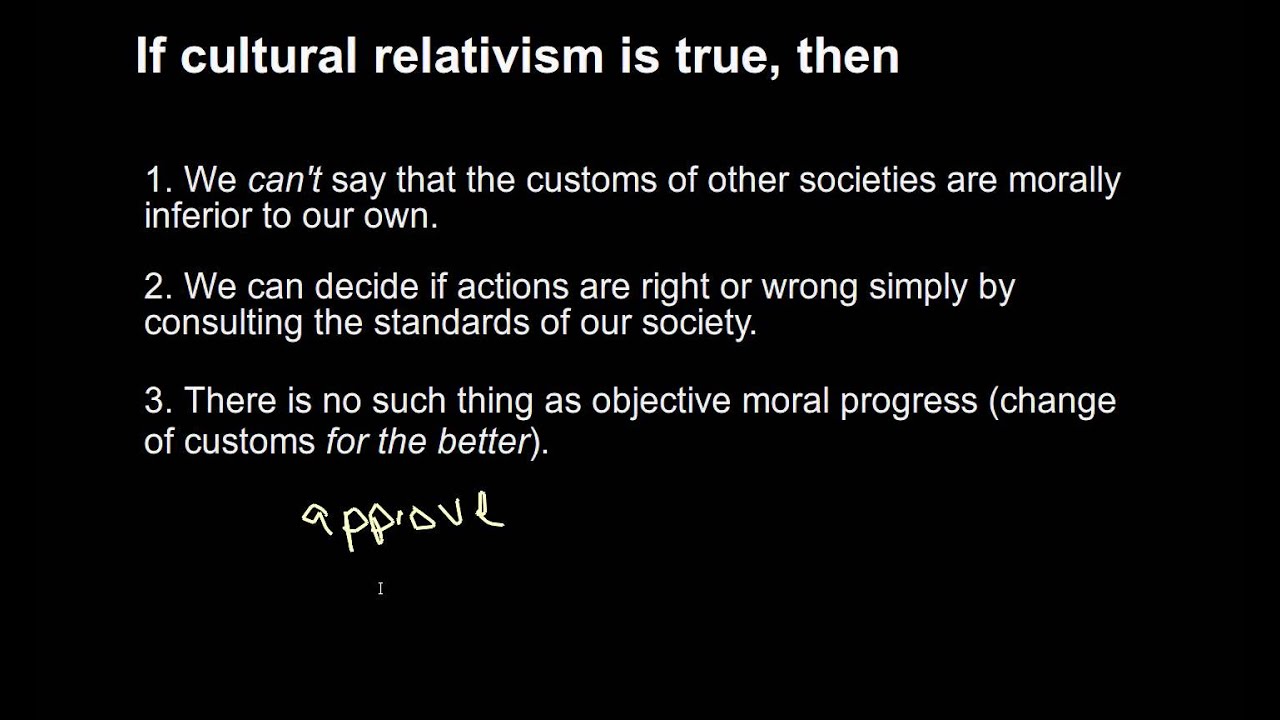
14:04
Cultural Relativism Explained: Arguments For & Against (Philosophy Lecture)
@khanpadawan
28.7K views•2011-09-13

164:01
John of Damascus on Holy Images: A Theological Defense
@BannedBooks
139 views•2026-04-25

48:12
31 Essential Philosophy Books Explained in 48 Minutes
@unsolicitedadvice9198
249.5K views•2025-03-08

4:57
The Myth of Sisyphus: A Greek Legend of Eternal Punishment
@TEDEd
8.6M views•2018-11-13
Related Study Plans & Knowledge Roadmaps
Structured learning paths in Philosophy
philosophy
Frankfurt School: Critical Theory & Culture
01Foundations of the Frankfurt School and Critical Theory
02Horkheimer & Adorno: The Critique of Instrumental Reason
03The Culture Industry and Mass Deception
+ 2 more learning modules
12h5 modules
Explore Roadmap
philosophy
Philosophy of Language: From Frege to Austin
01The Linguistic Turn: An Introduction to Language in Philosophy
02Gottlob Frege: Sense and Reference
03Early Wittgenstein: The Picture Theory of Meaning
+ 3 more learning modules
15h6 modules
Explore Roadmap
philosophy
Feminist Epistemology: Standpoint & Injustice
01Introduction to Epistemology and Feminist Critiques
02Sandra Harding and Standpoint Theory
03Donna Haraway and Situated Knowledges
+ 2 more learning modules
12h5 modules
Explore Roadmap
philosophy
Environmental Philosophy: Ethics & Deep Ecology
01Foundations of Environmental Ethics & Anthropocentrism
02Biocentric Individualism and Animal Liberation
03Ecocentric Holism and Deep Ecology
+ 1 more learning modules
10h4 modules
Explore Roadmap