



![GATE Chemistry 2026 | Questions Discussion | Solid State & Nuclear Chemistry [Session-2]](https://i.ytimg.com/vi/siZLLSpS8qg/maxresdefault.jpg)




![ECUACIONES LOGARÍTMICAS resueltas Ejercicios [ Desde cero ] Súper resumen](https://i.ytimg.com/vi/mk1NITiuLoA/hqdefault.jpg)










![Production of Radionuclides in Nuclear Reactors [L8]](https://i.ytimg.com/vi_webp/Z1dzYuZAMIM/maxresdefault.webp)



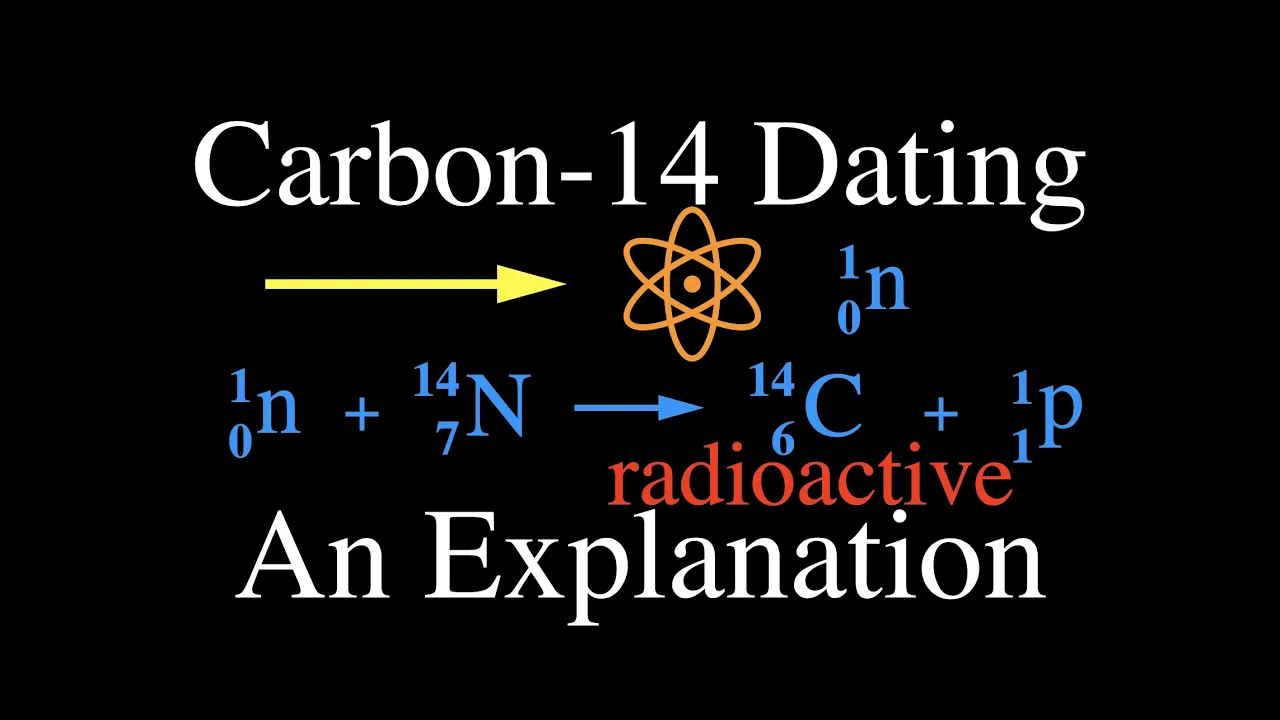
Nuclear decay follows first-order kinetics, meaning the half-life (time for half the sample to decay) is constant and related to the rate constant by t₁/₂ = ln(2)/k ≈ 0.693/k; calculations can be simplified using the relationship between remaining mass/percent/activity and half-lives, with radiocarbon dating applying these principles to date organic materials up to ~50,000-70,000 years by comparing the remaining carbon-14 activity to modern levels.
Kinetics of Nuclear Decay: Half-Life & Radiocarbon Dating
Added:Basic understanding of atomic structure, isotopes, and the difference between stable and unstable nuclei.
Familiarity with the primary types of radioactive decay, specifically beta decay which is central to carbon-14 dating.
An introduction to chemical kinetics, specifically first-order reaction rates and the concept of a half-life.
Mathematical proficiency with algebraic manipulation, natural logarithms (ln), and exponential functions (e).
Advanced radiometric dating methods for geological timescales, such as Uranium-Lead (U-Pb) and Potassium-Argon (K-Ar) dating.
The thermodynamics of nuclear reactions, including mass defect, Einstein's mass-energy equivalence (E=mc²), and nuclear binding energy.
The kinetics of consecutive decay series and nuclear equilibria (secular and transient equilibrium).
Practical applications of nuclear kinetics in medicine (diagnostic tracers and radiotherapy) and nuclear energy production.
16.5K views369likes19:50Original Release: 2022-04-13
the kinetics of nuclear decay gonna be the topic of this lesson my name is chad and welcome to chad's prep where my goal is to take the stress out of learning science now in addition to high school and college science prep we also do mcat dat and oat prep as well i'll be sure to leave a link in the description below for you can find those courses now this lesson is part of my new general chemistry playlist and for a couple more chapters i'll be releasing several lessons a week throughout the remainder of this school year uh if you want to be notified every time i post a new lesson or my next playlist subscribe to the channel click the bell notification so the kinetics of nuclear decay is largely going to be review for the majority of this lesson and then we'll kind of apply it to like uh radioactive dating uh towards the end of this lesson so but it turns out that all of nuclear decay is first order for the relevant parts we'll look at all the spontaneous routes of decay anyways so and being first order we don't have to worry about zero order or second order like we did back in the chemical kinetics chapter we'll be dealing exclusively with just this first order process and so it's going to follow the first order integrated rate law which is a couple different forms in which it's written so and we'll be dealing pretty heavily with half-lives it's often pretty characteristic uh to give you the half-life of a radioactive nuclide so notice this equation shows us that we can get the radius or the half-life from the uh the rate constant or you know the rate constant from the half-life but most of the time you're probably more likely to be given half-lives in this particular context than the rate constant but you should know there's a lovely easy relationship between the two so in fact that's actually where we're going to start we're going to derive this lovely half-life expression because it's kind of important so if we take a look at the original first order integrated rate law if you subtract off ln of n naught to the other side of the equation and then realize that you know subtracting logs is the same thing as dividing them under a single log we get this lovely equation and so if we take a look at that lovely equation we'll take the natural log and then n over n naught n is how much of that radioactive nuclide you have now and not is how much you started with well the half-life is defined as the time it takes for half your sample to be consumed or in this case in a nuclear context we say half of your radioactive nuclei to decay away so how much do you have left well if you started with n-naught you'd have half of n naught left well half of n naught divided by n naught is just simply half and so at the half lifetime this becomes natural log of a half equaling negative k and the time it took to get there is what's defined as the half-life time and if we rearrange and solve for this year we can say that your half-life is going to equal the natural log of one-half over k well go figure guess what uh and i lost a negative sign there my bad negative one ln of one-half over k and the natural log of one-half go figure is equal to negative 0.693 and that way a negative times a negative 0.693 gives you a positive and that's where this relationship comes from so now we talk about half-lives a lot what we don't talk about are what about a third life what about a fifth life but you could and i've seen professors ask it on a test and essentially instead of putting in natural log of one half here they're expecting to put a natural log of one-third a natural log of one-fifth and you could figure out the time it took for a third of your sample to decay so or i guess a 30 sample to be left i guess is what it really amounts to so or a fifth of your sample to be left or something along these lines so just kind of keep that in mind all right so now that we've kind of reviewed what that half-life looks like uh you got to realize that it's again real common to kind of structure this around half-lives in this chapter and some of the math you might get away with even having to use these integrated rate laws and you might be able to either exactly calculated or at least approximate it well enough to pick out the right answer in multiple choice without ever having to pull out your calculator let's take a look and see how this looks let's say we started off with a particular mass so let's just say we started off with 64 grams of a radioactive nuclide so well after it decayed for a half-life what mass of that nuclei would remain well in this case you'd have 32 grams left and if it experienced another half-life how much would be left after that point you just keep cutting at half so then you'd be down to 16 grams and another half-life you'd be down to eight grams and another half-life you'd be down to four grams and so on and so forth you just keep dividing by two or multiplying by a half every half-life and so if we look at this one thing to note a lot of students look at this and be like oh you've gone through half you know five half-lives one two three four five bad counting count the arrows it's the process that is the half-life so count the arrows one two three four half-lives and so this would be the first half-life the second half-life the third half-life the fourth half-life it's a couple different ways you could look at this or be presented with this you might be asking if you start with a 64 gram sample and let's say the half-life equals five hours well then how long would it take to where you've only got four grams left well you'd have to look at this and be like oh well that's an exact number of half-lives because all i do got to do to 64 to get to four is divide by two four times well and if each of those half-lives is five hours well then four of them would be a total of 20 hours and you could do that in your head because it was a perfect number of half-lives the math comes out easy now it could be asked exactly the other way it could be like a researcher was doing a kinetics experiment they started with 64 grams of a radioactive nuclide and after 20 hours they had 4 grams left what's the half-life and you have to realize that again to go from 64 grams to 4 grams that's exactly 4 half-lives and if that took a total of 20 hours well then what's one half-life if four half-lives would be 20 hours then just one of them divided by four would get you five hours for that half-life so it could be asked either way either giving you the half-life and then figure out the total time to get to four grams or give the total time to four grams and backtrack to figure out that half-life so could go either way now what if instead of going all the way to four grams so let's say again we're dealing with half-life of five hours what if i said hey get me to where we only have five grams left and that's where life kind of sucks so maybe depends on if it's multiple choice it might suck it might not so what you'd have to say is well okay five grams is not a perfect number of half-lives however three half-lives would get me to having eight grams left four halves would get me to having four grams left well three half-lives would be 15 hours if the again the half-life is five hours so so three half-lives would be 15 hours four half-lives would be 20 hours so to get to 5 grams which is somewhere in between would be somewhere between 15 and 20 hours and because 5 grams is quite a bit closer to 4 grams it's probably closer to 20 hours than it is to 15. and if there's only one answer choice in that range well great you just pick it and you move on you don't do any of the math however if that's not the case if you got let's say all the answer choices are between four and eight grams well then what do you do to find out how long it takes to get to where you only have five grams left so well then that's when you got to bust out these first order integrated rate laws so the first order integrated rate law is what you use to solve for anything that you can't do in your head because it's not a perfect number of half-lives all right so if we want to solve for this time here so we take and we'd say okay ln of n well i want to get to the point where i've got 5 grams left equals the ln of n naught i started with 64 grams minus k times t and i want to solve for t and the problem is i can't solve for t unless i also know k okay well where do i get k from well i get it from the half-life expression right here if we rearrange this a little bit we can see that k is equal to 0.69 over the half-life that's k and so what i'm going to do i'm not actually going to even solve for it separately i'm just going to substitute right in here for k and i'm going to substitute in 0.693 over the half-life which we said was 5 hours and just substitute right in and now i can solve for t and you're definitely going to want a calculator here and again we said it should be somewhere between 15 and 20 hours should be closer to 20. so let's see what we get all right so we're going to take the natural log of 5 minus we'll subtract this over to the other side the natural log of 64.
natural log of 64 and i'll hit enter it's like negative 2.55 so and then i'm going to divide by negative 0.693 over 5. so divided by and i'll put this all in parentheses divided by negative 0.693 divided by 5 and close my parentheses and we're going to get 18.4 hours cool and life is good and like i said had there only been one answer choice in between 15 and 20 uh or at least closer to 20 in that ballpark well then i would have just picked it and i never would have done all this math but i wanted to make sure you'd seen all this math worked out as well just in case uh the answer choices weren't so nice so but oftentimes you'll be able to at least ball park it in your head without ever having to do the plug and chug in this particular chapter all right so let's see how else could this be presented so well this could also be presented instead of dealing with the mass of a radioactive nuclei it could be presented in percentages and fractions so well initially you'd start off with all of it and in percentages that's 100 and in fractions that just means one and so what percent would you have after the first half-life well you'd have 50 or what fraction well a half and after a second half-life could be down to 25 or half of a half is a fourth and after a third half-life you'd be down to 12.5 percent which is half of a fourth and one half times one fourth is one eighth and then finally after a fourth half-life that'd be 6.25 or half of an eighth one-half times one-eighth is 1 16. and so on and so forth and so you could have this you know instead of being told that you know you started with 64 grams and you know how long does it take to get down to four grams if the half-life is five hours and figuring out that it's 20 hours you might be told well if you start off you know with a radioactive nuclei how long does it take to get all the way down to where only 6.25 remains or only 1 16 of the sample remains same question you'd have to be like oh to get down to 6.25 percent that's just taking 100 and dividing by two four times it's four half-lives and four times five hours would be 20 hours okay so same thing to get down to 1 16 you'd have to realize that if you start off with all of it you got to divide by 2 or multiply by half 4 times to get to 1 16 four half-lives would be once again 20 hours assuming again you were given a half-life of five hours now be careful because sometimes until instead of telling you what you have left and this always gives you what you have left you have 25 left you have 12.5 left you have 6.25 left you could be given how much has decayed instead so notice if you only got 25 percent of your sample left what's because 75 percent has decayed already if you only got 12.5 percent of your radioactive nuclide remaining it's because the other 87.5 percent has decayed same thing with fractions you know if you've only got a fourth of your sample left it's because three-fourths has already decayed if you've only got an eighth of your sample left it's because the other seven eighths has already decayed away if you only get a 16th of your sample remaining it's because the other 15 16 has decayed away and so it might be phrased in that terminology and you got to be careful because a lot of students don't see the difference between what fraction or what percentage remains versus how much has decayed now there's one last way this might be presented so it turns out it's pretty customary for us to measure radioactivity in a variety of different ways but they're all going to kind of deal with some sort of like disintegrations per second or disintegrations per minute and we call that the activity or radioactivity so i'm going to look at this as disintegrations per minute there's a few different units you might use and stuff like this i'm just going to use disintegrations per minute so it turns out the activity of a radioactive sample is directly proportional to how much of that radioactive sample you have and so as you go through a half-life and the amount of the radioactive sample is cut in half well because the activity is directly proportional to how much you have so is the activity then going to be cut in half and so you might be told the number of disintegrations per minute and i'm just going to write this disintegrations per minute it's not really written that way but i'm going to write it that way and let's just say it started off with 20 disintegrations per minute well then after a half-life you'd be down to 10 disintegrations per minute and after another half-life you'd be down to five disintegrations per minute and after another half-life you'd be down to 2.5 and then finally 1.25 disintegrations per minute and so this could all be given in terms of activity as well so again whether it's the exact mass of the nuclei the percentage the fraction or in terms of activity it all is going to lead to the same kind of calculations and again if you're given you know a situation with a perfect number of half-lives life is good you can do that in your head you can just keep dividing by two or multiplying by half and again you can use your calculator don't get me wrong if the numbers aren't nice so however the big key is that if it's not a perfect number of half-lives perfect number of times of cutting something in half then you got to resort back to this first order integrated rate law and usually the way it's going to work is that you're going to use this level expression to get the rate constant from the half-life and then you'll substitute it back into the first-order integrated rate law to solve for time or to solve for one of the variables that you don't know all right so we can take now what we've learned about the kinetics of nuclear decay and apply it to radioactive dating and specifically we're going to take a look at radiocarbon dating now there are other forms of dating like uranium and potassium argon and things of sort we're only going to look at radiocarbon dating here in this lesson and radiocarbon dating is useful for dating something that was once alive it had to be once alive whether plant or animal or bacteria or something like it had me once living we'll see why in a second but also only it's going to really really work like 50 to 70 000 years maximum so and the longer it goes kind of the more approximate that that age range is going to become when you calculate it so but the idea here is that there is radioactive carbon 14 in the earth's atmosphere and that comes from cosmic radiation converting nitrogen 14 into carbon 14 and that carbon 14 is going to undergo a constant rate of beta decay and when it undergoes beta decay it's no longer carbon 14. so the amount of carbon 14 in the earth's atmosphere has reached some sort of equilibrium between the amount that's being formed from the cosmic radiation interacting with nitrogen and then the amount that's decaying and so how does it get into a living creature well this is probably going to be in the form of carbon dioxide and plants and other photosynthetic organisms are going to take in this radioactive carbon dioxide with all the rest of the carbon dioxide and they're going to incorporate it into their bodies we'll call them bodies and then animals are going to come along and eat those plants or photosynthetic organisms and then animals will eat those animals and eventually we're all going to incorporate a steady amount of this radioactive carbon 14 into us everything that was once alive in one way shape or form whether plant animal or other as long as it was living it'll have this steady amount so and the steady amount comes from that you're going to keep ingesting in one way shape or forms a little tiny amount of this radioactive carbon-14 but it's also going to be decaying and every living creature is going to reach this steady state equilibrium where the amount coming in is going to equal the amount going out until no more is coming in i.e the organism has died once it's died it's no longer eating anything are no longer doing photosynthesis and so no longer will it have any input of this radioactive carbon-14 and that's going to serve as a time stamp because from that moment on the amount of radioactive carbon 14 it has in it in its dead carcass is going to be slowly decreasing as our radioactive carbon 14 undergoes beta decay and so it gives us a lovely time stamp based on how much like let's say i find a piece of you know ancient wood from a fireplace in in some whatever you know i can test that wood to see how much radioactive carbon 14 it still has compare that to the amount of radioactive carbon 14 in any living thing today and kind of get a ballpark and it turns out that we know the half-life for this radioactive carbon-14 so might be 57 15 or 57 30 depending who you talk to i'm going to use 57 30 years and so we got a couple problems here so first off the amount of radioactive carbon 14 is tiny to begin with again uh for the natural occurring isotopes 98.9 of carbon weighs 12 1.1 percent weighs 13 and if you notice 98.9 plus 1.1 adds up to 100 and it turns out the amount of radioactive carbon-14 is like 0.000 something it's a really tiny percentage and so measuring such a tiny amount is something we can do up to a point and so it turns out once you cut the amount of radioactive carbon-14 in half so many times there's just so little left that we can't accurately measure it and so that's why this is going to be limited to 50 to 70 000 years because once you've gone through you know 10 or 12 half-lives you just don't have enough radioactive carbon 14 left for us to really accurately measure and so it's just not going to happen so that's why this is going to kind of get capped so but now that we know this half-life all we have to do is measure the amount of radioactive carbon-14 in a sample of something that was once alive and then compare it to the amount that's in anything that's still living and has still reached that steady state equilibrium so question we're going to look at here is the carbon-14 activity of a piece of cloth at an archaeological site is 4.1 disintegrations per minute if the carbon-14 activity of living organisms is 16.4 disintegrations per minute what is the approximate age of the piece of cloth now i chose this problem and so i chose the numbers and i chose them to be nice here so we got 16.4 disintegrations per minute we're going to go all the way down to 4.1 and i chose these numbers because it's an exact number of half-lives here so that's nice so we're going to go down after one half-life to 8.2 disintegrations per minute and after another half-life to 4.1 disintegrations per minute and so this is going to be an exact number of half-lifes and i could plug this into my first-order integrated rate law i'd use the half-life to get the rate constant substitute it in right there i'd say that i've got 16.4 disintegration from it was the initial amount before something died and that now it's got 4.1 and then i'd solve for time except because this is a perfect number of half-lifes this is relatively simplistic to do so this first half-life took five thousand seven hundred and thirty years and the second half-life also took five thousand seven hundred and thirty years and so all we gotta do is add that up and just take five thousand seven hundred and thirty times two and we're gonna get eleven thousand well that's it helps if you plug this in correctly into your calculator let's try that one more time eleven thousand four hundred and sixty years because it was a perfect number of half-lifes and again had this been some number that wasn't uh easily obtained by dividing that first number by two a certain uh successive number of times well then i would have been doing exactly what we did earlier involving again getting the rate constant from the half-life substituting into that first order integrated rate law and solving from there but this is essentially what they're doing with radiocarbon dating and the key is again it had to at one time be alive so and then we're just going to compare the amount of you know it's carbon-14 activity to the carbon-14 activity and something that is still alive today now if you found this lesson helpful a like and a comment letting me know are pretty much the best things you can do to support the channel and if you are looking for nuclear chemistry practice or preparation for your final exams like final exam rapid reason practice finals then take a look at my general chemistry master course i'll leave a link in the description free trial is available happy studying
Up Next
87:39
Uranium: The Bogeyman of the Periodic Table | Prof Steve Liddle
@chemreach845
153 views•2021-12-12
83:56
Biocatalysis and Catalysis in Islatravir Synthesis | Merck Webinar
@SCIwheresciencemeetsbusiness
675 views•2020-10-08
13:51
Naming Complex Ions & Coordination Compounds | Chemistry
@ChadsPrep
73K views•2022-04-19

17:31
Edible Water Bottles: A DIY Guide to Sodium Alginate Spherification
@ryan
10.5M views•2019-06-21
Related Study Plans & Knowledge Roadmaps
Structured learning paths in Chemistry
chemistry
Nuclear Chemistry: Decay, Meds & Fuel Cycle
01Introduction to Nuclear Structure and Radioactivity
02Decay Dynamics and Kinetics
03Radiation Interaction and Detection
+ 2 more learning modules
24h5 modules
Explore Roadmap
chemistry
Supramolecular Chemistry: Forces & Machines
01Foundations of Chemical Bonding and Intermolecular Forces
02Introduction to Host-Guest Chemistry
03Thermodynamics and Dynamics of Self-Assembly
+ 2 more learning modules
16h5 modules
Explore Roadmap
chemistry
Photochemistry: Excited States & Reactions
01Foundations of Light-Matter Interactions
02Molecular Orbitals and Electronic States
03Photophysical Processes and Jablonski Diagrams
+ 2 more learning modules
18h5 modules
Explore Roadmap
chemistry
Coordination Chemistry: Bonding & Properties
01Introduction to Transition Metals and Ligands
02Crystal Field Theory (CFT) and Geometry
03Magnetic Behavior and Spin States
+ 2 more learning modules
14h5 modules
Explore Roadmap