

















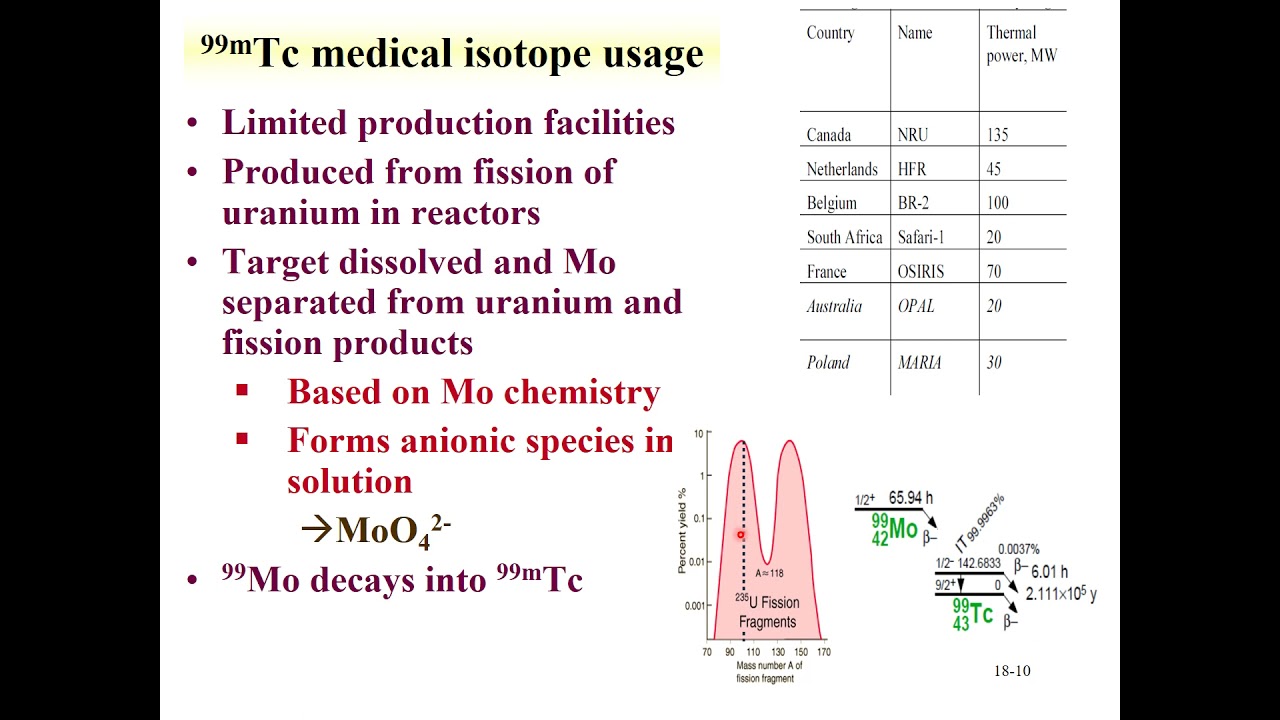



Uranium (element 92) represents a unique element at the boundary between naturally occurring and synthetically created elements, serving as both a powerful energy source for nuclear power and a dangerous material for weapons; its complex chemistry, involving f-orbital electrons and relativistic effects, enables applications ranging from nuclear energy production to medical treatments, while fundamental research on uranium compounds continues to advance our understanding of heavy element chemistry and address real-world challenges like nuclear waste management and sustainable energy solutions.
Uranium: The Bogeyman of the Periodic Table | Prof Steve Liddle
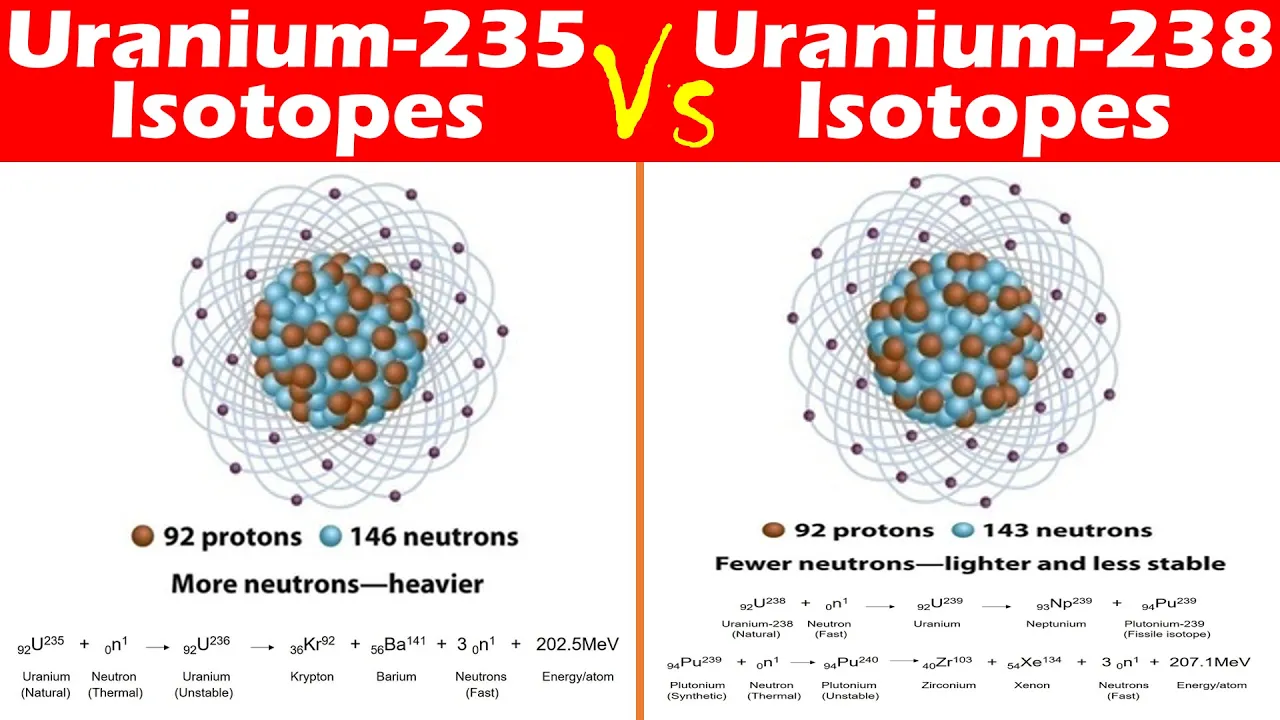
Added:Basic atomic structure and the concept of isotopes, specifically distinguishing between Uranium-235 and Uranium-238.
Fundamentals of radioactive decay, including alpha, beta, and gamma radiation, as well as the concept of half-life.
Introduction to the Periodic Table, specifically the location and electron configuration of the f-block elements (actinides and lanthanides).
Basic principles of chemical bonding, coordination chemistry, and oxidation states.
Advanced actinide chemistry, focusing on the synthesis and reactivity of novel uranium complexes and uranium-ligand multiple bonds.
The nuclear fuel cycle, including uranium mining, enrichment techniques (like gas centrifugation), and nuclear waste remediation strategies.
Applications of radiochemistry in medicine and industry, such as targeted alpha therapy and nuclear imaging.
Geopolitical and environmental implications of nuclear energy, nuclear non-proliferation treaties, and forensic detection of nuclear materials.
153 views2likes1:27:39Original Release: 2021-12-12
so welcome again to one of those for another uh wmctc evening lecture six film lecture and uh i'd like to thank first of all the wmctc and raw scientific chemistry as well as the university of birmingham for making these uh or enabling these uh these lectures and for funding as well and it gives me blake uh great pleasure to introduce our evening speaker professor stephen liddle who is the head of inorganic chemistry and the co-director for the center of radiochemistry research at the university of manchester and his presentation i'm going to say the title a minute uh it's going to cover uranium which is a very topical element at the moment as we look to nuclear fusion to perhaps decarbonize our energy and uh and the environmental benefits from nuclear energy as well but just saying the word uranium obviously polarizes the audience as people have a lot of preconceived ideas about the elements so is it a force for good um or otherwise and so the the title of this talk is uranium the bogeyman of the periodic table a case of dr jekyll or mr hyde so i'd like to uh thank and introduce our speaker once again professor stephen little all right thank you mark for the very kind introduction and good evening everyone uh shame i can't be there in person but i guess it's the nature of the world we live in at the minute maybe the next time i'll be able to be down at birmingham like the last time which was a couple of years ago now it feels like a lifetime ago um so yeah i i do a lot of research on uranium it's basically my favorite element of the periodic table but clearly it's an element with something of a pr issue is of how it's viewed and so i'm i'm just going to talk through a variety of issues uh surrounding uranium its role in the wider world and i'm going to try and convince you that fundamental research can actually contribute to sorting out some real world problems that we've got i just want to emphasize i'm not here to try and convince you that nuclear power is the answer to everything i'm just going to give you what i think are unarguable facts and i leave it up to you how you interpret them and how you conclude them and i think that the opening slide kind of sums uranium up uh really on the left-hand side as soon as people talk about nuclear and of course uranium is synonymous with uh nuclear power straight away you see images like this this is the kind of image you often see associated with stories about pollution but actually what's coming out of those towers is water vapor from cooling but often it can be misrepresented on the other hand there's clearly something much more disturbing uh which is a rendition of an atomic bomb after it's gone off and one of the reasons i picked this is because it's a really weird twist it sort of looks like a clown laughing at you which i i'm not really sure how this happened but i mean this is just one of these strange things in life [Music] now why can't i advance slide there we go right so um i do view uh uranium as being a very split personality element because of the uses that we've given to it on the one hand we've got mr hyde who's not particularly pleasant individual to run into we opened pandora's box around about the time of the second world war in the last century because there was a race to generate atomic weaponry to bring uh the world war to an end and so then things like this is what erupted out of that pandora's box that we opened and of course once we opened that box we could never close it again and then we have to get our arms trained and then the wall of the consequence and of course it's a hugely destructive event um but actually bizarrely it's a way to make new chemical elements which is something i will come on to in a little bit uh another aspect of mr hyde is is this now this is a picture of fukushima the power plant out in yeast that kind of had a major problem when the tsunami hit a few years ago it's really difficult to find it in focus version of this photograph and that's because no journalist in their right mind wanted to get any closer to actually then take the photo appropriately and of course what was going on here was there was a catastrophic failure of the reactor as a consequence of the tsunami and then apparently there was a meltdown and all the consequences that come with that but that's a pretty severe instance of when things can go wrong and also however on the other hand you know it is arguably the case that nuclear power quite can be quite good in terms of our co2 footprint and having sustainable secure energy supplies and of course nowadays you can go out and get your own nuclear reactor on the internet you can order the jojo snap together reactor it's not that expensive easy to put together but i think actually they advertise a floor in this so if you look at those two kids if you see the flash in that building behind them i'm not sure i would be standing there trying to fly a kite okay um so over the years uranium's reputation has been up and down like a yo-yo when people first became aware of it in a kind of a regular sense out in popular culture it was actually a bit of a fart element so people would go uh prospecting for it a little bit like a gold rush there was also a uranium rush people just sort of found this element very exotic and they would go digging for it apparently it and other elements like thorium were put in toothpaste and the advertising claim was that it would make your your teeth be white and sparkle not like what we do nowadays with tooth whitening but basically this was something that people tried to commercialize and i'm really not sure about the one on the right but apparently you could get your ice cream with a sprinkling of uranium on top i really cannot imagine i was nice but you know fair pr and stuff and i think most people one way or another at some stage even if they don't realize it they've seen photographs of uranium glass which of course glows when you shine a light on it and this is i think is what underpins the classic uh cliched comment about if things are radioactive does it make you glow in the dark i think that's where this comes from although in the century gone and running up to now the tide really turned against uranium really mainly because of its association with nuclear be that weaponry or for peaceful civilian energy production and actually there's probably no one thing on the planet that's done more damage to the public image of uranium as an element but also nuclear and that will be the simpsons uh because of course it's a perfect blend really for negative pr in terms of mr burns the evil boss running the plan for all the wrong reasons homer is the incompetent person who's going to let everything melt down and then of course there's bart who finds binky the three-eyed fish in the local river um i should say a three-eyed fish could occur naturally that's called evolution you would just argue in this case that the radioactivity has accelerated that process but of course the knee-jerk reaction is that oh this is really bad therefore we should stay away from it now nuclear does have real problems okay they're not made up they are legitimate um and the main problem is the vast amount of waste that is generated by the process of uh doing nuclear fission and that's because you end up with this mix of stuff coming out the other end that's very difficult to separate and often you have quite small quantities of incredibly radioactive materials dispersed in a much larger volume of actually non-radioactive or very lonely radioactive materials but overall you have something that's a real concern and so this is a stock footage from a storage area i think this is low level waste but basically there's a lot of it and of course very publicly widely known there have been real issues uh in terms of catastrophic accidents in nuclear power plants over the years that there's a picture of chernobyl but it's important to emphasize that normally there's extremely extensive arrays of engineering safety systems put this kind of thing but that's a very good example of what happens when you circumvent those engineered systems to try and do something that you might describe as being outside the spec uh of the plant so you you might quite reasonably say to yourself well why did we ever get in to this in the first place if it's such a difficult awful thing to work with and of course the answer is it was political so around about the time of the second world war uh was over the un is getting going the security is being set up huge drive for the uk to be on that security council for all sorts of geopolitical reasons and so we engaged in the race to obtain nuclear weaponry to get ourselves a prominent role within the u.n and we were successful in doing that the consequence though of that is that we then have a lot of places where we've been generating nuclear materials and could we then use them for something quite sensible of course the answer then is civil energy and going back to the previous slide you might argue that one of the reasons we we have these processes that generate lots of waste as you might argue that the science to produce materials for weapons to to get that goal of being on the un security council was that the the politics pushed the science faster than the science was comfortable to go at and so it was almost like it was forced to go forwards even if you might argue it wasn't really ready to go but the imperative was to get the materials to make the weapons to secure the sea on the u.n council but nowadays we're using about 20 um sorry about 20 of our energy breakdown is nuclear power ironically it's slightly higher up in scotland even though the smp are an anti-nuclear party but we average out about 20 for the uk overall actually there was an article on the bbc news website today about these new um smr reactors that are going to be rolled out by wells voice and i was looking at the breakdown of the energy production there and it's looking pretty similar still to this table so even those tables getting a little bit out of date we're still quite reliant on uh our electricity from nuclear power and the unpalatable fact is if those plants don't operate people's lights go out and so this is at the moment an essential part of our energy mix whether it should be is an entirely separate matter i'm purely talking here about the practicality of the this is an essential component of our energy mix and actually coming back to mark's opening comments and some of the comments that i've alluded to or being well so far the fact of the matter is as a species we've had a pretty profound effect on the earth's climate you could track co2 emissions right back to the advent of uh the industrial revolution and so there there's serious questions here about when we're producing our energy which is a society we demand it would be a very brave politician now who would stand up and say to be environmentally friendly we're all going to have to accept the electricity being off a day a week or something like that we have this insatiable demand against what the impact of that on the planet is and in terms of production at the point at which electricity is generated nuclear actually stacks up pretty well although like a lot of things in life you should really be looking at the process in the round and i would say that what you cannot ignore is the phenomenal co2 footprint in the concrete used to produce these plants but then you might argue there's a lot of concrete and a lot of other processes that generate electricity so it's a very complicated problem but the bottom line is if you've got a plant that's there already and it's working then you're not generating co2 or any significant levels compared to other technologies every time you're generating the electricity that's used by you the consumer so there is a role there for it but again there's bigger decisions about whether it should be a role now what i come across a lot is people who are either completely okay with nuclear uh they don't have a problem with uranium or people who are right on the other end of the spectrum who just instantly recoil and really don't like it and i found myself wondering for a while why why was this the case why why does it generate such a visceral reaction now it's easy to answer if you're thinking about weapons it's a bit more of a complicated issue i think when you're thinking about energy production but actually it really boils down to a very simple thing so apart from the startling fact that uranium and nuclear is actually synonymous with marmite um we are vehicles to reproduce our dna because dna is very reactive molecule and so it's ended up accommodating itself in our bodies to be reproduced but dna is very savvy it knows what is not good for it and it knows that radiation is very bad for it because dna that is damaged will either be mutated or will not be able to reproduce and so it's hardwired in us to recoil from things that we intrinsically know are going to harm us like a fire or radioactivity but again this is a very complex issue because most of us have no problem going and lying on a beach and irradiating ourselves for several hours to get the perfect tan but actually you're exposing yourself to significant quantities of radiation if you get in a plane and fly somewhere else on the planet to go on holiday as soon as that plane gets high up into the atmosphere you are receiving a higher dose level of radiation from cosmic rays and the like and if you go down certain cellars in cornwall you can come across radioactive gases that just happen to be there so this is a natural phenomena but we are programmed to recoil from it automatically and that's why we tend to get this visceral response when we deal with this topic in terms of radioactive elements in the periodic table but also their applications but i always put this slide in because i think it's a very important thing if you never have the time to stop and think about it that once you grasp what's going on and you understand why you are fearing something or recoiling then you can start to think about what that really means and whether you think that response is still appropriate it might be but you might be in a scenario where actually when you think it through it's not appropriate now uranium sits in the periodic table if you're a physicist a cosmologist you're thinking about things in the the bigger universe you only really need to worry about two elements in the periodic table and that's hydrogen and helium because they are the main constituents of stars but as soon as you get down to planetary level then thankfully and i'm very thankful for this and inorganic chemist in the world we've got this huge array of elements um from the natural world uh to play with in terms of organizing them in different ways to make new materials but also categorizing them and understanding why they sit where they sit within the periodic table now obviously uranium's down at the bottom it's element 92 it's actually a very significant place in the periodic table because uranium is the last element in the periodic table that occurs in any significant level naturally once you go beyond uranium you're into the realm of elements that even if they're formed in nature then they're in incredibly small quantities and then they decay away through radioactive decay or they have to be synthesized by humans otherwise they would not exist in the universe okay um there's another i think very beautiful way of showing the periodic table and this is from mark winter at sheffield and this is showing the periodic table in terms of atomic orbitals so if you're studying your a levels you have come across s orbitals for the s blocks the alkali metals and the alkaline earth metals you'll become familiar with p orbitals in the main group elements and you probably started to come across d orbitals on transition metals which is the the block of the red and the white sat in the middle what you may not have come across yet uh are the lanthanides and actinides sat at the bottom of the table and they use f orbitals so they're often referred to the f block and what happens is you go from s p d and f because each time you're introducing extra nodal plane and these orbitals get more complex as a consequence and the way i often think of it is you're getting an extra degree of dimensionality when you step up so the p orbital it's kind of twice an s orbital the d orbital it's about four times and then the f is ramping up again i just think that beautiful things to look at because these are the shapes of the orbitals that nature has chosen to house electrons in and it's electrons that do chemistry the atoms are the ring masters in any molecule they're holding on to the electrons but it's the electrons that actually execute chemical reactions and so i just think it's fascinating that these are the shapes of the orbitals that we have but they're very particular peculiar set of shapes for the f elements in the bottom of the table and this gives them all sorts of unusual properties and quite often you see the f elements behaving a very different way to pretty much the rest of the periodic table or at the bare minimum they're very different to the the d transition metal block sat in the middle and yet they're all metals and and so it's the nature of the electrons in these orbitals which is transforming the way that these elements behave now i mentioned a little bit there about um uranium being the last naturally occurring element in any particular uh significant level in the periodic table i just think it's helpful to get some historical context um so uranium was discovered in 1789 by clathron um this was in the era uh what i often refer to as the age of wonder where the human race was discovering new elements all the time we didn't quite have the periodic table at this point but i think it would have been a truly remarkable era uh to have witnessed in terms of people discovering the foundations of mata in terms of new elements on a regular basis uh just a few years later in 1794 gatlin isolated yitzvia and this was the classic example where i thought they had one element turns out it was multiple elements it's all co-crystallized in the in the mineral and they all discovered that the terpe which is very famous place in the world of chemistry because it's got no less than four of the lanthanide elements named after it so it's it's the place in the world with the most number of chemical elements named after it which is quite a record a little bit later claphroth is added again he's discovering the early lanthanides in the periodic table then thorium is discovered then protactinium is discovered and this is an interesting point from 1913 to 1916 because then comes the recognition of different isotopes of the same element which have radically different half-life times in terms of their radioactive decay and then you draw a line because that's when the era of element discovery and when i say discovery i mean of things that naturally occur essentially comes to an end and then we enter an age of element synthesis where the human race now has it within its power to start to synthesize new chemical elements and whenever i think about this i think this is truly remarkable that we as a species have acquired the ability to generate new elements in the periodic table we are basically god movements out in the world in the universe and we have that power and it starts with the synthesis of neptunium and that was really a stepping stone as i mentioned in a moment to obtaining plutonium because that was the chase for an atomic bomb and war is the classic example of generating technological change in an incredibly rapid uh rate quite often it's war that gives you a really fast burst of technological advance because there's a real imperative and this was an exactly that kind of example that we stepped off from discovery into synthesis because there was a big drive behind it which was to get the weapon to bring an end to the second world war and then people in particular seaboard because i'll mention in a minute start to work their way along literally creating the new elements that will build up to be the actinide series moving their way along this is quite time-consuming stuff if you're playing god with the chemical elements it doesn't just happen overnight it takes time to get these things right and to figure out how to do it and this comes right up to the current day we are still making or trying to make new chemical elements in the periodic table we're sort of up to about element 118 now there could well be more there are these islands of stability in atomic theory that certain ratios of protons and neutrons will give you stable isotopes so there's a principle that we could go to really high atomic numbers but it becomes really technologically very demanding work to do and some of these elements there's only been a few atoms of them made at once on the face of the planet and so this is devilishly difficult work to do but just very briefly i just want to touch on something which is the abundance of the elements so the lanthanides which is that top green row were often referred to as rare earths and this was a historical mistake that the the difficulty of extracting things was confused with their terrestrial abundance but the next green road down is the actinides and that first tall green pole on the left is thorium the next one's protactinium then the next tall pole is uranium and then back to my earlier point about it's the last naturally occurring one you see how that series flat lines so although they exist they're in very small quantities on earth compared to other elements higher up in the periodic table which have much bigger abundances but uranium for example is about as abundant as tin and we've been mining tin out of cornish mines for centuries so there's enough of it on the planet it's just a question of what we do with it now the reason of course why there's never much of these uh highly active transuranic elements once is their radio activities and this is a wide span it's isotope dependent but some of them have incredibly long half-lifes tens hundreds of thousands of years and this is why a lot of these elements if they're generated at the back end of nuclear power uh energy production have become such an issue because they don't just go away overnight they're going to be there for generations and generations and generations which then brings interesting questions about if you decide to bury them in the ground how are you going to make sure that that facility is still keeping everything contained not just in a few decades time but hundreds of thousands of years time potentially and so these are really big questions for people to grapple with okay so of course for a long time uranium was just a an other element in the periodic table um but it was the discovery of nuclear fission which really brought it into this regime where um good and bad applications of it uh were dreamt up and so this is all kicking off in the in the run-up to the second world war now fermi and nodak had um done a lot of work on predicting nuclear fission so this was a known concept and then it was actually done for real but a lot of people they were kind of scratching their heads for a while because they were trying to understand how barium was coming out of something that had had uranium input to it this is where elise mightner came into the equation because she realized what was going on and she worked with otto hahn on this and then this is just one of these travesties of history uh mike now had to flee from germany because of the second world war and she went up to a nordic nation and for intensely political reasons han published the resulting work without mike as a co-author and that meant that she missed out on the nobel prize and so he got it but arguably it's her that did the majority of the work so it was a true travesty that she was missed off the nobel prize and it was all because of what was going on in the second world war um so then people are interested in making uh elements past uranium especially for the weapons applications in the second world war but also thinking about energy production later so how do you do that it's actually fundamentally very simple imagine putting a football on a stool in a room saying about 20 meters away from you then imagine picking up a marble and that's your neutron and you're gonna throw that marble at the football and you need to throw the phone just the right speed that it doesn't bounce off and it actually goes in and sticks and this is fearsomely different difficult to do and so basically it becomes a numbers game they invented these uh cyclotrons some called atom smashes because that's exactly what they were doing they were picking a target which was a chemical element then they were firing atomic particles at it with huge flux rates because the hit ratio is so small for the bigger the flux then of course after some point in time you're going to get some hits and if you give it long enough and your flux rate is high enough then you're going to convert a sample into a brand new element and so in some ways an elegant process in other words weighs a very blunt way of synthesizing chemical elements but it works and so this was what was pushed at the time over in berkeley in california and so the first target was neptunium so that's stepping off from uranium and basically a neutron was fired into uranium-238 to make uranium-239 of course there's a bit of gamma coming out at this point because this is a high-energy process uh but what would happen then is um the 239 would transmute into neptunium-239 with beta emission and so what's going on here is that the atomic number of that element is then changed by one which is why it's switched over to be a new element this is very difficult stuff to do um and of course when you've got a new element you have to characterize and try and convince yourself that you really do have a new element this is quite tricky stuff to do if you're working on very small scales and there's a lot of confusion at this point as well because actually before all of the actinides were recognized that there was some ambiguity about what uranium really was no one actually knew that the actinide series existed underneath philanthropies so at the very beginning uranium was misclassified as a transition metal because it shares a lot of properties with group six metals so in the periodic table in group six you've got chromium then molybdenum then tungsten people thought that uranium was just a heavier version of tungsten little did they know that it wasn't a d transition metal but it was an f actinide metal and that's the difference between them but no one knew that that series of elements existed so it's perfectly reasonable to think oh these just must be more transition metals um but people started to suspect that something different here was going on and that was because the elements weren't quite behaving the way that i think people expected them to behave so this guy edward mcmillan was involved in a lot of this now uranium had been named after unis and there was a big trend at the time to name things after planets so uh element 93 was given the name neptunium in honor of neptune this was a half way for the real which was plutonium and this chap down on the right glenn seaborg was really making a name for himself at the time uh he was basically intent on making elements after element after element that was new uh and of course that really gets you noticed when you're making new elements in the public table this again this is bear in mind this is during wartime he was very fixed on the same that they needed plutonium because it already predicted that it could underpin an atomic bomb so they needed enough material to test that mcmillan was volunteered and moved over onto this work because of his prior experience and so then they got together and got on with it and uh so they made some nepotunium from bombarding uranium with deuterons and then that decays to give you plutonium 238 and so then they had there in and then this was developed a little bit further and then this is back to pandora's box past a certain point they had enough material to test and then all of the theoretical predictions were proven indeed to be correct because the u.s was successful in detonating a fission ability of plutonium 239.
if uranium is the jekyll and hyde of the periodic table plutonium is the hannibal lecter of the periodic table because it's an element that shouldn't exist it's an element that nothing that has evolved in the natural environment of the world has ever come into contact with and therefore we haven't developed physiological responses to deal with it particularly well so it's incredibly lethal to almost anything that comes into contact with it although as i understand it some microbes actually can feed off plutonium and do very nicely off that but that's a very niche case i've got a little note at the bottom here now well there's a star on this paper um so it was received in 1941 the publication that said right hey this is what we've got but it was withheld uh for publication uh so that it didn't inform the enemy as to what they were up to so this is another example where science was having to dance a very peculiar dance to fit in with uh geopolitical events going on around it now seaborg wasn't going to hold back at this point he really had the bit between his teeth and he could sense that he could go further and further if they could leapfrog from uranium to neptunium to plutonium then why not go one space further to the right or another space or another space and keep on going how far could you go and the answer is that they could certainly go as far as making elements like curium and americium um this is 1944 and this is possibly one of the most bizarre ways that new elements have ever been announced to the world there was no formal press release there was no staged pr conference to announce the fact that there was another two elements in our world cborg went on to a radio show called quiz kids and the presenter i think probably just you know to try and get the discussion rolling when oh hey hey glenn made any new elements recently i bet you he wasn't expecting cborg to turn around and go oh yeah we made another two at which point the classifications officer is probably pulling his hair out because now there's there's no point keeping his elements secret anymore because seaborg's just announced them on a national uh radio show so that's probably got to be the most unorthodox announcement two brand new elements in the periodic table ever i imagine simple probably got quite the dressing down for that afterwards but basically it was too late at this point and he'd made such a name for himself going this far they weren't going to fire him from the job and that was probably part of the calculation when he decided to announce them and he was probably fed up with them not being announced because there were brand new elements but they didn't have any use in nuclear weaponry so why wouldn't you tell people about them except it gives you a clue as to what you might have been up to with the elements in between uranium and these two and so they kept going and next up with berkelium in california and just sitting under the title here i think is an astonishing uh piece of information so first of all you needed a kilogram of plutonium that in itself was a major undertaking you'd then take that kilogram and bombard it with whichever particular atomic particles would work and you'd end up with one milligram of americium or um oh there's typo that's not curium not super californium but basically terrible yields i mean if you're a synthetic chemist you would never accept that as a workable yield but if your prize is a brand new element to the periodic table then you'll take it and then there's a little bit of what i call the moon lander effect kicks in um clearly berkeley is very proud of making yet you know two more elements in the periodic table in phone up the mayor's office look what we've done and the response was just there whatever and it was a bit like everyone was looking at the first moon landing everyone was looking at the second moon landing they probably weren't looking at a few more down the line of the moon landing so it's that kind of psychological thing where people get sick of something and move on um and so he also is the guy working on this was really quite upset because i think he sort of felt quite delicious legitimately quite aggrieved i mean do you not understand how much work goes into making a new element and uh yeah so this is the sense of humor at the time he he um what did he call it bm because it was a bit of a stinker to discover which is hit where it's saying it's really hard to make um and then the new yorker uh the newspaper at the time suggested that uc berkeley had lacked four signs should have called the elements 97 to 100 university of orpheum california berkelium uh berkeley's response they could not risk the new yorker finding elements 99 and 100 and calling them new and yorkie so i guess that uh that was where their humor was at the time people really want to keep on going now it's einsteinium and fermium's term uh i mentioned right at the beginning a nuclear detonation is actually a way of forming new chemical elements and actually that's where the first einstein and fermium were first detected uh the second bullet point i find particularly intriguing if you stop to think about it it was found on the filter papers that were flown through the cloud now just stop and think about that how do you think a piece of filter paper got to fly through the top of an atomic bomb going off there were no remote operated drones back there some poor air crew probably got the shock of their life in their morning briefing when they were told what they were going to be doing that day not something i would be wanting to do given emp cannot quite often knock out electronic operators like say the electronic operators you need to keep an error plane flying so this was really difficult stuff to do but of course they were still trying to understand a lot of things not least of which what goes on in one of these bombs when it goes off but to their surprise they discovered these new elements there's since been much more efficient and much better for the environment ways discovered to make these elements in the periodic table and i think also this is when the environmental aspects start to be realized by people if people were finding fermium or bits of coral this was a warning sign that this wasn't just playing around with stuff this had much bigger implications then mendelevium was synthesized in honor of uh mendeleev uh you know the god for the periodic table and bombarding standing with helium reigns i mean this is the lengths you would go to it's questioning of what you want your atomic number to be what you want um therefore to combine to get the right combination of numbers that gives you a new element and this bit i find remarkable so they make this tiny amount of this new element and they will go and jump in a car and drive around the berkeley campus to the analysis room making the samples up whilst in the back of the car because they just didn't have long enough to hang around why they didn't have the analysis room next to the cyclotron i don't understand but for some reason it was cited somewhere else this is clearly in the days before health and safety because i really don't think nowadays you'd get away with saying that we make a brand new element that's radioactive and jumped in the back of a car with it and drive around the campus so you can get the analytical suite okay so now after seaborg's work there are lots of course lots of people involved in this but seaborg is uh the chap who was the theme leader we have the all these extra elements and so there were question marks about where they should go in the periodic tables remember i said no one really understood the notion that there would be an actinide series or as you shall see in a minute it was not widely known though it could actually be an actinide series so mendeleev famously you know came up with the idea of a public table but he didn't know about the existence of an f shell because he didn't know about quantum chemistry because quantum chemistry was not a thing when mendeleev was thinking about elements in this periodic table mostly uh though i was measuring the x-ray spectra of elements and it's because of mosley that we got to grips with the concept of atomic number and of course this is a fundamental clue to a disorder periodic table and what he discovered from his measurements was that there was these 14 elements lanthanum to hafnium and that is where your lanthanide series sits but it wasn't until boar came along and thought about it that he realized that the fourth primary quantum shell can accommodate 32 electrons because that's 14 more than the 18 you get from combining 1s 3p and 5d orbitals together this then invokes the notion that there must be the 4f series for sure but it wasn't really until seaborg highlighted to everybody that now we had another group of elements and actually the actinide series the 5f series of elements in the periodic table really took form as a concept to essentially complete a periodic table or at least complete it at a time because now we've got extrusions super heavies added every now and again this throws up quite an interesting conundrum so if you look at the top line here of calcium and scandium and strontium and atrium there's no ambiguity about where those elements are going to go in the periodic table um because scandium is 3d one so this is the elements in their ground state and nitrogen is for d1 so they're clearly the first two elements of the start of the d block in the periodic table but if you then look at the rows starting with barium you've got lanthanum it's got a 5d1 configuration but so is lutetium at the other end of the lanthanide series if you look at actinium which is 61 well it's the same for laurencium so which do you put in group three because actually either of those pairs could go in on the basis that they are a d1 configuration now lots of periodic tables around the world put lanthanum and actinium under scandium their nitrium you hardly ever see any like the one on this slide or i think we're probably starting to see them a bit more nowadays but for a long time and this is what seaborg did the issue is ducked where um lutetium and lorenzio are just put as placeholders and then you have two rows of 15 elements now straight away this is a problem because you're dealing with an atomic shell that only has seven orbitals and therefore can only hold 14 electrons and so that's 14 elements and so you can't have rows of 15.
now i understand why people sidestepped it but it's quite interesting that for a long time i think i saw certainly as an undergraduate a lot of periodic tables to put lanthanum and actinium in that slot but there's actually quite good evidence that it should be tissue and laurencium because when you look at the atomic radius the ionization data their melting points and electronegativities you always find that further the lanthanides because this data is not easy to obtain for a radioactive actinides lanthanum is the outlier but neutrals fits the trend so there's a very strong argument that lutetium and lawrencium should sit as group 3 elements i want to emphasize this is not a settled matter only um two years ago now 2019 the international year earth periodic table there was an iupac group set up to examine which elements should sit at the bottom of group three and in the end they decided not to really force it one way or another and so you'll find all three types of periodic table and different lecture theaters around the world some with la and ac some with l u and lr and some with nothing there at all and two rows of 15.
so even now in the year 2021 there's still a vigorous debate about where some elements in the periodic table should actually be which i just think is fascinating there's no doubt about where uranium should be though it's very safe where it is now um [Music] what most people overlook though is charles janet's left step period table this is a huge shame i'm a big fan of this periodic table um so he was put he he was around the late 1800s and early 1900s and he generated the periodic table in this form it agrees perfectly with quantum theory before quantum theory existed each row corresponds to the madelung rule which is really nice and he also put the actinides in the right place 20 years before seaborg but basically seaborg was a much better at getting his message out and so a lot of people missed this completely which is a shame because i think this guy was a genius because he used this to speculate about elements with negative atomic numbers he was in speculating on the existence of antimatter before anybody really knew that antimatter could be a thing so this is truly visionary but this guy constructed an alternative version of the periodic table which to my mind absolutely nails it and oh look under scandium and nitrium are lutium and low enzium which i personally agree with and this then sets the scene for a g shell of orbitals if we can ever make elements that far out in the periodic table it however and this is probably the reason why it never took off it's incredibly hard to show in one go because it's so wide you know any periodic table irrespective of what decision you've taken about which elements going at the bottom of group three there's always the f block set out underneath otherwise the period table would be too wide to conveniently represent and that was probably the biggest downfall of janet's left stump table which is a true travesty because i think this is in my humble opinion the best way to represent the elements in the periodic table okay i'm just gonna now having given you um a pretty quick tour of uranium the bigger picture how it sits in the periodic table the elements around it and the history of how all those elements came into being i'm just going to now switch gears a little bit and talk about a few aspects of some fundamental science and hope that you can see what's going on and i just wanted to show these pictures because uranium um is not an element that you can just routinely order in a catalogue in many ways that's quite reassuring um so quite often we have to sort something to particular places and so often if you start a synthesis with a metal halide you just buy that from a chemical company whereas we have to make them from scratch but it's not often that people actually see the colors of uranium compounds and i just want to show them because i think they are truly gorgeous you've got the bright emerald green uranium 4 as the tetrachloride down in the middle you've got uranium tri iodide it is this gorgeous dark blue color but then oxidize it by one to make ui4 and now it's a bright orangey red these are the the bright colors that you associate with transition metals and of course uranium was misclassified as a transition metal until seaborg realized that oh sorry it was very good at telling everybody that there is a an actinide series and so it's no wonder that uranium was misclassified because you just have to look at it with the mark one eyeball and you see something that is screaming transition metal but it isn't it's show those uranium turnings down in the bottom left uh because again back to this kind of image that uranium has about glowing in the dark uranium metal looks like metal turnings when it's turned out because it's a metal but you'd be surprised how many people think that it's julian was glowing dark because that's what all the movies imply but it's just an element in the periodic table it's just what we've done with it which has brought its uh reputation okay so um reasonably quick now for the next few slides but hopefully you you'll get the gist of uh why i'm mentioning them so fukushima had a meltdown it probably wouldn't if it had a slightly different type of nuclear fuel in it rather than the standard oxide there's been a lot of uh image stress nitride there's a so-called accident tolerant fuel um it's an interesting turn of phrase because you'd like to think anything in nuclear was accident tolerant but it's a bit more accident tolerant than the oxides the traditional roots of making them can introduce all sorts of impurities and that's a real problem if you're dealing with the fissionability of elements but it's got some spectacular properties compared to the oxides that are used incredibly dense so you don't need a lot of space quite a high melting point higher i believe than some of the oxides that are used so more resistant to a meltdown scenario and absolutely outstanding thermal conductivity which is really great because when you generate the heat from nuclear fission you need to get it out to then move it down the line to the turbines to actually generate the electricity from the chemist's perspective it's been fascinating for well over a century because all the way back to harbour's original pattern for the harbor bosch process for the synthesis of ammonia remember the world makes mega no sorry multi-ton quantities of ammonia every year to make fertilizers it's not an exaggeration that life on earth would struggle to exist if we didn't have this process but at the beginning of the second paragraph there's verde noon in yuran it's talking about uranium turns out uranium is actually the best catalyst for making ammonia it's obvious why we don't use it in a highly pressurized chemical plant but even back then there was a hint that uranium chemically is a really intriguing element so for a long time there was a lot of interest in making molecular uranium nitrides which could then be studied because sometimes you can study bulk materials but sometimes it can be quite challenging but if you make a discrete molecular complex then you can study that molecule in great detail and so uh this framework nitrogen atoms around the uranium is just an organic ligand and we use that to generate a very particular pocket at the union where we can execute well-defined chemistry and here that that is when you add an azide to uranium three the uranium reduces the azide you eliminate nitrogen and you install the nitride n three minus functionality uranium and then the target for this particular work was to then take the alkali metal away and get the terminal un linkage uh this was something that people had been chasing for a long time and it various systems didn't work we were fortunate enough to be able to make it work with the ligand system and the synthetic approach that we took with a highly talented phd student who made this chemistry work and so you get quite short un distances here so the reason i put that 1.825 bond distance is a carbon-carbon single bond is about 1.5 angstroms a carbon-carbon triple is about 1.2 so for an element as massive as uranium to have a bond to nitrogen that's only 0.3 of an angstroms longer than a cc single bond is showing you just how short that un distance is and um because we had to link the story back it turns out that that nitride can be converted to ammonia we've since shown that it can be hydrogenated and so our argument well this is a little tenuous i admit is basically it's a molecular model for what goes on in the harbor bosch process when dignity is split to nitrides and then hydrogenates to make ammonia which is then released and to my surprise at the time i discovered so dave king was my phd student william clegg was my phd supervisor he's so he's like my chemistry father wheatley a crystallographer my chemical grandfather and so it turned out that harbor is my great great great chemical grandfather um which i found slightly ironic until i and i'm amusing in in a way until i stopped and thought about it that i closed track back to a handful of chemists in the 18th century but not everyone tracks back to harbour so that maybe it was in the stars or something that i was going to end up making uranium nitride okay but what my point here is we can make molecular species and probe them and understand their chemistry and then relate that to things that are going on on megaton scales in chemical industry not involving uranium but with a well-known reaction over a century ago was recognized as being the best when you do it with uranium and now with computational methods we can visualize the electrons in these systems with a process called density functional theory we don't need to go to the ins and outs but basically you compute the electronic structure of these molecules and there on the top left is an f electron uh computed in the computer on the top right we have the nitrogen sigma bond to an f orbital on uranium and on the bottom two we've got nitrogen pi bonds to uranium again using uranium f orbitals this is basically an inorganic nitrile but we can compute this and actually see what the orbitals look like in the chemical bonding of some of the heaviest elements in the periodic table moving on another topic very briefly again it's back to this big picture of what are our natural resources and how do we use them we've become very reliant on crude oil there is an alternative to crude oil if you don't have ready access to it so for example uh south africa uses fishertrucks extensively but essentially you're taking things that are given to you by nature and then reorganizing them into a particular way it's in in the in the context of crude oil it's distilling out all the components that you want then maybe you will do uh further synthetic modifications to various fractions to get a particular molecule that you want fish to trot you take co and h2 and you get a wide variety of organic products coming out the other end and these can all be separated out but a lot of them are basically liquid fuels um the problem here okay so the problem with crude oil is it took nature millions of years to put it there so it's not readily replaceable and when you get out of the ground you have to distill it the problem with fissure trops is it works but you get a huge array of products coming out the other end and they all need to be separated and this costs you time and money and that's not particularly environmentally sustainable either now no one's ever going to use what i'm just about to show you on the next slide but it just illustrates the chemical power of an element like uranium that if you take that uranium molecule on the bottom right and place it under carbon monoxide each uranium gives up an electron and the carbon monoxide is reductively coupled to what's called an ethylene diolate so it's got a two minus charge one on each oxygen and there's crystal structure of our product which shows because there's the picture of it that we've made this species and if we then treat it with an electrophile in this case scilar reagents we spit out the coupled co now basically is a protected molecule with those silar groups map uranium 4 halide can be reduced back down and now you've closed basically a in principle a catalytic cycle and this is selective now that alkyne goes on to do something of its own which it makes is substituted fewer than that's two of the alkynes coming together what i've shown on the top right there is the carbon 13 nmr spectrum when we used c13 labeled carbon monoxide and so we get these gorgeous nmr spectral and you can see carbon-carbon couplings and work out which carbon is which in the ring based on their chemical shift and splitting patterns and so any of you doing a levels you'll start to come across nmr and understand that in protein nmr you get different multiplets depending on how many hydrogens are coupling to each other this can happen with carbon as well if the abundance of the c13 is high enough but the point about this system is using one well-defined uranium molecule co and a protecting group if you like we've selectively made one organic molecule but we haven't made 15 or 20 molecules that need different types that need separating out like in fissure traps so this is a specific reaction we get only this product out every time now if you want fewer nodes that's great if you don't want funerals that's not a lot of use to you except that ring there that's not a million miles away from being a sugar and then that could be opened up and functionalized the basic point is you've stitched together a c fragment so you have a butane type precursor so you're upgrading your your carbon for being a c1 precursor to a c4 product and of course that's what fischer tropsch is trying to do and then lastly i couldn't ignore nuclear powering in general there's a lot of react types out there the uranium goes in and the fuel rod it's typically about three maybe five percent tops enriched that is then burned through it goes through its fission processes it generates a variety of elements there then it has to be dissolved up to try and recycle out the different components and this is where the challenge is certainly if you want to make nuclear more sustainable to be able to recycle materials that are going in away from let's call them the decomposition products from the radiolysis if you can get rid of them you could start to recycle things and increase the longevity of your fuel stocks this then brings us to purex which is one of the most famous separations protocols in the world you take your fuel elements you dissolve them up you get rid of all the elements that come after plutonium in quite an efficient step then you've got a mixture of uranium and plutonium you selectively reduce the plutonium down using a weak uh reducing agent that's not strong enough to do anything to the uo2 and then in principle you've got two separate product streams but there's a dirty little secret of this process which is the neptunium cross contaminates both streams because it sits between the two elements so it's a little bit like uranium and it's a little bit like plutonium but it's actually its own element but this means it's ending up in both streams and how could we make that step a little bit better this is actually a project we're working on with nl and what sits underneath this is that if you have an actinil molecule so over on the left a metal with two oxos two of them can come together when they're in uh the plus five oxidation state of the metal ion and then they disproportionate via this process in the red box in the presence of acids and we had some pretty strong acids in those separation processes and then you get disproportionation coming out the bottom you might say who cares well you should care because that helps the cross-contamination to occur but also the hex surveillance proportionation is very soluble and so environmentally incredibly mobile so if any of this got out it could be miles downstream and you would never know about it unless you went looking for it the the plus four oxidation state metal ions precipitate out and then you would have immediate obvious contamination at a point of a leak and so this is quite a lot of concern about how to deal with this and just very briefly just going to show you that again using particular organic ligands around metal ions we can control the chemistry and selectively reduce urinal down from urinal six to a mixture of unl5 and urinal six that's the molecule on the right hand side of the slide and when we take that remaining chloride away and reduce it again we get this dimeric species here where you've got these bridging oxygens and this is synonymous with that process going on in the red box because if you take that molecule and add in acid it disproportionates but if there's no acid it's stable and so by probing the fundamental chemistry we're trying to get to the bottom of what would actually go on they're not too distant future you'll have noticed this is uranium not neptunium we intend to then having learnt our lessons from uranium do this with neptunium for real and see if we can gain some insight into what's going on what the problem is and how to fix it and that's fundamental science trying to address a real world problem so i'm just going to wrap up now on uh my penultimate slide which is there's a there's a lot of waste and other problems and processes that surround these elements that periodic table and especially uranium and also plutonium it has to be said but i don't think we've got enough knowledge because as i said the processes were pushed on probably a bit quicker than the science base would have liked because of the overarching political issues and so we need to know more about these elements in the periodic table and the way you do that is by doing fundamental research because then you really get to see what makes these elements tick what makes them do various things and then you can try and design things rather than just relying on serendipity okay so that's been a bit of a whistle-stop tour through a wide variety of things but i hope it's given you a bit of flavor for uranium as an element how it sits in the periodic table and all the things that surround it i just want to very briefly wrap up by saying hello it's well and truly stalled because of the covered 19 pandemic i'm passionate outreach it's one of the reasons i'm here tonight um we've been putting together a series of videos of manchester in a project called camera chemistry at manchester explains research advances where we're trying to explain what science we're doing and why it's important so if you're interested i think it's probably quite easy to find on a google search go have a look i'm going to stop there i'm going to say thank you all for turning up virtually tonight and listening to me and i will obviously be very happy to answer the questions that i'm expecting are in the comments feed so thank you very much excellent thank you very much steve for that that really really interesting talk and covering all the aspects of uranium as well it's interesting people think it's just the realm of physicists and engineers but there's a lot of chemistry there and it's very interesting point when you mentioned uh lisa meitner's discovery of the of the fusion process and actually was the skill of the analytical chemist in actually determining the very small amount of barium that was in their samples to actually underwrite the theory so a lot of chemistry there speaking of chemistry one of the first questions we had is um a question for you what uh what sparked your interest in uranium before you saw your genealogical tree what sparked your interest in your view um so i did my a levels i went to university was an undergraduate uh i did a year out in industry it was a great year out but it convinced me i didn't want to work in chemical industry so then i decided to go and do a phd that was in alkali metal chemistry once you've got your phd you can become basically a contract researcher and that's the zone where you have to survive on contracts before eventually you might be lucky enough to get an academic position and my my first job i i did was uh working on group two metals so i had the s block well and truly nailed by this point um i then moved on through a variety of other postdoc positions so i was actually a postdoc about seven years before i became an independent academic and that's an unusually long time it was just a lean phase of academic recruitment in the uk and i got experience around the vast majority of the periodic table except noble gases and the actinides and i was thinking about when i was applying for positions to get into academia and what got me into academia in the end was the award of a royal society university research fellowship so every year the royal society awards about 32 of these fellowships to people across natural sciences to get new blood into academia and i was sitting there thinking how am i going to be different to a whole bunch of other inorganic chemists who are all going to do fantastic work how am i going to stand out from the crowd and i thought most people would be working with s p or d elements but by the end of the day the selection panel will hopefully either loved me or hated me preferably loved me but they'll probably remember the one crazy guy who wants to work on uranium as opposed to all the other transition metal chemists and although that's a slightly cynical way of describing it i did have a bit of a thought like this that i needed to do something that was clearly different that worked there was another element to it which is as a postdoc i was always surveying the literature uh for what was going on in case it gave me a an idea for a research fellowship to be funded on and i just became aware that there was some very interesting stuff going on with the nights and so my timing was just right basically but that's why i picked it i had a hunch it would be interesting i could see signs of art in the literature and it was a way to be different to everybody else because i think quite often if you are doing something different you're going to discover things that no one else is going to discover excellent thank you now that's interesting point about about standing out and serendipity as well playing part of the career that's very true another question here uh i think in one of her earliest slides you you put some half lies of some elements money i said it was the protactilium 231 that had a very exceptional long long half-life the question is when half lies for this type of isotope are so large so long how how do you actually calculate the half-life uh well you know it's going to be a an exponent so you only need a few data points before you can extrapolate out because you're absolutely right you know the human race has not been measuring the t half of protactinium over 20 odd thousand years or whatever it is but you know at the end of the day these decay processes follow very well behaved exponential processes so it just becomes a matter of mathematically modeling them i say just you know it's not like that's a walk in the park but uh you know this is where the power of mathematics comes the discipline of chemistry and basically sorts it out for you actually talking modeling i was very pleased to see as the computational chemist myself your slide where the the modeling was uh was in such good agreement with experimental and um and also suggesting the mechanism is is it's very interesting to see the two and just to comment on the modeling it's um [Music] yes it's again people have uh disputed the results of modeling and i think when it first came onto the scene it was oversold slightly but certainly computational chemistry when you're dealing with those five f electrons is is no mean feat you're trying to solve the trading or wave equation make approximations and for that many electrons computationally it's uh it's a huge challenge so it's this is also one area that's uh that's advancing as we have more powerful computers as well so it's really interesting to see a little bit more modeling effort on those on those apps nodes yeah so something i didn't want to get sidetracked with today is of course these elements sit in a relativistic regime uh which is a really big deal i mean it profoundly changes that chemistry so relativistic effects in the periodic table kick in round about mercury um it's actually relativistic effects why mercury is a liquid rather than being a solid metal and it makes the f electrons behave in different ways to what they would without the relativistic effects and so you have to go away and understand some of einstein's scribblings to understand what is going on here but it profoundly changes the behavior of elements in the periodic table and you know hydrogen is subject to relativistic effects it's just the waiting scheme you'd attach to it is so tiny you can dismiss it but by the time you get to heavy elements in the periodic table it becomes a big deal because electrons are zooming around like two-thirds the speed of light which is jolly fast there is a um quite a general question here that's um i think we could spend all evening discussing but it was is a question as to what extent the uk has invested in uh in uranium and nuclear power and i think i think you should have answered it that politically uh we started off with the tube allies projects and some of the early research um and it was the military application that drove the choice of fuel for the civilian area but it's waxed and wayne throughout the years but uh maybe you can put some comment about where we've gone and perhaps where we're gonna go i think well i mean the answer is that the uk's investors are enormous so i'm not even sure i could put a number on it um there's a real pressing issue i mentioned earlier in my talk there was a bbc news article uh on their website today about this announcement about royals royce building these uh smr reactors because they're much smaller and uh the numbers i saw quoted in that news article today was where a traditional nuclear power plant might cost you 23 billion to build one of these smaller units could come in as little as 2 billion now it's not like 2 billion is a trivial sum of money either um but those are the kind of sums of money that get involved and then this is where why it becomes quite contentious because you get into all these debates about if it's that expensive to build how much is the consumer being charged for their electricity bill who's going to build the plants it's an enormous financial injection and you know there's been a variety of nuclear projects in recent years have been cancelled because they were just going to cost too much so there were concerns over national security because often the government's approach is to get third-party companies to do the cash outlay in the first place and then that starts to bring in issues about if china is hugely invested and they've got hawaii technology are we going to accept this but yeah it's phenomenally [Music] um the the prize for it if you like is that you're then getting electricity on demand with no co2 emissions at that point but then stinging the tail as you generate all the products and that's very expensive to deal with as well uh mark you might know the current figure better than i but i think the nda's estimate to clean up nuclear waste is like it's well over 120 billion now i believe yeah [Music] but it's what's the phrase i'm looking for i mean there's an element of how much bangs you get for your book but there's all the also an element of you get what you pay for and that the problem we have as a world never mind as a country is we've got ourselves hooked on crude oil and it's entirely understandable why it was there in the ground we didn't have to do anything to produce it we just have to extract it and it's an extremely good energy vector it's got it's basically the best energy content vector of fuel that we've got as soon as you move away from that you're automatically going uphill and so any solution that you derive is going to cost you an awful lot of money it doesn't matter whether it's fuel cells um nuclear power plants even wind turbines which look like a fantastic solution you need 10 kilograms of electromagnet per wind turbine a substantial amount of that are lanthanide elements which have critical supply issues because of the countries in the world that happen to be rich in them everywhere you look there's a problem associated with finding an energy source that's good for the planet and reliable and isn't going to cost a fortune um so yeah sorry have i answered the question now i've probably gone wildly off topic i think it's uh it's an interesting question um i think one of the key points i would say you mentioned the figure there when you look at the cost of nuclear parts at least these days when the costs are being proposed they are including decommissioning costs which which wasn't uh wasn't known the earlier actors and i think one of the key things now is there's a such a great deal of transparency in the nuclear industry now uh where there certainly wasn't in the kind of fifties when when they're being built um but it's but it's interesting to to see and be interesting the development of the small smrs and our rather large construction project you've got something that's that's dissembled uh well built in a factory constructed and then just assembled on site so interesting to see if that if that scales yeah so so it doesn't get lost so i don't know if it's come to you but i've got a question in my direct feed does chemistry play a major role in medicine and the answer is yes because in radio therapeutics there's enormous interest in delivering radioactive elements to say a specific point of bone cancer to kill the cancer without doing harm to the patient so um although often we recoil from radioactivity we can harness it to cure people of cancer if we do it in the right way so yes there's a huge amount of chemistry in medicine and and actually following on for that you mentioned that the purex process as a way of reprocessing extracting useful things from fuel and could the purest process be modified to maybe extract some useful isotopes from waste that could be used for medical purposes um it probably could because one of the very useful isotopes especially for because i had this one in my mind for treating bone cancer is a particular isotope of samarium which is one of the lanthanide elements and if you can put that element in a particular organic molecule with particular functional groups on it they bind to the calcium in your bone and lock it in place and if you can direct it to the right place then it's incredibly effective i think also there's an isotope of lutetium which is getting used as a medical isotope as well i think the in principle the answer is yes because there's all sorts in the soup of a dissolved fuel rod post reactor right um the the issue is separating them all out that's the challenging thing so another point that i didn't want to get too sidetracked with is a lot of these elements especially for the lanthanides they are a very similar size that they but they go in a very smooth gradation from lanthanum down to lutetium but when the elements are very similar sizes it by definition makes them very challenging to separate we can do it but then it becomes really expensive and this is arguably one of the big challenges that a lot of people talk about in terms of dealing with nuclear waste if you've got a tiny amount of material that's 99.99 for radioactivity isn't it great if which is one selecting agent you could take that out of the equation in one go and do it selectively then you'd cure all sorts of headaches overnight uh i mean that but there's several headaches to cure in any fuel world that is dissolved but actually what underpins your ability to do that is an understanding of the basic chemistry understanding of things like chemical bonding how covalently different ions bind because you could generate different molecules that select for different necklines depending on the tuning of the covalency and the bonding and there's a lot of work been going on into this over years and the only way you can do that in a targeted way is to understand the nature of these elements which is where you need the fundamental work [Music] yeah actually on that uh reprocessing process you mentioned the accident uh tolerant fuels that nitrides and carbines have been looked at with with they require um alterations the reprocessing process are they dissolvable in the nitric acid for example or will they will they require adjustments to downstream yeah so earlier on when i said about you have to look at processes in the round i think that's a classic example of that that if you hone in on the is it a more accident tolerant fuel would it have better for your performance the answer is arguably yes but then you look at how do you fabricate it how do you put it together in a rod what you do with it after that i that just might be what tips the balance against because everyone knows how to process oxides it's not an accident that uo2 is the fuel of choice because it's a fairly stable material you can pour it out on the bench you don't need to be worried about it there are for example reports that uranium nitrites are pyrophoric so the last thing you need is your fuel bursting into flames um obviously for all sorts of obvious reasons um and again that's just you know it's you have to weigh up all the factors you can't just hone in on on one thing which i guess is what you're alluding to there's a lot to consider there especially i mean i've been to see the production of the oxide uh at the preston site where it's basically this massive hopping yeah it goes into the top it all comes out at the bottom hugely mechanized very impressive but it relies on things not bursting into flames for a start etc etc so if you had to retool a plant like that that's a massive overhead you know it's like in dragon's den when they talk about retooling their processes it's all the costs that add up to something that's quite expensive already absolutely it's fascinating obviously you're manufacturing a ceramic and the pellets are quite fragile so the mood will in the factory on these vibrating carpet tiles basically it's a fascinating process to watch yeah um trying to have a look on the chat there that i've missed any other questions in terms of different fuels it's interesting to know that the india because it's got uh abundant supplies thorium and they're exploring the the thoria region i guess that's attractive because you don't need to um to enrich the fuel you can you can just purify and use use the thorium uh and it doesn't produce plutonium as a side product um do you think had we not had the the military application of uranium do you think we might have gone the thorium route or is is that a possible uh preferred route for the future do you think i that's an interesting one i think thorium fuel cycles are quite interesting right because they're nominally proliferation resistant um [Music] well i'll correct me if i'm wrong my understanding has always been though that what you get out the other end can actually be a lot worse than what you get from a uranium fuel run so we're back to this holistic what's the overall process look like and if what you're dealing with at the back end is so horrendous that it's now impractical all those good points because of clearly something that's proliferation resistant is it a very good thing it no longer matters um yeah i think usually i think it normally comes down to who's blessed with having a natural supply and then they run with that because that tends to be a major contributory factor to your synergic overall holistic analysis if you've got the stuff on tap in your own country then clearly you've removed an enormous component from the cost base and introduced something really very practical to use um because you know we're we've got what we've got then again most of the uranium on the planet isn't actually in the ground it's in the oceans so then how do we extract it um yeah when you when you lift the lid on this tin of worms you find tins of worms within tins of worms and it seems to go on forever and this is what makes it such a challenging thing uh to deal with in the round absolutely it's a fascinating subject and you talk about what what interests you in the field and there are there's so many different aspects now and huge opportunities and you mentioned i mean the possibilities of extracting uranium from from seawater it's um perhaps as uh well that might be something in the future that that someone will have an efficient process to do uh who knows there are there are many challenges associated with it yeah absolutely but it is interesting the link you made with medicinal chemistry as well because again when people think of nuclear and they don't realize nuclear medicine is is placed such a benefit to society and without the research in the nuclear field you wouldn't get this sort of a nuclear therapeutic and diagnostic tools that we are very grateful for absolutely yeah yeah because no one ever thinks about them because it's very rare that you actually need such things because you're in a bad place if you do but then it could be the thing that saves your life yes so actually yeah at the minute i think the us is pushing actinium radiotherapy quite a lot so there are some groups out there purely focused on this now so it doesn't help with the medical profession uh renames something that's nuclear magnetic resonance as uh mri scanner doesn't indeed um does anyone have any more questions if you do um put them in the chat uh if not i just say thank you so much to you for your time and a really fascinating talk and i certainly urge people to to follow the outreach link at the end as well to find out more about uh about manchester's research as well um jill i don't know if you want to to say a few words so yeah someone has suggested uh a virtual round of applause and presentation really good stuff so i'd like to say that yes i think we all should thanks steve thank you very much it was very clear and some very interesting facts and and points there so thank you so yesterday applause is an excellent idea thank you
Up Next
83:56
Biocatalysis and Catalysis in Islatravir Synthesis | Merck Webinar
@SCIwheresciencemeetsbusiness
675 views•2020-10-08
19:50
Kinetics of Nuclear Decay: Half-Life & Radiocarbon Dating
@ChadsPrep
16.5K views•2022-04-13
10:06
1H NMR: Determining Number of Peaks from Structure
@MSJChem
59.2K views•2017-04-06

17:31
Edible Water Bottles: A DIY Guide to Sodium Alginate Spherification
@ryan
10.5M views•2019-06-21
Related Study Plans & Knowledge Roadmaps
Structured learning paths in Chemistry
chemistry
Nuclear Chemistry: Decay, Meds & Fuel Cycle
01Introduction to Nuclear Structure and Radioactivity
02Decay Dynamics and Kinetics
03Radiation Interaction and Detection
+ 2 more learning modules
24h5 modules
Explore Roadmap
chemistry
Supramolecular Chemistry: Forces & Machines
01Foundations of Chemical Bonding and Intermolecular Forces
02Introduction to Host-Guest Chemistry
03Thermodynamics and Dynamics of Self-Assembly
+ 2 more learning modules
16h5 modules
Explore Roadmap
chemistry
Photochemistry: Excited States & Reactions
01Foundations of Light-Matter Interactions
02Molecular Orbitals and Electronic States
03Photophysical Processes and Jablonski Diagrams
+ 2 more learning modules
18h5 modules
Explore Roadmap
chemistry
Coordination Chemistry: Bonding & Properties
01Introduction to Transition Metals and Ligands
02Crystal Field Theory (CFT) and Geometry
03Magnetic Behavior and Spin States
+ 2 more learning modules
14h5 modules
Explore Roadmap