







![Multi Messenger Astronomy - A New Era of Discovery – Part-1 – [Hindi] – Infinity Stream](https://i.ytimg.com/vi/Ivp_G8uE_P4/maxresdefault.jpg)

![prof. P. Kulhánek: Obecná teorie relativity (Velmi nestandardní přednáška) – 11, [2.5.2024, LS23/24]](https://i.ytimg.com/vi/e9xnLc6UOfQ/maxresdefault.jpg)

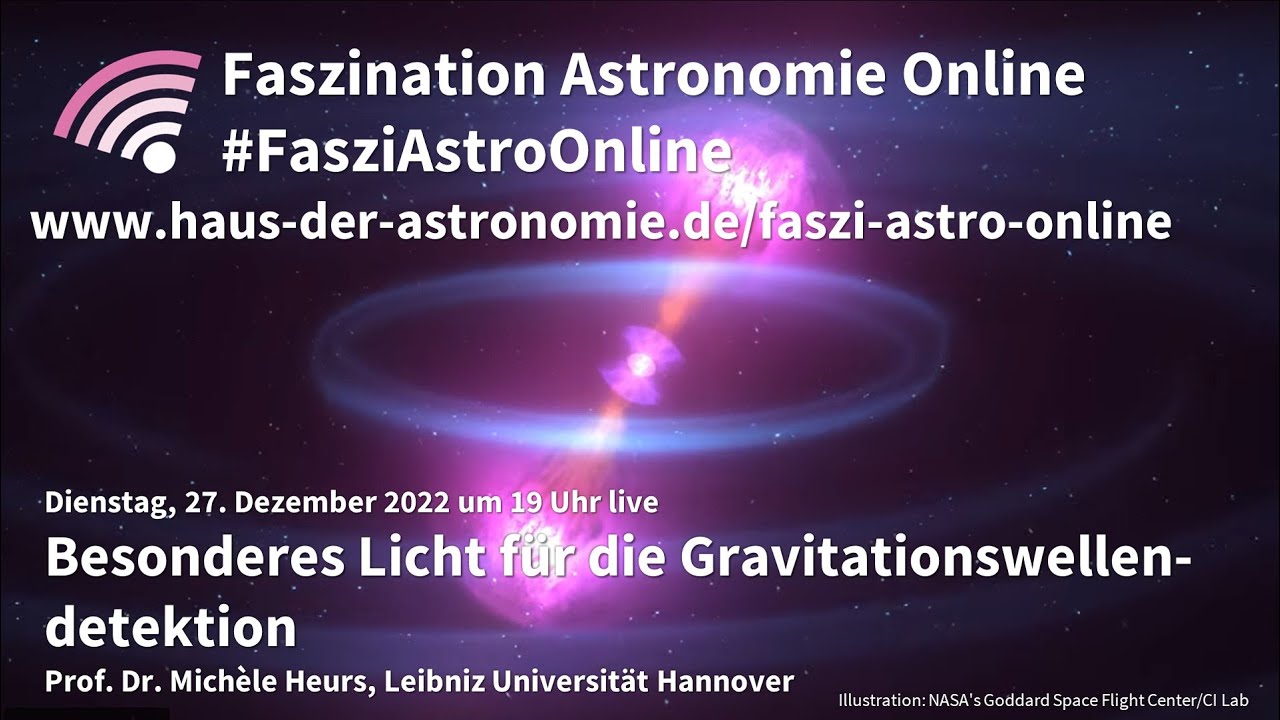

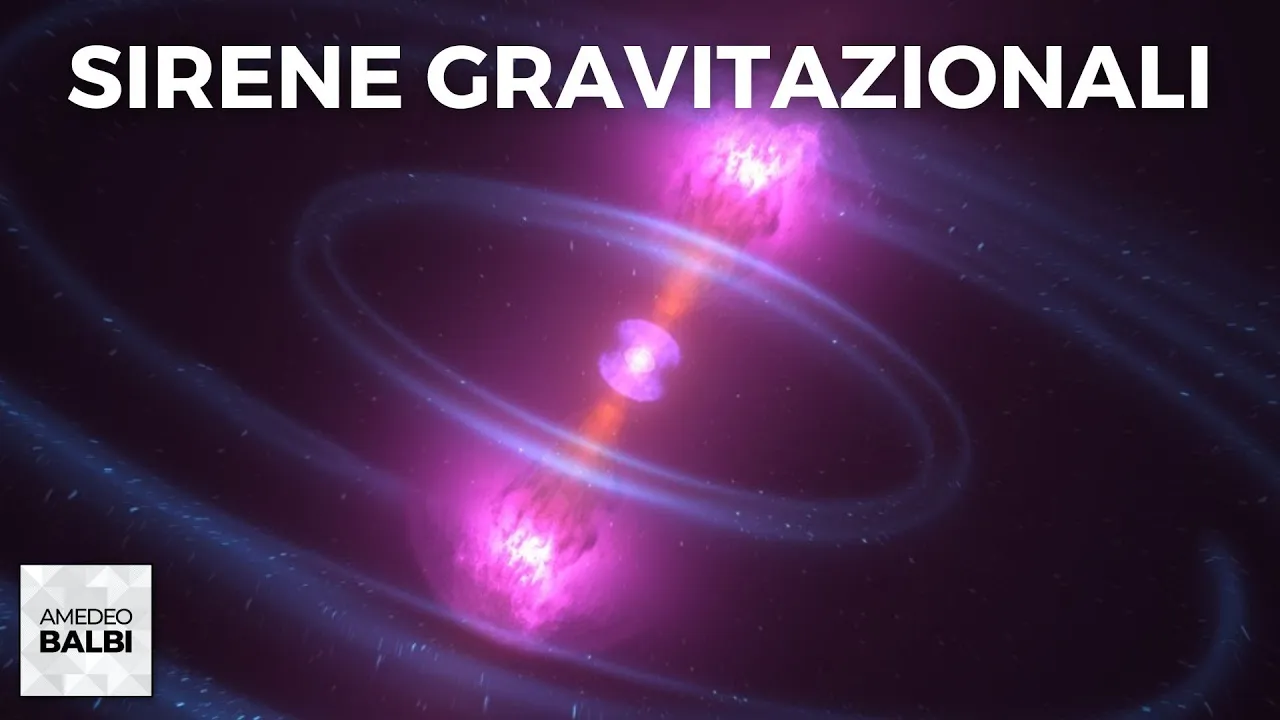


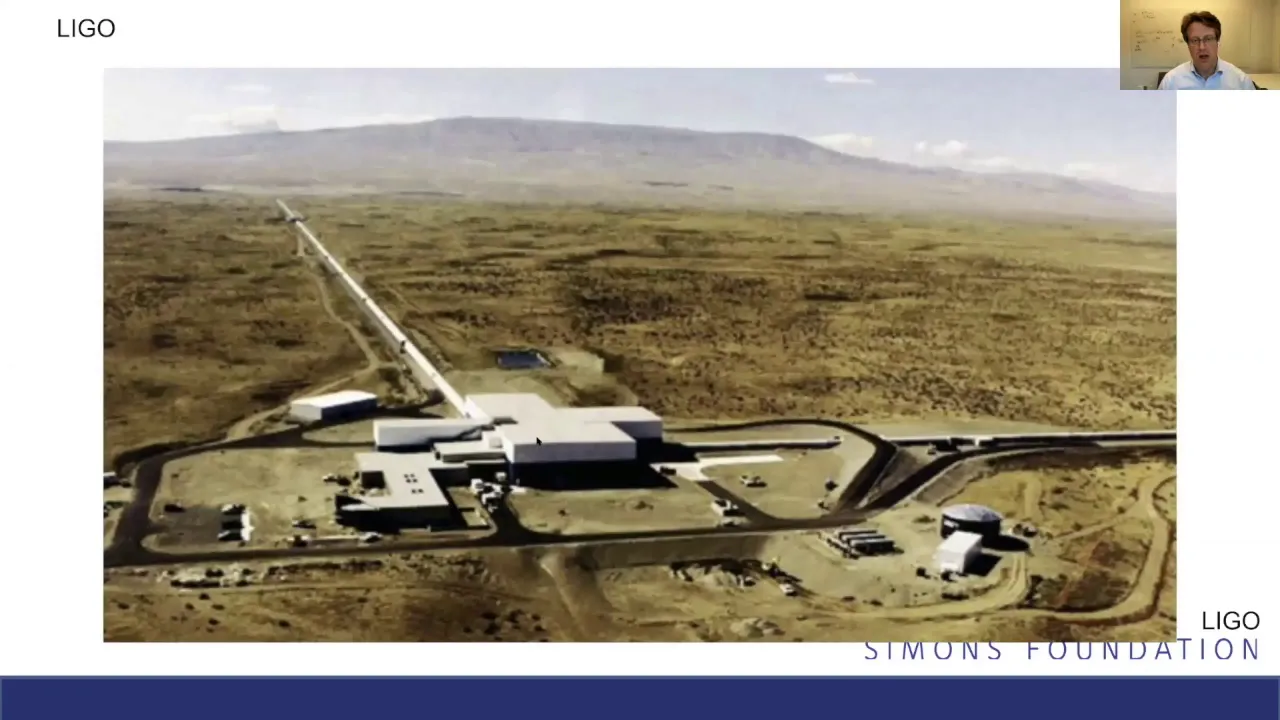
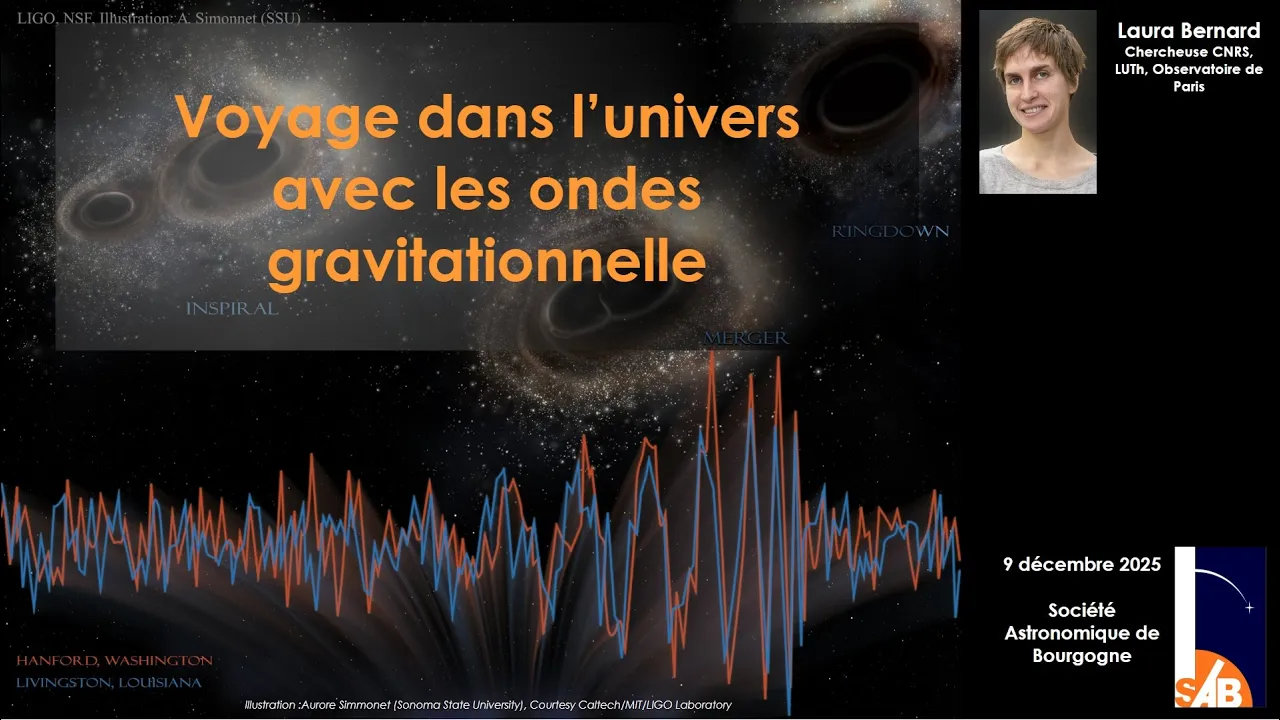

The Laser Interferometer Gravitational-Wave Observatory (LIGO) has directly detected gravitational waves for the first time, confirming Einstein's final major prediction of general relativity; these ripples in spacetime are produced when massive objects like black holes spiral together and merge, with LIGO's advanced sensitivity allowing detection of such events from billions of light-years away, opening a new era of gravitational wave astronomy.
LIGO Detects Gravitational Waves: A New Era for Astronomy
Added:Einstein's Theory of General Relativity, specifically how mass and energy warp the fabric of spacetime.
The theoretical concept of gravitational waves as ripples in spacetime caused by accelerating massive objects, such as binary black hole systems.
The basic principles of wave interference and the operation of a Michelson interferometer.
An understanding of extreme cosmic objects, particularly stellar-mass black holes and neutron stars.
Multi-Messenger Astronomy: How combining gravitational wave detections with electromagnetic observations (like gamma-ray bursts) provides a richer understanding of cosmic events.
Next-generation gravitational wave detectors, such as the space-based LISA (Laser Interferometer Space Antenna) and ground-based Einstein Telescope.
Using gravitational waves as 'standard sirens' to independently measure the Hubble constant and map the expansion rate of the universe.
Testing the limits of General Relativity in the strong-field regime by analyzing the precise ringdown waveforms of merging black holes.
876.7K views17.2Klikes9:31Original Release: 2016-02-11
[MUSIC PLAYING] Some incredibly exciting news today.
Gravitational waves have been directly detected for the very first time.
The Advanced LIGO Observatory has seen the spacetime ripples caused by black holes at the moment of merger.
The existence of these waves is the last major prediction of Einstein's theory of general relativity to be directly verified a century after the theory was first developed.
It opens a whole new window through which we can now observe our amazing universe.
This is one of the most important observations of the century.
On September 18, the Laser Interferometer Gravitational-Wave Observatory switched back on after three years of upgrades.
The new, advanced LIGO is around 10 times more sensitive.
And even conservative estimates predicted that it should certainly detect the passage of gravitational waves, of ripples in the fabric of spacetime caused by extreme gravitational events in the distant universe.
Almost as soon as it was switched on, a signal was seen.
The LIGO team kept very quiet and continued observing.
LIGO has been cautious.
And when here at "Space Time" we realized this was probably the real deal, we were too.
However, soon after the detection, we put together a video explaining what gravitational waves are, how they're formed, and exactly how advanced LIGO detects them.
It's right here.
This is a great time for you to watch it if you haven't already.
That was four months ago.
Since then, ripples from mergers of black hole pairs in distant galaxies have changed the shape of spacetime here on Earth.
Indeed, across the Milky Way.
And LIGO has seen them.
Today I want to talk about what exactly was seen, what it tells us, and what we can expect for the future.
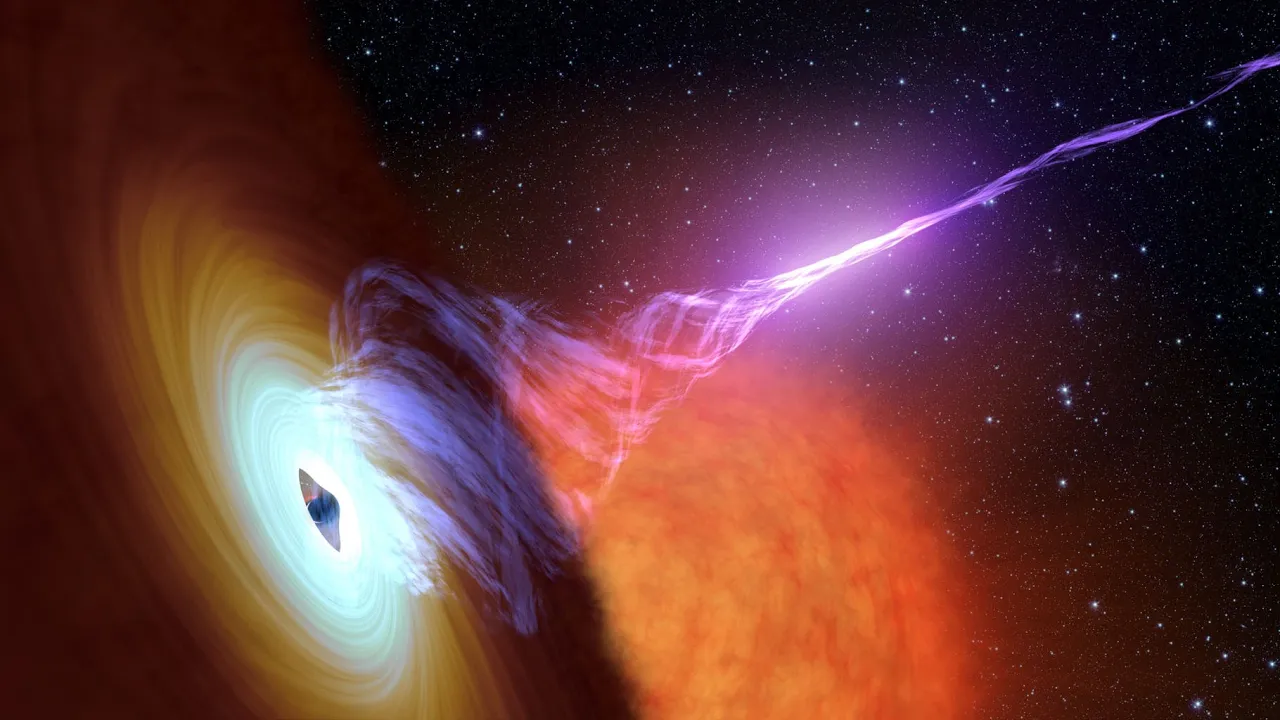
Any orbiting pair of massive objects generates gravitational waves.
But only extremely massive objects, through orbiting extremely close together, produce gravitational waves strong enough for us to detect, at the moment.
Now, LIGO is sensitive to pairs of stellar mass black holes and/or neutron stars.
In both cases, these are the collapsed core of a dead star, stellar remnants.
Now these stellar remnants are sometimes found in pairs, typically when the original stars were also a binary pair in orbit around each other.
These super dense objects produce serious gravitational radiation.
But gravitational waves carry energy, which is sapped from the orbital energy of the system.
As a result, the stellar remnants will gradually spiral in towards each other.
Now we've seen this slow orbital decay in binary neutron stars.
The amount of energy being lost in these systems is exactly what we predict it should be if caused by gravitational radiation.
And so this was a very convincing but indirect verification of gravitational waves.
However, the waves produced when these stellar cores are still distant from each other are far too weak, and have too low of frequency for LIGO to directly detect them.
But as the cores get closer, the gravitational radiation becomes extremely intense.
The in spiral speeds up exponentially.
And the last phase of the merger takes only a few minutes.
In those few minutes, the merging black holes or neutron stars produce such strong ripples in the fabric of spacetime that LIGO can see them out through vast distances.
In the case of merging black holes, to five billion light years.
Now this is really an insane distance, but that's just as well.
These events are incredibly rare.
It's expected that an observable merger of two black holes will happen only once every 10,000 years in any given galaxy.
So we need to watch a lot of galaxies.
Advanced LIGO can feel the ripples produced by merging black holes through a volume of space equal to about 0.1% of the observable universe.
That means we're watching millions of galaxies.
In the case of merging neutron stars, it's a much smaller distance, and so none have been seen yet, although it will happen eventually.
We'll also spot supernova explosions that produce neutron stars.
Stand by for that.
Now these mergers have very distinct signals.
They cause actual physical distances to change.
Spacetime is stretched and squeezed as the wave passes by.
These oscillations have a frequency, number of stretches and squeezes per second, that matches the rate at which the black holes were orbiting each other just before merger.
And we're talking up to 1,000 orbits per second.
OK.
So we saw some black holes merge.
That's pretty cool.
But what can we do with that?
Well, everything else aside, it's a great vindication for Einstein's general relativity.
See, gravitational waves are inevitable if the theory is correct.
And they were the last major prediction not directly verified.
If they weren't seen, it'd be a huge problem.
OK.
So Einstein wins again.
Except that now we have the capacity to do detailed tests of general relativity in a regime previously unavailable, in the regime of extreme gravity.
If the merger signals deviate significantly from the expected signal, then it may be a clue that the theory is incomplete, or even point to a new, deeper theory.
Now as far as I know, there's no indication of that from the detected signals.
However, physicists will be all over this data, looking for holes in the theory for some time.
These observations are going to tell us a ton about how black holes grow and about the physics of black holes themselves.
The signals are expected to carry information about the strange warping of space in the region of the event horizon.
Before long, we will observe one of these mergers simultaneously using multiple telescopes that span the electromagnetic spectrum from radio to visible to X-ray.
And that observation will break open so many mysteries and no doubt reveal further new mysteries.
Now LIGO is sensitive to gravitational waves at frequencies produced by merging black holes and neutron stars, as well as the formation of neutron stars and supernova explosions.
And potentially, even the actual spin of neutron stars.
However, now that we know that these things are detectable, it opens up an entirely new spectrum for observing the universe.
The upcoming Evolved Laser Interferometer Space Antenna-- eLISA-- will see an entirely different part of this spectrum, much lower frequencies, opening the possibility to observe completely new phenomena.
It'll see the slow ringing of binary white dwarf stars in our own galaxy, as well as the final dance of pairs of truly gigantic, supermassive black holes just before they merge in the cores of galaxies.
It's hard to understate this.
This is a really, really big deal, and it marks the beginning of the era of gravitational wave astronomy.
It's a new window on the universe that will reveal phenomena and physics that we never expected.
We'll keep you up to date in future episodes of "Space Time."
In a recent episode, we heated up the debate on the question of settlement of Venus versus Mars by looking at some nice ways to die on both planets.
You guys had some great questions.
TheRealBileth asks, wouldn't Mars' low gravity mess up bones and muscles?
Now this is a really good point that I didn't mention.
In terms of a long-term colony, Venusian cloud cities are going to be much healthier.
Astronauts on the International Space Station lose bone mass at 1% to 1.5% per month, and lose muscle mass also.
It wouldn't be so bad on Mars, but a long-term stay may be very unhealthy.
Venus' surface, or even cloud city gravity, is 90% that of Earth's.
And so the bone and muscle degradation would be minimal.
Laura Lorca wants to know exactly how to build a cloud city.
Short answer.
Balloons.
In fact, a giant balloon filled with atmospheric pressure air would float nicely at around 50 kilometers.
So think a huge dome filled with a breathable atmospheric pressure air, or an even larger balloon base.
It could be tethered to the surface with heat and pressure-resistant cables, carbon inner tube cables perhaps.
NASA is already thinking about small floating missions.
Check out its HAVOC program in the link below.
Fabio Brady would like to know whether Martian sandstorms are really life threatening.
So those sandstorms may be huge, but they're really more dust storms than sandstorms.
The atmospheric pressure is so thin that it doesn't generate enough force to move big stuff.
Not large grains of sand, and certainly not people.
This was a bit of creative liberty taken by the otherwise really awesome movie "The Martian."
Astrophysicist Andy Howell does a great job detailing the sites of "The Martian" in this video.
His channel is really excellent.
[MUSIC PLAYING]
Up Next
40:09
Deriving the Friedmann Equations: Universe Evolution Models
@eigenchris
56.9K views•2022-07-22

12:53
21cm Hyperfine Transition in Neutral Hydrogen: Radio Astronomy Basics
@AaronRobertParsons
12.4K views•2011-10-13
6:59
Understanding Geodesics and Curvature in Spacetime: Clarifying Parallel Transport
@pbsspacetime
341.3K views•2015-07-08

27:14
Entropy and the Second Law of Thermodynamics Explained
@veritasium
27.5M views•2023-07-01
Related Study Plans & Knowledge Roadmaps
Structured learning paths in Physics
physics
Nuclear Physics (Decay, Fission & Reactors)
01Atomic Structure and the Binding Force
02Radioactive Decay and Half-Life
03Nuclear Fission Mechanics and Chain Reactions
+ 2 more learning modules
12h5 modules
Explore Roadmap
physics
Soft Matter (Polymers, Colloids & Rheology)
01Foundations of Soft Matter & Thermal Forces
02Polymer Physics and Macromolecules
03Colloids, Surfactants, and Self-Assembly
+ 2 more learning modules
38h5 modules
Explore Roadmap
physics
Analytical Mechanics: Lagrangian & Hamiltonian
01Mathematical Foundations: Calculus of Variations
02From Newtonian Mechanics to Constraint Dynamics
03The Principle of Least Action & Lagrangian Mechanics
+ 3 more learning modules
28h6 modules
Explore Roadmap
physics
General Relativity (Spacetime & Cosmology)
01Foundations of Relativity: Special Relativity
02The Geometry of Spacetime: Equivalence Principle & Curvature
03Einstein's Field Equations: The Mathematics of Gravity
+ 2 more learning modules
55h5 modules
Explore Roadmap