








![[금융 스터디] 27. 리만기하학의 세팅 / e-좌표계와 m-좌표계](https://i.ytimg.com/vi/wfw0zbWKlaw/maxresdefault.jpg)

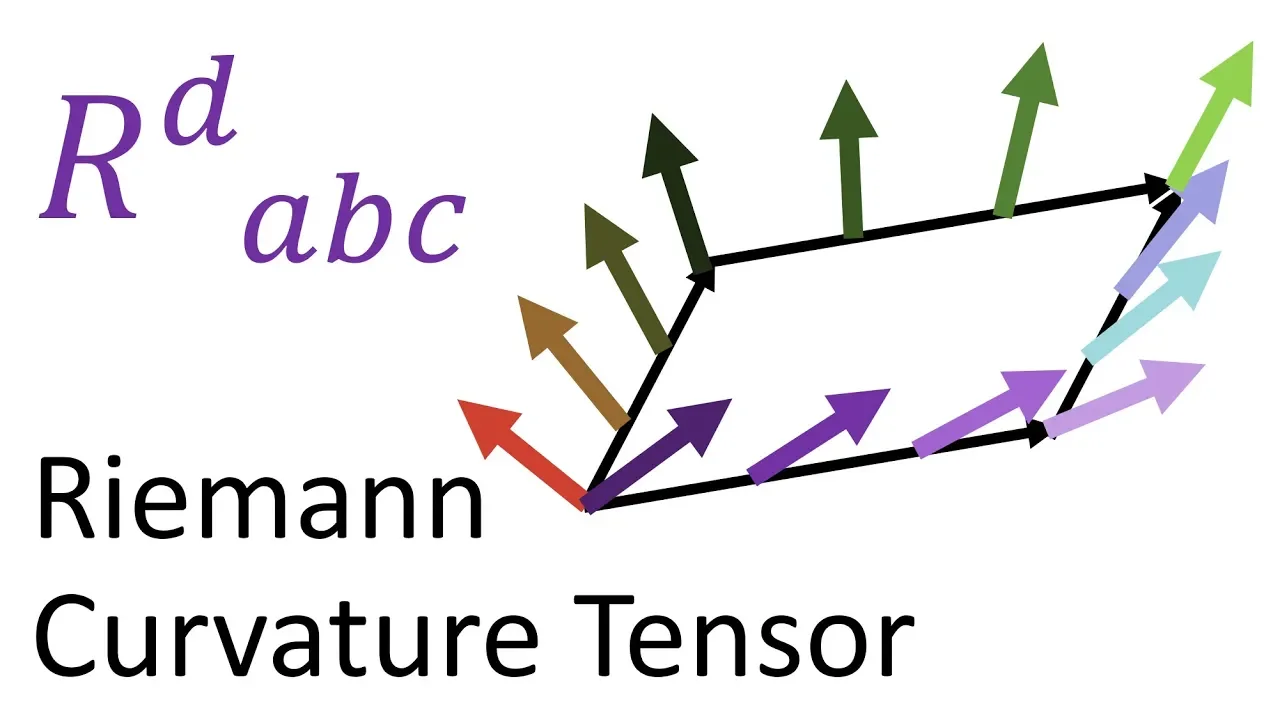
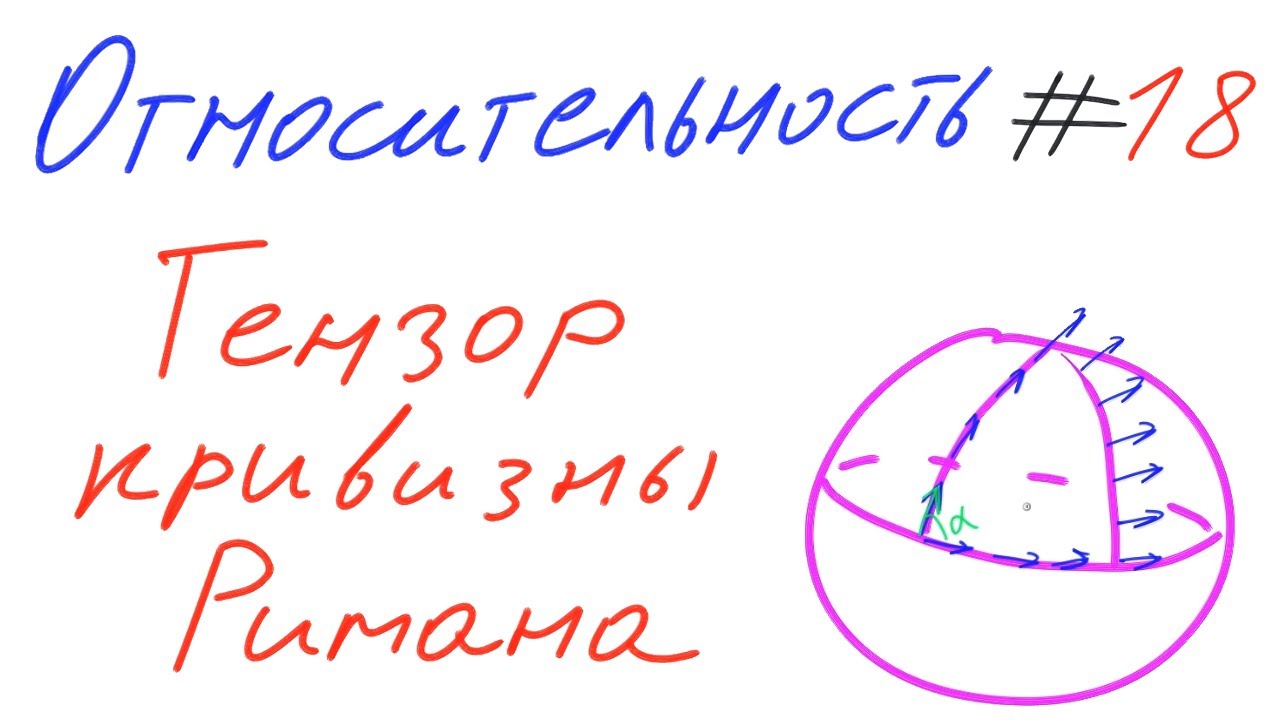
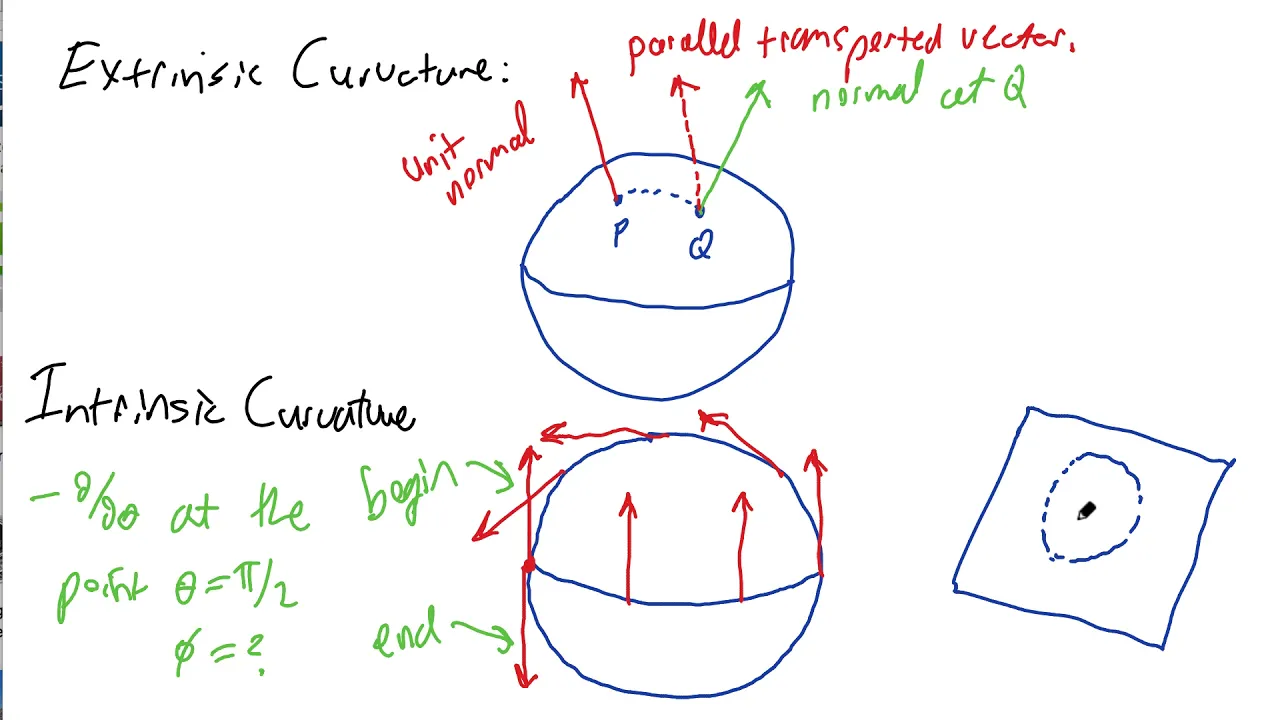




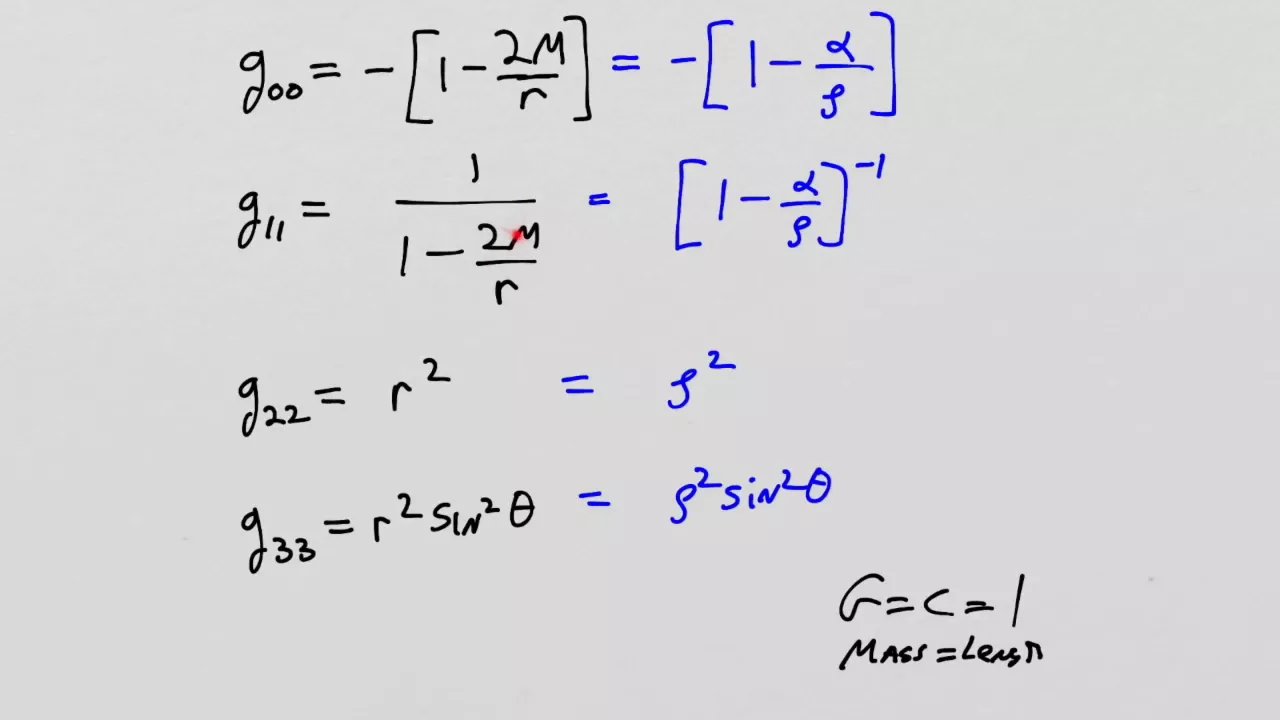
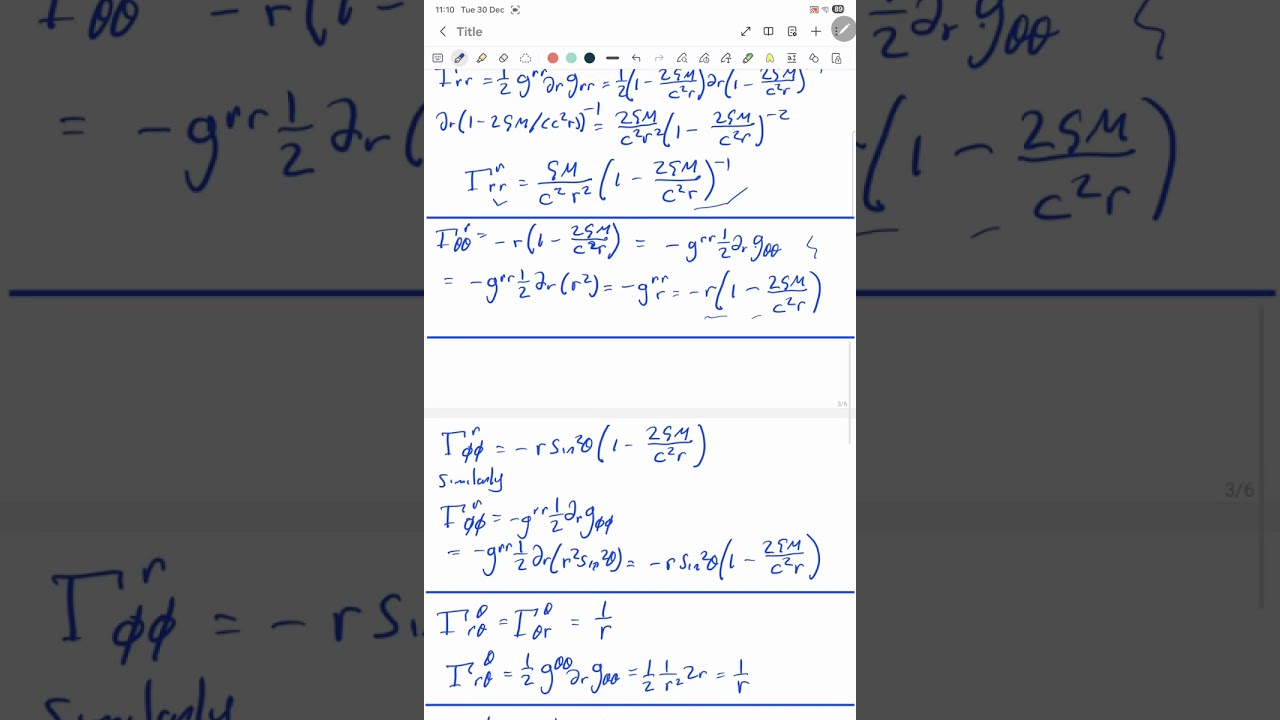


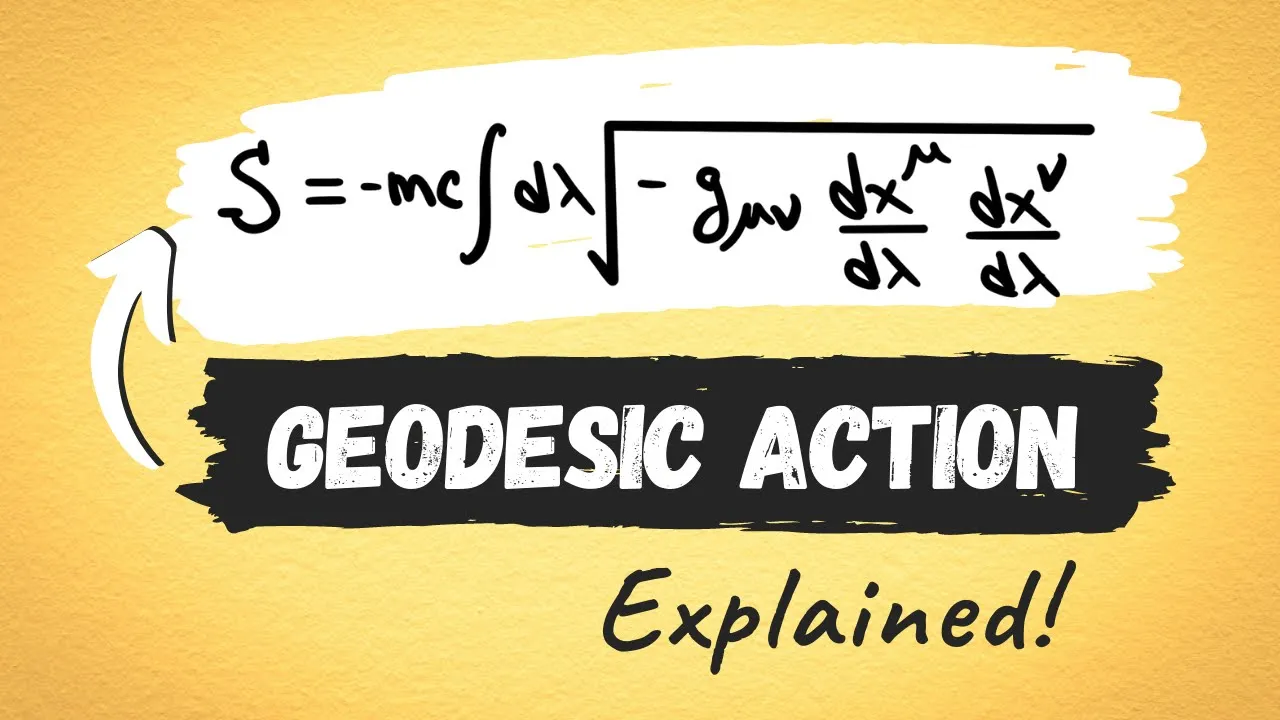
On a curved surface like a sphere, a geodesic is a curve that maintains its tangent vector when that vector is parallel transported along the curve; this can be visualized by imagining an ant moving in tiny patches where the curved surface appears locally flat, sliding the vector while keeping it parallel within each patch and projecting it to the next, which ultimately produces a great circle (a geodesic) rather than a straight line, demonstrating that the surface is intrinsically curved without needing to reference the surrounding 3D space.
Understanding Geodesics and Curvature in Spacetime: Clarifying Parallel Transport
Added:Basic differential geometry concepts, such as tangent spaces and how vectors behave on 2D curved surfaces like spheres.
Introductory linear algebra and vector calculus, specifically vector fields and directional derivatives.
The foundational principles of Special Relativity, including the concept of spacetime as a unified four-dimensional continuum.
The formal mathematical definition of the covariant derivative and Christoffel symbols (affine connections).
The Riemann Curvature Tensor, which quantifies curvature by measuring the path-dependence of parallel transport around closed loops.
Solving the Geodesic Equation in specific spacetimes, such as the Schwarzschild metric, to model planetary orbits and light bending.
The Einstein Field Equations, which mathematically link spacetime curvature to the distribution of mass and energy.
341.3K views4.1Klikes6:59Original Release: 2015-07-08
[Music] hey everybody you guys had a lot of questions and comments regarding last week's episode about straight lines and curve spaces that material is really important to get down visually before we move on to the rest of the relativity Series so today I'm going to step back and take some time to address your questions hopefully in a way that clears things up the question I saw most from you guys in the comments had to do with exactly what tangency and parallel transported vectors mean on the sphere it seems that we weren't entirely clear in the episode and some of you thought that we were being logically circular about what those definitions mean so I think a Hands-On demo might make the logic here a little more transparent first let's clarify what the word tangent means since there's a couple of different ways you could read that suppose I have a vector on the sphere clearly that Vector doesn't lie on the surface of the sphere that's impossible instead it's tangent to the sphere every Vector we ever dealt with in this episode was tangent to the sphere but being tangent to the sphere at this point does not mean that you're tangent to this black curve at this point see that there's an angle between these guys if instead I look at a vector that's pointing like this that is tangent to this curve geodesics are curves that take vectors that are tangent to themselves and keep them tangent when those vectors are parallel transported along the curve we're going to talk about parallel transport now so on a standard basketball this curve right here turns out to be a great circle it's a geodesic let's prove it how do I take this tangent vector and parallel transport him along this curve okay here's a point of confusion this Vector right now is drawn super super long because it'll make it more visible on camera but I want you to imagine that this Vector is actually only very very very short microscopically short but still tangent to the curve now imagine zooming in on this little patch of the sphere if you zoom in on that little patch of the sphere that little patch of the sphere is barely distinguishable from an entire plane that lies tangent to the sphere at that same point the plane in which this little Vector actually lives so the idea is that in a tiny little patch of the sphere the ant can pretend that he's instead living on the plane that's tangent to the sphere and in that plane he knows exactly what it means to parallel transport a vector so suppose he parallel transports the vector a tiny tiny amount and then projects back onto the plane makes another little patch and does the same thing he ends up and now I'm going to blow up the vector again to make it more visible sliding and projecting down sliding and projecting down sliding and projecting down suppose that he breaks up the trajectory from here to here into a th000 steps and does that process then he repeats it breaking it up into 10,000 steps then 100,000 steps then a million steps every time taking very very very small vectors and smaller and smaller and smaller patches drawing the curve out on the sphere that he generates through this process in the limit he will end up producing this great circle and whatever curve you generate in that limit is what we mean by a geodes on the sphere let's contrast that situation with what happens along this curve on the basketball which is not an arc of a great circle and thus not a geodesic this time I want you to pretend the curve is already drawn and the Ant is going to take this vector and try to parallel transport it along that curve if he uses the same rule as before moves in small patches and pretend that he lives on a plane within each patch and uses a billion small patches as he slides that Vector around and follows the same procedure but keeping it in the same direction that it was before this guy does not stay tangent take a look here's the larger Vector Starts Here parallel transporting it would do this and that is not tangent tangent would look like this but it ends up like this so therefore that's not a geodesic in fact suppose that the ant at this location takes a great circle going through that same point that is tangent to this curve at that point even in that little patch it will be able to tell that the curve deviates away from that tangent geodesic in other words even on very small patches you can tell that this Arc is curved and not straight in the same way that you could with a comparable Arc living on the plane even plane wise and patch-wise this is not a straight line it is not a geoda let me respond to a few more specific comments you guys had David shei and S B skate were both asking how the dimensionality of the ambient space in which the surface of the sphere is embedded namely the 3D ambient space affects the discussion of curvature on the sphere here well it doesn't the ambient space is just there as a visual aid for you but everything we've been discussing is intrinsic to the sphere itself for instance the surface of Earth you can tell is curved by following the same procedure the ant does patch by patch lay down a regular XY grid like you do in math class try to parallel transport a vector along a curve keep sliding your patch along and remaking a grid if you take a vector and go from New York to Los Angeles and then slide back along some other curve you'll realize that the vector you get back at New York isn't parallel to the one you started with therefore you can determine just by living on Earth's surface that earth's surface is a curved space there is one point where I did mention the ambient 3D space but only intrinsically to talk about parallel transport in a 3D space neop pic windfire pointed out that we did that at minute 7 in our parallel transport video in that point in the video the Earth that was shown was supposed to be the physical three-dimensional Earth and we were taking a vector and moving it along a circle in orbit around the Earth if you wanted to know if the three-dimensional space around Earth is curved you would follow the procedure of using ukan three-dimensional rules to parallel transport that Vector around a circle and see if you end up with the same Vector you started with if you do then the 3D space around Earth is flat but if you don't then the 3D space around Earth is curved finally akan Joshi asked how can two geodesics actually converge or diverge in a curved space but clarify the question the real question is whether two parallel geodesics or initially parallel geodesics can converge or diverge if they do you know your space Cas is curved here's a demonstration take two lines that are at the equator of Earth and both pointing North two line segments those are both going to lie along a line of longitude they're initially parallel now follow that those two lines of longitude and eventually you'll see that they converge at the North Pole even though neither person on those trajectories turned they were both geodesics the fact that they do converge eventually is another indication that the surface of a sphere is curved I hope this explains away some of the confusion you guys were having regarding geodesics and curved spaces I wanted to make this was on better footing before we moved on to Flat SpaceTime geometry in the next episode remember after that we'll be putting the Notions of curvature and flat space time together to discuss what curve SpaceTime is what the curves and vectors in that space mean and how it helps explain way in Newtonian gravity all that will be coming up in the forthcoming episodes of SpaceTime [Music]
Up Next
54:27
Optical Turbulence Effects on Laser Beam Propagation
@SPIETV
268 views•2025-04-25

12:53
21cm Hyperfine Transition in Neutral Hydrogen: Radio Astronomy Basics
@AaronRobertParsons
12.4K views•2011-10-13
9:31
LIGO Detects Gravitational Waves: A New Era for Astronomy
@pbsspacetime
876.7K views•2016-02-11

27:14
Entropy and the Second Law of Thermodynamics Explained
@veritasium
27.5M views•2023-07-01
Related Study Plans & Knowledge Roadmaps
Structured learning paths in Physics
physics
Nuclear Physics (Decay, Fission & Reactors)
01Atomic Structure and the Binding Force
02Radioactive Decay and Half-Life
03Nuclear Fission Mechanics and Chain Reactions
+ 2 more learning modules
12h5 modules
Explore Roadmap
physics
Soft Matter (Polymers, Colloids & Rheology)
01Foundations of Soft Matter & Thermal Forces
02Polymer Physics and Macromolecules
03Colloids, Surfactants, and Self-Assembly
+ 2 more learning modules
38h5 modules
Explore Roadmap
physics
Analytical Mechanics: Lagrangian & Hamiltonian
01Mathematical Foundations: Calculus of Variations
02From Newtonian Mechanics to Constraint Dynamics
03The Principle of Least Action & Lagrangian Mechanics
+ 3 more learning modules
28h6 modules
Explore Roadmap
physics
General Relativity (Spacetime & Cosmology)
01Foundations of Relativity: Special Relativity
02The Geometry of Spacetime: Equivalence Principle & Curvature
03Einstein's Field Equations: The Mathematics of Gravity
+ 2 more learning modules
55h5 modules
Explore Roadmap