





















Community Land Trusts (CLTs) are nonprofit organizations that acquire and manage land democratically to protect culturally significant neighborhoods from gentrification; they operate through a tripartite governance structure with equal representation from residents, surrounding community members, and government/expert stakeholders, and can leverage community bonds as a social finance tool to raise capital for property acquisitions while ensuring long-term affordability and community control over neighborhood development.
Community Land Trusts: A Solution to Gentrification
Added:The socioeconomic drivers and consequences of gentrification and urban displacement.
Basic principles of real estate economics, specifically the distinction between the value of land versus the value of physical structures built on it.
The systemic causes of the affordable housing crisis in modern metropolitan areas.
Fundamentals of urban planning, zoning laws, and how municipal policy shapes local neighborhoods.
The legal and operational structure of a Community Land Trust (CLT), including ground lease agreements and resale price formulas.
In-depth case studies of successful CLTs, such as the Champlain Housing Trust or the Dudley Street Neighborhood Initiative.
Financial models and funding mechanisms required to scale CLTs, including public subsidies, philanthropic capital, and tax policies.
Comparative analysis of alternative housing models, such as limited-equity cooperatives (LECs) and municipal social housing.
1.5M views60.5Klikes13:00Original Release: 2023-10-15
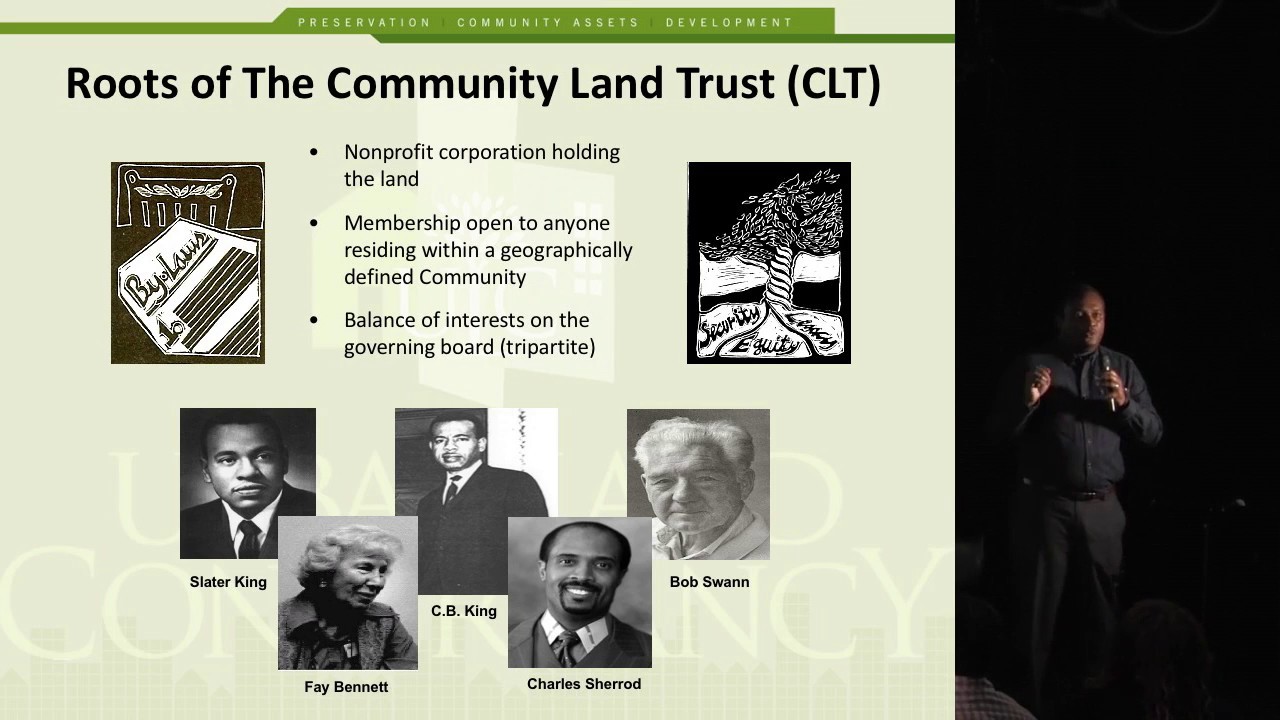
Kensington Market is one of the most culturally significant neighborhoods in Toronto it's a chaotic mixture of over 30 different cultures expressed through it shops artwork music and food all crammed into a 4x4 block area squeeze all of Toronto's cultures into one neighborhood and it might look like this how did it happen well it all started with immigrants moving here and saying youa zoning by laws in the early 1900s Jewish newcomers moved here and began to open stores in their Victorian houses selling everything from produce and milk to deli meats and live chickens in the following decades the neighborhood welcomed wave after wave of new immigrants including Italians ukrainians afro Caribbeans pugu Indians Chinese Koreans who also said the zoning bylaws and also set up businesses in their houses and over the years this law bending Melting Pot of cultures proved to be an ideal home for other Renegade groups as well like queer artists hippies and [Music] punks basically if you weren't your typical whitebred Canadian this was a welcoming Community for you today this history has made Kensington Market a beloved neighborhood that symbolizes Toronto's diversity and entrepreneurial spirit it's been featured in music videos TV shows documentaries it was designated a National Historic Site and it even has its own Heritage minut it by bringing newcomers shoulder-to-shoulder to build new lives together the reason I bring this up is because Kensington Market is changing and not like in the ways it's changed before people love it today which of course means so does the real estate and tourism industry property values in Kensington Market have skyrocketed resulting in a ton of Redevelopment pressure increasingly unaffordable rents and short-term rentals like airbnbs displacing longtime residents but this change isn't just affecting renters either commercial rents have sometimes tripled overnight leading to many historic small businesses and grocery stores closing to make way for trendy shops restaurants and way too many weed stores for some reason there have even been proposals to introduce a Starbucks a la bla or a Walmart here Kensington Market story isn't uncommon there are culturally significant neighborhoods all across North America today facing Market pressures that threaten to erase the community that made it so valuable in the first place and I'll be honest with you I used to think that there's not much you can do about this sort of change neighborhoods evolve and sometimes they become viral influencer tourist traps but what's happening here in Kensington Market is kind of changing my [Music] mind our story Starts Here 5456 Ken inton Avenue in 2018 this property was bought by investors to be turned into a weed themed Airbnb and the 12 tenants living here were given 3 months to vacate the building but this is where the story takes a turn you see there was a ton of push back from tenants and the broader Community about this eviction which pressured the new owners to eventually put the property back up for sale and that is when a nonprofit group called The Kensington Market Community Land Trust bought this building today 5456 Kensington Avenue is owned by this nonprofit organization who manages the land and building and guarantees its long-term affordability okay great we saved one property but that's just a drop in the bucket what about the rest of the neighborhood what are they going to do buy up all of Kensington Market well kind of you see the main reason why Kensington Market Community Land Trust exists is to acquire properties in Kensington Market for the community whenever a property comes up for sale in this neighborhood this organization will make an effort to acquire it rather than see it sold off to another private buyer and with each new property the Community Land Trust gains a larger and larger voice over how their neighborhood changes in fact they're currently working on more properties right now like this parking lot at 25 bellw Avenue the plan here is to use that land to build non-market housing but this isn't just happening in Kensington Market Community lust are increasing ly being used to protect culturally significant neighborhoods all across North America take Boston's Chinatown the downtown east side in Vancouver the Bronx in New York Toronto's Chinatown San Jose Harlem New York the Parkdale neighborhood in Toronto Lan Square in Chicago Atlanta and many many other neighborhoods people are forming Community Land trusts to acquire properties in response to real estate pressures so that begs the question what even is a Community Land Trust in the broadest sense Community Land Land Trust are nonprofit organizations that Acquire and manage land at the direction of their membership which is typically open to Residents and other stakeholders that membership decides on what their Community needs and uses their land to address those needs for example if the neighborhood needs more affordable housing they could lease some of the land to a co-op or nonprofit housing provider if they'd like to support arts and culture they could develop Studio spaces or performing venues if the goal is to celebrate Toronto's natural Wildlife they could build a a raccoon ping Zoo hypothetically the point is it's up to their membership so how does that membership make decisions well a community land trust is kind of run like a mini democracy its members elect a board who make decisions for the land trust and that board is typically required to have representatives from different stakeholder groups a common governance structure is the tripartite model where one-third of the board needs to be made up of residents inside theant properties a third made up of members from the surrounding community and a third made up of government officials housing experts and other stakeholders getting this balance of power right is key because it ensures that a Community Land Trust doesn't only act in the interest of any one stakeholder this isn't a glorified nimi group I think that's what makes Community Land Trust such a promising idea for neighborhoods facing gentrification through its governance structure and ownership of land a Community Land Trust can serve as a way for all members of a community to have a say over its future not just those who can AFF to buy property that also makes a community land trust a very formidable advocacy group because they regularly engage with neighborhood stakeholders Community Land trusts hold a ton of soft power locally even if they don't hold a ton of land take for example the Parkdale Neighborhood Land Trust in Toronto for a while it owned just three properties in Parkdale but ended up being a major voice for the neighborhood publishing policy papers conducting research on neighborhood issues and regularly organizing residents through various committees classes and other initiatives just last year the city of Toronto transferred 81 single family home properties into their portfolio finally I should add that Community Land trusts aren't just for addressing gentrification it can ultimately be formed by any group of people who want to come together to acquire land and make decisions for what happens on it in fact the First Community Land Trust called new community Inc was formed by civil rights activists in the 1960s their mission was to provide stable housing and farming land for black residents in Georgia who are being evicted and persecuted for participating in the Civil Rights Movement today it owns 1600 acres of land just outside the city of Albany in Vancouver a new Community Land Trust is being used to write historical wrongs as the city prepares to tear down these viaducts part of the lands left over will be leased to the Hogan's alley Society a community land trust for the city's black community many of whom were displaced by the construction of these viaducts in the' 60s today that Community Land Trust plans to develop housing shops and a black Cultural Center on their new property and in Owens Sound Ontario a community land trust is working to address both the housing and climate crises the Glassworks Cooperative holds 46 acres of land in a community land trust and plans to use that land to build a net zero Community with affordable housing Economic Development projects and environmental programs so Community Land trusts are clearly a powerful organizing tool for a variety of reasons but I want to address the elephant in the room here how how do you pay for all this if you haven't figured it out by now the largest challenge for a community land trust is getting the land in the first place it either has to be donated provided by the government or bought for the Kensington Market Community Land Trust they were only able to acquire 5456 Kensington Market because of a $3 million forgivable loan from the city of Toronto through Section $300,000 Prime $50,000,000 $50,000 in affordable housing grants 3.2 million doet acquiring properties is a ton of work and doing this for every property in Kensington Market would be a massive Endeavor there are no shortcuts here but the reality is that there are no shortcuts when it comes to addressing gentrification it's a complicated topic with so many differing opinions while Kensington Market and other culturally significant neighborhoods are valuable to so many people preserving that value is often at OD with the private real estate market that they're a part of so though it might not be easy the most effective solution I can think of is supporting nonprofit organizations like Community Land Trust to acquire the land outright taking it outside of a system that prioritizes profit and into a system that prioritizes the community if we can do it for parks and churches maybe we can do it for this one of the ways that we can support Community Land trusts acquire more more properties right now is through a social Finance tool called Community bonds which one of our partners tapestry Community Capital specializes in a bond is like an IOU where an organization borrows money and Promises to repay it plus interest at a specific date a community bond is a bond that helps a nonprofit pursue its Mission like a regular Bond the nonprofit is borrowing the money and commits to paying it plus interest but unlike regular bonds Community bonds aren't just about making a financial return they're also about soci cultural and environmental returns for example in the case of Kensington Market Community Land Trust a person would invest their money in the organization not just to collect interest but to see their money making a tangible impact in their own Community like making sure Kensington Market Remains the unique and interesting place that it is and because they offer more than just a financial return nonprofits can ask to borrow money with lower interest Community bonds can be a really effective tool for a community land trust for a couple reasons first off a Community Land Trust almost always needs to take out a loan anyways to buy properties a community Bond lets them set out their own terms for how they'd like to borrow money and pay out interest to their supporters instead of a traditional lender keeping the wealth within their own Community second most people already invest money in mutual funds stocks or cryptocurrencies anyways so I think the option to invest that money in a local cause you really believe in that benefits your community instead would be a pretty compelling idea to a lot of people Community Land Trust might not always start with a ton of money but they almost always start with a lot of community support and through Community bonds they can turn that Social Capital into actual Capital to acquire more properties the Kensington Market Community list is actually preparing to launch their own Community Bond offering right now to develop a fund to acquire more properties and scale up their work if you'd like to sign up to be on their interest list visit km c.ca and if you're curious about Community Bonds in general check out tapestry Community Capital I want to leave the final word for this video with ch Tam from the Kensington Market Community Land Trust Kensington Market is changing it's going to keep on changing we're not here to freeze this neighborhood in time but that change right now is disproportionately being shaped by people who have massive amounts of money and property already I believe and a lot of us believe that kington market is interesting and weird because it's a place where new generations of businesses and artists have come to try out their ideas it's affordable enough for them to do so the renters businesses artists and other folks who don't have the means to own property and that's why we started a community land trust is because we believe that those people deserve to shape this neighborhood too we don't have to only fun when we we do need to Insurance the night walk in the were made for [Music] cars sh
Up Next

9:20
Sampling Pre-1926 Music: A Producer's Guide to Public Domain
@Verysickbeats
13.8K views•2026-01-03

5:07
Impact of Yuan in Indo-Russian Trade Amid Sanctions
@WION
261.9K views•2022-07-01

10:33
Behavioral Economics Explained: Rationality, Nudges, and Risk
@crashcourse
1.1M views•2016-03-12

113:18
The Age of Easy Money: Fed & Inflation | Full Documentary
@frontline
21.2M views•2023-03-15
Related Study Plans & Knowledge Roadmaps
Structured learning paths in Economics
economics
Sovereign Debt: Defaults, IMF & Restructuring
01Introduction to Sovereign Debt & Government Bonds
02Debt Sustainability & Credit Ratings
03Anatomy and History of Debt Crises
+ 2 more learning modules
12h5 modules
Explore Roadmap
economics
Market Design: Matching Theory & Gale-Shapley
01Introduction to Market Design and Price-Free Markets
02Two-Sided Matching & The Gale-Shapley Algorithm
03School Choice Systems and Mechanism Design
+ 2 more learning modules
10h5 modules
Explore Roadmap
economics
Impossible Trinity: Forex, Capital & Policy
01Introduction to Monetary Policy and Central Banking
02Exchange Rates and International Capital Flows
03The Mundell-Fleming Model
+ 2 more learning modules
8h5 modules
Explore Roadmap
economics
Healthcare Economics: Market Failures & Systems
01Introduction to Healthcare Markets and Market Failure
02Asymmetric Information and Adverse Selection
03Moral Hazard and Insurance Design
+ 2 more learning modules
12h5 modules
Explore Roadmap