










![Что такое точки Лагранжа? [Fraser Cain]](https://i.ytimg.com/vi/Lx7PbmYV6HE/maxresdefault.jpg)




![NAJWIĘKSZA GWIAZDA! - Universe Sandbox 2 #5 [PL]](https://i.ytimg.com/vi_webp/PsZi1B8MrFk/maxresdefault.webp)
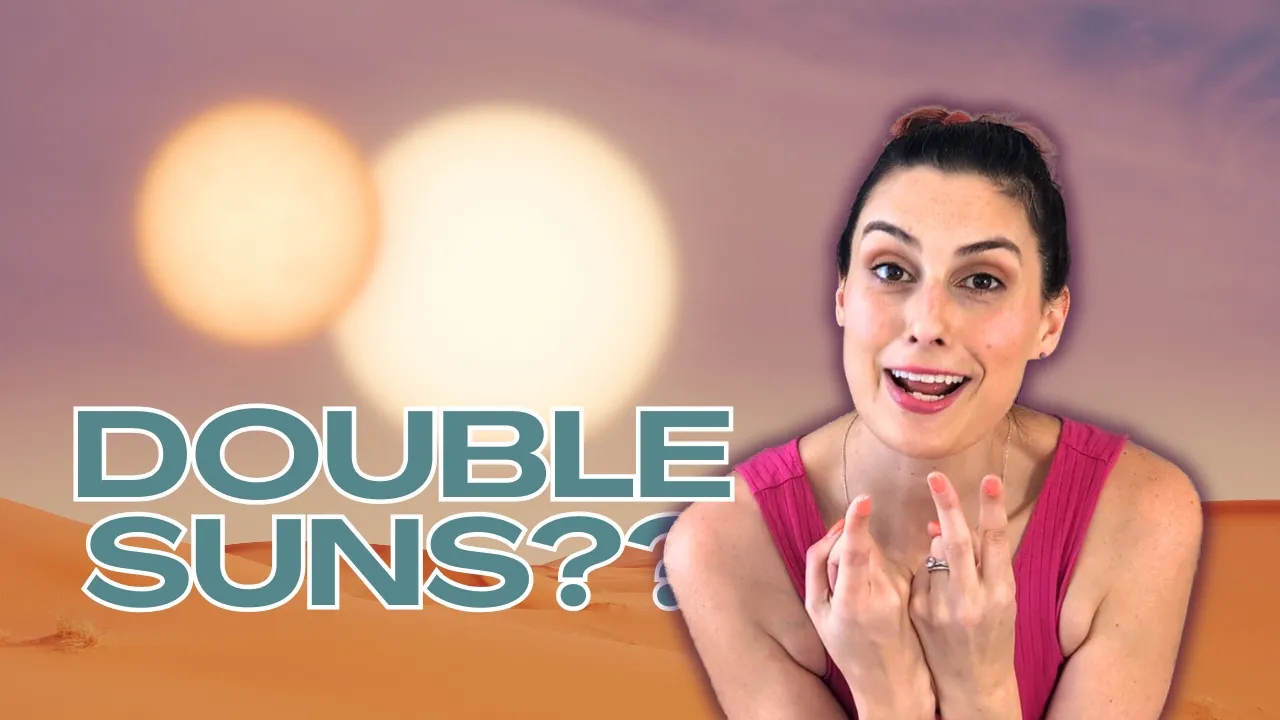
The three-body problem is a fundamental challenge in physics where three gravitating objects interacting with each other typically form an unstable, chaotic system that breaks apart over time, unlike the stable two-body systems (like Earth-Sun or Earth-Moon) that can be solved using Newtonian mechanics or quantum formulations; while some stable solutions exist, most configurations are inherently unstable, making long-term prediction extremely difficult.
Three-Body Problem Physics: Chaos, Stability, and Orbital Dynamics Explained
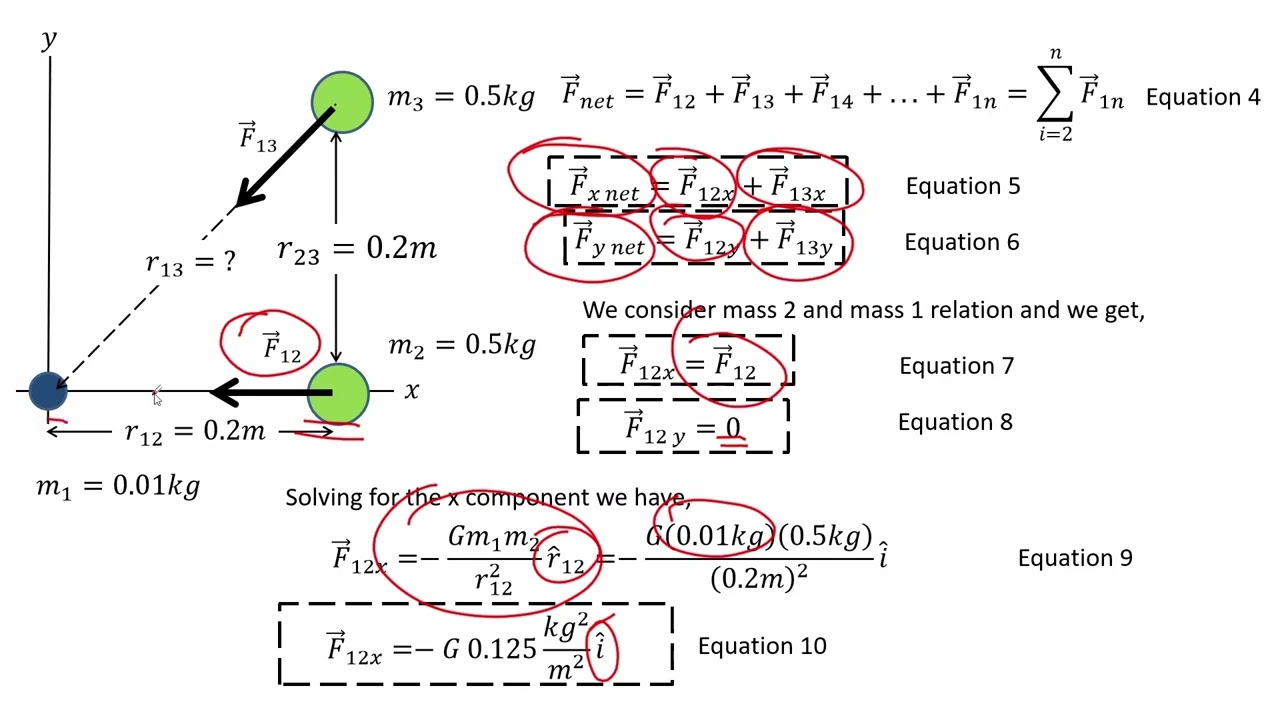
Added:Newton's Law of Universal Gravitation and how gravitational force vectors govern the motion of masses.
The Two-Body Problem and Kepler's laws of planetary motion, which provide the analytical baseline for stable orbits.
Basic classical mechanics, specifically Newton's laws of motion and the concepts of conservation of energy and momentum.
The fundamentals of ordinary differential equations used to model physical systems over time.
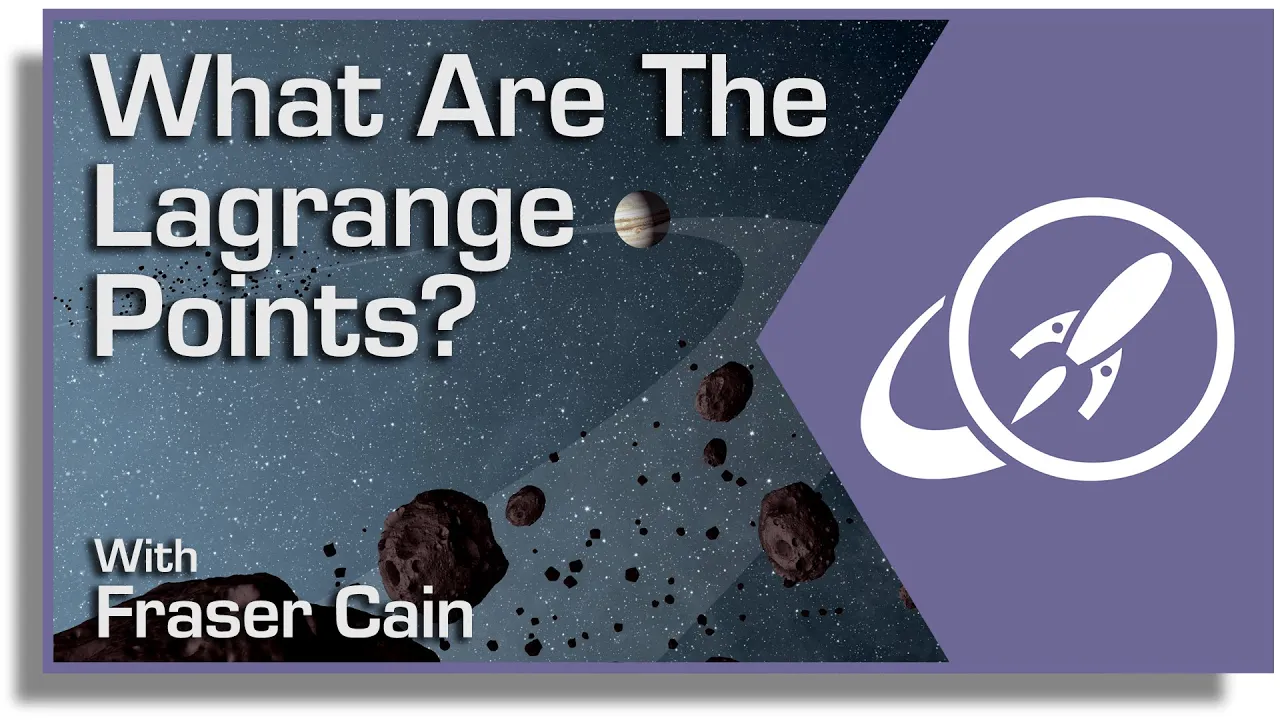
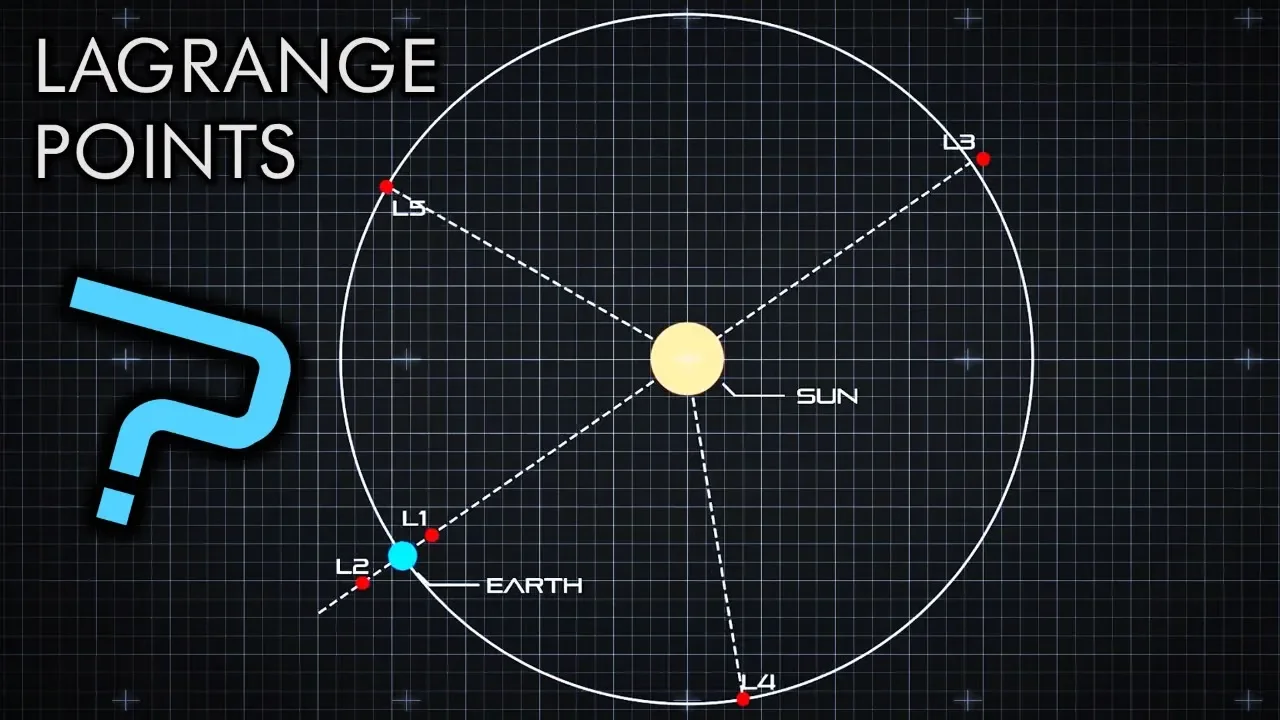
Lagrange Points (L1 through L5) and their practical applications in space exploration and satellite placement.
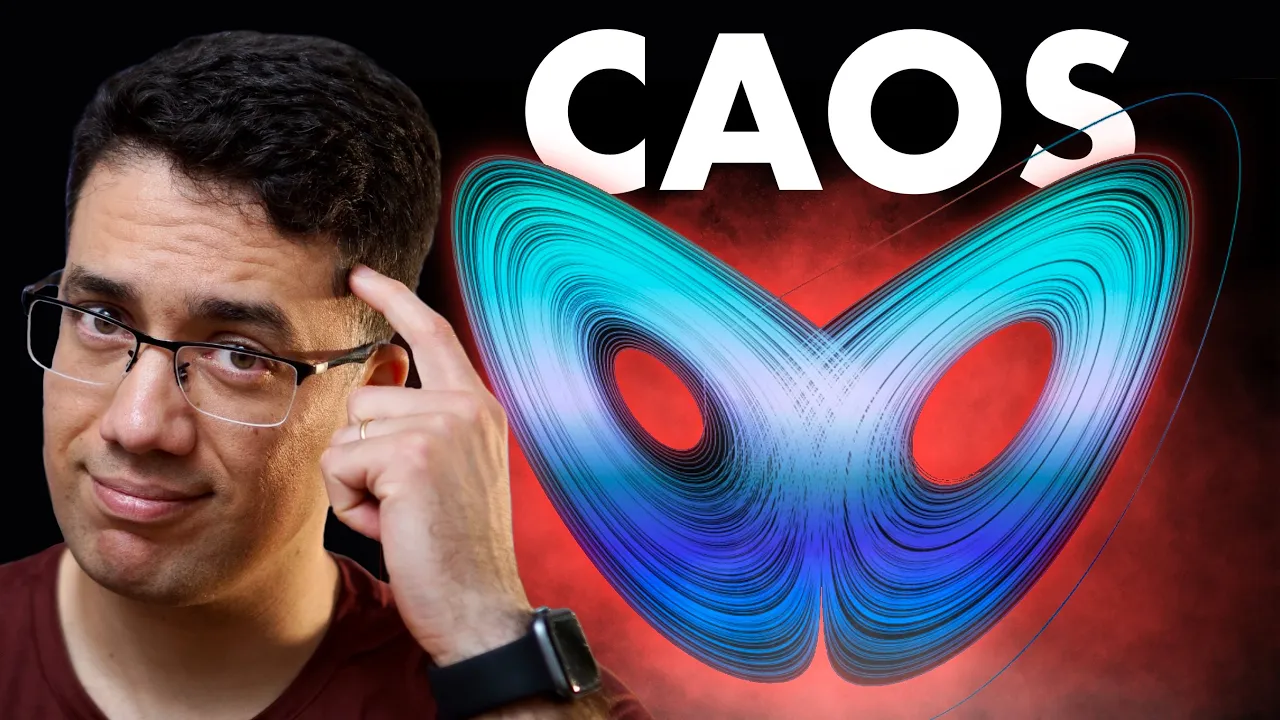
Chaos Theory and the mathematics of dynamical systems, focusing on sensitivity to initial conditions (the butterfly effect).
Numerical integration methods (such as Runge-Kutta or Verlet integration) used to simulate N-body systems computationally.
The Restricted Three-Body Problem and its relevance to binary star systems and exoplanetary orbital stability.
15.9K views570likes5:10Original Release: 2025-04-18
Have you watched Netflix threebody problem? Is this a real phenomenon? So I have read the book a long time ago when it first came out. The first book, the threebody problem by Chikshin Leu, a Chinese uh science fiction writer. Great book, very very good book. And uh recently a Netflix thing came out, documentary, not documentary series, right? I think I saw a couple of episodes of that. And uh so what is the threebody problem is the question. Is it a real phenomenon?
So the threebody problem is a bound state problem. It's a Newtonian bound state problem. So bound state problems can be solved in a variety of ways. You can use if it's the earth moon system for example or the earth sun system you can just use Newtonian mechanics to calculate the orbit and all that calculate the size of the orbit the periodicity of the orbit and so on so forth we have Kepler's laws which are out of Newtonian mechanics celestial dynamics and so on you can compute orbits and trajectories and whatnot using the Newtonian uh using Newtonian physics you can also or actually solve the shoddinger equation for the earth sun system or the earth earth moon system using a gravitational potential okay that is complicated I'll not go into that sounds complicated you don't know what a gravit gravitational potential is and so on but you can actually you solve this bound state problem not using Newtonian mechanics but using the quantum formulation the shroinger equation that also works but it's bound state problem earth sun or earth moon. Now instead of a two-body problem earth sun let's say we solve we try to solve a three-body problem somewhere in space there are three gravitating objects they are close to each other which means they feel the pull of each other's gravity so it's not a bound state of two objects two gravitating objects it's a bounce state of three gravitating objects that's the threebody problem now that is something that typically doesn't have a stable solution there are a few stable solution solutions. But most solutions are unstable solutions which means that the bound state the bound state is unstable.
It breaks up. It will evolve for a time and then it will break up. It is unstable. So it is a bounce. So it's not a bound actually. Now there are a bunch of solutions that and and it's very difficult. It's a very chaotic system.
It's very hard to to dig to find solutions uh from the Newtonian perspective. Now, if you want to see what some solutions look like, I could do that.
Um, okay. So, this is an image that represents a few table solutions to the three-body problem. As you can see, each of these of these uh images represents a threebody system and it has stable solutions which means that the bound state remains stable. It doesn't break up. What does it mean by for a bound state to break up? It means that one one or more of these objects will fly off into space and not return together, not come back into the into the system. So these systems that you're saying these solutions are stable solutions and they can persist indefinitely and recently I believe uh some meth some some physicists or mathematicians derived a whole bunch of more solutions maybe 12,000 or so solutions to this threebody problem. So overall it's a it's a chaotic and unstable system and that's the premise behind this this uh the science fiction book and the series the threebody problem. So yes is it a real phenomenon? Yeah you take three bodies three objects gravitating objects of reasonably similar masses you're going to have a chaotic system which typically will break up over time.
So it's a real phenomenon but the the what what whatever else is depicted in the story in the science fiction story the the the unfold of photon and all that that is in the realm of science fiction for sure. Okay. So we don't know we don't know if a proton can be unfolded. The premise is that there are lots of hidden dimensions, multiple dimensions. String theory premise, maybe maybe 10 dimen dimensions, maybe 11, maybe 26 dimensions. And maybe this alien civilization has has the technology to unfold the dimensions and engineer the inside of a of a proton. So that sort of thing. And then there is some stretching of act of of quantum mechanics in there. when they when they say that you can uh you can have a quantum entanglement in which there is transmission of information that is not right. So that it's not how it works.
Some of it is is fiction.
Up Next

9:10
The Three-Body Problem: Chaos Theory and Stellar Dynamics
@elizadiggins
180.6K views•2022-11-15

12:53
21cm Hyperfine Transition in Neutral Hydrogen: Radio Astronomy Basics
@AaronRobertParsons
12.4K views•2011-10-13

32:32
NMR Spin Physics I: Zeeman Effect, Resonance Condition & Larmor Frequency
@nptel-indianinstituteofsci8064
2.3K views•2024-01-17

27:14
Entropy and the Second Law of Thermodynamics Explained
@veritasium
27.5M views•2023-07-01
Related Study Plans & Knowledge Roadmaps
Structured learning paths in Physics
physics
Nuclear Physics (Decay, Fission & Reactors)
01Atomic Structure and the Binding Force
02Radioactive Decay and Half-Life
03Nuclear Fission Mechanics and Chain Reactions
+ 2 more learning modules
12h5 modules
Explore Roadmap
physics
Soft Matter (Polymers, Colloids & Rheology)
01Foundations of Soft Matter & Thermal Forces
02Polymer Physics and Macromolecules
03Colloids, Surfactants, and Self-Assembly
+ 2 more learning modules
38h5 modules
Explore Roadmap
physics
Analytical Mechanics: Lagrangian & Hamiltonian
01Mathematical Foundations: Calculus of Variations
02From Newtonian Mechanics to Constraint Dynamics
03The Principle of Least Action & Lagrangian Mechanics
+ 3 more learning modules
28h6 modules
Explore Roadmap
physics
General Relativity (Spacetime & Cosmology)
01Foundations of Relativity: Special Relativity
02The Geometry of Spacetime: Equivalence Principle & Curvature
03Einstein's Field Equations: The Mathematics of Gravity
+ 2 more learning modules
55h5 modules
Explore Roadmap