











![[8] N-body Simulation for Small Solar System Bodies by Dr. Budi Dermawan (ITB, Indonesia)](https://i.ytimg.com/vi/AKJhmIk8kwA/maxresdefault.jpg)


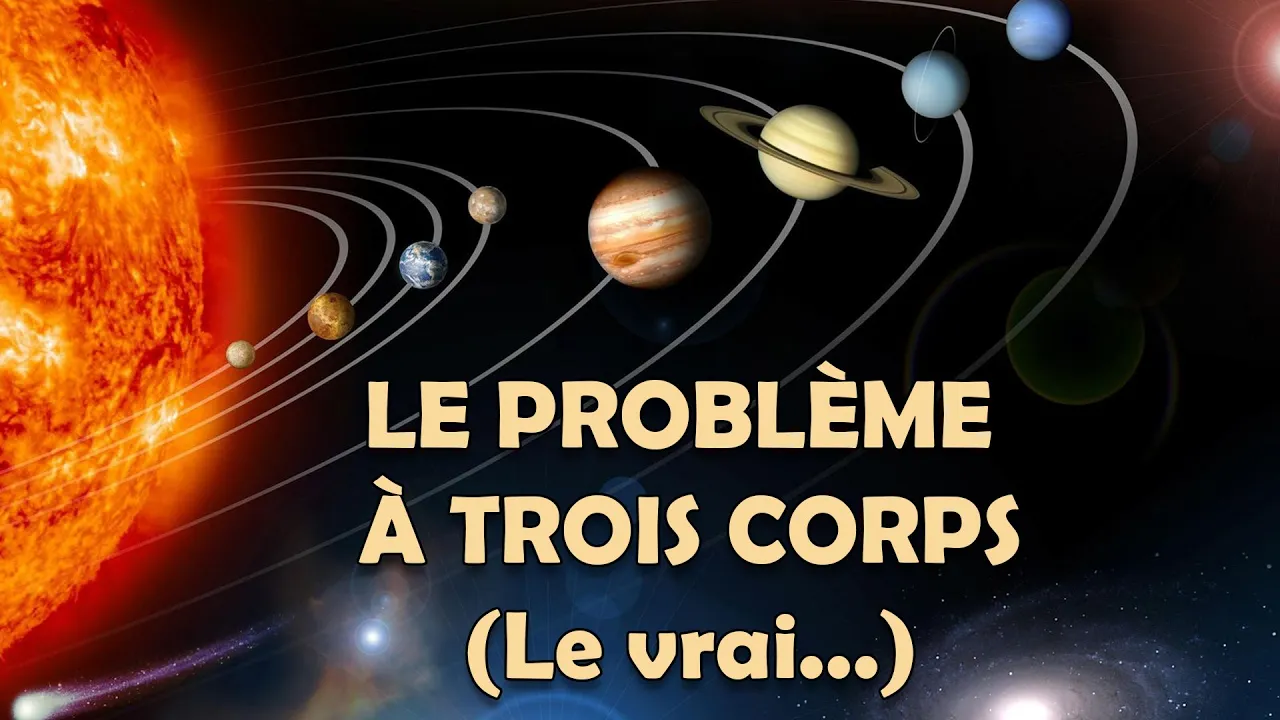



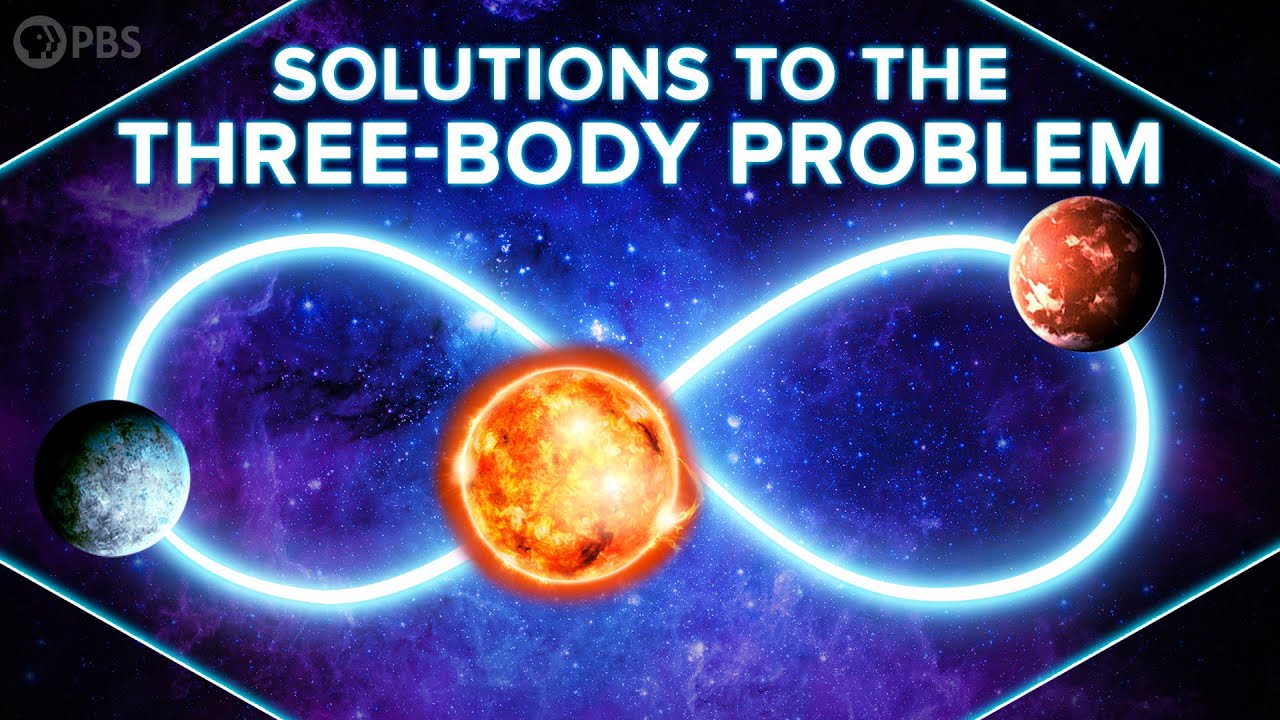
The Three Body Problem, first attempted by Newton after solving the two-body problem, remains unsolved because no general mathematical formula exists to predict the motion of three gravitating bodies given any starting conditions; unlike two-body systems which follow elliptical orbits, three-body systems exhibit extreme sensitivity to initial conditions (chaos), causing most configurations to either break apart or eject one body to form a stable binary system, though special solutions like Euler's collinear orbits and Lagrange's triangular configurations, along with computer-discovered complex orbits like the figure-eight pattern, demonstrate that certain stable arrangements do exist.
The Three-Body Problem: Chaos Theory and Stellar Dynamics
Added:Newton's Laws of Motion and Universal Gravitation, which define how celestial bodies exert gravitational forces on one another.
The Two-Body Problem and Kepler's laws of planetary motion, which provide the analytical baseline for stable, predictable orbits.
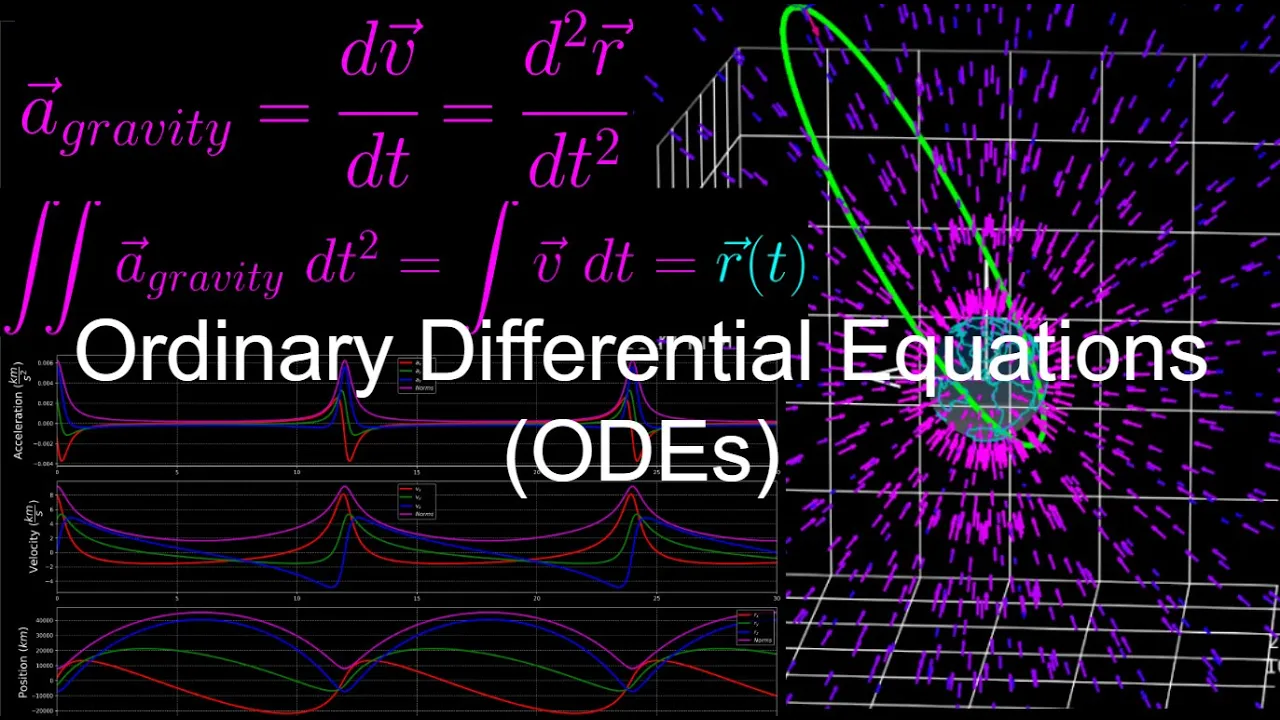
Basic concepts of ordinary differential equations (ODEs), which are used to formulate the equations of motion for planetary systems.
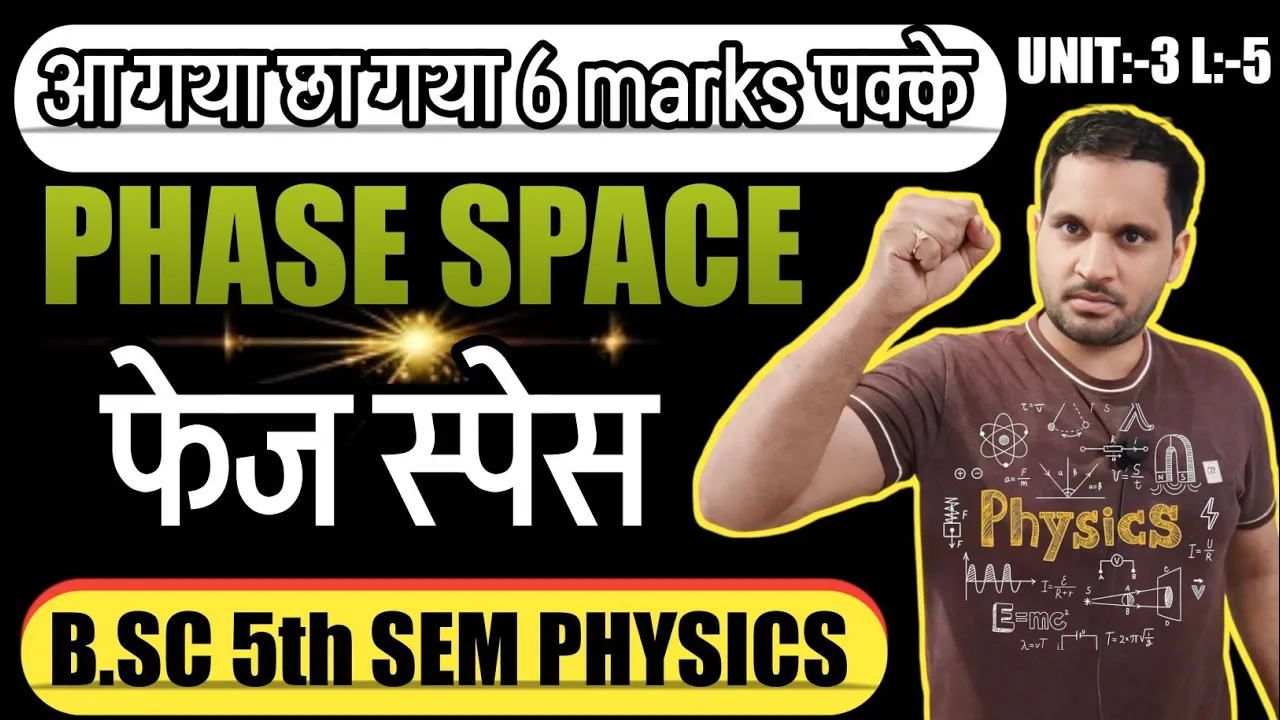
An introductory understanding of phase space and dynamical systems, where the state of a system is represented by position and momentum.
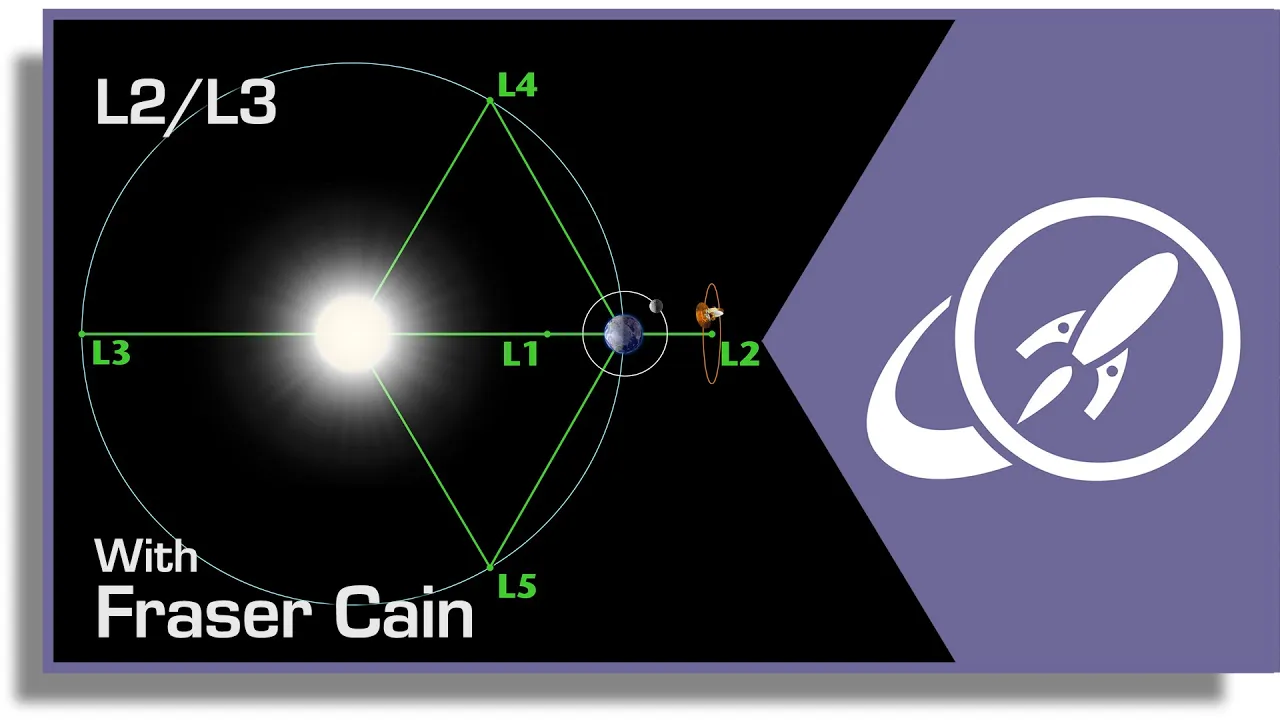
The Restricted Three-Body Problem and the derivation of Lagrangian points, including their application in positioning space telescopes.
Numerical integration techniques (such as Symplectic integrators) used in computer simulations to approximate N-body orbital paths over time.
Advanced Chaos Theory concepts, specifically the Kolmogorov-Arnold-Moser (KAM) theorem and calculating Lyapunov exponents to quantify orbital unpredictability.
Stellar dynamics in galactic nuclei, specifically how three-body interactions with supermassive black holes produce hypervelocity stars.
180.6K views6.3Klikes9:10Original Release: 2022-11-15
[Music] foreign [Music] 1684 Newton showed mathematically for the first time how planets moved around their Stars Kepler had several decades earlier provided his empirical observations of their motion but Newton was the first to show the solutions mathematically his Solutions were ellipses like these with the Sun at one Focus he was able to show that planets moved faster when they came closer to their stars and he was able to predict the periods of their orbits these predictions served as the culminating achievement of Newton's theories of motion and of gravity after he found his solutions to this so-called two-body problem he tried to solve the next logical problem that of three gravitating bodies he was never able to find a general solution in fact no one ever has for the Dynamics of these three body systems remains a topic of interest in astronomy to this day to really dig into the three body problem we need to be a little more specific about what exactly we mean by a three-body problem after all we can predict the motion of the Moon the Sun and the Earth with relatively High Precision doesn't that count as an example of the three body problem when we talk about a three body problem we mean three bodies are similar or if you're a mathematician equal masses solving three body systems with very different masses allows physicists to use a little math trick known in the business as perturbation Theory it helps us handle problems where A little nudge say like the moon disrupts a simple system like the Sun and the Earth when the bodies are all about the same mass we can't call any one of them a small nudge so we have to fall back on other means in the 300 plus years since Newton no one has been able to find such a method there is no General solution the three-body problem and many mathematicians don't believe there ever will be when we talk about solving the three-body problem we have to be careful about what we mean after all I can show you three bodies gravitating just like this one might ask how can I do that without solving the problem the three body problem is unsolved because no one has ever found a master formula to describe the motion of the three bodies given any starting situation that is we've never found a function say F of T which we can write out with our mathematical symbols that tells us where the bodies are at any given time we do have one thing going for us however the system is deterministic that is to say that even though we can't write down the function the function does exist there's only one correct way for the system to evolve there's no Randomness to the motion of the bodies because we cannot solve the problem we instead estimate the motion with computers the equations that govern how the bodies move on short time scales are very simple so it's easy to predict what happens a little bit into the future say one second then we can do it again and again and again until we have an accurate estimate of the trajectory [Music] foreign while there is no General recipe for finding the trajectories of the bodies some special cases do exist the first of these were found by Euler who noted that when bodies were arranged in a line like so there were Simple Solutions in which they always remained in a line later LaGrange found two more sets of Solutions in which bodies form equilateral triangles instead of lines these special Solutions are occasionally seen in nature or close estimates thereof and are of direct consequence astronomically no further solutions to the three body problem were found until the 1980s during which computers were put to the task of looking for other stable Solutions the solutions that the computers were able to find are extremely intricate and too complicated for humans to have ever found on their own take this one for example which forms a figure eight or this one which forms an even more abstract curve these two discovered in the 1970s exhibit simpler but no less precarious Dynamics during their orbits while these special Solutions are beautiful they are not likely in nature because of another special characteristic of this problem chaos three body problems are extremely sensitive to initial conditions say for example that I place three bodies on the plane like so let's give each of them some initial velocity as well and now let's let them go and see what happens [Music] let's go back if we alter the setup ever so slightly say change the velocity of this body just a little bit and let it go again we see that the evolution of the system is much different physical systems that act this way are called chaotic and they are of great interest to physicists and mathematicians alike there is in fact an entire field of mathematics aptly named Chaos Theory dedicated to the study of such systems in most cases three body systems in random configurations break apart this system for example sends all three particles off into the abyss some like this one eject one body and then form a stable binary system last year physicists used the math of Chaos Theory to characterize these ejections and found that almost all three body problems end with the binary system suggesting that we might find candidate binary systems which could once have been in a three-body system deepening our understanding of these systems could then potentially provide more detail about how star systems evolve because the ejected stars from these systems move with very high velocities we call them hyper velocity stars or sometimes runaway Stars these stars are predicted to arise from many different gravitational interactions including but not limited to those found in three body systems we have found and observed many such Stars over the last few decades this diagram courtesy of NASA shows about 20 known hyper velocity stars in our galaxy those shown in red are thought to have originated within our galaxy while those in Orange are thought to be extra Galactic and are of great interest for their insights into the properties of faraway galaxies this is also great science fiction fodder take for instance this headline which suggests using hyper velocity stars to hitch a ride out of our galaxy unfortunately if hyper velocity star came close enough to us we would probably be in need of an entirely new solar system to call home but nonetheless it's an interesting idea [Music] before I go I want to leave you with my favorite three Body Solution this one published in 2017 looks a lot like a snowflake because more complicated orbits require more accurate computation this one is composed of over 3 million estimates which took my computer a couple of hours to complete one final note the three body problem was actually solved in 1912 by a Finnish mathematician named Carl sudman just 30 years after the famed mathematician Enrique Point career declared to the world that it was impossible unfortunately sudman's solution comes as an infinite sum of very complex terms and is for all intents and purposes completely useless in fact it would take a computer several decades to compute a three-body problem by sudman's method to the level of accuracy I was able to present in this video regardless though here's to Carl for sticking it to the Man [Music] foreign [Music]
Up Next

6:13
Chaos Theory and Weather Prediction: Why Forecasting Is Hard
@besmart
596.4K views•2015-10-05

12:53
21cm Hyperfine Transition in Neutral Hydrogen: Radio Astronomy Basics
@AaronRobertParsons
12.4K views•2011-10-13

32:32
NMR Spin Physics I: Zeeman Effect, Resonance Condition & Larmor Frequency
@nptel-indianinstituteofsci8064
2.3K views•2024-01-17

27:14
Entropy and the Second Law of Thermodynamics Explained
@veritasium
27.5M views•2023-07-01
Related Study Plans & Knowledge Roadmaps
Structured learning paths in Physics
physics
Nuclear Physics (Decay, Fission & Reactors)
01Atomic Structure and the Binding Force
02Radioactive Decay and Half-Life
03Nuclear Fission Mechanics and Chain Reactions
+ 2 more learning modules
12h5 modules
Explore Roadmap
physics
Soft Matter (Polymers, Colloids & Rheology)
01Foundations of Soft Matter & Thermal Forces
02Polymer Physics and Macromolecules
03Colloids, Surfactants, and Self-Assembly
+ 2 more learning modules
38h5 modules
Explore Roadmap
physics
Analytical Mechanics: Lagrangian & Hamiltonian
01Mathematical Foundations: Calculus of Variations
02From Newtonian Mechanics to Constraint Dynamics
03The Principle of Least Action & Lagrangian Mechanics
+ 3 more learning modules
28h6 modules
Explore Roadmap
physics
General Relativity (Spacetime & Cosmology)
01Foundations of Relativity: Special Relativity
02The Geometry of Spacetime: Equivalence Principle & Curvature
03Einstein's Field Equations: The Mathematics of Gravity
+ 2 more learning modules
55h5 modules
Explore Roadmap