









![RA-22 EPITHELIAL MESENCHYMAL TRANSITION MD Pathology |RATS [GAME] |DR GSS |EXAM PG](https://i.ytimg.com/vi/9coWqd7OhTM/hqdefault.jpg)






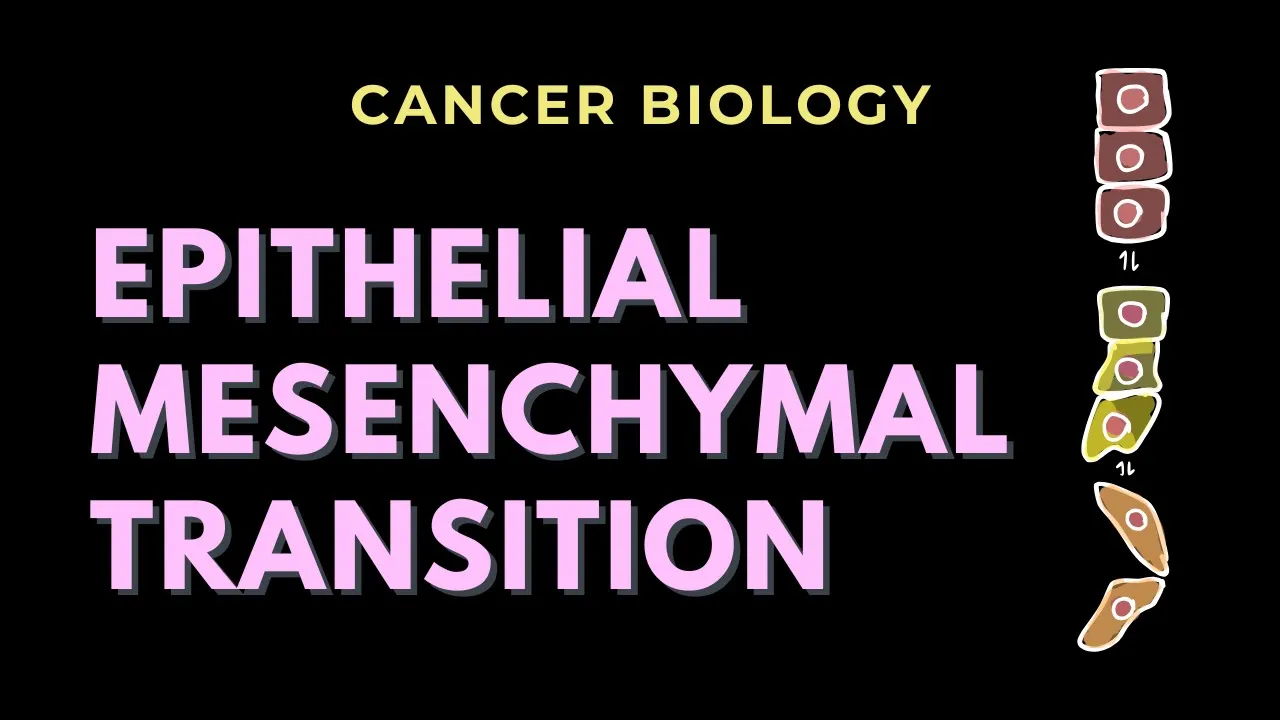
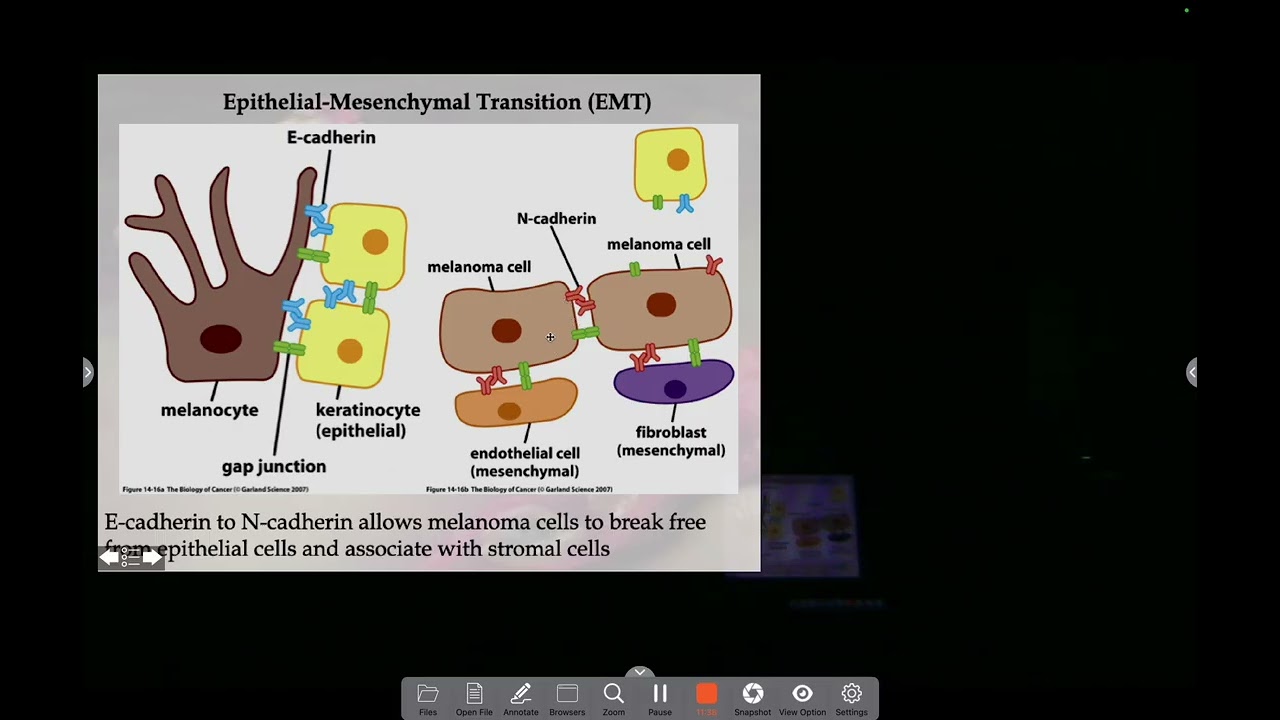
The epithelial-mesenchymal transition (EMT) is an epigenetic cell biological program, not a genetic mutation, that enables cancer cells to acquire the ability to metastasize; this program allows cells to transition from epithelial to mesenchymal states, with cancer stem cells residing at an intermediate position on this spectrum, and its activation alone is sufficient to propel cells from primary tumors to distant metastatic sites, challenging the traditional view that metastasis requires specific genetic mutations.
Cancer Stem Cells & EMT: Mechanisms of Metastasis
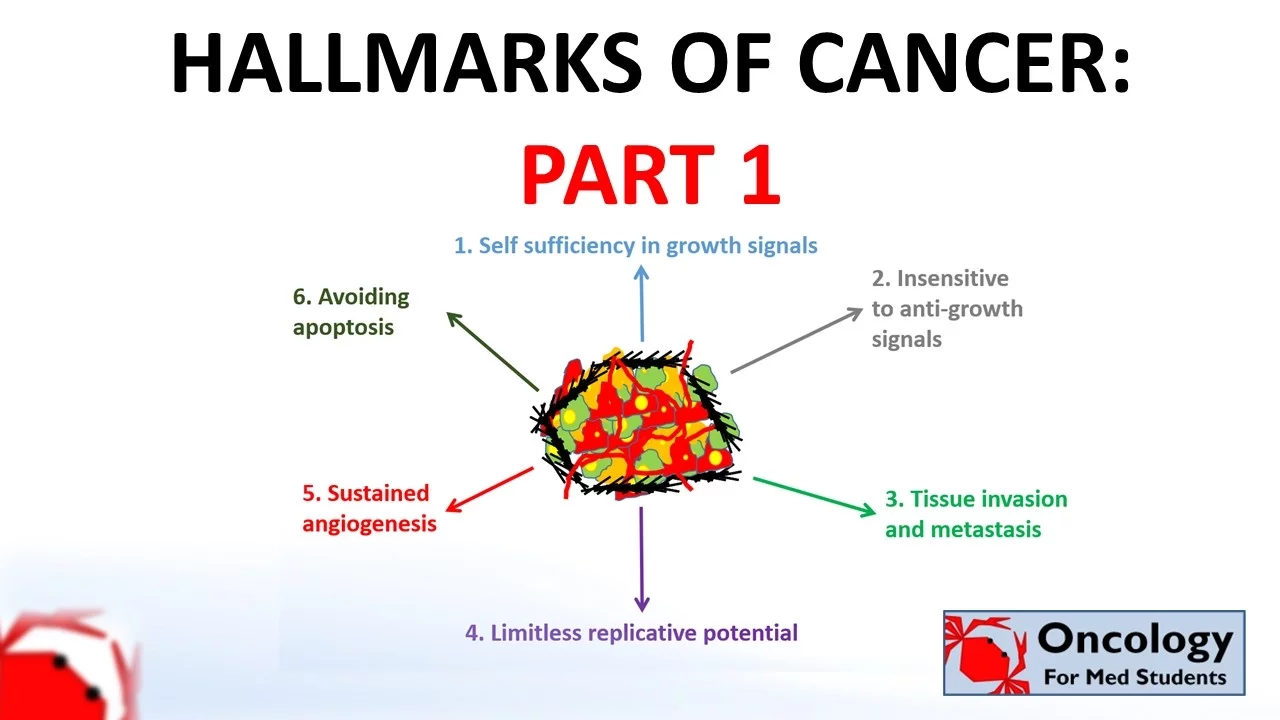
Added:Fundamental principles of oncology, including the multi-step progression of cancer and the classic hallmarks of cancer.
Basic cell biology concepts regarding epithelial and mesenchymal cell types, specifically their differences in cell polarity, adhesion, and motility.
The core concepts of stem cell biology, such as self-renewal, differentiation pathways, and asymmetric cell division.
An overview of the metastatic cascade, specifically how primary tumor cells disseminate to and colonize distant organs.
The process of Mesenchymal-to-Epithelial Transition (MET) and its necessity for metastatic colonization at secondary sites.
The specific transcription factors (such as SNAIL, SLUG, and TWIST) and signaling pathways (such as TGF-beta, Wnt, and Notch) that orchestrate EMT.
Therapeutic strategies aimed at targeting cancer stem cells and inhibiting EMT to overcome drug resistance and prevent tumor recurrence.
The role of the tumor microenvironment (TME) and stromal cell interactions in inducing and maintaining the EMT phenotype in cancer cells.
29.9K views391likes1:04:53Original Release: 2016-04-15
I just wanted to welcome you to the Salk Institute and the metal lectures as chair of the salt metal committee and I'll just say a couple of words about the Salk medal they were inaugurated in in 2005 by the Institute and the Board of Trustees to recognize the 40th anniversary of the sake Institute's lab opening and well there are two medals there is a medal for public service and a medal for basic research scientific research the medals of being awarded this is the third time the medals have been awarded every five years the medal winners in 2005 were Dom Metcalfe for his pioneering work on discovering and exploiting blood cell growth factors and Paul Farmer for his introduction of humanitarian work for introducing accessible healthcare in Haiti and then in 2010 which where we celebrated our 50th anniversary as a letter of intent the medal winners were Bob Rader the basic research medal for his pioneering work on understanding mechanisms of gene transcription and our very own Owen Jacobs for his release philanthropic work and support of basic research and then this year were obviously celebrating two wonderful scientists for these pisaq medal of excellence in research but the Public Service Medal was already awarded in 2014 to Itzhak Perlman to recognize Jonas Salk's 100th birthday and so I'll ask India to introduce Bob Weinberg thank you Tony I also like to extend my welcome for the to and seminars lectures on the research excellence medal our first speaker is dr. Robert Weinberg who comes with a Daniel Ludwick professor at the Whitehead Institute of biomedical research at MIT a few words about Bob Bob is a truly MIT in and out he did an undergraduate at MIT he's the graduated MIT his postdoc at MIT his assistant professor at MIT associate professor MIT full professor at MIT this is what we call institutionalized people so Bob is really a towering figure in the field of cancer biology perhaps the top half a dozen in the whole world that Bob Wills name will be among them bob has many seminal contributions and it can take a whole hours to tell you but I just wanted to point out a couple of them why we think Bob Weinberg's work was so unique should be chosen for this particular medal early in his career as an assistant professor Bob made a very seminal discovery he took cells which were chemically transformed and took its DNA put into normal cells and showed that they were also not became cancer cells so this was the beginning of the era that genes have been mutated by chemicals those genes are present in the genome if you take that DNA put it around the normal cells they became cancer cells now it looks so obvious now to us because we think genes or the standard component of cancer but this was a path-breaking discovery very shortly after that he showed that that particular gene was actually previously hijacked by a virus called the raster coma juarez virus which can also cause tumors and then made even more remarkable discovery and that was also joined by two other groups that the mutate there were the 1 point mutation in this gene they were like thousand nucleotides one point mutation one amino acid change from one to the other and that was responsible for causing the cancer in the cell after that big discovery Bob showed that it's not enough to have just one gene you have to have a combination of genes and they were beautiful series of paper saying how it's the combination of bunch of genes coming together by which you can actually cause a transformation of a cancer of a cell that would have been enough for most people in our lifetime their discovery but Bob went on to show something else in addition to the genes which are involved in causing cancer by gain-of-function they're also those we lose in certain cancer cells and it's very hard to find genes which we have lost but Bob's ahem was able to find such a gene called retinoblastoma which causes we now know that no blastoma cancers and showed that the loss of that gene was responsible for these tumors so both components gain-of-function loss of function comes from the discovery of Bob he further went on to also which will be the subject today I won't tell you much about it that how they're the transition from a carcinoma into amat acid into a metastatic cell and what genes are involved and we'll hear about that not surprisingly Bob had been honored extensively for his discoveries he has the Wolf Prize he has the breakthrough prize which was recently given to him and of course his member of all the procedures societies of science not only United States or abroad so that's where Bob's science i'ma tell you feeds things personally Bob is my oldest friend I met him in 1969 when I was a second year graduate student at the Weizmann Institute and Bob had just come as a postdoctoral fellow working with on spinnaker it was through Bob that he told me to go work on animal viruses that I went today with Baltimore's lab at MIT who had just come from Salk Institute and Bob was actually quite influential in telling me how viruses was the way to go looking to cancer cells and David Baltimore's lab had discovered a very interesting enzyme called RNA dependent on RNA polymerase doesn't matter for the purpose and I wrote my grant on that a month later I got another paper from David Baltimore in those days you know we didn't have emails you just have to actually get by post and I showed it to Baba said look Bob another paper from David Baltimore's lab its title was RNA dependent DNA polymerase and Bob in a minute said Al Shabab remembers that oh my god here is David Nobel Prize which is quite remarkable to think and he did get a Nobel Prize for that and I was disappointed because I had just written a 48 page paper which I sent to my mom as a preprint and he had this paper with only six stages and Bob said when a Nobel Prize so really bob has been persevered long before many OSS Bob and I had very nice family relations we have traveled all over the world I think for the last 30 years we have been practical in every continent together and just last month we were in Chile and I thought so we went to Easter Island and these are them why is in Easter Island and he loved my who are pretending to him over here is Bob and you might also find some people this guy looks like Tony hunter here and this guy really thinks he's wrong heavens but bob has higher aspirations he thinks he's like the moai eventually and of course my favorite one is here in 1990 we were together in the Hermitage in st. Petersburg this is when you're young and thank you in der for that kind and a bit embarrassing introduction needless to say I was pleased extremely flattered to be named together with Saul Schneider as one of the salt medalists people sometimes ask me why do I do science and I say well actually enjoy the day-to-day process of doing it of being with young people in the lab of talking things through with them but I will admit once in a while i I find that events like this provides some affirmation some confirmation that what goes on in my lab is actually maybe possibly important in the eyes of some sometimes I even think what do people think of me where I've been in write in different places I'm an alum proud alumnus of the Salk Institute I was here from 1970 to 72 and you may know a man named Jamie Simon he's the resident Salk cartoonist photo archivist historian and so he sent me a nice photo an image of myself a photographic image which apparently epitomizes what people think of me here at the Salk now 44 years after I last left here and I I guess this image leaves little room for equivocation or doubt this is what he recently sent me so you can interpret it as you will I don't know what to make of it except that it shows that I'm not always terribly serious person which happens to be the case well I will move on this is I hope a bit of a distraction maybe not and and begin to discuss the topic of my lecture today which is the attempts to understand the molecular basis of malignancy we know that the formation of primary tumors is a multi-step process we know this already from the work of kinslin Fogle C 1980 line 9 and here in the context of colorectal cancer and we kind of have an understanding of how primary cancers operate how they are they form through a series of distinct changes in genetic and epigenetic changes in genes the big change however in terms of clinical cancer is this last step where primary carcinomas progress to form invasive growth and ultimately to disseminate and this last step which I'll refer to as the invasion metastasis cascade actually subsumes a series of smaller steps which you see here involves cancer cells getting into vessels moving through vessels to distant tissues in the body forming micro metastases and ultimately forming macroscopic metastases fortunately all this occurring with a relatively low efficiency so that people who have thousands and millions of micro metastases may or may not ever develop metastatic disease over here that being the case one asked the question how can one understand mechanistically how cancer cells acquire the ability to metastasize looking at this one might think that there's a lot of genetic alterations that must intervene but in fact there's an alternative at least in the constant case of epithelial cells carcinoma cells which is a cell biological program that was first described by betty hay in 1986 and involves a cell biological program in which cells shift from one phenotypic state to another from an epithelial to mesenchymal state it's called the EMT the epithelial mesenchymal train and it involves a change in a whole series of cell biological attributes going from one state to the other and these acquired attributes in the case of carcinoma cells can be associated with the cells indeed of high-grade malignancies importantly for our discussion this shift isn't does not involve mutations of genes it's a change in a cell biological program and therefore is can be seen as an epigenetic level and I would only mention the fact that although the EMT as I will refer to it is often thought in some people's eyes as being a binary program in fact when cells go from E to M usually they proceed only partway toward samozang komal state and retain epithelial characteristics while acquiring mesenchymal ones in their stead in fact the EMT is choreographed by a whole series of transcription factors you can see them here in in various medizone embryos the transcription factors sometimes called EMT TFS were already evolved ostensibly early in the Cambrian and have been preserved in the genomes of all Metazoa up to this stage indicating their essentiality in organism development and here you can see the fact that if it looks at a tongue of carcinoma cells invading into the stroma of a host one sees the epithelial cells here and out here a rim of cells that have shut down a pre-existing epithelial marker and instead another rim acquired a mesenchymal marker indicating very graphically that this shift involves the responses of cells to some contextual signals that they're experiencing in a primary tumor in this case hetero typic signals released by the stroma in which that they've actually previously recruited i want to switch gears momentarily and move to another biological problem this is being first the work of mohammed el Hadj and Michael Clarke 2004 in which they described that if they look at a population of cells in a human breast cancer one could stratify the cells in this human breast cancer using floor x fluorescence activated cell sorting for these two markers CD 44 and 24 into two different populations a minority population that apart plantation and appropriate host mice would yield tumors as few as 200 of these and a majority population sake genetically the same cells which failed to do so indicating already at this point that cells could dwell in at least two distinct alternative phenotypic states in the tumor which either had or lack tumor initiating potential in my own lab people use this fax analysis once again to recapitulate what I just showed you here the position of non stem cells according to al-haj and Clark and here the minority population of stem like cells this is 44 high 24 low and conversely the alternative antigenic State with these two markers here this injected in people's thinking the idea that these sub population of cells here behave similarly to the hierarchical organization of cells in a variety of epithelial tissues in which one has self-renewing stem cells transit amplifying or progenitor cells and subsequently post mitotic differentiated cells indicating a possible similar organization within the complex tissues which we call tumors and to people my lab said that I want money and went on growth ask the following question is there potentially any connection between the EMT program and the stem cell program that's shown here and I still don't know many years after this happened why they posed this question but they did I only heard about it later and here is what they found if they took these epithelial cells which have a cobblestone morphology push them through an EMT through the forests expression of either this or this EMT inducing transcription factor then they observe cells that acquired Amazon komal or fibroblastic like morphology but at the same time when they analyze these cells by fluorescence activated cell sorting they saw the non stem cells migrated on Moss from the non stem cell into the stem cell state and this already suggested some kind of connection between the EMT program and in fact the stem cell program which was reinforced when they took two populations of cells that really existing up here or down here examined the messenger RNA expression profiles of these cells and discovered that the cells that naturally resided up here in the stem light position over expressed relative to the non stem cells a whole series of mizenko markers including EMT inducing transcription factors and under expressed the key epithelial marker ECAD hearing and this already cemented the idea that there was an intimate inter connection between the EMT program and the epithelial stem cell program at least in the bilayer the epithelium of the mammary gland and why that operates to this day represents a bit of a mystery but it surely is the fact here is the work of wen Jun Guo who looked at a normal mammary a duct in a mouse it's a bilayer epithelium you can see that here here are the luminal cells on the outside or the basal cells and they are known to have epithelial stem cell traits the basal cells and when he stained these tissues for the slug EMT inducing transcription factor he discovered that the basal cells naturally expressed slug even though this is a normal memory duct unperturbed by any kind of injury and that began to indicate that slug played a critical role in the normal life in the homeostasis of the normal mammary gland independent of its involvement in cancer indeed here he showed that the slug that the basal cells over expressed the slug EMT inducing transcription factor by more than a factor of a hundred he subsequently undertook a functional proof in order to ascertain whether in fact the EMT program actually can create cells with a higher stem like potential in the context of the normal mammary gland and I mention this because I will be switching back and forth between normal epithelial cells and neoplastic epithelial cells with the assumption which I believe is valid that EMT programs apply equally to both of them this test involved removing the normal mammary epithelial stem cells from a rudimentary memory ductile memory fat pad implanting into the cleared memory still Moffatt had a population of mammary epithelial cells and to the extent that the implanted cells Karrie stem cell potential one can regenerate an entire memory ductile tree as he did here that is morphologically and functionally indistinguishable from the normally arising duck the tree that you see on the left and so when django exposed a population of normal mammary epithelial cells transiently to to EMT inducing transcription factors slug and sox9 he had a population control population of cells ten thousand of the normal mammary epithelial cells prepared from the mammary gland of a mouse failed upon introduction you generate a memory ductal tree whereas a population of cells that have been exposed transiently to slug an EMT for five or six days prior to implantation these generated an entire memory ductal tree indicating that the transient exposure to the slug EMT inducing transcription factor increased by a factor of at least 100 the representation of mammary ductal stem cells and this began to indicate a functional connection between the EMT program and at least one aspect of normal stemness and so this added yet another phenotype to what one associated with the multi-faceted EMT program to be sure the EMT may be necessary for entrance into the stem cell state at the epithelial stem cell state in the mammary gland but it's not sufficient some cell we believe that the great majority of cells that have activated the EMT program are poised to enter into the stem cell state but there may be other factors which push them actually into the self renewing state that we associate with bona fide stem cells this kind of work led to pose let us suppose the following question given the powers of the EMT program is it possibly the case that if one has a primary tumor that has acquired a whole series of mutations during primary tumor formation are these genetic alterations that led to primary tumor formation sufficient to enable a primary tumor cell to disseminate in the absence of any mutations beyond those that were initially required for primary tumor formation in other words is this last step of dissemination actually sufficient for metastatic dissemination the test was to activate the EMT program in primary carcinoma cells and to observe the sup the consequences this workup Susanna Keshava and Yasmine de Kock showed that if one took a population of normally relatively benign human breast cancer cells implanted these cells in a mouse and waited for let's say 10 weeks later then they found that the resulting tumors in the control mice that had never experienced an EMT inducing transcription factor they continued to be to express for example ich adherent indicated right here which is the the keystone of the epithelial state but the cancer cells that had been exposed for two weeks in vivo to these two EMT inducing transcription factors which I just mentioned before slug and sox9 if one shut them down and then looked at the resulting tumors 10 weeks later now the these cells were highly proliferative in the resulting tumors they expressed the mizenko marker fibronectin which was absent in the controlled tumors of interest was the fact that even though these cells had experienced the introduced slug gene which was then shut off they continued to express the corresponding endogenous gene slug and corresponding to agustin gene sox9 and most importantly these tumors which had previously been benign here look at the non invasive edges now we're highly invasive and perhaps most importantly the cells that had not experienced these two transcription factors form very few micro or macro scopic metastases in the lung whereas those that had experienced both transcription factors performed at least a hundred macroscopic metastases and as many as 400 microscopic metastases and this is the beginnings of a proof that in fact the activation of the EMT program suffice is to propel cells from the primary tumor to a distant site in the body it doesn't deal with all the problems to my mind of the invasion fastest cascade I think it's plausible the EMT program can achieve all of these steps in this multi-step process but the final step which is called colonization would seem to involve an adaptation of cells from one tissue of origin to a distinct distinct issue which may initially upon enter entry into that tissue to be inhospitable environment and cancer cells therefore I imagine require some complex adaptive programs which we still understand very poorly if at all in most cases in any case this began to suggest the notion that the EMT program can play an important role in the genesis of these breast cancers and I believe in the context of many other kinds of carcinomas much of the involvement of this program was further illuminated by the work of Shinya who made use of some of the transgenic mice that have been created by Tsukasa Shibuya in which the latter had knocked in to the endogenous genetic low-side encoding a whole series of EMT transcription factors they were yellow fluorescent protein which was knocked in in a fashion that it would record the active activity of the promoter of the EMT TF without perturbing the normal functioning of this gene here this had afforded a series of experimental advantages the detection by email' fluorescence isolation of cells by facts and here I just mentioned the work of Chien which he shows and reinforces the notion that one has two layers in this miss Vye layered epithelium the basal lineage i talked about before in the luminal lineage and when she began to use these transient mice reporter mice to examine the expression of different transcription factors she found that indeed slug was expressed in the basal cells indeed much more widely than before you can see that here interestingly snail which is another EMT inducing transcription factor was expressed in in the memory that but importantly and critical for our discussion outside of the mammary duct itself in the normal associated stroma here's a yet another EMT inducing transcription factor which is once again expressed in the stroma and there's a dramatic difference in whether these cells are expressed when these transcription factors are expressed within or outside of the epithelial lining of the duct here's yet here's snail and once again in the stroma and ZEB one the master regulator the EMT program to which I'll refer later once again in the stroma I mention this because this creates a great experimental barrier for you tell me to understand the involvement of these transcription factors in cancer progression it being the case that if one grinds up an entire tumor or an entire tissue one has great difficulty sometimes understanding the involvement of this program and the involvement of these transcription factors because these transcription factors are highly active in the Associated stroma which is very close obviously to the epithelial portion of the normal mammary gland here or in a carcinoma and so this really involves later laser capture microdissection in order to ascertain with precision where precisely the EMT program is or isn't it operate or is not operating what she found here was that the basal cells exist in an interesting intermediate state between the stromal cells here and voluminous cells in the inner surface of the duct the background cells in this case expressing ecat here expressed virtue in this case being the stroma where the stromal cells expressed no e-cat here the luminal cells expressed lots of akkad here and the basal cells Express the intermediary level and here one can see that as well in facts analyses where one sees high expression of the epithelial marker yep cam in the luminal cells non in the stromal cells and here an intermediate state in the basal cells and this begins to address the issue of cells that reside in an intermediary state between an epithelial and Amazon komal state in this case this is where the basal cells reside and she could document that quantitatively and and in various bytes various different measures she exploited the mmtv poly on the middle team mouse model of human breast adenocarcinoma development in order to see how these transcription factors played a role in the actual progression of these breast carcinomas and here's the take homeless and I'll show you some of the evidence momentarily just to help a frame her her work in the normal gland as I mentioned before slug is expressed in the basal cells none of the EMT inducing transcription factor is expressed in the luminal cells when she initiated tumor formation in genetically predisposed mice then she discovered that the the tumorigenesis began not in the basal layer but rather in the luminal layer and progressed through the involvement of these two EMT inducing transcription factors and ultimately the metastasis began to create a division of expression which began to recapitulate what was present in the early tumor save for the effect that snail mal seemed to be involved in in choreographing stemness of some interest here is the fact that the tumor began in a cell layer that was did not harbor the normal epithelial stem cells that is the normal stem cells were here the tumor began here and as I will argue the cancer stem cells do not arise from normal stem cells they arise in a different cell layer Albia at the under the aegis of a different transcription factor snail rather than slug here you can see the beginnings of this here is a early in tumor development once these ecad here and expressed here in these epithelial cells and here one sees a small island of cells that have lost expression of the epithelial acade here and now begin to express instead the snail EMT inducing transcription factor which I will tell you is a first cousin of slug which is operating in the basal layer of some interest and perhaps with this distraction in our conversation today is the is the interesting idea that as these luminal tourists begin to develop or early in tumor Genesis they arise as I've just advertised in the luminal layer but as the tumors progress they increasingly take on through transdifferentiation a basal phenotype which is said by some clinicians to represent the progression that one sees in many human breast cancers which have a basal oyd phenotype but which have been suspected to originate in the luminal cell layer in fact as shaniyah found the cells at the leading invasive edge of these carcinoma cells in 3d culture they express the slug II the snail EMT inducing transcription factor the leading invasive cells in contrast to slug which is hardly expressed if ever in these leading cells and so this began to suggest this guy progression which have showed you before and provoked the question of which population of cells is actually enriched in cancer stem cell activity I've kind of given away the the punchline to this but I thought I would anticipate it and so what she did was to measure tumor initiating ability by taking populations of cells implanting them at various dilutions and trying to measure the representation of tumor initiating cancer cells and what she discovered was that the snail high cells in this population one in ninety one of these cells could initiate a tumor with various solutions of implantation in contrast the slug high cells it was one in seventy-two thousand cells could initiate a tumor and this indicated clearly and dramatically that the snail high cells as I've advertised actually have the tumor initiating capability moreover if one injected these cells either directly into the tail vein of the long tail vein which succeeds them into the lungs or at sub-q tiny container sites of primary tumor implantation it was the snail high cells which were enriched in tumor initiating and metastasis initiating activity not the slug high cells so this led to the the scheme which I've shown you here in which these are the cancer stem cells those that Express snail and not slug and in other experiments she showed that in normal mammary stem cells if one shut down slug which I showed you before is important for normal mammary gland development then a mammary gland formation was blocked but normal mammary epithelial cells don't care about a snail if it shut down nothing happens the contrary situation the opposite situation happens in these adenocarcinomas of the breast if one shuts down slug there's no effect whatsoever on tumor initiating but however the tumor initiating cancer stem cell activity depends on its cousin snail so there's an obvious opposite action of these two transcription factors she also has evidence that snail is also important in human breast cancer pathogenesis which i won't show you here and so so I will mentioned something else just in passing if one takes snail and transiently induces it in normal mammary epithelial cells much like he she much like when Jen go previously induced the expression of slug one also gets mammary gland formation and therefore snail and slug are equally competent in stemness and this allows one to reach the following conclusion but slug is focused and when expressed at normal levels on stemness whereas snail and ZEB one are focused on the cancer stem cell state and generating the traits of high-grade mizenko carcinoma cells so there's a bit of a division of labour and how this arose evolutionarily we don't really know this kind of this raise additional questions one question we tried to probe further here I refer to the work of brian berry focused on the on the issue of where exactly do cancer stem cells ride or reside on the epithelial mesenchymal spectrum I've told you the notion that cells usually the turn on the EMT program only perceived partway through the EMT program tourism is an komal state but that on its own didn't really tell us where cancer stem cells reside on this spectrum and so with this in mind Brian Barry looked for additional ways to stratify the epithelial cells and the mesenchymal cells in addition to the CT twenty four and forty four markers I've already described and here he found an highly interesting marker integrating beta four also called CD 104 it's expressed in more epithelial cobblestone cells and not at all in highly mesenchymal cells and you can see that this epithelial our car goes down as one increases the mesenchymal attributes of a whole series of distinct cells so it is by this criterion clearly an epithelial marker in fact it's involved in an tethering epithelial cells to the basement membrane now here one uses the CD 24 and 44 markers to stratify this population of highly mesenchymal human memory epithelial cells and you can see here that this is a highly homogeneous population it's high in cd44 which is a attribute of losing coma state and it has a very uniform expression of CD 24 and this indicates the limited utility of CD 24 in further allowing the fractionation of these cells the stratification but if instead Brian be reused integral beta for here he could spread out a whole series of sub population that differed in their extents same population of immigrant beta for expression and this allowed him now to begin to stratify the cd44 high CD 24 low sub population and what he found to make a long story short is that the cells that express immigrant beta for high one in 3,000 of these cells in experimentally transformed cells could form a tumor but the cells that expressed low levels of this epithelial marker only 1 in 750,000 cells could initiate a tumor so here we have at least a 250 fold difference in tumor initiating capability here these cells immigrant beta low cells there were no tumors observed at all and this allowed one to begin to resolve the entire progression of cells from an epithelial to mesenchymal State here we see a whole series of spectrum and as one proceeds this this scheme is still being worked out in some detail one sees that epithelial cells initially expressed high levels of ecad here and that gets shut down as one becomes more mesenchymal cd44 goes up which I've advertised as a mizenko marker by Menten goes up integrand beta for which we just looked at Goes Down and this raised the question of where on the spectrum do the cancer stem cells actually reside and in fact as he's found the cancer stem cells actually reside in a so-called sweet spot in the middle if one is to epithelial one does not get cancer stem cells if one becomes to mizenko for example pushing cells into what we call the extreme EMT one also is a situation that is unfair duck t'v for the more the formation of cancer stem cells they reside halfway in the middle which is also the characteristic of normal stem cells and why exactly this is so we still don't understand except for the fact that cells that are pushed over here and become extremely was ANCA Melin fibroblastic actually lose their plasticity and such plasticity to differentiate in the more epithelial derivatives may actually be critical to the biology of these cells and note by the way that cells that express low levels of immigrant beta 4 over here actually lose their stem stemness attributes and this leads to the perhaps paradoxical observation that cells that express high levels of this epithelial marker cancer cells actually pretend far more poorly in terms of long term survival in triple negative breast cancer patients in cells that have low levels of this epithelia and this is also true looking here at a molecular basal subset of human breast cancers so we're beginning to tease out the different stages along the epithelial mesenchymal spectrum and beginning to move away from the simplistic notion that by activating the EMT program when pushes cells automatically into a stem cell state instead we now realize that cells halfway in between are in some still poorly defined state that enables their self renewal potential here's an additional elaboration on this work this was the work of Christine Schaffer she took a population of cells seen here which is cd44 low and she propagated as she initially separated these cells cd44 high cd44 low into two subpopulations cd44 high which would seem to contain the stem like cells and cd44 low the non stem like cells and here one sees how successful she wasn't stratifying these cells and she followed the fate of these cells in vitro for a period of time what she discovered was that the cd44 high cells as one might anticipate with time began to produce cd44 low cells in other words if you can see these red dots here I can't the the more stem like cells generate more differentiated epithelial cells what was unexpected in this work of hers was this finding here that the cd4 T for low cells generate that is the non stem cells generate populations of stem like cells apparently de novo and this could not be exploit explained by the outgrowth of a subpopulation of cells that is cd44 high cells that were contaminating the cd4 T for low cells from the beginning because the high cells actually proliferate more slowly and so this was a revelation for her for us because it meant that one could begin to recapitulate how cells actually operated in vivo indeed when she looked at memory of human mammary epithelial cells that have been modified to differing extents by the introduction of telomerase or the large T uncle protein of SC forty of the Rath uncle G the more one altered these cells the more there was a spontaneous conversion in vitro of non stem cells into stem cells and this happened even quite rapidly in vivo if she implanted a tumor which was very low in cd44 high cells two weeks later 20% of the cells had entered into the cd4 T for high state and that allowed her to draw redraw this diagram because it now appears that there is plasticity in both directions which has implications for a number of different kinds of treatments and analyses of different kinds of tumors for example here's one implication of this plasticity if one were to develop a therapy which would eliminate cancer stem cells in a tumor as we imagine they operate here then one gets rid of the cancer stem cells and there are ways of thinking about doing so now none yet introduced into the clinic one could imagine that with the goodness of time the tumor as a whole would disappear because its source of self renewal that is the stem cells would be eliminated but here now becomes the more real and and likely a grim reality and that is the following as before one gets rid of the cancer stem cells with some kind of treatment focused treatment but now the surviving non stem cells regenerate a new sub population of stem cells which then can foster the further growth of the tumor and the implication of this is that to the extent that one would like to use anti cancer stem cell therapy to eliminate tumors one needs to separate one needs to eliminate both the stem like cells and the non stem like cells either by an agent that attacks both or by two specialized agents that eliminate both populations she asked as Kristine Shaffer also asked the question of whether this process of going from a non-stem like state into a stem like state is characteristic you'll for example all kinds of breast cancer cells and so she used two different populations of breast cancer cells luminal cells and basal cells these are representative mcf-7 and HM lar cells these have luminal characteristics these have basically Eric turistic s' I mentioned in passing that in general the luminal cells have a better long-term prognosis the basal cells have a worse prognosis when she took populations of cd4 T for low non stem like cells from these two lineages and implanted them in mice and she waited a period of weeks for these cells to generate a tumor they were these did very slowly but they did the resulting tumor of implant of cd4 implanted cd44 or low cells once again yielded purely a population of cd4 t for low cells in other words there was none of this spontaneous d differentiation from a non cd4 t for non stem cell into a cd4 t for high stem cell population but the basal cells behave quite differently because if she looked at the resulting out tumor cells that grew out of this implantation of this cell the basal cells once again yielded a non stem cell population cd44 low but now there was a readily detectable sub population of cancer stem cells that clearly had arisen de novo through the spontaneously differentiation of the cd4 T for low stem cells so this part this backward deep differentiation did not seem to be shared equally between the luminal and the basal cells if she took the basal carcinoma cells that were cd44 low and knocked down prevented the expression of the zebb one EMT inducing transcription factor what she then discovered was that the spontaneous D differentiation of the basal breast cancer cells was prevented normally they would generate new cd44 high cells like this but if z1 was knocked down that was largely it prevented here as you can see here here and here in completely but but still significantly and this led to the obvious conclusion the to the extent that the basal nan stem cells become stem cells they need to do so in part through the activation of the Zeb EMT inducing transcription factor its expression what she found was if she took the contextual signal tgf-beta which is often released by the stroma impinges on carcinoma cells and induces carcinoma cells to activate their endogenous EMT program she discovered that when she took cd44 low luminal cells and added tgf-beta to them nothing happened in terms of their expression of cd44 high that is the EMT stem cell marker but the basal nan stem cells were responded to tgf-beta by producing cd44 high derivatives and here in this case we're also dealing with two different human breast cancer cell lines two additional human breast cancer cell lines so this suggested different degrees of responsiveness and plasticity in the basal versus the luminal cells she then looked at the transcriptional promoters of the Zevon gene which I've advertised is the master regulator of the EMT program in these cells and she did a histone she examined the histones that were associated with and controlling the expression of the promoter of the zebb one gene these days if you want to hold your head high than seminar you need to talk at least a little bit about epigenetics so this is my claim the respectability in the luminal cd44 low cells which you would imagine I have locked Zeb one expression since they're in the non stem cell state as might be expected there work a 27 methyl marks on the promoter of the Zevon gene which were responsible for shutting down the expression of this gene in contrast in the basal stem like cells cd44 high here in the promoter was turned on here one had a different set of marks on the histones that were decorating the promoter of the z1 gene the repressive mark was shut down and the inductive mark on the histone the modification was turned on which is consistent with the notion that the Zevon gene is indeed expressed at high levels in these stem like cells what was I would submit most interesting was the behavior of the basal cells that were in the non stem like state that is cd44 low they were not expressing the Zevon gene and here they had the coexistence of two distinct histone marks on their promoter the one mark induces repression the other mark induces the active expression of the gene and these two are acting in a conflicting way they're sometimes called a poise for bivalent promoter and it turns out that if one has such a bivalent promoter the repressive marks went out but this holds also interesting implications functionally because of the notion of this promoter being poised in other words one has this bivalent state here where these two marks coexist they they fight it out but the repressors went out in these non stem like cd44 low cells and if she did a series of experiments for example adding tgf-beta to non stem like cells she found the following if she took the luminal cd44 low cells and she added tgf-beta to these cells there was no effect but if she took the basal non-stem like cells and added tgf-beta a contextual or cue to turn on the EMT program to these Veysel non stem like cells then the repressive marks were evicted from the Zevon promoter and now the Zevon promoter turned on and now one could begin to get a tumor which expressed zebb one and could indeed enter into the stem like state and so this has interesting implications it's yet to be generalized but it suggests the following possibility that the future behavior of a cancer cell at least in the context your basal cancers of base Lloyd cancers of the breast in humans the future behavior of the cell is determined in part by the configuration of this master regulator of the EMT program cancer cells may at any one time not express the zebb one gene and not have activation of the stem like state but the the existence the persistence of the promoter of this gene in this Bible employ state renders this gene and therefore the cell around is susceptible in the future to turning on the zeb one gene thereby engaging a far more aggressive biological program again this needs to be generalized but it might hold the prospect in the future we don't know how to do this now of being able to predict the future behavior of a cell of a cancer cell by looking at the configuration of its Zevon promoter this is not clearly the only determinant of its future behavior but it would represent an interesting line of investigation which is still at least in our hands far in the future here's the work of the work our part that be rahman and he was interested in the following question could he find different compounds that could actually force cells from the cancer stem like state into the non stem like state that he's in the opposite direction because if one could actually take cells from the cancer stem like state and push them into the non stem like state they might among other things not only lose their stemness but also lose lose their heightened resistance to various am I still alive in nurses I'm getting too close to him so if one could push cells out of the stem like state it turns out that cancer stem cells have an elevated resistance to various forms of therapy and so therefore one could sensitize them in principle to different kinds of therapy but pushing them out of the stem like state he undertook this screen with Brian Berrian while Tom and looked for cells which would look for compounds they looked at 750 compounds it's a minor screen in terms of drug compounds which would induce the formation the expression of weak adhering the epithelia in a population of cells that was uniformly mizenko and what they discovered was that there were two compounds which have been studied since the beginning of time cholera toxin and forskolin which would induce the expression of ICH adhering the epithelium marker in cells that were previously very highly mesenchymal and this began to suggest an interesting idea as I often say just because it's a model doesn't mean it's wrong and that is elevating the levels of cyclic am/pm cells which is the consequence of the actions of both cholera toxin forskolin can actually shift the epithelial mesenchymal balance in in these epithelial cells here's what he found the via raman here here are the highly mesenchymal cells they're called nam ik h here if one exposes them for let's say five to seven days to cholera toxin that they now assume this epithelial sun-like phenotype the same can be said for forskolin if one looks at their fax profile they move from the cd44 hi to the cd44 lo state both agents do and importantly the cells which previously lacked expression we can hear now they have the few more ECAD here at the adherence junctions near adjacent cells in this monolayer culture of some interest is the fact that if one looks at the susceptibility of the cells that have been forced through an M ET through this exposure one sees increased drug sensitivity and keep in mind m ET in this context means amazon como epithelial transition the reverse of the process i talked about before whereas these highly zanko sells previously had a higher level of sensitivity to killing by doxorubicin or the red line once again practic taxol forcing them through this MIT lowered by a factor of anywhere from six to ten their responsiveness to killing by either doxorubicin or paclitaxel again in consonance with the idea that if one pushes cells out of the the mesenchymal stem like state one sensitizes them not entirely but but by perhaps an order of magnitude two killing by certain conventionally used agents and indeed the resulting cells that are pushed through this MIT have a gene expression program which is congruent with that of bona fide epithelial cells rather than mesenchymal cells so this is a bona fide EMT if one looks for example a tumor initiating capability then the cells that previously had a tumor initiating frequency of one in eight nine eighty six hundred cells now after exposure to cholera toxin now only one in 1.2 million cells is able to form a tumor and that having been said it clearly there's a profound diminution in in tumor initiating capability so this is a this is an interest here one can see that the differences in tumor initiation aesthetic ability and one can also validate secret EMP levels by various tricks using mass spectrometry and and just to finish up his story he was able to show that a histone modifying a protein called pH f2 which is a substrate for phosphorylation by protein kinase a the effector of cyclic EMP is able to act via the methylation on histones and here I just show that knockdown of this histone modifying enzymes blocks the ability of cholera toxin to induce an m-80 in mizenko epithelial transition by cholera toxin in in these cells and here is the model which we are currently operating under which is that these agents activate cyclic EMP in cells this it's protein kinase a which goes into the nucleus activates by phosphorylation the histone modifying enzymes pH f2 which acts via demethylation to alter the configuration of large numbers of histones throughout the genome of the cell and under those conditions one now sees that these cells shift their their status from or miss and come to an epithelial state it's still unclear whether pH f2 is a direct substrate of pH f2 of a protein kinase a or there are intervening kinases so I just finished by mentioning the work of its because if you booyah with Gerald I don't have time to get into in any detail but I only mentioned the fact that we also realize on the basis of his work that the EMT program not only convey cells from a primary tumor to the distance that distant microvessels and distant tissues but it also acts on the biology of the cells after they have extravasated and invaded the parenchymal of a near tumor because his work now shows us that in fact the EMT program enables cancer cells to extend these processes here that it enables them in turn to form focal adhesions with by via integrins with the extracellular matrix components and that in turn is critical to their ability to proliferate subsequently in in the perennial or distant tissues such as the lung so the EMT program extends its reach to multiple states steps of the invasion metastasis cascade and here I just show you to finish what one draws from his work that is the EMT program confers on the ability could make these protrusions which can enable the formation of abundant mature adhesion plaques which then allows cancer cells to proliferate after they have extravasated in the parenchymal of a distant tissue and here are the the the good looking people who've done this work Photoshop together over a period of years and I thank you once again for having me here and I won't approach too closely to you anymore I promise we don't know how much of the EMT program needs to be activated in order for cell to disseminate we're working on that right now but clue you don't need to push the cells into a fully mizenko mo state it needs to get halfway activated there that much we can already say why are people looking for mutant genes that are involved metastasis I don't know why do people search for unit unicorns in other words I don't believe there are metastasis genes I don't believe that there are genes in tumor cells that undergo moon mutation and in mutant form propel or choreograph metastatic dissemination in my opinion on the basis of what I've showed you here in the case of carcinoma cells I believe that metastatic dissemination is exclusively the activation of an epigenetic and non genetic program and I also think that cells prior to becoming fully tumorigenic adenomatous cells can also activate the EMT we know that and they can also begin dissemination so one doesn't need a fully transformed highly neoplastic state genetically in order to enable metastases to occur dissemination to occur yes so what what Reuben asks if I can paraphrase your your question and thank you for asking it what how do genetic alterations in a cancer cell impinge on its ability to activate the EMT program in other words I suggested on the basis of in vitro that the more modified a cell is the more labile it is in terms of activating the EMT program and I suspect we suspect that depending on the nature of the genetic mutations that a cancer cell has suffered during the primary tumor formation it may be more or less able to activate the previously latent or silent EMT program but having said that I can't really spell out the details one thing we know for example is that if you turn on wrasse in an epithelial cell it starts cranking out tgf-beta tgf-beta is released into the peri cellular space and it can activate in an autocrine or positive feedback fashion to induce parts of the EMT program so there's one graphic a specific example of how a mutation may facilitate the activation of an EMT program but that's still terra incognita we really don't understand those dynamics very much well Ron efferent touches on a point that is near and dear to my heart as you know there are throngs of people who have been studying thousands and millions of sequence by sequencing tumor cell genomes and the idea is if we could look at if we could sequence 1,000 genomes or 10,000 tumor cell genomes we know a lot more than if we didn't and that idea that that I notion is based on the notion that much of the biological phenotype of a cancer cell can be traced directly to the genetic mutations it is acquired during the formation of the primary tumor but I would propose an alternative explanation and that is the great majority of the bot cell biological phenotype of cancer cells cannot be understood by sequencing its DNA I don't say that very loudly back in Cambridge because I'm right next door to the Broad Institute and I co teach freshman biology with a man who was heavily invested in sequencing tumor cell genomes whose name will remain unmentioned here but it to my mind 80% of the phenotypes of a cancer cell cannot be understood by under by sequencing its genome and looking for its repertoire of mutant genes they are either determined by epigenetic programs like the EMT and maybe even more often by differentiation programs the cancer cells have inherited from normal cells of origin that persist in the in the derived cancer cells long after the tumor was initiated in other words the process of neoplastic transformation and somatic mutation does not erase these pre-existing differentiation programs and if that's true then what Ron Evans said it really needs to be thought about in great detail that by focusing on mutant genes in cancer cells one is focusing overly much on the determinants of what really a preordained the be the future behavior of the cancer cell I've made another enemy yeah so what were you referring to Jeff well who teaches biology with me Liz Blackburn welcome to the Sauk yes so Liz Blackburn raises the interesting question of whether somatic mutations accumulated by cells during two primary tumor formation might include genes that among others would affect the modification of the histones governing for example the transcription of the Zevon gene that would be one and and and so the question is are there such genes and at present we don't know of them I'm only happy to say at present that somehow it is my belief that the somatic mutations that cancer cells accumulate during primary tumor formation tilt the playing field either for or against the activation of an EMT program and how that happens mechanistically is at least from our perspective it's still quite elusive in terms of the known facts so it's a question do these mutations accumulate post primary tumor formation and this Liz Blackburn asks whether this is one way to activate the EMT program it raises the pointed question of whether cancer cells within primary tumors are actually interested in metastasizing is it selectively advantageous or as metastasis is I believe an accidental byproduct of primary tumor formation I believe the latter and I don't think that the ability to metastasize or the EMT program which actually slows down the proliferation of cells is advantageous for primary cancer cells it just happens as an axe in the primary tumor fascia in my opinion aidid opinion oh come on well there's a man at the Beth Israel Hospital in Boston his name is Harold Dvorak or as some people might want to pronounce it Dvorak who said exactly 30 years ago tumors are like wounds that do not heal and I to my mind that was prescient because it suggests something which is strongly indicated now and that is that the entire EMT program which what is what occurs normally it damaged epithelial cells in the process of healing in this instance however this EMT program either here in the context of the fuel cells or in the context of epithelial like cells that is the endothelial cells in the vasculature it has been hijacked and rather than being transient during wound healing it's expressed over extended periods of time and empowers the cancer cells to physically disseminate so
Up Next
13:52
Neural Crest Development | Embryology Tutorial Part 3
@thehistologywizard5783
15.5K views•2020-08-02
50:12
Bacterial Communication: Quorum Sensing and Biofilm Formation Explained
@JHUAAP
12.6K views•2011-06-28

5:35
Enteric Nervous System Explained: The Gut's Brain | Neurobiology Lecture
@alumniu6029
438 views•2018-09-12

7:08
Bacteriophages: Earth's Deadliest Killers and Future Antibiotics
@kurzgesagt
34.6M views•2018-05-13
Related Study Plans & Knowledge Roadmaps
Structured learning paths in Biology
biology
RNAi: Biogenesis, RISC & Gene Silencing
01Molecular Biology Foundations: DNA to Protein
02Introduction to RNA Interference (RNAi)
03Molecular Biogenesis of miRNA and siRNA
+ 2 more learning modules
10h5 modules
Explore Roadmap
biology
Mycorrhizae: Signaling, Biophysics & Ecology
01Foundations of Mycorrhizal Symbiosis
02Molecular Signaling and Root Colonization
03Biophysics and Bioenergetics of Nutrient Exchange
+ 1 more learning modules
11h4 modules
Explore Roadmap
biology
Circadian Clocks: TTFL, SCN & Periphery
01Foundations of Molecular Biology & Gene Expression
02Introduction to Chronobiology and Actograms
03The Core TTFL: Molecular Architecture of the Clock
+ 3 more learning modules
14h6 modules
Explore Roadmap
biology
Population Genetics: Math, Drift & Selection
01Genetic & Probability Foundations
02The Hardy-Weinberg Principle and Baseline Models
03Mathematical Modeling of Natural Selection
+ 3 more learning modules
18h6 modules
Explore Roadmap