

















Cosmological inflation is a theory proposing that the universe underwent a brief period of exponential expansion driven by a scalar field called the inflaton, which explains why the universe appears so homogeneous and flat today; this rapid expansion diluted primordial density fluctuations to undetectable levels while stretching quantum fluctuations to cosmic scales, providing the seeds for later structure formation, and solved the magnetic monopole problem by diluting these heavy particles to unobservable densities.
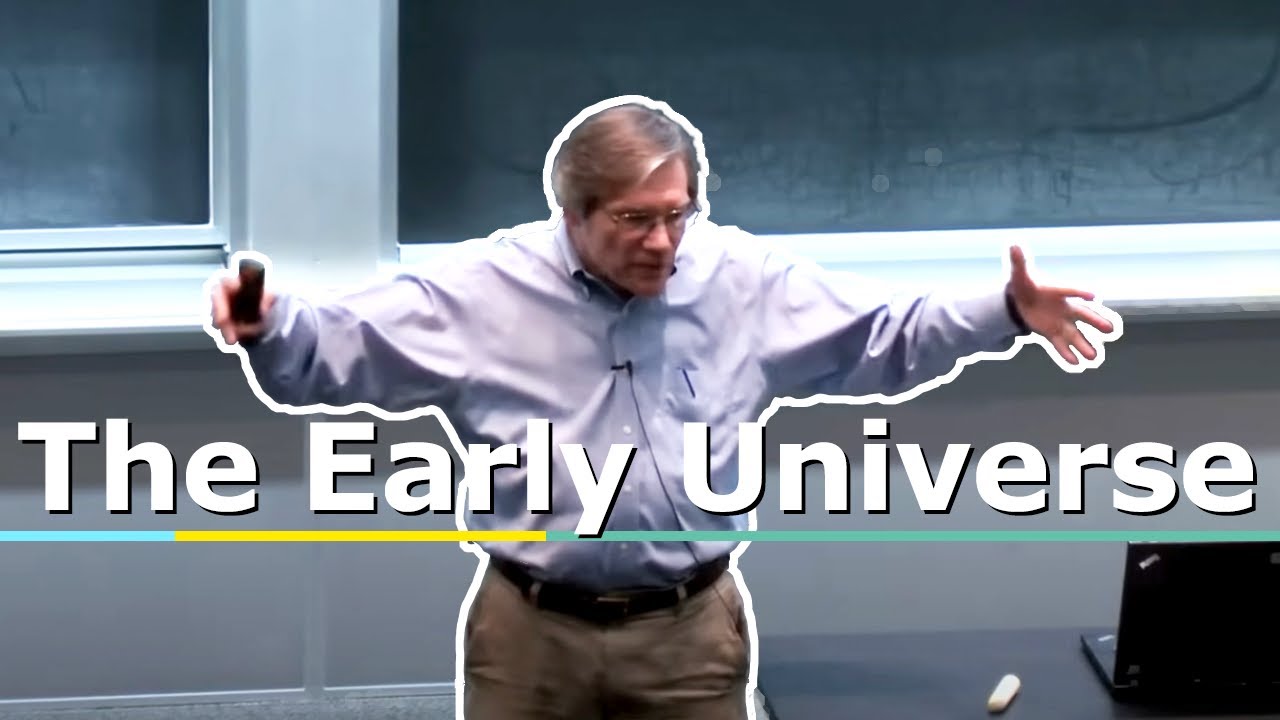
Cosmology Lecture 9: Inflation and the Early Universe (Stanford) 2013
Added:The Friedmann equations and the FLRW (Friedmann-Lemaître-Robertson-Walker) metric, which describe the expansion of a homogeneous and isotropic universe under General Relativity.
The classical Hot Big Bang model and its major unresolved puzzles, specifically the Horizon Problem and the Flatness Problem.
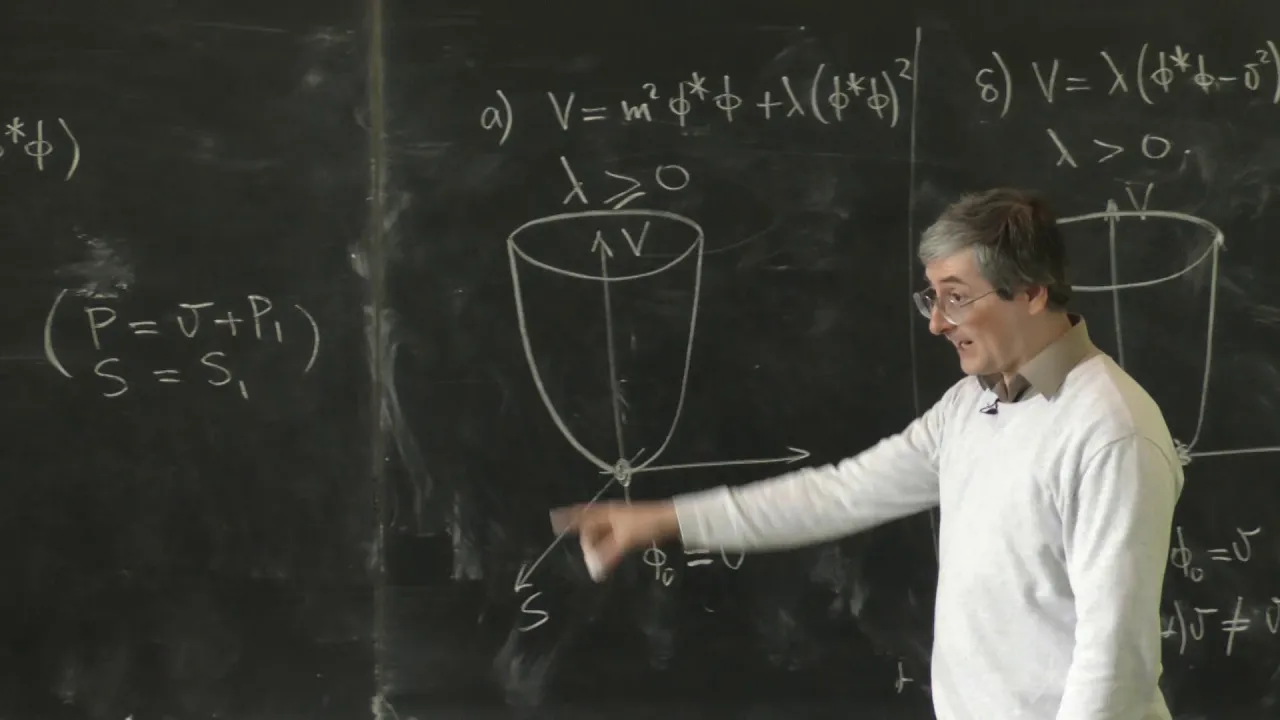
Basic principles of Quantum Field Theory, particularly how scalar fields function, including potential energy, kinetic energy, and vacuum expectation values.
The concept of Grand Unified Theories (GUTs) and how phase transitions in the early universe are hypothesized to generate topological defects such as magnetic monopoles.
The mechanism of 'Reheating', describing how the energy of the decaying inflaton field populated the cold post-inflationary universe with Standard Model particles.
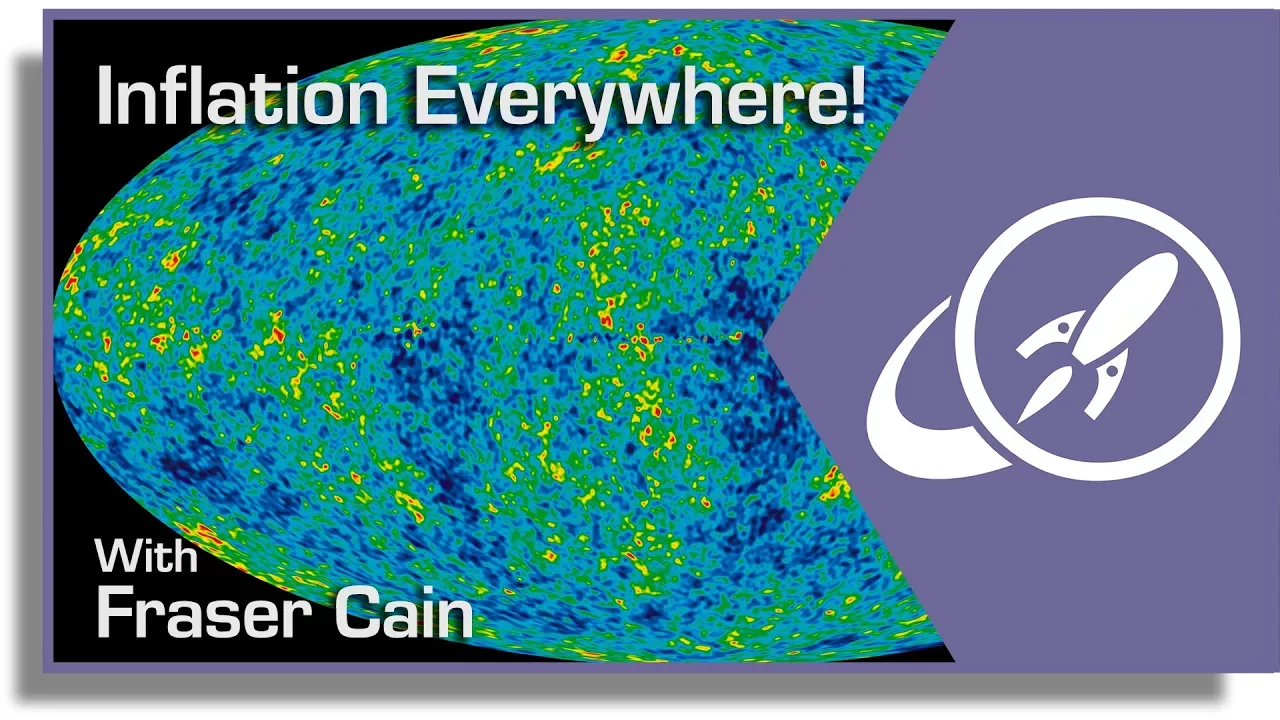
How quantum fluctuations of the inflaton field acted as the seeds for cosmic structure formation and left distinct imprints in the Cosmic Microwave Background (CMB) anisotropies.
The concept of Eternal Inflation and the 'Cosmological Multiverse' hypothesis, where inflation never stops globally, creating infinite pocket universes.
Observational tests of inflation, including the search for primordial gravitational waves through B-mode polarization in the CMB.
227.2K views1.2Klikes2:08:32Original Release: 2013-03-19
[Music] Stanford University are there other deeper and more profound questions I'm sorry I what's that I don't know if it's deep or profound but it's a question about last week okay um so the last thing I remember yes we're going to we're going to review a little bit okay but go ahead well there was an equation with the five double dot and 3 H5 dot on the left hand side and on the right hand side was F Force I guess yeah minus dvd5 so what's what is acting on what what sort of force are we thinking about here yeah all right good you know what a field is a field like the electric field mag itic field in this case a hypothetical [Music] Unis discovered field which is a scalar field Scala field exists in space yeah a scale of field in space and um Fields have Energy electric Fields have energy magnetic fields have energy scalar Fields have energy and the energy depends on the value of the field obviously right this is an Undiscovered field we don't know how the energy depends on the field but let's um hypothesis size vertically let's plot the energy in the field and I'm going to call it v v stands for potential energy for reasons that I'll describe in a moment but just think about it as the energy that would be stored in space per unit volume the energy density that would be stored in space just by virtue of the fact that the field which I'm plotting horizontally here has a certain value if the value of the field is one value then the energy is one thing if the energy if the field has a different value the energy is a different thing and so forth and it's very much like the um electric energy or magnetic energy that's stored in an electrom magnetic field but different different it's a scal of field makes a big difference for some things all right so let's plot it well nobody's ever experimentally detected it so I'm just going to make up a graph I'm just going to make up a curve here it is now you might think well this is funny if the field is zero shouldn't the energy be zero but the value of the field which is zero is somewhat arbitrary um the field has not been discovered I don't know where it zero is so I don't know where it should have zero energy so let's just plot it and make it any old thing we don't know what it is this is vfi and um it represents as I said the energy I'm going to call it potential energy and the reason I call it potential energy now is because it's the energy that is not associated with time dependence of the field it's not kinetic energy it's not energy that's associated with time derivatives the field defines a certain kind of velocity it's not a velocity of something in space it's the velocity of the field itself in other words the time derivative of the field if the field has a certain value at a later time it has a slightly different value then it has a f dot that's the analog of the derivative of the position of something think of the value of the field as a coordinate it's not a coordinate of a particle it's a it's a value of the field if it's changing with time I'll wait for a minute okay if it's changing with time there is field energy and ex example an example uh the uh just um the elastic string the elastic string is a kind of field in a one dimensional world the elastic string and if the elastic string is vibrating then by virtue of the fact that each little piece of the string is moving there's kinetic energy all right if we called the height of the string or the position of the string if we called it fi there would be a uh a fi Dot and in fact there would be a kinetic energy of the string which would be proportional to F dot squared just like and in fact we usually Define it so that there's a two in the denominator this would be the kinetic energy or the analog of the kinetic energy of the field now if this were a particle you would say I recognize ize this it's like 12 mv^ s where is the m well the answer is even if I put a it's not a genuine Mass let's just call it a parameter uh a number a number what's a good letter for a number give mean in all right how about better yet N squared okay why is it better yet because I won't have to take its square root that's why all right put n s it's like 12 mv^ s where the role of the mass of the N of the mass of a particle is being replaced by n s well if I then redefine the field if I change the name of the field and instead of calling it fi I redefine a new thing which I'll call Kai looks like X but it's not X it's Kai it's the Greek symbol Kai and I set it equal to n * 5 then this object over here just becomes Kai do squared so I can call at the time the square of the time derivative of some field having then Illustrated that it doesn't matter what you call a coefficient you can always eliminate it by a change of definition of the field let's not not bother let's just put a one here that's the kinetic energy of the field we've said there's also potential energy so the total field energy at any time is this plus v ofi and now field energy means the energy contained within a small unit box in other words the energy density really but let's follow a small box in which the field energy is given by this okay the mathematics of it is isomorphic everybody know the word isomorphic is the same as the mathematics of a particle with a kinetic energy and a potential energy or very close to it as we'll see and If This Were a particle If This Were the coordinate of a particle we would know what equation to write down let's let's go through the steps uh the steps are to say this is the energy corres kinetic plus potential corresponding to it there is a lran this is the energy corresponding to it there is a lran the lran is kinetic minus potential energy 5 do^ 2 / 2 minus V of 5 and then there's Lanes equations let me just remind you what lres equations look like they look like d by DT of the derivative of the lran with respect to the Velocity in this case the velocity is f dot is equal to the derivative of the lran why am I calling it script L if I'm going to call it script let's continue to call it script L over here script L over here minus the lran with respect to the coordinate that's lr's equations here's lran we can work it out the derivative of the L grangian with respect to fi dot that's just fi dot differentiating a square just gives you something linear and the two goes away so DL by F dot is f Dot and if I differentiate it twice and differentiate it against with respect to time this becomes F double dot second time derivative of f in other words a kind of acceleration the acceleration of the field itself simply defined to be the second time derivative and that's equal to D L by DF because the lran contains minus the potential energy instead of plus the potential energy this becomes equal to minus the derivative of V with respect to F now if this were a particle and F was the position of the particle then DV by DF would be the derivative of the potential energy with respect to position and that's the thing we would call Force and it's a function of F just as in general the force on an object depends on its position it might be constant the this object falling in a gravitational field uh near the surface of the Earth the force is pretty much constant but uh it doesn't have to be constant all right so this is basically the equation of motion for a field and a and I've assumed that the field is not varying much in Space the reason we can get away with that in cosmology is because space has expanded a lot or assuming space has expanded a lot the variations of the field have gotten stretched out and eventually they get so stretched out that over small regions of space over this box the field is very very smooth and very very flat that's an assumption but this is the field equation for a Scala field with a field potential energy vifi and it looks like Newton's equations now this is I was answering a question but in the process of answering the question I started the lecture which is where I was going to start right okay so let's uh let's uh go back now this object over here is the energy density or this over here if we actually want the energy in the box we have to multiply it by the volume of the box so let's keep that in mind and multiply this by the volume of the box and the volume of the expanding cosmological box is proportional to a cubed right the scale factor cubed it wouldn't matter if the scale factor didn't depend on time if the scale factor didn't depend on time it would just be a numerical constant and the numerical constant in the L grangian just cancels out from both sides so it doesn't matter but it is time dependent so the kinetic energy and potential energy both have in front of them a cubed of Time same with lran when you go from the energy to the lran kinetic energy minus potential energy you have to include that factor of a cubed volume another way to say it is that this was the lrange density the density of lran which you have to then multiply by the volume to find the lran now let's go back and redo the lrange equations let's do them now correctly including the a cubed first of all there is again just for comparison Al them over here on the other side of this Blackboard d l byd f dot is not F dot anymore but it's a cubed Time 5 dot so we start a cubed of T time F dot that's d l by D dot and then we have to differentiate that with respect to time let's just differentiate it d by DT that's the left hand side of the equation the right hand side of the equation is a cubed times with a minus sign DVD same as here except there's an a cubed in front of it minus now you can see immediately if a were constant we could pull outside the derivative here and just Factor it out and throw it away cancel it out from both sides of the equation but because it's not constant we have to worry about it and in particular when taking the derivative with respect to time is going to be a contribution coming from the time dependence of a cube that's the new thing that's what the expansion of the universe does to the equation of motion for a scal of field the expansion puts a new term in let's calculate that new term let's calculate both terms d by DT of this object here has one term which is just a cubed of T * 5 double dot now if that's all they were again we would cancel it from both sides of the equation and we'd be just dealing with an ordinary particle the second term is the time derivative of a cubed all time F dot so let's pull F dot out side over here and multiply it by the time derivative of a cubed so the time derivative of a cubed is 3 a s a DOT 3 a 2 a DOT time D the D yeah you you get that okay that's equal to a cubed minus DV d now we can divide by a cubed okay if we divide by a cubed this one goes away let's get rid of it we have to divide here by a cubed we'll come back to that in a minute and this one goes away okay so a^2 over a cubed that's called 1/ a and a do over a is what the Hubble thingy it's not constant but uh right what the Hubble thing right right all right so what do we get we we get the equation 5 dble dot + 3 H now H keep in mind in general it's time dependent 3 H * 5 dot equals minus dvdf which I called previously or earlier I called it f let's call it f but keep in mind what it is it's the derivative of of the potential with respect to field itself so over here it would be as if there were a force pushing the field down the hill and so forth It's always it always pushes down the hill but it would be pushing forward over here backward over here and so forth okay that's the basic equation that you asked me about now do you want to continue the question or uh how do we can we can we figure out a physical interpretation or is there any way we could or should try to visualize F if it's a force it's just the derivative of the potential okay we don't have to think of it as a force of one thing acting against another it plays the role of a force in the equation of motion here and since what we're doing is a general form of um mechanics mechanics of a field now mathematically it's uh has all of the properties of a force but it's a force not in space pushing some object it's a force pushing the field toward lower potential energy a tendency for the field to uh to uh move toward to accelerate toward lower potential energy okay this is our equation of motion and the interesting thing is the interesting thing of course is this new term here and the new term has exactly the properties of a viscosity this equation now becomes the equation of a of the of the field but think of the field now as the position of a rock just for as an analogy a position of a rock position of a rock which is falling there's the rock it's height we're calling fi height of above the surface of the Earth or wherever and it's falling if and it's falling let's say under the influence of a force F which in this case lets to be taking to be pushing downward exactly like the uh uh the force due to gravity that means the potential energy is increasing upward and therefore the force is downward if that's all it was we would expect the equation to be acceleration is equal to force the mass we threw that away we got rid of it by re by redefinition so this object would accelerate and in a short a couple of seconds or so it will be moving hundreds of you know 100 meters a second or faster I don't know yeah well it take some time to get to be 100 m/ second but not much time and it would just whiz away okay um if it's falling through water or even better let's say something even more viscous than water honey moving through honey it will gradually sink but it won't continue to accelerate ah now we know what H is for H is for honey right okay it would experience an additional force opposite to the direction of motion and proportional to the velocity viscous forces depend on the velocity the viscous force on a thing at rest there is no viscous force on a thing at rest it's only when it's moving that it experiences a viscous force it experiences the viscous force opposite to the direction of motion that uh to see that to see that that fits with this equation over here just shift this to the right hand side and it becomes minus H5 dot so the force is along the negative Direction relative to the velocity looks like a viscous Force so let's fill this space uh with goo with viscous goo and that become and Vis with a viscous coefficient proportional to H or 3 H in this case now in this particular case if H does depend on time it would be as though the viscosity depended on time but we're going to be interested in situations where the viscosity or where H does not depend very much on time uh does the viscosity of a honey uh depend on time sure if it's in the summer it's less viscous in the winter it's more viscous so yeah you can think of viscosity is depending on time makes perfect sense okay now for the moment let's suppose that the viscosity did not depend on time and let's watch what happens in the beginning the viscous beginning I mean if we drop it from rest if we drop the Stone from rest in the beginning there is no viscous Force because it's at rest and so initially it's just F double dot equals f ofi it accelerates all right the velocity starts to increase according to Newton's law but as the velocity increases the velocity increases so this term becomes more important eventually we'll get to a point where this term matches this term and when that happens it stops accelerating we can write this in the other form Five dble Dot is equal to the for the external Force minus the viscous drag and when the viscous drag gets up to be big enough so that it matches if the acceleration stops that doesn't mean mean that the velocity stops it doesn't mean the object comes to rest it means it just Falls at terminal velocity through the uh terminal velocity is the final velocity that it reaches the point where the force and the viscous force balance all right so you calculate the uh you calculate the um uh the velocity the terminal velocity and it's going to be let's write it f dot I won't put another symbol in this is the terminal velocity or the velocity that it achieves at the point where viscosity balances Force that's equal to the force ided by 3H the bigger the viscosity the slower the terminal velocity and so if the viscosity is very strong the terminal velocity will be very slow and the stone will just move very slowly through the viscous fluid and in that case if it's really moving slowly it's very likely that fi dot will be very small compared to vfi if it's you know it's a rock falling through really viscous stuff Stone then uh the kinetic energy is generally negligible compared to the potential energy keep that in mind that's going to come back but but that's uh that's those are the equations of a Scala field in uh in a cosmological background in a cosmological context okay any other questions about this yes by using the Lan are you invoking the principle of least action yes yes we are and uh for this we go back to discussions of field Theory and L grangian descriptions of field Theory which is um some quarter or another that we taught but if you don't want to think about the lunians just [Music] um take it as a fact that the time dependence in the energy here introduces this viscosity now you might ask what happened to energy conservation viscosity an object moving through a viscous fluid let's suppose for a moment that there was no Force okay it's just you give it a push through honey and what happens to it it slows down and comes to rest what happened to energy conservation well in the case of real genuine honey we know what happens it heats the honey a little bit okay but there was no honey here there was just the equations of motion of a scal of field there were no molecules to get heated up or anything thing and so we should ask well isn't this going to suck energy out of the system yes it is but why okay so then why isn't um energy conserved for this mathematical system with a lran that looks like this it's because energy conservation is a consequence of time translation invariance this lran with a being time dependent is no longer time translation invariant and there is no energy conservation for an equation like for a l grangian like this there just isn't any so not surprisingly that shows up as some sort of term in the equation which mimics a mechanism which allows energy to be lost by the system okay are we all happy now this is one half of the story of the equations for an expanding Universe in the presence of a Scala field of a the expansion affects the equation of motion through the viscous term but now we can ask how fi affects the expansion in fact what does it do to the expansion so for that purpose let's go back to the cosmological equations not the field equations for fi but the equations for a that's the fredman equation I'm going to simplify it and just take the flat Space Case you can put back the curvature if you like it will make no difference uh to what we're doing um because it is small by comparison with the things we're going to keep all right um so let's write down the fredman equation the fredman equation is a DOT over a squared which we can call H squ this is really an equation for H if you like but it's a DOT it's an equation for several things a DOT over a 2 and that is equal to 8 Pi G over 3 8 Pi G over 3times the the energy density times the energy density times what we've called Row in the past but we now have an expression for row here it is the thing in the square bracket not with the a cubed the a cubed was the volume the energy density is 5 do^ 2 over 2+ V of 5 so let's put that in here 8 Pi G over 3 and then two terms 5 do^ 2/ 2 plus v of okay now let's assume why assume uh can we prove it no we can't prove it but let's assume something which we're going to come back to I'm I'm telling you the equations now we're going to come back to the motivation for them in a little while uh I probably would have started with the motivation if art hadn't asked me the question he got me going so I so I went into this but we'll come back to the motivation let's assume that the potential energy is a that V is fairly large in some units and whatever units will need to say that it's fairly well it's large in units that you'll see in a minute um V is fairly large but it's a very shallow potential that the potential energy is gradual gradually um de and um drawing it so that it decreases off in this direction if it if it was tilted the other way we would simply change the definition of fi so that uh change the sign of fi and then redraw it so that it was tilted to the right tilted down to the right and tilted down to the right with a very moderate tilt yes did we actually say what fi is other than that it's a field SC field you want a name for it uh well you're you're talking about has something to do with energy density and so sort of my why I'm asking you want to name for it sure it's called the inflaton has it been discovered yet only indirectly does it exist probably so this is a scal field that has to do it's a Hy all scaler Fields have to do with energy density every field has to do with energy density period every field will contribute to energy density so every field has energy density but this one has is particularly cooked up to uh to do a certain job yeah so does all this apply to ban Fields this is a ban field Scala fields are always Bon Fields so but I mean every boan every boan could be like this this one is tailored to do a certain job job and um a job that other Scala Fields would not do because they just don't have the right properties the higs field being particular uh doesn't have the right properties in particular its potential is not shallow like this and the energy density associated with the exciting the higs field is not very high we want much more energy density there but there let's uh let's let's uh so far this is just a hypothetical description of the universe expanding with a with a field fi that has a certain property all right so if the field fi has a very gradual tilt to it then fi think of f is the stone falling now it's falling to the right things always fall in the direction of decreasing potential energy when I drew fi as a vertical axis I wanted you to think of a thing falling through space vertically but it always falls toward the direction of of De of decreasing uh potential energy and in this case that means falling down here now if the Tilt is gradual it means that the force is small we will come back to H well in fact we have an equation here for H which we'll come back to in a moment uh but whatever H is it's not zero simply because the right hand side is not zero in particular it has this vfi here we'll come back to it so H is not necessarily small and in the context that we're going to be thinking of it's rather large so H is rather large big viscosity big viscous coefficient very gradual tilt so thick honey with a weak Force pulling you down what happens you move you very quickly get to the um to the terminal velocity the force is small H is Big the terminal velocity is small and this ball which is really the value of the field gradually gradually gradually creeps down the hill and it creeps it creeps very slowly so slowly that the F do squar term here we could check it out we can uh we can uh we can um we can use the terminal velocity formula here to tell us what Five Dot is approximately and then check that the parameters whatever we're choosing for parameters are such that this term is much smaller than that but let's suppose we've done that then to a high approximation as long as it's moving very slowly H2 well again same equation H2 which equals a do over A2 is mostly just equal to 8 Pi G over3 time V of F and moreover V of f is not varying very quickly fi is varying very slowly and V of f the height of the potential is varying with time very slowly in other words to a pretty good approximation the field is standing still and the value of the potential energy here is just whatever it is on this ramp a number approximately just a fixed number so let's keep that in mind right so this is how does the universe expand under these circumstances well let's assume that because V of fi is so slowly varying that as a first shot at it we can just say that H is constant constant over a range of time until uh until this thing slides to an appreciably different height so as long as this rock up here is maintaining its uh its height or its potential energy we can just say V is a constant and let's uh let's see what we get and in that case of course H is a constant what's the solution of the equations of cosmology with a constant H remember exponential increase exponential expansion right why a do over a equals H or a dot d a DT = H * a the solution of that equation is an exponential expansion time derivative proportional to the same object with a constant coefficient or approximately con constant coefficient a expands like some constant time e to the HT and we have H what is h Let's uh let's solve this equation for H let's get rid of a do over a here and we know what H is H is equal to the square root of 8 Pi G over3 times the potential energy on this ramp all under the square root so if we know the height of the ramp of course we might want to fit this to experiment if we uh see the UN if we were at the time at which this was taking place if we could monitor how fast the universe was expanding we would simply fit V to uh to Observation but the things we're interested in here are taking place in the very early Universe let's first be clear this is a theory of the very early Universe it's a theory of the inflationary early starting point of the universe at that time V was believed to be rather large rather large in any kind of sensible units which means that the Universe was was was um if this is a correct Theory the universe was um exponentially expanding where is it exponentially expanding with a large coefficient how large well roughly the guess the guess that the it would be natural in cosmology would be the the doubling size of the universe was 10 Theus 32 seconds so it's really going it's really accelerating really expanding at that time this is not the theory of the current accelerating universe this is a theory of the early Universe we'll describe what happened later in a little while but this is the uh this is the exponential EXP expansion during inflation yeah probably not drawing the right connections but large viscosity and low gradient and rapidly exponentially expanding Universe just seem to be opposites I know it's F that's moving slowly not a right it's F that's moving slowly because it's moving slowly the potential energy stays more or less constant and it's the potential energy which is driving the expansion of the universe it's the derivative of the potential which is driving fi to move but it's the potential energy itself which is driving a to accelerate so quite different things right right it's it's it's not a which is experiencing viscosity it's F so there's no viscous drag drag on the expansion of the universe that's not what's going on here the viscous drag is on the evolution of the field which is keeping it pretty constant all right why should we be interested in a theory in which the universe was expanding very rapidly for possibly some significant length of time it's time now being measured in units of 10 Theus 32 seconds uh why should we be interested in such a theory the original guess about this which went back to Alan Guth in 1980 um did not seem terribly compelling and yet cosmologists caught onto it very quickly cosmologists and theoretical physicists by now it has been confirmed but it's one of the um one of the stories of uh theoretic iCal physics and guessing and uh uh the guess was a kind of a way out guess the puzzle there were two puzzles that this was addressing they were similar puzzles and in fact they are related to each other but the the first puzzle had to do with particles called magnetic monopoles now none of this inflation has ever been discovered yet oh yes I take that back this inflation Is Now by now well confirmed inflation being this experimental this exponential expansion uh we know that that really did happen or at least we know with some degree of confidence that it really happened um and it happened long enough it happened long enough that this exponential expansion caused the universe to expand by at least e to the 60 a lot of expansion at least e to the the 16 we know that and we're going to come to how we know it but not yet okay so that uh so why should one be interested in stretching the universe so much well the first reason was monopoles what what are monopoles monopoles are once again a set of particles that have not been discovered why should you introduce one crazy Theory with a totally undiscovered field to worry about particles which are also undiscovered and what was it what was trying to be explained not the fact that you didn't see those well yes the fact that you didn't see those particles in a certain sense um but not the fact that those particles were undiscovered yes I take it back you were trying to explain the fact that those particles were undiscovered but not that they were undiscovered by particle physics experiments namely that they weren't they just weren't out there in the universe and the way the argument goes a magnetic monopole let me tell you first of all what a magnetic monopole is and what the what the expectation for their properties is a magnetic monopole plays the same role with respect to magnetic field as an electric charge plays with respect to electric field it's simply a source a point source or an approximately point source of magnetic field with magnetic field radiating out from it in a Kum pattern exactly the analog of an electric charge magnetic monopoles according to current theories have never been discovered in the laboratory because they are very heavy how heavy somewhere is up near the plunk Mass that's the to to put it all in a nutshell magnetic monopoles are believed to exist they exist in most unified theories I would say they exist in every Unified theory that we can think of uh and in most theories they are very heavy heavy by comparison with ordinary particles the fact that they are very heavy perhaps 19 orders of magnitude heavier than the proton would easily account for the fact that they have never been seen in the laboratory okay but now let's go back to the very early Universe remember in the early un Universe was hot and when it was hot enough there was enough kinetic energy in the form of photons and other particles that uh you didn't need an accelerator to make Elementary particles at one point the temperature was high enough that photons would uh would scatter off each other and produce electron positron pairs even earlier it was hot enough that uh photons would scatter off each other and produce protons and antiprotons well if you go way way back to what physicists thought of as the very very beginning the temperature according to theory was hot enough that it could have created magnetic monopoles pairs of them just like you create pairs of electrons electrons and positrons when the temperature was uh um 26 OS of magnitude higher than something or other than uh than uh then the temperature for electron positron pairs it should have made monopoles now you you can say to yourself well why I mean okay this is wild wild speculation okay nevertheless every theory that we knew about seemed to contain these monopoles where were they first of all monopoles can't easily disappear they they have a charge they can't just disappear what can they disappear into they can't become electrons and photons and other things because electrons and photons and other things don't have a magnetic charge magnetic charge would be conserved just like electric charge so these particles unless they annihilated and one can estimate How likely it is that they all annihilated not likely uh so in the course of the universe as it evolved we would have expected to find some popular population of magnetic monopoles floating around in space maybe not a very large density of them the universe expanded a lot since the time of decoupling it expanded by a factor of a thousand since the time that it was hot enough to create monopoles according to the standard Theory it would have um expanded a lot more than that so they would be pretty dilute right but they don't seem to be there now why do I say they don't seem to be there they would have an interesting effect on the magnetic fields of galaxies if there were charged particles around what happens if there's a big if there's an electric field around and you have a population of electrically charged particles and antiparticles they discharge the field a bunch of particles if you had a a um if you had a capacitor creating an electric field across here and in here there was electrons and positrons let's say plus charges and minus charges plus charges and minus charges this is this is the plus side of the capacitor this is the minus side of the capacitor what happens the plus side of the capacitor pulls over the negative charge the minus side of the capacitor pulls over the positive charge and it discharges the field it discharges the field in the same way if the population of monopoles was as large as theorists had estimated and if they lived forever and they sat there in the magnetic fields of galaxies over the period of the age of the universe they would have discharged the uh the magnetic fields of galaxies the magnetic fields of galaxies have not been discharged they're there they exist so it became pretty clear that there's no significant population of monopoles out there even though the standard theories of the times in 1980 and so forth predicted standard cosmological theories predicted that the Universe was hot enough to create them and then in the process of expansion did not completely dilute them away right that was one argument that was one set of facts the other set of facts was the homogeneity of the universe not today's homogeneity but the homogeneity at the time of decoupling how do we know it was so homogeneous then by looking at the cosmic microwave background in different directions of space as time went on the temperature of the microwave background became better and better measured and it was measured in different directions the flux of radiation coming in as well as the temperature of it and its distribution were measured to very very high Precision all over the sky and one found that it was absolutely or almost absolutely at the time in 1980 it was absolutely uniform the one part in 10 Theus 4 or something like that one part in 10,000 or even better it was absolutely uniform on the sky and so that raised another question it raised a question why is everything so why at that time was everything so darn smooth no standard theory of cosmology could explain you know if you start with a small Universe very very hot it's likely to have all kinds of fluctuations and uh and bumps and lumps on it and so forth and expansion from a from a standard expansion would not have flattened it out and smoothed it to the degree that it was known to be smooth and and homogeneous the guess that um that Alan Guth made was that very very early after the monopoles had been produced and after perhaps the universe had a a highly complicated texture an enormous amount of expansion came it diluted the monopoles so that enough expansion will dilute anything so that uh so that the presence of monopoles was just diluted to the point where there were many many fewer of them than had been estimated and it also diluted the textural um lumps and bumps that one might have expected to be there now nobody could prove that they were there you could just say well the universe just started very very smooth and it stayed smooth you could have also said the universe started with no monopoles but there was no good reason for it with one shot the idea of a very very early extremely large amount of expansion can solve both problems flatten everything out or smooth it out just like a blowing up balloon balloon gets smooth and dilute the uh the density of these mon poles it was estimated the estimates vary to some degree but it was estimated that if you wanted to make the universe as smooth and flat as it is from a known starting point or an unknown starting point but except that the unknown starting point is not terribly smooth if you want to start with something which is not too smooth and blow it up to its present smoothness you had to have what is called approximately six 60 e foldings 60 e foldings an e folding is a multiplication by E E is 2.7 right you in order to to arrange the facts to be consistent with the known flatness in smoothness you needed approximately 60 e foldings or a factor of e to the 60 which means that this HT Factor here had to be at least 60 that that in itself tells us that this ramp must have been rather shallow the universe had to stay on the ramp for a sufficiently long time for it to have grown by Factor e to the 60 it doesn't tell you any details there's all sorts of ways that you can uh that you can change one thing and change the other thing but the working number is that there had to be e to the 60 or 60 e foldings of inflation in order to simultaneously account for the lack of monopoles and for the lack of structure in the universe at the very earliest uh question yeah is there a theory about why it wouldn't be completely chaotic before infation started there is no reason why it could not be completely chaotic no no 60 UH 60 would be enough to start with something which was very chaotic and rough and stretched it out um mathematicians talk about extremely yep y but uh Noni you can't okay so maybe it was 70 60 is the minimum 60 is the minimum with with re you make your assumptions worse you need more but Mantic monopole you can kind of predict how many there would have been so that could give you a firm 60 but I don't see how you would have it's only telling you that there were at least 60 now if you say that the Universe At the very beginning was fairly rough but not very rough it's again about 60 if you say it was rougher than that well then it becomes 70 if you say it was more texture than that becomes 80 minimum minimum number of e foldings is 60 now again these numbers are not hard and fast by changing the theory in this way and this way you can probably bring it down to 40 or 50 uh but one one doesn't uh you know there's there's room for uh pushing numbers around a little bit but I would say with reasonable confidence we know that the inflation took place so as to expand the universe if not e to the 60 e to the 50 or more an upper bound we don't have could it have been e to the e e to the 10 to the 10 to the 10 to the 10 to the 10 to the 60 yes it could have been nothing in observation tells us one way or the other um that would be very remarkable because to do that you would have to make this extremely shallow and you have to fine tuness the shallowness of it and so forth but still there is no known upper bound there is a lower bound lower bound of about 60 e-foldings that uh that's necessary to understand uh the flatness and so forth okay so that's uh that's uh where things lied around 1980 Alan Guth postulated that this exponential expansion and in order to drive the exponential expansion he postulated exactly a potential which looked something like this the first round of theories was not quite right it got it got into the form that I'm describing now after year or two Andre Lind uh and other people uh sort of straightened it out but and I don't want to go back through too much of the history because some of the history was wrong not the history was wrong the the the physics was wrong uh but you know ultimately it got straightened out to where the theory looked pretty much like this with a shallow ramp which supported this inflationary tendency for at least 60 e-foldings now one interesting thing is if the if the number of e-foldings were just barely 60 that would mean you are on the edge of being able to see exactly what it is that the inflation was invented to get rid of right inflation was invented to get rid of something this is how much you needed to flatten it to the current uh flatness what if it were right on that edge if it were right on that edge it means you should be on the threshold of in the next round of experiments being able to see some add addal curvature in the universe so one of the things that will be hunted for by the uh by the plun satellite and other rounds of uh of uh observational cosmology will be to see if the universe really is flat might it have curvature spatial curvature might it have positive curvature might it have negative curvature and the fact is inflation does not tell us whether there was more e-foldings than 60 it just tells us there had to have been 60 in order to account for the present data always in such circumstances it means that you have a chance in the next round of uh if you're on the edge if you're on the edge so this I we will come to why this is so important it is important yeah how does how does this relate to the temperature of the univers rapid expansion uh Yeah by what there was a there was um all right so the first impression which is close to the truth is that this rapid expansion cooled the universe cooled the universe expansion cools things and um if it was just classical physics if it was just classical physics and you had some heat in a in a box and you exponentially expand the Box very quickly it will cool uh to uh to negligible temperatures so the first answer to this is at least in a classical Universe this rapid expansion would have cooled it down so our first uh first statement let's say is that it was cold very cold during this inflation during this period here very cold because the heat got D diluted everything got diluted this space was empty it was expanding rapidly it was empty of all kinds of structures empty in the sense that they had been diluted uh ordinary particles were diluted monopoles were diluted everything else was diluted empty as hell and cold okay now this could not go on forever why not no theoretical reason uh if this potential had some other shape it could go on arbitrarily long but we know it didn't go on arbitrarily long we're here the universe is not doubling once every 10 to Theus 32 seconds so something happened the natural guess is that this potential did something different it had a plateau and it came to the end of the plateau why it had a PL why it had a plateau and why the end of the plateau looks like this is a mystery today we don't know what we know is that this is a pretty good representation of uh of cosmological data and what about today what about the bottom here the bottom represents today the potential energy of the field is very small we'll come back to why in a little while all right so if this is your model if this is the model that works how does it work first question is how did the universe get here in the first place nobody knows that's part of the initial condition uh and of course initial conditions in this context mean that's how far you can trace back uh with anything like uh observational uh data so we know from observational data CMB data and so forth that there was a period of inflation we must have started up here at some point how we got there we do not know it's a rather completely arbitrary thing to start us up there and it requires a theory it requires a theory of some cosmological uh setting to say why we did we start here did we really start here or did we come down from some other place we don't know we don't know but tracing back as far as we can go it looks like a good bit that we started somehow like this and gradually gradually gradually rolled down this hill taking long enough that 60 e foldings happened where do we think the onset of inflation took uh occurred in relation to decoupling oh much before much before if you much before uh much before all right now what happens when you get to the end of this Plateau when you get to the end of this Plateau if it's steep enough viscosity becomes less important first of all viscosity becomes less important for two reasons as you go down the hill here H gets smaller remember what H was H is proportional to the square root of the energy of the potential energy if this potential energy gets smaller then H gets smaller on the other hand F the force gets bigger as you go down the hill here so viscosity becomes less important Force becomes more important and the expected result is that you would if slide down once once you got to the edge here it would sort of slide down relatively quickly inflation would stop and in the process of sliding down the hill here energy was released potential energy the potential energy of the field disappeared it's true in an expanding universe that energy is not strictly conserved but even in an expanding Universe there's some memory if it's not expanding too fast you still do get to use at least approximately energy conservation if this potential energy suddenly disappeared it will be made up for by kinetic by something so it's thought that as you went over the hill here the potential energy V got converted to something else well one thing that it would get converted to is the velocity of the field obviously but then eventually you get down near the bottom when you get down near the bottom let's assume there is a bottom and you get stuck at the bottom where is the energy the energy somehow got converted to particles got converted to heat at some point all of this energy up here got converted to heat that's the that's what is thought the energy got converted to heat and that at that point that's where we usually start what we call the big bang when this vast amount of potential energy which is believed to have been there very large amount of potential energy suddenly got released fairly suddenly it got converted to heat and that heat was the starting temperature of the universe when it began as a hot uh big bang so the Big Bang has to do with what happened as you slid down here as you slid down there lots of heat was generated the heat that was generated replaced the right hand side of this equation by perhaps radiation domination and that's the period when uh when standard cosmology started as you go down this hill here yeah the in the higs field you have a constant field and xations that fields are the HG Bon yes so when you get to this Valley down here are you getting infons being created yeah yeah you're filling the universe with phons and then yeah exactly well when I say exactly that's one that's that's one nice Theory that's one nice way that it could have happened um the inflaton field is itself a field that has quanta those Quant are called INF uh no the in I guess they're called inflaton yes they would be called inflaton and so as it rolled down here you could either think of the field is increasing or you could think of it as the production of lots of inflaton particles if these inflaton particles themselves were unstable they could Decay into electrons positrons photons and other things and that would be one explanation of how all this energy got converted to heat and uh and particles so yes that that is one uh uh story which in uh in some form is probably the right story now there was uh the the bottom of the trough there at the end that's where space actually begun well it's not where space begun it's where the start where somewhere down here on the slide down here is where the big bang that we normally think of as the Big Bang began the hot big bang to that point to the left there space did not exist where am I why do you say that space didn't exist well because the Big Bang did not expand into space that existed it created space did it not a huge amount of space was created by the inflation that's what the inflation did is it blew up this fictitious balloon well we could uh I'm not sure exactly what creating space means but let's suppose what it means is it makes space bigger we don't understand the starting point but let's take as the starting point some little tiny uh tiny uh thre sphere of space in want of anything else right what we mean by saying creating space we mean we made it bigger we made it bigger to be able to move around in and have stars and galaxies and so forth and have interesting spatial relations called triangles and things of that nature and that's simply involved expanding the universe by a factor of what's e to the 60 would be about 10 to the 25 or something 10 26 10 to the 26 so 26 orders of magnitude of expansion is where the space was created then after the space was created it was empty it was empty but what it was full of potential energy to say it was empty is not quite right it was full of potential energy now this potential energy was actually in the form roughly speaking at that time of dark energy except it was of a much much larger value than today's dark energy it was potential energy it was the potential energy of this field that got eliminated when you roll down the hill something had to replace it what replaced it according to theory was um was particles heat light and all the stuff that the Universe began with would began with in the sense of standard cosmology okay it rolled down to the bottom what about the bottom was there any potential energy left over at the bottom yeah and what do we call it today Dark Energy Right the universe is still believed today to be expanding exponentially but with a tiny Hubble constant not once every 10 to the 30 10 to Theus 32 seconds but once every uh 10 billion years that requires a very very small potential energy here and it's what we today call the cosmological constant yeah when when you if they don't find the magnetic monopoles do you make the 60 bigger or you decide no no no the the monopoles were diluted out of existence during the first round of in during I thought you said we were on the edge of maybe see oh no actually I don't think we're on the edge of seeing monopol we're on the edge of seeing some curvature I um I don't think there's any chance of seeing monopoles we know that the uh Galactic uh magnetic fields were not Unwound but the Precision with which we can say anything about monopoles from the fact that the magnetic field was not unw is not very good but what we can do is measure the curvature of space the curvature of space has been measured to some Precision it's less than 1% in some in some units and in the next round it will go down possibly two orders of magnitude and we may discover that space is curved the the most the tightest constraint on here is the fact that space looks flat in other words there was enough inflation that had flattened things out to a degree where we at present cannot measure any curvature to space so if you don't see it you make your 60 bigger yeah we make the 60 bigger right so is is the bottom of the hill there on the left of energy is that the vacuum State energy that's the vacuum State energy of today now why so there's in some sense there's a nice unified picture of inflation and dark energy on the other hand it's a complete mystery why the number down here is 20 orders of magnitude smaller than it was up here that's part of the mystery why this you know I've drawn it on the Blackboard as if you could see this but on the scale of what's drawn here it should be a 120 h of magnitude smaller and that of course is the mystery of the small cosmological constant yeah um so if I understand what you're saying is during the expansion it was there weren't particles radiation whatever it just space expanded but then how does that explain you saying it it smoothed things out what what was there to smooth out particles came the curvature of space the geometric curvature okay but how did it thin out the magnetic modles that didn't get created until later on no no they were created oh oh oh you're in trouble if the monopoles are created later on you have to juggle the time scales here to make sure or time and energy and SC scales and so forth um right good the question is when this fell off here how hot did it heat the universe did it heat it up to the plunk temperature in which case you were back exactly where you started plenty of energy to create monopoles or did it heat it to something more moderate and modest that depends on the details yes you're perfectly you're right that there's a question here this this is called reheating incidentally why it's called reheating and not just heating I don't know but it was called reheating and reheating took place and created a certain temperature it is essential that that temperature is low enough enough that it be below the threshold for creating monopoles otherwise you're back where you started if monopoles were created on this leg of the journey over here you're back in the soup so uh so um are monop considered particles yeah okay so those were those were particles they very heavy ones okay but they existed before expansion happened they may have existed before expansion happens or or they may have or they may have failed to have been produced for the simple reason that it wasn't hot enough yeah now you have to juggle numbers to get this to work out but uh the numbers aren't crazy so bottom of the trough right now we're down at the bottom of the trough is there any overshooting expected back up the other side no no well a little bit but the reason that it doesn't overshoot is because of the friction okay the friction was enough to keep it from overshooting what um what caused that curve to suddenly drop yeah we don't know yeah this is a parameterization that fits uh observation we don't know why it was so flat up here and we don't know why it didn't continue to be flat there's no theory of it but even though there's no particular explanation is there recently believe there was a cause for the inflation to stop just don't know what it is or just let's put it this way I I I think the only known answer to any of these questions the only when I say known answer I don't mean to say that it's known to be right I mean the only answer around is anthropic that uh that um the universe may be extremely big and may have many many many different environments of all different kinds and you can ask here we are what did it take what kind of environment was necessary for us to exist now the thing is a lot of this is necessary for us to exist uh certainly we couldn't exist if the universe uh was was as big as a peanut so it had to have evolved and expanded um I'm not I didn't want to get into that tonight but the rough structure of this curve is dictated not only from uh from observation but most of it and large parts of it are necessary for the universe to have evolve to something that looks like what we live in so I'm going to come back to that but other than that we have no explanation of why the features of the curve are like this we don't know uh could just not even causal it's I mean physics there's a everything that happens there's a cause when the Universe goes through the radiation phase or whatever there's a cause and this would be the first time I came across something where there was no cause why something radically change and is it just they don't know what it is or there isn't a cause or is that not even a valid question the answer is unknown the answer some things AR know some things are't know the horizontal axis is five the horizontal axis is the field value five right so f is getting larger then you said it could be getting smaller either way well where you put the zero of fi is completely arbitrary where you decide to say fi is equal to zero uh you can put it here you can put it here you can put it here you might like to put it here where it is today and say that's the zero of five can we say anything about how the changing value of five relates to time changes with time we know anything about the me today throughout that that where time on the gra time isn't on the graph but we could mark off times this is uh 10 Theus 32 seconds well this is the start 10 the- 32 seconds 10 the- twice 10 - 32 seconds blah blah blah blah blah is 60 * 10 - 32 seconds that's what you need here that's what you need here 60 * 10 if it if it doubled or let's say it multiplied by E every 10 Theus 32 seconds then in those units by the time it went over the edge there were at least 60 units of e foldings maybe more so time ticked off here and then relatively quickly you went down the hill here how long did it take to go down the hill probably more than 10 Theus 32 seconds probably a lot more but uh on the scale of ordinary time pretty quick okay did you say earlier that it's impossible to for the energy to go back up on the far right side of that curve if it can go back up what are the implications of it if it can't go back up or can I thought you said it could not maybe I misunderstood uh yes that's correct it cannot go back up remember that the equations of cosmology have a friction term in them the expansion of the universe today is big enough to provide a friction that would make it very unlikely for this to uh to uh to spontaneously go up the hill right so you're sitting in a or or another way of saying it is it was the friction term that brought it to rest it may have overshot it may have it may have even rung a couple of times but uh the friction term due to the expansion of the universe would have slowed it down would have come to rest and then just like any kind of object in a viscous you know a rock sitting at the bottom of the sea is not going to suddenly spontaneously um uh come up to the top first do we have an idea how the tempure vary during that time how the density varies the temperature the temperature yeah the temperature was very cold during this period here okay and then during this period here when particles were dumped into it we don't know with any detail what the temperature was that it was heated to by the time it got down to here but what we do know is it had to have been hot enough uh to create all the particles that we know and love quarks and everything else so it had to be in the uh you know the range of um huge particle physics temperatures but uh number okay so I always have to work this out um room temperature is a 40th of an electron volt that's room temperature um we're talking about temperatures which were high enough to create proton anti-proton pairs or very likely much much hotter than that so a 40th of an electron volt for room temperature that's 300° um a billion electrons volts to create proton anti-proton pairs so that's a billion time um Time 1 over 300 * 1 over 40 so whatever it is it's you know 10 the 11 10 to 12th degrees something like that somewhere a trillion degrees or hotter um that's probably on the very very low end remember you have to have heated the universe up enough to among other things you had to heat the universe up enough to create the barion excess to create the proton antiproton Pairs and that sort of thing but probably much hotter than that so um ass field yes those bons are called yes yes they are they are on the way down here they Decay and in the process of decaying produce the usual part particles that's the theory yes that was the same question that was asked earlier there are bosons those bosons Decay uh and what do they Decay to photons electrons quarks uh anything that creates ordinary um energy density so and dark matter for that matter probably more Dark Matter than anything else question pleas um it looks what you said is that the fields always moves in the direction of his potential energy moves in the direction of decreasing potential energy excuse me and so what what you're illustrating is it looks like the universe had a definite potential energy um along the time of expansion inflation and that would somehow a low point in potential energy in the universe is it to say that that potential energy is there to stay and there's no other direction for it to go sure it looks like it so um that's to say then that the expansion of the universe says no bearing effect on this scale F that's right at the present time as far that's right at the present time it looks like we're stuck at the minimum here and unless something else happens that uh that is not built into the equations at the moment uh will stay there forever now what it's interesting to ask what happens if we stay there forever if we stay there for the universe exponentially expands now it's true it doesn't exponentially expand very rapidly but still every 10 billion years it doubles uh it takes how many times over a trillion years it will expand so much that basically the galaxies will have all receded from each other be moving away from each other outside the Horizon we will our galaxy will be alone there will be uh well the Andromeda might uh by then the Andromeda probably will have merged with our galaxy everything else is moving apart and we will truly be alone out there there'll be nothing else but uh but the Milky Way and the cosmic microwave background will have cooled to a temperature which is way below detectable everything else in between G IES will have stretched out and diluted to a point not by inflation but by the current inflation which is taking place the very slow inflation in a few trillion years I I think it's a good deal less than that but I I would have to think about it but in a few trillion years our galaxy will be absolutely isolated and physicists who live on it at that time will have no way of knowing that they are part of a population of large numbers of galaxies they will not be able to measure anything about astronomy they will not even be able to tell that they're undergoing a um an accelerated expansion remember how did we discover the current Dark Energy we discovered it by astronomy we discovered it by looking at the CMB the CMB Cosmic microwave background it will have cooled to a temperature which makes it undetectable everything in astronomy will have departed and gone out through the Horizon and so we won't be a not we but they will not be able to uh to tell that they're in a inflating accelerating universe if they come on the scene without history books and so forth at least for some period of time let's imagine it what for some period of time they look around at a universe which is uh 50 billion light years big they won't see anything they won't be able to tell us 50 billion light years uh they'll maybe send out probes and the probes will go out a few thousand light years and come back and they tell them I saw nothing there was nothing out there and they will discover themselves a unique phenomena sitting at the center well of course they'll call themselves the center and uh one and only one such thing and they will be puzzled they will be puzzled and then some smart young guy will come along and he'll say Hey you know maybe there are lots more out there but maybe the universe just expanded a lot and they uh and uh they just uh went away is it clear that all this started from a point source that what does that mean that there weren't other point sources that point sources expanding back through US Point sources in what in zero space H zero space in in what at the point there was no space point before the creation of space itself this is yeah I know I know I know but if but if there's no if there's no space but only this tiny little nugget which is uh what is it a point source in you're imagining that this thing is in some other space but that's the wrong idea right couldn't there be more than one five space could have been more than one you'll have to ask somebody else planet is the 10 bilon 10 trillion years from now a situation analogous to perhaps what we can't see beyond our expanding yes but the yes it will be analogous except that everything apart from our own Galaxy will be out beyond that point so the radio astronomers in that g Galaxy might be able to detect old Transmissions of the grouo mark radio show for example I don't think so I don't think so they will be red shifted to the point that they will be um yeah not very funny let's put it this way not too funny it'll take a long time to get the [Laughter] joke wait there's so many questions I got I'm going to start at this end and sweep across okay well you you you you had a question let let somebody else get a question is there any idea how heavy Theon particle is yeah well okay no there's no no there is no uh the the mass of the inflaton particle has to do with the curvature of this down at the bottom here and we know nothing about it we know nothing about it the only thing we know is it's not so light that we would have produced Bo it and accelerators that's about all okay wait wait we're going to sweep across okay is this a I also a function of spatial coordinates oh absolutely this like yeah yeah again again fi might have started with lots of ripples but in the process of this inflation taking place those ripples got stretched out so after a couple of e foldings the ripples would have been um you know pretty much eliminated locally and you can forget them although we'll come back to that I mean that's yeah well let me see okay Y when you talk about ripples were those Quantum fluctuations no let's let's uh Quantum fluctuations we will come back to for the moment let's just imagine classical waveform and it gets stretched out that's the primary main thing that happened superimposed on top of that were Quantum fluctuations and they will play an enormously big role when we come back to it and what what exactly are quantum fluctuations in that context let's wait because that's going to be a serious issue that we'll come back to with okay you're you're you're you're you're in my next angular oh okay um uh should we today be seeing galaxies slipping Over the Horizon uh no no no the Horizon is so red shifted and all we see out there is Cosmic microwave background when we look back that far first of all we're seeing the universe at that at an early time before galaxies even formed so when you look way out there and the furthest we can see is to the surface of decoupling the surface called the surface of last scattering but that that means the place where the universe was opaque that's pretty much out near the uh near the Horizon okay but we can't see further than that and even if we could we would be looking back so early that there would have been no galaxies and uh so the answer is no we can't see such things so it's only at a later time that these objects are going to slip over the well we'll never see them slip over when we look out we will always see pretty much the same thing as an information Theory War veteran uh is it easy for you to say that teacher astronomers will really have no information about the origins ofers well um what we'll have is the observation we not we what they will have if they still exist and stars still exist and so forth what they will have is their little Galaxy and uh in an otherwise completely empty space it's very hard to see how they could do any observations which would directly tell them that they were in a space which was inflating once every 10 billion years or once every uh 20 billion years um I can't offand think of anything that they could do short of sending out probes which would take you know of order billions of years to go go out there and come back and make measurements on the whole Global structure of the universe short of that I can't see how they could tell uh what the the expansion properties of the universe were or anything else they could do that they could take tens of billions of years and explore but they can't go too far because if they go too far they go outside the Horizon and they can't get back they can only go out to distances of order 30 billion light years something like that 20 billion light years years send signals back and forth which will take billions and billions of years triangulate discover the fact that things are reced that they're receding away from each other but before they go too far come back so in principle they can do geometric measurements discover this curvature of SpaceTime discover the fact that there's a dark energy um but it would take billions of years at least with the level of um of precision I think even with better levels of precision they would have trouble um uh if their astronomers are anything like our astronomers it will take them billions of years to reconstruct the fact that they're in an inflating Universe the yes no version of the same question is basically do do you believe that dark energy can destroy information no yeah thinking about gravitational attraction of galaxies there are larger Str gravitational structures where galaxies may be closer together sometime in the future yeah I who's going to win there um yeah I I actually once asked some observational cosmologists is it really true that all that we'll see uh will be us in the androma and I I think it is true I think everything else is participating in the outward flow and enough that they will uh that they will recede uh but you know um yeah I I think so if we're currently expand if expansion is accelerating where is that on the curve what's happening on that Cur we're down there just sitting there nothing's happening in this curve nothing can can you express Fe as a function of times on the upper board on the right yeah I express v as a function of time why do why do I have to write an equation I'm not going to write an equation I'm going to tell you what started here slowly drifted to the right suddenly picked up and went down to here it's very nonlinear it's nonlinear hugely nonar hugely nonlinear yep that's right well it might have been linear up here gradually linearly uh tracking along here but when it got to here yes became nonlinear okay yeah uh you were uh referring before just a minute ago about uh way in the future uh societies could actually send probes out but with the uh Dark Energy uh it's shouldn't take too well should take at some point to where the uh universe is expanding faster than the speed of light yeah they can't they must not go they must not go past the horizonless they can't get back right yeah which gets smaller and smaller so but they can certainly go a few billion light years out and then come back and that should be enough for them to be able to measure carefully properties you know not just one of them but a few of them sending light signals back and forth which themselves would take billions of years to travel they could probably do some triangulation I haven't thought about it a lot it's not an urgent thing on my uh yeah yeah it's always not no no the Horizon will stay out there if roughly 50 60 billion light years I I don't remember exactly what it is but the space in that there's just less space in that uh distance there's not space there's less space less space no less stuff there's the same space there there's a lot of space but not much stuff in it how do you define that boundary um is it where the recession velocity the Galaxy approaches the speed of light yes if you're sitting here if you're sitting here the potential energy is constant and the Hubble constant is constant constant Hubble constant means the universe is expanding this way or it also means that um distance or velocity is equal to distance time Hubble and Hubble is constant now so you can now solve the equation at what distance away from us are things receding with a speed of light and find distance divided by Hubble sorry C divided by Hubble is equal to distance and what you will find will be of order uh 15 billion light years right from the known numbers 15 billion light years and that's where the Horizon is that's where things are receding away from us with the speed of light okay I I yeah all right talking about boy this this lecture seems to have uh been very provocative G what we s of sense about things after a lot of expansion we be alone our our galaxy would be what would the nature of our galaxy would it be a lot tighter than it is now you have to ask a galactic uh I I don't think so uh somewhat but not a lot no I think it's uh I think it's going to you know um how many stars there will be what the density of stars is I don't know but I think that will survive for a trillion years and I believe um I don't know I never I never was sufficiently interested to track down and ask ask my friends what the details are but uh but um I think there will still be the Galaxy there will still be stars and uh with any luck there will still be planets and uh and um intelligent creatures on them you've spoken of inflaton as a particle is it correct to think of space having been filled with many infons and the sense that it's now filled with many other kinds of particles and the infons are now gone they've decayed other things yes that's exactly right to some extent you can imagine that all this energy was stored in a kind of condensation of the inflaton and it was released as you came down here in the uh in the inflaton decayed now again I mean much of what I'm telling you would have to be true in order to explain why the universe uh is and was uh the way it was during the observable period we don't we do not understand with any great uh uh Insight why this is the picture but we do have significant evidence now that that is what the picture was okay all right we have uh 15 minutes or so the next thing on our agenda is to understand after all this inflation why isn't the universe completely smooth the amount of inflation that took place in order to make it as flat as it is would have made it so smooth that there would be no explanation of the structures that are out there the inhomogeneity that's out there today so the next thing we want to come to is the fact that the universe is not homogeneous and it has all kinds of structure on various scales I thought I would tell you a little bit about that structure and just a very naive uh but still more or less right explanation of why the structure appears the way that it does now I'm not talking uh and what it traces back to um when I say the structure I don't mean galaxies now galaxies are small potatoes on a small scale I mean on a much bigger scale not just clusters of galaxies but whole super clusters of superclusters of galaxies and they form a structure that fills the universe that does have structure it does have structure it's not completely homogeneous on those scales and that structure is quite fascinating and I think largely understood but it's mostly understood by simulations the simulations start by assuming the universe was not precisely smooth and they start with a certain pattern of non-s smoothness called the fluctuation Spectrum which we're going to study a little bit and then allow gravity and just the motion of objects and so forth to evolve and see that it creates structure now on the biggest scales biggest scales of super duper clusters or galaxies um gravity is not all that important the on the scale of a galaxy or certainly on the scale of a star or a planet gravity is what pulled things together on bigger scales uh this structure that's seen that is largely not or to some extent not coming from Gravity and would be there even if there was no gravity but what it takes is to start with some inhomogeneity some fluctuation in space um so I thought I would talk a little bit about the theory of how that structure got formed and the theory that I'm going to show you is extremely simple extremely simple I gave you three pictures uh to to look at has everybody seen the three pictures I sent them to you by email all right picture number one is actual photograph of the sky but deep deep deep uh astronomy um billions of light years out high red shifts and what you see is a pattern of Light which has some structure to it it's not featureless and um I couldn't find as good a picture as I wanted but what you see has a kind of filamentary structure uh you can see it on the pictures but there are better pictures I couldn't find the right one that I was looking for has a kind of filamentary structure now these filaments are not single galaxies they're thousands and thousands and maybe millions of galaxies a huge number of them forming these filamentary structures and the filamentary structures intersect and uh form a complicated web at least photographically in the sky and that web so looks this is um this is an exaggeration because the pictures are not that good but it might look something like that at the intersection of the filaments things are particularly bright again these are not single galaxies particular bright at the intersections of them there are big voids in between the uh the filaments they parent filaments and that's the rough uh picture on scales much much bigger than a Galaxy I've forgotten how big these cells are I don't remember okay uh you can look it up next second picture this is picture one sky real thing picture two I will not redraw it because it looks the same picture two is simulations made by people what do they do they start with a bunch of particles big galaxies but you start with a bunch of particles with some kind of spectrum of fluctuations fluctuations means a little bit of Randomness in um in the velocity distribution in particular in one region of space they might be moving a little more this way another region a little bit moving this way traced back to some primordial variation which we'll want to understand right but that's what you start with and you let it evolve for a while start with uniform a good starting point for this would be a uniform distribution of stuff but with variations in velocity small variations in velocity it's a velocity variations which are the most important things and what do you see after a time in these simulations you see a picture which if I drew over here would look just like this except sharper clearer why because it's simulation and you're not looking through a telescope but billions of light years billions of light years a billions light years or more you uh have uh a uh simulation with great detail what forces or what what interactions are you allowing in those at the moment at the moment n okay none none right right I'm going to show you the theory that you would get if there were no forces okay and the last picture anybody know what the last picture is it's a beautiful blue color a swimming pool it's the bottom of a swimming pool light forms patterns at the bottom of the swimming pool and what do they look like they look like this exactly like that you would have a hard time telling the bottom of the swimming pool from uh simulations of uh of uh Galactic structure they look very very similar to each other of course one is in three dimensions and that there a big difference but of course what you see is only two dimensional and the swimming pool and uh the real universe and simulations of it have a remarkable similarity what's the explanation of this the explanation of this is something called costic costic were first encountered as an optical phenomenon namely the bottom of the swimming pool phenomen on and uh we can make a simple one-dimensional version of it if the world were onedimensional Co stics would just be spots if the world if the if the bottom of the swimming pool was replaced um uh by a onedimensional bottom to the swimming pool instead of seeing lines like this you would just see spots of high intensity okay let's try to explain that let's uh let's go through the explanation of these cosics the cosics are the spots of high intensity and in two Dimensions the bottom of the swimming pool they're replaced by a network of not spots but lines of high intensity and in three dimensions we'll find out what there is replaced by but let's go through it let's suppose let's draw a picture here time goes this way or depth of the swimming pool depth of depth below below the surface I'm going to plot depth vertically upward that's because perversity the bottom of the swimming pool is here the top of the swimming pool is here okay here's the top of the swimming pool but the top of the swimming pool has some structure to it uh from the optical point of view there's a little bit of waviness in the top of the water huh and when light rays come in they're refracted a little bit and so you have a sort of rough surface here and the angle that the light goes off in in different directions uh will vary from place to place so here the light may go straight through here the light may go off at an angle here it may go off at a different angle over here it might go up again here it might go off over here and over here and so forth depending I'm I'm exaggerating it because this is an exaggeration this being due to the random fluctuations in the starting point of the light where the starting point of the light is uh is the place where the light comes into the swimming pool it hits the bottom someplace and what do you see you see these in the one-dimensional case you see these spots of high intensity let's see if we can explain that let's call the axis uh down here let's call it X oh notice we can either think of this picture as representing the light waves from the top of the pool to the bottom of the pool or we could think of it in a totally different way we to think of particles starting with different velocities particles starting with different velocities at T equals z instead of being the top of the pool this would be t equal 0 and instead of different angles that the light refracts through slightly different velocities as we move along okay so let's start down here let's say at T equals z let's think of it uh from the point of view of particles moving okay so at t equal 0 Let's assume for Simplicity that the particles are uniformly distributed with no tendency to Bunch up like this at all uniformly distributed but slightly different velocities As you move from place to place all right so let's say let's define the n by DX is the number of particles per unit X along this axis the N by DX it's the small that's the number of particles in a small DX divided by DX this is what you would call the density of particles on this axis and we're just going to take that to be one we could take it to be anything we want uh but let's just say it's uniform featuress the magnitude of it is not important what's important is that it's just featureless and let's just say it's equal to one now what happens to each particle let's call the position of the particle after a Time T instead of calling it X let's call it y up here let's call it y y of T that's the position of a particle which let's say started at point x if the particles were not moving we would just say y of T is equal to X the position of the particle after a certain time would be the same as the position of the particle when it started and X is just the label that labels where the particle is where the particles were when they started that's what we would say if the particles weren't moving but if the particles are each moving with a velocity V and V depends on X the velocity of the particles depends on X then we should add here plus a v ofx * T the particle at X had velocity V of X and after a Time T it will have moved a distance V of XT so we so here's the starting point that started at point x and after a Time T its new position is X Plus V of x * T is that clear just all right now let's try to compute at a later time how many particles there are per unit y y is the new coordinate of the particle we're interested in the density at a later time what we want to compute is DN by Dy we want to know the number of particles per unit Y at a later time all right so what do we do what's the trick the trick is differentiate this equation over here not with respect to time but with respect to X so we have let's just call it y Dy by DX is equal to 1 plus the derivative of V with respect respect to X let's call that V Prime V Prime of x * T I've differentiated both sides of the equation with respect to X what's the next step anybody guess we have D ndx and we have Dy DX what we want is DN by Dy so that's equal to d n by DX which is 1 * DX by d y right but d x by d y is just one over d y by DX okay so let's put that in d n by DX is 1 and this factor is just 1 ided by 1 + V Prime of x * t where do you think these uh bright spots are After Time T can you guess that where the denominator is equal to zero this is the density After Time T and where is it going to be big of course in the geometric optics approximation we're going to get something infinite in the wave theory it's not really infinite we're going to get bright spots especially bright spots at the places where 1 + V Prime of x * T is equal to Zer okay let's think about that let's see if we can figure out what that looks like um yeah let's plot V Prime of x here's V Prime of X and it it varies remember it varies what does it average around and you got a good idea for what it its average might be zero let's assume it's zero so V Prime of x v Prime not V of X but V Prime of X is something that might uh sort of fluctuate as you go from one place to another and some places the particles are moving to the right that's when v v sorry in some places V Prime is is positive in some places B Prime is negative and when do we get in trouble in other words when does this thing become infinite it becomes infinite when when V Prime of x * t or minus that is equal to 1 okay let me uh instead of plotting V Prime I will PL minus V Prime just because of this uh sign there I told you this was V Prime actually I made a mistake it's minus V Prime okay this is minus V Prime and here's one up here and after a small amount of time V Prime * [Music] T is small V Prime Time T after a tiny amount of time is small let's just shrink this uh by uh small number T and there no place where it's going to pass through one okay but now what happens is T starts to increase V Prime of x * T increases it just gets it just gets uh multiplied so after let's say 10 seconds it's now somewhat bigger it's like this everything is just 10 times bigger than it was at 1 second still no crossover points this is not intended to be periodic particularly it's intended to be more more random than that but accidentally I drew it as random time keeps going on V Prime Time T keeps getting bigger eventually one of these points let's say this one will get up over to here and what happens at that point V Prime * T has become equal to 1 the denominator has become zero when the denominator becomes zero that's where you get a lot of intensity that's where the intensity the number of intensity if it was light rays it would be intensity if it's particles you get a huge enhancement of the uh the particle density at that point so over here an extra strong density of particles or an extra strong density of light hitting the bottom of the pool and the rest of them are still down here somewhere you go a little further this point splits into two this one comes up there and eventually goes through the top of the ceiling here and creates two more spots these are cosics these are what cosics are they're places you know what costic means the literal meaning of the word costic it means sharp it's where these sharp features these points um along the bottom of the one-dimensional swimming pool get these uh very very sharp uh um light spots okay now if you were to do exactly the same thing in two dimensions and we could work it out but we don't have time tonight if you did it in two Dimensions where you start with the two-dimensional world and particles moving upward two dimensional World being uh either a two-dimensional world or the top of the swimming pool and you evolve either in height or in time what you see is basically this there are call them hot spots I don't know but they're not spots they're linik and they intersect and you can see that at the bottom of the swimming pool and in fact in the bottom of the swimming pool you'll find extra brightness at the place where they intersect so you get a network of lines and spots with the highest intensity being at the spots high intensity along the lines and big voids now in this case in the swimming pool it's not voids of water it's voids of light missing uh less light in three dimensions if you play exactly the same game now we're saying we're starting with a three-dimensional world with a uniform distribution of particles but velocity dispersion of the same kind what you'll get is surfaces surfaces intersecting other surfaces in a complicated form surfaces the cosics will be surfaces the surfaces from time to time and place to place will intersect along lines and the lines will intersect along points that's what you're seeing when you look at these simulations you can't see the surfaces because the surfaces are just in front of you you know but you do see the lines and you do see the hotpots where the lines intersect acustics so this is what you would expect in a world without gravity no gravity has been invoked all we've invoked was um a distribution a somewhat random distribution of very small velocities at the starting point now it wouldn't hurt to also have some variation in density along here it'll it wouldn't make much difference uh basically the same thing and um that's if you like a very simple Le but not wholly inaccurate theory of large very large scale structure atics on smaller scales of course gravity plays a big role and causes things to condense into galaxies and so forth but the point is we the the reason I emphasize this is because we have to have a theory of this variation in the initial velocity distribution and where did it come from we've said that we've stretched the universe out to the point where it's incredibly flat and uniform where did this come from where did the starting distribution of uh random uh variations not random but uh variations in velocity come from that in itself is an inhomogeneity so the next thing we're going to study a little bit is the Quantum origin of the inhomogeneities uh in the in the universe and how it led to the starting point for this good okay for more please visit us at stanford.edu
Up Next
13:24
The Interstellar Medium Explained by Christopher McKee
@SeriousScience
9.7K views•2014-07-21
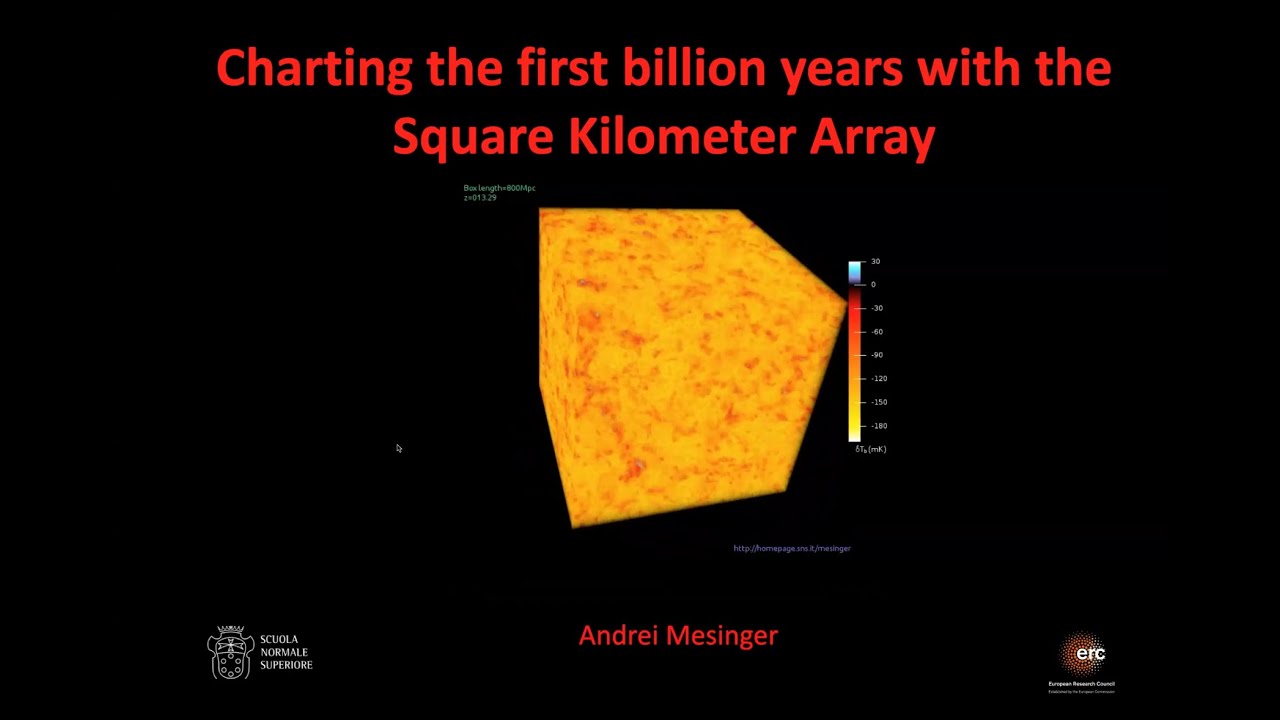
61:17
First Billion Years of the Universe with the Square Kilometre Array
@iaaudc
121 views•2022-05-26
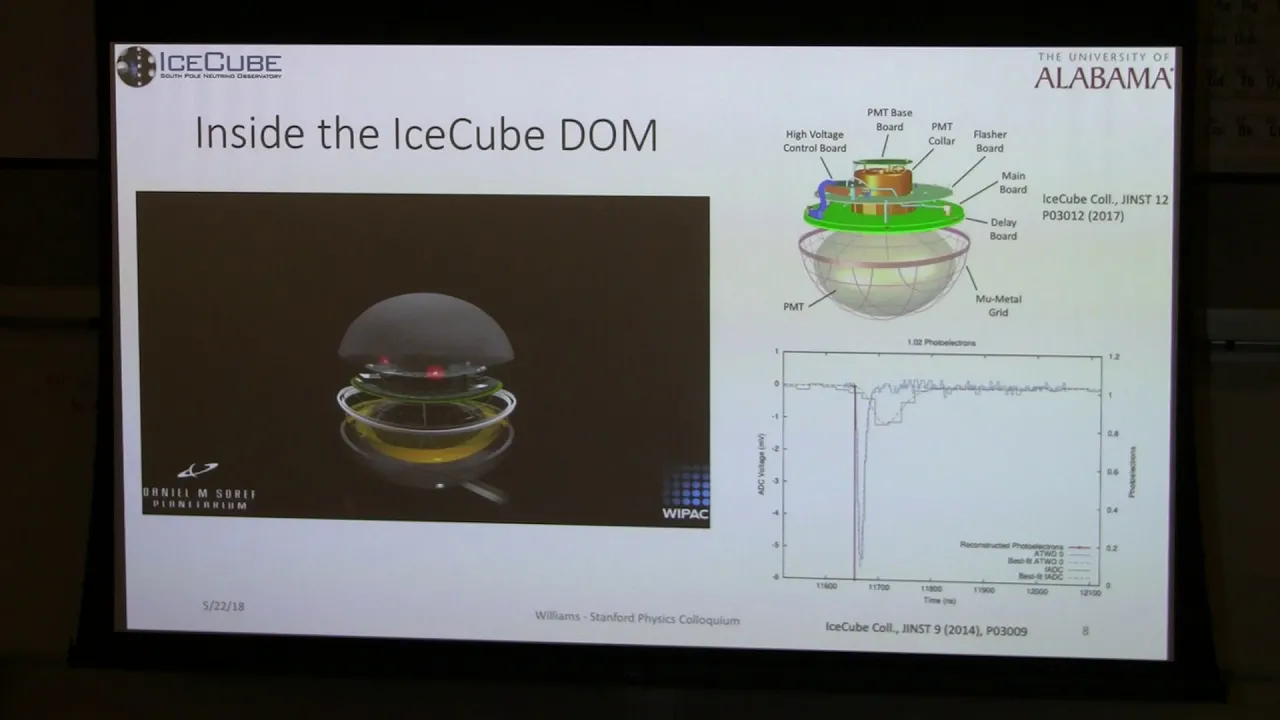
58:25
IceCube Neutrino Observatory: Neutrino Astrophysics Explained
@StanfordPhysics
1.5K views•2018-05-23

6:10
Gamma-Ray Bursts: Cosmic Snipers Explained | Astronomy
@kurzgesagt
15M views•2016-07-31
Related Study Plans & Knowledge Roadmaps
Structured learning paths in Astronomy
astronomy
Reionization: Pop III Stars, IGM & 21cm Line
01Foundations of Cosmology & the Early Universe
02Population III Stars & Cosmic Dawn
03Physical Mechanisms of Reionization
+ 2 more learning modules
17h5 modules
Explore Roadmap
astronomy
Planetary Rings: Dynamics, Roche & Resonances
01Foundations of Gravity and Orbital Mechanics
02Tidal Forces and the Roche Limit
03Structure, Composition, and Collisions
+ 2 more learning modules
10h5 modules
Explore Roadmap
astronomy
Asteroseismology: Stellar Waves, Ages & Cores
01Foundations of Stellar Astrophysics & Wave Mechanics
02Stellar Oscillation Modes: P-modes and G-modes
03Mathematical Framework of Asteroseismology
+ 2 more learning modules
35h5 modules
Explore Roadmap
astronomy
Adaptive Optics: Physics, Engineering & Control
01Foundations of Wave Optics and Wavefronts
02Atmospheric Turbulence & Optical Distortion
03Wavefront Sensing Technologies
+ 3 more learning modules
35h6 modules
Explore Roadmap