











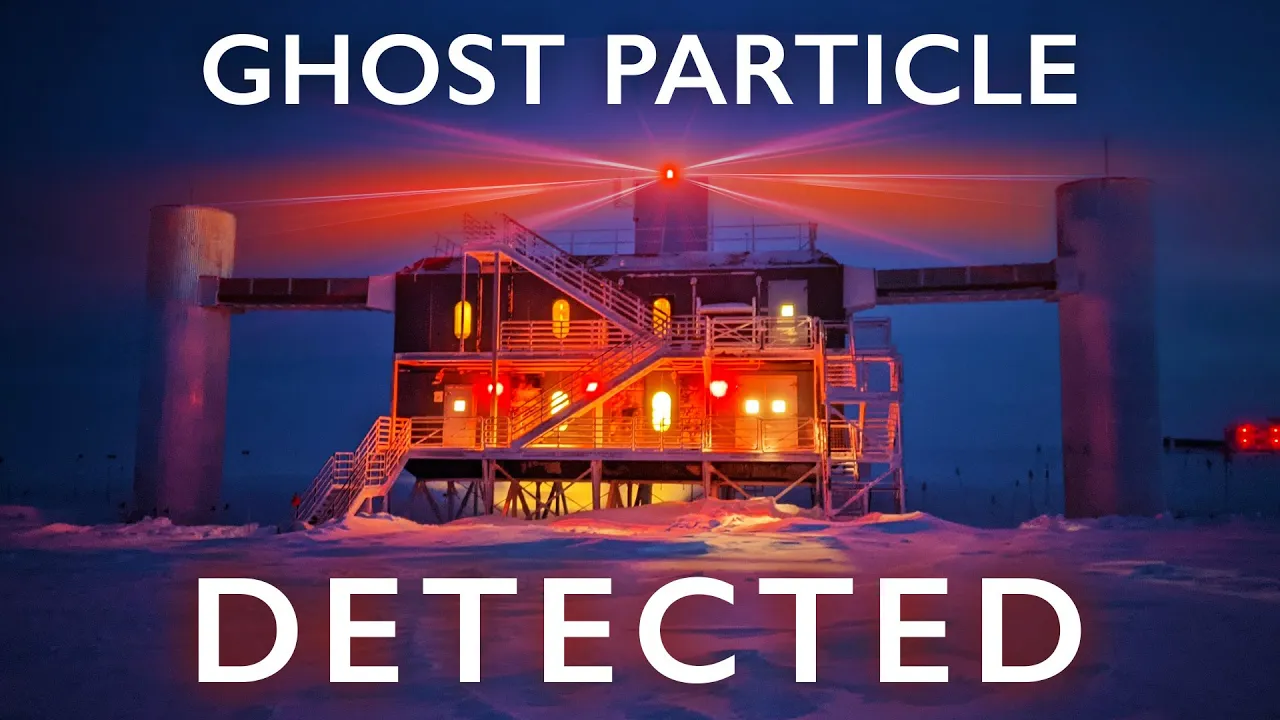





The IceCube Neutrino Observatory, a cubic kilometer detector embedded in Antarctic ice at the geographic South Pole, has pioneered neutrino astronomy by detecting astrophysical neutrinos from cosmic ray accelerators such as active galactic nuclei, gamma-ray bursts, and supernova remnants. By analyzing the unique signatures of neutrino interactions—muon tracks, electromagnetic cascades, and tau decays—IceCube has confirmed the existence of a diffuse astrophysical neutrino flux with a spectral index of approximately 2.9, representing the beginning of neutrino astrophysics as a new observational window into the universe. The observatory collaborates with multi-messenger partners including gravitational wave detectors and electromagnetic observatories to identify the sources of these high-energy neutrinos, with future upgrades planned to enhance sensitivity and enable precision measurements of neutrino properties.
IceCube Neutrino Observatory: Neutrino Astrophysics Explained
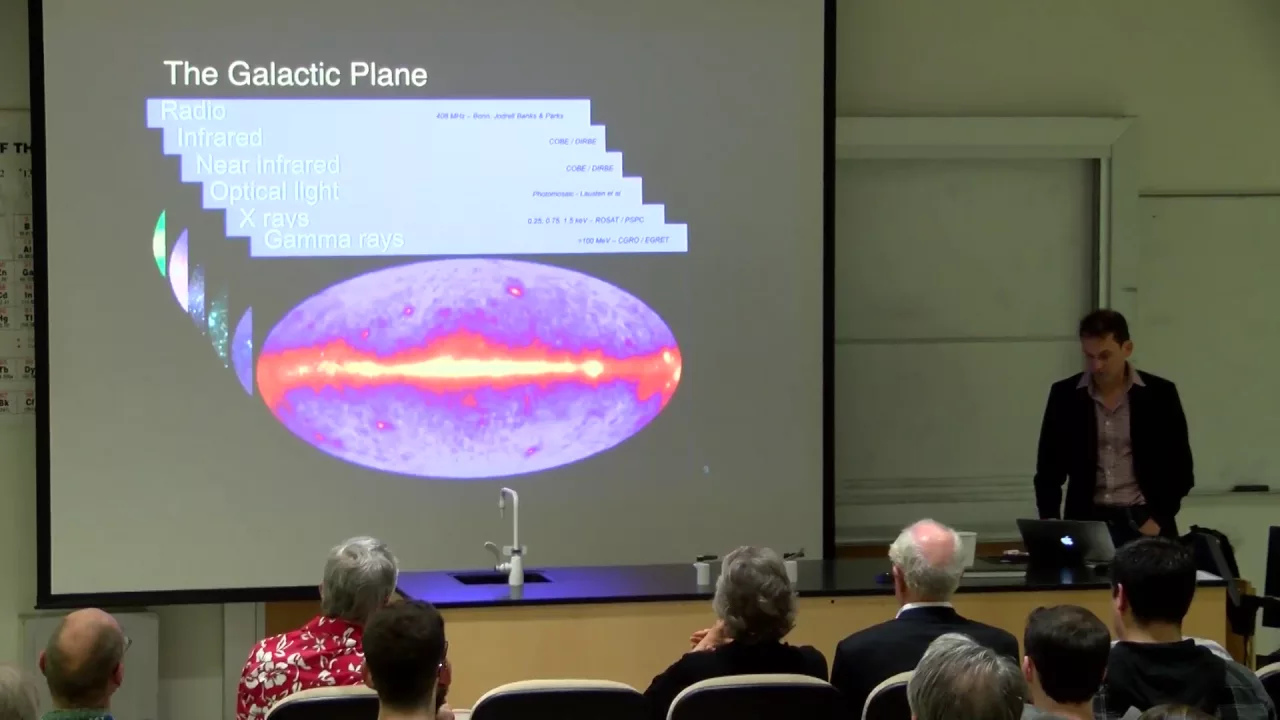
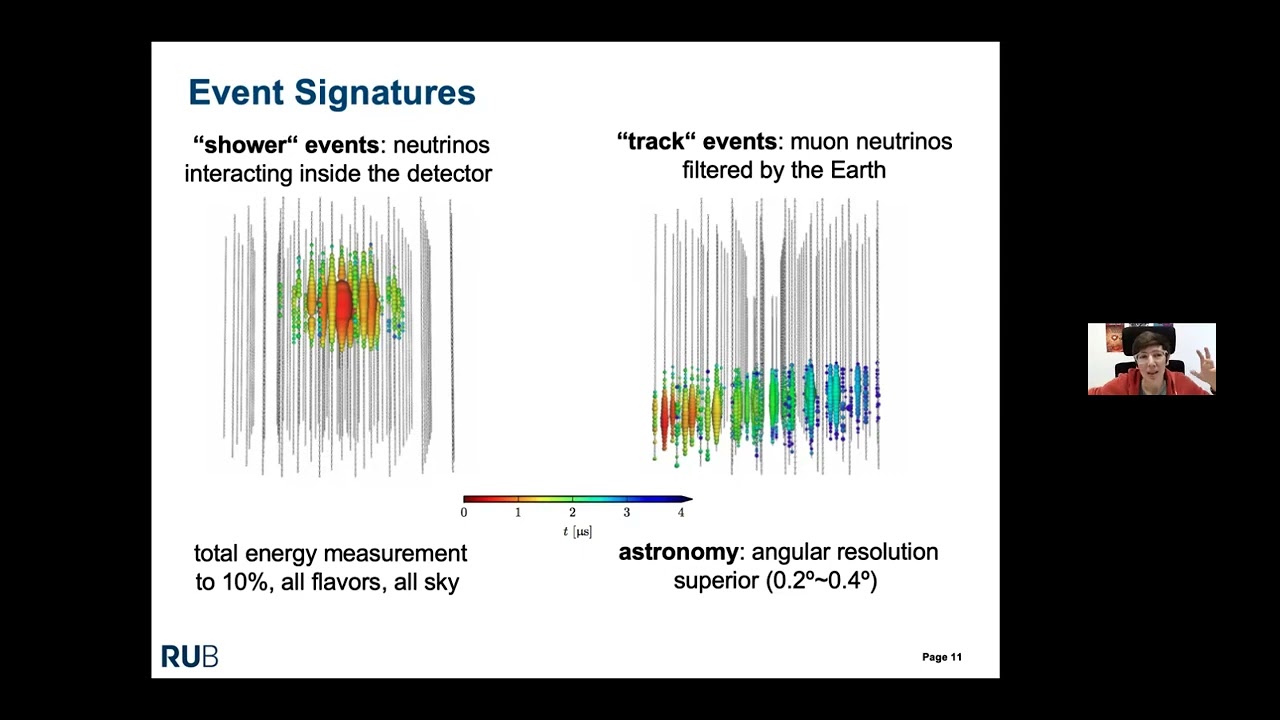
Added:[Applause] I like to introduce to you all Don Williams Don is a professor at the university Bama and she's a member of the IceCube collaboration and she's currently the analysis coordinator sis in charge of El Nino fees that come out of the experiment she is a stronger by training so did her PhD in astronomy at UCLA but found herself on the interface between astronomy and particle physics and has I guess moved kind of in that in the direction towards leading and if you know astrophysics so Thank You Lorne thank you all for having me here today it's a pleasure to be at Stanford actually did my master's research at SLAC on the scary in effect so yeah it's been a while so I'm here to talk about Ice Cube and neutrino astronomy ice cube does a lot of physics and astronomy but it's this particular area of multi messenger astronomy and neutrino astronomy that I want to focus on today so I just like to acknowledge the IceCube collaboration this is our current collaboration map the US Canada several countries in Europe especially Germany Belgium in Sweden Australia Japan South Korea and New Zealand and it's about 300 people at over 40 institutions takes a lot of people to make this collaboration run okay so multi messenger astronomy is the theme of today's talk especially in neutrinos when we talk about multi messenger we talk about the different types of particles or waves that we're detecting from astronomical objects and how they're all connected together so the four messengers so gamma rays is what's represented here but that is the highest energy end of the electromagnetic spectrum and obviously astronomy is done in all areas of the electromagnetic spectrum cosmic rays have been around for quite a while these are charged particles and although because they're charged they get bent in magnetic fields that's what this is that makes it challenging to point them back to their sources but they are a very valuable source of information - about processes going on in Astrophysical objects neutrinos is what I will focus on these are neutral particles very difficult to detect and they're very interesting because they can come from deep inside of objects which might be otherwise opaque and of course the new kid on the block is gravitational waves with the detections by LIGO this is a very exciting era because sources of gravitational waves have also very recently been discovered to be sources of electromagnetic waves as well with the detection of a neutron star neutron star merger there was also a gamma-ray burst and this is a very exciting time I'd see all these things working together and Dark Matter is still out there but that is definitely going to be part of this picture going forward let me switch out my dongle the presenter doesn't seem to be ok so neutrinos are standard model particles right here in the Santa model version of the periodic table and they come in three flavors electron muon and tau they're the lightest particles that are known they do have mass but it is very very small and of course it is known that these can change between flavors in transit because the flavor eigenstates are not the same as the mass eigenstates and there are many many sources of neutrinos both at home and in the cosmos going from the cosmological neutrinos at the very low energies that are relics of the Big Bang the neutrino equivalent of the Cosmic Microwave Background all the way up to cosmogenic neutrinos which are neutrinos that would be produced by cosmic rays interacting with the Cosmic Microwave Background and most of these have in fact been observed of course in between we've got solar neutrinos supernova neutrinos from 1987a and then reactor anti neutrinos terrestrial anti neutrinos and background from old supernovae which we expect to be in part of the general flux atmospheric neutrinos these are produced by cosmic rays interacting with our atmosphere and then neutrinos from AGN is what it's labeled here more generally speaking neutrinos from cosmic-ray accelerators neutrinos from the sources of the highest energy cosmic rays are what I'll focus on here today and most of these been discovered but there's a cosmological neutrinos still as yet undiscovered high flux but very low energy very challenging backgrounds from old supernovae that's what Super K is going after with the gadolinium update and cosmogenic neutrinos there are many experiments in progress trying to find these many of them based in in the radio but the rest of these have been observed so neutrinos from cosmic accelerators so what is prompting this idea that you know what caused us to build this detector that I will describe is the fact cosmic rays have been observed all the way up to energies of about 10 to the 20 evey one a little bit higher than that and you know this spectrum you know these energies are much higher than what we can achieve on earth and accelerators so the question is what is accelerating these particles and it is believed that they are accelerated in astronomical objects objects which have very strong magnetic fields objects which have strong shockwaves things like active galactic nuclei the Jets of active galactic nuclei gamma-ray bursts supernova remnants objects like that and where these cosmic rays fit into the picture with the other messengers particularly gamma rays and neutrinos is that where these protons are being accelerated they should also be interacting with their environments if they interact with gamma rays in their environments then you can get either protons and neutrons or neutrons and positively charged ions and if you get a you know the protons and then the neutrons which then you know eventually decay into protons these can form part of the cosmic great cosmic ray flux as well as particles which didn't interact and then from the neutral pion they always decay to gamma rays so that could form part of the gamma ray flux of course there are other ways of getting high-energy gamma rays such as inverse Compton but this is how the gamma rays would fit into the picture with cosmic ray acceleration and then if you get charged ions then they will decay to me ones the muons will decay to electrons and along the way you get the Associated neutrinos and antineutrinos and if you protons interacting with protons then you can get both positive and negative pi ons as well as neutral peons so all of these things are connected together in this you know fairly simple picture of cosmic ray acceleration and cosmic ray interaction with their environments whether it's gamma rays or protons and therefore it is interesting to look for neutrinos from these sources now if you look at the flux of cosmic rays and make a calculation of - how many nutrients you would expect or can at least place an upper bound on that it was known for a while that in order to detect the type of fluxes we expect from cosmic ray sources we would need a very large detector and in fact a cubic kilometer detector you would see about 10 of these neutrinos above the atmospheric background per year so you have to go to very high energies in order to get away from the atmospheric neutrino background which is tremendously high so this brings us to Ice Cube this was detected this was designed specifically to detect neutrinos from cosmic ray accelerators a neutrino flux that was motivated by the flux of observed cosmic rays and so Ice Cube was built in ice at the amundsen-scott South Pole station that is right near the geographic South Pole and cube is four cubic kilometer that is the instrumented volume of the detector so this is what it looks like it cut away from the ice on the surface we have our ice top array which is a cosmic ray air shower detector and also a partial veto for the deep end ice part of the detector modules are deployed on cables of in holes that were drilled into the ice with a hot-water drill and the sensors start at 14 50 meters deep and go down to 25 50 meters deep and then there's some ice below us and then the bedrock and in the center of the detector we have a more densely instrumented array called deep core I won't be talking much about that today but that is aimed more low energy physics neutrinos and they in the tens of GeV which is low energy for us and that goes for a neutrino oscillation and attempts to indirectly detect dark matter there are 86 of these strings and each of them has 60 sensors which are called digital optical modules or Dom's for short and the detector was completed in 2010 commissioned in spring of 2011 and it has been running continuously since then we have over 99 percent uptime we run 24 hours a day seven days a week 365 days a year so we cover a very broad range of physics in Ice Cube I'm just gonna be talking about the neutrino astronomy and multi messenger astrophysics but we also do cosmic ray physics with I stop and we do neutrino physics as I mentioned with deep core oscillation physics muon neutrino disappearance and tau neutrino appearance we search for Dark Matter indirectly not directly but indirectly looking for signatures of dark matter in neutrinos we also search for other exotic particles such as mono poles and we do glaciology because we have the most detailed information available on the ice at the South Pole at these depths much more detailed than what's available from ice cores and so we've published papers and Glaciology journals and talked to glaciologists as well so this is the ice cube sensor the Dom it's a fairly simple sensor it's a pressure vessel which contains a single photomultiplier tube a 10-inch photomultiplier tube which faces downward it spotted in some gel that makes optical contact with the glass and then what makes it digital is the mainboard so this contains digitizing electronics so we can digitize the signal in ice and send it up over the cable rather than sending an analog signal which will get distorted and this enables us to get the complete waveform information from the voltage signal recorded by the PMT which enables us to do very detailed reconstruction rather than doing something simpler like a time over threshold approach there's also LEDs for calibration there's 12 of them on each module so it's over over 5,000 of these in the ice each of them it has 12 LEDs so every Dom can act as a calibration source as well as a receiver so the ice that is an important part of our detector even more important in some ways than the sensor itself it is our support structure it is our calorimeter we didn't design it right we didn't have to pay for it it was but that means we have to take it as it comes it is a naturally occurring volume of ice and it is quite complicated so an undisturbed ice at these depths there's no bubbles so we're deep enough that bubbles are incorporated in the crystal structure as clathrates so but note the word undisturbed that's a very important we do have layers of dusts volcanic dust and also dust just from glacier glacial events that's actually most of it this causes depth dependent scattering and absorption so this is what our scattering looks like as a function of depth this is as a function of wavelength here that's fairly flat on this scale and then the absorption as a function of depth and where these things are high on the absorption and scattering scales that means that light does not travel as far undisturbed so this right here at about 2000 meters depth that is right in the middle of the detector depth wise as we call it the dust layer and then we've got smaller dust layers as well dust layers are not horizontal the glacier has been you know traveling it travels at 10 meters a year and so these layers actually get bent and so this is just a relief map showing the the tilts the gradient tilt of our dust layers as a function of depth so the tilt is stronger at larger depths we found out the scattering was anisotropic we did not expect that at all but this is a plot showing both simulated and real muons and if we divide them you know they're simulation assumes no and I saw trippy we get this pattern here okay and that basically aligns with the flow of the glacier the whatever the scattering are the dust grains they seem to be aligned with the flow of the glacier we still don't understand everything about this process we've been talking a lot with glaciologists about it but it's something which we must take into account to reconstruct our events and finally this is the most fun we found out that we have a bubble column in each of the holes this is from the ice that was melted during the drilling and then refrozen and the air that was released during that process got frozen into a bubble column in the center of the hole we have one photograph of it but we assume that this affects all of our holes it is especially important for our low energy neutrino events so this is the scattering column this is very clear ice so most of the ice is very clear but all of the impurities and the air got trapped in this column in the center so what a neutrinos look like an ice cube and I'm talking now about the very high-energy neutrinos so these are hundreds of TeV to pev energies is what I'll be discussing for the rest of this talk so you can have all three flavors of neutrinos in ice cube and if you have a charge current interaction then you get a W boson and then outside of that you get the Associated charged lepton and so if it is a muon neutrino then after the interaction the muon will form a track through the ice and in these pictures the colors represent time so red is early and green or blue is late so this is going from up to down like that and the size of each sphere represents the amount of light that was recorded by that photomultiplier tube so the amount of charged the number of photo electrons and so larger amounts of charged indicate higher energy so the muon neutrino tracks these muons neo a very relativistic and so they can actually they can start outside the detector and go all the way through or they can start in the detector and exit it but if you have an electron neutrino in that case the electron immediately interacts with the surrounding ice and forms an electromagnetic cascade or shower I hope using the word cascade for the rest of the talk and these cascades develop over about 10 meters or so and this looks almost point like an ice cube because the horizontal distance between strings is 125 meters so it looks almost like this spherical distribution of light with light going out in all directions and this shower the Cascade signature is also seen for any neutral current event regardless of flavor that's hadronic cascade and then for tau neutrinos that is one of my interests and with a Tau because it is has such a short decay length you can actually see it decay in the detector and so what you see is the initial interaction from the from the neutrino that's a deep inelastic scattering reaction in all three of these cases at these energies and then when you get the towel lepton out it'll decay most of the time the hadrons sometimes two electrons sometimes two a muon and that second cascade can be resolved from the first one if the energy is sufficiently high would have to be above hundreds of TV and energy so this is called the double bang signature or a double cascade and so this is something that we're looking forward to try and identify town neutrinos this is a simulation of a track in Ice Cube which shows the simulated photon so that's what these lines are they're the light moving out from the track and so you can see at the beginning here this is a cone this is the Cherenkov cone because this is traveling at the speed of light vacuum and so it creates Cherenkov light in the detector these are very high-energy muuns so they do not emit their light evenly always they lose a lot of light stochastically bremsstrahlung other effects as they move through the detector but you notice that the lines are kind of you know Wiggly as they move out from the track this is the effect of scattering in the ice on the on the photons and with the track we've still got a pretty long lever arm for reconstructing its direction so our direction with resolution for tracks is about half a degree the energy obviously it's not necessarily contained it might be only partially contained or not contained at all so the energy we only get to about a factor of two four Cascades those are entirely contained within the detector what can be but the direction as you can see is quite poor because scattering quickly loses you any information that you had about the direction now we do have some information of a direction resolution is about 15 degrees but that is much worse than tracks this is you know thirty times the size of the full moon the energy resolution however is much better as 10% for these high-energy Cascades because the light is all contained within the detector so our backgrounds mostly come from cosmic ray air showers so cosmic ray air showers produce muons and neutrinos and the muons they come to us from above they're a downgoing signal and that is a vast majority of our signal at trigger level it's about three kilohertz of muons at trigger level neutrinos can to us from above we don't see them so much because of me ones but they also come to us from below because they are low enough in energy to get all the way through the earth and therefore we have this background of atmospheric neutrinos and we see a few hundred of those per day and so there are definitely neutrinos anything up going is a neutrino but their atmospheric rather than Astrophysical and this just shows the spectrum of the atmospheric neutrinos in blue is muon neutrinos in red is electron neutrinos the pink here is the prompt spectrum which is neutrinos from cosmic rays that induce charmed Masons and therefore they decay right away before they have time to interact and they produce neutrinos promptly that's what the prompt means and that's a steeper spectrum but it's much much lower in flux and so we have not yet identified the prompt neutrinos that is something we're trying to do it turns out that the Astrophysical neutrinos kind of mask out that signal but that's still something that's on our to-do list is to try and identify this prompt signal so in order to reject this background so we have most of our background coming from above so one obvious thing to do is to look for upgoing signals and we don't want to restrict ourselves to that however because the southern hemisphere sky contains the galactic center which is an extremely interesting region and so we want to be able to look at the entire sky so in order to look at downgoing events we look for contained events events which are not coming from outside the detector and I'll show you how that works and we also of course look for events that are very high in energy in order to get away from this steeply falling conventional atmospheric neutrinos spectrum if you go away out here in higher and energy past 100 TeV then the atmospheric neutrinos spectrum Falls very rapidly and what you see there is expected to be Astrophysical in origin so this shows our effective area for various types of up going events and this is also another reason why we want to look at downgoing events as well this is the effective areas of function of energy and for horizontal events you don't really see much effect due to energy just rising effective area but for the up going events events which are coming straight up through the earth we do see a fall-off as we get to higher energies because neutrinos of that energy actually do start to get absorbed by the earth so these are not old-fashioned neutrinos going through you know light your leg without interacting these are you know hundred TV neutrinos the cross-sections get larger and so they do start to get absorbed so if we want to see pv neutrinos then we need to look at downgoing events and have some sensitivity there so our we have two searches which I'll show here both of which can be described fairly simply the high energy starting event search which you would call heavy for short if you see that acronym on the slides this is a very simple search just for starting high-energy neutrinos so what we do is we take the detector and we turn part of it into a veto region and so the outer sector is seen from above the outer layer of strings all around is a veto and we also have the top as a veto for 90 meters so that's several layers of Dom's in order to get away from this cosmic ray muon background which is so intense from above we also have a veto in the dust layer this is because the ice is just not characterized very well there and a muon can sneak through more easily there so we eliminate the dust layer and we also cut off the bottom here the just the bottom most on we require no more than three of the first 250 photo electrons in the event to be in the veto region any more than that we consider it to be vetoed we eliminate that event and we require at least six thousand photo electrons total in the event which corresponds to a threshold of about thirty TeV so the way the search works is it's quite simple with the veto region if we have a consecrate v1 coming from above it's going to be creating light all along its track and we'll see some of that light in the outermost region of the detector and so will veto that whereas if it's a neutrino then it can come invisibly into the detector and then interact inside the detector inside the veto region and so that we accept as an event here and of course there is some background of muons and atmospheric neutrinos that can sneak past this either in energy or in the veto but this will get us to the point where we can detect Astrophysical neutrinos with high significance so this is one of the early events that we got from the first two years of our search back then we named them all after but characters so this is Bert and so this is a real event not a simulated event so you don't see the light but you see that the event is starting deep inside the detector and then the light is spreading outwards in all directions so this is a classic cascade and the red is early again the orange and the green as it goes outward or late and you just see the light spreading out and this is spreading out the light is over hundreds of meters room is 125 meters in between each row of strings and the energy deposited by this event is about one pev deposited in the detector so this was one of the highest energy neutrinos ever seen at the time since then we've gone a bit higher and this is our highest energy contained cascade this is Big Bird and this was discovered in the third year of the search and so again looks like a cascade the red starting in the middle and then the light spreading out and that had an energy of about two P V so currently we've got six years of data which are ready to show we have a seventh year of data which is currently in processing and if this talk was two weeks later I'd be able to show you that but we'll be showing that at neutrino 2018 which will be in a couple weeks if all goes well and so what this shows is the black represents the data bendin energy so these are the events that pass the search we have 80 events in six years and the shaded regions are various types of backgrounds red is the atmospheric muon background and blue is the atmospheric neutrino background pink is the fit to the charm or prompt component and so this is an upper limit it's an upper limit on the charm component and then the best fit flux is shown in these dashed lines here so it is consistent with a power law although with a somewhat softer spectrum than we expected currently we fit 2.9 to is the spectral index of these contained events this here on the right is the plot of the flux or the number of events as a function of the sign of the declination angle events on the left are downgoing events on the right or upgoing so you see we've got a nice lot of downgoing events and the background is expected to be very suppressed for downgoing events because these events will be me towed by accompanying muons if they were from cosmic ray air showers and so this is a good indication that what we're seeing is not produced by cosmic ray air showers the expected background in this time is 15 with no fairly large error bars atmosphere of neutrinos and 25 atmospheric muons and putting this and the declination information together this is an over five sigma rejection of an atmospheric only hypothesis for the source of these neutrinos and so we also have a selection of through going events these are high-energy neutrino events all up going we don't allow down going because that would allow in the cosmic Iranian background so for now these are all up going and the highest energy neutrino we've seen so far at all so not contained but just in general was this one which made a pod in the September of 2015 and of course all of the energy that's deposited in the detector is only part of the energy because this track started outside the detector and then exited so not all the energy is deposited but we modelled the amount here and we expect the median expectation for the neutrino energy is 8.7 PV for this neutrino it is up going but only slightly so the atmospheric neutrinos spectrum what we get from the starting events the contained events is in blue here so that's a 2.92 spectrum we get a harder spectrum from the up going through going muon neutrinos that's about 2.1 and so far these are still statistically compatible with each other but we are still investigating what exactly is the difference between these populations what might be the cause of the different spectral indices that we fit one thing to notice that the energy ranges are different there's more low energy events in the starting events so this is still in progress is understanding the spectrum other questions we have which are outstanding we cannot yet answer is there a spectral cutoff is there a high energy cutoff are there multiple power laws involved are there any angular or direction in the sky which have different properties and so that's still something go we're trying to answer just a quick mention of town neutrinos so this is one of the missing pieces of our picture we do expect to see town neutrinos from these sources because muon neutrinos we expect to be produced at the source from the PI on decay and they should oscillate into various flavors and we should see equal numbers of all three flavors by the time they get to earth and so the double bang signature you know you have the initial charge current interaction and then you have the decay of the tau one search that we did in order to try and get away from this well separated double cascade which would be we'd have to be very lucky to see that is to look at individual Ice Cube sensors and make use of our waveforms these very detailed signals that we get from the doms and actually look for what we call a double pulse so actually you can see two bumps from a from the two cascades in this picture even if they just look like one cascade in the event view so we did not see any results from a three-year search there's an updated search that is coming and one thing to note is that we did see a background in this search which were not contained but these are atmospheric muons which have stochastic losses very close to the Dom and they can actually create a double pulse so we need to have a containment cut in order to get away from those we're also doing another search which is more similar to our traditional cascade search which is a likelihood search so we do a have a likelihood for the event shape and we can do a double cascade likelihood so in order to do this properly you need to implement the most sophisticated modeling of ice including an ice otra P and tilt because if you don't take MSRP into effect it can actually a mimic a double double cascade or a double bang so this plot shows this is sensitivity only not results but it shows the increase in sensitivity we would get by applying a towel identifier from this double cascade search and what this plot is this is a triangle plot showing the fraction of tau neutrinos we detect versus the fraction of muon neutrinos we detect versus the fraction of electron neutrinos we detect and what we expect is one to one the one one-third of each and that's right in the center of the triangle and so if we only know tracks and Cascades okay and in that cases a degeneracy between town neutrinos and electron then we get this larger - contours here but if we can identify house with a double bang then we get a tighter contour here so again that's something where the results of that search are forthcoming another thing which we're working on and we're still we've we've we have this new event selection but we're still investigating the results of that is partially contain Cascades and we did that in order to try and get more of the high-energy events to give us more volume but if you work with partially contained events you are of course running right up against your muon background so these events have to be really scrutinized to see if they are in fact neutrinos as opposed to muons and the reason why we're interested in getting too high energies aside from just the fact that high energies are cool is we want to try and go after the glass shell resonance and so this is resident scattering of electrons anti neutrinos off of electrons in the ice that produces an oddish LW boson at 6.3 pev and this is interesting because it would tell us something about whether there are anti neutrinos there were the amount of anti neutrinos in the Astrophysical neutrino flux for all other searches that we do we cannot distinguish between neutrinos and antineutrinos this is the only search we have that is sensitive only to anti neutrinos and so stay tuned for more information on this but this is our highest energy candidate event and it's at the corner of the detector and so we're in the process of studying that and we plan to have more results in this year and then later on at the ultra high-energy cosmic ray conference so now I'm going to talk about how we try and associate our neutrinos with Astrophysical sources and work with other types of detectors in order to see you know what is the source of these neutrinos so the first thing we can do is just make a sky map so we take all of the events from our starting event search and put them on the sky this is an equatorial coordinates so everything on the bottom half is in the southern hemisphere sky for us is down going everything in the top half is northern hemisphere sky for us that's up going we just look and see do we see a significant cluster and the tracks are X's and the showers are crosses and the showers and the purple regions are the uncertainty so of course the showers have much larger uncertainty than the tracks and we do not see any statistically significant clustering here this gray lights here that is the Galactic plane in equatorial coordinates and I think the Galactic Centre is somewhere around here so we don't yet see any statistically significant clustering from this search but this is only 80 events so we can open up a larger selection of events which is all of our through going tracks including some at lower energies than the ones I mentioned and we can even you know we can't open up the southern hemisphere sky to this by imposing a large energy cut and basically selecting consequently ones that are very high in energy and see if any of them cluster which would indicate there were neutrinos rather than cosmic rays so we do not see any statistically significant clustering in this map either and this is seven years of data and in addition to just looking for clusters with the neutrinos we also scan through a list of catalogs selected sources gamma-ray sources radio sources AG ins various types of quasars FS RQ and Blaise ours also the galactic center supernova remnant starburst galaxies anything we think might be a possible source of neutrinos and so far we do not see any statistically significant correlation of neutrinos with those sources we can therefore put constraints on various source classes specifically how much do they contribute to the neutrino flux that we observe our strictest constraints are on gamma-ray bursts we have never seen a neutrino in temporal and spatial coincidence with a gamma-ray burst and so this because there's a tight time window around gamma-ray bursts that allows us to eliminate a lot of background and set the tightest constraints so gamma ray bursts contribute less than 1% of the high-energy neutrino flux we can do other searches for example a recent one so these all came out Knapp Jay last year we did a stacking search with a Fermi tughlaq blazer catalog and just stacked all those on top of each other and looked at the neutrinos we did both an equally weighted check so all neutrinos weighted equally and all neutrinos waited by the gamma-ray flux of the of the gamma-ray sources and we found that they contribute less than 27 percent or less than seven percent depending on how you weight them we did a search of the Galactic plane that contributes less than 14% of the neutrino flux so all of these things mean that we do not see a statistically significant correlation of the neutrinos with these objects and therefore we can set an upper limit on how much they contribute to the neutrino flux so we do not yet have a smoking gun source and you know we keep looking at various Fermi sources you know not only steady-state but of course we also want to look at transient sources as well in addition to gamma-ray bursts so gravitational waves have been a very interesting new addition to the multi messenger universe and in just a couple of years they got their first multi messenger source which was the neutron star neutron star merger and so we did a search for neutrinos not only IceCube but also our sister experiment in the Mediterranean Antares similar concept but in water instead of ice and also the prj Observatory just happened to have be properly aligned to be sensitive to neutrinos from this source so this is the the neutron star neutron star merger and The Associated gamma-ray burst right here and what we do when we search for neutrinos from a gamma gravitational wave source is we look plus or minus 500 seconds within plus or minus 500 seconds of the gravitational wave trigger and this is just motivated on observations of gamma-ray bursts of precursors and kind of the most conservative window we can set where we might expect to see neutrinos in association with these objects and so it's a thousand seconds and that's a long time in IceCube we do see hundreds of atmospheric neutrinos per day so that's what we see here these crosses the X is right here but none of them were associated in space with this object they were just scattered around the sky and Antares also had some events but did not see any that were at the same point unfortunately this effect was in the downgoing region so it was the southern hemisphere sky for Ice Cube and it was in the downgoing region of Antares which is marked by everything above this dash line here which means our background is worse there so it would be nice to get a northern hemisphere source also one with axes and jet may be pointed more towards the earth O'Shea is also sensitive to neutrinos only in a very narrow band which just happened it can coincide with the source at the time but did not see any events so but we are certainly going to be continuing to monitor these events as they come out from Lagos next observing run and we'll keep searching for neutrinos from those so we want to try and get electromagnetic partners especially involved early on so for the past year or so I've perhaps two years now we have been sending real-time alerts from the South Pole so we send these alerts with a latency of less than a minute median latency is 33 seconds and so we have a filtering system which picks out interesting events and then they're checked on the monitoring system in the south and they're sent to the north and then we've got a couple of different alert streams this is IceCube jargon but she is our through going track alert hesse is our starting track alert we only send tracks we don't send cascades at the moment because telling our electromagnetic partners to point at a 15-degree area the sky is not very helpful and then we send out public alerts through the there's an aim on system this is a multi messenger Network and also through GCN and so we've sent 13 alerts since 2016 and we usually send the first alert as I mentioned within a minute and then after a few hours we send detailed follow-ups based on reconstruction of the event and try to send a better estimate of the angular error of this event and any changes in its location that may have happened in reconstruction and so this is a picture of one of our through going track events very pretty this is more than PV of deposited energy in the detector and so the energy for the starting tracks they start at 60 tv4 alert events for through glowing tracks we have a higher threshold that's 500 T V and each of them sends about you know four alerts per year and these are non-overlapping samples through going tracks do not pass the starting track search so these are non-overlapping and the expected signal events per year that is the expected number of Astrophysical events over atmospheric background is about one for the starting tracks and 2.5 to 4 for the through going tracks so we are working on improving our alerts based on feedback from the community and also things we want to do so some up come improvements we have a new starting event selection which is in progress it has not yet been approved for release but this will be more downgoing events of lower energy so it's got stricter veto conditions but this will add something to our picture eventually we do want to send out cascades at least for the use of wide field observatories but we're still working on that and we do want to improve our Astrophysical event purity reduce the number of background events so we're working on that so we're updating our selections and also we'll be updating the information we put in the alerts to make them more transparent so yeah this is a very interesting thing and I really wish this talk was in a few weeks because I can't really say much more than Zahn this slide but in September of 2017 right in the teeth of the Ice Cube collaboration meeting in Berlin we sent out it through going traveller and it was spatially coincident with an own blazer so this is a Fermi blazer was already in the Fermi Catalog and it was flaring at the time it had been flaring for a few months and what really got everyone going was that then magic followed up this is a high-energy ground-based gamma-ray telescope and it achieved the first detection of this blazar in high-energy gamma rays so five-segment detection above 100 GeV in the weeks following the Ice Cube detection they had bad weather when they did their initial observations so the detection came from a later observation sent out a tile here and so there's over twenty eight tiles associated with this event and we've been working with our partners to put together a paper which is embargoed so I can't say anything more so now talking about the future for Ice Cube so we're still we're still have not you know exploited everything the ice cube can do we're still working on understanding the ice better and improving our reconstructions but of course we want to build a bigger detector so the name of our punitive upgrade is Ice Cube Gen 2 because we want to be terribly clever and named it after a penguin and the gen 2 Observatory would consist of a high-energy erase this is ice cube here in red so we would surround it on that one side at least with more strings we can't surround it equally on all sides because there's restrictions on where we can drill at Pole and then we fill in our info our Center with more strings to make a a precision array called pingu this is for doing Atmospheric neutrino physics especially going after the neutrino mass ordering which would be a very nice complementary measurement to everything that's going on in the accelerator neutrino world and we would also have an extended surface array so that's what's shown here on the surface the ice top array is exactly coincident with ice cubes so it doesn't veto much more than is you know things they're directly downgoing but this would veto more and allow us to get a better grip on the southern hemisphere sky and so the questions we want to answer are even if you know the best case scenario for Ice Cube you know we won't have as good of a idea of the point sources of neutrinos as we would with this expanded detector especially with more track detections we want to know more about the spectrum of the neutrinos or you know how hard is that how soft is it are there multiple spectral indices involved is there an energy cutoff we all know more about the flavor content about glass how events and then as I mentioned we want to do neutrino physics at low energies and do the neutrino mass ordering so this is a plot showing what we would be able to achieve with Gen 2 so this is a nice multi messenger plot this is a fermi lacked diffuse gamma ray flux this in green and blue is the TA and Oshea cosmic ray flux and then in between is the IceCube 100 T V P V neutrino flux and this gray area is where we are now ok in terms of our uncertainties and our measurements and the orange represents where we would be with Gen 2 so we would get a much better measurement of the spectrum with a higher statistics so the first phase it was formerly called Gen 2 phase 1 but is now called the IceCube upgrade and this is our proposal which is currently under review with the NSF and this is to start restart the drilling process get the drill out of mothballs and update it and start drilling some new strings so the proposal calls for 7 new strings in the center of Ice Cube in the deep core area not as many strings as pingu but that's kind of moving in that direction the physics we would do would be neutrino disappearance and taou appearance in the atmospheric sector so down in the tens of GeV energies and also more precise calibration of the ice and the optical modules so the strings we're looking at would be strings with two point four meter spacing in between the modules so over a hundred modules on the string so make it a very dense array and then the space in between strings would be on the 10 to 20 meter level which would enable us to probe the ice at lengths that are shorter than ice keep scattering lengths for the first time so one thing we really want to do with this upgrade is trying to improve our reconstruction so these are cascade events the high energy starting cascade events in Ice Cube and this is the per a vent angular error each for each one and this is measured by basically doing a lot of simulations and seeing how often we would measure the that particular angle and as we go to high energies so this is the angular error versus energy for statistical only we expect to be able to get down to below 5 degrees which is still a big improvement over 15 but we when we actually look at our events we don't see we're getting anywhere near that so we need to understand the detector better in order to do that there's a lot of aspects to that understanding the ice understanding the cable shadow understanding how to handle bright Dom's in the center of the in the center of the events that's still something that's work in progress and so we're looking at putting new calibration devices in the upgrade in order to improve our modeling of the ice and of the doms this is one of the new devices under study which is the precision optical calibration module which has already been tested in water in Lake Baikal as well as updated LED flashers and other devices for the sensors for Gen 2 we're looking beyond the ice cube mod model in two ways especially one of them is to try to go for slimmer designs this is to save drilling costs so the the wider the hole is to get the module down the more fuel you use and that's one of the major expenses involved in Ice Cube the other is just increasing our photocathode area and being sensitive to more directions all ice cube PMT's are downward facing we want to have something that's upward facing as well so some of the ideas that are under study the end um this is inspired by our friends at km3 net they have a similar design in km3 net and so this is a lot of 3-inch PMT's set in this kind of flies I design with sensitivity in all directions our colleagues in Japan are developing the D egg which the dual PMT module just one PMT up one PMT down in a slim egg-shaped case okay so again to make the drilling cheaper and we're also looking at other technologies we've always used only PMT's but there are wavelength shifting optical modules fibers a lot of other things that are under study so the surface detector we've got two things that are under study one is just scintillator which is a good workhorse for cosmic ray detection that was high threshold and high duty cycle and then we're also looking at gamma ray detectors on the surface this has a very low duty cycle compared to scintillator it's about 10% because we have to deal with the moon and Aurora's and all kinds of things but it also has much lower threshold so that would be an interesting component of our veto we're also looking at just updating the ice cube Dom since this is a known design it's very reliable it's been in the ice for many years now which would look fairly the same but we would update the electronics more off-the-shelf digitizers as opposed to the custom-made digitizers that we use now and up to updated LED flashers and updating how we do the calibration of the module onboard so in summary so we have Astrophysical neutrinos we're still trying to figure out their properties and where they come from and it's a really exciting time to be working with our partners in electromagnetic and gravitational waves and cosmic rays and there are a lot of observatories that are in progress being upgraded and in planning in neutrinos gravitational waves cosmic rays and all kinds of arrays on the ground this only scratches the surface so thank you very much for your attention all right thanks John that really nice presentation the first bullet there is of course how many you have to get at this point because the individual events are becoming more interesting in some ways in the ensemble right because we send them out as alerts and you know if they have something that's associated with them as a multi muster partner so I would say it's not yet at the point where we're thinking about old news because we need more of them in order to really pin down the spectral characteristics so we're past five Sigma so that's you know kind of one threshold for old news but also in addition trying to identify town neutrinos that's still out there and identifying Glashow resonance events that's still out there and so it's not just a matter of the ensemble numbers but the individual properties of the events as a schedule it's constant dirty high energy cosmic energies and you sort of know now how many there are and I'm a little confused about what if anything want us to learn about the cosmos so far we have not yet been able to complete that picture so right now we know that there are a physical neutrinos but until we know where they come from and are able to get a better handle on their spectral characteristics so that's that's that still to come what seems to indicate that there instead of this guy being dominated by a few large closed by sources it's may be dominated by more fainter further sources and so we're you know we're still trying to understand that I mean particularly was it was a bit of a surprise to us not to see anything from gamma-ray bursts so we set limits who are much more stringent than the models at the time and of course and the models evolved but that was that was an interesting thing we were sort of expecting that we would you know that we would see something from gamma ray burst was predicted by the original round of models that was available at the time Ice Cube was constructed but overall that's the that's the message we're getting just from the fact that we don't see statistically significant clusters early on is that we don't have a close bright source so if we got funding tomorrow the time scale is five years for the first part of the upgrade that's the phase one part of the upgrade the seven strings the timescale for Gen 2 that would be more of a 10 to 15 year time scale in principle we can roll that out a lot faster because we don't have to wait for the drill that's the main thing that you know holds things up for the anice array is the drill and the fact that we can only drill at certain certain times of the year with the surface array there the challenge is just how do we actually manage these very remote you know stations that are very far from the current footprint of Ice Cube so currently everything is connected by cables to the ice cube lab and the wear overs can walk out to it and it's all you know fairly accessible but if we're talking about you know much larger surface veto then we would need remote stations things that are not necessarily attached by cables and that's that's a design challenge we are currently putting out scintillators at the pole in order to basically account for the fact that our ice top tanks are becoming buried in snow so we're losing the electromagnetic component of the showers still get the muons of course so that's the scintillator upgrade is already ongoing as a surface upgrade but that only coincides to the existing i-stop tanks that's not any larger in area so that's a question so weather radio would be officially included in the upgrade or not we don't have a full proposal for the upgrade only for the phase 1 the phase 1 does not include any radio so right now the radio experiments of the pole they're going after the cosmogenic neutrinos they are a separate experiment but they're kind of within the IceCube umbrella they you know share some of our facilities in terms of the the infrastructure but we would it would be ideal to have radio as part of the as part of the upgrade but overall the radio is always going to be much more certain to see things that are outside of the optical detector because they're always gonna have a much larger field of view than the optical detector where events must be at least partially contained so there's a it takes a little while to freeze back up so we can get the string deployed within 12 to 24 hours and so basically there's a giant hose reel and we lower the cable and as the cable goes by we attach the doms to the breakouts which are already on the cable and then we lower the entire thing and so we've never had a string in ice cube get stuck it did happen to Amanda or predecessor we had one stuck string there but we know a lot more than we than we do now so yeah we the top priority once we get the hole drilled is to get the material deployed as fast as possible and of course the string freezes from the top down right the hole freezes from the top down so that makes it very important to get it deployed as fast as possible oh gosh it's between minus 50 I think and the upper most modules and gets towards I think minus 20 and the bottom most modules where it starts to get closer to the earth and it's more so it's warmer closer to the bedrock so in between you have somewhere in between there but it's between between about minus 30 and minus 20 mmm so that's something we're thinking of for Gen 2 we're looking into degassing and you know you know having more control over the process but we've never we've never tried anything like degassing on that scale and it wasn't really something that was in our minds you know that this would happen so we do plan to try degassing for the for the upgrade but whether it'll work or not is it still to be determined the other thing which we are definitely going to do differently this is a more of a technical detail but to keep contaminants from the drill water out because we basically use some of the drill waters return water and so some contaminants got into the guns of the water in some of the holes is not really noticeable but there's a couple of holes where the absorption of the ice in the hole is noticeably lower than the others and it doesn't make any difference for the large-scale physics because these events are so bright but it is something we want to avoid going forward in the future so I don't think we would be sensitive because these are extremely relativistic so I don't think we'd be sentient we'd be sensitive necessarily to the mass I have talked with people in LIGO about you know if we got a neutrino and a gravitational wave event at the same time or if we got a neutrino and you know gamma ray then we would at least be able to set some limits but of course we have to take into account the modeling right the gamma rays and the gravitational waves and the neutrinos aren't necessarily all produced at the same time so there is some uncertainty there and so I think it's the best handle we've got yet on the tree nose traffic the speed of light is as far as from that point of view as supernovae yeah I don't know off the top of my head what what kind of limits we could place at present we can't place any because we don't have a definite association of a neutrino with another type of messenger yeah this is right in my wheelhouse this was my job as a postdoc so the the spacing between sensors that's easy we measure that with the laser Ranger and so we don't and then we measure it again in the ice with the flashers LED flashers and so that's all good the spacing between the strings that's more difficult so we had so we surveyed the positions of the of the strings and then we use drill data to see how straight the hole was going down and it's straight to within a meter and then to measure the absolute depth of the strings that was actually more complicated because we use pressure sensors to measure the depth and every once in a while one would fail and so we use the LED flashers in order to make those measurements of that the kind of overall depth of the detector we can also measure with me ones from I stopped and just measure the time difference so that gives us some handle there and with the strings are closest together in deep core we have done trilateration measurements basically to try and see you know do we agree with a drill data and we do but we can't do much better than the drill data so we need modules closer together a different technology in order to get a better accuracy so currently our accuracy is about a meter which is more than enough for us but in the future for Gen 2 especially when the strings are much further apart in the upgrade trying to measure that with LED flashes can be extremely difficult because of the long distances and there's just so much scattering so we're planning to put acoustic sensors on the doms in order to measure their distance from each other but that's not a technology we've yet tried in Ice Cube so in the case of the Tau neutrino that is something we need in order to tune you know to get away from the degeneracy that we have between cascade events and so what we're interested in there there's a couple of things that we're interested in first of all is just we do expect to see town neutrinos from Astrophysical events and we don't expect to see town neutrinos at that energy from the atmosphere there's just not enough charm so so just seeing them would be a smoking gun that this in fact was in fact the national physical neutrino just this is a single event so that's interesting in terms of the physics of the source so there are various models okay which can predict different fluxes of neutrinos at the source the standard Payan model that's just you know to me land neutrinos one electron neutrino no Taos by the time it gets to earth it's one to one to one but if for example you have a source that's all muon neutrinos are all electron neutrinos and there's various you know models of different you know places along the spectrum you can get different ratios where it's not quite equal now with a few town entry no detections which is you know at most what we would expect you know statistically would expect maybe about two at most from the methods I'm describing in the data set that we're that we're looking at now two to three maybe and that in itself is not enough to distinguish between those models because the contours are still encompassing all of those possibilities just theta2 2 3 is so large no matter what you start you end up with a lot of tau neutrinos at the end but that's what it would enable us to eventually go after is the is the physics of the source or is there any weird neutrino physics going on any new models or is there anything strange going on in terms of the astrophysics that's not giving you the typical Payan model with the Glashow events locating anti neutrinos would tell us that there was negative PI ons in the in the original environment and that's something we expect more from proton proton the proton gamma so that would give us some insight into the Astrophysical environment nothing we can do with icecube I would expect to be able to give us a statistically significant measurement but it would be indications and then we'd be able to do better with Gentoo so that's why those are important for understanding the Astrophysical environment as well as the physics
Up Next

Europa's Global Geologic Map | Jupiter Moon Geology
@nasascientificvisualizatio5842
101 views•2018-07-06
First Billion Years of the Universe with the Square Kilometre Array
@iaaudc
121 views•2022-05-26

Kepler's Laws of Planetary Motion Explained (Educational Astronomy Video)
@Peekaboo_Kidz
404.9K views•2023-02-17
Gamma-Ray Bursts: Cosmic Snipers Explained | Astronomy
@kurzgesagt
15M views•2016-07-31
Related Study Plans & Knowledge Roadmaps
Structured learning paths in Astronomy