




















Neutrinos, nearly massless particles that interact so weakly with matter that hundreds of billions pass through our bodies every second, serve as powerful cosmic probes because they can travel unimpeded through the dense early universe, potentially revealing information about the cosmos from its first second—earlier than light can show us. This is because neutrinos decoupled from other matter much earlier than photons did (at one second versus 380,000 years after the Big Bang), creating a 'cosmic neutrino background' that could help scientists understand fundamental physics questions including why neutrinos have mass and whether they are their own antiparticles.
Neutrinos: Unveiling the Universe's Cosmic Ghosts
Added:The Standard Model of particle physics, specifically the classification of elementary particles like leptons, quarks, and gauge bosons.
The fundamentals of nuclear reactions, particularly radioactive beta decay and stellar nucleosynthesis (nuclear fusion in stars).
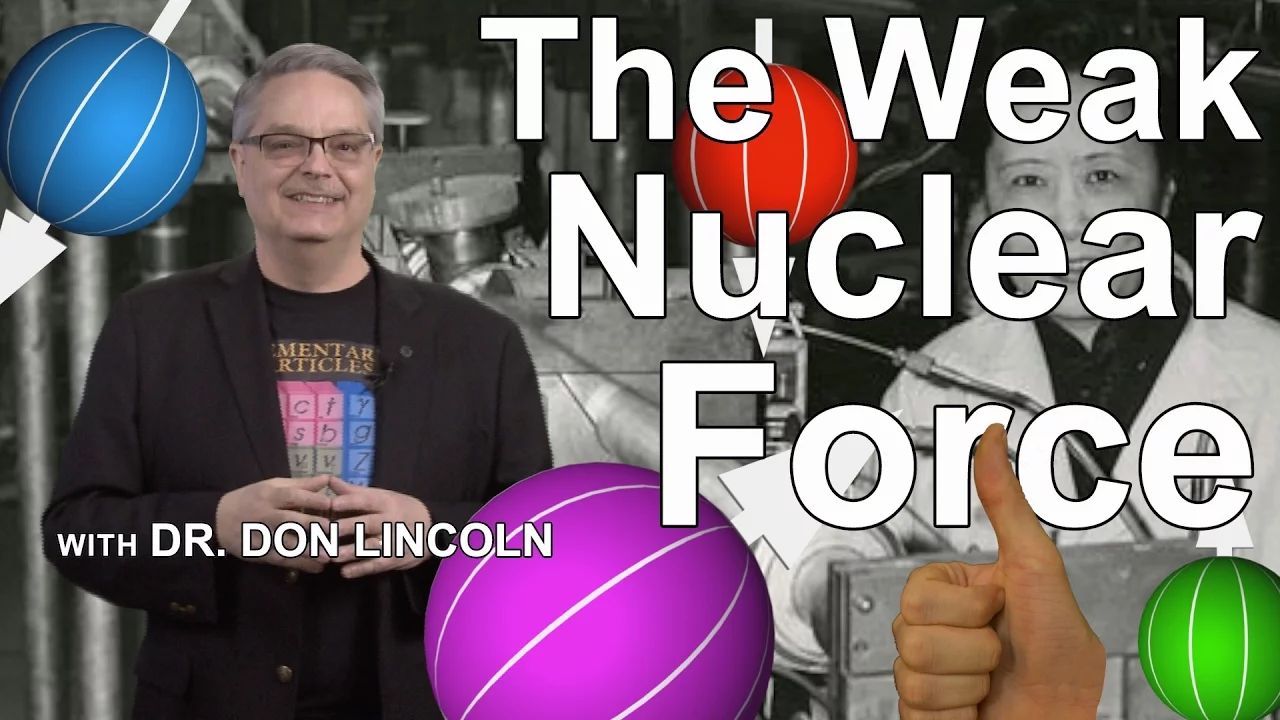
The four fundamental forces of nature, with an emphasis on the weak nuclear force and how it differs from electromagnetism.
Basic astronomical concepts regarding cosmic ray origins, supernovae, and the lifecycle of massive stars.
The phenomenon of neutrino oscillation and how it proves that neutrinos possess non-zero mass, challenging the original Standard Model.
The engineering and physics behind massive neutrino detectors, such as IceCube at the South Pole and Super-Kamiokande in Japan.
The emerging field of Multi-Messenger Astronomy, which combines neutrino data with gravitational waves and electromagnetic observations.
The theoretical concept of Majorana fermions and neutrinoless double-beta decay, which could explain the matter-antimatter asymmetry in the universe.
1.7M views20.2Klikes42:50Original Release: 2022-05-01
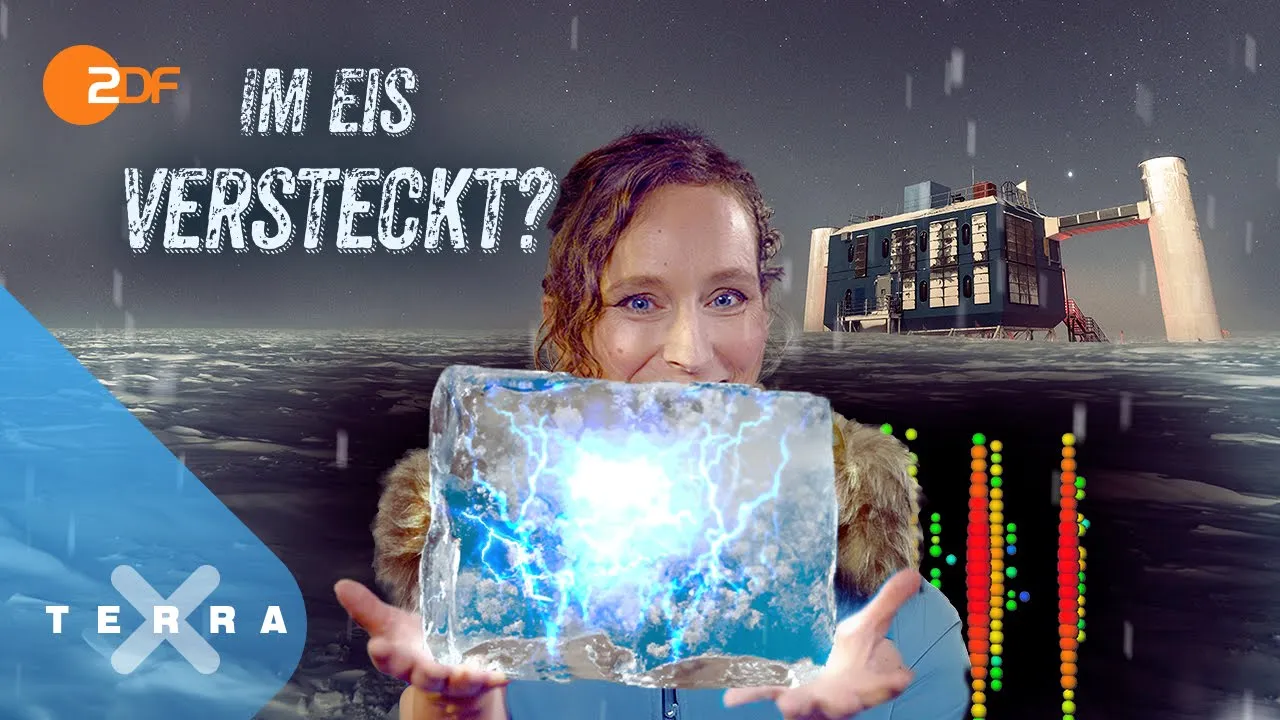
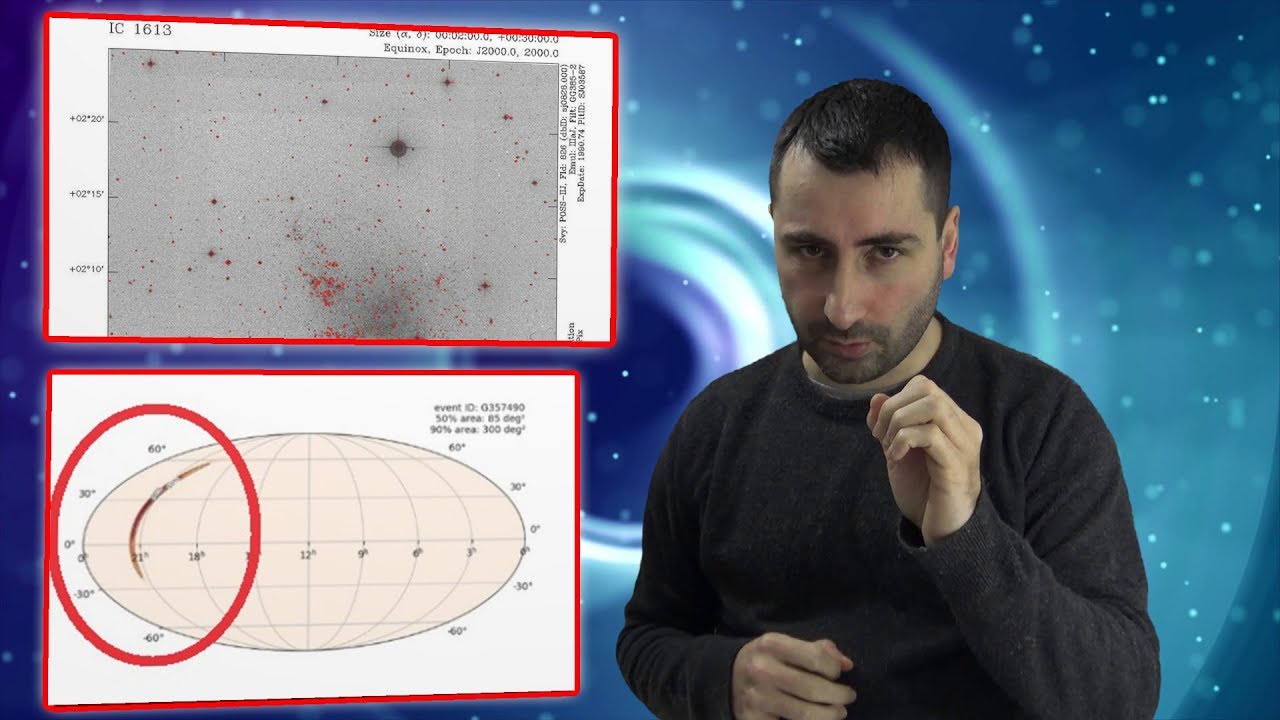
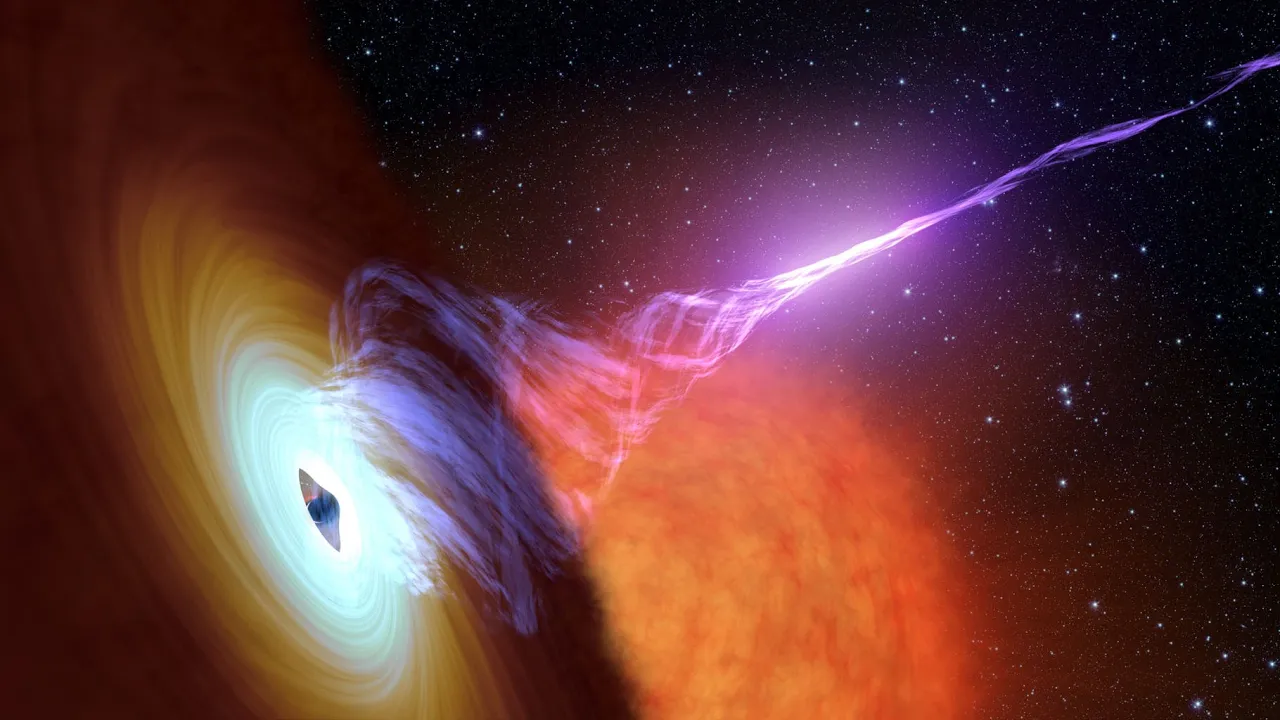
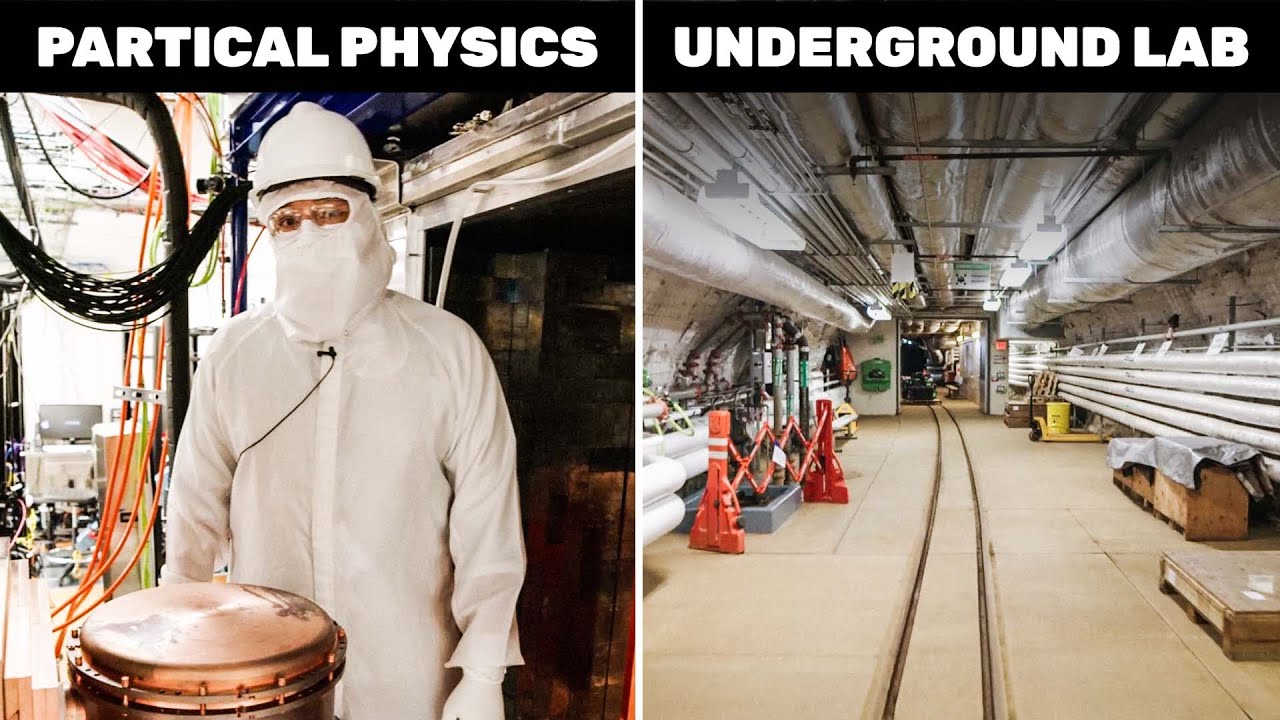
you do not see the real world your eyes are lying to you or more precisely your brain in 2011 scientists at new york university ran a study which showed that we may perceive threatening objects to be closer than they really are in january this year researchers at the university of california found that in an effort to create a continuous image our vision is stuck up to 15 seconds in the past as do youtube videos so our brains need time to buffer and finally the sun is green at a young age we learn we mustn't ever look directly upon it but those that dare perhaps to witness the fleeting beauty of a sunrise gaze upon a warm yellow orb that gives life to most species on earth this colour is not a trick of the eye but a trick of the air molecules of nitrogen and oxygen scatter blue light away from us more making the sun look redder than it truly is but escape the bounds of the atmosphere and to the human eye the sun would appear the purest white a combination of every wavelength of colour it emits in different quantities and this is the lie the colour white created in our minds objectively the sun is of all colors green emitting more green photons than any other wavelength [Music] and that is not the only way our eyes deceive us in regards to our closest star ultraviolet rays that tan our skin infrared that warms our faces when we step out on a sunny morning radio waves which can be picked up by our technology our sun is constantly producing massive amounts of photons that stream around and through us at wavelengths our eyes simply did not evolve to perceive these limitations mean we bathe in a constant wash of particles that we simply cannot see and this hidden world is not only made up of light the sun also produces massive waves of particles that are so unresponsive as to have been completely undetected or even conceived of until the 20th century and yet are so numerous that across the universe they outnumber the particles that make up ordinary matter a billion to one it is with these neutrinos we may be able to answer some of the deepest questions about our cosmos the oldest light in the universe the cosmic microwave background is 380 000 years younger than the big bang itself before that the universe was too hot and too dense for light to travel freely but if the oldest images of the cosmos are still 380 thousand years old how could we ever know what happened before what if we want to know what the universe was like not just in its first year but its first second our telescopes cannot tell us they have reached an opaque barrier they cannot penetrate yet astronomers have found a way to pull back the veil to uncover these early moments in time pushing back the clock to the most ancient map of the cosmos there is but to do that they will first have to probe the secrets of these cosmic ghosts secrets that challenge our very understanding of how the universe works this video has been kindly sponsored by better help many scientists believe the universe is infinite and that can get lonely sometimes better help is an easy to use platform that helps you access therapy from your phone or computer the last couple of years have been difficult for everyone and it's so important to not only stay physically healthy but mentally too one of the barriers for me had always been that in times of crisis i didn't know how to find someone to talk to so it felt easier just to ignore it better help are a great solution to this problem with over 20 000 therapists with a broad range of expertise just a click away all you need to do is access their platform fill out the questionnaire with your specific needs and better help will match you with a licensed therapist to listen and help you it's convenient straightforward and trusted by more than two million people who have signed up and tried it so head over to betterhelp that's better help dot com forward slash hot you for ten percent off your first month thanks again to better help for supporting education on youtube why would you build a telescope inside an airplane it is the morning of december the 1st 2010. at the end of its 10 hour flight a retrofitted boeing 747 returns to an air force runway in palmdale california one change is instantly noticeable peering out a retractable door at the rear of the plane rests the 20-ton 2.7 meter wide mirror of the sofia infrared telescope when the weather warms it flies south for a second winter from palmdale to christchurch new zealand the annual migration allows access to an entirely different part of the sky during its observation periods as many as 100 flights a year sophia flies at an altitude of 12 or so kilometers not all that higher than most commercial flights and in doing so it captures a light that the air beneath it would block water it not only forms clouds which block visible lines of sight while it looks clear to us in small quantities entire oceans reveal its true nature it appears blue because it absorbs red light and it also absorbs invisible infrared light infrared light that holds the universe's most distant secrets as the universe expands light stretches and after enough time much of it arrives to the infrared sofia flies 99 of the planet's water is beneath it the telescope can catch wavelengths of light that would never make it to other equipment on the ground wavelengths that denote the births and deaths of stars the formations of planets and even dust surrounding supermassive black holes at the heart of galaxies for more than a century humanity has had to use technology to overcome the limits of our perception telescopes can reveal to us the massive made insignificant through distance microscopes magnify what is under our very noses the smaller the object of study the smaller a wavelength of light you need in order to study it in detail today electron microscopes can achieve resolutions 4 000 times smaller than any optical microscope but how do you study or even detect the smallest known particle in the universe a particle so small we don't actually know how small it is [Music] in late 1951 frederick reigns and clyde l cowan jr began project poltergeist the first experiment in neutrino physics two decades prior the physicist and mathematician wolfgang pauli had proposed the concept of the neutrino he sought to balance an equation governing the process of nuclear decay in some unstable nuclei a neutron will spontaneously transform into a proton and an electron the exact amount of energy was based on the principle of balance add up all the energy in the particles at the start of a reaction and it should equal the total energy of all the particles present at the end of it but the electrons experiments were catching all came up wanting either the law of energy conservation was wrong at this level of subatomic particles or another source of energy was missing perhaps as wolfgang paulie first proposed there was an even smaller particle which the neutron had broken up into a particle neutral in charge which escaped the nucleus but also escaped capture direct detection of these neutrinos was deemed essentially impossible they were simply too small and too ghostly 100 trillion of them stream through your body every single second as if you were simply not there in fact paulie once said of the neutrino i have done a terrible thing i have postulated a particle that cannot be detected [Music] but it was the nuclear revolution of the 1940s that eventually proved him wrong a child of russian immigrants frederick raines was born in a small new jersey town in 1918. as a boy he developed a love of music singing in particular but his love of science grew from a moment of boredom in school where he looked out a window and noticed the splitting of light known as diffraction rain's passion eventually led to a phd in theoretical nuclear physics and he joined the manhattan project in 1944 over the years he rose up the ranks to eventually head nuclear weapons testing in the pacific it was during a sabbatical that he realized the nuclear fission reactions provided by the deadliest bomb known to humanity could provide the concentration of neutrinos needed to detect one of them still he likened it to listening for a nat's whisper in a hurricane as the 1950s dawned project poltergeist planned to capture the elusive particle for the very first time by detonating a 20 kiloton nuclear payload which could provide a surge of neutrinos in sufficient quantity that maybe a mere handful actually had a chance of being picked up by a detector placed a mere 50 meters away from the explosion this detector was filled with a special mix of liquids that would flash in rare circumstance the creation of a charged particle after a neutrino collision a thousand times larger than previous detectors they named it el monstro thankfully reigns and his colleagues realized that if they added cadmium salts to their liquid they could make it even more sensitive a bomb would no longer be necessary a nuclear reactor one could turn on leave running and turn off became the most sensible option and in june of 1956 reigns sent to communique to poorly a neutrino collision had been detected neutrinos were no longer theory a mathematical concept used to balance the equations of the universe's inner workings they were real if barely tangible nearly four decades later reigns was awarded the nobel prize for his work nowadays modern detectors make their neutrinos a little differently the micro boone experimented firmer lab and upcoming dune project employ liquid argon as a detector and fermilab creates neutrinos using a particle accelerator but not all detectors need to make their own neutrinos some are on the hunt for those crafted by nature itself the ice cube array in antarctica features 86 cables drilled into the ice encompassing a total volume of one cubic kilometer equivalent to a million swimming pools since opening in 2011 ice cube has hunted for the rare neutrino which has traversed billions of light years for any and all of these projects the important factor is shielding neutrino detectors are hidden in mines underneath hundreds if not thousands of meters of rock or in ice cube's case solid ice this prevents other small particles raining down on earth from causing interference cosmic noise that would otherwise drown out the minuscule signal a handful of neutrinos every so often deign to give but the question remains just why are neutrinos so incredibly hard to detect and why does that make them ideal for detecting the earliest moments of the cosmos [Music] in your entire lifetime the likelihood of you interacting with neutrino is about 25 not bad odds you may think and yet 100 billion pass through your thumbnail every second about 180 million billion neutrinos produced only by our sun passed through the earth every minute a light year of lead would only stop half the neutrinos passing through it generally neutrinos simply do not interact with other particles be they matter or be they light the four fundamental forces of gravity electromagnetism and the strong and weak nuclear forces govern how particles interact with one another gravity draws everything with mass together like tiny beads rolling along depressions of space-time created by the presence of others the greater the mass the deeper the depression the greater the appearance of gravitational pull for a long while neutrinos were thought to have no mass whatsoever just like photons while they could fall along the curves in space-time they left no tracks of their own for other similarly small particles to notice yet photons are the messengers of the electromagnetic force anything with electric charge in our day-to-day anything that's made of protons and electrons interacts with the electromagnetic force to some degree but neutrinos are the ultimate neutral particle they are not composed of smaller pieces and are neither influenced by electric nor magnetic fields tiny neutrinos simply slip through the gaps of course the mysterious substance called dark matter is invisible to the electromagnetic force but at the very least we can see its gravitational influence the strongest of the forces is the strong nuclear force which has the job of binding together fundamental particles called quarks and as a byproduct holds together neutrons and protons that make up the nucleus of an atom neutrinos however are not quarks and so the strong force too is happily ignored the only fundamental force that neutrinos appear to be ruled by is the weak nuclear force indeed this was the very reason poorly predicted their existence as the weak force needed to create them to maintain a balance of energy in this way neutrinos are ghosts barely skirting the laws that govern our reality [Music] they exist to explain why the energies of certain particles and certain reactions that we really can measure look the way they do but that does not mean that they are exclusively cosmic duct tape injected into physics merely to make our equations look nice we can use them as probes studying some of the most extreme events in the universe on february the 23rd 1987 a 168 000 year old explosion struck the earth an international effort hunted down the culprit in the large magellanic cloud a dwarf satellite galaxy of the milky way the nuclear furnace of a massive star had failed a gravitational implosion concentrated enough of the star's mass for one last death whale a supernova but hours before the light of this cosmic explosion had reached our telescopes a detector inside a zinc mine collected the signatures of 11 neutrinos [Music] born in 1926 masatoshi koshiba had originally planned on studying german literature but after receiving a failing grade in physics he overheard his teacher speaking ill of his abilities spite it turned out was a powerful motivator a month later he'd raised his grade enough to pass the requirements for the physics department when he eventually attended new york's university of rochester for his phd he completed the program in less than two years fast forward to the 1970s and kosheba sought to rewrite the laws of physics he wanted to observe the decay of protons he'd hoped to prove the grand unified theory which sought to unite the two models with which physicists describe the universe general relativity and quantum mechanics and this is what his kameoka nucleon decay experiment or camioca nde was meant to do a cylindrical tank holding 4500 tons of water hidden a kilometer underground but ultimately protons proved far too stable if they ever do break down it happens so rarely the koshiba's machine would never be sensitive enough to catch one in the act however he did realize that with a retrofit it could be sensitive enough to catch neutrinos streaming through the planet the arrangement of a thousand photo detectors would also indicate from what direction they were coming and just two months after his experiment began collecting data koshiba's team hit the proverbial jackpot it was actually two days after supernova 1987a's light had reached earth researchers at the university of pennsylvania had sent a fax to their colleagues in tokyo informing them of the explosion and it was here they found what they'd been waiting for for 13 seconds kamioka nde had captured a burst of neutrinos streaming through the earth the timing had been perfect only a few minutes prior the detector was shot down for a full two minutes and so kamioka nde helped open up a new era of astronomy which hoped to unveil natural phenomenon too opaque for light to penetrate [Music] and over the last decade neutrino detectors have been joined by gravitational wave detectors that have helped astronomers explore the mergers of black holes and neutron stars in 2017 the ligo gravitational wave detector picked up 100 seconds of two neutron stars spiraling down towards each other and finally merging over 70 light-based observatories including some high above the earth's surface pointed their telescopes toward the event collecting information across the electromagnetic spectrum and an energetic system also allows for the creation of neutrinos however unlike supernova 1987a all those years ago none of the neutrinos captured by earth's detectors could be traced back to this merger while disappointing it was not expected the event was so brief that it made detection unlikely however a future neutron star merger may provide an opportunity for photon capturing telescopes gravitational wave detectors and neutrino detectors to work in tandem providing three different images of the same object thus marking the beginning of the era of multi-messenger astronomy slowly but surely the previously untouchable neutrino is joining the ranks of particles used to study objects throughout the universe and some scientists believe we can even use these invisible particles to unveil something even more distant [Music] the beginning of the universe itself [Music] this is the cosmic microwave background our universe's baby picture the photons captured in this image describe the entire state of the visible cosmos a mere 380 000 years after the big bang at this moment the universe changed from being opaque to transparent over the subsequent 13.7 billion or so years these photons have touched every corner of the universe in a 45.6 billion light-year radius and in their travels their wavelengths have stretched out longer and longer today we can only detect them with radio telescopes indeed they were first detected as a form of static coming from every possible direction in the sky by studying the cosmic microwave background otherwise known as the cmb astronomers can turn back the clock to that 380 thousand year age but with light we can go no further to peer beyond the cmb astronomers must rely on a different particle one which freed itself long before the photon did they need to capture an image of the c newbie the cosmic neutrino background as the very first second entered the annals of history the universe had already experienced quite the cosmic ordeal it had gone through inflation distinguished the four fundamental forces and quarks had either combined to form composite particles like protons and neutrons or annihilated with antimatter twins neutrinos and anti-neutrinos were just part of the hot cosmic soup thrashing around colliding with other particles including photons they were not the ghosts we know of today it was simply too hot neutrinos were effectively coupled to everything else scattering with each collision rather than passing through mata as if nothing was there at all but space was ever expanding the density of particles in each minute portion of three-dimensional space ever dropping the time between collisions was getting longer particles themselves were slowing down and decreasing in energy and that decrease corresponded to a drop in temperature at one second old temperatures had reached an order of 10 billion degrees celsius a temperature completely incomprehensible to us a temperature a thousand times more intense than what's found at the core of our sun but finally particles were zipping around just slowly enough for neutrinos to break free [Music] they no longer crashed into quarks or electrons or even light itself the universe was still opaque at all wavelengths of light as it would remain for hundreds of thousands of years but for neutrinos all had been made clear and this cosmic neutrino background where scientists able to image it would reveal the state of the universe at this very moment the universe at one second old [Music] in the intervening years these relic neutrinos have continued to lose energy but they are still out there everywhere evading detection even more intently than the high energy neutrinos our technology only occasionally captures but we do know they are there and our only hope lies in a method of indirect detection relic neutrinos when they first began streaming through an otherwise opaque universe left tiny sonic booms in their wake small patches of space would become slightly hotter or slightly cooler with the small shuffling around of matter and light as space expanded these patches would have too therefore a relic neutrino's influence would be made apparent within the structure of the cosmic microwave background and even in the overall structure of matter in the universe to this very day back in 2019 a team of scientists hunted through the structure and announced the inferred presence of relic neutrinos yet not enough to compile an image of the cnewb other hopes for detection lie in a special kind of hydrogen atom known as tritium where the nucleus of a traditional hydrogen atom is a singular proton tritium also contains two neutrons it is a naturally unstable atom the weak nuclear force ultimately takes control converting one of the neutrons into a proton electron and anti-neutrino but decay can also be triggered by outside forces specifically by the collision and absorption of an incoming neutrino and it is the energy of that neutrino which dictates the energy of the escaping electron the electron which our technology can measure a relic neutrino created in the big bang will produce a different signature than a neutrino created by another much younger source with enough tritium our scientists may be able to build up a vision of the cosmic neutrino background but the challenge that lies within such experiments is the sheer scale required the catering experiment in germany uses 20 micrograms of tritium and hopes to detect at most two relic neutrinos in an entire year the ptolemy experimented princeton meanwhile hopes to expand their prototype detector an atom thick layer of tritium atop an atom thick layer of carbon both the size of a postage stamp up to 100 grams of tritium their team estimates they might then capture 10 neutrinos a year so much effort for so little data with a picture of the universe at one second old instead of 380 000 years scientists will be able to confirm or contradict decades of mathematical theory how physics is supposed to work beyond the sight of our eyes or any of our current telescopes the secrets behind that barrier are simply waiting to be uncovered just like the cosmic microwave background permeates all of space the cosmic neutrino background envelops us scientists estimate that there are approximately 300 relic neutrinos and anti-neutrinos streaming through every cubic centimeter of space but not all of these neutrinos are the same over the latter half of the 20th century scientists discovered that there was more than one type of neutrino three flavors were identified and named after other fundamental subatomic particles electron muon and tau the electron neutrino is the most well studied of the set along with their antimatter twins they are what's created when protons or neutrons inside our everyday atoms interact with the weak nuclear force they are what's created as the sun shines but these are not the only secrets that neutrinos hold for they have also found themselves at the center of controversy controversy that has shaken the very bedrock of physics [Music] since 1905 humanity has been taught that there is a fundamental speed limit to the universe einstein's special theory of relativity dictates that no particle or wave can traverse space faster than a particular speed light traversing the vacuum of space can travel exactly at this speed limit which we colloquially call the speed of light neutrinos once thought to be massless travel at very nearly the speed of light but certainly not faster or can they in september 2011 a team of physicists announced that they may have proven einstein wrong the opera collaboration had observed a beam of neutrinos making the 730 kilometer voyage from cern in geneva switzerland to the grand sasso national laboratory near aquila italy and the beam appeared to travel about 60 billionths of a second faster than the speed of light in another universe this result could have been the last snowflake to fall before an avalanche the straw that broke relativities back but dissenting members of the team as well as other international groups rushed forth not to confirm their result but to find where they went wrong where some kind of error could have been introduced after a review scientists identified a possible culprit a fiber optic cable which connected the gps technology tracking the neutrinos journey and the computer meant to record their arrival the connection was ever so slightly loose introducing a bit of lag in the message from one device to another another error was identified in the master clock each tick passing just a tiny bit too quickly together these errors could explain the apparent violation of the rules of nature subsequent experiments affirmed einstein and the following march two of the project's leaders resigned after members passed a vote of no confidence neutrinos it turned out did not travel faster than the speed of light they did not break that law of physics but why would anyone think that a neutrino could break a law of physics well they had done it before the year is 1968.
deep beneath the surface of south dakota housed within the home stake gold mine sits a vast shielded neutrino detector filled with 40 000 liters of chlorine-based cleaning fluid this detector's neutrino target is not man-made as with the earlier project poltergeist nor intergalactic as with the later kameoka nde but somewhere in between the crushing mass of a star compresses the hydrogen at its core with such an intense pressure that temperatures reach tens of millions of degrees along with a quirk of quantum mechanics this heat causes hydrogen nuclei to engage in a multi-step process which makes helium but helium isn't the only byproduct a continuous stream of photons is released and a specific flavor of neutrino is also created electron neutrinos by the late 1960s theoretical physicists had calculated the amount of electron neutrinos the sun would emit in any given second as well as how rarely these neutrinos would interact with matter as they barrel through the earth astrophysicists raymond davis jr and john mccall knew what to expect but when the count finally came it was only one-third that estimated value davis and mccall had a mystery on their hands a mystery that would come to reshape our understanding of the fundamental particles that govern our universe at the time the result was so unexpected that many believed there had been some kind of mistake behind it as with the later opera collaborations results regarding faster than light travel it was just a single experiment human error could have caused the discrepancy or the estimated number of neutrinos made by our sun could have been off it was after all a very complicated calculation a one percent error in the sun's temperature would lead to a 30 error in neutrino count but as the years passed and experiment after experiment around the world continued to replicate davis and bocal's results it became clear observations didn't match theory the fundamental theory behind the nature of neutrinos was somehow wrong but it took nearly 30 years for the remarkable truth to be found in 1998 one of camioca nde's successors super camioca nde completed a study of atmospheric neutrinos while it was primarily sensitive to electron neutrinos researchers had their sights turned towards its sibling the muon neutrino created when charged particles from both the sun and the wider universe interacted with the earth's atmosphere but their research uncovered some quizzical data the number of neutrinos detected coming from one side of the planet didn't match the number coming from the opposite direction given their ghostly nature the number of neutrinos detected should not depend on the direction they're coming from it should be constant and it was here that the researchers suggested a bizarre new idea something was happening during the muon neutrino's journey in between being created in the air and striking their detectors some had somehow changed into a third flavor of neutrino which their detector wasn't sensitive to the tau neutrino the slightly longer distance the earth traversing neutrinos had to take gave them greater chance to swap identities and thus go unmeasured further experiments at the sno in canada verified the results and it was conclusive the sun's missing neutrinos first identified by davis's team had been found two-thirds of the electron neutrinos had turned into muon or tau neutrinos at any given moment any one flavor of neutrino could change into another and in 2002 davis and koshiba were awarded the nobel prize in physics for their initial neutrino detections and in 2015 koshiba's protege and director of super camioca nde takaki kajita shared the prize with sno researcher arthur mcdonald for their discovery of neutrino oscillation continuing the remarkable international effort the principle of neutrino oscillation had solved the solar neutrino problem but at the same time threatened to rewrite the laws of physics in answering one question they had opened up so many others the revelation that neutrinos could oscillate between one of three flavors meant that neutrinos had to have mass but under the standard model of particle physics neutrinos should be massless complicating this further in addition to three neutrino flavors there are three neutrino mass states but unfortunately there is not a one-to-one correspondence instead of having a scoop of vanilla ice cream having one mass a scoop of chocolate having the second mass and a scoop of strawberry the third each flavor of neutrino is a neapolitan scoop with different ratios of vanilla chocolate and strawberry scientists aren't even sure what this mass is experiments using nuclear decay having narrowed down the mass of the three states to less than one electron volt for context the electron itself has a mass of more than five hundred thousand electron volts if neutrinos do have mass they are dwarfed even by the minnows of the standard model despite this because of their sheer number some estimates would put their total mass as roughly similar to the mass of all the stars in the universe the other major unknown of course is how neutrinos have mass at all the universe in its potentially infinite size is filled with a variety of similarly infinite fields we are generally familiar with electromagnetic fields and gravitational fields but there is one field that imbues anything that interacts with it with mass this is the higgs field it is omnipresent invisible and immutable we only know that it's there by inferring the detection of its particle avatar the higgs boson finally detected to great uproar in 2012.
it is fairly straightforward the more a given particle interacts with the higgs field the more mass it gets the most massive fundamental particle is the top quark which receives from the higgs a mass equivalent to what is contained within a single atom of gold particles like photons don't interact with the higgs field at all and stream through reality with no mass whatsoever this would suggest that as the least massive particles known to humankind neutrinos interact with the higgs field but just barely but as we currently understand neutrinos this also cannot be true according to the standard model of particle physics as particles interact with the higgs field they not only gain mass but change a property sometimes referred to as handedness swapping from being right-handed to left-handed and vice versa thus all matter and antimatter particles within the standard model come in both right-handed and left-handed forms all it seems except for you've guessed it neutrinos and anti-neutrinos over all these decades across all our vast hidden detectors and super powerful particle accelerators scientists have yet to observe a right-handed neutrino or a left-handed anti-neutrino this means they cannot interact with the higgs field as science currently describes they cannot get their mass in the way all other fundamental subatomic particles do what therefore is the alternative given that all neutrinos are left-handed and anti-neutrinos are right-handed it may be that neutrinos are actually their own anti-particle such particles of which the standard model only counts the photon and the z naught boson are known as majorana particles another option is an addendum to the standard model that would tie the light neutrinos science has observed to a heavier counterpart it so far hasn't like sitting on a seesaw these much heavier neutrinos would sit on one side and lift up the neutrinos on the other making them lighter or perhaps the right-handed neutrinos have merely gone undetected after all this time right-handed neutrinos may be even more ghostly than their left-handed twins interacting exclusively with the higgs field such right-handed neutrinos may also be the answer to another neutrino mystery sterile neutrinos a flavourless type of neutrino that would join the ranks of the electron muon and tau neutrino flavors if one were ever detected sterile neutrinos if they do in fact exist would be even more ghostly than their flavoured siblings they would not even interact with the weak nuclear force only responding to the force of gravity the ultimate ghost particle if sterile neutrinos are one day unveiled as a real-world particle like neutrinos were seven decades ago they may also contribute to the gravitational effect astronomers ascribe to dark matter and finally it may be that all right-handed neutrinos existed merely during our cosmic origin birthed alongside their siblings in the heat of creation something in them could have been unstable and over the 13.8 billion years time has flowed ever forward they would have broken down into other subatomic particles they would now be lost to us forever any remnants of them long dispersed but perhaps there is a method to see back that far locked away in ancient structures like the c new b which eventually piece by piece neutrino by neutrino humanity will map neutrinos their elusiveness making them the ultimate cosmic probe may just help give us the answers to their own secrets you've been watching the entire history of the universe don't forget to like and subscribe and leave a comment to tell us what you think thanks for watching and we'll see you next time [Music]
Up Next
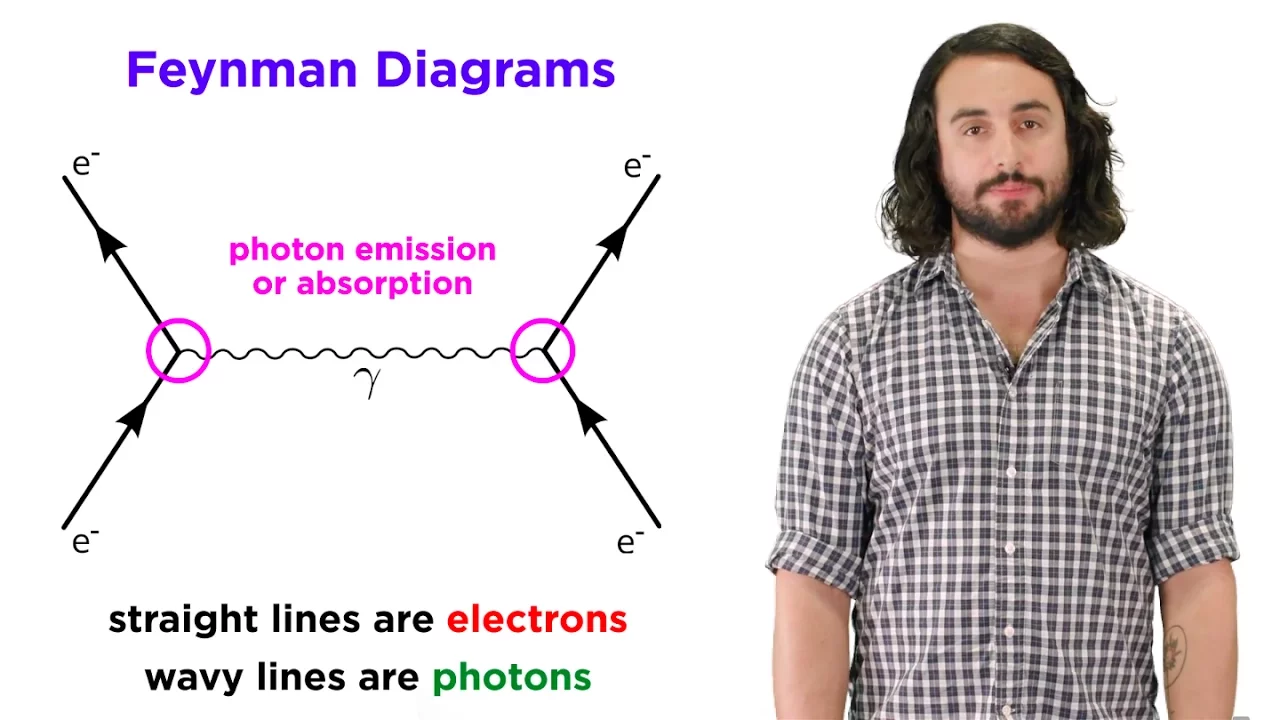
4:21
Quantum Electrodynamics Explained: QED & Feynman Diagrams
@ProfessorDaveExplains
118.8K views•2017-05-29

12:53
21cm Hyperfine Transition in Neutral Hydrogen: Radio Astronomy Basics
@AaronRobertParsons
12.4K views•2011-10-13

32:32
NMR Spin Physics I: Zeeman Effect, Resonance Condition & Larmor Frequency
@nptel-indianinstituteofsci8064
2.3K views•2024-01-17

27:14
Entropy and the Second Law of Thermodynamics Explained
@veritasium
27.5M views•2023-07-01
Related Study Plans & Knowledge Roadmaps
Structured learning paths in Physics
physics
Nuclear Physics (Decay, Fission & Reactors)
01Atomic Structure and the Binding Force
02Radioactive Decay and Half-Life
03Nuclear Fission Mechanics and Chain Reactions
+ 2 more learning modules
12h5 modules
Explore Roadmap
physics
Soft Matter (Polymers, Colloids & Rheology)
01Foundations of Soft Matter & Thermal Forces
02Polymer Physics and Macromolecules
03Colloids, Surfactants, and Self-Assembly
+ 2 more learning modules
38h5 modules
Explore Roadmap
physics
Analytical Mechanics: Lagrangian & Hamiltonian
01Mathematical Foundations: Calculus of Variations
02From Newtonian Mechanics to Constraint Dynamics
03The Principle of Least Action & Lagrangian Mechanics
+ 3 more learning modules
28h6 modules
Explore Roadmap
physics
General Relativity (Spacetime & Cosmology)
01Foundations of Relativity: Special Relativity
02The Geometry of Spacetime: Equivalence Principle & Curvature
03Einstein's Field Equations: The Mathematics of Gravity
+ 2 more learning modules
55h5 modules
Explore Roadmap