




![우리는 과학을 왜 이렇게 배우지 않았을까? [E=mc²] 2부 | 김범준 물리학자, 지구 과학커뮤니케이터 | 알릴레오 북’s 시즌5 21회](https://i.ytimg.com/vi/MAic4vOA0OQ/maxresdefault.jpg)







![What is a Plasma? Is it the 4th State of Matter? - [5]](https://i.ytimg.com/vi_webp/WVYJQucn2yU/maxresdefault.webp)



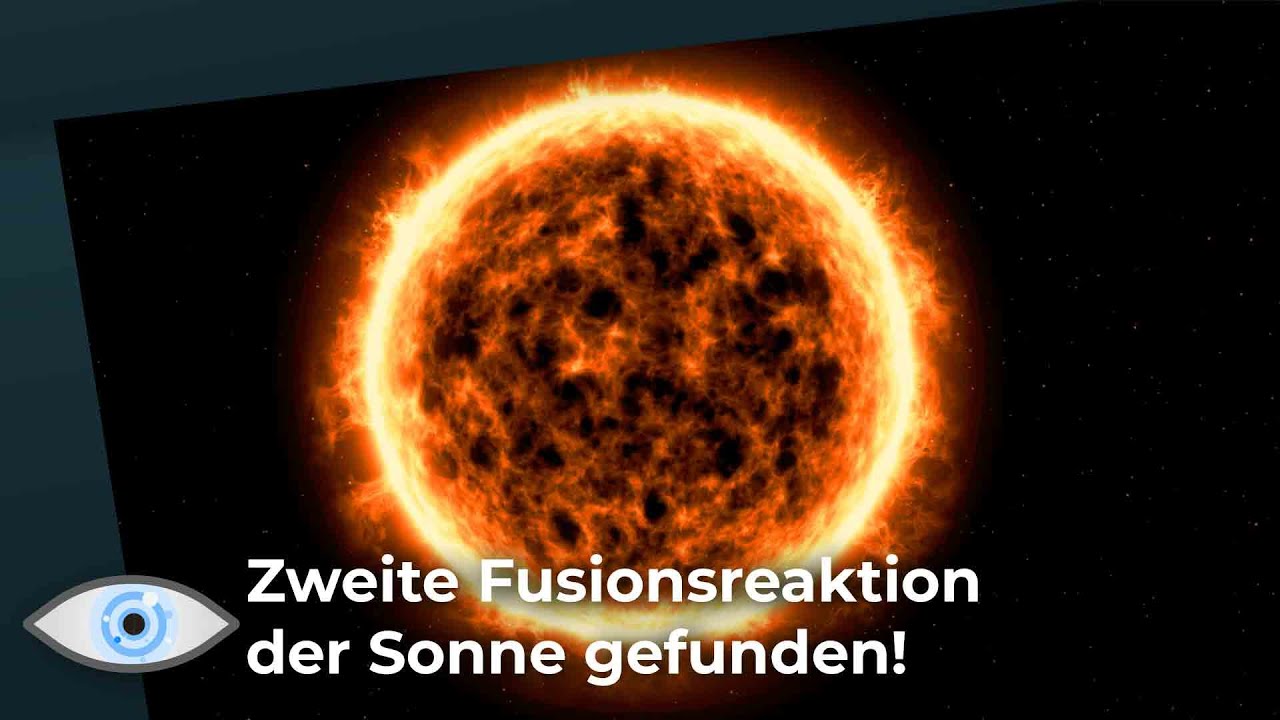

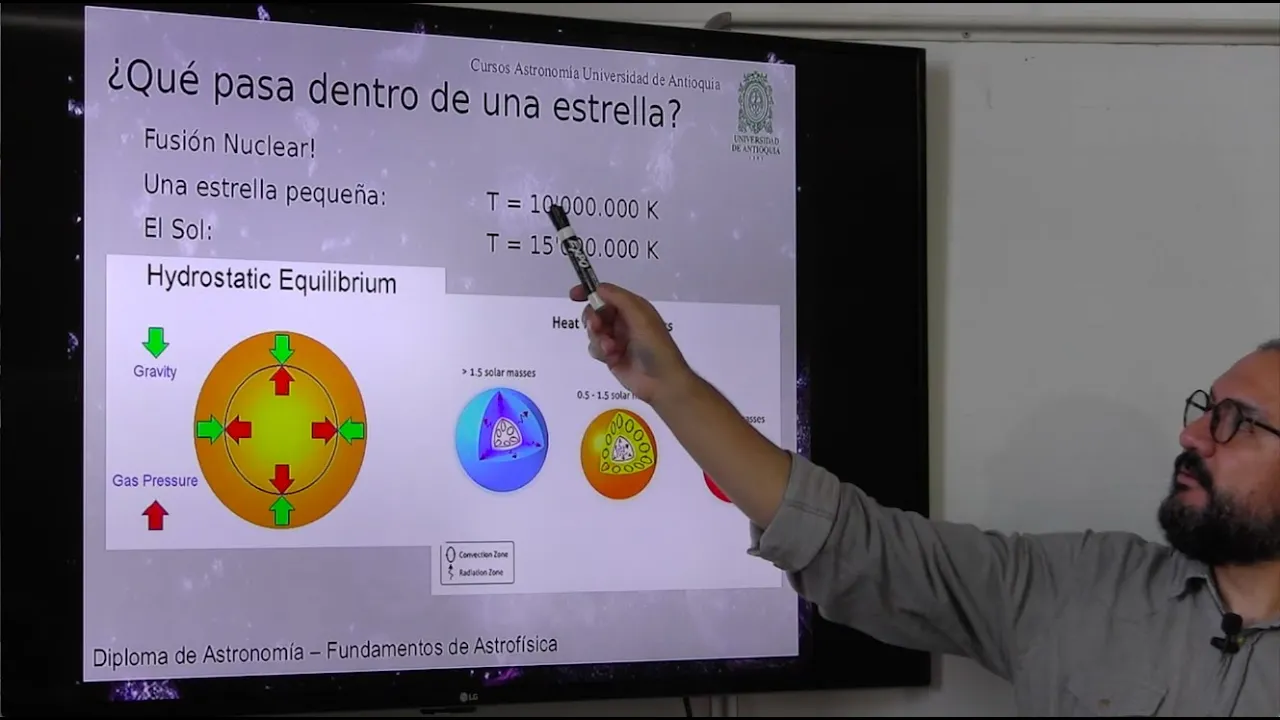

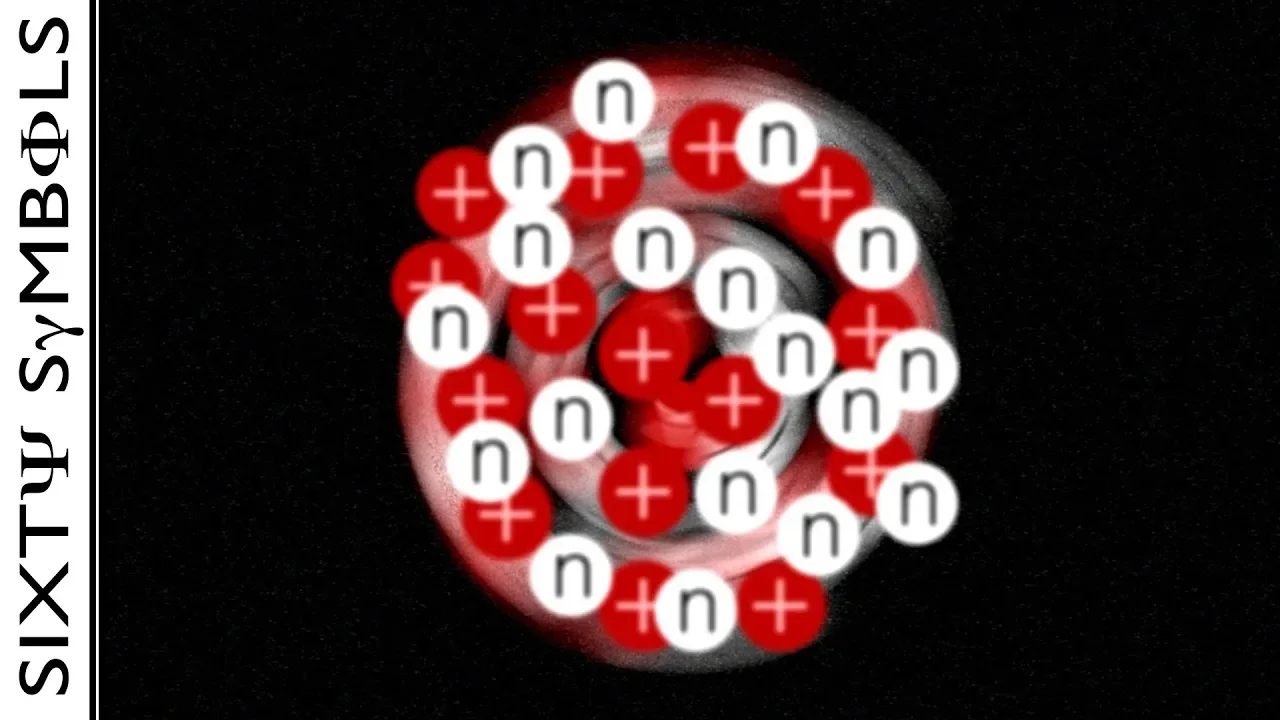

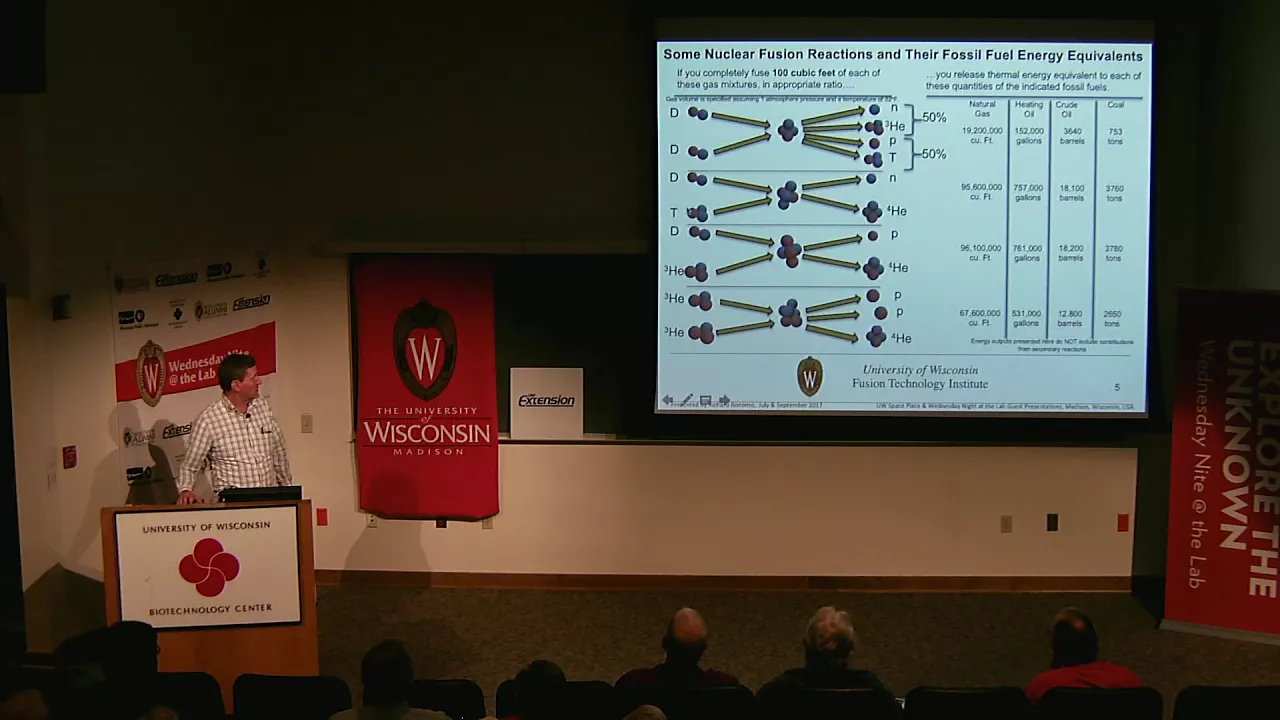


In stars like our Sun, the extreme temperatures of 15 million degrees Celsius allow protons to overcome their electromagnetic repulsion and fuse through the proton-proton chain: two protons collide to form deuterium (with beta-plus decay producing a positron and neutrino), which then fuses with another proton to create helium-3; helium-3 nuclei subsequently combine to form helium-4 through two main pathways—direct collision at 10-12 million Kelvin or via electron capture forming lithium-7, which then fuses with another proton to produce beryllium-8 that decays into two helium-4 nuclei—releasing enormous energy that powers the star.
Stellar Nucleosynthesis: Proton-Proton Chain Explained
Added:Basic atomic structure, including the properties of protons, neutrons, isotopes, and the difference between hydrogen and helium nuclei.
The concept of mass-energy equivalence (E=mc²) and how mass deficit translates into energy release.
The four fundamental forces of nature, particularly the electrostatic repulsion (Coulomb barrier) versus the strong nuclear force.
The state of matter in stellar cores, specifically high-temperature, high-pressure plasma where thermonuclear fusion can occur.
The CNO (Carbon-Nitrogen-Oxygen) cycle, which is the dominant hydrogen fusion pathway in stars heavier than the Sun.
The Triple-Alpha process and advanced burning stages, explaining how helium fuses into carbon and heavier elements as a star ages.
Stellar nucleosynthesis limits, such as why fusion stops at iron in massive stars, leading to core-collapse supernovae.
Applications in terrestrial nuclear fusion research, including magnetic confinement fusion (tokamaks) and inertial confinement fusion.
63.8K views2Klikes4:27Original Release: 2019-06-30
[Music] the core of the Sun this is a soup of electrons and protons we call plasma where the former would normally orbit the latter in this case billions and billions of them move freely around in a dense hot climate and we aren't talking desert hot try 15 million degrees Celsius and it's important because temperatures and pressures this high allow free-roaming protons to reach a critical speed you see protons are positively charged and as such naturally repel each other thanks to the column force that's also called the electromagnetic force think of identical magnetic poles being squished together right there's a repelling force there and it's the same principle with protons but when trillions of psi and millions of degrees Celsius or mixed in protons smash into each other by managing to overcome the column force instead succumbing to the nuclear force and stars around the size of our Sun this proton proton collision ultimately drives the fusion process that warms our planet when one proton smashes into another a few things happen first one of the protons in the new deuterium nucleus becomes a neutron this is actually a rare event typically the two fused protons just decay back into separate particles without anything else happening but enough deuterium is produced every second to sustain the chain reaction inside our star and we'll assume that's what's happening here so at this point two smaller particles are yielded a positron and a neutrino and a process called beta plus decay the previously positive charge of the converted neutron is transferred to the smaller positron which is an electron with a positive charge instead of a negative one the other particle a neutrino is an electron with no charge at all the positron will almost immediately collide with an electron yielding two gamma rays which are hyper charged light particles gamma rays are the things that cause cancer by penetrating and breaking down cellular DNA it's bad as for the neutrinos well you're being bombarded with billions of those every second but they rarely interact with nature so you don't have to worry they're very small and they are neutral hence the name neutrino now back to our deuteron within seconds it fuses with another proton creating helium-3 or helium a gamma ray is also released with a significantly higher energy state in the previous reaction and at this point helium-3 must become helium four somehow so yeah it gets dicey the problem is that there are several ways to make for so we'll discuss the two most common methods method one involves two helium nuclei as long as temperatures are somewhere in the range of 10 to 12 million Kelvin they're able to smash into each other and yield helium 4 along with 2 protons and a ton of energy the process takes around half a millennium to play out most of the time which is kind of hard to fathom and that's because a single proton will typically smash into Helion and then decay immediately again that disrupts the process between two helium atoms and their way more protons inside the Sun there are Helion or helium atoms so then helium 4 will go on to fuse with other smaller nuclei to form heavier elements like beryllium carbon and oxygen but when temperatures are much hotter method 2 becomes rather common it involves a collision of one helium-3 nucleus that's Helion and one helium four nucleus forming beryllium 7 beryllium 7 is interesting because it appears stable on paper they're the same number of electrons as there are protons but the proximities of its four protons result in something called electron capture in which case an inner shell or free-roaming electron especially in the case of plasma in the Sun is absorbed into the nucleus releasing a neutrino and accompanying energy the resulting nucleus is thus comprised of four neutrons and three protons transforming beryllium 7 into lithium 7 which is significantly more stable now a free-roaming proton which there are plenty of inside the Sun may collide with a lithium nucleus to produce beryllium once again in a process called lithium burning only this time with an extra Neutron tucked into the nucleus beryllium 8 that resultant is extremely unstable and almost immediately decays into two helium-4 nuclei coincidentally and there we go we ended at the same place as method 1 only with twice as much helium as the former by the way I wrote this script at 2:00 a.m. on a Sunday so you'll have to excuse the more particular details I've glossed over and this is a 5 or so minutes after all so please be gentle with me thanks for the curiosity thanks for watching and thanks for learning with us
Up Next
79:05
Astrophysical Probes of Fundamental Physics Lecture 2
@tasivideos4735
333 views•2024-06-26

12:53
21cm Hyperfine Transition in Neutral Hydrogen: Radio Astronomy Basics
@AaronRobertParsons
12.4K views•2011-10-13

32:32
NMR Spin Physics I: Zeeman Effect, Resonance Condition & Larmor Frequency
@nptel-indianinstituteofsci8064
2.3K views•2024-01-17

27:14
Entropy and the Second Law of Thermodynamics Explained
@veritasium
27.5M views•2023-07-01
Related Study Plans & Knowledge Roadmaps
Structured learning paths in Physics
physics
Nuclear Physics (Decay, Fission & Reactors)
01Atomic Structure and the Binding Force
02Radioactive Decay and Half-Life
03Nuclear Fission Mechanics and Chain Reactions
+ 2 more learning modules
12h5 modules
Explore Roadmap
physics
Soft Matter (Polymers, Colloids & Rheology)
01Foundations of Soft Matter & Thermal Forces
02Polymer Physics and Macromolecules
03Colloids, Surfactants, and Self-Assembly
+ 2 more learning modules
38h5 modules
Explore Roadmap
physics
Analytical Mechanics: Lagrangian & Hamiltonian
01Mathematical Foundations: Calculus of Variations
02From Newtonian Mechanics to Constraint Dynamics
03The Principle of Least Action & Lagrangian Mechanics
+ 3 more learning modules
28h6 modules
Explore Roadmap
physics
General Relativity (Spacetime & Cosmology)
01Foundations of Relativity: Special Relativity
02The Geometry of Spacetime: Equivalence Principle & Curvature
03Einstein's Field Equations: The Mathematics of Gravity
+ 2 more learning modules
55h5 modules
Explore Roadmap