
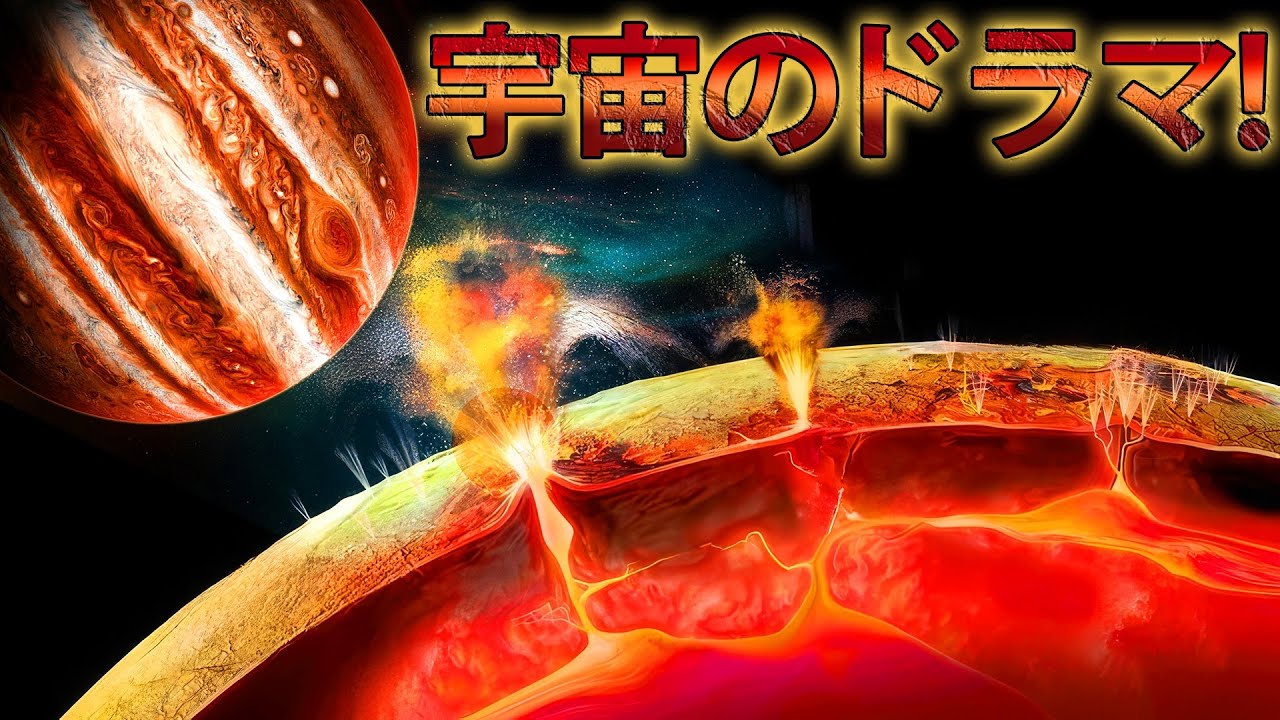

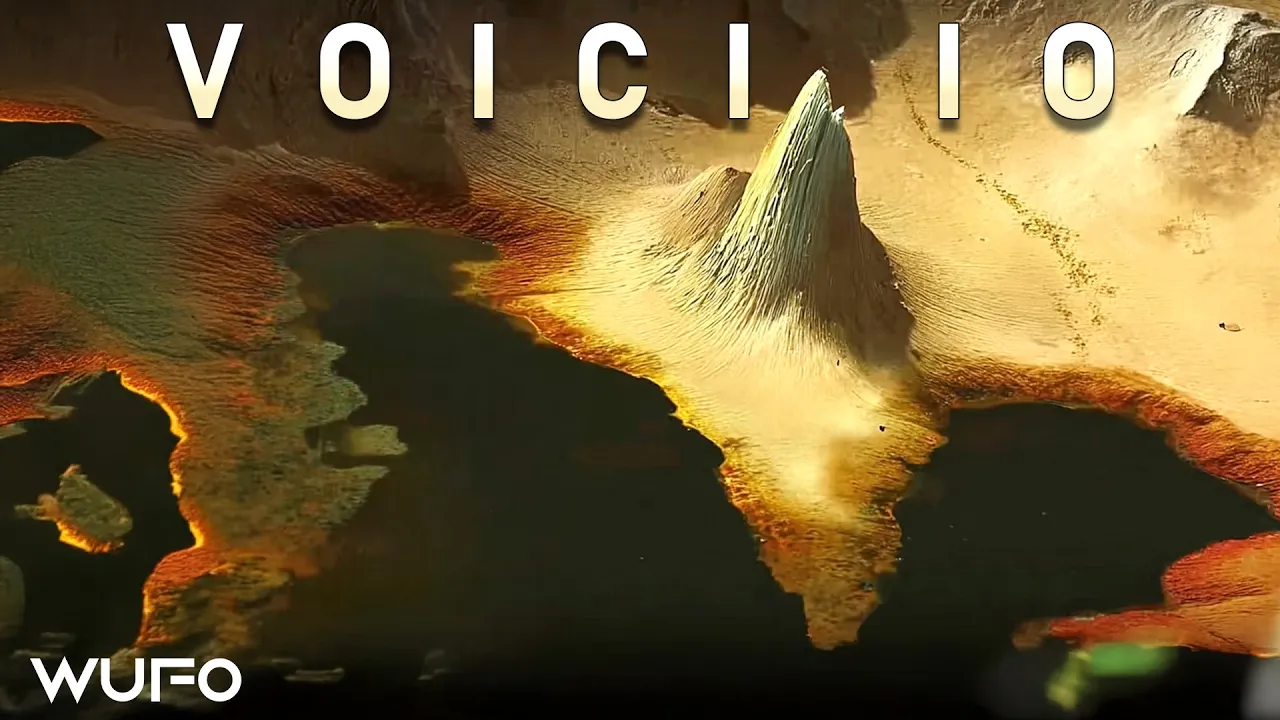










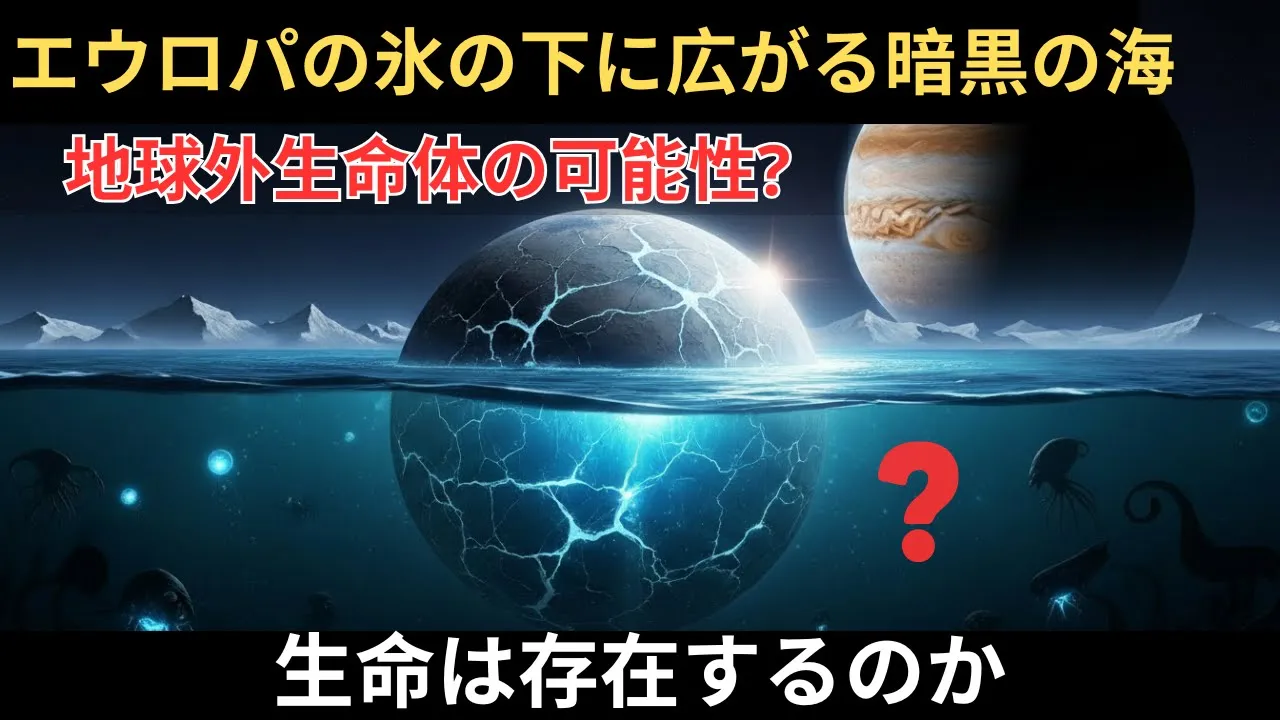





Europa, one of Jupiter's Galilean moons, has a remarkably young surface (~100 million years old) with minimal impact craters due to active resurfacing processes, and its global geologic map reveals four main feature types: chaos terrain (38% coverage, broken-up regions potentially connecting to the subsurface ocean), bands (linear features formed by extensional processes), linear features including ridges and cycloids (unique to Europa), and ridge plains (55% coverage, extensively cratered), with craters being the youngest features and ridge plains the oldest, demonstrating how tidal heating from Jupiter maintains a liquid water ocean beneath the ice shell.
Europa's Global Geologic Map | Jupiter Moon Geology
Added:Basic planetary geology principles, including how impact cratering density is used to estimate the relative age of a planetary surface.
The concept of tidal heating and orbital resonance (specifically involving Jupiter's Galilean moons) as a mechanism for generating internal planetary heat.
The differentiated interior structure of icy moons, particularly the model of an outer ice shell overlaying a liquid water ocean.
Fundamental criteria for planetary habitability, including the necessity of liquid water, essential chemical elements, and an energy source.
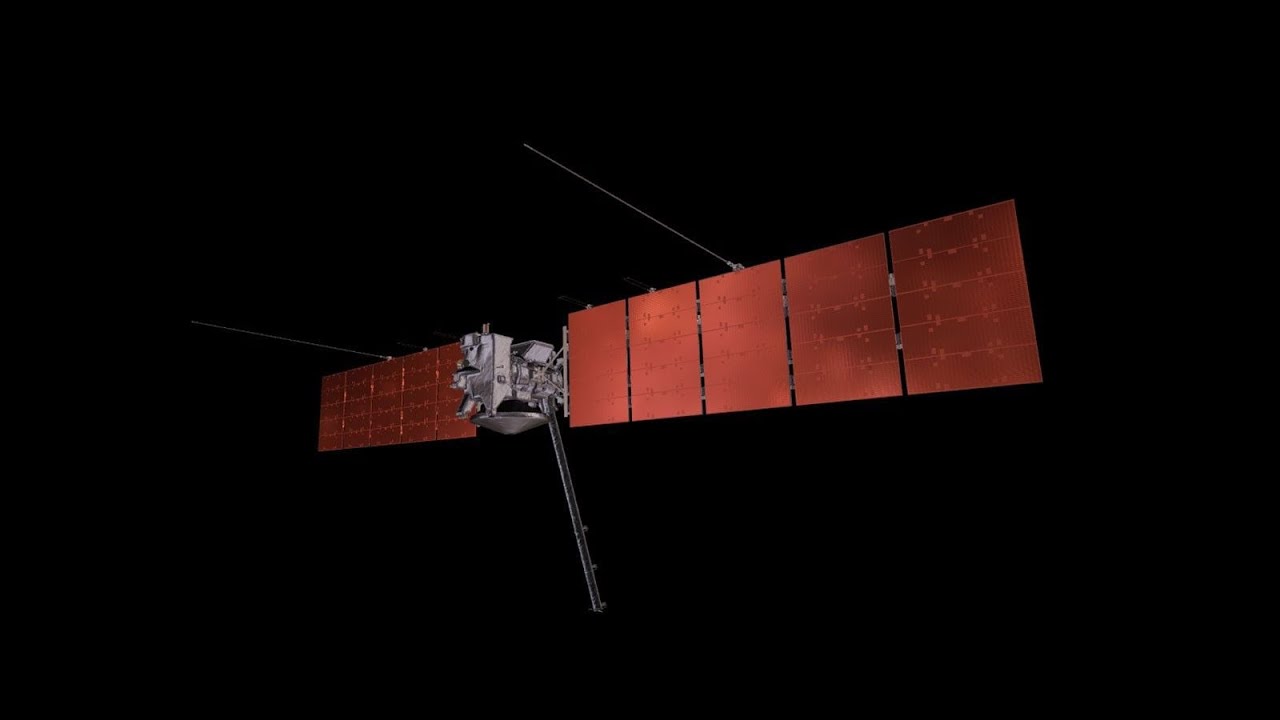
Upcoming robotic exploration missions to Europa, such as NASA's Europa Clipper and ESA's JUICE, including their specific scientific instruments and mission profiles.
The physical mechanics of cryovolcanism and ice tectonics, specifically focusing on how features like chaos terrain, lineae, and diapirs form on icy bodies.
Comparative planetology of solar system ocean worlds, examining how Europa's ocean dynamics compare to those of Enceladus, Titan, and Ganymede.
The study of terrestrial analogs for Europa, such as Antarctic subglacial lakes (e.g., Lake Vostok) and deep-sea hydrothermal vents, to model potential biosignatures and metabolic pathways for extraterrestrial life.
101 views4likes14:07Original Release: 2018-07-06
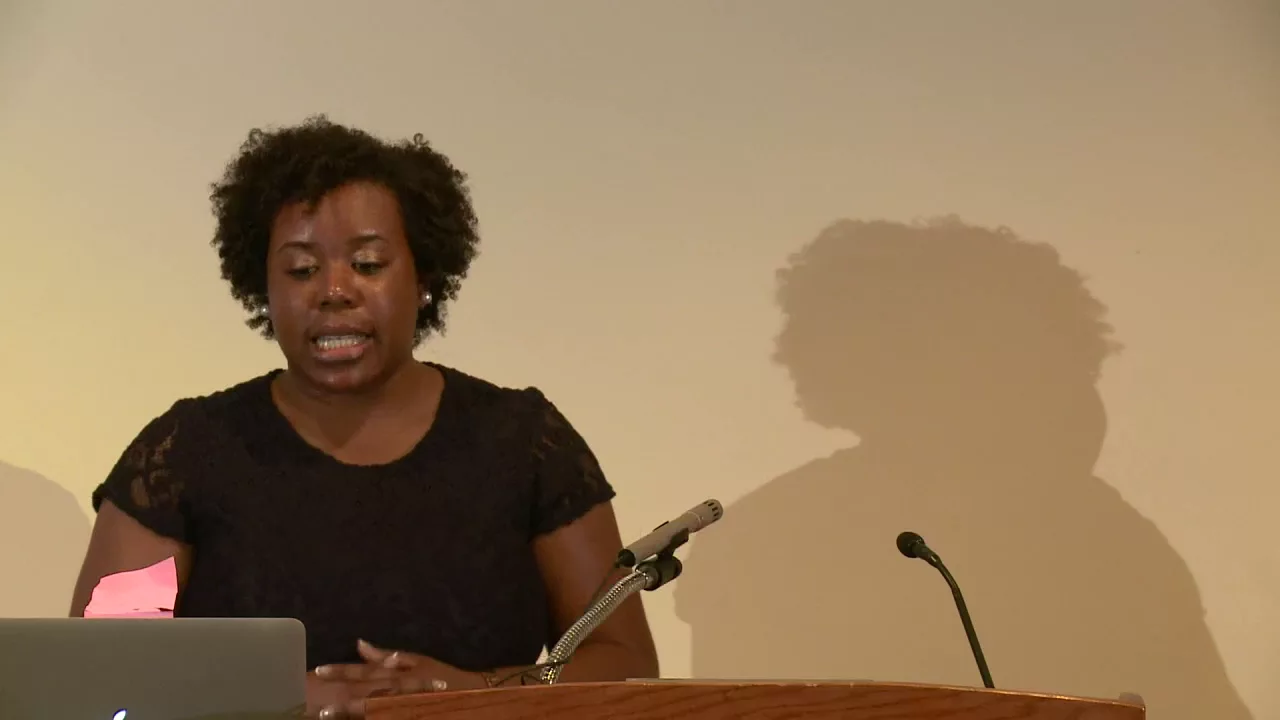
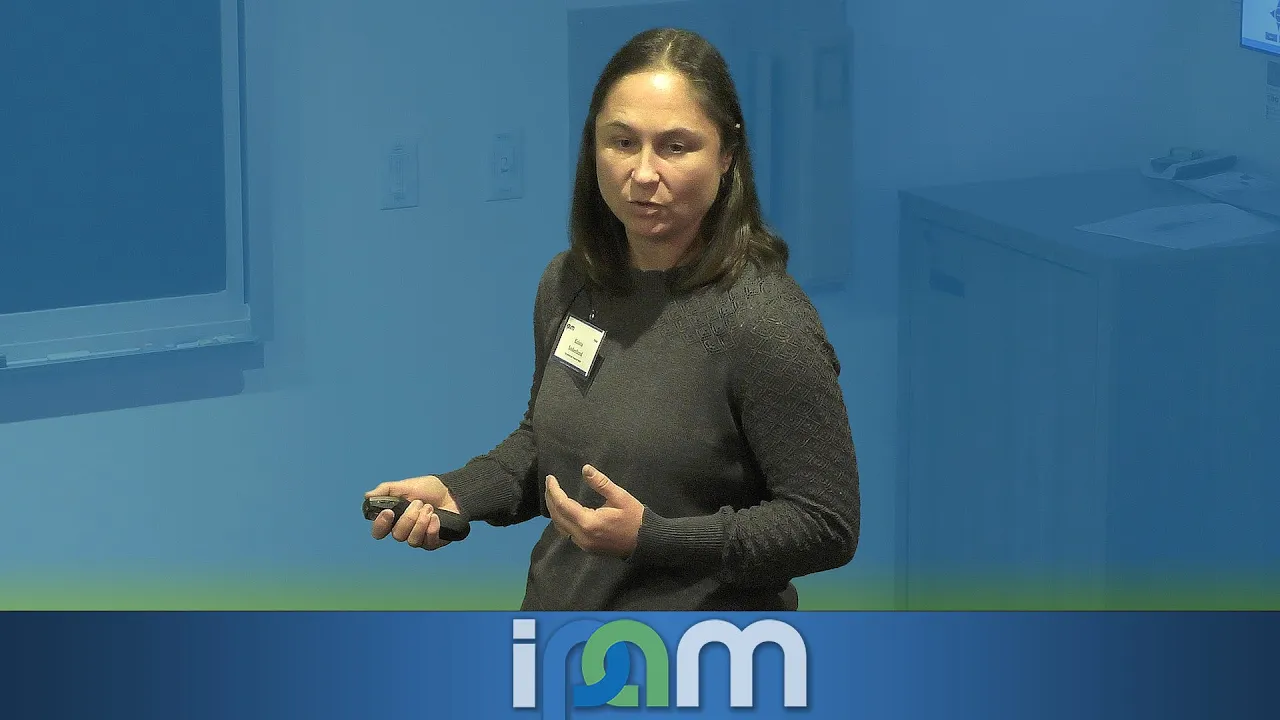
Okay good afternoon. How's everybody doing? Yeah? Super, great, okay good; okay so we're going to be moving from Mars into the outer Solar System to take a look at Europa's global geologic map, which is a project I've been working on over the past year with Alex Patof and Dave Sanski at JPL; this is one of my favorite pictures of Europa, It was taken by the Galileo spacecraft somewhere between 1997 and 2003 when it was in the Jupiter system, was put together by Cynthia Phillips, and I really enjoy it because it really displays Europa's two very unique features; one being all of these cross-cutting dark lineaments that cover the surface, and the other being this lack of impact craters. There are no obvious impact craters in this image and it's very odd for an outer solar system object, which, and this implies that the surface is pretty young, probably on the order of a hundred million years or so, so we're going to be discussing these two things as we go through the global geologic map, they'll come up many times; but first, a little background on Europa, for those of you who might not be particularly familiar. It's about the size of our Moon, so good sized; it is one of Jupiter's four main moons, also referred to as the Galilean satellites; so it goes: Europa, or Io, Europa, Ganymede, and Callisto. Io, Europa, and Ganymede are in what we call a Laplace resonance and this means that for every four times Io goes around Jupiter, Europa goes around twice, and Ganymede goes around once, and this is important because it keeps Europa in a slightly eccentric orbit; without this resonance, it would circular eyes around Jupiter. This eccentric orbit kind of does what we see over here on the right: it causes Europa to flex as it goes around Jupiter and we, or experienced tidal forces, and so what this does is it creates friction within the body, which creates heat, and this is what we think allows Europa to maintain its liquid water ocean underneath the ice shell; also, probably why it can form all of these very interesting features that we're gonna again go over as we go through the global geologic map.
Okay, so first this is the global image mosaic of Europa put together by the USGS--is the one in the background here. It consists mostly of images taken by the Galileo spacecraft which was in the Jupiter system from 1997 to 2003. There are also some images that fill in the gaps that are still from the Voyager mission, so quite quite old data really.
We also have the, this patch over here, which looks a bit brighter; that's what we call colloquially the "super mosaic." It was created for us by Jeff Collins; it includes a few more high-resolution images from the Galileo data, as well as just highlights albedo differences in this region. This image mosaic can create some challenges, (in uh) when trying to map the surface, and so I'm gonna touch on two of those right now; one being the large variety of resolution of the images across the globe, and that's what's displayed here; you can see that the across, the, across Europa we are dealing with resolutions that vary from 200 meters to over 12 kilometers per pixel, and what that means is that we're gonna have trouble maintaining a consistent map across the surface; another issue that we always run into is the varying incidence angle; and what the incidence angle is, is just the angle between the sun and the surface; so at zero degrees, that would be the sun directly overhead; and at 90 degrees, that would be the sun at the horizon; and this can affect the apparent albedo of features on the surface, or the apparent color of features on the surface, and this can again lead to difficulties when creating a consistent map across, across Europa; and these two things really arise from the fact that Galileo, the Galileo spacecraft was not an orbiter, it was a flyby mission and when you are just flying by objects, you fly by at different distances and have different viewing geometry; it's just a fact that it that happens when you have a flyby mission and this is just an example of actually what happens when you have different resolutions and different incidence angles; in the pink box here, we have an example of what happens when you are meeting 12, sorry, on 12 kilometres per pixel with 200 metres per pixel you can see that some of those lineaments just completely die out. Where do you draw them? They don't go anywhere. You can't see them anymore. In the yellow box we see an example of the incidence angle complications and that's...some of those low albedo features just turn into high albedo features; they turn from grey to white, and so again this can create complications when you, when trying to create a consistent map across the surface, so again we'll take a look at the global image mosaic and just kind of orient ourselves here before I show you the global geologic map; so pick your favorite feature and look at it; okay so this, when it comes up, will be the global geologic map that we've created, and again, we've tried to address this consistency issue; we've had multiple people map, completely map the surface and then we compare and create this agreed geology to have, to have consistency and also objectivity, which is your goal in creating a geologic map, so we have ten different geologic units that I'll kind of go through; they're paired into four different groups and I have eight different features: linear features and point features that we'll go through. But you can see off-the-bat one of the main reasons we create global geologic maps is to really look at the global distribution of these features, and so you can keep that in mind as we go through; so first we're going to start with craters; craters are in our orangish colors; the crater itself is in that dark orange color; we have continuous crater ejecta in the medium orange color and then discontinuous crater ejecta in the light, lighter color; and I'll show you examples of some of those different units here, so our continuous crater ejecta would just be the ejecta that's immediately outside the crater. It's heavily mottled, likely high albedo; discontinuous crater ejecta is actually only found around one crater on Europa, probably the youngest crater, and this is Pwyll, and so discontinuous crater ejecta is also could be referred to as secondary craters, or crater rays, and these will disappear over time due to space weathering or the radiation environment at Jupiter, and so this is why we think Pwyll is one of the youngest craters on the surface, and again you can see there's about 40-something craters across the surface; that's astronomically low for anyone who's looked at any other moon in the outer solar system. This is astronomically low. Usually they're saturated with craters, like you can't even tell one crater from the other, and so this is why we think that Europa is probably about 100 million years old on the surface, so it has some sort of active resurfacing process that's erasing these craters.
Next, so this might be kind of hard to see but we're going, we're looking at the depression margins here and they form great circles actually on Europa surface, and they're also over here, and they're broad, shallow depressions and they appear to be one of the youngest features on the surface because--and I've highlighted one here-- because they don't affect the pre-existing structures at all, and they're really odd, really, and we don't really know what forms them; the only possibility that we've come up with so far is that they might be remnants of paleo poles from polar wander, so you can imagine that when you have an ocean underneath an ice shell the ice shell is rotating differentially from the ocean underneath, your ice shelf might rotate and change orientation with respect to the poles, or the equator, so this could be evidence of that, not sure.
Moving on, I think we're gonna be moving to the chaos features next; they take up about 38% or so of the surface and we have four different, four different geologic units to, four different varieties of chaos but chaos, in general, refers to a broken up terrain. It looks to be a broken up pre-existing structures that appears to be embayed by a matrix-y material, and it's thought to be this is where the ocean, the underlying ocean might be communicating with the surface, which is very important for potential habitability; so they're of high interest to both the Europa Clipper mission and potentially the Europa Lander mission; so we have four different varieties here: we have a low albedo chaos, a high albedo chaos, mottled chaos, and a knobby chaos; our low and high albedo we actually--even though I told you that that can vary due to incidence angle--we can actually quantitatively show that there are differences across the globe that are low and high albedo and they are consistent, and then our mottled chaos here is just high and low albedo chaos right next to each other on small scales, so it's really patchy, and then we have an interesting occurrence of what we call knobby chaos, and it only occurs in one place: in the southern trailing hemisphere of Europa, and it it's interesting because it has a large-scale roughness and almost curvilinear fractures that run through it and so it's just an interesting feature that we like to point out on the surface; also in our chaos here that I'm pointing out is our point feature, our one point feature that we have and that's micro chaos; and micro chaos are these small, almost circular areas of potentially chaos.
They are only 10 to 50 kilometers in diameter so at our, on our map here, they would only be represented by a point and I'm gonna try and make these show up a little bit better for you here; we map over 2500 of them across the surface so these little tiny green dots, if you can see them, and so we mapped over 2500 of them across the surface, and it's actually really interesting because they we visually, they seem uniformly distributed which is not really something we would have expected and something we're still exploring, so this is another great reason to create global geologic maps; you start realizing these things that you didn't know before; next we'll move on to bands. There are two types of bands: just a general band unit, and those are those long dark linear features that we were talking about before, and then we have a high-albedo bands unit, which is down here at the bottom.
There are only two of them but they're very young and apparently fresh on Europa so that's why we're highlighting them here. Bands are interesting because they're thought to be formed in an extensional process similar to mid-ocean ridge type spreading, so some good analog to something on Earth, and yeah, cool. Okay so moving on, I think we're gonna go through, oh here, right, the two different types of bands; so you can see we have a low albedo band and our high albedo bands, which are relatively fresh, and moving on we'll be going to the linear features, and these linear features are scattered throughout, throughout the surface and we have four different ones that I'm gonna highlight here: ridges, up here (points), which are just a long linear topographic high, and then we have cycloids, which are actually pretty unique and actually go back to what I was talking about in the beginning with that tidal force; the tidal forcing when Europa goes around Jupiter, the stress field is rotating and that's what creates these long arcs and cusps for, of the cycloids and so something that's pretty unique to Europa, this doesn't really occur anywhere else. Troughs; we have over here, there are just a couple of them, not very many on Europa, and then most commonly, probably are these undifferentiated Linea outlined here in the pink and that's because they're a artifact of the resolution; the resolution is just too low; we can't tell if it's a Ridge or if it's a band; we just don't know, so it's undifferentiated.
Lastly, yeah, we're coming to my favorite unit; in particular this is the ridge plains, so the ridge plains cover 55% of the surface and I think they're really cool, not not a view often shared, but that's because of the global resolution; they don't look like anything; they don't look like anything; there are flat; they're white; they're not very interesting; however, when you look in the high resolution, the very few high resolution images that we have of Europa surface they're crazy; they're covered in all of these ridges, criss-crossing all over the place, sets of them; we just have absolutely no idea what's going on and this covers the surface; it literally covers the surface; so landing something on here, it's gonna be interesting so good luck to the lander people; I I don't relish that job. Okay, so I'll leave you here, going through what what I just said, I'm so chrono stratigraphically, or some kind of, in order from youngest to oldest, we have our craters, our chaos units, then bands, and then our ridged planes being the oldest unit, but again I'd like to emphasize this is only a hundred million years of surface history; this is the visible surface history; usually when you look at stratigraphic columns you're looking at four billion years; this is just a hundred million years, so a lot of surface history packed into a hundred million years, and I'll leave you with these beautiful rotating globes made for us by Ashley Davis and take any questions.
Up Next

50:23
Are Aliens Smarter Than Us? Astrobiology Explained
@StarTalk
507.3K views•2023-02-02
61:17
First Billion Years of the Universe with the Square Kilometre Array
@iaaudc
121 views•2022-05-26

6:25
Kepler's Laws of Planetary Motion Explained (Educational Astronomy Video)
@Peekaboo_Kidz
404.9K views•2023-02-17
6:10
Gamma-Ray Bursts: Cosmic Snipers Explained | Astronomy
@kurzgesagt
15M views•2016-07-31
Related Study Plans & Knowledge Roadmaps
Structured learning paths in Astronomy
astronomy
Reionization: Pop III Stars, IGM & 21cm Line
01Foundations of Cosmology & the Early Universe
02Population III Stars & Cosmic Dawn
03Physical Mechanisms of Reionization
+ 2 more learning modules
17h5 modules
Explore Roadmap
astronomy
Planetary Rings: Dynamics, Roche & Resonances
01Foundations of Gravity and Orbital Mechanics
02Tidal Forces and the Roche Limit
03Structure, Composition, and Collisions
+ 2 more learning modules
10h5 modules
Explore Roadmap
astronomy
Asteroseismology: Stellar Waves, Ages & Cores
01Foundations of Stellar Astrophysics & Wave Mechanics
02Stellar Oscillation Modes: P-modes and G-modes
03Mathematical Framework of Asteroseismology
+ 2 more learning modules
35h5 modules
Explore Roadmap
astronomy
Adaptive Optics: Physics, Engineering & Control
01Foundations of Wave Optics and Wavefronts
02Atmospheric Turbulence & Optical Distortion
03Wavefront Sensing Technologies
+ 3 more learning modules
35h6 modules
Explore Roadmap